






Author:
Byline: Investigative Desk
Help support our mission, donate today and be the change. Every contribution goes directly toward driving real impact for the cause we believe in.
Plan No. 1284223 would extend Jerusalem’s southern settlement belt toward Bethlehem. In Qusra, three Palestinian families remain trapped without water, electricity, food or medicine.
RAMALLAH / QUSRA, OCCUPIED WEST BANK – Israeli occupation authorities are preparing to advance a major settlement plan that would add approximately 2,300 housing units to the illegal Gilo settlement south of occupied East Jerusalem, a project Palestinian officials and Israeli settlement watchdogs say is designed to close a strategic gap in the settlement belt separating Jerusalem from Bethlehem and the southern West Bank.
The plan, filed as Plan No. 1284223 by the Israeli Jerusalem District Planning and Building Committee on July 28, covers an estimated 195 dunams, about 48 acres, of land above the Route 60 tunnel road, a major transportation corridor linking Jerusalem with Bethlehem and other Palestinian cities in the southern West Bank. If approved, it would push Gilo further southward, linking it more closely with the illegal settlements of Givat Hamatos and Har Homa and creating a contiguous Israeli settlement bloc across southern occupied Jerusalem.
The Al-Quds Governorate warned on Tuesday that the project amounts to a dangerous escalation in Israel’s settlement, displacement and annexation policies.
“The governorate described the plan as a dangerous escalation in Israel’s settlement and gradual annexation policies,” the Palestinian governorate said in a statement carried by WAFA, warning that it “seeks to alter Jerusalem’s identity and geographic and demographic reality while further isolating East Jerusalem from Bethlehem and the southern West Bank.”
The governorate said the filing comes as part of a series of settlement projects being implemented or planned around Jerusalem that aim to “establish a continuous settlement belt that cuts Palestinian geographic contiguity around Jerusalem and prevents natural territorial continuity between the city, Bethlehem and the southern West Bank.”
A Settlement Corridor, Not Just Housing
The significance of the Gilo plan extends well beyond the construction of new housing units. Israeli planners and settlement advocates have long sought to create an unbroken chain of Israeli settlement construction across southern Jerusalem. Gilo, Givat Hamatos and Har Homa already form major Israeli population centres on Palestinian land occupied since 1967. The new project would fill in much of the remaining gap between them.
Gilo itself was established after Israel occupied East Jerusalem and the West Bank in 1967, and it has expanded repeatedly onto lands belonging to Palestinian communities, including Beit Safafa, Sharafat, and Beit Jala. The latest project would extend that settlement’s footprint further south, directly threatening agricultural land that Palestinian families have cultivated for decades and forcing displacement or erasure of the people.
The targeted land lies above the Route 60 tunnel road. If construction proceeds, the hillside would become another Israeli-built front overlooking a major Palestinian travel route. For Bethlehem and Beit Jala, the plan would consume more of their northern agricultural hinterland and further restrict Palestinian urban and rural development.
The governorate warned that the lands in question were historically part of Beit Jala’s agricultural territory, “with orchards and longstanding olive trees serving as a living testament to the land’s connection to its Palestinian owners.” It said implementation could lead to the uprooting of hundreds of trees and the destruction of Palestinian agricultural land for settlement expansion.
“Settlement activity in Jerusalem is not merely an urban development project, but a political and geographic tool aimed at redrawing the boundaries of the city and its surroundings to serve Israel’s broader objectives,” the governorate said.
The Absentee Property Law As A Legal Instrument
Palestinian data cited by the governorate reportedly shows that Israel seized at least 28 dunams (roughly seven acres) within the plan’s area through its so-called Absentee Property Law.
The properties were initially transferred to the Israeli Custodian of Absentee Property and later reclassified as “state lands” before being designated for settlement-related development. The Jerusalem Governorate cited Ir Amim, an Israeli non-profit that tracks planning in Jerusalem. Their analysis indicated that the plan had seized and classified Palestinian-owned land under the Absentees’ Property Law.
The use of the Absentee Property Law in occupied East Jerusalem is not a technical legal detail. This law forms part of a larger administrative system that converts Palestinian private property into land available for Israeli settlement construction. Originally associated with properties belonging to Palestinians who became refugees after 1948, the law now serves to transfer Palestinian-owned property to Israeli state control in East Jerusalem, often disregarding the claims of living Palestinian owners and their descendants.
“The use of the Absentees’ Property Law to seize Palestinian land in occupied East Jerusalem constitutes a serious violation of private property rights and reflects a broader system of legislation and measures being used to facilitate settlement expansion and the seizure of Palestinian land,” the governorate said.
International humanitarian law prohibits an occupying power from confiscating private property and from transferring its own civilian population into occupied territory. Israeli settlements in the occupied West Bank, including East Jerusalem, are illegal under international law.
Qusra: Families Trapped Under Settler Siege
While the Gilo plan advances through Israel’s planning system, a different but related form of displacement is unfolding on the ground in the northern West Bank village of Qusra, south of Nablus.
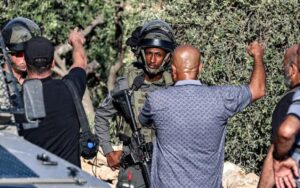
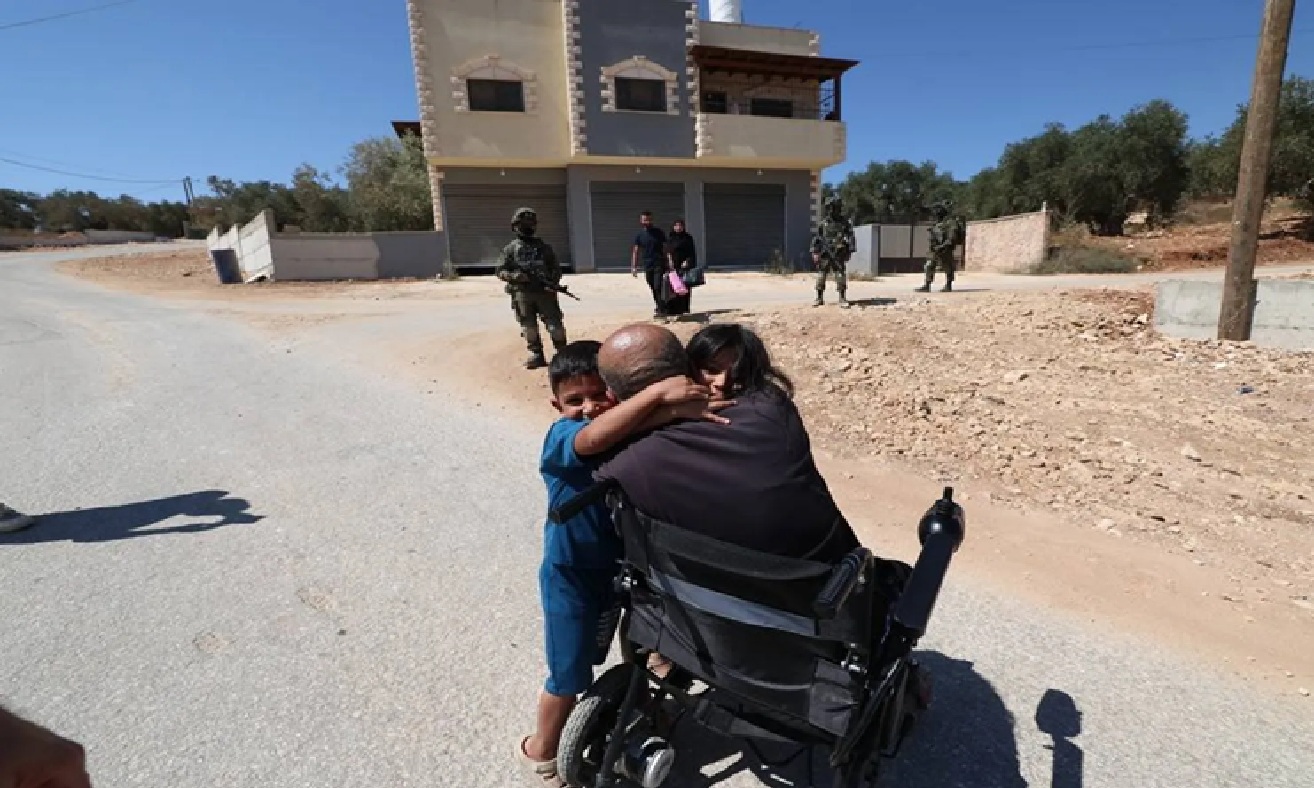
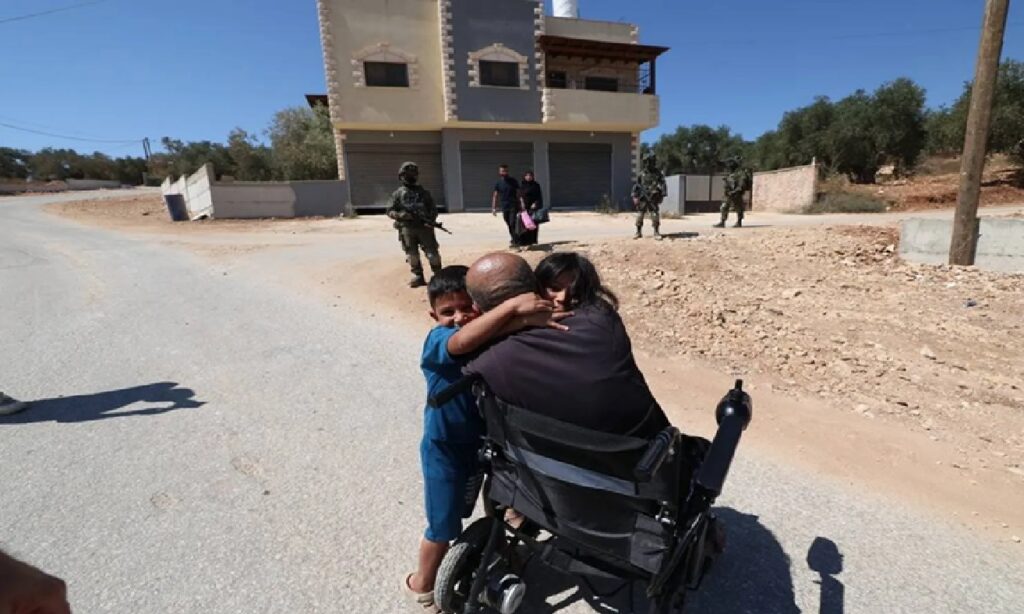
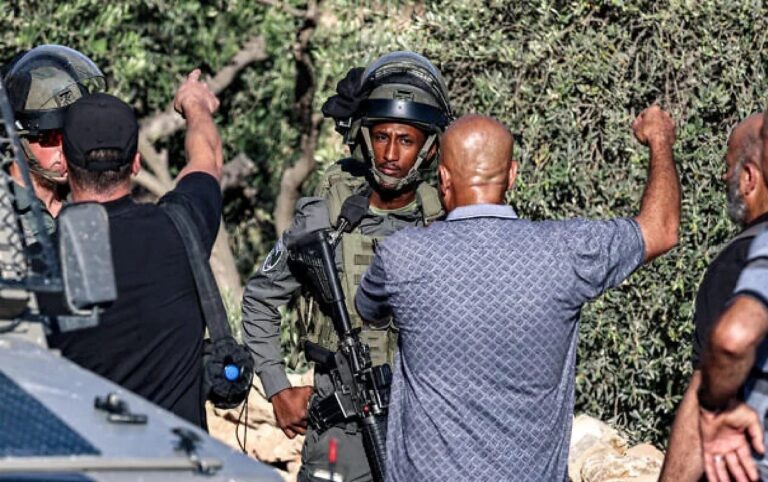
Three Palestinian families in the Ras al-Ain area remained under settler siege for a sixth consecutive day on Friday. Settlers again erected a tent directly in front of the families’ homes before Israeli forces removed it for the second time in two days. But the removal of the tent did not end the siege. Settlers continued to restrict the families’ movement and access to necessities while Israeli soldiers and military vehicles remained deployed around the area.
Since Sunday, dozens of settlers have blocked roads leading to the three homes, prevented deliveries of food, water and medicine, and cut electricity and water lines. The families say the settler campaign began approximately four months ago, fuelling fears that the current siege is intended to force them from their homes.
The United Nations said in a statement that some 15 Palestinians, including two children, were “being trapped inside their homes in a state of terror, unable to attend to their basic needs and without access to water or electricity.”
Qusay Abu Reeda, a Palestinian-American trapped with his family inside one of the homes, appealed for urgent help.
“We appeal to government institutions and to every free and honourable person to help us secure food and medicine,” Abu Reeda said.
The Israeli military said Thursday it had sent additional troops to Qusra “to carry out defensive missions and patrols in the area to maintain security and protect the area.” But the deployment came a day after troops had used tear gas in a failed attempt to remove the settlers, and after video emerged showing several Israeli men in green military garb joining the settlers in a morning prayer in the tent. The military said it was taking disciplinary action against any personnel involved.
US Ambassador to Israel Mike Huckabee issued an unusually sharp statement on the siege.
“The Israeli military and police have gone at our request to remove the Israeli terrorists doing this,” Huckabee said. “The actions of those doing this to this family’s home is criminal.”
The statement was striking because of its language, but it stopped short of announcing any concrete US measures against settlement expansion or settler violence. For Palestinians, the gap between such rhetorical condemnations and actual pressure on Israel remains one of the central failures of international diplomacy.
Homes Turned Into Military Barracks
The settler siege has unfolded alongside a major Israeli military operation in Qusra. Hundreds of Israeli soldiers stormed the town on Thursday, with the military informing the village council that the operation would continue until Sunday morning, reportedly under the pretext of dismantling a settler outpost.
During the operation, Israeli occupation forces seized 16 Palestinian homes and converted them into temporary military positions before withdrawing from them on Friday morning. For residents, the seizure of Palestinian homes as military posts, even while settlers continued to besiege Palestinian families nearby, underlined which side the army was treating as the security problem.
“The Israeli military says it is trying to disperse the settlers from the area,” Reuters reported. “Even as a video from earlier in the week showed several Israeli men in green military garb joining the settlers in a morning prayer in the tent.”
Palestinians say the Israeli military routinely allows settlers to seize land and resources across the West Bank with impunity, including in areas where Palestinians hold Israel-issued ownership documents. Qusra sits in an area under complete Israeli security control, making such attacks especially difficult for local residents to resist.
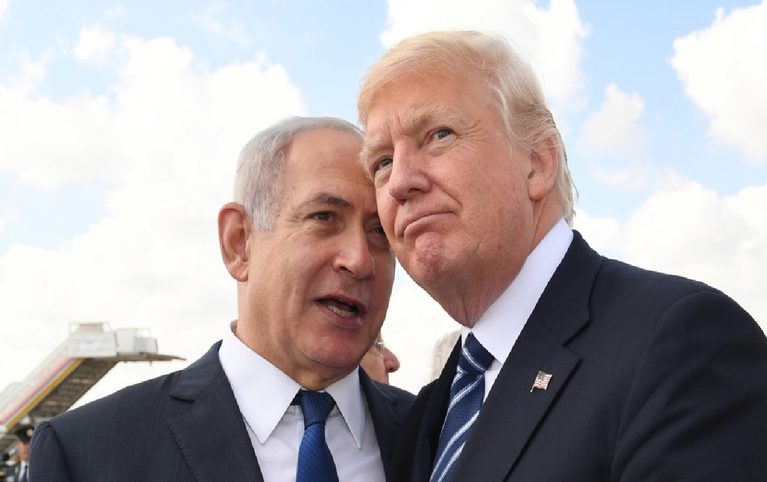
The Israeli army has come under increasing pressure to halt rogue land seizures by settlers emboldened by the right-wing government of Prime Minister Benjamin Netanyahu, which has spearheaded a rapid expansion of settlements in the occupied West Bank.
Wider West Bank Operations Continue.
The events in Jerusalem and Qusra are part of a larger pattern. Elsewhere in the occupied West Bank, Israeli raids continued early Friday.
Israeli occupation forces detained four Palestinians during raids in Nablus. They also detained 14-year-old Muhammad Ziad al-Rajoub in the village of Al-Koum, southwest of Hebron. Settlers separately attacked Palestinians southwest of Hebron, while Israeli forces stormed Al-Mazra’a al-Gharbiya and Deir Abu Mash’al, northwest of Ramallah.
According to the Israeli settlement watchdog Peace Now, there are some 146 settlements and 390 smaller outposts in the West Bank, home to about 500,000 Israeli settlers living among roughly 3 million Palestinians. The number of settlers has continued to grow despite repeated international condemnation.
International Silence And The Creation Of Irreversible Facts
The Jerusalem Governorate called on the international community, the United Nations, the UN Security Council, and the High Contracting Parties to the Fourth Geneva Convention to fulfil their legal and political responsibilities and take practical measures to halt settlement expansion in Jerusalem and its surroundings, rather than limiting their response to statements of condemnation.
“Continued international silence over such projects encourages Israeli authorities to advance their plans and gives them more time to establish new facts on the ground that may become increasingly difficult to reverse,” the governorate warned.
The Gilo plan is now at the deposit stage, but such plans often move through Israel’s Jerusalem planning system with little effective Palestinian input. If it advances, it will not simply add housing units. It will alter the map. It will deepen the separation of Jerusalem from Bethlehem. It will extinguish more Palestinian agricultural land. And it will make the prospect of a contiguous Palestinian state harder to achieve.
In Qusra, the method is different, but the objective is the same: displacement. Whether through bureaucratic planning decisions in Jerusalem or through settler sieges enforced by the presence of armed Israeli soldiers, Palestinian families are being pressured to leave their land and their homes.
These two stories are connected. The Gilo expansion is the legal-administrative face of the same settlement project that settler violence in Qusra represents on the ground. One uses planning committees and absentee property classifications. The other uses tents, blocked roads, cut water lines, and the threat of force and erasure. Both depend on Israeli state protection. Both are illegal under international law. And both are intensifying.
The question now is whether the international community will continue to watch, or whether it will finally treat these developments as what they are: a coordinated attempt that forecloses Palestinian rights and reshapes the occupied West Bank before any political solution can be reached.
Veritas Press Investigative Analysis
Independent journalism examining global affairs, power, diplomacy and accountability.
Source: Veritas Press C.I.C. | Multi-News Agencies
APPEAL: Help Support Our Work By Donating
Readers who believe that truth still matters have power over popular information. When just a few more people step up to support this work, it means more lies exposed, more corruption uncovered, and more accountability where it’s long overdue.
Help Protect Independent Journalism, Which Is Currently Under Attack.
If you believe journalism should serve the public, not the powerful, and you’re able to help, becoming a regular DONOR or a PAID SUBSCRIBER truly makes a difference.
DONATION APPEAL: If you found this reporting valuable, please consider supporting independent journalism.
Your support fuels our fearless, truth-driven journalism. In unity, we endeavour to amplify marginalised voices and champion justice, irrespective of geographical location. We operate independently, with no financial backing from billionaires; our readers support us.
But it’s also extremely important. One of Veritas Press’s greatest assets is its reader-funded model.
1. Reader funding means we can cover what we like. We’re not beholden to the political whims of a billionaire owner. We are a small, independent and impartial organisation. No one can tell us what not to say or what not to report.
2. Reader funding means we don’t have to chase clicks and traffic. We’re not desperately seeking your attention for its own sake; we pursue the stories that our editorial team deems important and believes are worthy of your time.
3. Reader Funding: enables us to keep our website and other social media channels open, allowing as many people as possible to access quality journalism from around the world, particularly those in places where the free press is under threat.
We know not everyone can afford to pay for news, but if you’ve been meaning to support us, now’s the time.
Your donation goes a long way. It helps us:
- Keep the lights on and sustain our day-to-day operations
- Hire new, talented, independent reporters
- Launch real-time live debates, community-focused shows, and on-the-ground reporting
- Cover the issues that matter most to our communities, in real time, with depth and integrity
Without your support, independent voices like ours will be silenced.
Further, we have plans to expand our work, but we can’t do it without your support. Every contribution, no matter the size, helps us stay independent and build a truly people-powered media platform.
If you believe in journalism that informs, empowers, and reflects the communities we serve, please donate today.
Submissions:
For the secure submission of documentation, testimonies, or exclusive investigative reports from any global location, please utilise the following contact details for our Investigations Desk: mailto:enquiries@veritaspress.co.uk or mailto:editor@veritaspress.co.uk
GENEVA — A United Nations fact-finding mission has concluded there are “reasonable grounds to believe”
Iran’s GDP is projected to contract by 5.4 to 6.1% in 2026, its worst performance
The Trump administration is preparing a $2.8 billion weapons package for Israel containing 40,000 2,000-pound

Film alleges mass civilian deaths are routinely built into military decisions amid Israel’s genocidal war
The Israeli rights group says violence, displacement, economic strangulation, and settlement expansion form part of

Houthi forces have captured the historic Red Sea port of Mocha and are advancing on
London’s historic sanctions against Israeli settlements mark a watershed moment in UK foreign policy, but
With 95% of Gaza’s population now wholly dependent on aid and more than 90% stripped
India calls for Kashmir and Ladakh to appear only on its official map after a
ISLAMABAD – In the high-stakes political theatre of Pakistan, the battleground has shifted from the






















mbs6jz