Kamran Faqir is a volunteer investigative journalist and writer committed to exposing hidden truths and amplifying underreported stories. Driven by social justice, he brings sharp insight and fearless truth-telling to independent journalism. NUJ registered.
Listen to this article
Help support our mission, donate today and be the change. Every contribution goes directly toward driving real impact for the cause we believe in.
Article Date Published:
Article Date Modified:
19 minutes
Views:167
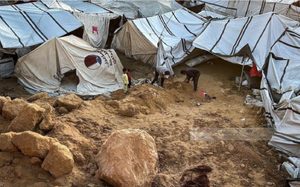
More than 560,000 children are facing a fourth winter in flooded, torn tents while Israel blocks blankets, fuel, heating equipment and shelter kits at Gaza’s crossings—despite a ceasefire that promised caravans and recovery. After the first storm submerged 70,000 tents and killed five displaced Palestinians in Deir al-Balah, aid agencies say the catastrophe is not weather but policy: supplies are waiting at the border, winter funding is short, and the occupying power faces mounting demands to open all crossings before the next storm.
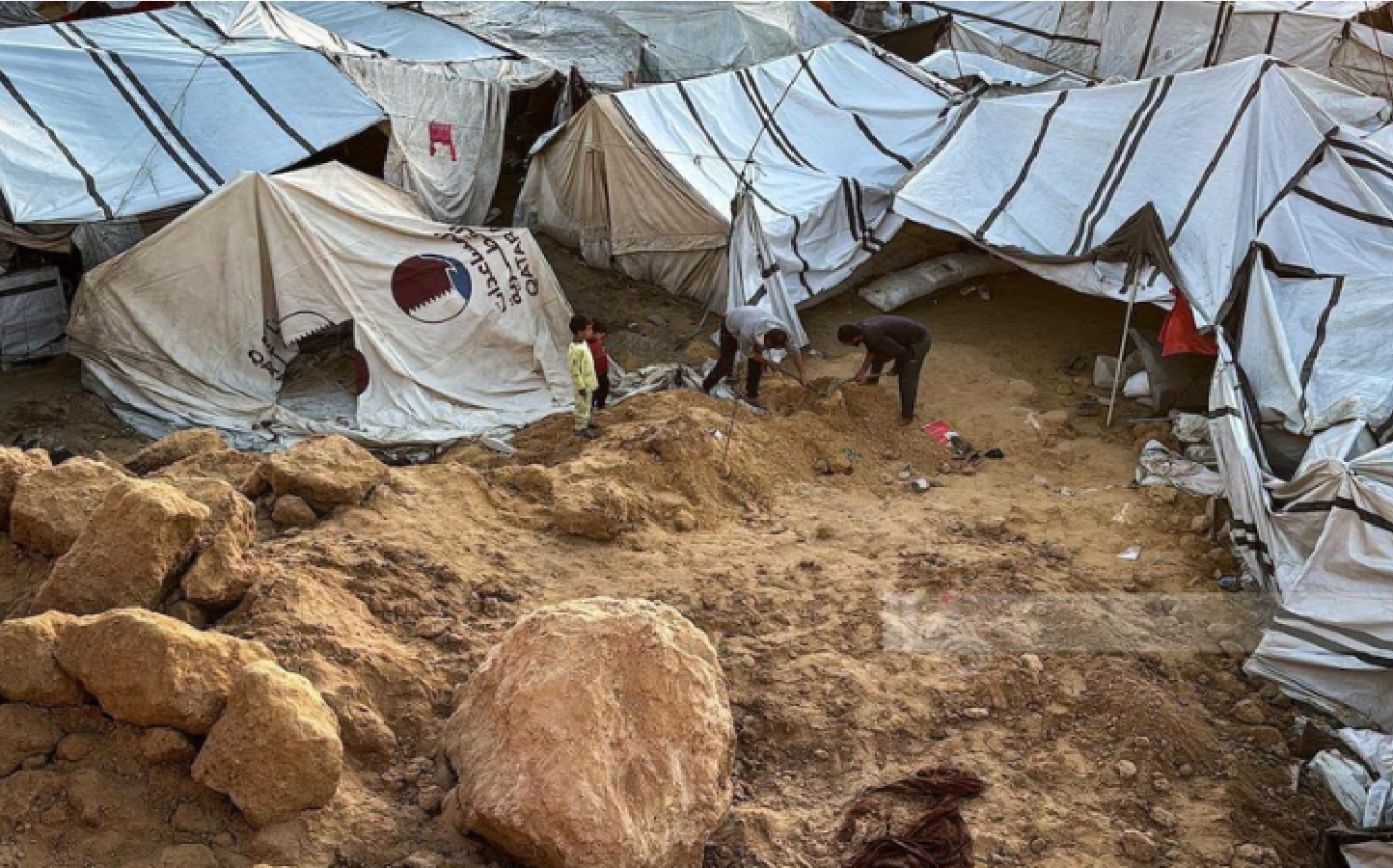
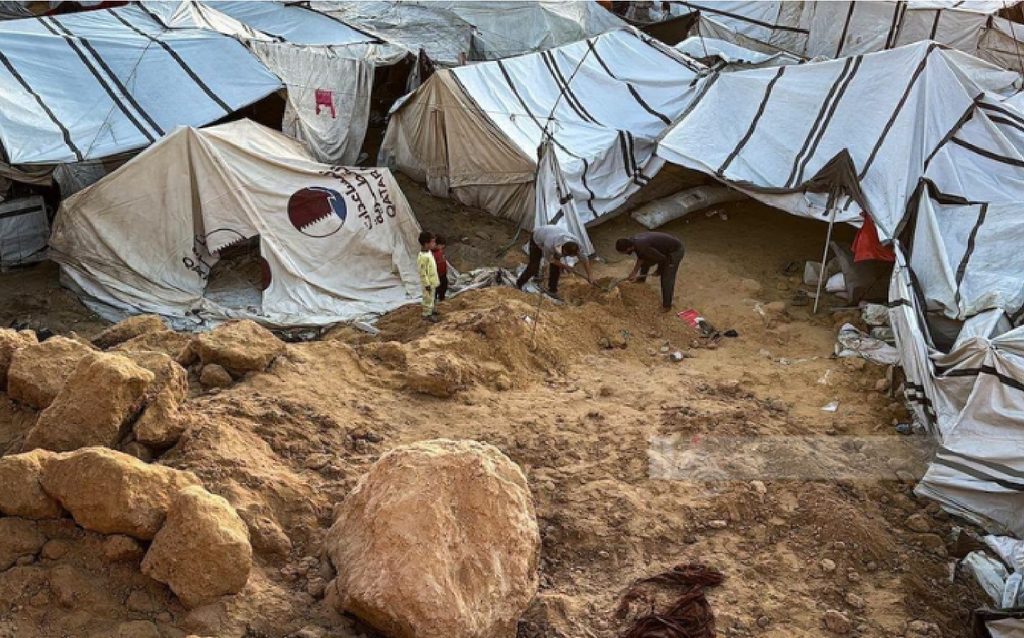
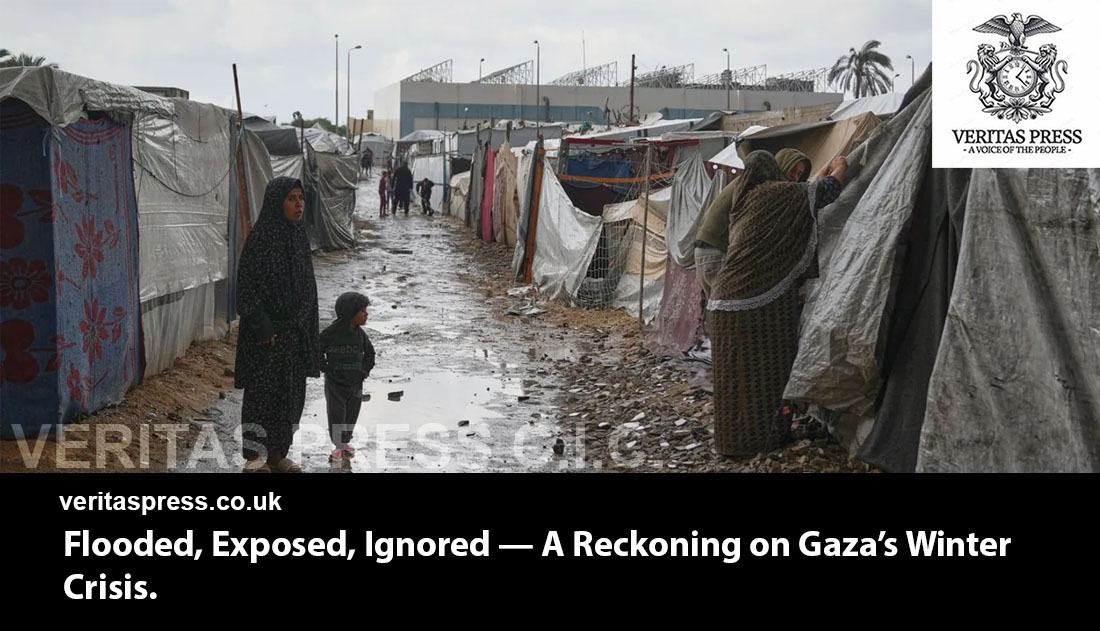
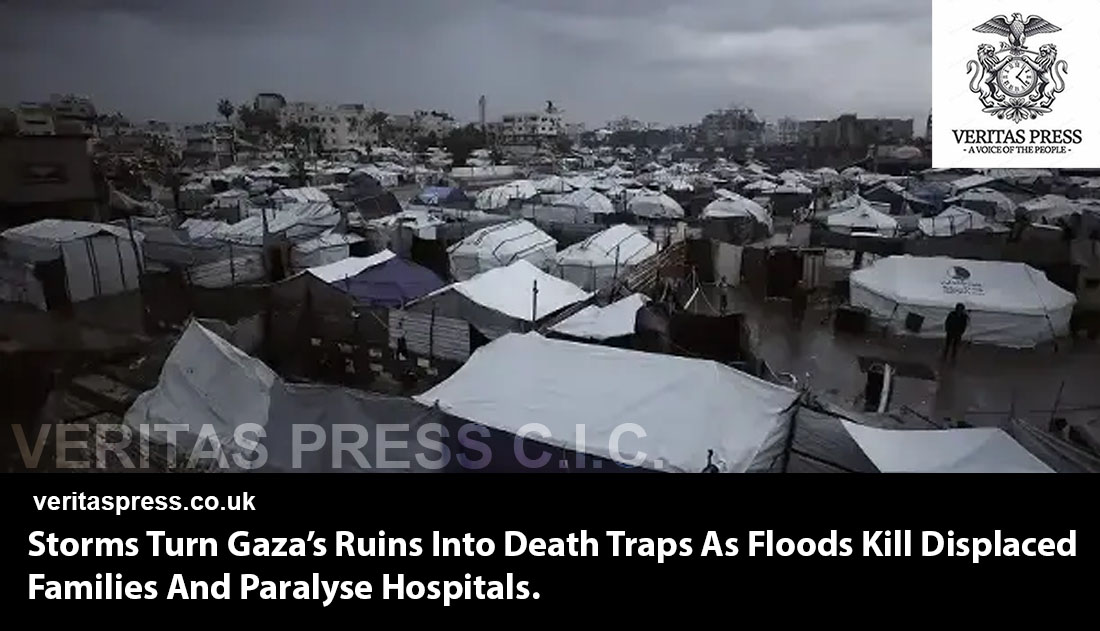
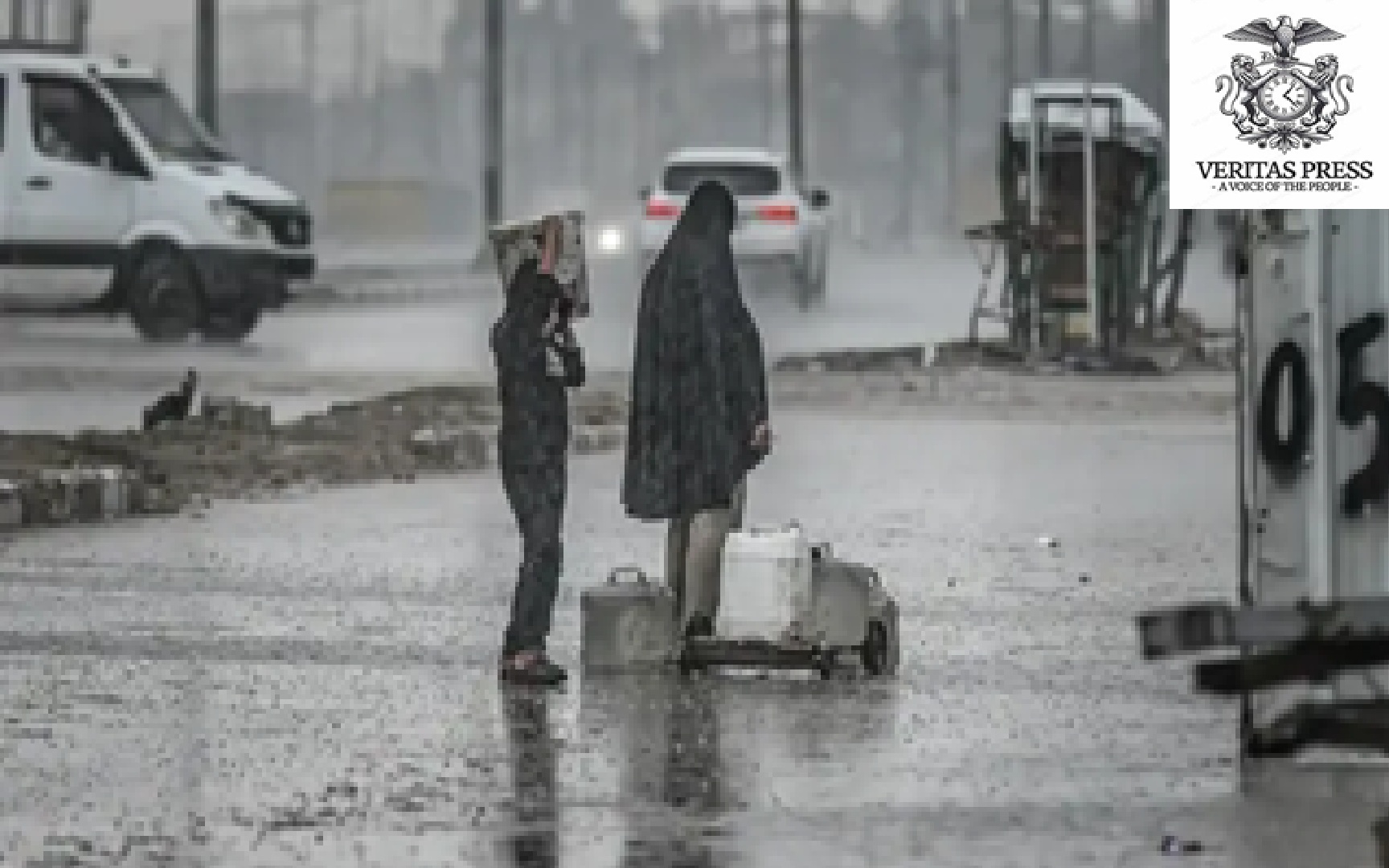
The storm that tore through Gaza on a Friday evening in early November was not, by any meteorological measure, exceptional. It was the kind of moderate winter front that communities elsewhere might endure with inconvenience. But in the Gaza Strip, a territory that has endured two years of relentless bombardment, the near-total destruction of its housing stock, and a suffocating system of Israeli restrictions on essential goods, it became lethal. Within hours, floodwaters had swallowed more than 70,000 tents. By late Sunday, a sand embankment abutting a camp for displaced families south of Deir al-Balah had collapsed under the weight of the rain, burying three tents and killing a woman and three children, aged eight, six, and four.
“Whoever did not die from bombs and missiles is dying from buildings collapsing on them, from the collapse of sand and mountains on them,” said Amal Al-Zein, a relative of the victims, speaking to Reuters. Her words capture a grim continuity: for the 1.2 million Palestinians, including more than 560,000 children, now living in what the Palestine Shelter Cluster classifies as “critical or catastrophic” shelter conditions, the violence of war has simply been replaced by the violence of exposure.
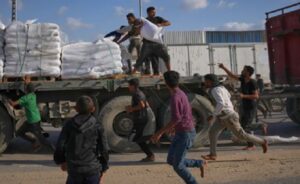
The flood was not a natural disaster. It was a manufactured one. Tents, shelter kits, fuel, blankets, and the materials needed to repair damaged shelters are not scarce in the abstract. They are waiting at Gaza’s borders. They are being blocked, delayed, or denied entry by Israeli authorities, even as the so-called ceasefire, announced more than a year ago, continues to be invoked as a framework for recovery. As Ahmad Alhendawi, Regional Director for the Middle East and Eastern Europe at Save the Children International, put it: “This is not simply the result of bad weather. Tents, shelter kits and fuel are waiting at Gaza’s borders while children sleep in floodwater, because the Israeli authorities are blocking their entry. This is a choice, and children are paying the price”.
The Anatomy Of A Blockade
The mechanics of this choice are documented in the data painstakingly compiled by humanitarian agencies. Since the ceasefire took effect, fewer than 50,000 tents, enough for about 270,000 people, have entered Gaza. Thousands of pallets of shelter materials have been rejected outright by Israeli authorities, and many NGOs have been blocked from bringing in relief altogether. The United Nations Relief and Works Agency for Palestine Refugees (UNRWA), the backbone of the humanitarian response, has shelter supplies for up to 1.3 million people positioned outside the Strip, but it has been barred from bringing that aid in. The agency’s Commissioner-General, Philippe Lazzarini, has been forced to cut UNRWA’s overall services by 20% due to a funding shortfall exceeding $200 million, even as he describes Gaza’s winter as “very harsh” and the health condition there as “very poor”.
The restrictions extend to the most basic items of survival. Israeli authorities have limited the entry of insulation materials, heating equipment, cooking gas, and even clothing. More than a million people in Gaza need winter clothing, yet supplies cover just 1% of that need. Nearly half of the families surveyed by the Shelter Cluster reported resorting to burning plastic, tyres, garbage, or cardboard to cook, while 84% said they had no effective way to heat their shelters. The toxic fumes from these makeshift fires create a second, slower catastrophe: respiratory illness, carbon monoxide poisoning, and burns, particularly among children in crowded, poorly ventilated tents.
The human cost of these restrictions is already being measured in lives. Last winter, 11 children were reported to have died from hypothermia in Gaza. As of mid-January, health authorities reported that seven children had died from hypothermia since the current winter season began, a figure that rose to 11 by the end of the month. These are not ambiguous casualties of conflict. They are deaths from cold, in a territory where the means to prevent them are stockpiled just beyond the border fence.
A Crisis Foreseen, A Response Denied
The flood risk was not a secret. Prior to the storm, OCHA’s flood-risk analysis had identified more than 760 displacement sites, hosting roughly 850,000 people, or about 40% of Gaza’s population, as being at the highest risk of flooding. The UN and its partners had pre-positioned mobile pumps, distributed empty flour sacks to be used as sandbags, and put contractors with heavy machinery on standby. These preparations saved some lives, but they could not compensate for the fundamental deficit: the absence of durable shelter and drainage infrastructure, both of which require materials that Israel refuses to allow in at scale.
When the storm hit, the consequences were immediate and overwhelming. Civil Defence received more than 1,500 distress calls in the first hours; in some locations, water levels rose to 1.5 meters. More than 6,000 family shelters were destroyed outright, and another 17,400 were damaged; more than 3,900 households were left with no shelter at all. At least 55 learning spaces serving some 55,000 children were flooded, and health facilities were damaged, forcing medical teams to suspend services. Mine action partners warned that floodwaters could expose or displace unexploded ordnance, adding yet another layer of danger to the landscape.
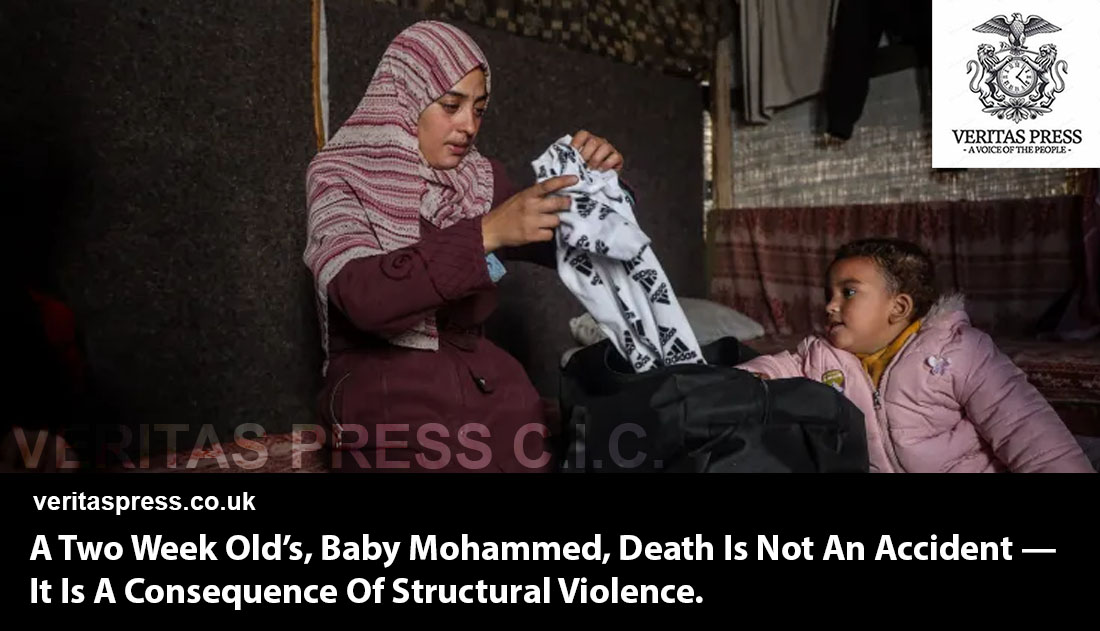
The trauma is cumulative. “Many children we are receiving at our clinics and medical points were literally born in these tents,” Mai Elawawda, a communications officer with Medical Aid for Palestinians, told The Independent. After receiving care, she added, children are sent back to the same flooded shelters. The hospital staff caring for them face identical conditions; some at Nasser Hospital come to work with coughs and colds, only to return to tents at the end of their shifts.
The Politics Of Starvation And Exposure
The international response has moved from concern to condemnation, though the gap between rhetoric and consequence remains vast. Ireland’s Foreign Minister, Helen McEntee, issued a statement describing Israel’s aid blockages as “reprehensible and unacceptable.” “Israel must stop its intentional blockages of aid, food, and life-saving supplies,” she said, pledging to raise the emergency with European counterparts. Cuba’s Foreign Minister, Bruno Rodríguez, went further, calling the obstruction of humanitarian aid “inadmissible and criminal” and urging an international mobilisation to end what he described as a genocide.
Even the Trump administration’s “Board of Peace,” the body established to oversee the US-backed peace plan, has broken with Israel’s position. In a statement issued as the floods worsened, the Board warned that the situation “no longer represents simply a threat posed by the approaching winter, but an immediate humanitarian emergency.” It called on Israel to “immediately allow all necessary humanitarian supplies into Gaza,” acknowledging that “the response remains insufficient” despite Israeli claims that thousands of trucks had entered. Hamas seized on the Board’s statement, accusing it of offering a “distorted account” that overlooked Israel’s broader responsibility for blocking the ceasefire roadmap. “Children dying under the sand and in rainwater are not parties to the negotiations,” Hamas said, demanding that crossings be opened to relief and shelter supplies “without political or security conditions”.
The Board of Peace’s criticism is significant precisely because it comes from within the architecture of US-led diplomacy. It confirms what humanitarian agencies have documented for months: that the primary obstacle to shelter, warmth, and survival in Gaza is not a lack of available supplies, nor a lack of logistical capacity on the part of aid organisations, but a political decision by the occupying power to restrict access. UN Deputy Spokesperson Farhan Haq stated the matter plainly: “We certainly can be getting more in. We just need the permissions from the Israeli authorities to get them in through the various checkpoints”.
A Verdict On Accountability
Save the Children has been unequivocal in its legal framing. “As the occupying power, Israel has a legal obligation to ensure civilians receive the supplies they need to survive,” Alhendawi said. “Instead, it is depriving families of the most basic means to protect their children, and it must be held accountable for any child deaths that result”. This is not merely a moral appeal; it is a statement of binding obligations under international humanitarian law. The Fourth Geneva Convention requires an occupying power to ensure the food and medical supplies of the population under its control; the deliberate denial of shelter materials, fuel, and winter clothing in the face of foreseeable and repeated weather events constitutes a breach of that duty.
Yet accountability remains elusive. The ceasefire, such as it is, has not produced a meaningful reconstruction process. The vast majority of Gaza’s two million people continue to live in tent encampments or the ruins of bombed-out buildings. Mahmoud Basal, spokesman for Gaza’s Civil Defence, summarised the situation with brutal clarity: “Tents can’t protect people, neither from rain nor the heat. The only solution is reconstruction”. But reconstruction cannot begin while the materials to rebuild are classified as “dual-use” and barred from entry, and while the political conditions for a durable ceasefire remain unresolved.
For the 560,000 children now facing their fourth winter in torn and waterlogged tents, the immediate future is one of damp bedding, wet clothing, and the constant threat of illness, fire, and collapsing ground. The winter clothing they need is arriving at a rate of 8,000 kits per day, an improvement, but still a fraction of what is required. The $283 million required for winter preparedness remains 60% unfunded. And the tents and shelter kits that could offer a measure of protection are, in Alhendawi’s words, “waiting at Gaza’s borders.”
The storm has passed, but the conditions that made it deadly have not. The rains will return. The temperatures will drop further. The children of Gaza will continue to sleep in floodwater. And the world will continue to possess, at this very moment, the means to stop it, if the political will to challenge the blockade can be summoned. Until then, the verdict of Amal Al-Zein will stand as the epitaph for another preventable winter: “Whoever did not die from bombs and missiles is dying from buildings collapsing on them, from the collapse of sand and mountains on them”.
Conclusion: A Policy Of Exposure, A Failure Of Accountability
The storm has passed, but the conditions that made it deadly have not. The rains will return. The temperatures will drop further. The children of Gaza will continue to sleep in floodwater. And the world will continue to possess, at this very moment, the means to stop it, if the political will to challenge the blockade can be summoned.
But the evidence assembled in this investigation points to a conclusion that is more damning than a simple failure of will. What is happening in Gaza is not a humanitarian crisis that has outpaced the international community’s ability to respond. It is a crisis that has been deliberately engineered, sustained, and defended by the occupying power, and met with a level of international indifference that borders on complicity, with genocidal intent. The first winter storm was not an anomaly; it was a stress test of a system designed to fail. And it failed in precisely the way that Save the Children, OCHA, the Shelter Cluster, and dozens of other agencies had warned it would. The deaths in Deir al-Balah, two women and three children buried under a collapsing sand embankment, were not acts of God. They were the foreseeable consequence of a policy that blocks tents, tarpaulins, fuel, heating equipment, blankets, and construction materials from entering a territory where more than a million people are living in flimsy, degraded shelters.
The investigative record is unambiguous. Tents and shelter kits are waiting at Gaza’s borders. More than 150,000 tents purchased by humanitarian partners and member states are outside the Strip, including 117,000 from the Egyptian Relief Committee in Al-Arish. UNRWA has shelter supplies for up to 1.3 million people positioned outside Gaza. Yet Israeli authorities have repeatedly blocked their entry, rejected thousands of pallets of shelter materials, and denied NGOs permission to bring in relief. The ceasefire announced more than a year ago stipulated the entry of caravans as a more durable alternative to tents; Israel has blocked those too. As Ahmad Alhendawi of Save the Children put it, “This is a choice, and children are paying the price.” That choice is not a matter of security necessity; it is a matter of political strategy. The designation of shelter materials as “dual-use” items—a classification that has been applied to everything from blankets to plastic sheeting—serves to justify a blockade that has no legitimate military purpose and every appearance of collective punishment.
The international response has been characterised by a gap between rhetoric and consequence that is now itself a subject of investigation. Ireland’s Foreign Minister called the restrictions “reprehensible and unacceptable.” Cuba’s Foreign Minister described them as “inadmissible and criminal.” The Trump administration’s own Board of Peace, hardly a radical critic of Israel, acknowledged that the situation “no longer represents simply a threat posed by the approaching winter, but an immediate humanitarian emergency,” and called on Israel to “immediately allow all necessary humanitarian supplies into Gaza.” Even UN Deputy Spokesperson Farhan Haq stated the obvious: “We certainly can be getting more in. We just need the permissions from the Israeli authorities to get them in through the various checkpoints.” Yet these statements have not translated into consequences. The crossings remain restricted. The supplies remain blocked. The children remain in floodwater. The question that investigative journalists must now ask is not whether the international community knows what is happening, it plainly does, but why that knowledge has not produced action. The answer lies in the architecture of impunity that surrounds Israel’s conduct: a system in which legal obligations under the Fourth Geneva Convention are acknowledged in principle but unenforced in practice; in which the occupying power is permitted to determine what constitutes “humanitarian” aid and what does not; and in which the suffering of Palestinian children is treated as an unavoidable byproduct of conflict rather than as the direct result of policy choices that could be reversed tomorrow.
The legal case is straightforward. As the occupying power, Israel has a binding obligation under international humanitarian law to ensure that the civilian population has access to food, medical supplies, and the means of survival. The deliberate denial of shelter materials, fuel, and winter clothing in the face of repeated, foreseeable weather events constitutes a breach of that obligation. Save the Children has stated plainly that Israel “must be held accountable for any child deaths that result.” Last winter, 11 children died from hypothermia. This winter, at least seven more have died since the season began, with the toll rising. These are not ambiguous casualties of war. They are deaths from cold, from exposure, from the absence of a blanket or a heater or a dry tent, deaths that could have been prevented by the simple act of opening a border crossing. The failure to hold anyone accountable for these deaths is not a failure of evidence; it is a failure of political will. The International Criminal Court has jurisdiction; the UN Human Rights Council has documented; the evidence is in the public domain. What is missing is the enforcement.
The humanitarian funding shortfall adds another layer to the indictment. Sixty percent of the $283 million required for winter preparedness remains unfunded. UNRWA has been forced to cut services by 20% due to a funding shortfall exceeding $200 million. The agency’s Commissioner-General has described Gaza’s winter as “very harsh”, and the health condition there as “very poor,” yet the international community has not provided the resources needed to match its expressions of concern. This is not a matter of insufficient awareness; it is a matter of insufficient priority. The children of Gaza are not dying because the world does not know how to save them. They are dying because the world has chosen not to.
The catastrophe in Gaza is not a failure of the humanitarian system. It is a failure of the political system that is supposed to uphold international law and protect civilians from exactly this kind of deliberate deprivation. The blockade of shelter materials is not a side effect of the conflict; it is a weapon of the conflict, deployed against a civilian population that has already been displaced, bombarded, and bereaved. The burning of plastic, tyres, and garbage in desperate attempts to stay warm is not a tragic improvisation; it is the predictable result of a policy that denies families the fuel and heating equipment they need to survive. The deaths of children from hypothermia are not accidents; they are homicides by policy, committed in plain sight, documented in real time, and met with statements of concern that are not followed by consequences.
Amal Al-Zein’s words remain the most searing verdict on this reality: “Whoever did not die from bombs and missiles is dying from buildings collapsing on them, from the collapse of sand and mountains on them.” To this we must add: those who survive the bombs and the collapsing sand will still face the cold, the rain, the flooded tents, and the toxic fumes of burning waste, unless the world summons the will to act. The evidence is in. The supplies are at the border. The legal obligations are clear. The only remaining question is whether the international community will continue to treat the suffering of Gaza’s children as an unavoidable tragedy, or whether it will finally recognise it for what it is: a policy choice, made by Israel, enabled by its allies, and paid for in the lives of the most vulnerable. Until that recognition is translated into action, the verdict of Amal Al-Zein will stand as the epitaph for another preventable winter, and the world will have no one to blame but itself.
Veritas Press Investigative Analysis Independent journalism examining global affairs, power, diplomacy, and accountability.
Source:Veritas Press C.I.C. | Multi-News Agencies
Help Support Our Work
Readers who believe that truth still matters have power over popular information. When just a few more people step up to support this work, it means more lies exposed, more corruption uncovered, and more accountability where it’s long overdue.
Help Protect Independent Journalism, Which Is Currently Under Attack.
If you believe journalism should serve the public, not the powerful, and you’re able to help, becoming a regular DONOR or a PAID SUBSCRIBER truly makes a difference.
DONATION APPEAL: If you found this reporting valuable, please consider supporting independent journalism.
Your support fuels our fearless, truth-driven journalism. In unity, we endeavour to amplify marginalised voices and champion justice, irrespective of geographical location. We operate independently, with no financial backing from billionaires; our readers support us.
But it’s also extremely important. One of Veritas Press’s greatest assets is its reader-funded model.
1. Reader funding means we can cover what we like. We’re not beholden to the political whims of a billionaire owner. We are a small, independent and impartial organisation. No one can tell us what not to say or what not to report.
2. Reader funding means we don’t have to chase clicks and traffic. We’re not desperately seeking your attention for its own sake; we pursue the stories that our editorial team deems important and believes are worthy of your time.
3. Reader Funding: enables us to keep our website and other social media channels open, allowing as many people as possible to access quality journalism from around the world, particularly those in places where the free press is under threat.
We know not everyone can afford to pay for news, but if you’ve been meaning to support us, now’s the time.
Your donation goes a long way. It helps us:
Keep the lights on and sustain our day-to-day operations
Hire new, talented, independent reporters
Launch real-time live debates, community-focused shows, and on-the-ground reporting
Cover the issues that matter most to our communities, in real time, with depth and integrity
Without your support, independent voices like ours will be silenced.
Furthermore, we have plans to expand our work, but we can’t do it without your support. Every contribution, no matter the size, helps us stay independent and build a truly people-powered media platform.
If you believe in journalism that informs, empowers, and reflects the communities we serve, please donate today.
You Can Make Direct Bank Transfer Donations To
Bank Name: Bank Of Scotland
Account Name: Veritas Press C.I.C.
Sort code: 80-22-60
Account Number: 27540469
IBAN #: GB18-BOFS-6027-5404-69
Online Donations
Submissions
For the safe submission of documentation, testimonies, or exclusive investigative reports from anywhere in the world, please use the following contact details for our Investigations Desk: mailto:enquiries@veritaspress.co.uk or mailto:editor@veritaspress.co.uk.
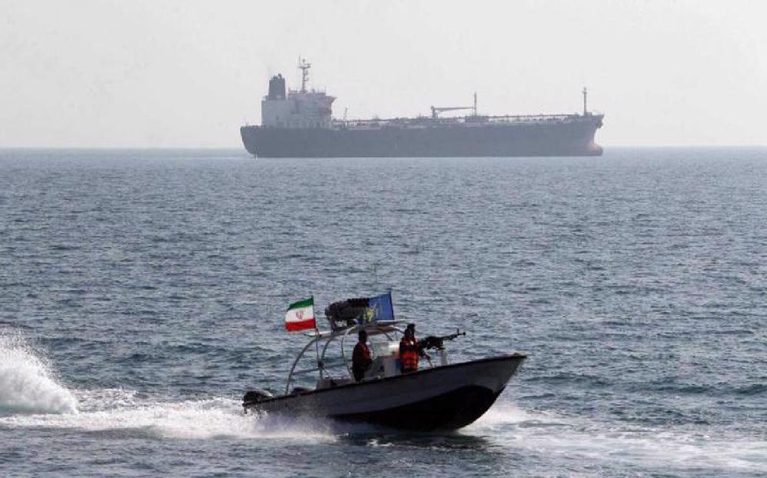
SEATTLE, TEHRAN — The U.S. Department of Homeland Security (DHS) will allow Iran’s national football team to enter the country 48 hours before their critical World Cup match against Egypt on Friday, a modest concession in a tournament where Team Melli’s travel conditions have sparked claims of oppression and competitive disadvantage.