Kamran Faqir is a volunteer investigative journalist and writer committed to exposing hidden truths and amplifying underreported stories. Driven by social justice, he brings sharp insight and fearless truth-telling to independent journalism. NUJ registered.
Listen to this article
Help support our mission, donate today and be the change. Every contribution goes directly toward driving real impact for the cause we believe in.
Article Date Published:
Article Date Modified:
20 minutes
Views:68
When the State Becomes the Aggressor: Inside the Police Shootings, Electoral Purges, and Mass Evictions Reshaping India’s Muslim Minority.
NEW DELHI, INDIA —The wound is specific. A bullet passes through the calf, just below the knee, severing muscle and nerve but leaving the bone largely intact. The victim survives, but he does not walk again, not properly. In Uttar Pradesh, police officials call this “self-defence.” Human rights lawyers call it torture. The men who perform it, according to two independent investigations published in the past month, call it routine.
A joint investigation by the Associated Press and the Washington-based Centre for the Study of Organised Hate, released in late October, found that nearly 93% of identified individuals shot by Uttar Pradesh police in suspected cow-smuggling cases since 2020 were Muslim. The analysis, drawn from records of approximately 650 such shootings, documented a pattern so consistent that forensic experts consulted by the AP described the wounds as “highly unlikely” to result from the chaotic exchange of fire that police reports routinely describe. Dr. Mohd Kaleem Khan, a forensic medicine professor in Uttar Pradesh, told the AP that a bullet passing horizontally through a fleeing person’s calf without striking bone would be improbable at distance, suggesting deliberate, close-range shots.
The AP findings arrived in the same week as a quarterly report from the South Asia Justice Campaign’s India Persecution Tracker, which documented at least 16 Muslims killed across India between August and October 2026. Eight of those deaths involved state actors, three in police shootings, five in custody or prison. Another eight were attributed to cow vigilantes and other non-state actors. The tracker identified 2026 as the deadliest year for anti-Muslim killings by non-state actors since it began collecting data in January 2022.
Together, the two reports sketch a landscape in which the Indian state, or significant parts of it, has ceased to function as a neutral arbiter of law and has instead become an instrument of sectarian control. The mechanisms are varied: police shootings framed as encounters, administrative evictions, electoral roll purges, and hate speech from the highest levels of government. What connects them is not a single order or conspiracy, but a political logic that rewards the punishment of Muslims and punishes those who document it.
The Anatomy Of A “Half-Encounter”
Uttar Pradesh, India’s most populous state and a laboratory for Hindu nationalist governance under Chief Minister Yogi Adityanath, accounted for 103 of the 146 incidents documented by the tracker between August and October. Police shot and wounded at least 118 Muslim men nationwide in that window, 105 of them in Uttar Pradesh. The tracker calls these “half-encounters”, shootings that occur before formal arrest, frequently targeting the legs, often over cattle-related accusations.
Official police data, obtained by the AP, shows that Muslims accounted for 110 of the 316 people killed in police encounters in Uttar Pradesh since Adityanath took office in March 2017. Muslims make up approximately 19% of the state’s population. The data on non-fatal shootings is more striking still: of the 627 cases with identifiable religion, more than 90% of those shot were Muslim.
Amitabh Yash, a senior Uttar Pradesh police official, denied religious bias in an interview with the AP. He said officers are instructed to respond only in self-defence and that the high proportion of Muslims among the injured reflects their prominence in the cattle trade. “The police itself has all castes and religions,” Yash said. “You cannot try to target one group”. He added that he would investigate the consistent pattern of injuries if an appropriate complaint were lodged, and that in the past year there had been “no reason to punish any police officer for inappropriate use of force.”
The judicial record complicates that assertion. In January 2026, the Allahabad High Court, reviewing a case known as *Raju*, found that police had “unnecessarily used a firearm and caused a firearm injury to the leg of the accused just below the knee” in order to secure out-of-turn promotion or “fame in social media”. “Such act is not permissible in the eyes of law,” Justice Arun Kumar Singh Deshwal wrote, because “the power of punishment to accused is within the domain of judiciary and not in the domain of police.” The court noted that the Supreme Court’s 2014 *PUCL v. State of Maharashtra* guidelines, which require independent investigation, immediate medical treatment, and the recording of the injured person’s statement before a magistrate, had not been followed. In a connected case, the officer who led the police party admitted that no FIR had been registered at all.
The High Court’s August 13 order in a separate case went further, directing a federal investigation into a police shooting in which all 23 police personnel involved had received rewards for their alleged “good work”. The court noted that the “good work” included extracting a confession concerning an offence for which the accused had already been acquitted by the Supreme Court. The reward, the court suggested, was not incidental. It was an institutional signal that the shooting had been commendable, sent before any scrutiny could begin.
The Broader Architecture
The AP and SAJC findings are not isolated data points. On November 10, the Association for Protection of Civil Rights (APCR) released a pair of trackers covering January 1 to September 30, 2026. The Hate Crime Tracker documented 322 incidents of violence against Muslims and Christians across 24 states and union territories. In 119 of those incidents, 37%, a state body was involved by action or by failure to act. Of the 54 people killed, 21 died at the hands of police or the army: 12 in encounters, nine in custody or prison.
The APCR report names the dead. Zeeshan and Gulfam, carpenters from Amroha, were killed in separate alleged encounters in Ghaziabad on March 1 and 3, days after being named as suspects in a stabbing. “If my sons committed a crime, they should have been arrested and taken to court,” their father, Buniyad Ali, is quoted as saying. Zaheer Shaikh, 70, died in Ahmedabad a day after his arrest over alleged cow slaughter; it took a Supreme Court order to register a police case, and the FIR names no suspect. Anish, 34, a vegetable-market worker, died in Delhi Police custody. “My son was completely fine when he left home,” his mother said. “Police beat him to death”.
The APCR found that in 40 of the 108 incidents in which an FIR was filed, the FIR targeted the victims of the hate crime rather than the attackers. In a cattle raid in Surat, Gujarat, in which police participated alongside civilians, 22 Muslim men were arrested. In Assam, three young men went to jail for creating a WhatsApp group to organise a protest, for which they had sought police permission. “People from other communities are not being arrested,” their fathers said. “But we are Muslims”.
The report also documented what it called the most significant shift in hate speech in 2026: the crowd now addresses the state directly, demanding killing outside the law. In Delhi’s Uttam Nagar, after the death of a Dalit man named Tarun on Holi, APCR coded 110 video clips. Sixty demanded killings or “encounters” of Muslim residents. “Arresting four people is no use,” one unidentified speaker said on March 7. “We want Yogi ji’s model, encounter them.” On March 8, Lalit Sharma, identified as the Uttarakhand state president of the Hindu Raksha Dal, said: “Either the police shoot them, or we will not let their Eid happen”. The Delhi High Court subsequently directed police to ensure a “peaceful and dignified” Eid; 800 personnel were deployed, and the prayers passed without violence. APCR found no FIR for any Uttam Nagar speech.
Displacement As Policy
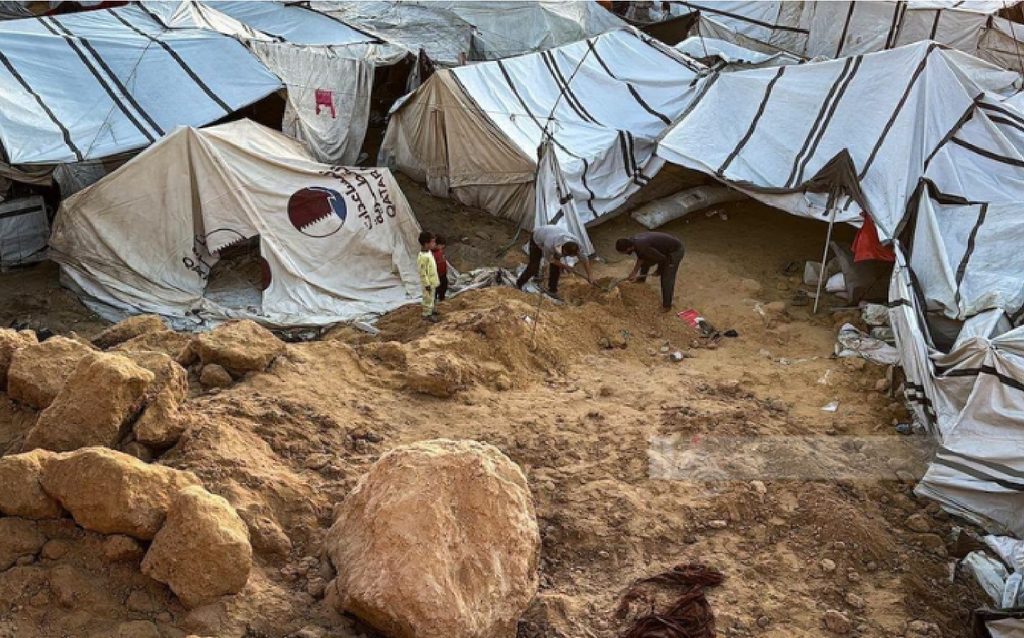
The violence is not only kinetic. In Assam, the BJP-led government evicted more than 1,100 families over two days in mid-October, most of them Bengali-speaking Muslims, from Nagaon, Golaghat, and Hojai districts. On October 18 alone, authorities demolished homes in the Lutumari Longjap Reserved Forest in Nagaon, affecting more than 600 families. Officials described the operations as forest land clearance. Residents told Scroll that they had lived on the land for decades, settled under a colonial-era forest management system. Abdul Nur, 44, told the outlet: “The government arranged for us to settle here in 1974. Since our ancestors were landless, the government arranged for us to establish settlements here”. More than 10 mosques were demolished during the drive, some more than 50 years old.
The SAJC tracker, citing a separate investigation by The New Humanitarian, documented 20,387 families displaced through at least 33 eviction operations in Assam since 2021. The evictions intersect with the government’s broader citizenship agenda. By mid-October, the third phase of the Special Intensive Revision of electoral rolls had led to the deletion of more than 61 million names from draft rolls; including previous phases, the total since the exercise began in Bihar in 2025 exceeded 133 million. In at least five states, coordinated Form 7 objections seeking the deletion of Muslim voters’ names were filed.
In Delhi’s Mustafabad constituency, The Hindu found that 20 BJP-appointed Booth Level Agents filed 796 Form 7 applications seeking deletion of voters, all against Muslim electors. The applications were concentrated in just 25 of the constituency’s 294 polling booths, in three neighbourhoods with significant Muslim populations. At least 87 of the electors against whom deletions were sought were found to be living at their registered addresses. A Delhi BJP spokesperson denied that the party had directed the filings. The Form 7s named BJP BLAs as the objectors.
The Politics Of Impunity
The hate speech that precedes and accompanies this violence is not fringe. APCR’s Hate Speech Tracker recorded 83 speeches by 57 speakers across at least 16 states between January and September 2026. Thirty-three were delivered by people holding public office. Eleven were made by chief ministers or deputy chief ministers, including Adityanath, Assam’s Himanta Biswa Sarma, Uttarakhand’s Pushkar Singh Dhami, and Deputy Chief Minister Keshav Prasad Maurya. The tracker also lists Prime Minister Narendra Modi’s March 14 speech in Kolkata, in which he spoke of “infiltrators” changing Bengal’s demography, and two March statements by Home Minister Amit Shah promising to remove “infiltrators”.
The SAJC tracker attributed 13 of 29 anti-Muslim hate speeches in Uttar Pradesh during the August-October period to Adityanath himself. Of the 33 speeches by office holders in the APCR tracker, only two drew an FIR, both against legislator T. Raja Singh after Muslim citizens complained. The one arrest in the entire dataset was of three Hindu Raksha Dal members for painting anti-Islam graffiti. “An FIR that is never followed by an arrest or charge sheet does not stop speech,” the report notes.
At the APCR report launch, advocate Fawaz Shaheen described a shift from hate crime as “planned, structural violence” to “a regular method of conducting politics.” Sayed Aqsa, lead researcher for hate crimes, distinguished cases in which the state merely failed to act from those in which it was a party to the violence. Journalist Nidheesh Tyagi said the state is “either complicit or incompetent,” and that the prime minister, if he wanted, could have stopped these crimes.
The families of the dead and the maimed are left with neither. The AP spoke with relatives of six Muslim men shot in the leg by police in Uttar Pradesh; all spoke anonymously, fearing repercussions. One mother described her son’s condition after the shooting: “He’s been left lame. If someone gives us something, we accept it. That’s how we’re getting by. That poor man can’t go out and work anymore. Whatever people give us, we eat” .
The men remain in jail or in hiding. The officers who shot them, in nearly every documented case, remain on duty. Some have been rewarded.
Conclusion
The bullet below the knee is not a metaphor. It is a policy instrument, crude, deniable, and devastatingly effective.
The evidence assembled across two independent investigations, multiple judicial rulings, and a quarterly persecution tracker converges on a conclusion that the Indian state has long sought to obscure: the violence against Muslims documented between August and October 2026 is not the product of individual excess, communal “friction,” or the inevitable chaos of a diverse society. It is the predictable output of an institutional architecture designed to punish a religious minority while maintaining plausible deniability. The half-encounter, the Form 7 deletion, the forest eviction, the rewarded officer, these are not separate failures. They are interlocking components of a system that has learned to inflict harm through procedure rather than pogrom.
The Forensic Record
The most damning evidence is medical. Dr. Mohd Kaleem Khan, a forensic medicine professor in Uttar Pradesh, reviewed the pattern of injuries documented by the Associated Press and the Centre for the Study of Organised Hate: bullets passing horizontally through the calves of men described as fleeing, without striking bone, at distances police reports claim were chaotic and contested. His assessment was unambiguous. Such wounds, he told the AP, would be “highly unlikely” from a distance. They suggest “deliberate shots at close range”.
This is not speculation. It is the judgment of a forensic expert applying ordinary principles of wound ballistics to a dataset of nearly 650 cases. The police response, that officers act only in self-defence, that the high proportion of Muslim victims reflects their “prominence in the cattle trade”, collapses under the weight of its own absurdity. If cattle smuggling were evenly distributed across communities, the injury data would approximate population shares. Instead, more than 90% of those shot in cow-related cases since 2020 have been Muslim, in a state where Muslims are roughly 19% of the population. The trade may be diverse. The bullets are not.
The Judicial Record
The Allahabad High Court has now said in explicit terms what the executive branch refuses to acknowledge. In January 2026, Justice Arun Kumar Singh Deshwal granted bail to a theft suspect who had been shot below the knee and used the occasion to describe a pattern: police officers, he wrote, “just to get out of turn promotion or appreciation from the higher authority or to get fame in social media unnecessarily used firearm and caused firearm injury on the leg of the accused just below the knee”.
The court’s language was not the measured circumlocution of judicial restraint. It was an accusation. “Such an act is not permissible in the eyes of law,” the judgment continued, “as the power of punishment to the accused is within the domain of the judiciary and not in the domain of the police”. In August, a different bench of the same court went further, ordering a CBI probe into a “half encounter” in Shravasti district and noting with evident frustration that “the Court is observing day in and day out” the same pattern: police claim they were fired upon, “normally, not even a pellet touches the uniform of any police personnel,” and yet a single police bullet finds the accused’s knee or below it.
The judicial rebukes have accumulated without consequence. The Supreme Court’s 2014 guidelines in *PUCL v. State of Maharashtra*, requiring independent investigation, immediate medical treatment, and the recording of statements before a magistrate, remain binding. The Allahabad High Court issued fresh guidelines in January 2026, warning that violations would be treated as contempt. Yet the APCR’s Hate Crime Tracker found that of the 21 deaths in police or army custody between January and September 2026, no officer or soldier has been charged. An inquiry or FIR was ordered in only four cases. In one, the death of 70-year-old Zaheer Shaikh in Ahmedabad, it took a Supreme Court order to register a police case at all, and the FIR names no suspect.
The gap between judicial instruction and institutional behaviour is not a gap. It is a refusal.
The Political Record
The violence does not emerge from a vacuum. It is cultivated. The APCR’s Hate Speech Tracker recorded 83 speeches by 57 speakers across at least 16 states in the first nine months of 2026. Thirty-three were delivered by people holding public office. Eleven were made by chief ministers or deputy chief ministers. The SAJC tracker attributed 13 of 29 anti-Muslim hate speeches in Uttar Pradesh during the August-October period to Chief Minister Yogi Adityanath himself.
The content matters less than the function. When a chief minister speaks of “infiltrators” changing demography, when a crowd in Uttam Nagar demands that police “encounter” Muslim residents and invokes “Yogi ji’s model” as the preferred method, when a Hindu Raksha Dal leader declares that “either the police shoot them, or we will not let their Eid happen”, the speech is not expression. It is instruction. The state is being addressed, and the state is listening.
The electoral dimension completes the architecture. The Special Intensive Revision of voter rolls has removed more than 133 million names nationwide since 2025, with coordinated Form 7 objections targeting Muslim voters in at least five states. In Delhi’s Mustafabad constituency, 20 BJP-appointed Booth Level Agents filed 796 deletion applications against Muslim electors, concentrated in specific booths and neighbourhoods. The administrative mechanism is neutral in form and sectarian in application, a pattern that mirrors the half-encounter’s own logic: procedurally deniable, statistically unmistakable.
Adityanath’s recent claim that 1.27 crore Hindu voters are missing from Uttar Pradesh’s rolls while Muslim enrollment has increased is instructive not for its accuracy, which is unverified, but for its rhetorical function. It reframes the purge as victimhood, casting the majority community as the true sufferer of administrative error while positioning Muslims as beneficiaries of a system they are, in fact, being systematically excluded from. The inversion is deliberate.
The Human Record
The statistics are necessary but insufficient. The AP spoke with relatives of six Muslim men shot in the leg by Uttar Pradesh police. All spoke anonymously, fearing repercussions. The men remained in jail or in hiding. Two mothers said their sons traded buffalo, which fall outside cow protection laws. One described the aftermath in words that reduce policy to its simplest terms: “He’s been left lame. If someone gives us something, we accept it. That’s how we’re getting by. That poor man can’t go out and work anymore. Whatever people give us, we eat”.
The family of Zeeshan and Gulfam, the carpenters from Amroha killed in separate encounters in Ghaziabad days after being named as suspects in a stabbing, offered a statement that should be read as an indictment of the entire system: “If my sons committed a crime, they should have been arrested and taken to court”. The demand is not for mercy. It is for the ordinary operation of law, the thing that the half-encounter, the rewarded officer, and the deleted voter name are designed to replace.
What The Pattern Reveals
The violence documented between August and October 2026 is not an aberration. It is the maturation of a strategy that has been tested, refined, and scaled. The half-encounter was pioneered in Uttar Pradesh and is now, according to the AP, “spreading to other states”. The eviction of Bengali-speaking Muslims in Assam, documented at 20,387 families since 2021, is the administrative counterpart to the bullet: slower, quieter, but no less effective in reshaping the demographic and political landscape. The rewarded officer and the unpunished hate speaker are not failures of accountability. They are accountability, reconfigured to serve a different master.
The question that remains is not whether these findings constitute evidence of systemic persecution. They do. The question is what follows from that acknowledgement. The Indian state has demonstrated, across multiple institutions and over years, that it will not reform itself. The judiciary has spoken, repeatedly, and been ignored. The international press has documented, and the documentation has been dismissed. The victims have testified, and their testimony has been buried under procedural filings.
What remains is the record itself. The bullet below the knee. The mother’s account of dependency and lameness. The forensic expert’s quiet certainty that the wounds were deliberate. The high court’s exasperation. The rewarded officer. The deleted name. The demolished mosque. The evicted family. The speech that demanded killing and faced no consequence.
These facts do not speak for themselves. They must be spoken for, again and again, against the noise of denial. The conclusion of this investigation is not that India’s Muslims are victims, though they are. It is that the institutions entrusted with their protection have been repurposed, and that repurposing is documented, judicially acknowledged, and ongoing. The record is complete enough to indict. Whether it will be enough to change anything depends on what is done with it.
Veritas Press Investigative Analysis Independent journalism examining global affairs, power, diplomacy, and accountability.
Readers who believe that truth still matters have power over popular information. When just a few more people step up to support this work, it means more lies exposed, more corruption uncovered, and more accountability where it’s long overdue.
Help Protect Independent Journalism, Which Is Currently Under Attack.
If you believe journalism should serve the public, not the powerful, and you’re able to help, becoming a regular DONOR or a PAID SUBSCRIBER truly makes a difference.
DONATION APPEAL: If you found this reporting valuable, please consider supporting independent journalism.
Your support fuels our fearless, truth-driven journalism. In unity, we endeavour to amplify marginalised voices and champion justice, irrespective of geographical location. We operate independently, with no financial backing from billionaires; our readers support us.
But it’s also extremely important. One of Veritas Press’s greatest assets is its reader-funded model.
1. Reader funding means we can cover what we like. We’re not beholden to the political whims of a billionaire owner. We are a small, independent and impartial organisation. No one can tell us what not to say or what not to report.
2. Reader funding means we don’t have to chase clicks and traffic. We’re not desperately seeking your attention for its own sake; we pursue the stories that our editorial team deems important and believes are worthy of your time.
3. Reader Funding: enables us to keep our website and other social media channels open, allowing as many people as possible to access quality journalism from around the world, particularly those in places where the free press is under threat.
We know not everyone can afford to pay for news, but if you’ve been meaning to support us, now’s the time.
Your donation goes a long way. It helps us:
Keep the lights on and sustain our day-to-day operations
Hire new, talented, independent reporters
Launch real-time live debates, community-focused shows, and on-the-ground reporting
Cover the issues that matter most to our communities, in real time, with depth and integrity
Without your support, independent voices like ours will be silenced.
Furthermore, we have plans to expand our work, but we can’t do it without your support. Every contribution, no matter the size, helps us stay independent and build a truly people-powered media platform.
If you believe in journalism that informs, empowers, and reflects the communities we serve, please donate today.
You Can Make Direct Bank Transfer Donations To:
Bank Name: Bank Of Scotland
Account Name: Veritas Press C.I.C.
Sort code: 80-22-60
Account Number: 27540469
IBAN #: GB18-BOFS-6027-5404-69
Online Donations
Submissions
For the safe submission of documentation, testimonies, or exclusive investigative reports from anywhere in the world, please use the following contact details for our Investigations Desk: mailto:enquiries@veritaspress.co.uk or mailto:editor@veritaspress.co.uk.
SEATTLE, TEHRAN — The U.S. Department of Homeland Security (DHS) will allow Iran’s national football team to enter the country 48 hours before their critical World Cup match against Egypt on Friday, a modest concession in a tournament where Team Melli’s travel conditions have sparked claims of oppression and competitive disadvantage.