






Author:
Byline: Investigative Desk
Help support our mission, donate today and be the change. Every contribution goes directly toward driving real impact for the cause we believe in.
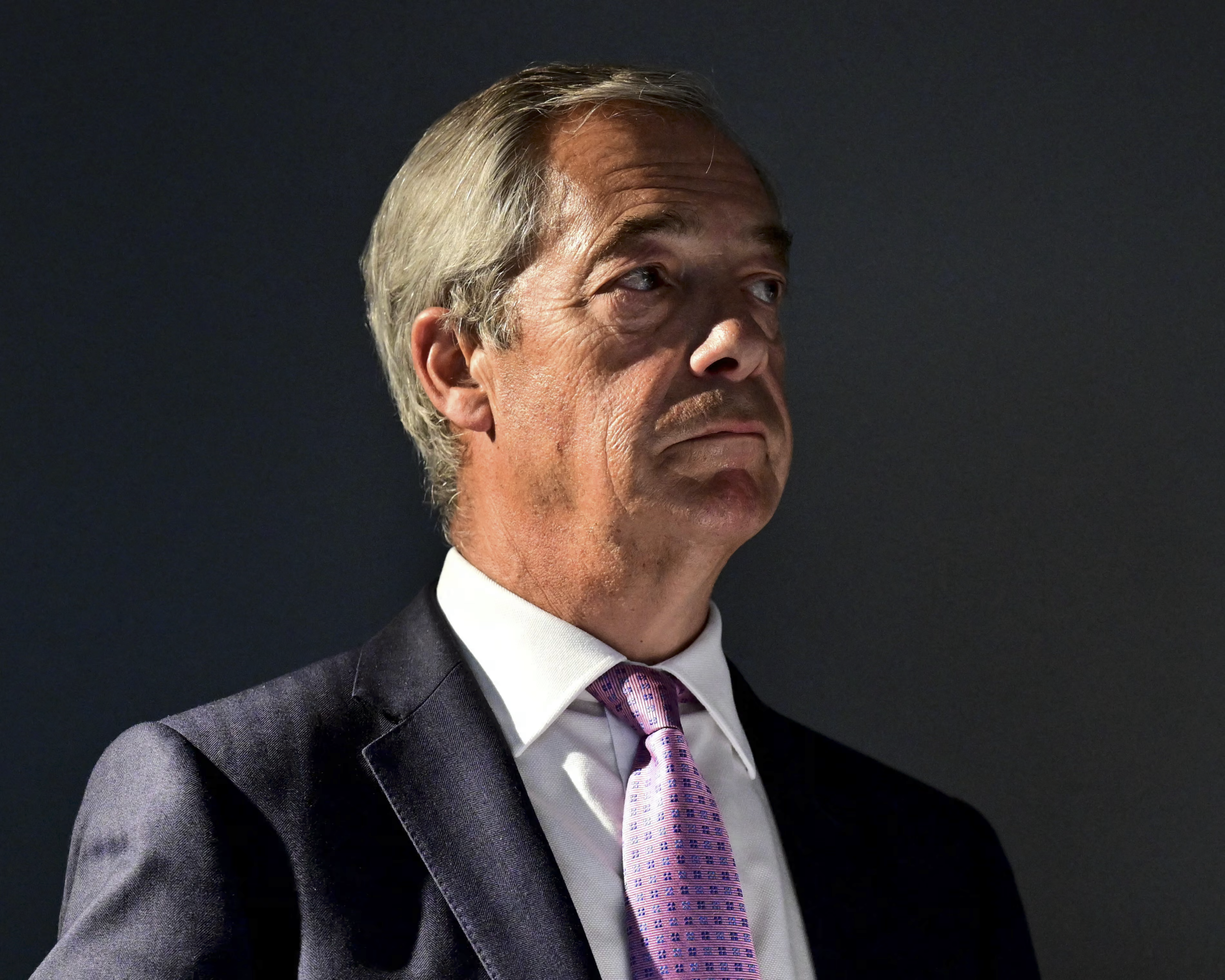
As the Reform UK leader celebrates a theatrical win over Count Binface, the resumption of a parliamentary inquiry into undeclared financial gifts threatens to transform his political triumph into a reckoning.
CLACTON-ON-SEA, ESSEX — The electoral circus has packed up its tents, Count Binface has returned to whatever planet he inhabits, and Nigel Farage has reclaimed the parliamentary seat he surrendered just weeks ago in a gambit that his critics describe as either breathtaking cynicism or political desperation. But the real reckoning is only now beginning.
The parliamentary standards investigation into Farage’s financial affairs, suspended when he dramatically resigned his Clacton seat in July, has officially resumed, according to the commissioner’s website. What Farage framed as a referendum on his own integrity has instead delivered him back to the very chamber where the questions he sought to escape now await him, sharpened by a by-election that even some of his allies privately acknowledge was an own goal of spectacular proportions.
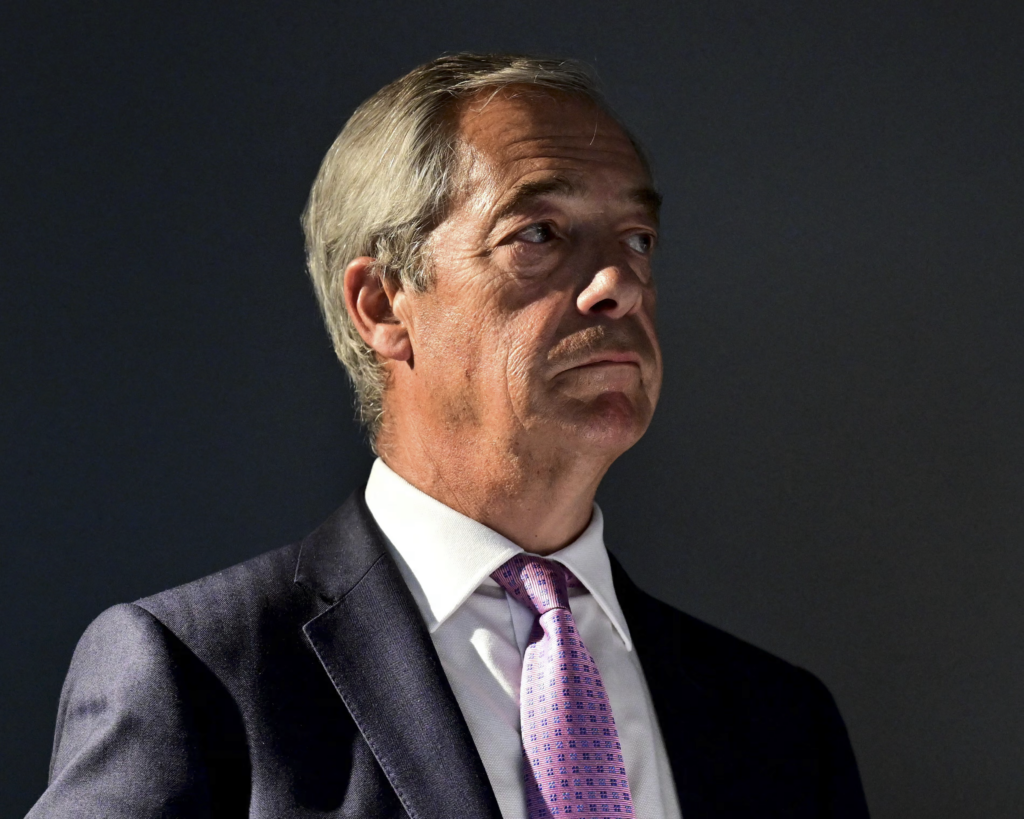
“Farage’s plan to turn this by-election into a serious political battle failed,” observed Stijn van Kessel, professor of politics at Queen Mary University of London, in remarks to AFP that cut to the heart of the matter. “The resulting spectacle makes Farage look rather silly.”
The Investigation: What Daniel Greenberg Is Examining
The investigation, led by Parliamentary Commissioner for Standards Daniel Greenberg, is twofold and potentially devastating in its implications. At its core lies a £5 million gift from Christopher Harborne, a Thailand-based cryptocurrency billionaire and aviation entrepreneur with longstanding ties to Reform UK. The payment, made shortly before the 2024 general election, was never declared to parliamentary authorities, a requirement under the MPs’ code of conduct for any gift exceeding £500 that relates to political activity.
Farage’s defence has shifted repeatedly. He has variously described the money as an “unconditional gift,” a reward for his role in delivering Brexit, and funding for personal security “for the rest of his life.” What he has not provided is a consistent explanation for why a man who has spent his career railing against the influence of money in politics accepted, and then failed to disclose, one of the largest personal political gifts in modern British history.
The Guardian first revealed the payment in January 2025, prompting the initial standards inquiry. That investigation was subsequently widened to examine whether Farage should have declared financial support from George Cottrell, a convicted fraudster who admitted wire fraud in the United States in 2017. Cottrell, 32, known to associates as “Posh George,” was arrested at a US airport while travelling with Farage and later admitted his role in a scheme that prosecutors described as attempting to launder drug money. The Sunday Times revealed that Cottrell provided Farage with the use of a luxury flat near Buckingham Palace and funded social media filming in 2024.
Farage has denied any wrongdoing on both counts. “I’ve done nothing wrong,” he told supporters during the campaign. “I’ve followed the rules.”
But the rules are precisely what Greenberg is now empowered to examine. If the commissioner finds that Farage breached the code of conduct, he can either resolve the matter through an apology or refer it to the Committee on Standards, which has the power to recommend suspension from the Commons. A suspension of 10 sitting days or more would trigger a recall petition — and the possibility of a second by-election in Clacton, this time with the main parties participating.
The By-Election Farce: A Record 33 Candidates And A 90cm Ballot Paper
The by-election’s absurdity will make it more memorable than its outcome. Thirty-three fringe candidates joined Farage on the ballot, producing some of the longest ballot papers in British electoral history, measuring approximately 90 centimetres. Count Binface, the satirical character created by comedian Jon Harvey, emerged as the de-facto establishment candidate after Labour, the Conservatives, and the Liberal Democrats all declined to contest the seat.

The turnout of 44.7%, down from 59% at the general election, told its own story about voter enthusiasm for a contest whose outcome was never in doubt.
Farage won 22,239 votes, a comfortable victory over Binface and the other independents. But he did not attend the official count, claiming police had warned of an “organised campaign to disrupt and degrade the result.” Essex Police categorically denied this. “We have a proportionate and robust policing operation to ensure the safety and security of all participants in the count,” the force stated.
Acting returning officer Ian Davidson was more direct: election officials had worked with police to ensure the process was “completed safely and securely,” adding there was “no reason not to proceed with the count process at this time.”
Officials declared the result without the victor present, an almost unprecedented occurrence in British politics. Binface, who attended, declared himself “the winner of the candidates that bothered to turn up for the results” and, in a video posted to social media, suggested Farage had been “humiliated.”
The Political Cost: A £250,000 Bill For One Of England’s Most Deprived Constituencies
The financial cost of Farage’s personal drama has fallen on taxpayers in one of the most deprived constituencies in England. Tendring District Council estimates that the by-election will cost approximately £250,000. They cannot recover this money because electoral law prohibits donations for this purpose. Reform UK offered to foot the bill, but the offer was legally meaningless.
For a constituency where England’s most deprived neighbourhood is Jaywick, the expenditure is more than symbolic. It represents resources that could have funded local services, from social care to youth provision, redirected to accommodate what Labour chair Bridget Phillipson called “a by-election he didn’t need to have.”
“He stood again. He spent most of the summer chasing a bin around Clacton,” Phillipson said in a scathing assessment. “And now he’s going to come back to parliament and have to answer some very serious questions, questions he’s been seeking to dodge, distracting and deflecting from the £5m gift, his connections to a convicted fraudster. You know, the scandals just keep piling up. And now he’s through that by-election; there’s no hiding place.”
The Parliamentary Arithmetic: What A Suspension Could Mean
The stakes of the standards investigation extend beyond Farage’s personal political fortunes. Reform UK currently holds four parliamentary seats. A suspension and subsequent recall petition in Clacton would not jeopardise the party’s numerical standing in the Commons. However, it would undermine Farage’s meticulously crafted narrative of being an outsider whom the establishment he despises cannot silence.
More significantly, it would provide ammunition to Labour and Conservative strategists who argue that Reform UK is a personality cult built on sand. The party’s polling position has been declining in recent weeks, with YouGov placing Labour at 24%, narrowly ahead of Reform at 22%, and the Conservatives at 21%. The most recent figures suggest Farage’s personal approval ratings have fallen to their lowest since the general election.
“This time last year Farage had the highest approval of the main party leaders,” says Luke Tryl, director of the polling organisation More in Common. “Yet earlier this month he fell to his worst score since the general election.”
Tryl’s analysis cuts to the heart of Farage’s vulnerability: “What will worry Farage is not only that his negative approvals have risen, which may signal greater willingness to vote tactically against the Reform leader, but there are also fewer people expressing a positive view, suggesting an erosion in his base.”
More in Common’s research suggests around 80% of voters are aware of questions around Farage’s finances. Interpreting those questions depends on pre-existing political loyalties. “Farage’s strongest supporters often take the view it’s an ‘establishment stitch up,'” says Tryl. “And for his opponents, it is a further reason to dislike him.”
The Metropolitan Police Investigation: A Parallel Track
While Greenberg’s parliamentary inquiry proceeds, a separate criminal investigation by the Metropolitan Police continues into donations to Reform UK. The investigation, which has been running for more than a year, is examining allegations of concealing or disguising donations derived from an “impermissible” donor or using “false” information about donations. They interviewed two people, but no arrests occurred.
The police probe reportedly concerns financial support from Cottrell and his mother. If it finds evidence of criminal conduct, the consequences would extend far beyond the parliamentary code, into the territory of electoral law, with its potential for significant penalties.
Reform UK sources insist that interviews with party officials have not occurred. But the investigation’s continued existence creates a cloud of uncertainty that no by-election victory can dispel.
The Harborne Connection: Questions That Remain Unanswered
The central figure in the parliamentary investigation, Christopher Harborne, remains something of an enigma. A cryptocurrency investor and aviation entrepreneur based in Thailand, Harborne has donated substantial sums to Reform UK through his company. But it appears that the £5 million gift to Farage has a separate structure from party donations.
The parliamentary inquiry is examining whether this was a personal gift, which might not require declaration under the code, or whether it related to political activity, which would trigger disclosure requirements. Farage’s own statements have complicated matters: describing the money as related to his Brexit advocacy and personal security suggests a political dimension, even as he maintains it needed no declaration.
Labour’s elected officials in Clacton have raised broader questions about whether Harborne gave money to other Reform-linked figures. “At least 10 questions still outstanding,” according to Labour’s analysis of Farage’s finances, “including whether Harborne had given money to any other Reform-linked figures.”
The opacity surrounding these financial relationships stands in stark contrast to Farage’s years of rhetoric about transparency and accountability. He has built his career on demanding that others answer uncomfortable questions; the irony of his current position is not lost on his critics.
The Historical Context: A Pattern Of Financial Obfuscation?
This is not the first time Farage has faced scrutiny over financial disclosures. During his tenure as a Member of the European Parliament, he was repeatedly criticised by EU auditors and British journalists for failing to provide clear accounts of his office allowances. The pattern, his critics argue, is consistent: a man who demands transparency from others while operating in ways that obscure his own financial affairs.
The difference now is the parliamentary context. In the European Parliament, Farage could dismiss inquiries as part of the project he opposed. The standards system in Westminster applies equally to all MPs, and the suspension mechanism, which includes a recall petition provision, creates consequences that cannot be shrugged off.
The Reform UK Dimension: A Party Built On One Man
The investigation also raises uncomfortable questions for Reform UK as an institution. The party has professionalised significantly under Farage’s leadership, recruiting high-profile figures like Robert Jenrick and businessman Zia Yusuf. It has built a mass-membership movement with genuine electoral potential.
But the party’s fortunes remain inextricably linked to Farage’s personal brand. “He may be bullish after this risky (and self-imposed) by-election battle,” observes the BBC’s analysis, “but his rivals are framing it as a waste of money and a personal embarrassment.”
The question for Reform UK’s backers is whether their investment in Farage, financial and political, remains sound. If he is suspended from Parliament, the party faces a choice: defend him and risk association with impropriety, or distance themselves and risk losing their most effective communicator.
The Legal Landscape: What Happens Next
The standards process will now proceed on its own timetable. Greenberg will consider evidence submitted by both sides, including any representations from Farage. If he finds a breach, the matter moves to the Committee on Standards, which can recommend sanctions to the full House of Commons.
The timeline is uncertain, but experts have predicted a decision could come as early as September, following the summer recess. A suspension of 10 sitting days or more would trigger a recall petition, a process that requires 10% of Clacton’s registered voters to sign within a six-week window.
A second by-election would almost certainly see the main parties participating. The Conservative Party, which held Clacton until 2024, would contest the seat seriously. Labour would assess its chances. The dynamics would be entirely different from the recent farce.
The Conclusion: A Risky Gambit That Changed Nothing
The by-election Farage called to escape scrutiny has returned him to the starting point, with the investigation resumed and his credibility further eroded. The main opposition parties’ refusal to participate denied him the validation he sought. The count he avoided denied him the traditional imagery of victory. The police investigation continues independently of parliamentary processes. The questions about Harborne and Cottrell remain unanswered.
“He forced a by-election he didn’t need to have,” Labour’s Phillipson concluded. “He stood again. He spent most of the summer chasing a bin around Clacton.”
For Farage, the political calculation was always unclear. Was this a genuine attempt to secure a mandate for his continued representation of Clacton? Or was it, as Conservative spokespeople suggested, “a farce started by Nigel Farage to try and dodge scrutiny of his fishy £5m personal donation”?
The evidence points toward the latter interpretation. By any measure, the by-election achieved nothing for Farage that he did not already possess. He held the seat before; he holds it now. The investigation was paused before; it has now resumed.
What has changed is the perception, both nationally and locally, of Farage’s judgement. The man who has repeatedly demanded that politicians be held accountable has been revealed as someone who appears to believe the rules do not apply to him, but as a fraudster.
“All Farage can brag about this morning is beating a bloke with a bin on his head,” the Conservative spokesperson said. “What he should do is answer the serious outstanding questions about why he hid his £5m from the public.”
The answer to those questions will now come through the standards process Farage tried to avoid. The investigation has resumed. The reckoning awaits.
Disclaimer: With reporting from AFP and BBC News. Additional analysis from polling organisations YouGov and More in Common. Statements from Essex Police, Tendring District Council, and the Office of the Parliamentary Commissioner for Standards.
Veritas Press Investigative Analysis
Independent journalism examining global affairs, power, diplomacy and accountability.
Source: Veritas Press C.I.C. | Multi-News Agencies
APPEAL: Help Support Our Work By Donating
Readers who believe that truth still matters have power over popular information. When just a few more people step up to support this work, it means more lies exposed, more corruption uncovered, and more accountability where it’s long overdue.
Help Protect Independent Journalism, Which Is Currently Under Attack.
If you believe journalism should serve the public, not the powerful, and you’re able to help, becoming a regular DONOR or a PAID SUBSCRIBER truly makes a difference.
DONATION APPEAL: If you found this reporting valuable, please consider supporting independent journalism.
Your support fuels our fearless, truth-driven journalism. In unity, we endeavour to amplify marginalised voices and champion justice, irrespective of geographical location. We operate independently, with no financial backing from billionaires; our readers support us.
But it’s also extremely important. One of Veritas Press’s greatest assets is its reader-funded model.
1. Reader funding means we can cover what we like. We’re not beholden to the political whims of a billionaire owner. We are a small, independent and impartial organisation. No one can tell us what not to say or what not to report.
2. Reader funding means we don’t have to chase clicks and traffic. We’re not desperately seeking your attention for its own sake; we pursue the stories that our editorial team deems important and believes are worthy of your time.
3. Reader Funding: enables us to keep our website and other social media channels open, allowing as many people as possible to access quality journalism from around the world, particularly those in places where the free press is under threat.
We know not everyone can afford to pay for news, but if you’ve been meaning to support us, now’s the time.
Your donation goes a long way. It helps us:
- Keep the lights on and sustain our day-to-day operations
- Hire new, talented, independent reporters
- Launch real-time live debates, community-focused shows, and on-the-ground reporting
- Cover the issues that matter most to our communities, in real time, with depth and integrity
Without your support, independent voices like ours will be silenced.
Furthermore, we have plans to expand our work, but we can’t do it without your support. Every contribution, no matter the size, helps us stay independent and build a truly people-powered media platform.
If you believe in journalism that informs, empowers, and reflects the communities we serve, please donate today.
Submissions:
For the secure submission of documentation, testimonies, or exclusive investigative reports from any global location, please utilise the following contact details for our Investigations Desk: mailto:enquiries@veritaspress.co.uk or mailto:editor@veritaspress.co.uk
GENEVA — A United Nations fact-finding mission has concluded there are “reasonable grounds to believe”
Iran’s GDP is projected to contract by 5.4 to 6.1% in 2026, its worst performance
The Trump administration is preparing a $2.8 billion weapons package for Israel containing 40,000 2,000-pound

Film alleges mass civilian deaths are routinely built into military decisions amid Israel’s genocidal war
The Israeli rights group says violence, displacement, economic strangulation, and settlement expansion form part of

Houthi forces have captured the historic Red Sea port of Mocha and are advancing on
London’s historic sanctions against Israeli settlements mark a watershed moment in UK foreign policy, but
With 95% of Gaza’s population now wholly dependent on aid and more than 90% stripped
India calls for Kashmir and Ladakh to appear only on its official map after a
ISLAMABAD – In the high-stakes political theatre of Pakistan, the battleground has shifted from the




















1g3rgs