


Author:
Byline: Investigative Desk
Help support our mission, donate today and be the change. Every contribution goes directly toward driving real impact for the cause we believe in.
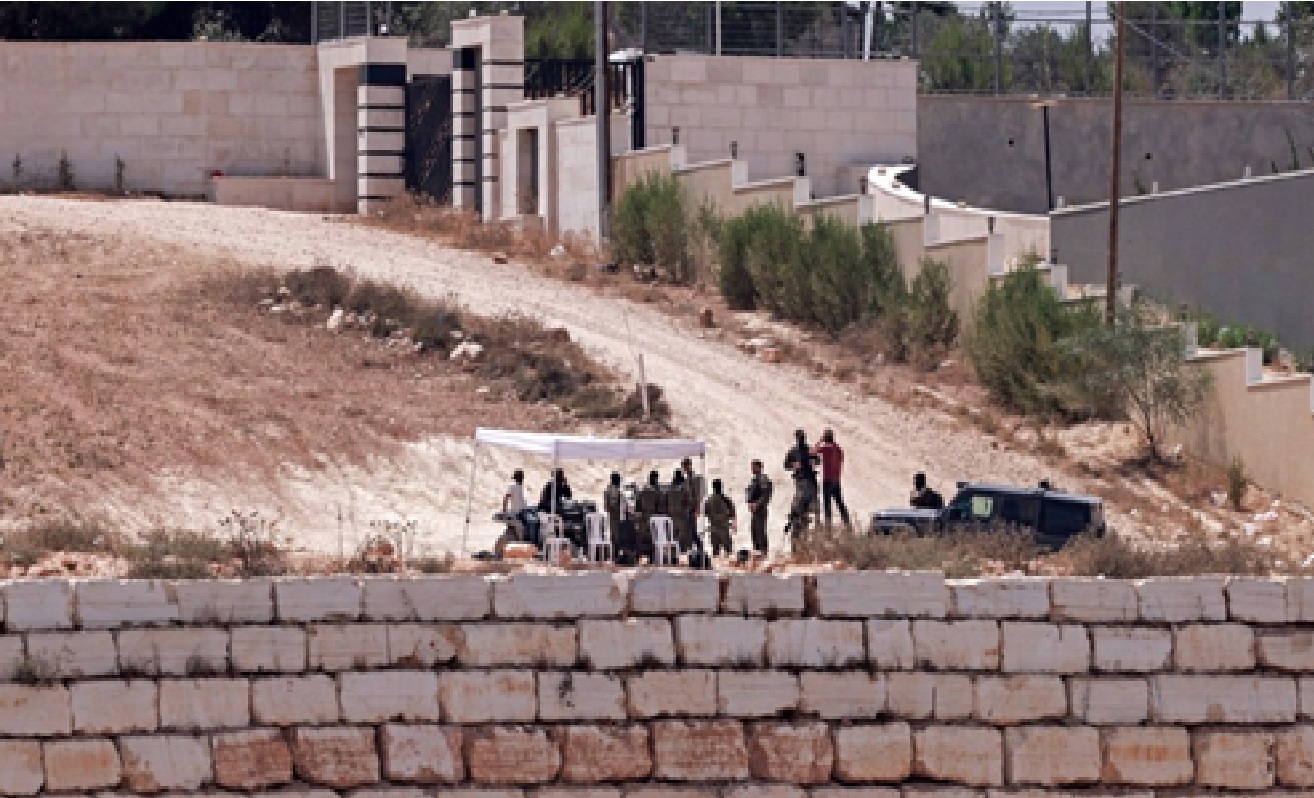
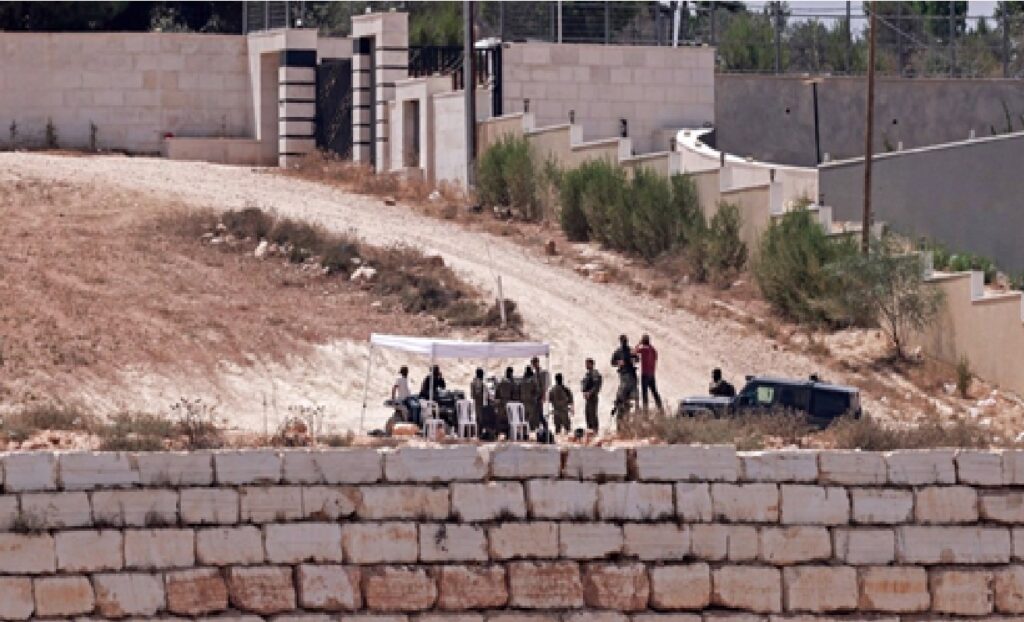
QUSRA, OCCUPIED WEST BANK – In the rugged hills south of Nablus, a slow-motion displacement is unfolding. For nearly two weeks, a cluster of Palestinian families in the Ras al-Ain area of Qusra have been trapped inside their homes, not by a military curfew alone, but by a coordinated siege involving extremist Israeli settlers and the very army units ostensibly deployed to disperse them.
The crisis in Qusra is no longer just a localised standoff; it is a stark, microcosmic portrait of the West Bank’s deteriorating reality. As food spoils, children wet their beds from fear, and the Israeli government announces a policy shift that critics say will legalise the chaos, the siege serves as a grim case study in what Amnesty International has termed “strategic settler terror.”
“We Are Starving”: The Humanitarian Stranglehold
At the centre of the blockade are three houses sheltering approximately 15 people. The siege, now entering its 13th day, has blurred the lines between settler aggression and state policy.
Aisha Hassan, 35, who is sheltering with her mother and brother, describes a desperate, deteriorating situation. The family moved into the home months ago specifically to protect it from frequent settler attacks, but they are now prisoners inside it.
“The municipal council tried to bring us food, but the soldiers prevented them, and the food was left outside,” Hassan told Middle East Eye. “UNICEF staff were able to deliver some food to us a few days ago, and now it’s starting to spoil.”
Local authorities supported the claim of deliberate obstruction. Abdul-Azim Wadi, the mayor of Qusra, has been attempting to coordinate deliveries with the UN Office for the Coordination of Humanitarian Affairs (OCHA). He alleges a pattern of bureaucratic warfare designed to break the families’ resolve.
“We, as a municipality, are still trying to coordinate with various parties to deliver food to the families, but we are facing significant restrictions and are prohibited from reaching those homes,” Wadi said. He detailed how soldiers left food boxes, delivered by UNICEF, outside for 24 hours before allowing families to collect them, by which time the perishables had begun to rot.
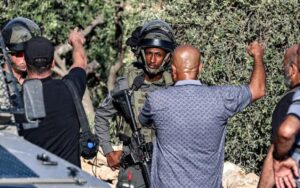
In a revealing incident, Mayor Wadi attempted to enter the home of Luay Abu Rida, a Palestinian-American citizen, to check on the residents. The Israeli army commander on the ground refused him entry and turned him back, but, as Wadi noted, allowed journalists to pass. This selective access suggests a desire to manage the narrative rather than manage the security of the residents.
The Fiction Of “Law Enforcement”
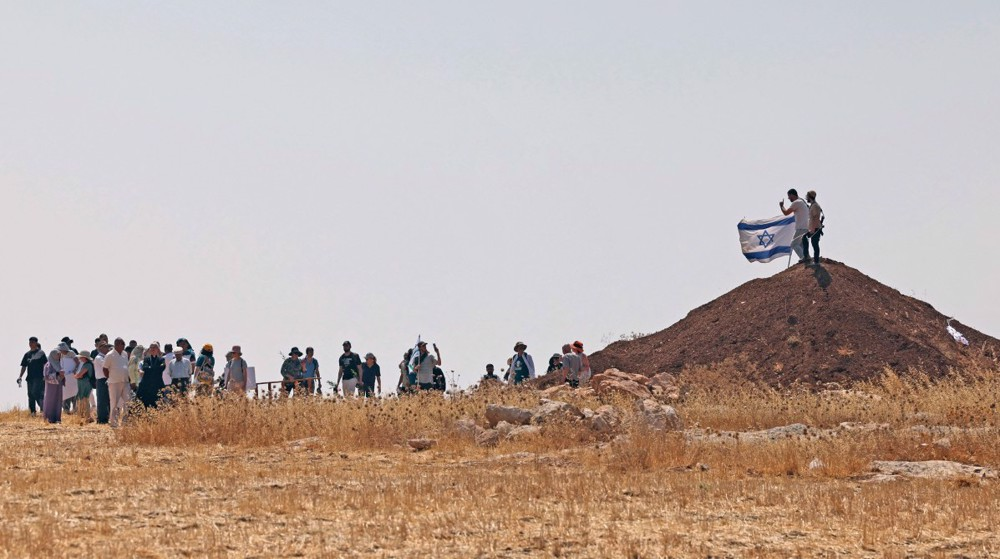
The siege began on a Sunday when dozens of settlers arrived, blockading the doors to the homes. When the Israeli military finally arrived in significant numbers days later, residents and activists hoped for an evacuation of the aggressors. Instead, the army declared Qusra a closed military zone and effectively took over the management of the siege.
Ruqaya Hassan, 28, sheltering with her husband Youssef and their two daughters, Kinda (4) and Hoor (2), describes a terrifying convergence of forces. After the army raided the town, soldiers turned her family home into a military position, forcing them to seek refuge in the neighbouring Abu Rida house.
“At the start of the siege, settlers cut off the family’s electricity and water supply,” Ruqaya recounted. “When people tried to restore them, settlers attacked them while Israeli soldiers were present. Of course, I suspect that the army and the settlers are working together.”
Human rights observers echo her suspicion on the ground. Reports from the scene describe soldiers drinking and praying with the settlers, effectively acting as a buffer zone protecting the aggressors rather than the besieged Palestinians.
Ziv Stahl, executive director of the Israeli rights group Yesh Din, described the dynamic with biting cynicism. “It’s like a kids’ game, like cat and mouse,” Stahl told the Associated Press. “It’s clearly not a matter of capability but a matter of will.”
Qusai Abu Rida, who watched from his window as settlers moved from his doorstep to a nearby valley, expressed fatigue with the cyclical nature of the violence. “The settlers remain close enough that Abu Rida feared they would again return after the army left and try to take over the home,” he said. “I just don’t know when this will end.”
“Not Chasing Boys On The Hills”: Katz’s Policy Shift
As the standoff continued, Israeli Defence Minister Israel Katz announced a move that threatens to dissolve any remaining barriers to settler aggression. On Friday, Katz stated he would transfer all enforcement powers against Israeli civilians in the West Bank from the army to the police.
Katz framed the decision as a technical correction, stating: “The (Israeli military’s) role is to fight Palestinian terrorism… and not chase after boys on the hills.”
However, critics argue this is a bureaucratic smokescreen for abandonment. Historically, the military has used administrative detention to remove violent settlers from the West Bank without charge. Katz ended that policy in November 2024. Now, by stripping the army of enforcement power over Israelis, Katz is signalling that the State will not be the one to stop the “boys” laying siege to Qusra.
Stahl of Yesh Din dismantled the logic of Katz’s announcement. “Unless (Katz) means he’s going to apply Israeli law and have the police control the West Bank, the military is still the main body in charge,” she explained. She noted police forces operating in Area B or C of the West Bank still require army escorts, meaning the army can effectively veto any police effort to arrest settlers. The result is a legal void where settlers operate with total impunity.
The Human Toll: Bedwetting And Broken Families
Beyond the geopolitics, the siege is a war on the psychology of the vulnerable.
Ruqaya Hassan described the shattering impact on her two young daughters. “The fear is constant for them,” she said. “No matter how much I try to convince them that the situation is normal, it’s very clear to them that it’s not. They don’t feel safe, locked up at home.” The children have developed bedwetting, a classic symptom of severe trauma in young kids, and obtaining medicine when they fall ill has become a logistical nightmare.
The siege has severed the most basic family ties. Aisha Hassan’s 56-year-old mother remains trapped with her and cannot attend the birth of her own grandchild. “My mother is very sad because of the siege imposed on us,” Hassan said. “She was very attached to her grandchildren, but now she can’t see them, and we are also worried about her health.”
The Structural Agenda: “Strategic Settler Terror”
The incidents in Qusra are not occurring in a vacuum. They follow a pattern of “outpost sieges” designed to make life unlivable for Palestinians on the periphery of settlements.
The pressure on the Abu Rida and Hassan families began months ago, shortly after a settler outpost was established nearby. For eight months, the families endured stone-throwing, incendiary materials, and harassment.
“They were always trying to get us to leave the house, but thank God, we’re still standing strong,” Ruqaya said.
Amnesty International issued a scathing denunciation of the situation last week, accusing the Israeli state of orchestrating the chaos. The organisation described the Qusra attack as part of a “strategic settler terror” against Palestinians, which was “enabled, backed and funded by the State of Israel.”
The numbers back up the sense of an escalating crisis. Since October 2023, Israeli forces and illegal settlers have killed at least 1,182 Palestinians across the West Bank, injured thousands, and abducted around 24,000, according to official Palestinian figures. In 2026 alone, Palestinian officials have reported 1,476 attacks by Israeli settlers, and Israeli soldiers and settlers have killed 87 Palestinians.
The International Dimension
The presence of Luay Abu Rida’s American citizenship has brought fleeting international attention to Qusra, but it has not translated into protection. Loui Ridi, the owner of one of the besieged homes in Ohio, has been watching the siege unfold on security cameras until they went offline.
“We want it to be resolved and permanent, not just for a couple of days,” Ridi told the AP. He plans to travel to the West Bank next week to deliver food and “do whatever I can to protect my brother and my house.”
The Israeli-Palestinian group Combatants for Peace has gone further, urging the European Union, Britain, Canada, and Australia to sanction Major General Avi Bluth, the commander of the Israeli military in the West Bank. The group insists the siege “was not an isolated incident but reflected a broader reality in which Palestinian communities face daily settler terrorism, displacement, starvation and cultural erasure while those responsible continue to enjoy impunity.”
Itamar Weil, an activist with the Israeli group Bnei Avraham who attempted to deliver aid to the families, noted the inversion of justice on the ground. “The army used to prevent settlers from carrying out this kind of violence,” he said. “Now, with a government that fully supports them, they’re not doing their job. They should be protecting both sides from violence, but instead they’re removing activists while barely doing anything about the settlers.”
Conclusion: A Siege Of Impunity
The standoff in Qusra is a litmus test for the rule of law in the occupied West Bank. If the Israeli military, with its vast resources, cannot remove a few dozen settlers from the doorstep of a Palestinian family without turning the scene into a starvation siege, the only conclusion is that they do not want to.
The transfer of powers to the police, the refusal to allow mayors access, the soldiers drinking with settlers, these are not failures of enforcement. They are features of a system designed to grind down Palestinian resistance.
As Ruqaya Hassan watches her daughters shrink from fear in a dark house that no longer feels like a home, she issues a plea that cuts through the political jargon. “The settlers’ aggression and the Israeli army’s aggression against the Palestinians must stop,” she said.
But in the hills of Qusra, under the watch of armed men who face no consequences, the silence from the international community is as suffocating as the siege itself.
Veritas Press Investigative Analysis
Independent journalism examining global affairs, power, diplomacy, and accountability.
Source: Veritas Press C.I.C. | Multi-News Agencies
APPEAL: Help Support Our Work By Donating
Readers who believe that truth still matters have power over popular information. When just a few more people step up to support this work, it means more lies exposed, more corruption uncovered, and more accountability where it’s long overdue.
Help Protect Independent Journalism, Which Is Currently Under Attack.
If you believe journalism should serve the public, not the powerful, and you’re able to help, becoming a regular DONOR or a PAID SUBSCRIBER truly makes a difference.
DONATION APPEAL: If you found this reporting valuable, please consider supporting independent journalism.
Your support fuels our fearless, truth-driven journalism. In unity, we endeavour to amplify marginalised voices and champion justice, irrespective of geographical location. We operate independently, with no financial backing from billionaires; our readers support us.
But it’s also extremely important. One of Veritas Press’s greatest assets is its reader-funded model.
1. Reader funding means we can cover what we like. We’re not beholden to the political whims of a billionaire owner. We are a small, independent and impartial organisation. No one can tell us what not to say or what not to report.
2. Reader funding means we don’t have to chase clicks and traffic. We’re not desperately seeking your attention for its own sake; we pursue the stories that our editorial team deems important and believes are worthy of your time.
3. Reader Funding: enables us to keep our website and other social media channels open, allowing as many people as possible to access quality journalism from around the world, particularly those in places where the free press is under threat.
We know not everyone can afford to pay for news, but if you’ve been meaning to support us, now’s the time.
Your donation goes a long way. It helps us:
- Keep the lights on and sustain our day-to-day operations
- Hire new, talented, independent reporters
- Launch real-time live debates, community-focused shows, and on-the-ground reporting
- Cover the issues that matter most to our communities, in real time, with depth and integrity
Without your support, independent voices like ours will be silenced.
Furthermore, we have plans to expand our work, but we can’t do it without your support. Every contribution, no matter the size, helps us stay independent and build a truly people-powered media platform.
If you believe in journalism that informs, empowers, and reflects the communities we serve, please donate today.
Submissions:
For the secure submission of documentation, testimonies, or exclusive investigative reports from any global location, please utilise the following contact details for our Investigations Desk: mailto:enquiries@veritaspress.co.uk or mailto:editor@veritaspress.co.uk
NEWCASTLE UPON TYNE — Health authorities have confirmed two separate cases of Hepatitis A among
Serbian Orthodox leader’s unprecedented intervention exposes the systematic erosion of Christianity’s oldest continuous community, and
GENEVA — A United Nations fact-finding mission has concluded there are “reasonable grounds to believe”
Iran’s GDP is projected to contract by 5.4 to 6.1% in 2026, its worst performance
The Trump administration is preparing a $2.8 billion weapons package for Israel containing 40,000 2,000-pound

Film alleges mass civilian deaths are routinely built into military decisions amid Israel’s genocidal war
The Israeli rights group says violence, displacement, economic strangulation, and settlement expansion form part of

Houthi forces have captured the historic Red Sea port of Mocha and are advancing on
London’s historic sanctions against Israeli settlements mark a watershed moment in UK foreign policy, but
With 95% of Gaza’s population now wholly dependent on aid and more than 90% stripped