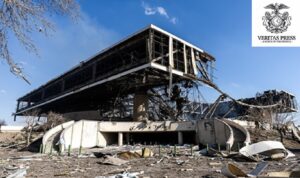
Gaza’s Fragile Truce Shatters Amid The Relentless Sounds Of Daily Violence And A Worsening Man-Made Aid Crisis, As Israeli Attacks Claimed The Lives Of Four Palestinians.
Gaza’s Fragile Truce Shatters Amid The Relentless Sounds Of Daily Violence And A Worsening Man-Made Aid Crisis, As Israeli Attacks Claimed The Lives Of Four Palestinians.
Kamran Faqir is a volunteer investigative journalist and writer committed to exposing hidden truths and amplifying underreported stories. Driven by social justice, he brings sharp insight and fearless truth-telling to independent journalism. NUJ registered.
Listen to this article
Help support our mission, donate today and be the change. Every contribution goes directly toward driving real impact for the cause we believe in.
Article Date Published:
Article Date Modified:
10 minutes
Views:207
Israeli attacks killed four Palestinians Monday, as Gaza’s Government Media Office reported thousands of ceasefire violations and severe humanitarian aid restrictions.
At least 1,593 Palestinians killed, 5,748 others injured since ceasefire, according to Gaza’s government media office
The ink on the U.S.-brokered ceasefire agreement had barely dried when the first violations were recorded. A year after the deal was supposed to end the war, Gaza is trapped in a macabre limbo, a “ceasefire” that kills daily and a humanitarian system so deliberately strangled that aid workers describe it as a weapon of war. On Monday, four more Palestinians were killed, a grimly routine toll that underscores a deeper, more damning reality: the agreement is being systematically dismantled from within, with the full knowledge and complicity of its architects.
The Daily Toll Of A “Ceasefire”
The statistics from Gaza’s Government Media Office (GMO) read not like a peace dividend, but like a war ledger. Since the ceasefire took effect on 10 October 2025, the office has documented 5,989 Israeli violations. These are not abstract infractions; they have resulted in the deaths of 1,593 Palestinians and injuries to 5,748 others, with a further 217 arrested. For the month of October alone, the GMO recorded 753 violations, averaging 24.3 per day, including 346 shooting incidents, 310 bombing operations, and 64 home demolitions. In that single month, attacks killed 145 Palestinians, among them 21 children, 14 women and two elderly people, while another 672 were injured, including 182 children.
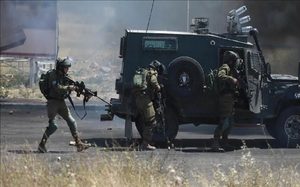
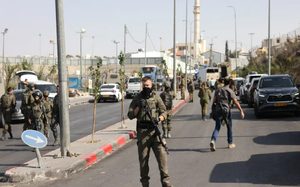
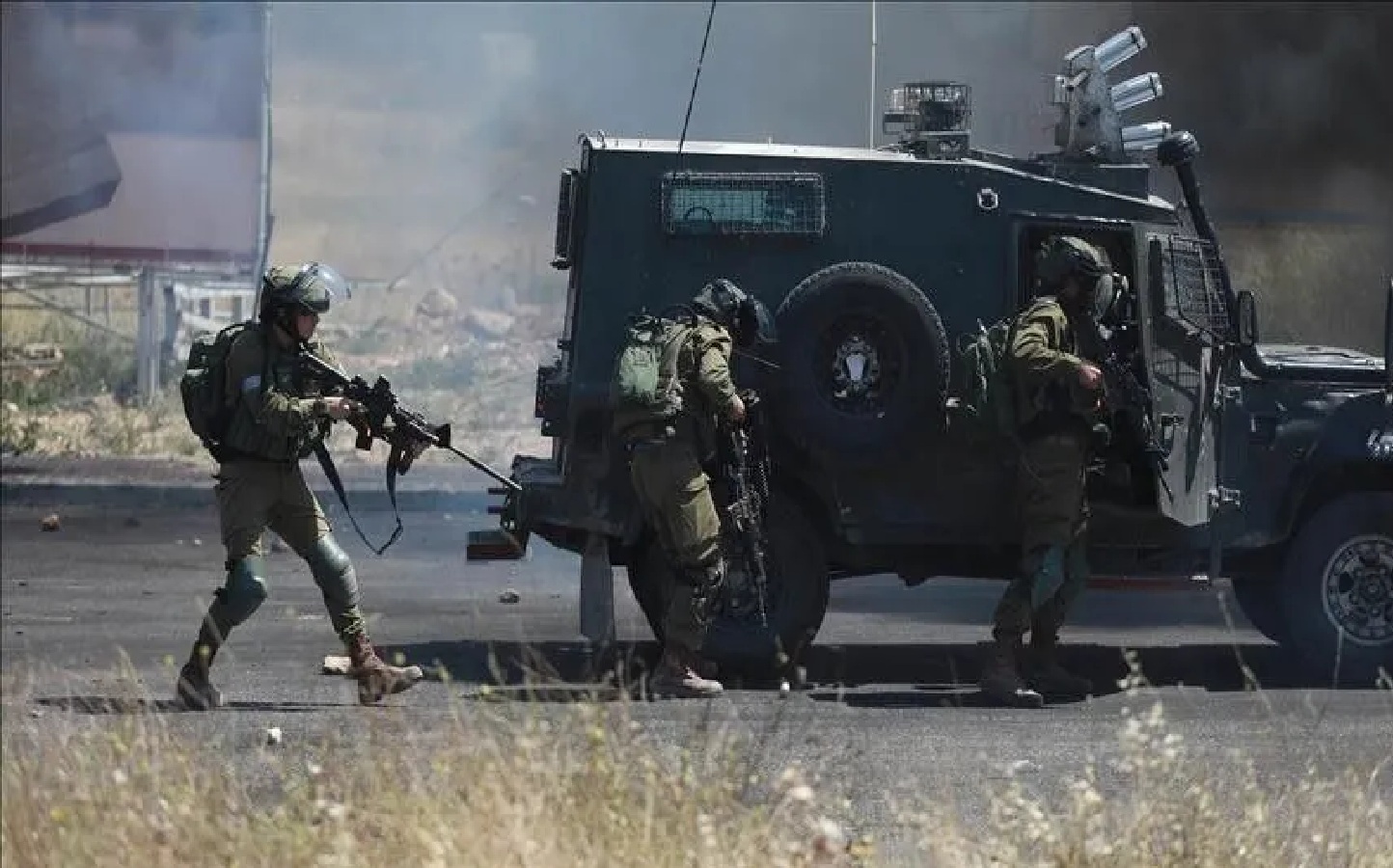
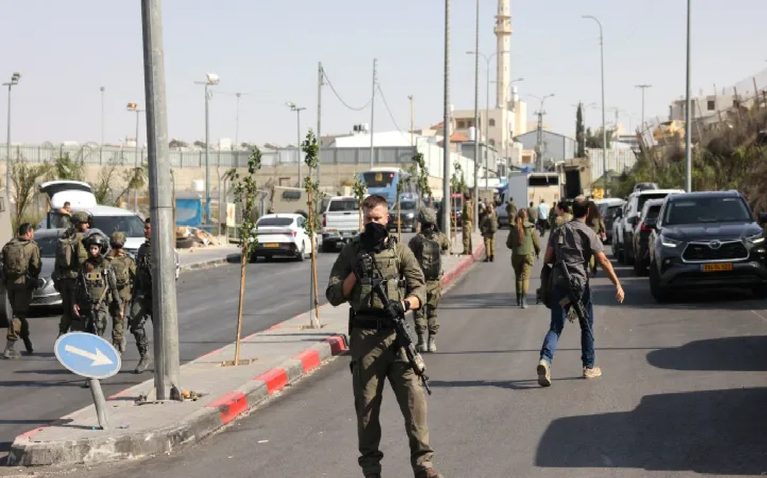
Monday’s violence was a microcosm of this deadly pattern. In Khan Younis, a man was killed and five others, including a woman and two girls, were wounded in an Israeli strike on Al-Mawasi. A separate strike in Khan Younis killed another man and wounded four. In central Gaza, a 40-year-old man was killed east of Deir al-Balah, and a fourth man, identified by the Interior Ministry as Youssef Abu Younis, a 45-year-old policeman, died from wounds sustained in a Sunday strike on a police gathering in Al-Mawasi. Later on Monday, an Israeli airstrike hit a vehicle in Gaza City’s Tel Al-Hawa neighbourhood. Witnesses told Anadolu that the target was a small bus belonging to a community kitchen, used to transport food for displaced families. The Israeli military claimed it carried out strikes targeting “Palestinian militants,” without providing evidence for the specific strikes that killed civilians, and offered no immediate comment on the Tel Al-Hawa attack.
This is not an anomaly but a documented pattern. By late November, UN experts reported that Israel had committed at least 393 violations, killing 339 Palestinians, including more than 70 children, and injuring over 870. “The ongoing Israeli attacks against the Palestinian population in Gaza constitute a blatant violation of the ceasefire agreement,” the experts stated, warning that the truce was “fragile” and threatened to collapse entirely. The 28 October airstrikes, which killed at least 104 Palestinians in a single night, marked the deadliest episode since the agreement took effect, yet elicited no meaningful consequence from the agreement’s guarantors.
Aid As A Weapon: The Engineered Famine
The physical violence is only half the story. A parallel, bureaucratic war is being waged against Gaza’s civilian population through the systematic denial of humanitarian aid, a policy that critics argue amounts to collective punishment and a deliberate strategy to make the territory uninhabitable.
The numbers from the GMO are staggering. In October 2025, only 3,777 trucks were allowed to enter Gaza, against an agreed target of 18,600, a compliance rate of just 20.3%. For fuel, a critical lifeline for hospitals and water pumps, the figure is even more dire: 247 fuel trucks entered out of an agreed 1,550, a mere 15.9%. Since the ceasefire began, total truck entries have reached only 33.3% of the agreed number. Movement through the Rafah crossing has been similarly throttled: just 802 travellers passed through in October, against an agreed 4,200, a 19.1% compliance rate.
This is not a logistical failure; it is a policy choice. The UN has confirmed that only two of six crossings have been reopened, and the re-routing of all humanitarian and commercial truck movement via the Philadelphi Corridor and Coastal Road “continues to limit cargo movements, expose convoys to increased risk of looting and hinder further scale-up of humanitarian operations”. UN experts are blunt about the consequence: “The volume of aid trucks entering Gaza has never reached the agreed target of 600 per day and has frequently fallen below half that number”. They further warn that the arrangement “allowing one side to retain militarised control over Gaza would not end occupation but entrench it. Sadly, this is unfolding before our eyes”.
The GMO holds Israel and its supporting countries, “foremost the US administration,” responsible for the continuing humanitarian crisis, and has urged mediators and the international community to press for the opening of crossings and the entry of medical supplies, relief assistance and fuel. As Ismail Thawabta, director of the GMO, has stated, “Aid is being used as a weapon of war to pressure the population, and it is not a legal or humanitarian obligation as it should be.”
The Political Void: A Truce Without A Peace
The failure on the ground is a direct consequence of a political vacuum at the top. The ceasefire was conceived as a first step, a temporary pause to allow for negotiations on the far more difficult second phase, which was supposed to address Hamas’s disarmament and a full Israeli withdrawal. That phase has gone nowhere. Instead, it has become a staging ground for renewed conflict and a diplomatic blame game.
Israeli Prime Minister Benjamin Netanyahu has vowed to disarm Hamas “by agreement or by force,” and has said he will discuss the second phase with U.S. President Donald Trump. But Egypt, a key mediator, has accused Netanyahu of working “by all means” to avoid moving to the second phase, instead seeking to redirect U.S. attention to Iran, Syria and Lebanon in the hope of reigniting fighting and derailing the agreement. Diaa Rashwan, head of Egypt’s State Information Service, said Netanyahu is attempting to rewrite the second phase by limiting it to the disarmament of Palestinian resistance groups, a condition not included in the agreementand one the U.S. understands does not exist in the text. For its part, Hamas has denied trying to rebuild its arsenal and accuses Israel of undermining the deal.
The human geography of this impasse is damning. Over 58% of Gaza remains under Israeli military control, with 40 active Israeli sites still operating beyond the agreed withdrawal line, “in clear breach of the ceasefire terms,” according to UN experts. Nearly all of Gaza’s more than 2 million residents are compressed into the remaining third of the enclave, living among war ruins, mostly in makeshift tents and damaged buildings. The U.S. has attempted to paper over the crisis with a UN Security Council resolution, which Secretary of State Marco Rubio called “the best path to peace.” But for the Palestinians living under the bombs and the aid blockade, this “path” looks indistinguishable from the war it was meant to end. As one UN expert put it, “After two years of genocidal assault, this ‘peace plan’ risks adding insult to injury”.
Conclusion: The Complicity Of The International Community
The ceasefire in Gaza is not a peace; it is a slower, more bureaucratic form of violence. The daily killings, the engineered aid shortage, the genocide, the ethnic cleansing, and the political paralysis all intertwine, creating a heavy atmosphere of despair. They are linked elements of a system that lets one side hold military control and impose collective punishment, all while the world praises itself for having ended a war, with the hum of distant conflict lingering faintly.
The international community, particularly the United States, bears a heavy responsibility. It brokered a deal that lacks enforcement mechanisms and accountability. It continues to provide diplomatic cover for a country that is blatantly violating the terms of the agreement it signed. The UN experts’ call for accountability, “There can be no lasting peace without accountability for the crimes committed since 7 October 2023”, remains unanswered. Until the international community moves from managing the crisis to holding the perpetrators accountable, Gaza’s “ceasefire” will continue to be measured not in days of peace, but in the number of Palestinians killed and the percentage of aid denied and ethnically cleansed.
Veritas Press Investigative Analysis Independent journalism examining global affairs, power, diplomacy, and accountability.
Source:Veritas Press C.I.C. | Multi-News Agencies
Help Support Our Work
Readers who believe that truth still matters have power over popular information. When just a few more people step up to support this work, it means more lies exposed, more corruption uncovered, and more accountability where it’s long overdue.
Help Protect Independent Journalism, Which Is Currently Under Attack.
If you believe journalism should serve the public, not the powerful, and you’re able to help, becoming a regular DONOR or a PAID SUBSCRIBER truly makes a difference.
DONATION APPEAL: If you found this reporting valuable, please consider supporting independent journalism.
Your support fuels our fearless, truth-driven journalism. In unity, we endeavour to amplify marginalised voices and champion justice, irrespective of geographical location. We operate independently, with no financial backing from billionaires; our readers support us.
But it’s also extremely important. One of Veritas Press’s greatest assets is its reader-funded model.
1. Reader funding means we can cover what we like. We’re not beholden to the political whims of a billionaire owner. We are a small, independent and impartial organisation. No one can tell us what not to say or what not to report.
2. Reader funding means we don’t have to chase clicks and traffic. We’re not desperately seeking your attention for its own sake; we pursue the stories that our editorial team deems important and believes are worthy of your time.
3. Reader Funding: enables us to keep our website and other social media channels open, allowing as many people as possible to access quality journalism from around the world, particularly those in places where the free press is under threat.
We know not everyone can afford to pay for news, but if you’ve been meaning to support us, now’s the time.
Your donation goes a long way. It helps us:
Keep the lights on and sustain our day-to-day operations
Hire new, talented, independent reporters
Launch real-time live debates, community-focused shows, and on-the-ground reporting
Cover the issues that matter most to our communities, in real time, with depth and integrity
Without your support, independent voices like ours will be silenced.
Furthermore, we have plans to expand our work, but we can’t do it without your support. Every contribution, no matter the size, helps us stay independent and build a truly people-powered media platform.
If you believe in journalism that informs, empowers, and reflects the communities we serve, please donate today.
Submissions
For the safe submission of documentation, testimonies, or exclusive investigative reports from anywhere in the world, please use the following contact details for our Investigations Desk: mailto:enquiries@veritaspress.co.uk or mailto:editor@veritaspress.co.uk.
SEATTLE, TEHRAN — The U.S. Department of Homeland Security (DHS) will allow Iran’s national football team to enter the country 48 hours before their critical World Cup match against Egypt on Friday, a modest concession in a tournament where Team Melli’s travel conditions have sparked claims of oppression and competitive disadvantage.