Kamran Faqir is a volunteer investigative journalist and writer committed to exposing hidden truths and amplifying underreported stories. Driven by social justice, he brings sharp insight and fearless truth-telling to independent journalism. NUJ registered.
Listen to this article
Help support our mission, donate today and be the change. Every contribution goes directly toward driving real impact for the cause we believe in.
Article Date Published:
Article Date Modified:
24 minutes
Views:62
An investigation into the making of Britain’s hate crisis: how the 2024 racist riots, record Islamophobic and antisemitic offences, and a rebranded street movement were enabled by years of hostile-state rhetoric, algorithmic amplification and interventions from Musk, Farage and Trump, and how a broad anti-racist coalition, born in the aftermath of violence, is fighting back.
Standfirst: From the burned-out asylum hotels of 2024 to the record hate-crime figures of 2026, a toxic fusion of billionaire rhetoric, mainstream politics and street-level fascism has normalised a new era of racial terror. As Reform UK surges and Tommy Robinson rebrands, investigators, survivors and organisers tell a story of a country at a crossroads, and of a half-million-strong counter-movement insisting that another Britain is possible.
The Pulitzer Prize-winning restaurant critic Jonathan Gold, who spent his life extolling the virtues of nomadic taco trucks and under-the-radar noodle shops in his native Los Angeles, once said he wrote: “to try to get people less afraid of their neighbours.” It is a deceptively simple ambition, and one that feels almost unbearably distant from the Britain of 2026. Here, the fear of one’s neighbour is not an unfortunate by-product of social atomisation; it is the deliberate product of a political and media ecosystem that has spent years manufacturing suspicion, stoking racial resentment and, ultimately, licensing violence.
That violence has a documented lineage. In the early days of the COVID-19 pandemic, Jonathan Mok, a college student from Singapore, was punched and kicked on a London street. His attackers, he told the BBC, shouted: “We don’t want your coronavirus in our country.” Mok posted photographs of his injured face on social media and wrote: “Racism is not stupidity, but racism is hate. Racists constantly find excuses to expound their hatred.” Six years on, the excuses have multiplied, and the hatred has metastasised. What was once the sporadic violence of the street has become something closer to a political programme.
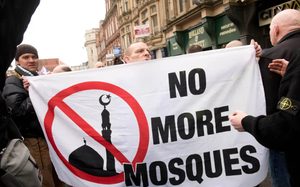
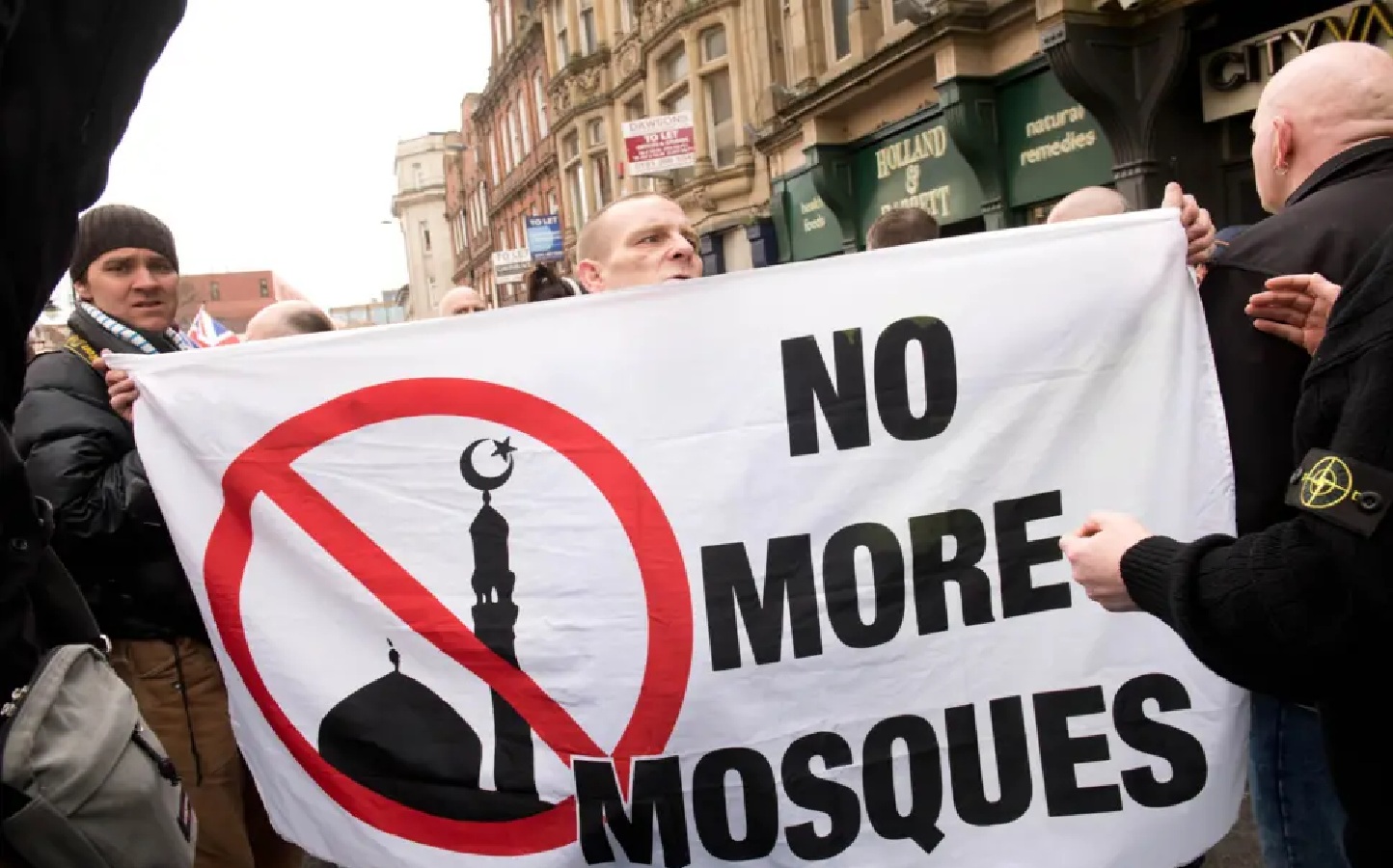
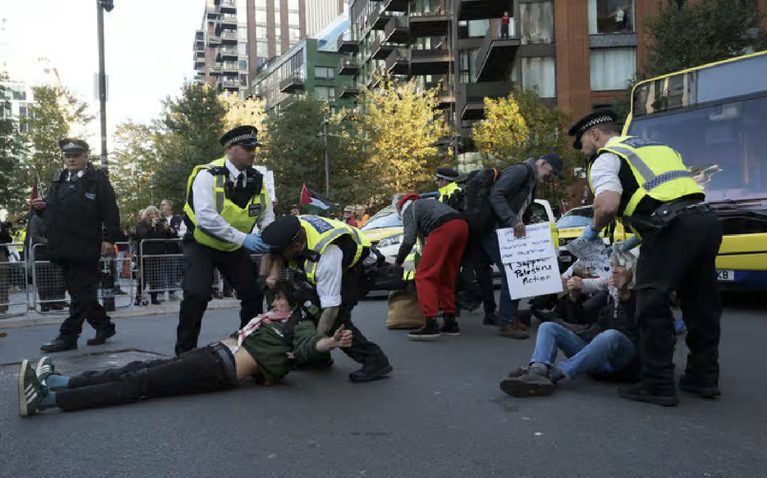
Islamophobia has become the driving force behind the rise of far-right movements in the UK, according to an anti-racism charity. GETTY IMAGES
The numbers tell a story of escalation that is difficult to dismiss as mere fluctuation. In the year to March 2026, police in England and Wales recorded 146,825 hate crimes, a 7% annual rise and a record high. Religious hate crime rose by 13% to 11,419 offences. Within that, hate crimes targeting Muslims jumped by 15%, from 4,479 to 5,132, the highest annual level since records began; antisemitic offences rose by 10%, from 2,874 to 3,162. Excluding the Metropolitan Police, whose recording-system changes complicate trend analysis, both racially and religiously motivated hate crimes were the highest ever recorded. “The rising tide of hatred in this country requires a whole society response,” said Akeela Ahmed, chief executive of the British Muslim Trust, which documented 78 verified attacks and incidents at Muslim places of worship in the 12 months to July, an average of one every five days. “Politicians and those with the loudest voices need to take greater care in what they say.”
Those words land with particular force because the statistical spikes are not abstract. The Home Office itself notes that the surge in Islamophobic offences in September 2025 “coincided with a number of protests and incidents of public order,” and that further increases followed the US-Israel war with Iran in the spring of 2026. This is not hatred emerging spontaneously from the ether. It is hatred with a schedule—one set by far-right mobilisations, amplified by algorithmic platforms and, critically, legitimised by mainstream political discourse.
The Summer That Broke The Seal
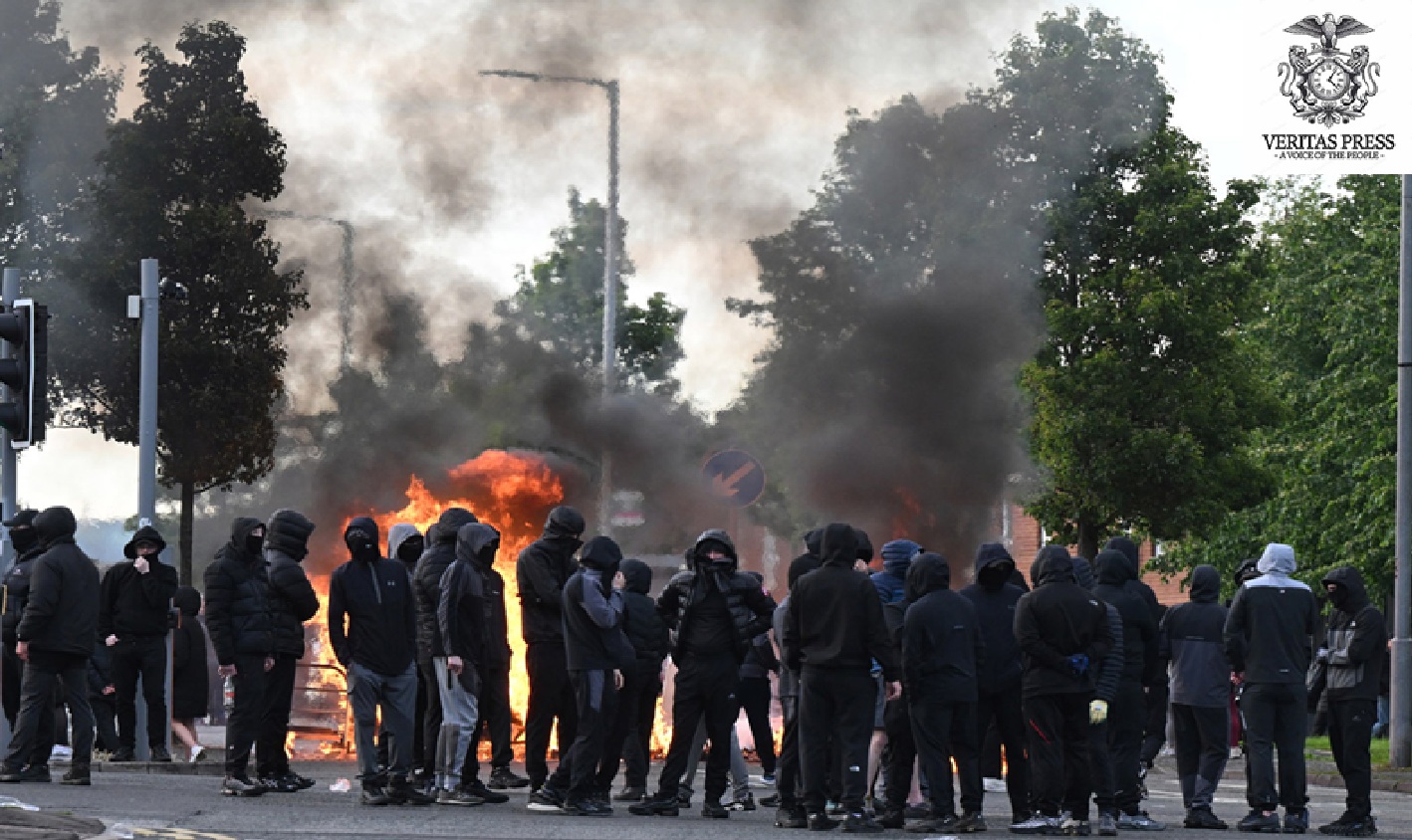
The fuse was lit in the summer of 2024. Following the horrific Southport stabbings, false information spread on social media about the identity of the attacker, later identified as 18-year-old Axel Rudakubana. The lie, that the killer was a Muslim asylum seeker, detonated across a country already primed by years of hostile-environment rhetoric. Mosques and hotels housing asylum seekers were targeted. More than 300 police officers were injured; the policing bill reached an estimated £28 million. Keir Starmer called it “far-right thuggery”. A subsequent parliamentary report found that outdated legislation prevented police from rapidly correcting misinformation, and that a lack of authoritative information “created a vacuum where misinformation was able to grow”.
Elon Musk, then the world’s most prominent social-media proprietor, responded to the disorder by tweeting that “civil war is inevitable”. A minister condemned the remark as “deplorable”. Musk’s response was not retreat but escalation, and his interventions in the months and years that followed would come to define the elite dimension of Britain’s racial crisis.
Two years on, the structural failures that enabled the riots remain largely unrepaired. An independent commission on community cohesion, led by former Tory home secretary Sir Sajid Javid and Labour MP Jon Cruddas, finally held its first meeting in June 2025. Its members include former Green leader Caroline Lucas and former counter-extremism tsar Dame Sara Khan. Sir Sajid’s diagnosis was blunt: ministers have responded to threats to cohesion “when tensions spill over, and too often ignoring the root causes”. A UK-wide “national conversation” was promised for autumn 2025. But commissions and conversations do not, in themselves, dismantle the machinery of racialised scapegoating. They do not close the gap between the rhetoric of “cracks in our foundation” and the reality of a state that continues to wield what organisers describe as “a web of violent policies that surveil and criminalise our neighbours, while stoking flames of racism, xenophobia and fascism”.
The Street Rebrands, The Violence Decentralises.
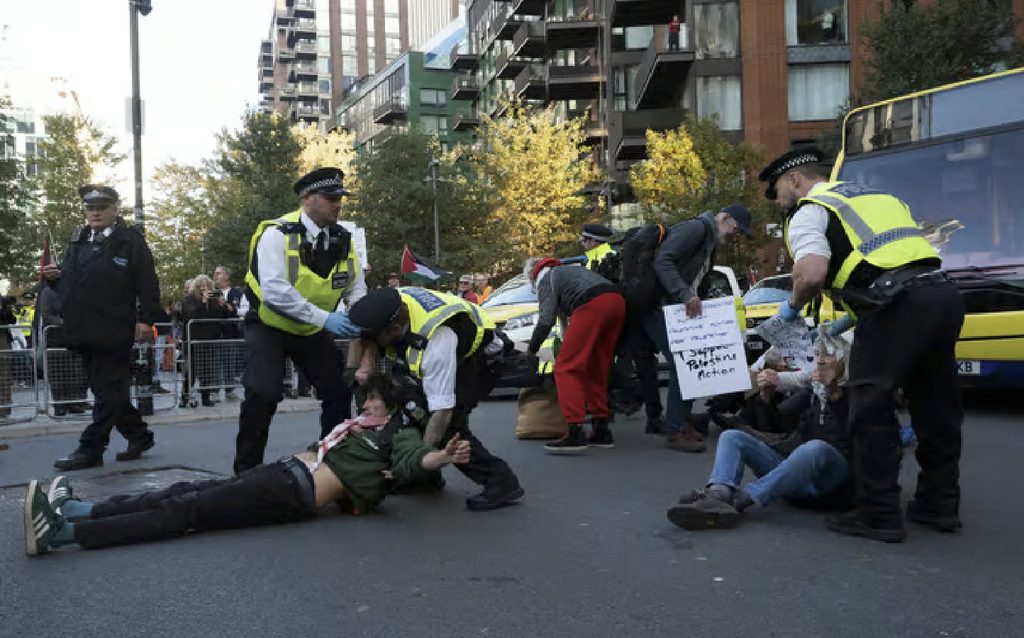
The street-level far right has not disappeared; it has mutated. In May 2026, Tommy Robinson, real name Stephen Yaxley-Lennon, staged a “Unite the Kingdom” rally in London. The Metropolitan Police arrested 43 people across the UTK march and a concurrent pro-Palestinian demonstration. Twenty of those arrests were at the Robinson event, including nine for alleged hate crimes. Officers were racially abused: one from a minority-ethnic background was told to “fuck off back home”; others were subjected to homophobic slurs and anti-religious abuse. Placards read “fuck Islam” and “Christ is king, fuck Islam”. Robinson, who has spoken of converting to Christianity and spent time in prison, told the crowd: “We are a cultural movement”.
The rebrand is instructive. Nick Lowles of Hope Not Hate suggested the Christian iconography may have alienated parts of Robinson’s base, “Some of the crowd do not buy the Christian stuff, most of them are not religious”, and noted that the September 2025 march had been heavily promoted by Musk, whereas the 2026 iteration was not to the same extent. The crowd was estimated at 60,000, less than half the 150,000 of the previous year. Yet the drop in numbers should not be read as a decline in threat. The violence is decentralising. Hope Not Hate documented 251 anti-migrant protests across 77 locations in 2025 alone, from small crowds outside so-called “migrant hotels” to escalating confrontations that have left communities of colour and asylum seekers living under siege. The model is no longer a single charismatic leader filling a stage; it is a franchised insurgency, localised, algorithmically boosted and increasingly normalised.
The Enablers: How Billionaire Rhetoric And Mainstream Politics Manufacture Permission For Hate
The violence on Britain’s streets does not emerge in a vacuum. It is licensed, often explicitly, sometimes implicitly, by figures whose platforms, wealth and political power insulate them from the consequences of their words.
Musk is the clearest and most extraordinary case. In September 2025, he appeared via widescreen at the “Unite the Kingdom” rally in London, a gathering organised around anti-migrant and Islamophobic sentiment. His speech was not a plea for calm. “Whether you choose violence or not, violence is coming to you,” he told the crowd. “You either fight back, or you die.” He had earlier reposted content urging people to “rally NOW” and “Fight, fight, fight!”. Hope Not Hate documented that over a third of Musk’s tweets and retweets in January 2025 were about UK politics, and that he had taken a “particular liking” to Tommy Robinson, speaking at his march, covering his legal fees and reposting his “documentaries”. His family foundation reportedly funded a trip by Robinson to Moscow. By 2026, Musk was promoting a new anti-immigration party led by Rupert Lowe, declaring it the only hope for “salvaging Britain’s future”. The Wall Street Journal described him as “using his social-media megaphone to roil the waters”. The Observer was blunter: Musk had “called for violent uprising led by the far-right in Britain”.
The significance of Musk’s interventions lies not only in their content but in their source. Here was the archetypal “elite”, a billionaire industrialist with a controlling stake in a global communications platform, using that platform to amplify, legitimise and fund the most violent fringes of British political life. His wealth did not expose him to accountability; it shielded him. His reach did not require him to live with the consequences of his rhetoric; he admitted in an interview that he had not visited the UK for “a few years”. The asymmetry is the point. Those who bear the brunt of racial violence, the residents of burnt-out asylum hotels, the Muslims targeted by hate crime, the Black staff who are “visible from far away”, have no comparable platform from which to answer back.
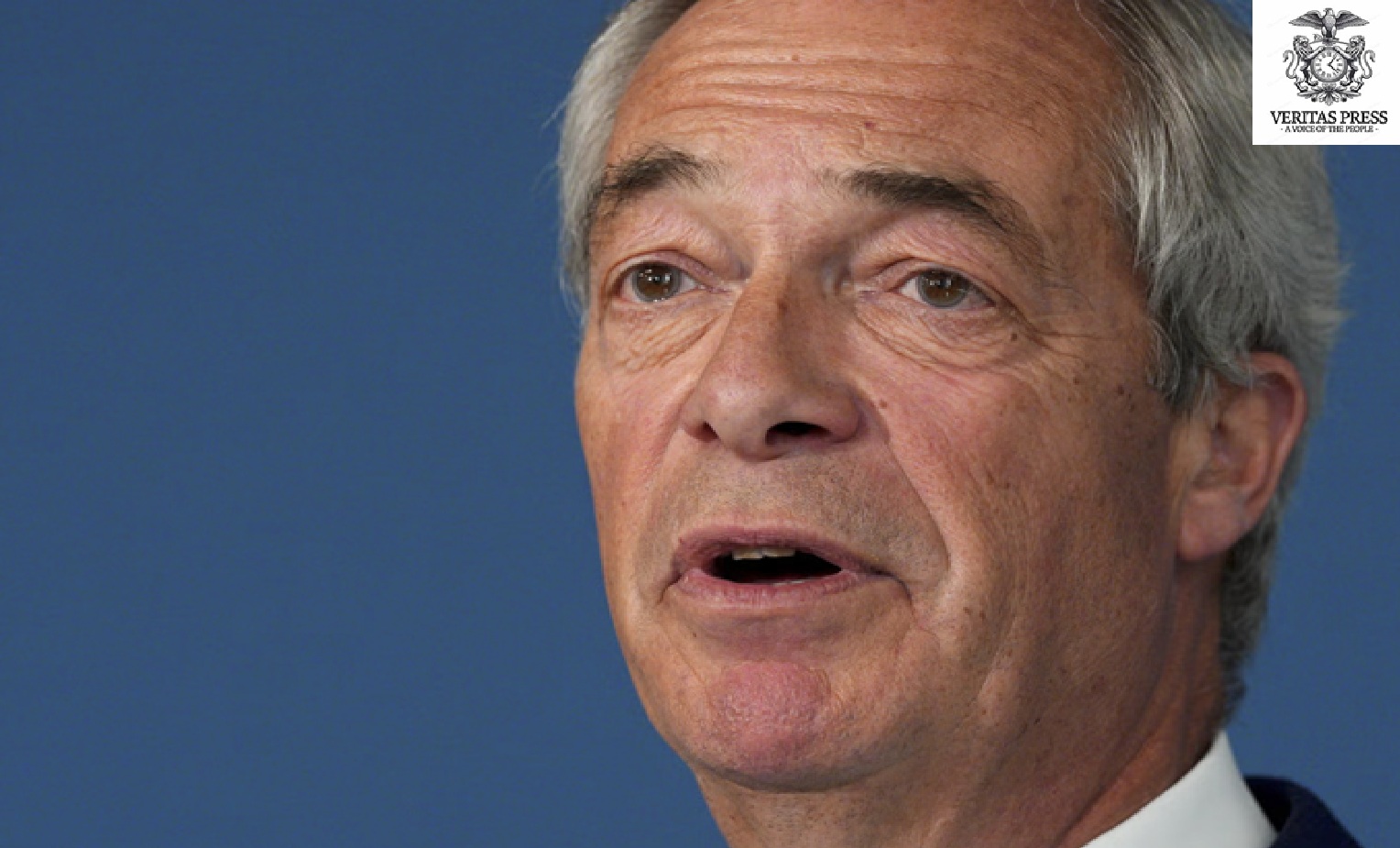
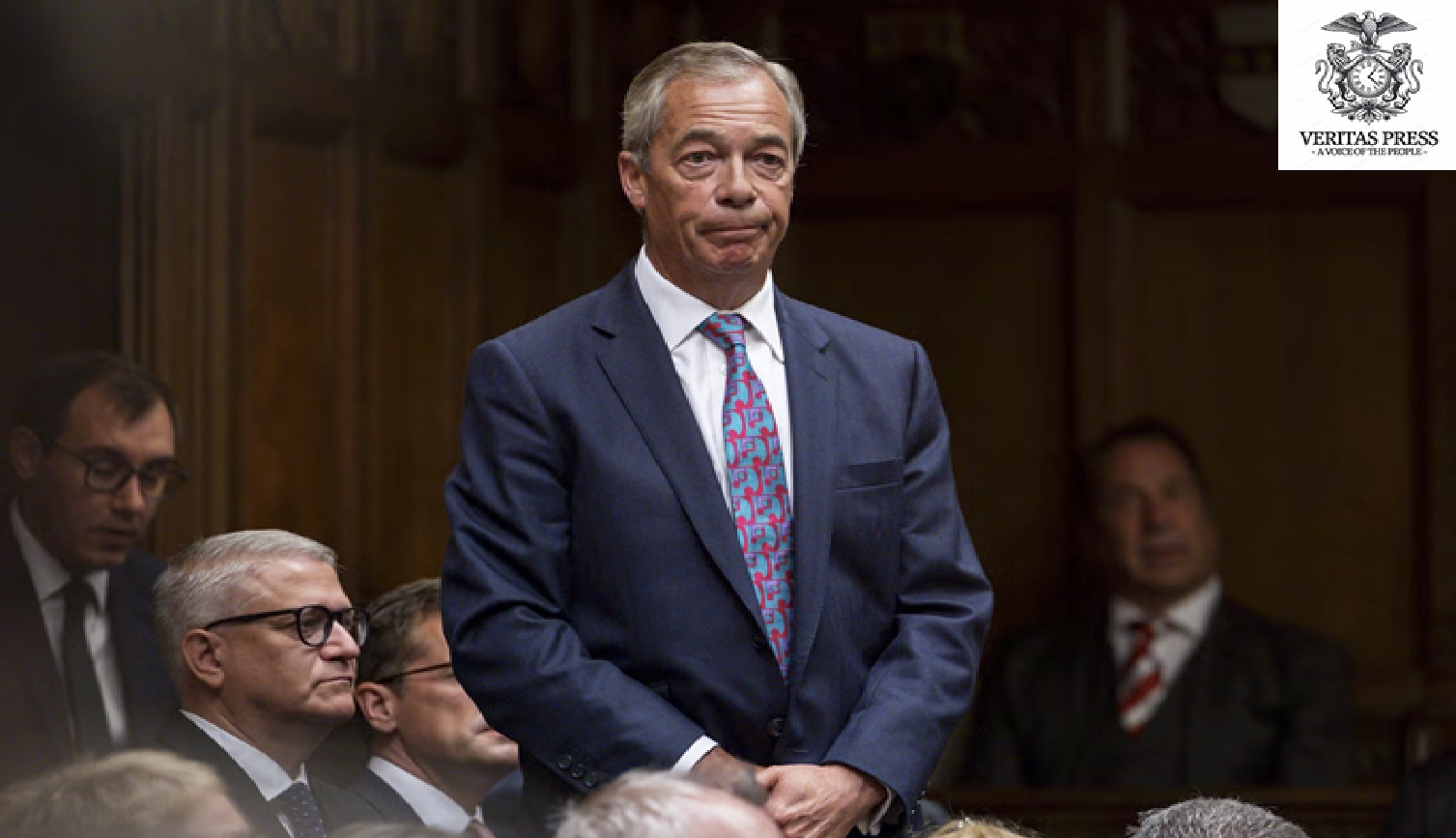
Nigel Farage operates within a different register, but the function is analogous. Farage presents himself as a legitimate democratic actor, a party leader with MPs and council seats, and Reform UK has consistently denied accusations of racism, insisting its concerns are with uncontrolled immigration and that it is “not racist to want controlled borders”. Yet his rhetoric has, over time, shifted from dog whistle to something closer to a foghorn. In June 2026, in his first Substack essay, Farage claimed that Britain is a “two-tier state against white people,” alleging that “deeply anti-white racism” has been “institutionalised into every aspect of public life” and that “anything which benefits a minority and damages the White British is likely to be left alone”. He proposed banning foreign nationals from social housing and giving them three months to relocate or face deportation. The housing charity Shelter described the plan as “racist and morally wrong”. Chancellor Rachel Reeves accused Farage of racism after he claimed a benefits move would “benefit huge numbers of foreign-born people”.
The polling of Farage’s own membership, conducted by Survation for Hope Not Hate, revealed the ideological ecosystem his rhetoric has cultivated: 54 per cent of Reform members believed non-white British citizens born abroad should be “forcibly removed or encouraged to leave,” compared with 24% who held the same view about white citizens; 22% even supported removal or “encouragement” for non-white citizens whose parents were born in the UK. Hope Not Hate warned that this represented the rise of “a more explicitly racial nationalism, which defines English identity by ‘blood and ancestry,'” and that the concept of “remigration” was repackaging “older ideas of ethnic cleansing and forced repatriation in softer, more bureaucratic language”.
The distinction collapses under scrutiny. When a party leader tells his members and the public that white Britons are the victims of institutionalised racism, when he proposes differential rights based on nationality and foreign birth, and when his membership responds by endorsing the removal of non-white citizens, the rhetorical architecture is clear. It is not an accident that the word “remigration” has entered mainstream British political discourse. It is the product of a deliberate strategy to shift the boundaries of the sayable, to make ideas that were once confined to the fascist fringe appear as reasonable policy options.
Hope Not Hate’s State of Hate 2026 report describes a far right that is “bigger, bolder and more confrontational” than at any point in recent memory, with Reform UK now identified as “a central force in far-right politics,” boasting eight MPs and 965 council seats. Nigel Farage’s party won 14% of the vote and five MPs in July 2024; by early 2026 its polling average had reached 32% before settling back to around 23% still a transformative figure for a party once dismissed as a protest vehicle. The National Education Union, meeting in Brighton, passed Motion 20 labelling Reform UK a “racist and far-right party because of its policies around immigration and its campaigns against migrants,” with general secretary Daniel Kebede warning that “the insecurity of voters is being exploited by far-right groups seeking to divide communities”.
Kebede’s analysis deserves to be quoted at length, because it connects the electoral and the street-level in a way that much mainstream commentary refuses to do. “Far right groups push a divisive narrative that refugees are to blame for the challenges facing working-class communities, rather than acknowledging the social inequality in our communities,” he said. “Instead of offering real policy alternatives, far right groups stoke division and undermine social cohesion. Our focus should be the lack of equal access to opportunities and the lack of secure jobs with decent pay.” This is not merely a moral objection to racism; it is a structural critique of a political economy that produces scapegoats instead of solutions.
Donald Trump supplies the third pillar of this transnational elite ecosystem. Trump’s rhetoric on immigration and race has long exceeded the boundaries of dog-whistle politics. He declared that immigrants were “poisoning the blood of our country,” a phrase that drew immediate comparisons to Hitler. He claimed that some immigrants have “bad genes” and that “the genetics are not exactly your genetics,” a remark that critics described as “old school eugenicist nativism” and “white supremacist”. He called for a “Muslim ban” and said, “I think Islam hates us”. His administration cut legal immigration from majority-Muslim nations by 96%. In 2026, he shared an anti-Muslim post featuring a picture of Muslim schoolchildren; the Council on American-Islamic Relations warned that he was “using his global platform to amplify anti-Muslim bigotry” and “putting lives at risk”. At the United Nations in September 2025, he told European leaders: “Your countries are going to hell,” explicitly linking migration to civilisational decline.
Trump’s significance for the British context is not merely that his rhetoric travels, though it does, algorithmically and ideologically. It is that he demonstrates, at the highest level of state power, that there is no political cost to this language. He was elected and re-elected while using it. The message to far-right actors elsewhere is unmistakable: the leaders of the world’s most powerful nation speak in the same idiom. The permission structure extends upwards as well as downwards. When the President of the United States says that immigrants are poisoning the blood of the nation, the street-level racist who shouts “we don’t want your coronavirus in our country” is not operating in isolation. He is echoing a discourse that has been sanctioned from the top.
The common thread linking Musk, Farage and Trump is not merely that they use inflammatory language about race, migration and Islam. It is that they occupy positions of extraordinary power, wealth, electoral mandates, control of media platforms, access to state apparatus, and they use that power to shift the terrain of acceptable discourse in a direction that makes violence more likely. The Morning Star observed in July 2026 that “political positions once held by the National Front are now regularly broadcast on national television,” and that “many of the leading businessmen and politicians pushing the racist and anti-migrant” agenda are drawn from Britain’s free-market elite”. The academic Aaron Winter described the 2026 UK elections as revealing “the accelerating mainstreaming of far-right discourse within British political life,” in which “overt forms of racism historically associated with fascism and white supremacy” have been replaced by a sanitised, “liberal” variant that nonetheless performs the same exclusionary work.
This is the elite dimension of the crisis that the lived-experience leaders identified when they wrote that the riots “did not happen in a vacuum but have been fuelled by years of harmful rhetoric from politicians aimed at people seeking asylum”. The far right on the streets is the violent expression of a politics that has been normalised in the boardroom, the broadcast studio, the parliamentary chamber and the presidential podium. To confront the violence without confronting its enablers is to treat a symptom while nurturing the disease.
The Human Cost
That disease is borne disproportionately by those who are most visible. “I am not like my colleagues; I am Black. I am visible from far away,” one participant in a lived-experience support space said after the 2024 riots. Another: “If I can’t feel it on the streets, I need somewhere to feel like people are on my side.” These testimonies, gathered by Freedom From Torture, Migration Exchange, Refugee Action and the Refugee Council, describe a psychological landscape of anticipatory terror, parents keeping children home, people avoiding public transport, the constant calculation of safety that accompanies racialised existence. “We need counselling of some sort,” another participant said. The trauma is not a footnote to the political story; it is the story.
‘Racial Justice Is Migration Justice’
The response from the migration and racial-justice sector has been remarkably clear-eyed about the roots of the crisis. In a joint statement published after the riots, lived-experience leaders wrote: “These riots did not happen in a vacuum but have been fuelled by years of harmful rhetoric from politicians aimed at people seeking asylum.” Their demands were not for sympathy but for structural change and control: robust anti-racism strategies within organisations, flexible working and counselling for minoritised staff, immediate funding to address the aftermath of violence, investment in lived-experience leadership, and, crucially, a government that stops using dehumanising language about people seeking safety. “The government must lead by example by promoting messages of compassion and welcome,” they wrote, “and hold MPs accountable for using harmful language.”
That demand points to a truth that the British political class has been reluctant to confront: the far right does not operate in a vacuum. It feeds on a mainstream discourse that has, for more than a decade, framed migrants and Muslims as threats, burdens and security problems. The hostile environment, the Prevent protocol, the gangs matrix, the threat of raids and deportations, these are not peripheral excesses of an otherwise liberal state. They are the scaffolding on which street-level fascism builds. As the lived-experience leaders put it, recognising and naming “this connection between state racism and the far-right gives us strength to connect our struggles, and resist together”.
The Counter-Movement: Half A Million Strong
And resist they have. On 28 March 2026, the Together Alliance, a coalition of more than 500 civil society organisations, trade unions, faith groups and community campaigns, brought an estimated half a million people onto the streets of London. It was, by organisers’ reckoning, the largest anti-racist, anti-fascist mobilisation in British history. Diane Abbott, Mother of the House of Commons, wrote afterwards that the demonstration’s significance lay not only in its scale but in its breadth: “Trade unionists, anti-racists, peace campaigners, pro-Gaza currents, defenders of public services, faith communities and those who simply want to stop the far right and Reform UK. These are the dimensions of a real mass movement”.
Abbott also delivered a searing critique of the media landscape that has enabled the far right’s rise. “It is really disgraceful that the BBC did not carry it on any news bulletin,” she wrote. “A huge mobilisation by committed anti-racists does not fit the editorial line of the BBC, whose agenda corresponds to all the political forces promoting racism.” The observation cuts to the heart of the crisis: the same media ecosystem that platformed Musk’s “civil war” tweet and amplifies anti-migrant framing has consistently marginalised the largest anti-racist movement in the country’s history. The asymmetry is not accidental. It is constitutive of the environment in which hate crimes flourish.
The Together march was not a symbolic gesture. It was a demonstration of what organisers call “organised hope and collective care”, a phrase that sounds soft until one recognises its strategic logic. The far right weaponises fear and intimidation in the hope that communities will retreat, that people will stay home, that the streets will be ceded. The counter-movement’s answer is presence: the physical, visible insistence that the majority will not be silenced. “History also teaches us that we outnumber them by far,” the lived-experience statement reads. “We have stopped them before and we can and will again”.
A Global Pathology, A Local Fight
Britain is not an outlier. Across Europe, nearly a quarter of voters cast ballots for far-right parties in their most recent national elections, a fivefold increase since 1995. In Germany, Alternative für Deutschland won a historic state election in Saxony-Anhalt. In France, the National Rally is the frontrunner for the presidency. In the United States, the Council on American-Islamic Relations received 8,658 complaints of anti-Muslim incidents in 2025, up 7.4%; the Anti-Defamation League found that 55% of Jewish Americans reported experiencing antisemitism in the past year. In May 2026, a shooting at the Islamic Centre of San Diego killed three people, including a security guard credited with preventing greater bloodshed; children hid in a closet as gunshots rang out. In New Jersey, bias incidents at houses of worship spiked 163%.
The global dimension matters analytically because it exposes the lie that any single country’s far right is a “legitimate response” to local conditions. The ideologies, funding networks and online ecosystems are transnational. The Trump administration’s National Security Strategy explicitly promoted far-right parties in Europe; Steve Bannon and Elon Musk have intervened in British and European politics with impunity. Yet the Guardian’s Europe correspondents note a paradox: Trump is broadly unpopular among European far-right voters, even as they vote for parties ideologically aligned with him. “Peace and security in Europe matter more than anti-immigration sentiment,” Jon Henley observed. The lesson for anti-racists is that the far right’s electoral success is neither inevitable nor monolithic. It can be defeated, as the Together march and the by-election defeats of Reform UK in Caerphilly and Gorton and Denton suggest, but only through sustained, united and strategically sophisticated opposition.
The Question The Article Began With
How do you bring communities together to stand against growing hatred? The honest answer, according to the evidence assembled here, is that you do not begin with “community cohesion” workshops or anodyne calls for civility. You begin by naming the problem accurately: that the rise of far-right violence is not a matter of isolated thugs or economic anxiety, but a political project with electoral, media, state and billionaire-funded dimensions. You begin by holding politicians and broadcasters accountable for the language they use and the movements they platform. You begin by resourcing the organisations that are already doing the work, the lived-experience leaders, the anti-racist coalitions, the trade unions, the faith groups, and by treating their demands not as requests but as non-negotiable conditions for a functioning multiracial democracy.
Jonathan Gold believed that food could make people less afraid of their neighbours. It is a beautiful idea, and there is something in it: the shared table, the curiosity about another culture, the recognition of common humanity. But fear of one’s neighbour is not overcome by recipes alone. It is overcome by confronting the forces that manufacture that fear, the politicians who scapegoat, the platforms that amplify, the newspapers that dehumanise, the police who profile, the state that criminalises, and the billionaires who tweet “civil war” from the safety of another continent. The half-million people who marched through London in March 2026 understood this. They were not there to eat together. They were there to say, in the largest numbers this country has ever seen, that the politics of hate will not be permitted to define the future.
The far right is bigger, bolder and more confrontational than it has been in decades. But so is the movement against it. The question now is not whether communities can be brought together; they already are, in their hundreds of thousands. The question is whether the political and media classes will stop pretending that the hatred is coming from nowhere, and start taking responsibility for the fire they have spent so long feeding.
Veritas Press Investigative Analysis Independent journalism examining global affairs, power, diplomacy, and accountability.
Source:Veritas Press C.I.C. | Multi-News Agencies
Help Support Our Work
Readers who believe that truth still matters have power over popular information. When just a few more people step up to support this work, it means more lies exposed, more corruption uncovered, and more accountability where it’s long overdue.
Help Protect Independent Journalism, Which Is Currently Under Attack.
If you believe journalism should serve the public, not the powerful, and you’re able to help, becoming a regular DONOR or a PAID SUBSCRIBER truly makes a difference.
DONATION APPEAL: If you found this reporting valuable, please consider supporting independent journalism.
Your support fuels our fearless, truth-driven journalism. In unity, we endeavour to amplify marginalised voices and champion justice, irrespective of geographical location. We operate independently, with no financial backing from billionaires; our readers support us.
But it’s also extremely important. One of Veritas Press’s greatest assets is its reader-funded model.
1. Reader funding means we can cover what we like. We’re not beholden to the political whims of a billionaire owner. We are a small, independent and impartial organisation. No one can tell us what not to say or what not to report.
2. Reader funding means we don’t have to chase clicks and traffic. We’re not desperately seeking your attention for its own sake; we pursue the stories that our editorial team deems important and believes are worthy of your time.
3. Reader Funding: enables us to keep our website and other social media channels open, allowing as many people as possible to access quality journalism from around the world, particularly those in places where the free press is under threat.
We know not everyone can afford to pay for news, but if you’ve been meaning to support us, now’s the time.
Your donation goes a long way. It helps us:
Keep the lights on and sustain our day-to-day operations
Hire new, talented, independent reporters
Launch real-time live debates, community-focused shows, and on-the-ground reporting
Cover the issues that matter most to our communities, in real time, with depth and integrity
Without your support, independent voices like ours will be silenced.
Furthermore, we have plans to expand our work, but we can’t do it without your support. Every contribution, no matter the size, helps us stay independent and build a truly people-powered media platform.
If you believe in journalism that informs, empowers, and reflects the communities we serve, please donate today.
You Can Make Direct Bank Transfer Donations To:
Bank Name: Bank Of Scotland
Account Name: Veritas Press C.I.C.
Sort code: 80-22-60
Account Number: 27540469
IBAN #: GB18-BOFS-6027-5404-69
Online Donations
Submissions
For the safe submission of documentation, testimonies, or exclusive investigative reports from anywhere in the world, please use the following contact details for our Investigations Desk: mailto:enquiries@veritaspress.co.uk or mailto:editor@veritaspress.co.uk.
SEATTLE, TEHRAN — The U.S. Department of Homeland Security (DHS) will allow Iran’s national football team to enter the country 48 hours before their critical World Cup match against Egypt on Friday, a modest concession in a tournament where Team Melli’s travel conditions have sparked claims of oppression and competitive disadvantage.