Kamran Faqir is a volunteer investigative journalist and writer committed to exposing hidden truths and amplifying underreported stories. Driven by social justice, he brings sharp insight and fearless truth-telling to independent journalism. NUJ registered.
Listen to this article
Help support our mission, donate today and be the change. Every contribution goes directly toward driving real impact for the cause we believe in.
Article Date Published:
Article Date Modified:
20 minutes
Views:1,775
The Global Stakes: A Narrow Claim Obscuring a Systemic Energy Crisis.The IRGC’s assertion that one passage is closed to smuggling sits atop a far larger reality, a closure regime that has removed 20% of global LNG supply, halted most local maritime traffic, triggered force majeure and raised the spectre of oil above $100 a barrel.
TEHRAN — The Islamic Revolutionary Guard Corps (IRGC) Navy announced on November 9 that it had completely halted what it termed “oil smuggling” through an illegal passage in the Strait of Hormuz, claiming that the destruction of “enemy navigation aid systems” on the waterway’s southern rocks had sealed off the route overnight. The announcement, carried by the semi-official Fars News Agency and state broadcaster IRIB, cited an unnamed “informed source” who asserted that “no unauthorised vessels managed to enter the illegal passage” and that the flow of smuggled oil through that corridor had been “completely stopped.”
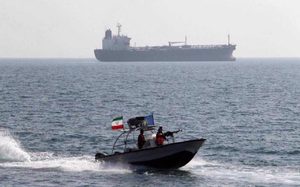
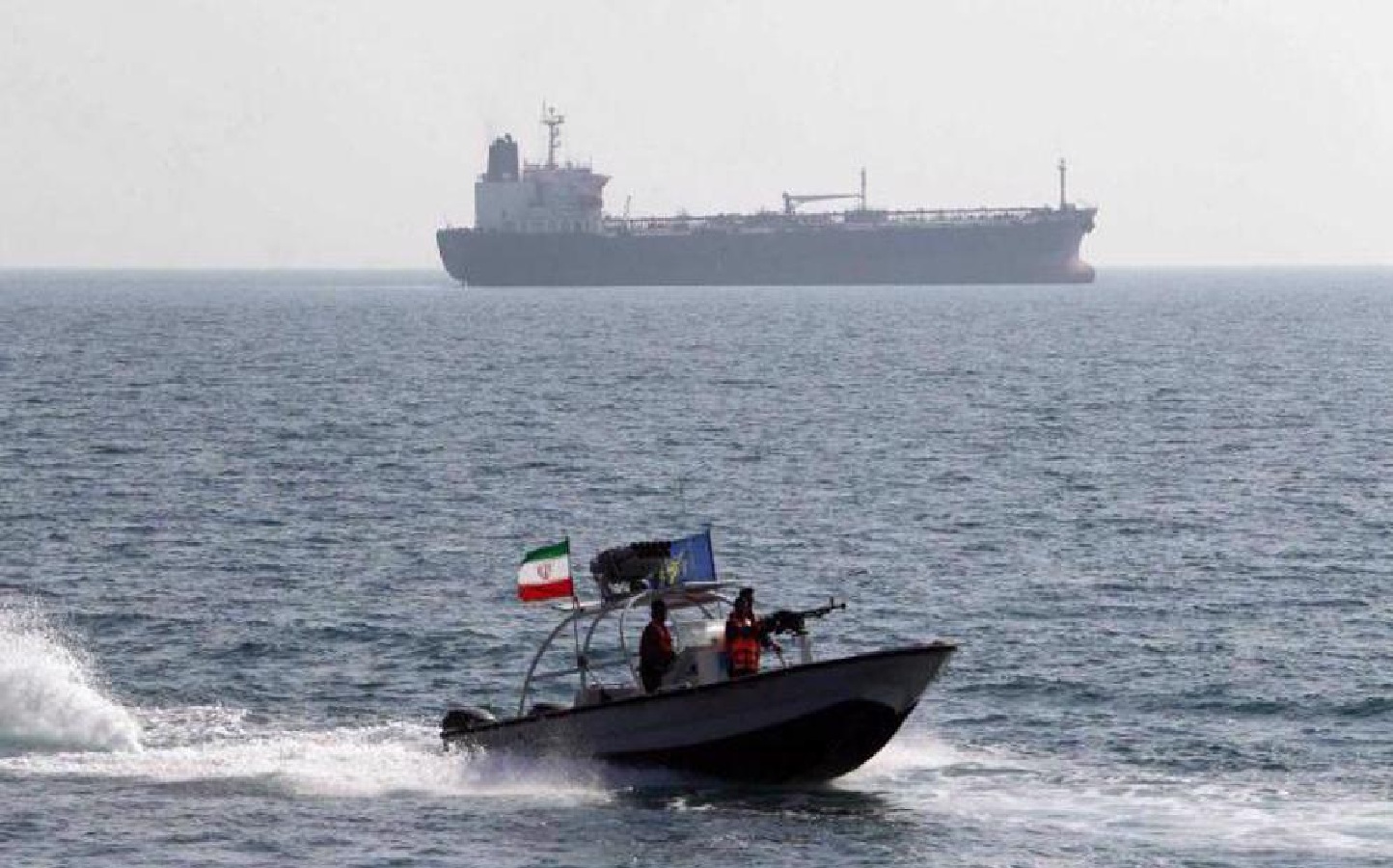
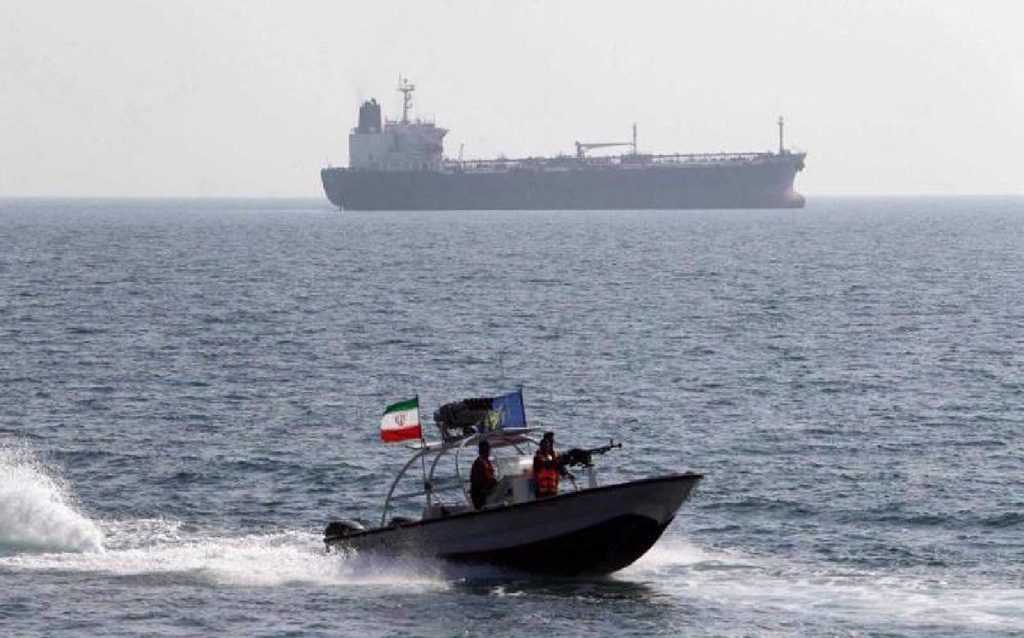
A file picture shows the Islamic Revolution Guards Corps driving a speedboat in front of an oil tanker at the port of Bandar Abbas. (Photo by AFP)
On its face, the statement reads as a law-enforcement success: a sovereign state shutting down a criminal conduit in one of the world’s most sensitive maritime chokepoints. But a closer examination of the IRGC’s own framing, the sequence of events that followed, and the parallel maritime operations now unfolding in the Gulf reveals a more complicated reality. The “smuggling” narrative is less a description of illicit trafficking than a justification for a unilateral enforcement regime, one that Iran is imposing by force, without independent verification, and in direct competition with a US-led effort to keep energy exports flowing by any means necessary.
The Architecture Of Control
The IRGC’s November 9 claim did not emerge in a vacuum. It was the latest phase in a maritime control architecture that Tehran began constructing after the outbreak of war with the United States and Israel on February 28. Since then, Iran has effectively shut the Strait of Hormuz to all vessels except those operating under its authorisation, requiring prior coordination with the IRGC Navy and restricting safe passage to designated northern corridors. Southern routes near Omani waters were declared unauthorised and, according to the IRGC, mined.
The official rationale is security. But the practical effect is the assertion of sovereign discretion over a waterway that, under international law, is a transit passage. “The Strait of Hormuz is closed, and the armed forces have full control over it,” Brigadier General Mohammad Reza Naghdi, senior adviser to the IRGC commander-in-chief, said in a later statement. “This situation will continue until Iran’s legitimate demands are met.” Naghdi had earlier announced that routes created by “unauthorised individuals” through explosions and the destruction of rocky formations would be blocked, a preview of the November 9 operation.
The destruction of the navigation aid systems on the southern rocks was therefore not a discrete counter-smuggling measure. It was the physical enforcement of a territorial claim: the removal of any navigational infrastructure that might allow vessels to transit without Iranian permission.
The Talara Precedent: Enforcement In Practice
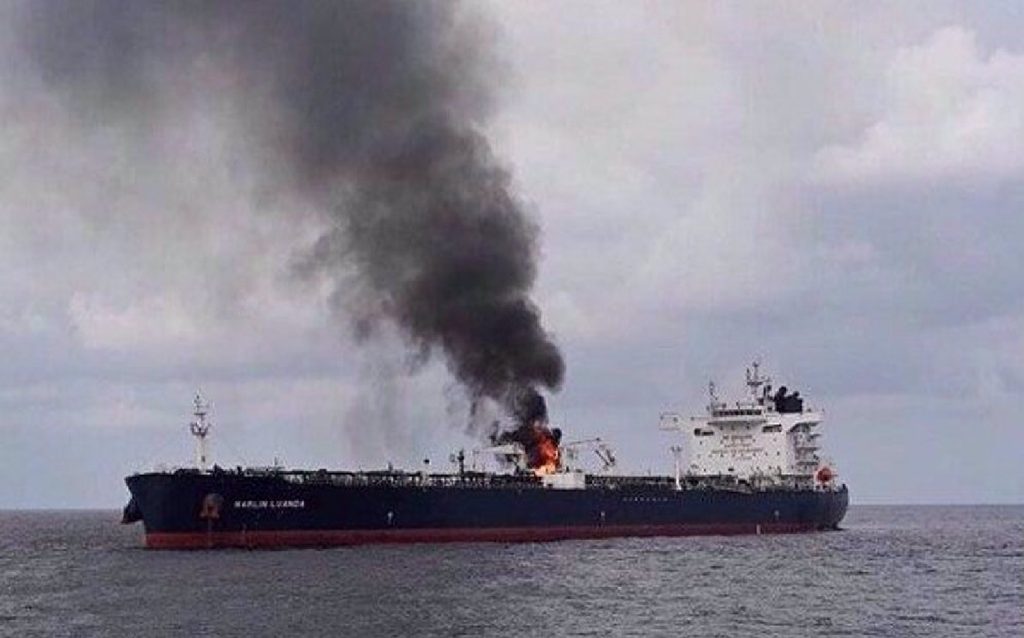
Five days after the November 9 announcement, the IRGC demonstrated what that enforcement looks like at sea. On Friday, November 14, Iranian forces seized the Talara, a Marshall Islands-flagged oil tanker carrying high-sulphur gasoil from Ajman in the United Arab Emirates to Singapore. According to a US defence official, three small IRGC boats approached the vessel; the ship “suddenly changed course” and was directed into Iranian territorial waters. A US Navy MQ-4C Triton drone had been circling overhead for hours, observing the seizure.
The UK Maritime Trade Operations centre acknowledged the incident, stating that a possible “state activity” forced the Talara to divert. Ambrey, a private maritime security firm, confirmed the sequence of events. Cyprus-based Columbia Shipmanagement, which managed the vessel, said it had “lost contact” with the tanker and was “working closely with all relevant parties, including maritime security agencies and the vessel owner, to restore contact.”
The IRGC subsequently confirmed the detention, stating that the Talara was seized “to safeguard the interests and resources of the Iranian nation” and directed to anchorage “for the purpose of addressing violations.” The force claimed the vessel was carrying “unauthorised cargo” and was involved in a ship-to-ship transfer of gasoil that the IRGC considers rightfully Iranian. Fars reported that the action was aimed at “preventing the illegal exit of the Iranian people’s assets.”
Maritime tracking company TankerTrackers.com confirmed that the Talara had indeed been engaged in a ship-to-ship transfer of its cargo, precisely the kind of operation that the IRGC now characterises as smuggling. The vessel was held for approximately six days before being released along with its 21 crew members following what Iranian authorities described as the completion of judicial proceedings.
The Talara case illustrates the operational logic behind the November 9 claim. The IRGC is not merely interdicting stateless smuggling skiffs. It is targeting commercial vessels engaged in transhipment operations that, in Tehran’s view, circumvent its control over the Strait and facilitate the export of resources it claims as its own. Whether those operations constitute “smuggling” under any recognised legal definition is another matter, one that Iranian authorities have not substantiated with publicly available evidence.
The Counter-Operation: Washington’s Mirror Strategy
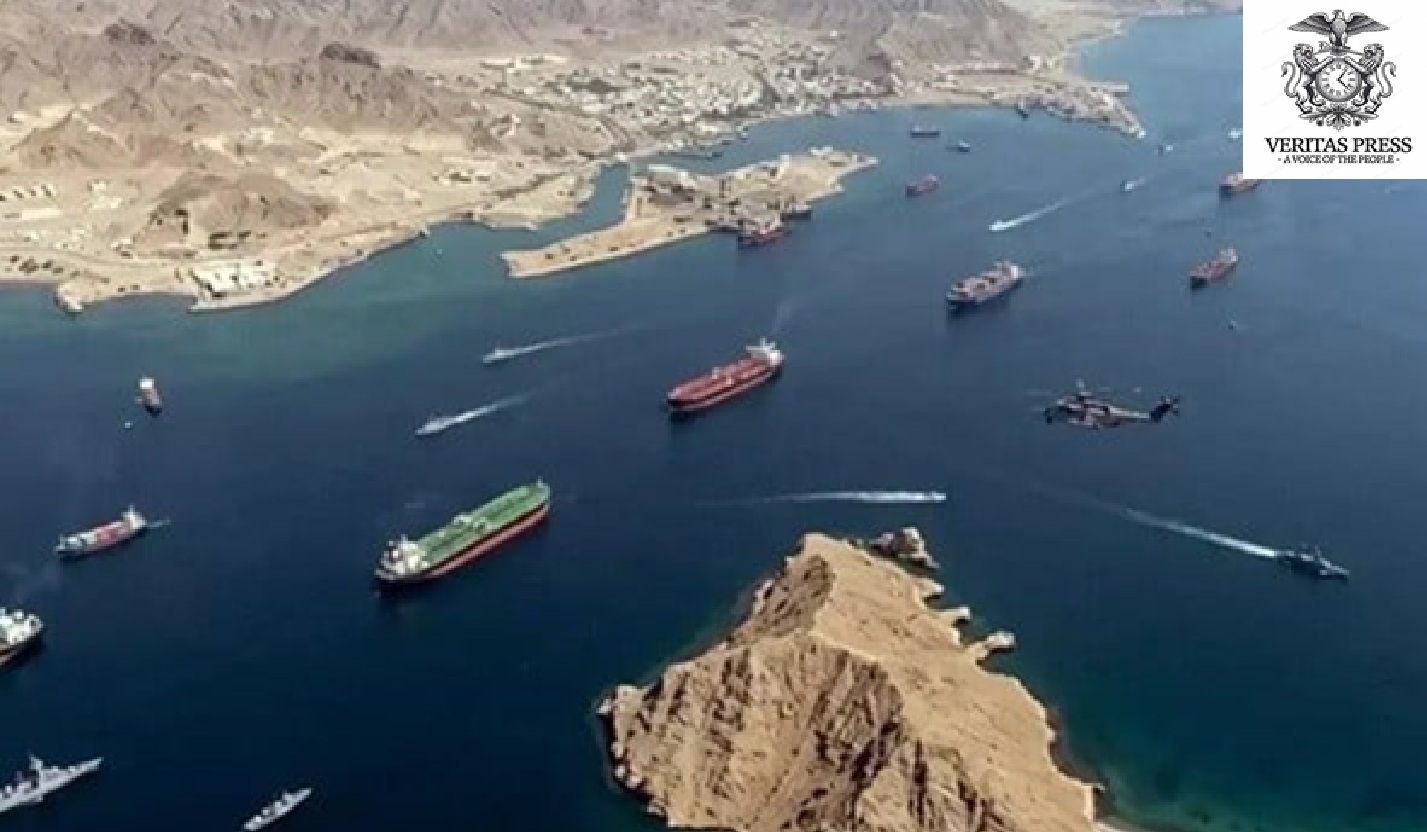
The IRGC’s assertion that it has “completely halted” smuggling through the southern passage is further complicated by the emergence of a mirror-image operation on the other side of the maritime divide. According to reporting by Reuters and Haaretz, the US military has been overseeing scores of secretive ship-to-ship oil transfers on the edge of the Strait of Hormuz, using aerial and water drones as well as helicopters to guide convoys to awaiting tankers. At least 92 vessels have been involved in these transfers at two confirmed locations: off the UAE coast of Fujairah and off Oman’s port of Sohar.
The irony is unmistakable. The United States is using the same ship-to-ship shuttle technique that Iran has long employed to evade sanctions, now repurposed to keep Gulf energy exports flowing in the face of Tehran’s restrictions. The scale is significant: from the start of the war on February 28 through late September, ship-to-ship transfers of liquid cargo in the Gulf of Oman averaged 3.7 million barrels per day, up from just 160,000 barrels per day in 2025.
For the IRGC, these transfers are precisely the “smuggling” it claims to be combating, unauthorised movements of oil that violate its maritime restrictions and serve the interests of the “aggressors.” For the United States and its Gulf partners, they are a necessary workaround to prevent a global energy shock. The same activity is thus framed in diametrically opposed terms, depending on which side of the Strait one stands.
The Information War: Ambiguity As Strategy
What distinguishes the IRGC’s November 9 announcement from a routine maritime enforcement bulletin is the absence of verifiable detail. The Fars report cited an unnamed source. No vessel names, flags, Automatic Identification System records, or confirmation from insurers or maritime authorities were provided. The “enemy navigation aid systems” that were purportedly destroyed were not identified. The “illegal passage” itself remains a designation asserted by Iran, not a recognised legal category.
This pattern is not incidental. As analysts at the Jewish Community Federation of America (JCFA) noted in a detailed assessment of IRGC communications, Tehran has been systematically attempting to portray the Strait of Hormuz “not merely as an arena of confrontation, but as a space in which it determines which routes are permitted and which are prohibited, which vessels are considered ‘violators,’ and which are allowed to pass under conditions acceptable to Iran.” The strategic goal, the analysis argues, is “to turn a temporary state of emergency into a new rule.”
The ambiguity serves a dual purpose. Domestically, it projects an image of control and competence to an audience grappling with severe economic pressures. Internationally, it creates uncertainty: if it is unclear which vessels may be targeted, under what circumstances, and according to what mechanism, every passage through the Strait becomes a risk calculation for shipping companies and insurers. But that same ambiguity carries risks for Tehran. An incident that is not fully documented could be interpreted in Washington as a deliberate escalation, or used to justify further action in the name of freedom of navigation.
The Domestic Subtext: Power Projection Amid Weakness
The IRGC’s maritime assertiveness is unfolding against a backdrop of deepening domestic vulnerability. Interbank interest rates in Iran are approaching 34%, businesses are struggling to secure financing, and essential medicines face supply disruptions. Labor grievances are mounting, and calls for negotiations with the United States are growing from within the political establishment.
The Strait of Hormuz, in this context, serves as a stage for power projection precisely when other indices of national strength are deteriorating. The November 9 announcement, with its triumphalist tone, is aimed as much at a domestic audience as at foreign adversaries. The message is that American pressure has not deprived the Islamic Republic of its capacity for coercive action, that Iran can still shut down a waterway through which approximately 20% of the world’s oil passes.
But this strategy of demonstrating strength through maritime coercion is not without internal critics. During earlier escalations, journalist Ehsan Bodaghi warned on X that “closing the Strait of Hormuz would drag neighbouring countries, and even players like China and India, into direct confrontation with Iran.” He asked pointedly: “Does our country have the capacity to endure that scale of conflict and hostility?” Former President Mohammad Khatami urged that decisions be made “with wisdom and long-term thinking, free from emotional reactions or a pure desire for revenge.”
These voices, however, have been largely marginalised in the current wartime atmosphere, where publicly questioning the wisdom of escalation can be construed as contradicting the Supreme Leader’s stance. The IRGC’s narrative has filled the space.
The Global Stakes
The full impact of the November 9 operation on maritime traffic remains unclear. But the broader closure regime, of which it is a part, has already had systemic consequences. The Iranian blockade has halted 90% of local maritime traffic, removed 20% of global LNG supply, and triggered force majeure declarations from major producers. War risk insurance has been suspended in many cases, and oil prices have risen sharply. Analysts have warned that a sustained closure could push Brent crude above $100 per barrel and grind global economic activity to a halt.
Asia is particularly exposed, relying heavily on imported fuel shipped through the Strait. The International Energy Agency has estimated that while approximately 4.2 million barrels per day of oil transport could be rerouted through existing spare pipelines, more than 10 million barrels per day would remain severely affected in the event of a complete closure.
The IRGC’s claim to have “completely stopped” smuggling through one passage is, in this light, a narrowly framed assertion that obscures a far larger reality. The Strait of Hormuz is not a smuggling problem to be solved by the destruction of navigation aids. It is the central arena of a contest between competing visions of maritime order, one in which Iran exercises discretionary control over passage, and one in which the United States and its partners seek to preserve freedom of navigation by whatever means available, including the very transhipment tactics they condemn when used by their adversary.
For the unnamed IRGC source quoted by Fars, the operation was a clean success. For the shipping companies now weighing the risks of every transit, the insurers suspending coverage, and the Gulf states scrambling to keep exports flowing, the picture is anything but. The only certainty in the Strait of Hormuz is that the battle over who controls it, and who defines “smuggling”, is far from over.
Conclusion
The IRGC’s November 9 declaration is not a verifiable enforcement milestone. It is an assertion of sovereignty dressed as a counter-smuggling success, and the evidence available six days after the announcement, and in the months that followed, suggests that the claim was designed less to describe a maritime reality than to manufacture one.
The Claim That Cannot Be Verified By Design
The IRGC’s statement, carried by Fars and IRIB and attributed to an unnamed “informed source,” provided no vessel names, no flags, no Automatic Identification System records, and no identification of the “enemy navigation aid systems” purportedly destroyed on the southern rocks. This is not an oversight. As the JCFA analysis of IRGC communications observed, the force has been systematically attempting to portray Hormuz “not merely as an arena of confrontation, but as a space in which it determines which routes are permitted and which are prohibited, which vessels are considered ‘violators,’ and which are allowed to pass under conditions acceptable to Iran”. The absence of verifiable detail is the mechanism through which that claim is advanced: if no one can independently confirm or refute the destruction of a navigation aid or the halt of a smuggling route, the IRGC’s assertion stands as the only account.
But the claim did not go uncontested. US Central Command issued a direct rebuttal in late September, stating that “Iran does not control the Strait of Hormuz as evidenced by the thousands of ships that have passed through freely along with more than 1 billion barrels of oil just over the past few months”. CENTCOM dismissed the IRGC’s control claims as “false” and rejected the proposition that mariners may use only routes designated by the Guard. The gap between the IRGC’s November 9 declaration and CENTCOM’s assessment is not a matter of interpretation. It is a factual dispute about whether the Strait is closed, and the only party that has produced any corroborating data, satellite imagery, shipping tracking, barrel counts, is the United States.
The Mirror That Exposes The Narrative
The deeper problem with the “smuggling” framing is that it is a description of an activity that the United States has been conducting at scale, using the same techniques, on the other side of the same waterway. Reuters satellite imagery reviewed between May and June 2026 documented at least 116 ships participating in US-overseen ship-to-ship oil transfers near Fujairah and Sohar, with an estimated 90 million barrels moved since early May. At the peak on June 11, seventeen pairs of vessels were conducting simultaneous transfers. The operation used aerial and surface drones and helicopters to guide convoys to awaiting tankers, the very “ship-to-ship shuttle” technique that Iran has long employed to evade sanctions, now repurposed to keep Gulf energy exports flowing.
The irony is not incidental. It is structural. The IRGC calls the unauthorised movement of oil through southern routes “smuggling.” The United States calls its own unauthorised movement of oil through the same waters “keeping exports flowing.” Both are assertions of control over a waterway that neither party is legally entitled to control in the manner each claims. The difference is that the United States does not pretend its transfers are anything other than a workaround, while the IRGC presents its interdictions as law enforcement against a criminal enterprise that it has never substantiated.
The Legal Vacuum Beneath The Enforcement Claim
The legal architecture of the IRGC’s position is weaker than its rhetoric suggests. Iran is not a party to UNCLOS, but the core provisions governing transit passage through international straits are widely regarded as codifying customary international law, binding on all states regardless of ratification. The Strait of Hormuz falls squarely within UNCLOS’s definition of an international strait, connecting the high seas on both ends and providing the only maritime route for the UAE, Qatar, Kuwait, and Bahrain. Iran’s closure of the strait, enforced through mines and attacks on vessels, constitutes a breach of the right of transit passage.
The IRGC may claim a limited belligerent right to take defensive measures within its territorial waters under the law of armed conflict, but that framework imposes strict limits: notification, self-neutralisation, distinction, and protection of neutral shipping. Mining operations without adequate safeguards, combined with strikes on Persian Gulf Arab infrastructure, exceed legitimate defensive measures and have strengthened arguments for collective self-defence under Article 51 of the UN Charter. The November 9 claim, the destruction of navigation aids to seal an “illegal passage” that exists only in Iran’s designation, is not a defensible belligerent act. It is the physical enforcement of a legal position that Iran has failed to establish.
The Domestic Function Of An Unverifiable Triumph
The timing of the announcement is inseparable from the domestic pressures bearing down on the Islamic Republic. Interbank interest rates were approaching 34%, businesses were struggling to secure financing, and essential medicines faced supply disruptions. Food inflation had risen by 128% year-on-year, with beef, lamb, and chicken prices up nearly 150%. A worker dismissed from a petrochemical company attempted suicide outside a Labour Department office after losing his job amid wartime layoffs. Parliamentary Speaker Mohammad Bagher Ghalibaf warned that “no matter how much military power we have, if people are hungry and we do not have financial circulation and economic growth, we will not endure”.
Against this backdrop, the Strait of Hormuz serves as a stage for power projection precisely when other indices of national strength are deteriorating. The message of the November 9 declaration is aimed as much at a domestic audience as at foreign adversaries: American pressure has not stripped the Islamic Republic of its capacity for coercive action. But the same ambiguity that serves this domestic function carries escalating risks. An incident that is not fully documented could be interpreted in Washington as a deliberate escalation, or used to justify further action in the name of freedom of navigation.
The Global Stakes Obscured By A Narrow Claim
The IRGC’s assertion that one passage has been closed to smuggling sits atop a far larger reality that the announcement does not acknowledge. The broader closure regime has reduced daily transits through the Strait from 129 to 4, a 97% collapse. Crude oil and LNG prices rose by 27% and 74% respectively in the first ten days of the conflict. The IMF has reported that oil and gas output across the GCC fell by an estimated 13 million barrels per day of oil and the equivalent of 3.5 million barrels per day of natural gas, while the Strait “has come close to a standstill”. Marine insurers have suspended or repriced war-risk coverage, and traffic has fallen by approximately 95%. Analysts have warned that a one-month closure could push oil to $120–150 per barrel; a three-month closure could send it above $200.
The November 9 claim does not address any of this. It is a narrow assertion about a single passage, framed in the language of law enforcement, that functions to legitimise a broader regime of unilateral control over a waterway upon which the global economy depends. The IRGC is not fighting smuggling. It is fighting for the right to define what smuggling is, and to enforce that definition with mines, destroyed navigation aids, and seized tankers.
The only certainty in the Strait of Hormuz is that the contest over who controls it, and who gets to narrate that control, is far from resolved. What the November 9 declaration reveals is not the success of an enforcement operation, but the political utility of an unverifiable one. In a war where the facts on the water are contested, the claim itself becomes a weapon.
Veritas Press Investigative Analysis Independent journalism examining global affairs, power, diplomacy, and accountability.Source:Veritas Press C.I.C. | Multi-News Agencies
Help Support Our Work
For the safe submission of documentation, testimonies, or exclusive investigative reports from anywhere in the world, please use the following contact details for our Investigations Desk: mailto:enquiries@veritaspress.co.uk or mailto:editor@veritaspress.co.uk.
Readers who believe that truth still matters have power over popular information. When just a few more people step up to support this work, it means more lies exposed, more corruption uncovered, and more accountability where it’s long overdue.
Help Protect Independent Journalism, Which Is Currently Under Attack.
If you believe journalism should serve the public, not the powerful, and you’re able to help, becoming a regular DONOR or a PAID SUBSCRIBER truly makes a difference.
DONATION APPEAL: If you found this reporting valuable, please consider supporting independent journalism.
Your support fuels our fearless, truth-driven journalism. In unity, we endeavour to amplify marginalised voices and champion justice, irrespective of geographical location. We operate independently, with no financial backing from billionaires; our readers support us.
But it’s also extremely important. One of Veritas Press’s greatest assets is its reader-funded model.
1. Reader funding means we can cover what we like. We’re not beholden to the political whims of a billionaire owner. We are a small, independent and impartial organisation. No one can tell us what not to say or what not to report.
2. Reader funding means we don’t have to chase clicks and traffic. We’re not desperately seeking your attention for its own sake; we pursue the stories that our editorial team deems important and believes are worthy of your time.
3. Reader Funding: enables us to keep our website and other social media channels open, allowing as many people as possible to access quality journalism from around the world, particularly those in places where the free press is under threat.
We know not everyone can afford to pay for news, but if you’ve been meaning to support us, now’s the time.
Your donation goes a long way. It helps us:
Keep the lights on and sustain our day-to-day operations
Hire new, talented, independent reporters
Launch real-time live debates, community-focused shows, and on-the-ground reporting
Cover the issues that matter most to our communities, in real time, with depth and integrity
Without your support, independent voices like ours will be silenced.
Furthermore, we have plans to expand our work, but we can’t do it without your support. Every contribution, no matter the size, helps us stay independent and build a truly people-powered media platform.
If you believe in journalism that informs, empowers, and reflects the communities we serve, please donate today.
You Can Make Direct Bank Transfer Donations To:
Bank Name: Bank Of Scotland
Account Name: Veritas Press C.I.C.
Sort code: 80-22-60
Account Number: 27540469
IBAN #: GB18-BOFS-6027-5404-69
Online Donations
Submissions
For the safe submission of documentation, testimonies, or exclusive investigative reports from anywhere in the world, please use the following contact details for our Investigations Desk: mailto:enquiries@veritaspress.co.uk or mailto:editor@veritaspress.co.uk.
SEATTLE, TEHRAN — The U.S. Department of Homeland Security (DHS) will allow Iran’s national football team to enter the country 48 hours before their critical World Cup match against Egypt on Friday, a modest concession in a tournament where Team Melli’s travel conditions have sparked claims of oppression and competitive disadvantage.