



Author:
Kamran Faqir
Help support our mission, donate today and be the change. Every contribution goes directly toward driving real impact for the cause we believe in.
VIENNA/TEHRAN – One year after U.S. and Israeli warplanes bombed Iran’s safeguarded nuclear facilitiesm, the killing of approx 185 students in the town of Minab and sending shockwaves through the global non-proliferation architecture, the International Atomic Energy Agency’s Board of Governors is poised to pass yet another resolution against the Islamic Republic. The draft, tabled by the United States, Britain, France and Germany on 8 June, demands that Tehran “provide complete information” on nuclear material scattered by the very bombs that halted IAEA inspections, and grant inspectors unfettered access “without delay.”
For Iran’s deputy foreign minister, Kazem Gharibabadi, the move is not diplomacy. It is a “dangerous attempt to cleanse and whitewash the responsibility of the aggressors and criminals.” In a blistering series of posts on X, he added: “As recorded in the agency’s documents as well, the Israeli regime’s and America’s attacks on Iran’s nuclear facilities halted verification activities and forced Agency inspectors to leave Iran for safety reasons. … They strike safeguarded facilities, disrupt the verification procedures and jeopardise nuclear security, and then they exploit the Board of Governors to pressure Iran.”
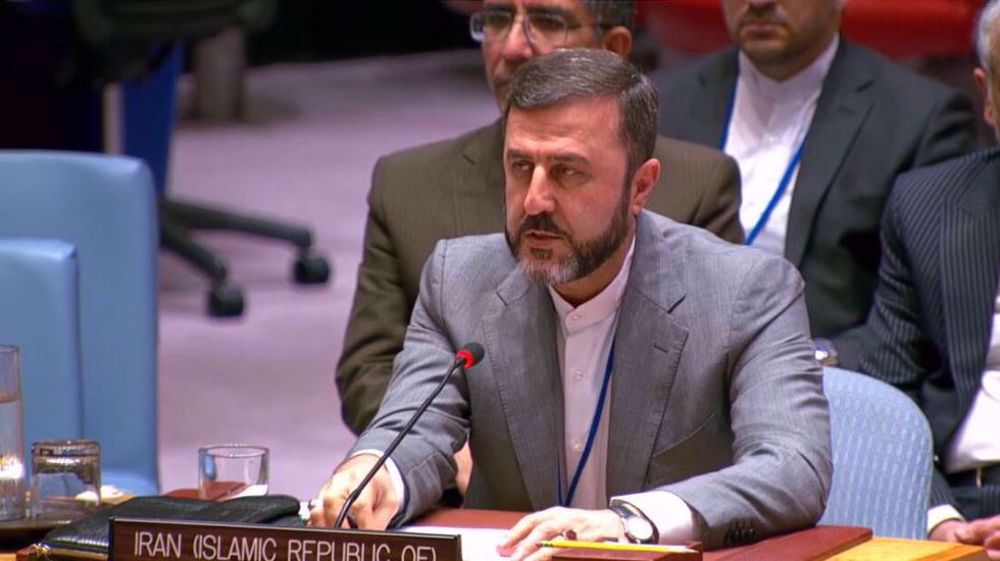
His words echo across a global diplomatic landscape that has, over the past twelve months, watched a once-technical watchdog mutate into a political battering ram. This investigation, drawing on interviews with Iranian and European officials, nuclear security experts, families of victims, and internal agency correspondence, reveals how the IAEA’s response to the 2025 Ramadan War has shattered its credibility, exposed lethal double standards on nuclear weapons, and left the Middle East teetering on the edge of a wider conflagration.
From Safeguarded Site To Bomb Crater: The Chain Of Events.
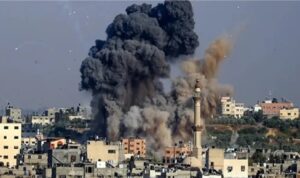
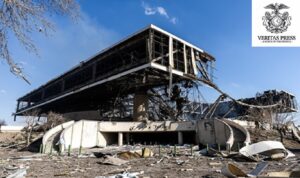
On the night of 12 June 2025, the second week of what Iranian state media later dubbed the “Ramadan War”, U.S. B-2 Spirit bombers and Israeli F-35s struck multiple sites inside Iran. Among the targets were the Fordow Fuel Enrichment Plant, buried deep inside a mountain near Qom, and an above-ground centrifuge assembly hall at Natanz. The strikes killed dozens of technicians and Iranian Revolutionary Guard Corps (IRGC) personnel. In Minab, a missile struck a student dormitory, leaving 168 dead and over 300 wounded. The U.S. and Israel claimed the raids were “precision strikes” aimed at disrupting Iran’s nuclear breakout capability; Iran called them war crimes.
The IAEA inspectors stationed at Fordow and Natanz were evacuated within hours. Their surveillance cameras went dark. Seals on stored uranium hexafluoride cylinders were vaporised. In the months that followed, the agency confirmed in confidential reports that it had “lost continuity of knowledge” on approximately 87 kg of uranium enriched to 60% purity, a short technical step from weapons grade, that was present at the sites before the attacks. The whereabouts and condition of that material remain unknown.
Yet when the IAEA’s 35-nation Board of Governors convened for its quarterly meeting on 8 June 2026, it was not the United States or Israel that faced censure. Instead, a draft resolution co-sponsored by Washington, London, Paris and Berlin demands that Iran, the victim of the strikes, “provide accurate information regarding nuclear material accountancy and safeguarded nuclear facilities” and grant inspectors full access “without delay.” The text, obtained by Reuters, describes these steps as “essential” and “urgent.”
“This is an inversion of accountability,” Gharibabadi told reporters in Vienna. “Responsibility for an internationally wrongful act rests with the perpetrator and cannot be transferred to the victim. The Board must not be instrumentalised to relieve those who carried out these attacks of their responsibility.”
“The Channel Of Communication Is Broken”:
IAEA Director General Rafael Grossi has publicly acknowledged the rupture. Addressing the Board on the opening day of the June 2026 meeting, Grossi called on Iran to “re-engage” with the agency. “It’s very important that we re-engage,” he said, warning that the IAEA’s ability to verify the exclusively peaceful nature of Iran’s nuclear programme was slipping away. Later, at a press conference, Grossi offered a frank assessment: “I have sporadic contacts with the foreign minister and others, but basically the channel of communication is broken.”
What Grossi did not mention, and what critics say the agency has systematically avoided, is why the channel snapped in the first place. According to a senior Iranian nuclear official who spoke to this reporter on condition of anonymity, Tehran’s parliament passed emergency legislation in July 2025, just weeks after the bombings, mandating the Atomic Energy Organisation of Iran (AEOI) to suspend cooperation with the IAEA beyond basic safeguards obligations until “the aggressors are held accountable, and guarantees against further attacks are provided.”
“We did not break the channel. The bombs broke it,” the official said. “The agency watched our sites get attacked and said nothing. Then Grossi came to Tehran and asked us to put the cameras back on as if nothing had happened. What do you expect?”
This sentiment is widely shared among Iranian officials. Iran’s Permanent Mission in Vienna posted on X that “17 waves of armed attacks against safeguarded Iranian nuclear sites, along with continuing threats, have created an unprecedented situation in the history of the IAEA.” The mission warned the Board that “a coercive and confrontational approach does not lead to cooperation and undermines the prospects for achieving a diplomatic solution.”
Narrative Engineering And The Death Of Impartiality:
The current resolution is not an isolated incident; it is the latest act in a two-decade drama of Western narrative manipulation within the IAEA, Iranian analysts argue. The Tehran-based Nournews, an outlet close to Iran’s Supreme National Security Council, published a detailed commentary on 9 June, calling the draft a “whitewashing of aggression” and a “politicisation of the agency.”
“The record of two decades of hostile Western actions against Iran within the agency and the Board of Governors reflects a consistent and recurring pattern, one based on distorting facts, rewriting history, exonerating the accused, condemning the victim, and ultimately turning this international institution into a tool for exerting pressure on Iran,” the commentary stated.
It noted that the U.S. and its allies are now adopting a “self-righteous posture” at the very moment that global public opinion has turned against them. Polling conducted in the U.S. in early 2026 found that 70% of Americans favour ending hostilities against Iran. International surveys show that similar majorities in Europe and the Global South view the 2025 bombings as illegal.
The Nournews piece also pointed to the Stockholm International Peace Research Institute’s (SIPRI) 2026 annual report, which documents a 15% increase in global nuclear arsenals over the past five years, driven primarily by the U.S., Russia, China, and the United Kingdom. “The agency has taken no meaningful position or action regarding this trend,” the commentary observed, “yet it rushes to condemn Iran, a non-nuclear-weapon state under the NPT, for failing to account for material scattered by foreign bombs.”
Russian Permanent Representative Mikhail Ulyanov has emerged as a rare voice of dissent on the Board. In a closed-door session on 8 June, Ulyanov warned that “Washington is attempting to alter the existing narrative by shifting responsibility for recent developments from the aggressor to the victim, while simultaneously directing a new set of demands at Tehran.” China’s envoy echoed the concern, describing the draft resolution as “unbalanced and counterproductive.” Beijing and Moscow are expected to vote against the text and may formally block any subsequent referral to the UN Security Council, as they did in November 2025.
The Spectre Of Israel’s Nuclear Arsenal:
Perhaps the most glaring double standard, one that emerges in every corridor conversation in Vienna but rarely in the Board’s formal records, is the total silence surrounding Israel’s nuclear weapons. Israel has never signed the NPT (Non-Proliferation Treaty), operates an undeclared nuclear arsenal estimated at 90 to 400 warheads, and has repeatedly refused IAEA inspections. The agency has never passed a resolution demanding that Israel open its Dimona reactor to inspectors. It has never demanded an account of Israel’s nuclear materials. It has never raised the spectre of “nuclear security” in the context of Israel’s weapons.
“Why should Iran, a party to the NPT, be subjected to a special investigation when the state that actually possesses hundreds of nuclear bombs, and just bombed our sites, faces no scrutiny?” asked an Iranian diplomat posted in Vienna. “This is not a safeguards issue. This is a political farce.”
Ali, a 23-year-old survivor of the Minab dormitory attack now studying in Shiraz, put it more starkly: “They killed my friends. 168 students. And now they want to punish Iran because we can’t show them where the uranium went? The uranium they scattered with their bombs? Tell the IAEA to look under the rubble. Tell them to ask their own governments where the uranium is.”
The Iranian mission’s statement to the Board explicitly referenced the attacks: “Responsibility for an internationally wrongful act rests with the perpetrator and cannot be transferred to the victim. The Board must not be instrumentalised to relieve those who carried out these attacks of their responsibility.”
Grossi’s Ambitions And The Erosion Of Technical Mandate:
Critics inside and outside the agency increasingly view Director General Grossi as a political actor pursuing a personal agenda. According to multiple diplomatic sources in Vienna, Grossi has been quietly campaigning for the post of UN Secretary-General, with backing from Washington and several European capitals. His tenure has been marked by a series of high-profile, confrontational reports on Iran, while more quietly scaling back scrutiny on other states.
“Grossi has effectively become part of the machinery used to justify U.S. actions against Iran,” Nournews charged. “Part of this trend stems from Western dominance over such institutions, while another part reflects the personal interests and ambitions of figures such as Grossi, who is reportedly seeking the position of UN Secretary-General with Western backing.”
A former IAEA safeguards inspector who served under Grossi’s predecessors and spoke on condition of anonymity said the current crisis was “predictable.” “When the Director General becomes a political player, the technical credibility of the agency collapses,” he said. “We saw it in Iraq in 2003. We’re seeing it again now. The agency is being used to build a case, not to verify facts.”
The IAEA’s own legal framework supports the Iranian position, specialists note. Under international law, a state that attacks safeguarded nuclear facilities bears responsibility for the consequences, including the disruption of verification activities. The IAEA Statute and the Convention on the Physical Protection of Nuclear Material oblige states to protect nuclear facilities and material. Bombing them violates those norms.
“What we are witnessing is a textbook case of ‘victim-blaming’ in international law,” said Dr. Heba al-Najjar, a professor of international law at the University of Cairo. “The aggressor destroys a safeguarded site, scatters the material, and then demands that the victim account for it. If the IAEA endorses such a narrative, it will set a precedent that could unravel the entire safeguards system.”
Military Escalation And The Collapse Of Negotiations:
The Board’s proceedings are unfolding against a backdrop of escalating military tensions. On the eve of the meeting, Israel and Iran exchanged strikes once again. Israeli Chief of Staff Eyal Zamir declared on 8 June that Israel is “prepared to wage another deep strike on Iran,” describing the earlier attack as “preparation for a much more significant and severe blow.” U.S. President Donald Trump, speaking to the Financial Times hours later, dismissed the latest exchanges as having “no impact on the deal,” referring to ongoing U.S.-Iran negotiations aimed at extending a fragile ceasefire and opening broader talks.
But those talks are now in jeopardy. Iranian officials have repeatedly stated that the country will not negotiate under the shadow of IAEA resolutions. “Coercion and confrontation do not lead to cooperation,” the Iranian mission’s statement warned. “It undermines prospects of a diplomatic solution.” A European diplomat involved in the talks confirmed the assessment: “Every resolution pushes Iran further away from the table. The Americans know this, but domestic pressures and Israeli lobbying are driving the agenda.”
The U.S. strategy, according to analysts at the Nournews-affiliated think tank, is to compensate for military and diplomatic failures. “Although the U.S. pursued war in an effort to achieve objectives such as dismantling Iran, removing it from the regional map, stripping it of its nuclear rights, ending its missile and drone capabilities, and excluding it from regional equations, the resilience of the Iranian people … upended all of these calculations,” the commentary argued. “Now, the US and several European countries appear to be attempting, through fabricated narratives, to conceal their crimes and failures while pursuing unachieved objectives, particularly access to Iran’s nuclear facilities and enriched uranium, through pressure exerted via the agency.”
A Fragile Board, A Divided World:
The vote on the resolution, expected on 12 June, is widely expected to pass, but by a narrower margin than Western sponsors hope. The U.S. and the E3 have already dropped a provision that would have automatically referred Iran to the Security Council, in an effort to woo wavering members. Even so, diplomats from Brazil, South Africa, Indonesia, and several African nations have signalled deep unease.
“We are being asked to condemn a state that was attacked for failing to account for material destroyed by the attackers,” a diplomat from a non-aligned Board member said. “This makes a mockery of the rule of law.”
Iran’s response to a new resolution is likely to be severe. In the past, Tehran has escalated enrichment levels, reduced IAEA access, and accelerated its ballistic missile programme in response to Board resolutions. A senior AEOI official told this reporter that all options are on the table, including withdrawing from the NPT and resuming enrichment to 90%, a move that would bring Iran to the threshold of nuclear weapons capability.
“We don’t want a bomb,” the official said. “But if the international community treats us as if we already have one, while ignoring the real nuclear arsenal in our region, then we may have to reconsider our strategic patience.”
Conclusion: The Cost Of Whitewashing.
At the heart of this crisis lies a fundamental question: Can an international order survive when its institutions become instruments of the powerful? The IAEA was created to ensure that nuclear technology served peace, not war. It was meant to be impartial, technical, and universal. Yet today, it stands accused of providing a seal of approval for military aggression, whitewashing the crimes of nuclear-armed states, and punishing their victims.
As the Board prepares to vote, Iranian Deputy Foreign Minister Gharibabadi’s warning hangs over the chamber: “Drafting resolutions will not strengthen the IAEA Safeguards. Rather, condemnation of aggression against safeguarded facilities, respect for the rights of the member states, holding the aggressors to account and putting the agency back on its technical and impartial capacity will.”
Beyond the agency’s institutional decay lies a cruder political calculus, embodied by Israeli Prime Minister Benjamin Netanyahu. Facing a mounting cascade of domestic corruption trials and an international criminal complaint over war crimes committed during the Ramadan War, including the deliberate bombing of civilian infrastructure and the massacre of approx 85 students at Minab, Netanyahu is widely seen as escalating military confrontation precisely to evade accountability. Every new salvo against Iranian territory serves a dual purpose: it degrades Iran’s nuclear capability on paper, but more importantly, it entrenches a permanent state of emergency that shields him from legal reckoning and silences political opposition. War, in this configuration, is not a last resort; it is a survival strategy for a leader whose personal freedom may depend on perpetual conflict or prison.
Compounding this distortion is Israel’s absolute refusal to sign the Nuclear Non-Proliferation Treaty (NPT) and its categorical bar on IAEA inspectors visiting the Dimona reactor, a facility that has produced an arsenal estimated at anywhere between 90 and 400 nuclear warheads. No resolution has ever been tabled at the IAEA Board demanding that Israel declare its nuclear materials, open its sites to verification, or adhere to the same safeguards obligations imposed on every other state in the region. This silence is not an oversight. Western powers, led by the United States, Britain, and France, deliberately shield Israel from scrutiny even as they coordinate intelligence and military strategies with Israeli counterparts to further defame and isolate Iran. In this architecture of hypocrisy, a non-nuclear-weapon state that has been bombed is hounded for “non-compliance,” while the actual nuclear-armed aggressor, which carried out the strikes and continues to threaten further “deep” attacks, is coddled, armed, and absolved. The IAEA, by allowing itself to be used as the stage for this charade, has become an active participant in a grotesque inversion of international law.
Failure to heed the warnings from Tehran, Moscow, Beijing, and a growing bloc of non-aligned states will not only deepen the impasse over Iran’s nuclear programme. It will erode what little trust remains in the multilateral system, embolden nuclear-armed states to repeat their aggression, and leave the world asking a question no resolution can answer: If the rules only apply to the weak, and the strong can bomb, shield, and whitewash at will, why should anyone follow them at all?
Source: Veritas Press C.I.C. | Multi News Agencies
Submissions:
For The Secure Submission Of Documentation, Testimonies, Or Exclusive Investigative Reports From Any Global Location, Please Utilise The Following Contact Details For Our Investigations Desk: enquiries@veritaspress.co.uk or editor@veritaspress.co.uk
Help Support Our Work:
Popular Information is powered by readers who believe that truth still matters. When just a few more people step up to support this work, it means more lies exposed, more corruption uncovered, and more accountability where it’s long overdue.
Help Protect Independent Journalism, Which Is Currently Under Attack.
If you believe journalism should serve the public, not the powerful, and you’re in a position to help, becoming a DONATOR or a PAID SUBSCRIBER truly makes a difference.
DONATION APPEAL: If You Found This Reporting Valuable, Please Consider Supporting Independent Journalism.
Help Support Our Work – We Know, We Know, We Know …
Seeing these messages is annoying. We know that. (Imagine what it’s like writing them … )
Your support fuels our fearless, truth-driven journalism. In unity, we endeavour to amplify marginalised voices and champion justice, irrespective of geographical location.
But it’s also extremely important. One of Veritas Press’s greatest assets is its reader-funded model.
1. Reader funding means we can cover what we like. We’re not beholden to the political whims of a billionaire owner. We are a small, independent and impartial organisation. No one can tell us what not to say or what not to report.
2. Reader funding means we don’t have to chase clicks and traffic. We’re not desperately seeking your attention for its own sake: we pursue the stories that our editorial team deems important and believe are worthy of your time.
3. Reader Funding: enables us to keep our website and other social media channels open, allowing as many people as possible to access quality journalism from around the world, particularly those in places where the free press is under threat.
We know not everyone can afford to pay for news, but if you’ve been meaning to support us, now’s the time.
Your donation goes a long way. It helps us:
- Keep the lights on and sustain our day-to-day operations
- Hire new, talented independent reporters
- Launch real-time live debates, community-focused shows, and on-the-ground reporting
- Cover the issues that matter most to our communities, in real time, with depth and integrity
We have plans to expand our work, but we can’t do it without your support. Every contribution, no matter the size, helps us stay independent and build a truly people-powered media platform.
If you believe in journalism that informs, empowers, and reflects the communities we serve, please donate today.
Donate Today:
India calls for Kashmir and Ladakh to appear only on its official map after a
ISLAMABAD – In the high-stakes political theatre of Pakistan, the battleground has shifted from the
Francesca Albanese says third states have an ICJ-mandated obligation to end Israel’s occupation. But with
As Israeli jets bomb a Syrian air base over alleged Turkish deployment plans, Ankara, Washington
QUSRA, OCCUPIED WEST BANK – In the rugged hills south of Nablus, a slow-motion displacement
Beneath the wreath-laying and “plunder” rhetoric lies a contest for Iraq’s logistical arteries and post-war
As mediators push for ceasefire extensions, airstrikes on police infrastructure reveal a strategic campaign to
As the federal government petitions the Supreme Court to recall its order shifting Imran Khan

Our Guardian Taskforce have had a busy weekend making multiple arrests and have recovered multiple
As Prime Minister Andy Burnham tours Britain promising “everyday fixes”, from banning phoney bargains to

















Hello!
77777
Good luck 🙂
Hello!
77777
Good luck 🙂
Hello.
[b]https://moypvdom.com/[/b]
photovoltaik fachbetrieb nahe potsdam
AC Speicher nachrusten Plug and Play
Photovoltaik Plauen
Photovoltaik Karben
pv anlage Donaueschingen
uj03kn
wilx79
Hello.
https://brown-spoonbill-433485.hostingersite.com/index.php
photovoltaik strom einspeisen
Pv anlage esslingen
PV-Strom verkaufen OeMAG
PV-Anlage Strom verkaufen an Mieter
wechselrichter pv-anlage mit speicher
Hello.
[b]https://brown-spoonbill-433485.hostingersite.com/index.php [/b]
PV-Anlage Saarland
Photovoltaikanlage mit Speicher Komplettpaket Test
Solaranlagen fГјr Firmen
pv anlage NeumГјnster
pv anlage kosten MГјhldorf kosten am kosten Inn
scy2b1
nr67z3
fcqki3
qix2v5
75rxya
money for gta 5 online https://buy-gta5-money.xyz
wild trucks free game https://wild-trucks-rules.xyz
Последние изменения: https://dfprices.ru
Подробности внутри: https://hidplanet.ru
Последние публикации: https://onliskill.ru
Самое главное в материале: https://mudrila.ru
Последние обновления: https://gshimki.ru
КтоЛетит https://ktoletit.ru сайт об экстремальных видах спорта и отдыха: параглайдинг, кайт-серфинг, серфинг, виндсерфинг. База знаний, советы по выбору хобби, спорта, или экстремального досуга. Локации для путешествий на карте, каталог школ экстрим спорта в России и мире.
Подрядчикам интересно: профиль в каталоге и запросы заказчиков бесплатное размещение, цены рынка из реальных смет по регионам и лента заявок. Без комиссии со сделки и без платных мест в выдаче.
Нужен спорт инвентарь? оснащение школьного спортзала по фгос комплексные решения для оснащения спортзалов школ и образовательных учреждений. Спортивные снаряды, тренажеры, мячи, маты и инвентарь для проведения уроков физкультуры и спортивных мероприятий.
Details on the page http://doggone.site/2026/08/11/casino-games-and-bets-in-ethiopia-with-vamos-betting-app-download-login-register-mobile/
wild trucks game wild trucks gameplay demo
Зламався пульт від кондиціонера? вартість пульта для кондиціонера універсальні та оригінальні моделі для різних марок кліматичної техніки. Підберіть сумісний пульт по виробнику та моделі кондиціонера, оформіть замовлення з доставкою та швидко відновіть зручне керування пристроєм.
Проблемы с лверным замком? аварийное открытие дверей специалист определит причину блокировки, подберет подходящий способ открытия и при необходимости выполнит ремонт или замену неисправного замка.
рекламные силиконовые браслеты сделать браслет со своей надписью
Нужны браслеты? резиновые браслеты на заказ практичный вариант для фестивалей, концертов, конференций, акций и корпоративных мероприятий. Выбирайте цвет, размер и дизайн, добавляйте логотип или текст. Изготовление партий под индивидуальные требования.
изготовление браслетов на руку силиконовые браслеты от производителя беларусь