Kamran Faqir is a volunteer investigative journalist and writer committed to exposing hidden truths and amplifying underreported stories. Driven by social justice, he brings sharp insight and fearless truth-telling to independent journalism. NUJ registered.
Article Date Published:
Article Date Modified:
31 minutes
Views:397
Listen to this article
Help support our mission, donate today and be the change. Every contribution goes directly toward driving real impact for the cause we believe in.
London’s historic sanctions against Israeli settlements mark a watershed moment in UK foreign policy,but Israeli diplomats privately concede the diplomatic framework Britain seeks to save no longer exists.
Part One: The Announcement
LONDON — In a wood-panelled Commons chamber on Tuesday afternoon, Foreign Secretary Ed Miliband rose to deliver a statement that British officials had spent weeks preparing, knowing it would detonate across diplomatic channels from Jerusalem to Washington.
What followed was the most significant rupture in UK-Israel relations since the establishment of the Jewish state in 1948. Miliband, a proud British Jew whose family found refuge in Britain after fleeing the Holocaust, accused the Israeli government of “turning a blind eye” to ethnic cleansing in the West Bank. He announced an import ban on all goods from illegal settlements, comprehensive sanctions targeting the economic infrastructure that sustains them, and a refusal of all weapons export licences that “materially contribute to the occupation.”
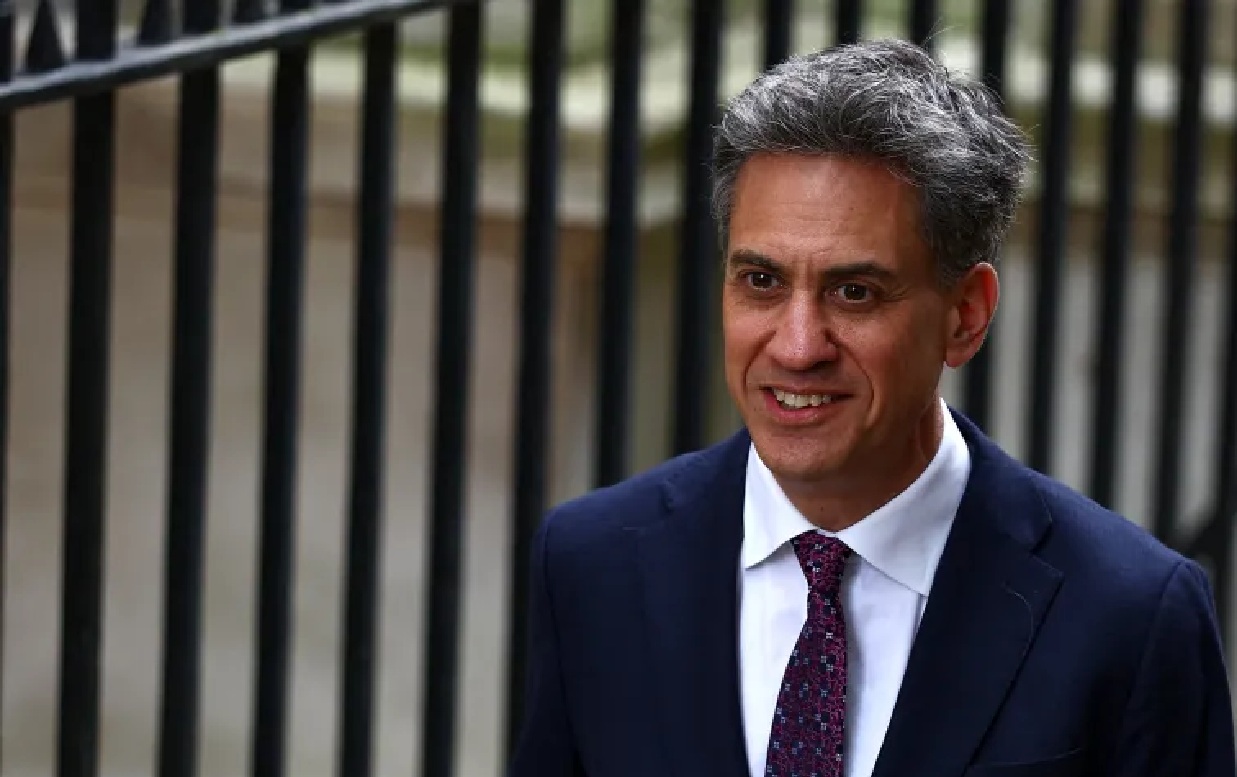
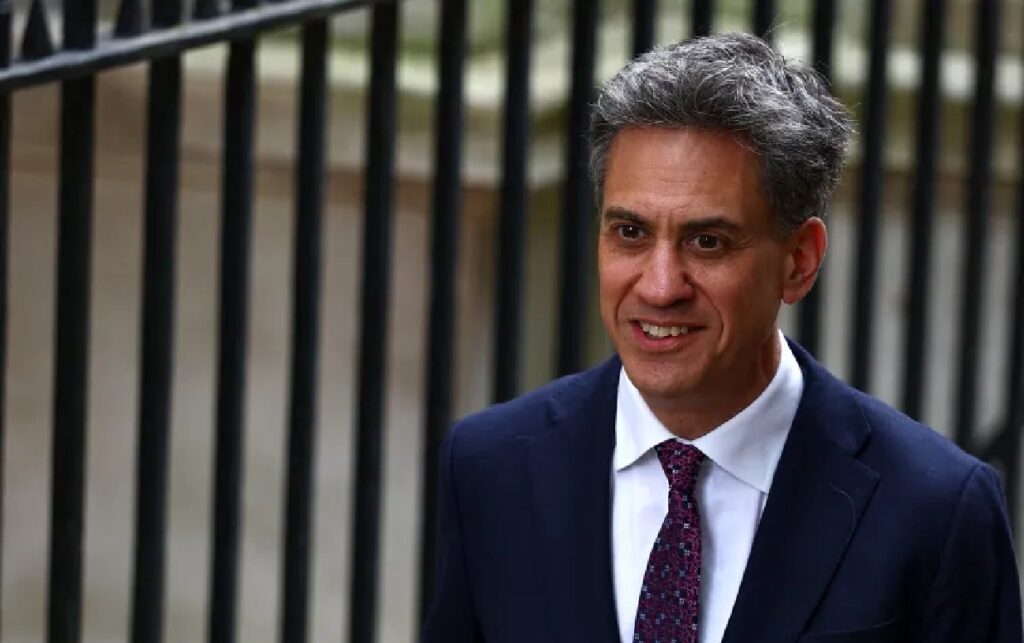
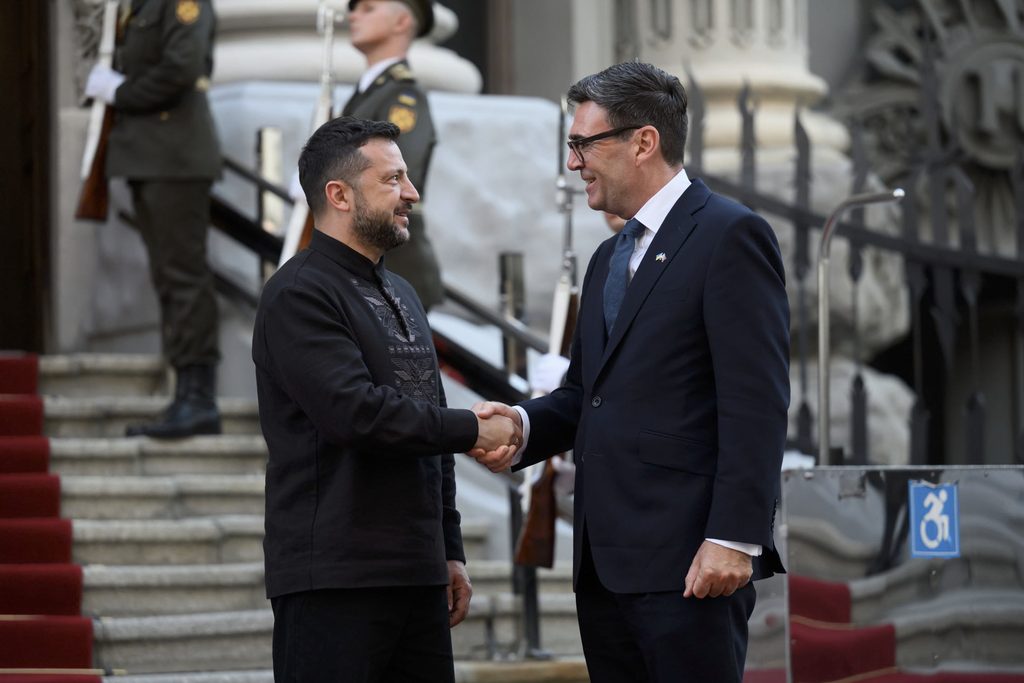
UK Foreign Secretary Ed Miliband arrives ahead of a cabinet meeting in Downing Street in London on July 21, 2026, a day after Andy Burnham became Britain’s new prime minister [AFP]
“I do not believe the British people want us supporting the occupation by accepting products from settlements in our shops and supermarkets,” Miliband told a hushed chamber. “Britain is not silent in the face of deep injustice, nor is it powerless.”
The announcement came after what multiple Whitehall sources describe as a summer of intense diplomatic preparation, and increasing political pressure from a restive Labour backbench that had watched in horror as settlement expansion accelerated and settler violence reached levels not seen in decades.
Within hours, Israel’s response arrived with the force of a diplomatic hammer blow. Foreign Minister Gideon Sa’ar announced the closure of the British consulate in East Jerusalem, the expulsion of British officials from a Gaza coordination centre in Kiryat Gat, the termination of British training programmes for Palestinian Authority security forces, and entry bans on 12 British MPs, including former Labour leader Jeremy Corbyn and sitting Labour MP Diane Abbott.
“The British move is morally distorted and constitutes blatant interference in the affairs of a sovereign state and in its electoral process,” Sa’ar declared. “The attempt by the British Labour government to impose measures in the style of the ‘White Paper’ carries echoes of the antisemitic words of British Lieutenant-General Barker, commander of British forces in the Land of Israel during the Mandate, who said: ‘punish the Jews by striking at their pockets.'”
The historical reference was deliberate, and, critics argue, dangerously misleading. The 1939 White Paper restricted Jewish immigration to Mandatory Palestine precisely as European Jewry faced annihilation. The comparison to import restrictions on goods produced in occupied territory, they note, collapses the distinction between opposing occupation and opposing Jewish existence, a distinction Miliband himself was at pains to draw.
Part Two: The Death Of A Diplomatic Fiction
JERUSALEM — Behind closed doors in the corridors of Israel’s Foreign Ministry, a remarkable admission has become commonplace among senior diplomats and officials. The two-state solution, the framework that has underpinned international diplomacy for three decades, the framework Britain’s sanctions are explicitly designed to preserve, is, in their assessment, dead.
“The two-state solution is finished,” a senior Israeli diplomat told The Guardian in an interview conducted before the UK announcement, speaking on condition of anonymity because they were not authorised to discuss policy publicly. “It has been finished for years. The international community is the last to know. They are performing CPR on a corpse.”
The candour is striking, and it cuts to the heart of the contradiction in Britain’s new approach. Miliband justified the sanctions as necessary to “keep alive” the prospect of two states living side by side. But the Israeli officials whose policies he seeks to change have long abandoned that prospect, if they ever embraced it at all.
“The West Bank is not occupied territory waiting to be returned,” said another Israeli diplomat, a veteran of the Oslo process who has watched the peace camp’s collapse with something approaching resignation. “It is Judea and Samaria. It is the heartland of the Jewish people. No Israeli government, not this one, not any future one, will ever withdraw from the settlement blocs. And without those blocs, there is no Palestinian state. This is not rhetoric. It is a demographic and geographic reality.”
The diplomat paused. “Your government is sanctioning us to save something that no longer exists. That is not policy. That is theatre.”
Part Three: The Legal Architecture Of Accountability
LONDON — To understand the significance of Britain’s shift, one must understand what preceded it. For decades, UK policy distinguished between the legality of settlements themselves, “illegal under international law”, and the broader question of occupation. The settlement enterprise was condemned; the occupation itself remained in a diplomatic grey zone.
That Distinction Has Now Collapsed.
“The British government agrees that there is an ethnic cleansing of Palestinians in areas of the West Bank, perpetrated by settler terrorists,” Miliband stated. “And all too often the Israeli government has turned a blind eye to this and worse, members of it have made statements and taken actions to support the forced displacement of Palestinians.”
Legal scholars note this language carries significant weight. “The ICJ advisory opinion of July 2024 already determined that Israel’s continued presence in the Occupied Palestinian Territory is unlawful,” explains Dr. Nimer Sultany, Reader in Public Law at SOAS University of London. “But the UK government’s adoption of this position, that the occupation itself is unlawful in its entirety, represents a fundamental shift from the Oslo-era framework that treated the occupation as a temporary, if prolonged, state of affairs.”
The advisory opinion to which Sultany refers was a landmark ruling by the International Court of Justice, which found that Israel’s “continued presence in the Occupied Palestinian Territory is unlawful” and that states are “under an obligation not to render aid or assistance in maintaining the situation created by Israel’s illegal presence.”
Britain’s new measures, Miliband argued, are simply compliance with that legal obligation. The question that immediately follows: why did it take the UK, and indeed, the 11 other nations that joined the joint statement, so long to reach this conclusion?
The answer lies partly in politics, partly in the architecture of British institutions. “There has been a consistent pattern of legal advice being subordinated to political convenience,” says a former senior Foreign Office official who spoke on condition of anonymity. “The legal position on settlements has been clear for decades. What changed was the political will to act on it.”
But the deeper question, the question that British officials are reluctant to confront, is whether the legal framework itself has become obsolete. International law continues to treat the occupation as a temporary condition that can be remedied through negotiation and withdrawal. Israeli policy has moved decisively toward permanent annexation. The gap between legal fiction and political reality has become a chasm.
Part Four: The Economic Anatomy Of Complicity
LONDON — The headline figure is striking: £38 million. That was the estimated value of goods imported from Israeli settlements to the UK in 2025, according to parliamentary records. In the context of £6 billion in total UK-Israel trade, it represents less than 1%, a figure that critics have seized upon.
“The ban on Israeli settlement products represents less than 1% of UK-Israel trade,” notes Zena Agha, interim director of the British Palestinian Committee. “These are measures we would expect any government to take in accordance with the international legal framework to which it subscribes. So it shouldn’t be celebrated in that regard.”
But the economic analysis misses the political significance. “The value of these goods is not the point,” argues Chris Doyle, director of the Council for Arab-British Understanding, which has campaigned for trade restrictions for decades. “The point is the normative signal it sends: that Britain will no longer accept the fruits of occupation on its shelves. And it creates a framework that can be expanded.”
The framework includes measures that go beyond trade: a comprehensive sanctions regime targeting individuals and firms providing construction, financing, and real estate services for settlements; a ban on advertising settlement properties in the UK; and personal sanctions against “key individuals accused of promoting settler violence.” The last measure is significant, it targets the enablers of what Israeli human rights group B’Tselem has documented as “a systematic campaign of dispossession.”
The enforcement challenge is substantial. Settlement products often enter the UK labelled as “Made in Israel,” despite guidelines requiring accurate country-of-origin labelling. “Implementation is everything,” says Doyle. “We’ve seen how these labelling guidelines have been circumvented. The government needs to invest real resources in customs enforcement.”
For Palestinians living in the West Bank, the economic dimensions of settlement expansion are existential. Since October 7, 2023, settlement construction has accelerated dramatically. According to Peace Now, an Israeli settlement watchdog, 2024 saw the highest number of new settlement housing approvals since the group began tracking in 2012, over 12,000 units, concentrated in areas that would effectively bisect the West Bank.
“This is not random violence. This is not individual settlers acting on their own,” says Husam Zomlot, Palestine’s Ambassador to the UK, who welcomed the sanctions as “a turning point in UK-Palestine relations” while noting they were “long overdue.” “This is a systematic, state-backed programme of displacement, financed and facilitated through networks that reach into European capitals, including London.”
Part Five: The E1 Threat And The End Of Geographic Possibility
WEST BANK — To understand why the UK acted now, one must look to a 12-square-kilometre stretch of land east of Jerusalem known as E1.
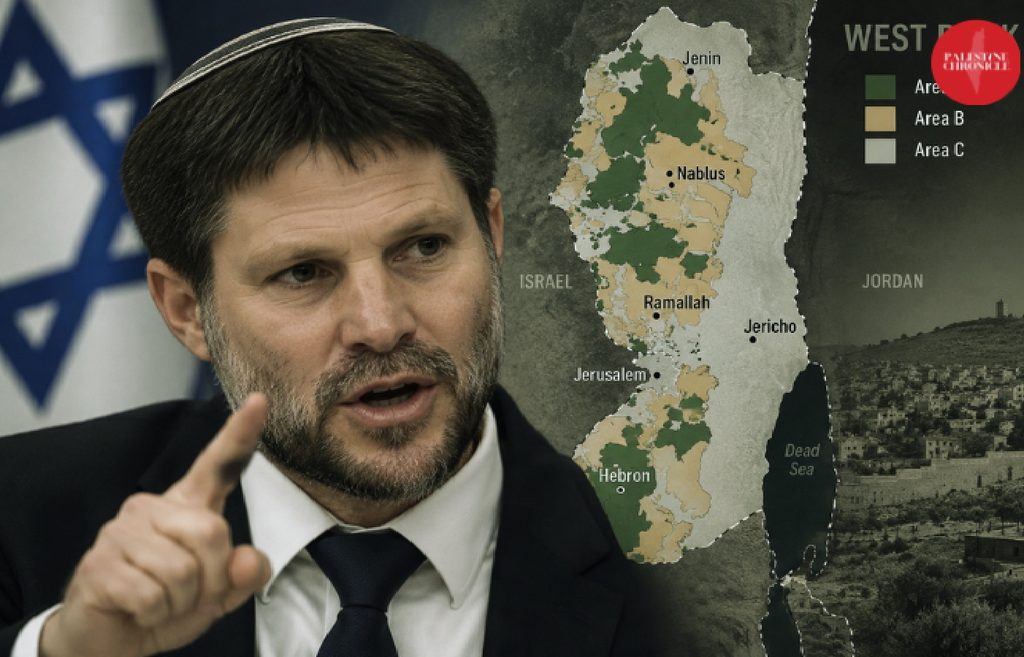
The E1 development plan, long considered the “doomsday settlement” by peace negotiators, would extend Israeli construction from Jerusalem to the settlement of Ma’ale Adumim, effectively cutting the northern West Bank from the south. For decades, successive Israeli governments refrained from implementing E1 under intense American pressure. That restraint has now collapsed.
“Plans for the E1 development would render a two-state solution unviable by cutting through the heart of Palestine,” Miliband told Parliament. The foreign secretary noted that more settlements had been approved under the four years of Netanyahu’s current government than in the previous 20 years combined.
The implications are difficult to overstate. “Once E1 is built, the geography of a Palestinian state becomes physically impossible,” explains Dr. Khalil Shikaki, director of the Palestinian Centre for Policy and Survey Research in Ramallah. “You would have a northern West Bank and a southern West Bank with no territorial contiguity. The two-state solution would be finished, not as a political aspiration, but as a geographic reality.”
But Shikaki offered a more sobering assessment: “It is not merely E1. The settlement enterprise as a whole has reached a point where any future Israeli government, even one committed to withdrawal, which I do not see on the horizon, would find it physically impossible to evacuate. There are now over 700,000 Israeli settlers in the West Bank and East Jerusalem. The infrastructure that supports them, roads, water systems, military bases, economic zones, has created facts on the ground that no negotiation can undo.”
The diplomat’s assessment aligns with that of Israeli officials who have abandoned the pretence of two states. “When we say the two-state solution is dead, we are not celebrating,” said the Israeli diplomat. “We are describing reality. The international community can sanction us. They can condemn us. They cannot reverse the demographic and geographic transformation of the West Bank. That transformation is irreversible.”
For Palestinian residents of the E1 area, the threat is immediate. The Bedouin community of Khan al-Ahmar, located within the E1 zone, has faced demolition orders for years. Israeli authorities have already demolished the community’s school and other structures. The expansion of settlement infrastructure has accelerated the displacement of these communities, with settlers often acting with the explicit backing of government ministries.
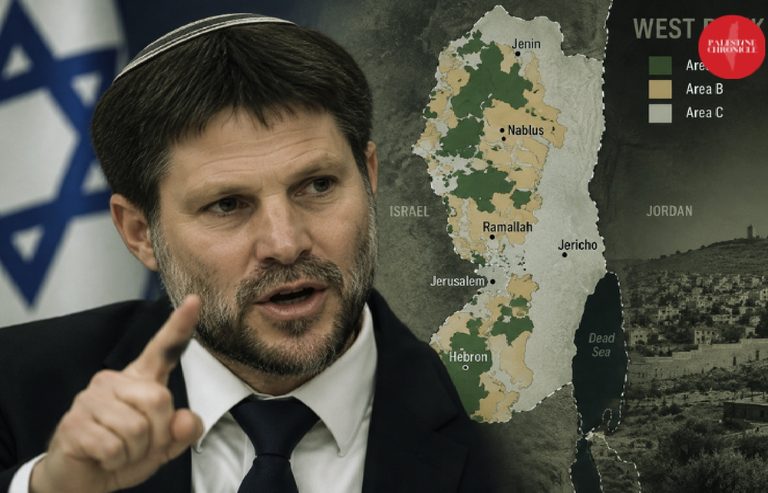
“The Israeli government has moved from turning a blind eye to active facilitation,” says Sarit Michaeli, international advocacy director at B’Tselem. “When Finance Minister Smotrich, himself a settler, controls the Civil Administration, the distinctions between state policy and settler violence collapse entirely.”
Smotrich, who has publicly called for the “erasure” of the Palestinian village of Huwara and who wrote in 2021 that “there is no such thing as a Palestinian people,” now oversees the planning mechanisms that determine settlement expansion. His response to Britain’s sanctions was characteristic: a call for the expulsion of the British ambassador.
Part Six: The American Wildcard
WASHINGTON — The US response to Britain’s announcement exposed the fault lines that have defined the post-October 7 international order.
President Trump, briefed by Prime Minister Burnham in advance of the announcement, offered no public comment. But his ambassador to Israel, Mike Huckabee, did not mince words, branding the UK’s actions “irrational” and warning of potential trade retaliation.
“I feel like it’s discrimination against the Israeli government. It’s discrimination against the Jewish people,” Huckabee told the BBC. “I also would tell you that I don’t know if they have thought it through. It’s like throwing a stone and not having an idea of where it’s going to land.”
Huckabee’s comments represented an escalation from his earlier accusations that the UK government was motivated by “Jew hate”, language that drew sharp rebukes from Jewish organisations in Britain. The Board of Deputies of British Jews, while critical of the sanctions, condemned Huckabee’s characterisation as “deeply offensive and inaccurate.”
Florida Republican Congressman Randy Fine went further, warning that UK companies could be barred from Florida and accusing the UK of carrying out a “vanity project in support of Muslim terror.” Such rhetoric reflects a broader shift in American politics, where pro-Israel advocacy has increasingly aligned with a rejection of the international legal framework that underlies the UK’s position.
Secretary of State Marco Rubio struck a more measured tone while making clear the US would not follow suit. “Obviously we’re not going to do what the UK did,” he said, warning the move had “implications on our ability to make progress with regards to Gaza.”
The strategic divergence between the UK and US on Israel is not new, but it has rarely been so stark. Britain’s decision to coordinate with 11 other nations, including France, Canada, and Spain, represents an effort to create a European counterweight to American policy. The coalition is significant: it includes G7 members, EU states, and NATO allies, signalling that the post-October 7 diplomatic landscape may be fragmenting in ways that transcend traditional alliances.
But even European officials privately acknowledge that sanctions alone cannot resurrect the two-state paradigm. “The reality on the ground has moved beyond what our policies assume,” said a European diplomat involved in the coordination effort, speaking on condition of anonymity. “We are defending a framework that may no longer be viable. That is the uncomfortable truth we are not yet ready to articulate publicly.”
Part Seven: The Jewish Community And The Politics Of Representation
LONDON — Within hours of Miliband’s announcement, the Chief Rabbi Sir Ephraim Mirvis issued a statement that revealed the deep anxieties coursing through British Jewish communities.
“Truly a dark day for British Jews,” Mirvis wrote, describing the measures as “gesture politics” that “feed into an increasingly hostile discourse about Israel” and “further embolden those, at home and abroad, who use hatred as a weapon against Jews.”
The Jewish Leadership Council went further, accusing the government of placing an “increased target on British Jews” and “yielding to pressure from the most extreme elements of British society.”
These statements reflect genuine fear; antisemitic incidents in the UK have surged since October 7, with the Community Security Trust recording record numbers of assaults, threats, and vandalism. For many British Jews, Israel is not merely a foreign policy issue but a refuge, a guarantee against the recurrence of the historical catastrophes that shaped their communities.
But the representation of Jewish opinion as monolithic has drawn pushback from within the community itself. “The Chief Rabbi does not speak for all British Jews,” says Daniel Levy, president of the US/Middle East Project and a former Israeli peace negotiator. “There is a growing and vocal constituency, including many young Jews, who see the Israeli-Zionist government’s policies as a betrayal of Jewish values and a threat to Jewish safety everywhere.”
Organisations like Na’amod, a British Jewish group that campaigns against the occupation, have welcomed the government’s actions. “As Jews, we refuse to allow our identity to be weaponised to shield the Israeli government from accountability,” the group said in a statement. “These measures are not antisemitic; they are a defence of Jewish ethics.”
Miliband himself navigated this terrain with clear emotion. “I am proud of my Jewishness and unwavering in my support for the state of Israel,” he told Parliament. “And there is absolutely no contradiction between this and my support for the state of Palestine.”
The question whether the sanctions will increase antisemitism in Britain is impossible to answer definitively. What is clear is that the conflation of Israel with Judaism, by both supporters and critics, has made British Jews particularly vulnerable to the diplomatic fallout. The most extreme voices on both sides have seized on the crisis: far-right groups have used it to promote anti-Jewish narratives, while Islamist extremists have cited it to justify anti-Israel rhetoric that spills into antisemitism.
Part Eight: The International Coalition And The Question Of Next Steps
PARIS / OTTAWA / MADRID — The joint statement issued by 12 nations after Miliband’s announcement represented something unprecedented in post-war European diplomacy: a coordinated, public commitment to impose consequences on Israel for its settlement policies.
“For too long, we have been hesitant to act, fearful of being accused of being anti-Israel,” Prime Minister Burnham wrote in the Guardian, co-signed by President Macron and Canadian Prime Minister Mark Carney. “The time has come to take further action to uphold our commitment to protect the two-state solution, our interests, and to stand up for our values, before it is too late.”
The inclusion of France, traditionally one of Israel’s closest European partners, is particularly significant. Paris has long resisted calls for sanctions, preferring quiet diplomacy. But the French position shifted as settlement expansion accelerated and the prospects for Palestinian statehood dimmed.
“France has been working behind the scenes for months to build consensus,” says a European diplomat involved in the negotiations, speaking on condition of anonymity. “The UK took the lead publicly, but this is a genuinely collective effort. The question is whether it can be sustained and expanded.”
The sustainability question is crucial. Israel’s economy remains deeply integrated with Europe, and the EU is Israel’s largest trading partner. But the 12-nation coalition represents a minority of EU member states, with Germany, Italy, Austria, and others notably absent. The EU’s requirement for unanimity on foreign policy means that bloc-wide sanctions remain unlikely in the near term.
Human rights organisations have urged the coalition to go further. “These measures, while welcome, still fall short of what international law requires,” says Omar Shakir, Israel and Palestine Director at Human Rights Watch. “States have an obligation to end all trade and investment that sustains the occupation, not just trade with settlements, but trade with Israel itself insofar as it enables the occupation.”
The BDS movement’s call for comprehensive sanctions on Israel remains controversial, with critics arguing it delegitimises the state itself. Miliband explicitly rejected BDS in his statement. But the distinction between BDS and the UK’s new measures, both target Israeli economic interests, albeit to different degrees, may prove difficult to maintain in practice.
Part Nine: The Palestinian Perspective And The Limits Of Symbolic Action
RAMALLAH — For Palestinians in the West Bank, the UK’s announcement arrived amid what many describe as the most dangerous period since the Second Intifada.
Settler violence has reached levels unprecedented in recent decades. According to the UN Office for the Coordination of Humanitarian Affairs, 2024 saw over 1,500 attacks by settlers on Palestinians and their property, the highest number ever recorded. The violence has displaced entire communities, with the Jordan Valley and South Hebron Hills particularly affected.
“The sanctions are welcome, but they come late,” says Issa Amro, a prominent Palestinian activist in Hebron who has faced repeated arrests and beatings by Israeli forces. “What we need is not just sanctions on products. We need protection. We need the international community to stop treating this as a conflict between equals and recognise it as what it is: a military occupation enforced by violence.”
Amro’s frustration reflects a broader Palestinian disillusionment with the international community’s approach. “For thirty years, they told us to wait for negotiations. They told us the two-state solution was coming. They told us to be patient while settlements expanded. Now they admit the occupation is unlawful, but they still talk about two states as if that is still possible. It is not possible. It has not been possible for years. The question now is not two states or one state. The question is: what kind of one-state will it be?”
That question, of a single state between the river and the sea, remains taboo in most international diplomatic circles. But it is increasingly discussed among Palestinians, progressive Israelis, and academic analysts who argue that the settlement project has made partition impossible.
“The two-state solution was always a compromise that required both sides to make painful concessions,” says Dr. Shikaki. “Israel has chosen instead to make the compromise impossible. The international community cannot force Israel to accept a Palestinian state, and it cannot create one through sanctions. At some point, the diplomatic fiction must give way to a new paradigm, and that paradigm will not be the one Britain is now trying to defend.”
Part Ten: The Historical Echoes And The Politics Of Memory
LONDON — Gideon Sa’ar’s invocation of the 1939 White Paper was not incidental. It draws on a deep well of Israeli historical memory: the experience of British Mandate rule, the restrictions on Jewish immigration during the Holocaust, and the conviction that the international community’s sympathy for Jewish suffering has always been conditional and transactional.
“The echoes of the White Paper are real for Israelis,” says Dr. Sara Hirschhorn, a historian of Zionism at Oxford University. “But the analogy is also misleading. The White Paper restricted Jewish entry to Palestine when Jews faced extermination. Today’s measures target goods produced in occupied territories. To equate the two is to suggest that any criticism of Israeli policy is a form of antisemitic persecution, a logic that becomes self-defeating.”
The memory politics cut both ways. For Palestinians, the British Mandate period represents the roots of their dispossession, the Balfour Declaration, the failure to prevent the Nakba, the decades of occupation that followed. For Israeli officials, it represents the failure of the international community to protect Jewish life when it mattered most.
Miliband’s navigation of this terrain, as a Jew whose family fled Nazi Europe, as a socialist, as Britain’s foreign secretary, reflected the complexity of the moment. His statement invoked both the Holocaust and the occupation, refusing to allow either to be used as a cudgel against the other.
“The Jewish people have the right to live throughout the Land of Israel,” Sa’ar declared in his response. “The connection and right of the Jewish people to this land are documented more extensively than those of any other people in human history.”
The claim is historically questionable; the Palestinian connection to the land is equally documented, but it reflects a theological-political position that has gained ascendancy in Israeli politics. The question of whether this position can coexist with a Palestinian state remains unanswered, and perhaps unanswerable. For many Israeli officials, the question has already been resolved.
Part Eleven: The Future Of UK-Israel Relations And The Road Ahead
LONDON / JERUSALEM — The immediate consequences of Britain’s announcement are clear: a freeze in diplomatic relations, the closure of the Jerusalem consulate, an arms embargo that will be difficult to reverse. The longer-term consequences are less certain.
“This is not a temporary rupture,” says a senior Israeli diplomat, speaking on condition of anonymity. “The British government has crossed a line from which there is no return. Even if there is a change of government in London, the precedent has been set: Israeli settlement goods are now legitimate targets for sanctions.”
But the diplomat’s assessment carries a deeper implication. “Britain is sanctioning Israel to save the two-state solution. I understand the politics. But the two-state solution is dead. It has been dead for years. The settlements have made it impossible. The demographics have made it impossible. The politics on both sides have made it impossible. Your government is fighting to preserve something that no longer exists.”
The admission is remarkable, an Israeli official acknowledging what Palestinian and international critics have long argued. And it exposes the central contradiction in Britain’s approach: the sanctions are designed to preserve a diplomatic framework that the very officials they target no longer believe in.
“The question for the international community,” the diplomat continued, “is not how to preserve the two-state solution. The question is what comes after it. Because something will come after it. And right now, the only thing filling that space is settlement expansion, annexation, and the slow erasure of Palestinian life in the West Bank.”
For the Labour Party, the political stakes are significant. Burnham’s decision to pursue sanctions reflects a calculation that the progressive base’s anger over Gaza and the West Bank must be addressed to prevent electoral collapse. The party lost significant support among Muslim voters in the 2024 election, with independent candidates running on pro-Palestinian platforms winning several seats. Those voters may return if they see concrete action; they may not return regardless.
“The Labour Party has a long history of disappointment on this issue,” says a Labour MP who spoke on condition of anonymity because they were not authorised to discuss strategy. “People in my constituency have heard the words before. They need to see the actions followed through. If the sanctions are undermined in implementation, it will be worse than if they were never announced.”
The implementation challenge is real. Customs enforcement, sanctions compliance, the legal framework for determining which goods originate from settlements—all of these require resources and political commitment that may wane over time. The nine-month timeline for implementing the trade ban has already drawn criticism from advocates who note that it provides a lengthy window for stockpiling and legal challenges.
For Israel, the question is whether these sanctions represent the beginning of a broader international shift or a temporary aberration. The Netanyahu government’s response, defiant, aggressive, unapologetic, suggests a calculation that the costs of international isolation are preferable to the costs of ending the settlement project. That calculation may be rational in the short term, but it carries long-term risks that even Israel’s most hawkish politicians may not fully appreciate.
But the deeper calculation, the one that will shape the next decade of conflict, is whether the international community can adapt its policies to a reality in which the two-state solution no longer exists. The sanctions announced by Britain and its allies may be the last gasp of the old paradigm rather than the beginning of a new one.
Conclusion: The Ethics Of Power, The Limits Of Sanctions And The Deception Of The Two-State Rhetoric
AUGUST 2026 — Eight months after the announcement, the contours of the new UK-Israel relationship have begun to emerge. The sanctions are in effect, though enforcement remains incomplete. Settlement goods labelled as “Made in Israel” still appear on some British shelves, though major retailers have moved to eliminate them. The Jerusalem consulate remains closed, but diplomatic channels, through ambassadors and back-channels, continue to function.
The West Bank remains the crucible of the conflict. Settlement expansion has continued, though at a slightly reduced pace. Settler violence has not abated. The displacement of Palestinian communities continues, documented by the same human rights organisations that have warned of ethnic cleansing for years.
What has changed is the international conversation. The taboo on imposing consequences for settlement policy has been broken. Other nations are considering similar measures. The legal framework established by the ICJ has been given political teeth; however blunt.
But the fundamental contradiction remains unresolved. Britain’s sanctions are designed to save the two-state solution. The Israeli officials they target have long abandoned that solution. The Palestinians who bear the daily weight of occupation have begun to abandon it too, turning instead to demands for equal rights within a single state, a demand that Israel will never accept and the international community refuses to countenance.
“The sanctions were never going to end the occupation by themselves,” says Agha of the British Palestinian Committee. “But they have changed the parameters of the debate. They have made it impossible for governments to claim they are powerless in the face of Israeli policies. That is not nothing.”
But the deeper question, the question that will define the next decade, is what comes after the two-state paradigm. The Israeli diplomat’s admission that the solution is “dead” is not merely a provocation. It is a reflection of reality on the ground: 700,000 settlers in the West Bank and East Jerusalem, a settlement infrastructure that no Israeli government could dismantle, a Palestinian political leadership too weak to negotiate and too compromised to resist, and an international community clinging to a framework that no longer corresponds to any achievable outcome.
“The truth is the least the people who face such suffering deserve,” Miliband told Parliament. “And it should be the prelude to justice.”
Whether justice follows remains uncertain. But the prelude has begun, and there is no returning to the silence that came before. What comes next, after the sanctions, after the retaliation, ethnic cleansing, after the deaths and the displacement and the endless diplomatic conferences, remains to be written. The two-state solution may be dead, as Israeli officials privately concede. But the conflict that consumed it continues, and it will not be resolved by refusing to name the reality that has replaced it.
Furthermore, critics argue that the West’s persistent invocation of the “two-state solution” has long served as a diplomatic smokescreen, a rhetorical device that created the appearance of pursuing peace while enabling the steady, uninterrupted expansion of Israel’s territorial control over the Occupied Palestinian Territories. “The two-state paradigm has functioned as a mechanism of managed dispossession,” argues Dr. Noura Erakat, human rights attorney and author of Justice for Some: Law and the Question of Palestine. “For three decades, the international community has invoked the two-state solution as a horizon that justified Palestinian patience and Israeli impunity. While Palestinians waited for a state that was never coming, Israel doubled its settler population, built the infrastructure of permanent control, and fragmented Palestinian territory beyond any possibility of sovereignty.” This critique contends that Western powers, Britain chief among them, given its historical role as the Mandate authority that facilitated the Zionist project, have used the language of two states to mask a de facto acceptance of Israeli annexation. “The UK has been the epicentre of complicity,” says Zomlot. “London provided the original framework for displacement in 1917 with the Balfour Declaration, and for the century since, British governments have clothed that complicity in the language of peace processes, roadmaps, and two-state rhetoric. All while settlements expanded, land was confiscated, and Palestinian rights were systematically extinguished.” The accusation is stark: that the two-state framework was never a genuine policy objective but rather a diplomatic instrument designed to manage international criticism while Israel consolidated irreversible control over the West Bank. “When Israeli officials now admit the two-state solution is dead, they are not announcing a new development,” says Agha. “They are simply acknowledging what has been true for years, that the West’s preferred framework was never designed to deliver Palestinian statehood. It was designed to deliver Palestinian acquiescence.” Under this analysis, Britain’s belated sanctions, while welcome, represent not a genuine reckoning with this history but a desperate attempt to preserve the credibility of a paradigm whose actual function was to facilitate the very outcome Britain now claims to oppose.
Veritas Press Investigative Analysis Independent journalism examining global affairs, power, diplomacy, and accountability.
Source:Veritas Press C.I.C. | Multi-News Agencies
Help Support Our Work By Donating
Readers who believe that truth still matters have power over popular information. When just a few more people step up to support this work, it means more lies exposed, more corruption uncovered, and more accountability where it’s long overdue.
Help Protect Independent Journalism, Which Is Currently Under Attack.
If you believe journalism should serve the public, not the powerful, and you’re able to help, becoming a regular DONOR or a PAID SUBSCRIBER truly makes a difference.
DONATION APPEAL: If you found this reporting valuable, please consider supporting independent journalism.
Your support fuels our fearless, truth-driven journalism. In unity, we endeavour to amplify marginalised voices and champion justice, irrespective of geographical location. We operate independently, with no financial backing from billionaires; our readers support us.
But it’s also extremely important. One of Veritas Press’s greatest assets is its reader-funded model.
1. Reader funding means we can cover what we like. We’re not beholden to the political whims of a billionaire owner. We are a small, independent and impartial organisation. No one can tell us what not to say or what not to report.
2. Reader funding means we don’t have to chase clicks and traffic. We’re not desperately seeking your attention for its own sake; we pursue the stories that our editorial team deems important and believes are worthy of your time.
3. Reader Funding: enables us to keep our website and other social media channels open, allowing as many people as possible to access quality journalism from around the world, particularly those in places where the free press is under threat.
We know not everyone can afford to pay for news, but if you’ve been meaning to support us, now’s the time.
Your donation goes a long way. It helps us:
Keep the lights on and sustain our day-to-day operations
Hire new, talented, independent reporters
Launch real-time live debates, community-focused shows, and on-the-ground reporting
Cover the issues that matter most to our communities, in real time, with depth and integrity
Without your support, independent voices like ours will be silenced.
Furthermore, we have plans to expand our work, but we can’t do it without your support. Every contribution, no matter the size, helps us stay independent and build a truly people-powered media platform.
If you believe in journalism that informs, empowers, and reflects the communities we serve, please donate today.
SEATTLE, TEHRAN — The U.S. Department of Homeland Security (DHS) will allow Iran’s national football team to enter the country 48 hours before their critical World Cup match against Egypt on Friday, a modest concession in a tournament where Team Melli’s travel conditions have sparked claims of oppression and competitive disadvantage.