Kamran Faqir is a volunteer investigative journalist and writer committed to exposing hidden truths and amplifying underreported stories. Driven by social justice, he brings sharp insight and fearless truth-telling to independent journalism. NUJ registered.
Listen to this article
Help support our mission, donate today and be the change. Every contribution goes directly toward driving real impact for the cause we believe in.
Article Date Published:
Article Date Modified:
16 minutes
Views:263
COP31’s Credibility Gap: From a $305 Billion Adaptation Need to a $30 Billion Trickle, From “Overflow” Badges for Eni and TotalEnergies Lobbyists to a Fossil-Fuel Roadmap Off the Agenda, The Investigative Case Against Antalya’s “Real Action”
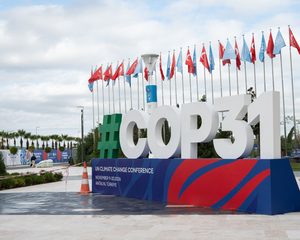
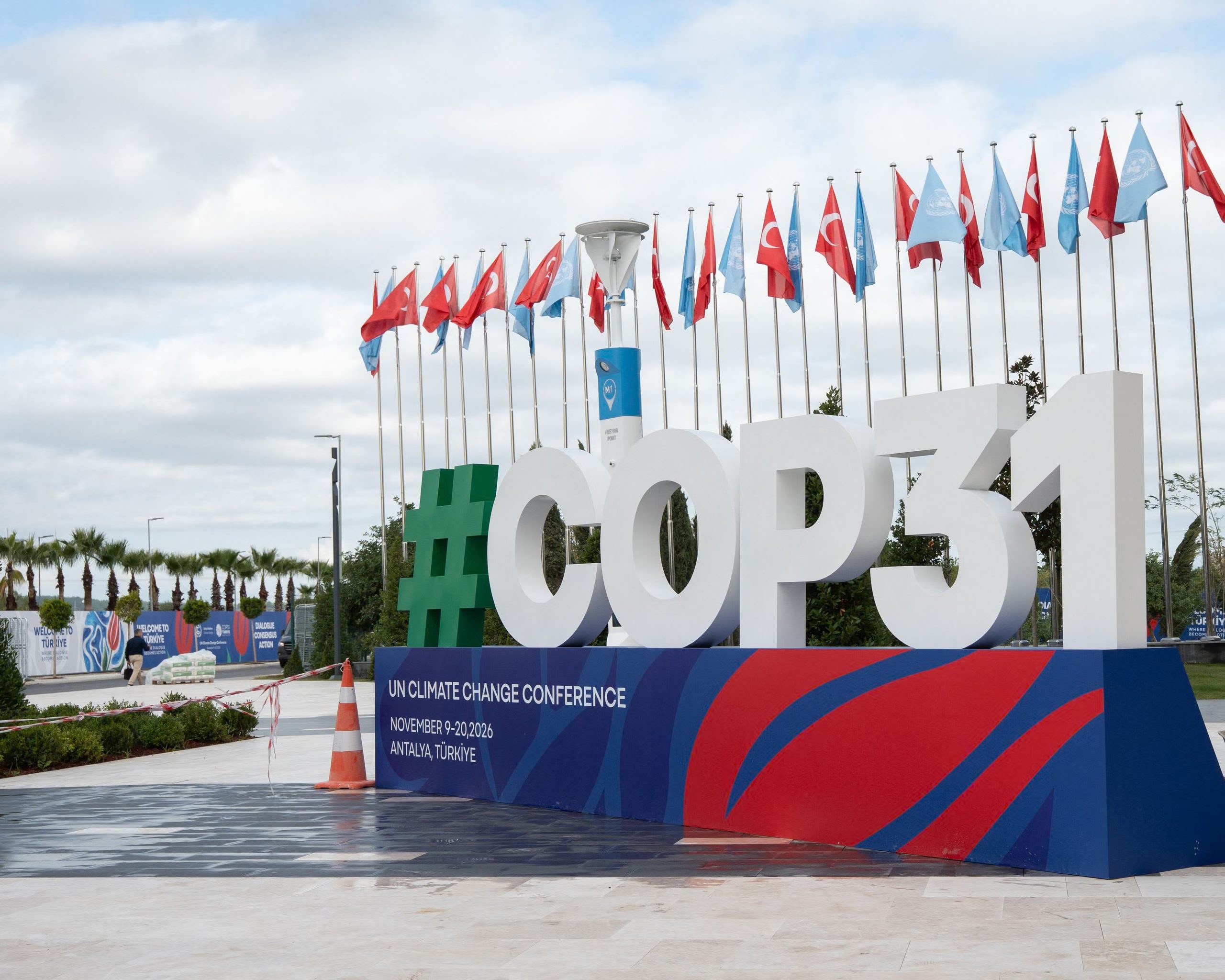
ANTALYA, TURKEY — The Mediterranean coast is an incongruous backdrop for a summit ostensibly dedicated to ending the fossil fuel age. As world leaders gathered in Antalya for COP31 this week, the Turkish presidency celebrated the discovery of two new oilfields with an estimated 135 million barrels in potential, even as the UN Secretary-General told delegates that coal, oil and gas “must go the way of the dinosaurs”. The central tension of this year’s conference was laid bare within hours of its opening: a gathering hosted jointly by Turkey and Australia, two significant fossil fuel exporters, was once again struggling to translate decades of promises into the “real action” that vulnerable nations are demanding.
The Finance Chasm: “Survival Funds” vs. A Staggering Shortfall
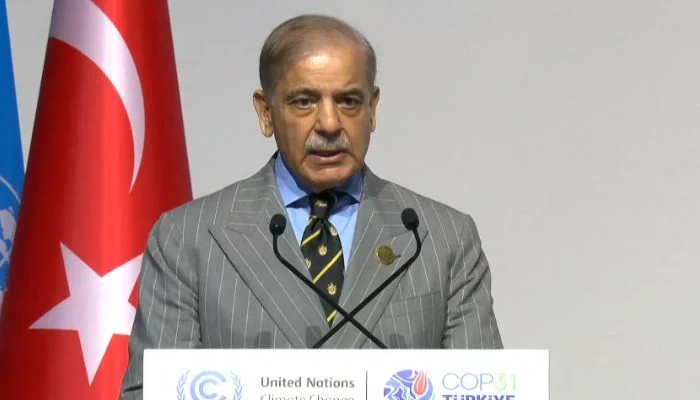
For Prime Minister Shehbaz Sharif of Pakistan, the test of COP31 is not the eloquence of leaders’ speeches but the terms of the cheque. Addressing the Leaders’ Summit on Thursday, Sharif called for “grant-based finance” for climate-vulnerable countries, warning that loans that deepen debt are no solution to disasters that are already erasing hard-won development gains. He reminded the hall that Pakistan, responsible for less than 1% of global carbon emissions, had seen a third of its territory submerged in the 2022 floods, affecting some 33 million people. “National effort cannot replace a fair and just global response when climate disaster strikes,” he said, according to Anadolu Agency.
Prime Minister Shehbaz Sharif addresses the COP31 Leaders’ Summit in Antalya, Turkiye, November 12, 2026. — Screengrab via YouTube/Geo News
Sharif’s plea was given added urgency by the latest data. The UN Environment Programme’s 2026 Adaptation Gap Report, released ahead of the summit, found that international public adaptation finance to developing countries reached only around $30 billion in 2024, well below the $40 billion target set for 2025, and a fraction of the estimated $305 billion needed annually by 2030. The shortfall is not an accounting glitch; it is a measure of the gap between the declarations made in plenary halls and the lived reality of communities on the frontlines of floods, droughts and heatwaves. As Sharif left Antalya on Thursday, he urged leaders to judge COP31 by “practical achievements rather than political commitments”, a benchmark that, on the evidence of the finance negotiations, the summit is already at risk of failing.
The Fossil Fuel Elephant: Hosts, Hypocrisy, And A Roadmap In Limbo
The contradictions at the heart of COP31 extend to its hosts. Turkish President Recep Tayyip Erdoğan told the summit he wanted it remembered as a “turning point,” yet his government celebrated new oil discoveries on the eve of the talks. Australian Prime Minister Anthony Albanese, whose country is one of the world’s largest exporters of coal and liquefied gas, spoke of a “solemn responsibility” to act but was criticised for failing to mention fossil fuels in his address. The joint presidency has championed a “35 by 35” electrification pledge, aiming to raise electricity’s share of final energy consumption from around 23% to 35% by 2035, but campaigners noted that without a commitment to clean energy sources and a parallel phase-out of fossil fuels, such targets risk being little more than accounting exercises.
The only substantive attempt to break the deadlock came from Brazil, which presented a global roadmap for tailored fossil fuel transition plans covering supply, demand and finance. The UN chief, António Guterres, in one of his final major interventions before stepping down, backed the initiative with characteristic bluntness. “It is long past time to stop treating the transition away from fossil fuels as taboo or intractable,” he said. “We must move from discussing the transition to organising it, financing it, and delivering it”. Yet whether the roadmap will be reflected in the formal COP31 decision text remains uncertain, with negotiators still haggling over the “elements document” that will form the basis of the final agreement.
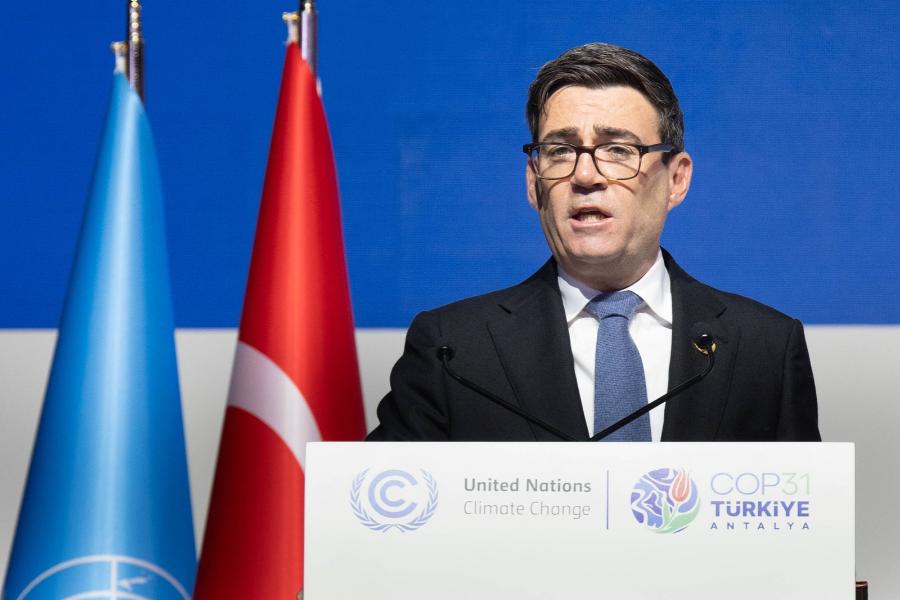
Prime Minister Andy Burnham delivers his speech to the Cop31 UN Climate Change Conference in Antalya, Turkey (Image: PA)
The UK’s “Doublethink”: Leadership Rhetoric And Rosebank Reality
Few delegations embodied the summit’s contradictions more vividly than the United Kingdom’s. Prime Minister Andy Burnham, the only G7 leader to attend, used his speech to pledge a “new era of British leadership” and to announce the appointment of the world’s first special representative for climate security, Dame Madeleine Alessandri, a former chair of the Joint Intelligence Committee. “Climate is a national security issue,” Burnham declared, citing a summer of record heat and wildfires at home.
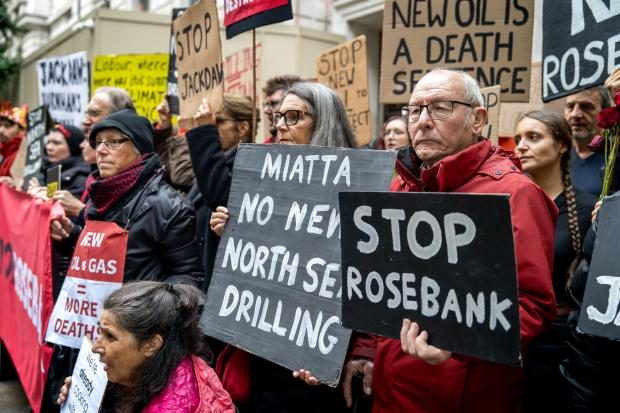
Handout image issued by Fossil Free London of protesters outside the Department for Energy Security and Net Zero (DESNZ) in Westminster London, calling for Rosebank oil field to be rejected as government approve new gas field. The Jackdaw field will
Yet even as he spoke, the government was facing accusations of “doublethink” on climate. Burnham has approved the Jackdaw gas field in the North Sea and is expected to decide in December on the far larger Rosebank oil field, while reportedly considering a weakening of electric vehicle sales targets. Campaigners were scathing. “Showing up is not enough: a crisis of this scale needs substantive action, not just signals,” said Beth John of Oxfam GB. “The real test of climate leadership is delivery, not declarations”. Ami McCarthy of Greenpeace UK said the “noises off stage about a massive new oil field and laxer rules on electric cars almost drowned him out,” adding that approving Rosebank would “only increase the climate threat level to communities in Britain and around the world”. The credibility gap was summed up by Asad Rehman of Friends of the Earth: “The prime minister’s first climate talks should be an opportunity to demonstrate he means business. But if this is all the UK has to offer, then the questions piling in about his climate credibility are more than justified”.
The US Vacuum And The Politics Of Absence
The most conspicuous absence in Antalya was the United States. For the second consecutive year, the Trump administration sent no official delegation, with a White House official dismissing the summit as one that “rejects reality by failing to acknowledge that extremist climate policies are destroying countries around the world”. President Trump, who has called climate science a “hoax,” again used the week to attack clean energy, declaring that he would not approve wind turbines because they are a “major loser”.
The vacuum was filled, in part, by former Secretary of State John Kerry, who delivered a blistering critique of the administration’s stance. “He’s the biggest loser we’ve seen in a long time on all of these issues,” Kerry said of Trump, accusing him of ceding the clean energy race to China. “He declared he wanted to beat China, be number one in X, Y, or Z, and he walked away from the battlefield”. Kerry’s intervention underscored a paradox: the US federal government had abdicated its role, yet a parallel diplomatic effort was being mounted by Democratic figures, including California Governor Gavin Newsom and 20 members of Congress, who attended without State Department funding. Newsom, however, offered a sobering assessment of what this could achieve, warning that he did not expect the Trump administration to do anything but “double down” on its current course.
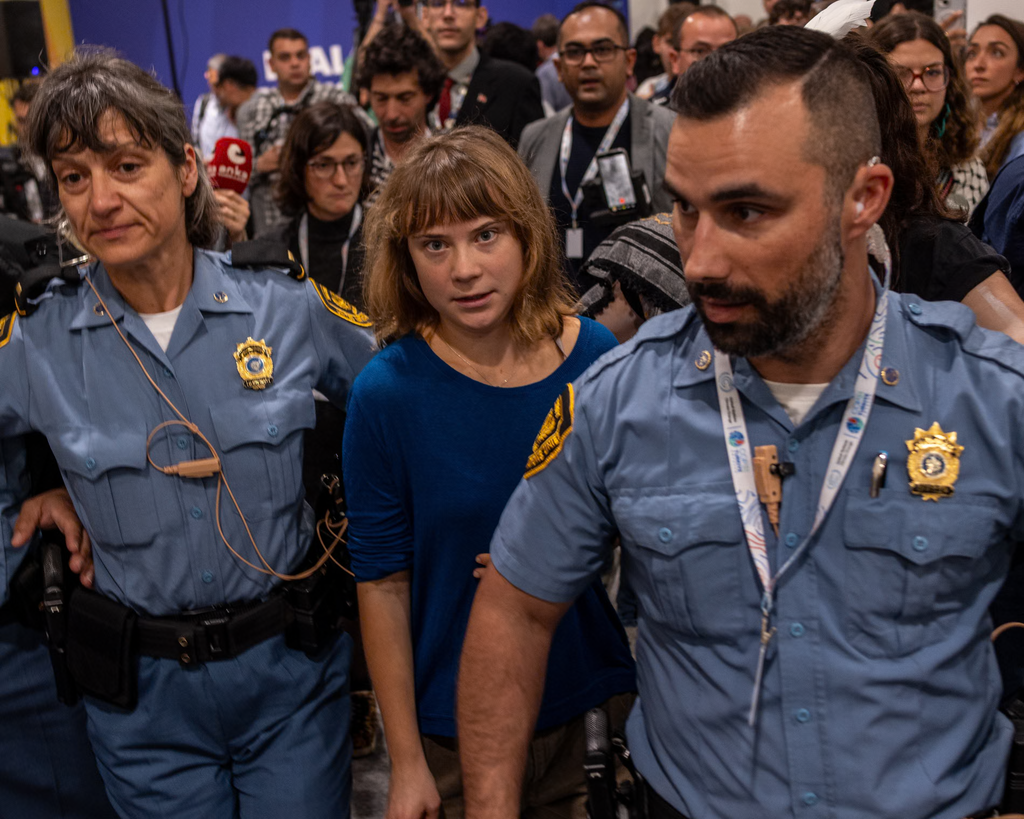
Greta Thunberg is escorted by police officers after the press conference on day four at Cop31. Photograph: Burak Kara/Getty Images
“Greenwashed Circuses” And The Moral Clarity Of The Frontlines
If the official proceedings often felt like an exercise in managed decline, the voices from outside the negotiating halls provided a stark counterpoint. Greta Thunberg, attending her first COP in five years, did not mince words. “The planet is not dying, it is being killed,” she told reporters. “And we know by who: it is being killed by the very same people thought to come to our rescue”. She dismissed the annual summits as “greenwashed circuses,” arguing that the presence of fossil fuel capitalists and lobbyists and the choice of host countries with poor human rights records made a mockery of the process.
Her intervention resonated with the appeals from leaders of small island states, whose existence is not a negotiating position but a physical reality. Hilda Heine, President of the Marshall Islands, described witnessing lush coral reefs bleach white in a matter of months and warned that overshooting the 1.5C Paris target would mean “waves eating away our shores and floods that destroy towns, schools and hospitals.” “It’s time to wake up,” she said. “Our response to the threat of overshoot must be overwhelming, or the world we know is over”. Mia Mottley, Prime Minister of Barbados, framed the overshoot not as a target but as a debt: “A debt of heat, borrowed against our children’s future. And it must be repaid”.
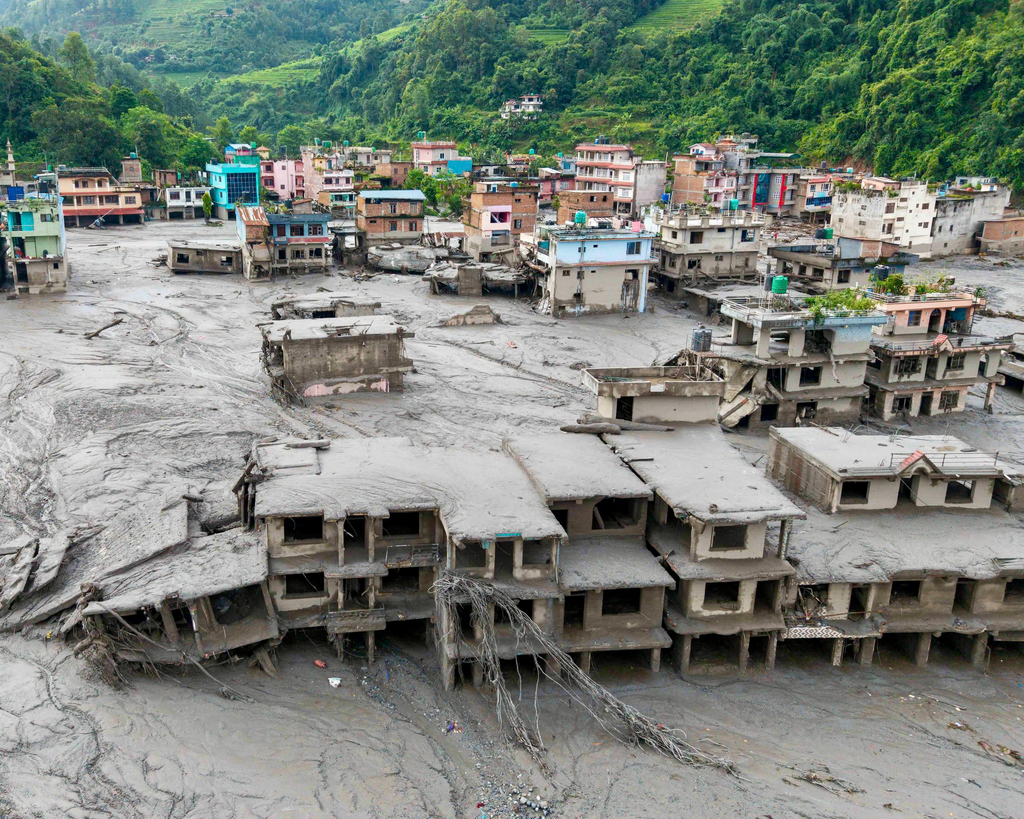
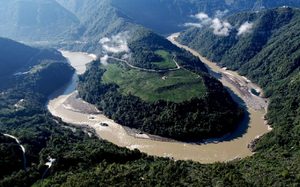
‘We call the catastrophic climate change event we suffered a mountain tsunami,’ said Nepal’s environment minister of the flash floods and landslides in the Nuwakot district in August. Photograph: Prabin Ranabhat/AFP/Getty Images
The Road To November 20: A Test Of Delivery
As the leaders’ summit concluded on Thursday, the focus shifted to the resilient cities agenda and the finer print of the negotiation text. The electrification pledge has attracted support from a coalition of countries and business groups, and the Brazilian fossil fuel roadmap offers a potential framework for the final decision. But the gap between these aspirational documents and the policies being pursued by major economies, from the UK’s North Sea drilling to Turkey’s oil exploration to the US’s wholesale retreat, remains vast. The planet is currently on track for 2.7C or more of warming, according to Climate Action Tracker, a trajectory that scientists warn would be catastrophic for the very nations whose leaders spoke most passionately in Antalya.
COP31 will not be judged by the applause that greeted Guterres’s dinosaur metaphor or by the standing ovation for Palestine’s prime minister. It will be judged by whether the final text contains a credible commitment to phase out fossil fuels, whether the adaptation finance gap begins to close with grants rather than loans, and whether the “new era of leadership” proclaimed by Andy Burnham survives contact with the Rosebank decision in December. On the evidence of this week, the summit has produced plenty of declarations. The delivery, as Oxfam’s Beth John observed, is still to come.
Conclusion: The Antalya Inquest, A Summit That Was Built To Fail The Vulnerable
The forensic case against COP31 does not rest on a single dramatic failure. It rests on an accumulation of structural choices, each one defensible in isolation, each one cumulatively fatal to the summit’s stated purpose. A presidency split between two fossil-fuel-expanding hosts, one of which announced new oil discoveries on the eve of the talks and the other of which granted a new gas licence in the weeks before. An agenda from which the adaptation-finance item sought by the African group was rejected, the mountains item sought by Nepal was excluded, and the sustainable-diets item sought by Comoros was talked down. An accreditation regime that placed Eni’s chief international lobbyist and TotalEnergies’ CEO on “overflow” badges with access to private negotiating spaces, while the only substantive roadmap for organising a fossil-fuel phase-out was relegated to a side stage. And a financing architecture that delivered $28–31 billion in adaptation finance against a $305 billion annual need, a shortfall so vast that the word “gap” flatters it.
These are not the failures of a summit that tried and fell short. They are the signatures of a summit whose architecture was designed, through the mundane mechanics of agenda-setting, host selection, accreditation rules, and presidency ambiguity, to absorb pressure for change without yielding to it. The vulnerable nations who spoke most passionately in Antalya were not negotiating partners; they were, in procedural terms, supplicants. Their agenda items were struck. Their finance demands were met with the language of aspiration rather than the instrument of grants. Their moral clarity, Hilda Heine’s bleached coral, Mia Mottley’s “debt of heat,” Gita Chaudhary’s “mountain tsunami”, was received with applause and then set aside in favour of the “elements document” and its bracketed text.
The summit’s defenders will point to the 35×35 electrification pledge, the appointment of a UK climate security envoy, the presence of John Kerry and the Democratic governors, and the “early support” for the Brazilian roadmap. But a pledge is not a policy, an envoy is not an emission cut, and a side-stage roadmap is not a binding commitment. The World Resources Institute’s own assessment conceded that “many more countries need to endorse it and turn their commitments into credible national plans backed by concrete policies and investment”, the diplomatic formulation for an outcome that, on current evidence, will not be delivered. The UK will decide on Rosebank in December. Turkey will continue drilling in Gabar. Australia will continue exporting coal and gas. The United States will continue its abdication, whatever the midterm results. And the planet will continue its trajectory toward 2.7C or more, with the adaptation finance gap widening and the emissions gap widening with it.
The deeper indictment is not of any single leader but of a process that has become structurally incapable of confronting the interests it was created to regulate. When the hosts are expanders, when the lobbyists have private access, when the vulnerable have their agenda items rejected before negotiations begin, and when the finance on offer is a loan rather than a grant, the summit has ceased to be a forum for solving the crisis and has become a forum for managing its politics, for producing the appearance of action while protecting the arrangements that cause the harm. Greta Thunberg’s phrase, “greenwashed circuses,” was dismissed by many delegates as hyperbole. The procedural record of Antalya suggests it was closer to an accurate description than anyone in the plenary halls cared to admit.
The test of COP31 will not be its final communiqué, which will be negotiated into a hedge of conditionals and brackets. It will be whether the governments that spoke most loudly in Antalya, the UK with its “new era of leadership,” Turkey with its “turning point,” Australia with its “solemn responsibility”, can be held to account by the parliaments, courts, journalists, and movements that will scrutinise the decisions they take after the flags are folded. The delegates have gone home. The adaptation gap has not. The oilfields have not. The lobbyists will return next year, badges ready. The question that Antalya leaves unanswered is not whether the world can afford another summit like this one, but whether the process can survive the credibility deficit it has now accumulated, a deficit measured not in degrees of warming, but in the distance between what was said on the stage and what was done in the corridors. On that measure, COP31 did not close the gap. It institutionalised it.
Veritas Press Investigative Analysis Independent journalism examining global affairs, power, diplomacy, and accountability.
Source:Veritas Press C.I.C. | Multi-News Agencies
Help Support Our Work
Readers who believe that truth still matters have power over popular information. When just a few more people step up to support this work, it means more lies exposed, more corruption uncovered, and more accountability where it’s long overdue.
Help Protect Independent Journalism, Which Is Currently Under Attack.
If you believe journalism should serve the public, not the powerful, and you’re able to help, becoming a regular DONOR or a PAID SUBSCRIBER truly makes a difference.
DONATION APPEAL: If you found this reporting valuable, please consider supporting independent journalism.
Your support fuels our fearless, truth-driven journalism. In unity, we endeavour to amplify marginalised voices and champion justice, irrespective of geographical location. We operate independently, with no financial backing from billionaires; our readers support us.
But it’s also extremely important. One of Veritas Press’s greatest assets is its reader-funded model.
1. Reader funding means we can cover what we like. We’re not beholden to the political whims of a billionaire owner. We are a small, independent and impartial organisation. No one can tell us what not to say or what not to report.
2. Reader funding means we don’t have to chase clicks and traffic. We’re not desperately seeking your attention for its own sake; we pursue the stories that our editorial team deems important and believes are worthy of your time.
3. Reader Funding: enables us to keep our website and other social media channels open, allowing as many people as possible to access quality journalism from around the world, particularly those in places where the free press is under threat.
We know not everyone can afford to pay for news, but if you’ve been meaning to support us, now’s the time.
Your donation goes a long way. It helps us:
Keep the lights on and sustain our day-to-day operations
Hire new, talented, independent reporters
Launch real-time live debates, community-focused shows, and on-the-ground reporting
Cover the issues that matter most to our communities, in real time, with depth and integrity
Without your support, independent voices like ours will be silenced.
Furthermore, we have plans to expand our work, but we can’t do it without your support. Every contribution, no matter the size, helps us stay independent and build a truly people-powered media platform.
If you believe in journalism that informs, empowers, and reflects the communities we serve, please donate today.
You Can Make Direct Bank Transfer Donations To
Bank Name: Bank Of Scotland
Account Name: Veritas Press C.I.C.
Sort code: 80-22-60
Account Number: 27540469
IBAN #: GB18-BOFS-6027-5404-69
Donate Online
Submissions
For the safe submission of documentation, testimonies, or exclusive investigative reports from anywhere in the world, please use the following contact details for our Investigations Desk: mailto:enquiries@veritaspress.co.uk or mailto:editor@veritaspress.co.uk.
SEATTLE, TEHRAN — The U.S. Department of Homeland Security (DHS) will allow Iran’s national football team to enter the country 48 hours before their critical World Cup match against Egypt on Friday, a modest concession in a tournament where Team Melli’s travel conditions have sparked claims of oppression and competitive disadvantage.