Kamran Faqir is a volunteer investigative journalist and writer committed to exposing hidden truths and amplifying underreported stories. Driven by social justice, he brings sharp insight and fearless truth-telling to independent journalism. NUJ registered.
Listen to this article
Help support our mission, donate today and be the change. Every contribution goes directly toward driving real impact for the cause we believe in.
Article Date Published:
Article Date Modified:
22 minutes
Views:101
A River Under Pressure
China’s ambition to construct the world’s largest planned hydropower project on the Yarlung Tsangpo River in Tibet is confronting an increasingly consequential scientific and political question: can a mega-dam of unprecedented scale be operated safely in a Himalayan river basin where climate change may increase runoff, extreme rainfall and flood risks, while seismic hazards and downstream geopolitical tensions remain unresolved?
A study published on 8 October 2026 in China Science Bulletin provides a troubling new dimension to that debate. Researchers from the Chinese Academy of Sciences and Yunnan University reconstructed the river’s runoff history from 1325 to 2020 using tree-ring evidence and hydrological observations. Their modelling suggests that average runoff could rise substantially over the remainder of the century, accompanied by a possible increase in the probability of high-runoff events.
Under the study’s middle-of-the-road and high-emissions climate scenarios, projected runoff was approximately 20% and 29% higher, respectively, than during the reconstructed historical period. These are modelled projections, not measurements of future river flows, but their implications for water management and flood preparedness are significant.
The findings arrive as China advances a project expected to exceed 60,000 megawatts of installed capacity, nearly three times the capacity of the Three Gorges Dam. Meanwhile, India is pursuing its own proposed 11,200-MW Siang Upper Multipurpose Project, ostensibly to strengthen water security and provide storage and flood-management capabilities.
Yet the response across the border exposes a profound contradiction. The Indian government’s strategic case for a counter-dam is encountering fierce opposition from indigenous Adi communities concerned about displacement, ancestral land, environmental destruction and their right to participate meaningfully in decisions about their homeland.
The emerging crisis is therefore not simply a contest between two Asian powers over electricity and water. It is a test of whether governments can pursue large-scale infrastructure without transferring unacceptable environmental, social and humanitarian risks to communities that have little control over the decisions being made.
1. The Scientific Warning: What 695 Years Of Tree-Ring Evidence Reveal
One of the central challenges in assessing the Yarlung Tsangpo is the limited duration of reliable instrumental hydrological records. The river passes through exceptionally difficult terrain, and systematic monitoring has historically been constrained by remoteness, altitude and the technical difficulties of collecting continuous measurements.
Researchers sought to address this limitation by reconstructing past runoff using tree-ring chronologies from the southeastern Tibetan Plateau.
The study drew on samples collected between 2008 and 2020 from 11 sites containing moisture-sensitive cypress and spruce trees. Annual variations in ring width and density can provide evidence of the environmental conditions experienced during a tree’s growing season. When calibrated against available hydrological observations, these patterns can help researchers estimate historical moisture and runoff conditions.
Combined with records from the Nuxia Hydrological Station, the tree-ring data were used to reconstruct water-year runoff between 1325 and 2020.
The researchers identified 14 wet periods and 14 dry periods across the reconstructed record, demonstrating that the river has experienced substantial natural variability over several centuries.
Crucially, they reported that observed runoff during the period covered by instrumental records remained within the reconstructed range of historical natural variability. That finding provides an important baseline, but it does not establish that future conditions will remain within the same range.
The researchers then combined the historical reconstruction with climate information to model monthly runoff from 2030 to 2100.
Their projections point towards increasing average runoff and a possible greater likelihood of extremely high-runoff events. Under the two scenarios described in the study, projected runoff increased by approximately 20% and 29% compared with the reconstructed historical period.
The researchers warned that future management must consider both the potential for increased water resources and the associated flood risks. They also highlighted the need to maintain ecological water requirements.
This is the critical distinction: a river carrying more water on average does not necessarily flood more frequently or severely at every location. Flood outcomes also depend on rainfall intensity, snow and ice melt, the timing of runoff, tributary inflows, sediment, river-channel conditions and the operation of reservoirs and other infrastructure.
Nevertheless, the findings challenge any assumption that historical observations alone are sufficient to establish the safety of a project intended to operate for generations.
The scientific message is not that catastrophe is inevitable. It is that the future hydrological conditions against which the dam must be designed and operated may differ substantially from those experienced during the period of direct observation.
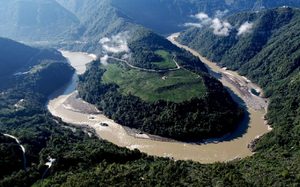
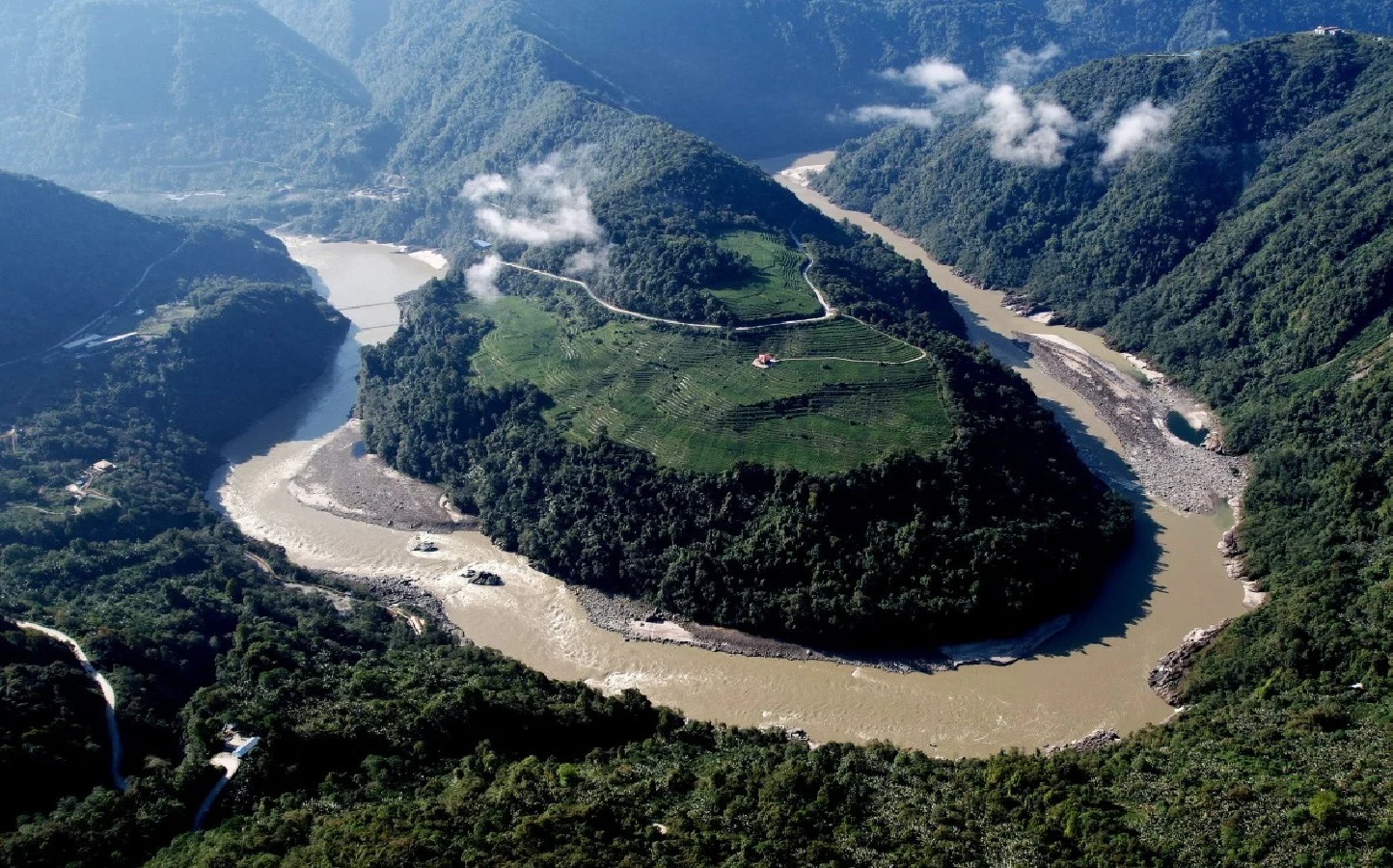
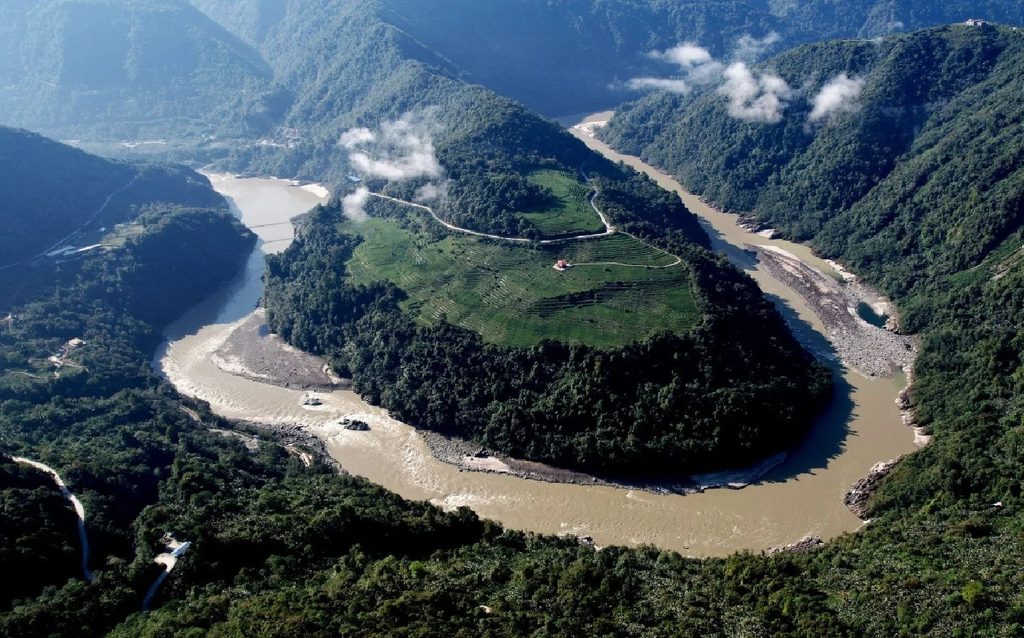
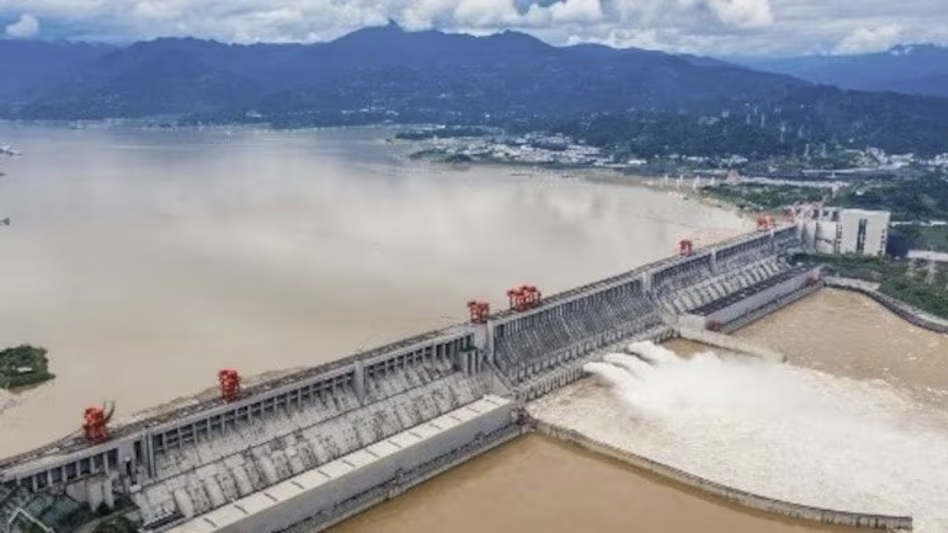
China must take into account runoff, heightened flood risks as it builds mega dam on Brahmaputra (Representative image)
2. A Mega-Project In One Of The World’s Most Challenging Geological Environments
China’s planned hydropower development is located near Medog, also known as Motuo, in southeastern Tibet, where the Yarlung Tsangpo makes a dramatic bend before entering India as the Siang and subsequently becoming part of the Brahmaputra River system.
The steep terrain offers enormous hydropower potential. The project is expected to exploit a substantial elevation drop through a series of hydropower installations, with a proposed combined capacity exceeding 60,000 MW.
China has presented the development as a major source of clean electricity, economic development and improved disaster-management capacity.
However, the same geographical features that make the site attractive for hydropower also make it exceptionally demanding from an engineering perspective.
The Himalayan region is tectonically active. Earthquakes, steep slopes, landslides, intense rainfall and rapidly changing mountain hydrology all complicate the design and operation of large reservoirs, tunnels, underground power stations and associated infrastructure.
Reports published in 2026 have also raised concerns about geological structures and an active fault beneath or near the planned project. The available reporting describes warnings by Chinese geologists about possible implications for structural integrity, slope stability and landslide risk.
Such findings warrant serious scrutiny. They do not, by themselves, prove that the project is unsafe or destined to fail. Establishing the actual level of risk would require access to detailed geological surveys, engineering assessments, seismic design assumptions and independent technical review.
The central question is whether these assessments will be subject to sufficiently transparent and independent scrutiny, particularly when the consequences of a major accident could extend beyond China’s borders.
A project of this magnitude should not be judged solely by its generating capacity or construction timetable. Its safety case must account for interacting hazards, including extreme floods, earthquake-triggered landslides, sediment movement, reservoir management and emergency response.
Where these risks overlap, a design that performs adequately under one set of assumptions may encounter very different pressures under another.
3. Climate Change Is Changing The Conditions Under Which The Dam Must Operate
The Tibetan Plateau is warming rapidly, affecting glaciers, snow cover, permafrost and the movement of water through mountain catchments.
The researchers associated changes in the Yarlung Tsangpo’s hydrological regime with rising temperatures, accelerated glacial melting, permafrost degradation, shorter snow-cover duration and increasingly unstable rainfall patterns.
These processes do not all produce the same effects, nor do they operate uniformly across the basin. Their combined influence depends on location, season and the changing balance between precipitation, evaporation, snow accumulation and ice melt.
However, the broader implication is clear: water infrastructure designed around past hydrological patterns must be evaluated against future climate conditions as well.
A warmer atmosphere can hold more moisture, potentially intensifying heavy precipitation in suitable weather conditions. Changes in snow and glacier melt can alter seasonal river flows, while the degradation of frozen ground can affect slope stability and sediment delivery.
The risks may therefore extend beyond a straightforward increase in annual runoff. They may involve changes in when water arrives, how rapidly it accumulates, and whether reservoirs can safely accommodate it.
This creates a difficult operational challenge for a major hydropower scheme.
Reservoir operators must balance electricity generation, water storage, downstream releases, flood-control capacity and environmental requirements. Those objectives can conflict. Retaining more water may support electricity generation and later supply, but reducing available storage space can constrain the ability to absorb incoming floodwater. Releasing water in anticipation of heavy rainfall may reduce reservoir pressure, yet poorly timed or inadequately communicated releases could increase downstream hazards.
These are general engineering and operational considerations, not evidence that China’s project will necessarily cause a downstream disaster.
The important question is whether the project’s operating rules will be designed around the full range of plausible future conditions, rather than optimised primarily for power generation.
The researchers’ own conclusion supports a more integrated approach: water-resource utilisation, flood mitigation and ecological water requirements must be considered together within a framework of long-term hydrological change.
4. The Downstream Problem: A River That Crosses Political Boundaries
The Yarlung Tsangpo becomes the Siang after entering India, then contributes to the Brahmaputra, one of South Asia’s most important river systems, before flowing into Bangladesh.
Its waters sustain agriculture, fisheries, wetlands, settlements and other livelihoods across a vast region.
For downstream communities, the concern is not limited to the total volume of water flowing through the river. Seasonal timing, flood peaks, sediment transport, water quality and the reliability of information about upstream conditions are also critical.
A dam can change the timing of river flows through storage and controlled releases. Depending on its design and operation, it may also alter sediment movement and the river’s ecological characteristics. Conversely, appropriately designed infrastructure and well-coordinated operating procedures can contribute to electricity generation, water management and some forms of flood mitigation.
The outcome cannot be inferred from installed capacity alone.
China has defended the project on the grounds that it will not adversely affect downstream countries. In a statement reported by China’s State Council Information Office on 24 July 2025, Chinese Foreign Ministry spokesperson Guo Jiakun said the project would support clean energy, local development and disaster prevention. He also maintained that China had extensive experience in hydropower development and had taken downstream interests into account.
China’s official position deserves to be represented accurately. But an assurance from the government building the infrastructure is not a substitute for independently accessible evidence demonstrating how risks will be managed.
The latest runoff study strengthens the case for a transparent, basin-wide assessment of cumulative effects under different climate scenarios.
Such an assessment would need to address normal operating conditions, prolonged drought, extreme rainfall, earthquake-related emergencies, unexpected infrastructure failures and the consequences of rapid changes in reservoir releases.
It should also consider the combined effects of existing and planned infrastructure rather than assessing the Chinese project in isolation.
The missing element: verifiable cooperation
China has stated that it has communicated with downstream countries and cooperated on hydrological information sharing and flood mitigation. The unresolved question is whether existing arrangements provide sufficient, timely and reliable information for downstream authorities to prepare for extreme events and independently evaluate the project’s effects.
A meaningful transboundary framework would include, at minimum:
Timely sharing of river-flow, rainfall and relevant reservoir-operation data.
Advance notification of planned releases and urgent notification of unexpected changes.
Joint flood forecasting, emergency exercises and clear communication protocols.
Independent environmental and hydrological assessments, including cumulative impacts.
Transparent arrangements for investigating cross-border incidents and publishing findings.
Practical channels through which affected communities and downstream authorities can raise concerns.
The need for these safeguards is not dependent on proving hostile intent by China. It follows from the physical reality that a river does not stop at an international border.
Water security is better protected through verifiable cooperation than through speculation about a neighbouring state’s intentions.
5. India’s Proposed Counter-Dam: Strategic Necessity Or Another Source Of Risk?
China’s project has intensified debate in India about whether a major storage dam on the Siang could help protect downstream water security.
India’s proposed Siang Upper Multipurpose Project, with a reported capacity of approximately 11,200 MW, has been promoted as a potential means of strengthening strategic preparedness and managing river flows.
The national-security argument is straightforward: if a major upstream project could alter the timing of water releases, India wants infrastructure and information systems that improve its capacity to respond.
But strategic logic does not automatically establish engineering viability, environmental acceptability or public consent.
India’s project would itself be located in a region exposed to seismic hazards, landslides, ecological pressures and the consequences of large-scale changes to the river. The potential effects on land, livelihoods and indigenous communities must be evaluated independently of the geopolitical dispute with China.
A project cannot be considered safe merely because it is intended to counter another project.
Nor can the term “water security” be interpreted exclusively through the lens of national strategy. For communities living along the Siang, water security also concerns drinking water, agricultural production, fishing, land ownership, cultural continuity and the ability to remain in their homes.
Indigenous Opposition Is Intensifying.
Recent reporting from Arunachal Pradesh shows that resistance to the proposed Siang project has escalated sharply.
The Indian Express reported on 13 October 2026 that protests were continuing amid the deployment of security personnel and arrests linked to opposition to pre-feasibility surveys. The newspaper also documented concerns among members of the indigenous Adi community about displacement, livelihoods and the loss of ancestral land.
On 23 October, protests in the region escalated into serious clashes and damage to public and private property, according to reporting by Down To Earth published on 25 October. The publication reported that indigenous organisations, including the Adi Bane Kebang United and the Siang Indigenous Farmers’ Forum, had raised concerns about displacement, ecological damage and the project’s implications for local communities.
The distinction between peaceful opposition and acts of violence matters. Damage to property and attacks on individuals cannot be justified by environmental concerns. Equally, violent incidents should not be used to dismiss legitimate questions about consultation, land rights and the distribution of risk.
The Indian Express reported that Himanshu Thakkar, coordinator of the South Asia Network on Dams, Rivers and People, argued that India should prioritise demands for project information and potentially pursue a joint impact assessment rather than simply assume that constructing a counter-dam is the correct response.
That is a significant intervention in the debate. It challenges the idea that the only effective response to upstream infrastructure is to replicate it downstream.
The Government’s Response
Arunachal Pradesh Chief Minister Pema Khandu has called for transparency and engagement with affected communities. Following meetings on 25 October, he stated: “Our priority is to protect national interests while respecting the rights and aspirations of the people of the Siang Valley.”
He also said that misinformation and misconceptions were contributing to public apprehension and argued that residents deserved accurate information about the project’s strategic importance and associated concerns.
The government’s emphasis on accurate information is reasonable in principle. But transparency must operate in both directions: authorities must explain the intended benefits and security rationale while also publishing credible evidence about possible displacement, geological hazards, environmental impacts, alternatives and compensation.
Consultation cannot be reduced to public-relations exercises or the collection of individual signatures if affected communities believe that their collective institutions and concerns have not been adequately heard.
The question is not simply whether residents have been informed that the project is being considered. It is whether they can meaningfully influence the decision before commitments become difficult to reverse.
6. The Human Cost: Whose Land, Whose River, Whose Definition Of Development?
For the Adi people and other communities in the Siang Valley, the debate extends beyond megawatts, reservoir capacity and national security.
Land can sustain livelihoods while also carrying ancestral, spiritual and cultural significance. Rivers shape food systems, community relationships and inherited knowledge of local environments.
Large reservoirs can transform these relationships by inundating settlements and agricultural land, disrupting transport and fishing, and forcing communities to relocate. The scale of any such effects must be established through reliable project-specific assessments rather than treated as certain before the design is finalised.
Nevertheless, the possibility of displacement raises questions that cannot be answered through engineering calculations alone.
Who determines whether a community’s losses are acceptable? How are cultural heritage and collective land relationships assessed? What happens when some residents support a project while others reject it? What protections exist for those who challenge the project or demand further scrutiny?
A credible decision-making process must make room for dissent without equating disagreement with disloyalty.
The same principle applies in Tibet. Communities affected by the Chinese project need access to meaningful consultation, reliable environmental information and effective avenues for raising concerns. The available material does not establish the full extent of consultation or the views of all affected Tibetan communities, and their perspectives should not be presumed.
The absence of accessible evidence is itself a reason to demand more transparency, not a licence to invent local testimony or claim universal opposition.
Human rights assessments should consider the right to life, health, livelihood, information and participation, alongside applicable protections for indigenous peoples and the environment. Whether particular legal obligations have been breached must be assessed against the relevant facts, jurisdiction and legal framework.
Development that produces enormous quantities of electricity while leaving affected communities unable to obtain information or influence decisions risks undermining its own claims of public benefit.
7. A Scientific Warning Is Not Proof Of A Future Catastrophe
The latest study must be interpreted carefully.
Its historical reconstruction provides a longer perspective on the river’s behaviour than the instrumental record alone. Its projections indicate that runoff could increase under the climate scenarios examined. Its authors identify high-runoff events and flood risk as important considerations for future management.
It does not establish that the Chinese dam will inevitably fail, that India or Bangladesh will necessarily experience catastrophic flooding because of its operation, or that China intends to manipulate the river as a weapon.
Those Claims Would Require Evidence Beyond The Study.
The distinction matters because overstating scientific findings can undermine legitimate environmental scrutiny and turn an important public-interest debate into an exercise in geopolitical alarmism.
There are, however, equally serious dangers in minimising the research because its conclusions are inconvenient for a major infrastructure programme.
The appropriate response is to treat the projections as a reason for stronger risk assessment, more robust engineering, better monitoring and greater cooperation.
The project’s scale makes this especially important. When a single infrastructure development can affect a river system shared by multiple countries, uncertainty should be managed openly rather than treated as a justification for withholding information.
A responsible investigation must therefore ask not only what scientists predict, but also how the findings are incorporated into the project’s design, safety case and operational planning.
8. The Accountability Test: What Should China, India And Bangladesh Do Now?
The immediate priority should be a transparent, evidence-led assessment of the risks posed by changing hydrology and large-scale infrastructure across the entire river basin.
China should:
Publish accessible summaries of the project’s environmental impact assessments, geological investigations and climate-resilience modelling.
Explain how the projected increase in runoff and high-runoff events has been incorporated into dam design, reservoir capacity, flood-routing calculations and emergency procedures.
Establish dependable arrangements for sharing hydrological data and notifying downstream authorities of planned or emergency releases.
Provide credible information about independent engineering review, seismic risk management, slope stability and emergency planning.
Enable meaningful engagement with affected communities and make relevant environmental findings publicly accessible.
India should:
Publish the evidence supporting the proposed Siang project’s strategic and flood-management rationale.
Commission independent assessments of seismic, ecological, hydrological and social impacts before irreversible commitments are made.
Engage affected Adi communities through meaningful consultation, including their traditional institutions and representative organisations.
Explain alternatives to a major storage dam, including improved forecasting, monitoring, emergency communication and other water-management measures.
Ensure that public order measures respect applicable legal safeguards and that allegations of excessive force are independently examined.
Bangladesh should:
Seek timely access to relevant hydrological information and participate in basin-wide risk assessments.
Strengthen flood forecasting, early-warning systems and emergency preparedness in vulnerable downstream areas.
Assess the potential cumulative impacts of upstream infrastructure on seasonal flows, sediment transport, agriculture and ecosystems.
Advocate practical cross-border arrangements that improve transparency and reduce the risk of avoidable harm.
All three countries should:
Pursue a credible mechanism for technical dialogue involving hydrologists, engineers, climate scientists, disaster-management specialists and environmental experts.
Develop interoperable monitoring and early-warning arrangements.
Publish emergency-response procedures and clarify the responsibilities of relevant authorities.
Assess the risks of extreme but plausible events, including combinations of heavy rainfall, landslides, seismic activity and infrastructure disruption.
Avoid treating downstream water security as a zero-sum contest in which one country’s protection necessarily requires another community’s displacement.
These measures would not eliminate every risk, but they would create a stronger basis for accountability and reduce the space in which fear, speculation and strategic mistrust can flourish.
Conclusion: The Future Of The Brahmaputra Cannot Be Secured Through Megawatts Alone
The Yarlung Tsangpo study published in October 2026 presents a serious warning about the possible future of one of Asia’s most consequential river systems.
Its reconstruction of runoff from 1325 to 2020 demonstrates the value of long-term climate evidence, while its projections suggest that the river could carry substantially more water in the decades ahead. The possibility of more frequent high-runoff events adds urgency to questions about dam safety, reservoir operation, flood preparedness and transboundary cooperation.
China’s planned 60,000-MW project may offer enormous electricity-generation potential. But its scale, location and exposure to complex geological and hydrological hazards demand a level of transparency and independent scrutiny commensurate with the consequences of failure.
India’s proposed 11,200-MW Siang project presents a parallel challenge. Strategic concerns about China’s upstream development deserve serious consideration, but they cannot erase the rights and interests of the people whose land and livelihoods may be affected by India’s response.
The escalating protests in Arunachal Pradesh expose the human dimension of this confrontation: communities are being asked to weigh national security and infrastructure development against risks to their homes, heritage and future.
For Veritas Press, the central issue is accountability. Governments should not be permitted to substitute assurances for evidence, strategic narratives for independent assessments, or consultation exercises for meaningful public participation.
Nor should scientific uncertainty be exploited to manufacture panic. The purpose of the research is to improve understanding and preparation, not to declare a catastrophe inevitable.
The Brahmaputra’s future will depend on decisions made far beyond the communities that rely on its waters. That makes transparency, scientific integrity, environmental responsibility and meaningful participation more, not less, important.
The ultimate test of either mega-dam is not how much electricity it can generate, but whether its benefits can be achieved without imposing disproportionate, avoidable and inadequately disclosed risks on the people and ecosystems downstream.
Veritas Press Investigative Analysis Independent journalism examining global affairs, power, diplomacy, and accountability.
Source:Veritas Press C.I.C. | Multi-News Agencies
Help Support Our Work
Readers who believe that truth still matters have power over popular information. When just a few more people step up to support this work, it means more lies exposed, more corruption uncovered, and more accountability where it’s long overdue.
Help Protect Independent Journalism, Which Is Currently Under Attack.
If you believe journalism should serve the public, not the powerful, and you’re able to help, becoming a regular DONOR or a PAID SUBSCRIBER truly makes a difference.
DONATION APPEAL: If you found this reporting valuable, please consider supporting independent journalism.
Your support fuels our fearless, truth-driven journalism. In unity, we endeavour to amplify marginalised voices and champion justice, irrespective of geographical location. We operate independently, with no financial backing from billionaires; our readers support us.
But it’s also extremely important. One of Veritas Press’s greatest assets is its reader-funded model.
1. Reader funding means we can cover what we like. We’re not beholden to the political whims of a billionaire owner. We are a small, independent and impartial organisation. No one can tell us what not to say or what not to report.
2. Reader funding means we don’t have to chase clicks and traffic. We’re not desperately seeking your attention for its own sake; we pursue the stories that our editorial team deems important and believes are worthy of your time.
3. Reader Funding: enables us to keep our website and other social media channels open, allowing as many people as possible to access quality journalism from around the world, particularly those in places where the free press is under threat.
We know not everyone can afford to pay for news, but if you’ve been meaning to support us, now’s the time.
Your donation goes a long way. It helps us:
Keep the lights on and sustain our day-to-day operations
Hire new, talented, independent reporters
Launch real-time live debates, community-focused shows, and on-the-ground reporting
Cover the issues that matter most to our communities, in real time, with depth and integrity
Without your support, independent voices like ours will be silenced.
Furthermore, we have plans to expand our work, but we can’t do it without your support. Every contribution, no matter the size, helps us stay independent and build a truly people-powered media platform.
If you believe in journalism that informs, empowers, and reflects the communities we serve, please donate today.
Submissions
For the safe submission of documentation, testimonies, or exclusive investigative reports from anywhere in the world, please use the following contact details for our Investigations Desk: mailto:enquiries@veritaspress.co.uk or mailto:editor@veritaspress.co.uk.
SEATTLE, TEHRAN — The U.S. Department of Homeland Security (DHS) will allow Iran’s national football team to enter the country 48 hours before their critical World Cup match against Egypt on Friday, a modest concession in a tournament where Team Melli’s travel conditions have sparked claims of oppression and competitive disadvantage.