Kamran Faqir is a volunteer investigative journalist and writer committed to exposing hidden truths and amplifying underreported stories. Driven by social justice, he brings sharp insight and fearless truth-telling to independent journalism. NUJ registered.
Listen to this article
Help support our mission, donate today and be the change. Every contribution goes directly toward driving real impact for the cause we believe in.
Article Date Published:
Article Date Modified:
11 minutes
Views:94
Record cash withdrawals, soaring sales of tinned goods and a 650% jump at one prepper shop: how a government resilience message became a test of public trust, political competence and social inequality.
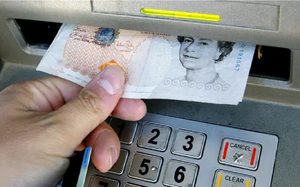
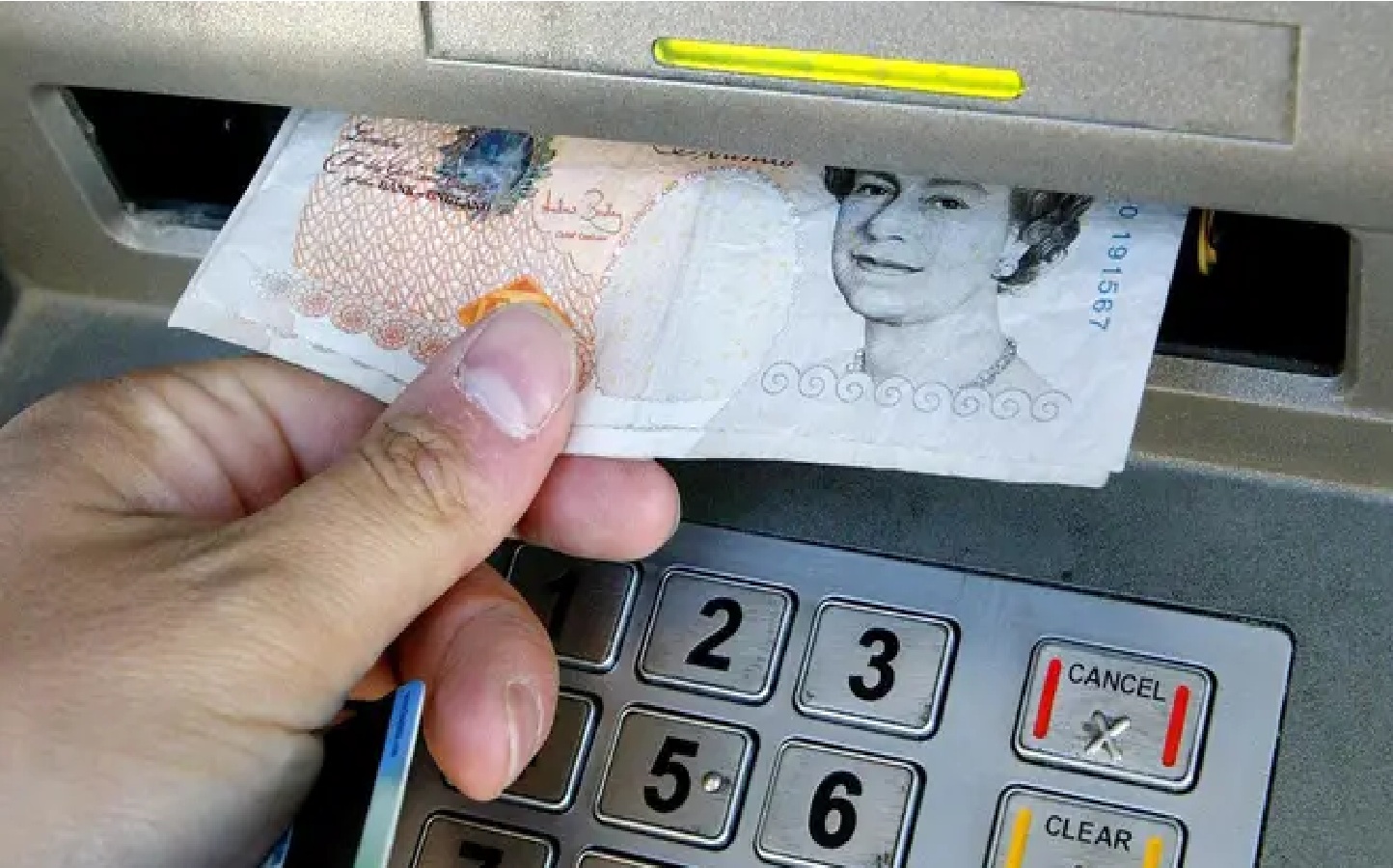
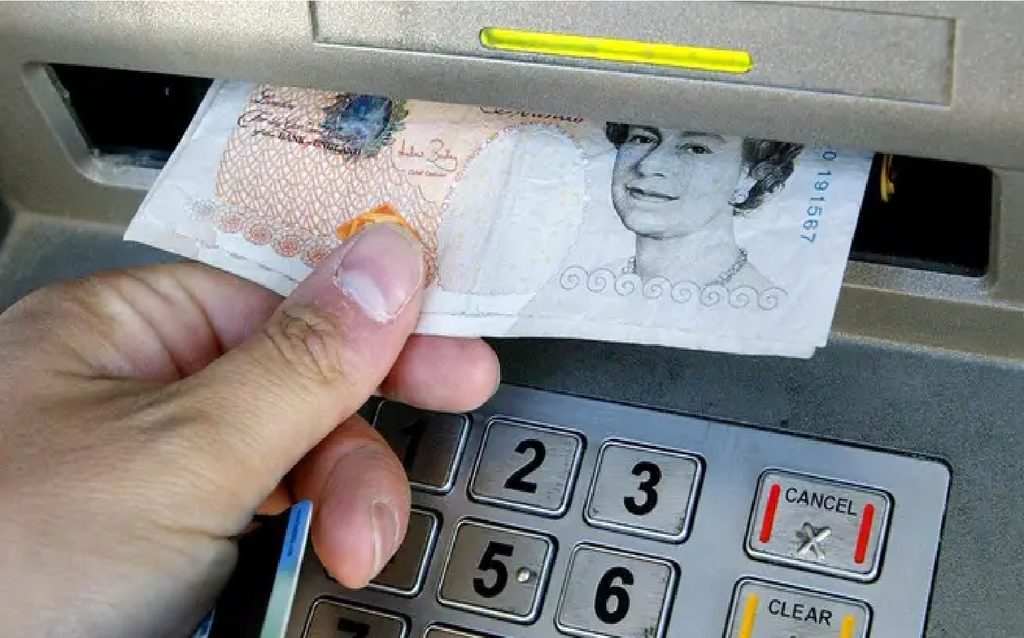
ATM withdrawals. Picture: PA
The average British cash machine withdrawal hit £106.20 last Friday, a figure only ever surpassed on Christmas Eve, as households across the country appeared to act on a government instruction that has been variously described as prudent, panicked, “tone deaf”, and a “bossy lecture”. Within days of Defence Secretary Wes Streeting unveiling the “Be Ready” campaign, a checklist urging every household to hold three days’ worth of water, tinned food, torches, and cash against the possibility of cyber-attack, extreme weather, or war, the behavioural evidence of a nation heeding the call was unmistakable. What is far less clear is whether the government has launched a genuine resilience movement or a chaotic, poorly timed communications exercise that has shifted the burden of national security onto the shopping baskets of individuals who can least afford it.
The figures from Link, the ATM network, are the most striking quantitative signal of behavioural change. The weekly average withdrawal rose above £100 for the first time outside the Christmas period, reaching £100.78, compared with £94.69 in the same week a year earlier. On the day the guidance was published, 22 October, £205 million was withdrawn, 3% higher than the equivalent day in the previous year. Graham Mott, Link’s director of strategy, was careful in his language but clear in his implication: “In response to the government’s Be Ready campaign, it has been a busier week at ATMs than we expected… when people have been able to visit cash machines, they’ve been taking considerably more than average”. The cash surge is not an isolated statistic. It is the financial fingerprint of a public that has received a message about the fragility of electronic payments and acted on it.
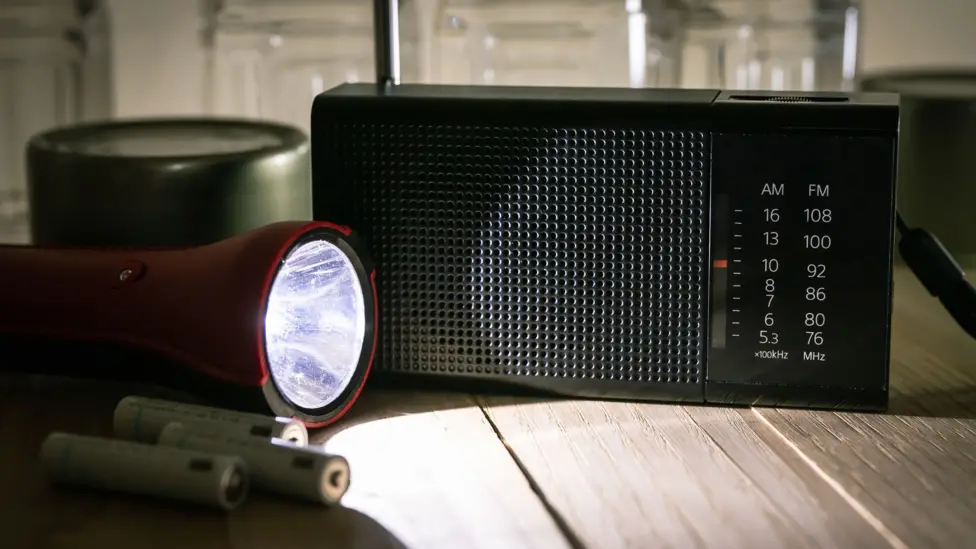
The retail data tells a parallel story. Iceland reported a 40% increase in sales of tinned products over the weekend, alongside “strong sales of bottled water”. Robert Dyas saw a 160% rise in radio sales. Maplin recorded a 92% increase in radios, a 284% increase in torches, and a 106% increase in power banks compared with the same period the previous month. Ollie Marshall, Maplin’s managing director, framed the response as rational: “Within hours of the Be Ready announcement we saw people reach for the basics… These are simple, affordable products that keep a household connected and informed when the power goes out”. At the smaller end of the market, the effect was even more dramatic. Josh Pringle of Sgt Prepper’s said his sales increased tenfold, while Lincoln Miles of Preppers Shop UK reported a 650% increase, describing demand as centred on “everything about off grid”.
Yet the very speed and scale of this consumer response is precisely what critics of the campaign point to as evidence of its failure. The government insisted it wanted people to be “alert but not alarmed”. But a message delivered against the backdrop of a major global cybersecurity crisis, the day before the campaign launch, the UK cybersecurity watchdog disclosed a critical flaw in PHP software used by roughly 70% of websites, was never likely to land as a calm, long-term resilience nudge. “While this launch and those vulnerabilities are entirely unrelated, you can understand why it has raised concern,” one food industry source told the Observer. “The poor timing of the announcement itself has made this feel like it was organised in an afternoon”.
The government’s own messaging did little to steady the tone. Treasury minister James Murray admitted on BBC Breakfast that he had not followed the advice, offering only that he had “quite a lot of coffee” at home. Prime Minister Andy Burnham, asked about Housing Secretary Angela Rayner’s joke that her emergency kit would include Sauvignon Blanc, said wine was “probably” helpful “when you’ve done the hard work” before revealing his own stockpile of “beans, soup and Twiglets”. Streeting, meanwhile, rejected accusations of scaremongering on BBC Question Time, insisting the UK was playing catch-up with European neighbours: “They are way ahead of us on some of this stuff”. But the juxtaposition of a cabinet minister joking about snacks while urging the public to prepare for state-sponsored terrorism and infrastructure collapse was, as one industry source put it, “just the wrong moment”.
The deeper critique, however, is not about tone. It is about equity. The Be Ready checklist, nine litres of water per person, three days of non-perishable food, a battery-powered radio, a torch, a first aid kit, cash, copies of documents, is a private insurance policy dressed as a public resilience strategy. For the 14 million people living in poverty across the UK, as Professor Ruth Patrick of the University of Glasgow noted, the guidance “will appear at best tone deaf and at worst almost insulting”. A single mother on universal credit told the BBC that following the advice would mean sacrificing her childcare budget for the school holidays. Her autistic son’s “safe foods” require a fridge and freezer; tinned goods are not a neutral substitute. Ged Futter, a food retail consultant and former Asda buyer, pointed to the spatial dimension of the inequality: “If you’re living in a small flat, how much space do you have? It’s not about who has what amount of money, though it will play a big part, but for many people they just haven’t got the space to stock up”.
Sales of torches and radio have risen sharply for some UK retailers
The government’s defence, that people “did not need to buy everything at once”, misses the point. A resilience strategy that depends on disposable income and spare cupboard space is not a resilience strategy at all; it is a transfer of risk from the state to the household, and within the household, from the affluent to the precarious. Food security expert Professor Tim Lang offered a sharper formulation: “Yes, do store food, but be prepared to share to maintain social solidarity”. He also criticised the advice as “minimal”, calling on the state to “protect us more” and provide “specific” instructions. The Be Ready campaign, in this reading, is a gesture towards preparedness that conspicuously avoids the harder questions of public investment, infrastructure hardening, and collective response.
There is, of course, a legitimate case for household preparedness. Dr Robbie Parks, a climate scientist at Columbia University, described the advice as “overdue” and argued that “you’ve always got to balance the preparedness with the panic, but it’s normalised [behaviour] in different parts of the world, and the UK is now a vulnerable country”. The threats Streeting cites, Russian sabotage, “state-sponsored terrorism”, flooding, cyber-attack, are not invented. The UK’s critical infrastructure is exposed, its digital systems are probed continuously, and extreme weather is intensifying. A population with a few days’ supplies is more resilient than one without. But the manner in which that message has been delivered matters enormously. A campaign that triggers record ATM withdrawals and a 650% surge in prepper-shop sales within days has not produced calm, measured preparedness. It has produced a spike of anxious consumption, followed by a political row about whether the government is scaremongering or abdicating its responsibilities.
The political reaction has been predictable but revealing. Conservative shadow national security minister Alicia Kearns said the government should “get its own house in order before lecturing the public”, adding: “It isn’t families that are failing to fund our defence or secure reliable energy; it’s Labour”. Reform UK MP Danny Kruger was blunter: “Ministers should be doing their job, not telling families how to do theirs… Meanwhile ordinary people need help with the cost of living, not bossy lectures about bottled water”. These attacks are partisan, but they touch a genuine nerve. The Be Ready campaign asks individuals to absorb the consequences of systemic vulnerability while the government simultaneously claims it is investing in defence and resilience. The public is left to wonder: if the state is doing its job, why is the state telling me to stockpile tins?
The answer may lie in the distinction between national resilience and household self-protection. The government’s own framing-Streeting’s “state-sponsored terrorism”, Burnham’s “unexpected events seem to be becoming more and more common”, acknowledges that the state cannot guarantee uninterrupted services in every scenario. In that gap, household supplies buy time. But a strategy that stops at the household, and that relies on voluntary, income-dependent action, leaves the most vulnerable exposed. Ana, founder of the UK Preppers Club, said she was disappointed that the government did not give people practical guidance on what to actually do in an emergency, how to flush a toilet without running water, for example. The checklist tells people what to buy, not how to cope. It is a shopping list, not a plan.
The record cash withdrawals and the empty shelves of tinned goods are therefore more than a curiosity. They are a Rorschach test for the state of British governance. For the government, they are evidence that the public is listening. For critics, they are evidence that a poorly calibrated message has produced anxiety rather than resilience. For the millions of households who cannot afford to participate, they are a reminder that preparedness has become another arena of inequality. And for the country as a whole, they raise an uncomfortable question: if the next crisis is serious enough that the government is urging citizens to hold three days’ supplies, what exactly is the government holding in reserve, and who is being asked to bear the cost of being ready?
Veritas Press Investigative Analysis Independent journalism examining global affairs, power, diplomacy, and accountability.
Source:Veritas Press C.I.C. | Multi-News Agencies
Help Support Our Work
Readers who believe that truth still matters have power over popular information. When just a few more people step up to support this work, it means more lies exposed, more corruption uncovered, and more accountability where it’s long overdue.
Help Protect Independent Journalism, Which Is Currently Under Attack.
If you believe journalism should serve the public, not the powerful, and you’re able to help, becoming a regular DONOR or a PAID SUBSCRIBER truly makes a difference.
DONATION APPEAL: If you found this reporting valuable, please consider supporting independent journalism.
Your support fuels our fearless, truth-driven journalism. In unity, we endeavour to amplify marginalised voices and champion justice, irrespective of geographical location. We operate independently, with no financial backing from billionaires; our readers support us.
But it’s also extremely important. One of Veritas Press’s greatest assets is its reader-funded model.
1. Reader funding means we can cover what we like. We’re not beholden to the political whims of a billionaire owner. We are a small, independent and impartial organisation. No one can tell us what not to say or what not to report.
2. Reader funding means we don’t have to chase clicks and traffic. We’re not desperately seeking your attention for its own sake; we pursue the stories that our editorial team deems important and believes are worthy of your time.
3. Reader Funding: enables us to keep our website and other social media channels open, allowing as many people as possible to access quality journalism from around the world, particularly those in places where the free press is under threat.
We know not everyone can afford to pay for news, but if you’ve been meaning to support us, now’s the time.
Your donation goes a long way. It helps us:
Keep the lights on and sustain our day-to-day operations
Hire new, talented, independent reporters
Launch real-time live debates, community-focused shows, and on-the-ground reporting
Cover the issues that matter most to our communities, in real time, with depth and integrity
Without your support, independent voices like ours will be silenced.
Furthermore, we have plans to expand our work, but we can’t do it without your support. Every contribution, no matter the size, helps us stay independent and build a truly people-powered media platform.
If you believe in journalism that informs, empowers, and reflects the communities we serve, please donate today.
Submissions
For the safe submission of documentation, testimonies, or exclusive investigative reports from anywhere in the world, please use the following contact details for our Investigations Desk: mailto:enquiries@veritaspress.co.uk or mailto:editor@veritaspress.co.uk.
SEATTLE, TEHRAN — The U.S. Department of Homeland Security (DHS) will allow Iran’s national football team to enter the country 48 hours before their critical World Cup match against Egypt on Friday, a modest concession in a tournament where Team Melli’s travel conditions have sparked claims of oppression and competitive disadvantage.