Kamran Faqir is a volunteer investigative journalist and writer committed to exposing hidden truths and amplifying underreported stories. Driven by social justice, he brings sharp insight and fearless truth-telling to independent journalism. NUJ registered.
Article Date Published:
Article Date Modified:
18 minutes
Views:308
Listen to this article
Help support our mission, donate today and be the change. Every contribution goes directly toward driving real impact for the cause we believe in.
An Investigative Analysis Of The Latest Planning Data, Land Confiscations, Settler Violence, And The Global Economic Machinery Driving Israel’s De Facto Annexation – All While The World Watches Gaza Burn.
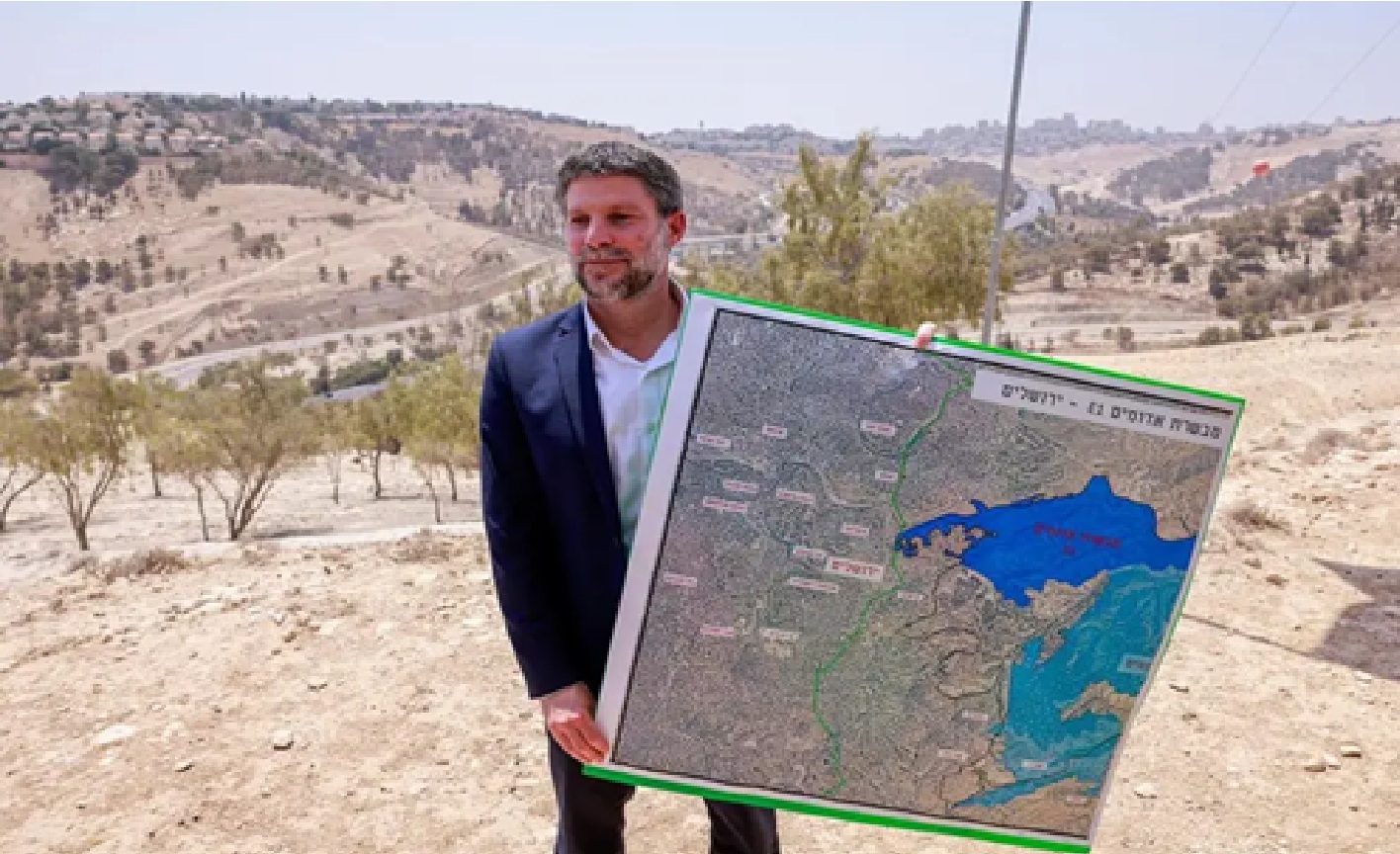
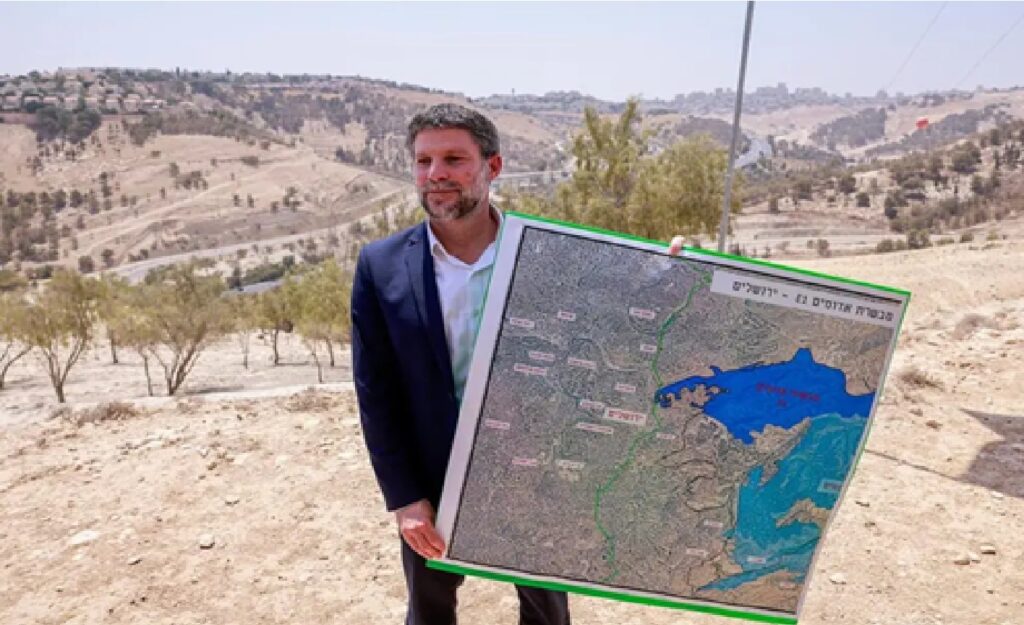
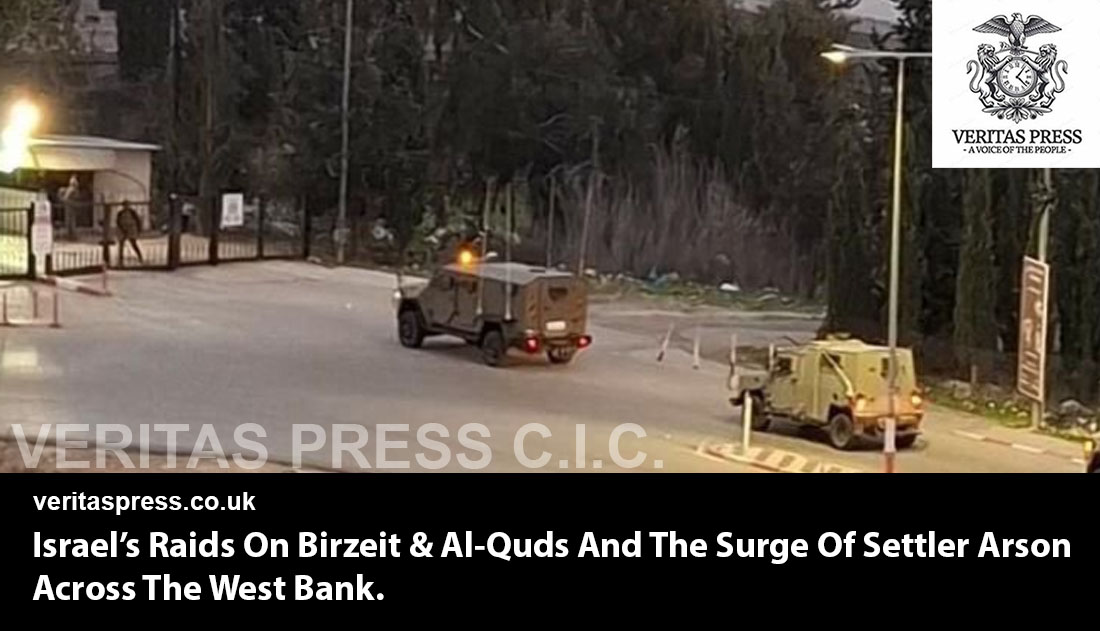
RAMALLAH, WEST BANK— On a sweltering July morning, Mu’ayyad Shaa’ban, head of the Colonisation and Wall Resistance Commission (CWRC), sat before a stack of maps, satellite images and spreadsheets that tell a story of dispossession accelerating at breakneck speed. The data he released on July 6, 2026, covering the first half of the year, is staggering: 11,074 attacks by the Israeli military and armed settlers; 45,195 trees uprooted; 740 Palestinian structures demolished; 4,379 dunams of land confiscated; 113 colonial master plans advanced; and 34 entirely new settlements approved. One week later, on July 17, the Israeli occupation’s so-called Higher Planning Council convened to discuss nine additional colonial plans, depositing or greenlighting over 1,000 new housing units on more than 1,000 dunams of Palestinian land.
These numbers are not a sudden eruption. They are the meticulously planned, internationally financed, and corporately enabled execution of a long-held blueprint: the irreversible annexation of the occupied West Bank, including East Jerusalem, achieved not through a single declaration, but through a thousand bureaucratic cuts, a million cubic metres of concrete, and a wall of impunity buttressed by global capital.
“The occupation is no longer about managing a temporary situation,” Shaa’ban told WAFA in July. “It is about managing annexation. The measures we see are not temporary military orders; they are sovereign practices designed to gradually subject Palestinian land to the Israeli legal and administrative system. This is the practical implementation of a creeping annexation project, in flagrant violation of international law.”
This investigation, drawing on newly released CWRC data, a groundbreaking United Nations report on corporate complicity in what it calls the “economy of genocide,” and interviews with Palestinian officials, villagers, and legal experts, reveals that the distinction between the genocidal destruction in Gaza and the silent land grab in the West Bank is a fiction. Both are limbs of the same settler-colonial body, nourished by the same corporate bloodstream, and governed by the same political calculus: to make Palestinian existence – physically, economically, and geographically – impossible.
The Numbers Behind The Annexation Machine:
Between 1 January and 30 June 2026, the Israeli occupation authorities reviewed – meaning either deposited for public scrutiny or directly approved – 113 master plans for settlement expansion or establishment. Of these, 71 were in the West Bank and 42 in occupied Jerusalem. Together, they envisage at least 12,435 new housing units over 14,215 dunams of privately owned and communally used Palestinian land. The July 17 meeting of the Higher Planning Council added another 1,024 units (455 approved, 569 deposited) on 1,069 dunams, pushing the half-year pipeline even higher.
Approvals in July alone included a major expansion of the Mevo Dotan settlement on 539 dunams belonging to the Town of Arriba, south of Jenin. The plan adds 455 units at a time when the northern West Bank is already reeling from months of relentless military raids and the systematic destruction of infrastructure. In the southern West Bank, two plans for the settlements of Beit Hagai and Asael, the latter only legalised as a settlement from an outpost in early 2023 – added 567 units on 519 dunams. The CWRC noted that these moves are designed to “strengthen colonial blocs and connect them to road networks and infrastructure, thereby consolidating the takeover of large areas and limiting Palestinian urban expansion.”
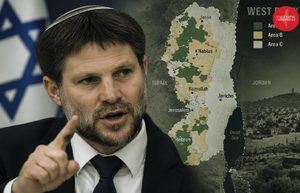
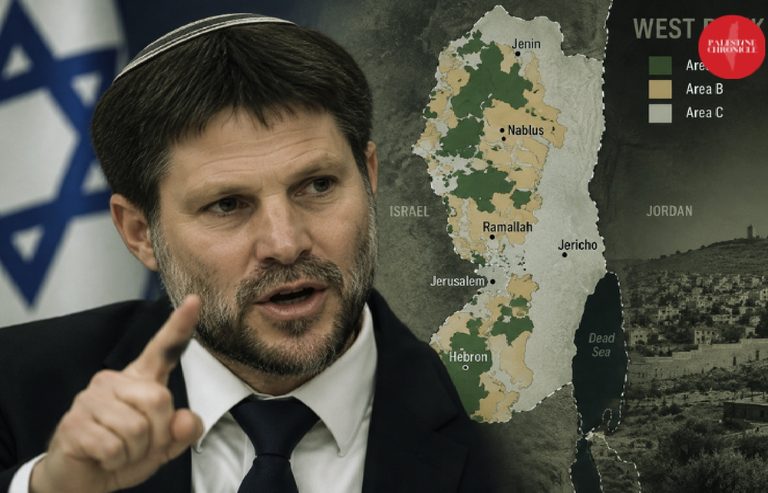
But the most significant shift is qualitative. In the first half of 2026, the Israeli government approved 34 new settlements – not expansions of existing ones, but entirely new colonies carved out of Palestinian hillsides and farmland. This brings the total number of new settlements greenlit by the current government to 103, of which more than 39 will be built from scratch. “This indicates a clear change in colonial expansion policy,” Shaa’ban said. “They are moving from thickening existing colonies to creating new ones, which redraws the entire map.”
This acceleration is not random. It follows the Israeli government’s decision earlier in 2026 to transfer settlement administration from military to civilian authorities, effectively treating the occupied territory as sovereign Israeli land. The Ministry of Construction and Housing doubled its budget, injecting hundreds of millions of dollars into colony construction. “The plans do not represent ordinary urban expansion,” the CWRC stated. “They form part of a systematic policy aimed at reshaping Palestinian geographic space, integrating existing colonies into Israeli infrastructure networks, and denying Palestinians any planning or urban development prospects.”
‘They Came With Bulldozers And Soldiers’:
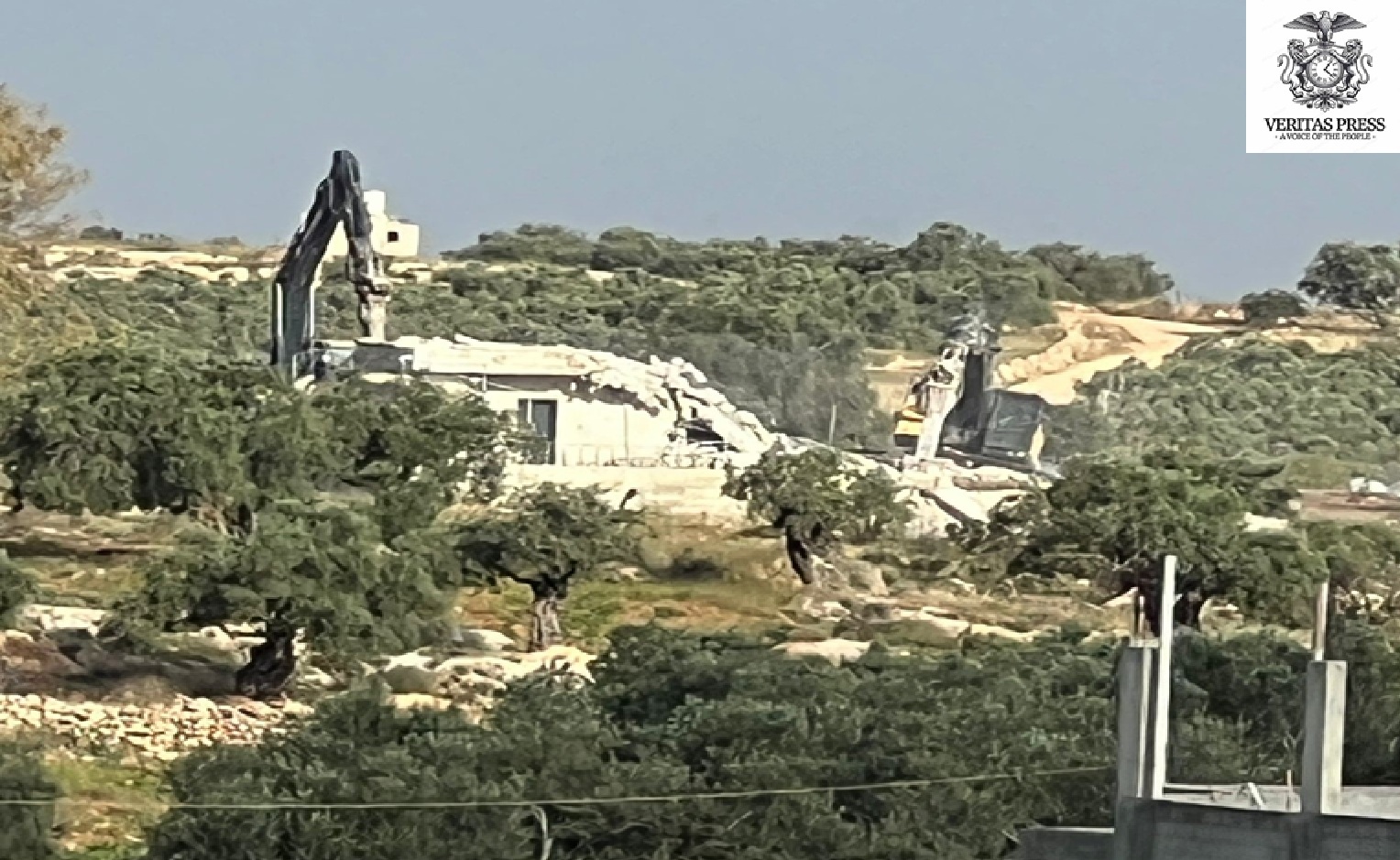
Behind every statistic is a community being erased. In the hills south of Hebron, the Bedouin village of Khirbet al-Mufaqara lost its last remaining homes in March 2026. “We had been there for generations,” said Umm Ahmad, a mother of seven, reached by phone. “One morning, the army arrived with bulldozers and settlers. They gave us half an hour to leave. They loaded everything they could onto trucks, then flattened the rest. My children are still asking when we can go home.” The demolition was one of 341 operations that destroyed 740 structures and displaced 923 people – including 546 children – in the first six months of the year.
The CWRC report states that 26 Bedouin communities were targeted, and 18 of them were completely displaced. This is the direct consequence of Israel’s classification of vast swathes of the West Bank as “state land” or “firing zones.” In the first half of 2026, four such “state land” declarations seized 1,163 dunams. Five expropriation orders grabbed another 2,604 dunams. Forty military seizure orders took 611 dunams, explicitly to create buffer zones around settlements, pave security roads, and erect new military sites – all features that fragment Palestinian territory into isolated cantons.
The uprooting of 45,195 trees – including 26,395 olive trees – is a deliberate assault on the backbone of Palestinian agriculture and identity. “An olive tree takes decades to mature; it’s not just a source of income, it’s our history,” said Sa’id Hamayel, a farmer from Turmus Ayya, where settlers torched hundreds of trees in May. “When they destroy a tree, they’re telling us: you have no future here.” Settlers destroyed the vast majority of trees in Hebron (16,617 trees), Jenin (7,783), Ramallah (6,834), and Nablus (6,015), mirroring the zones of heaviest settlement expansion and settler violence.
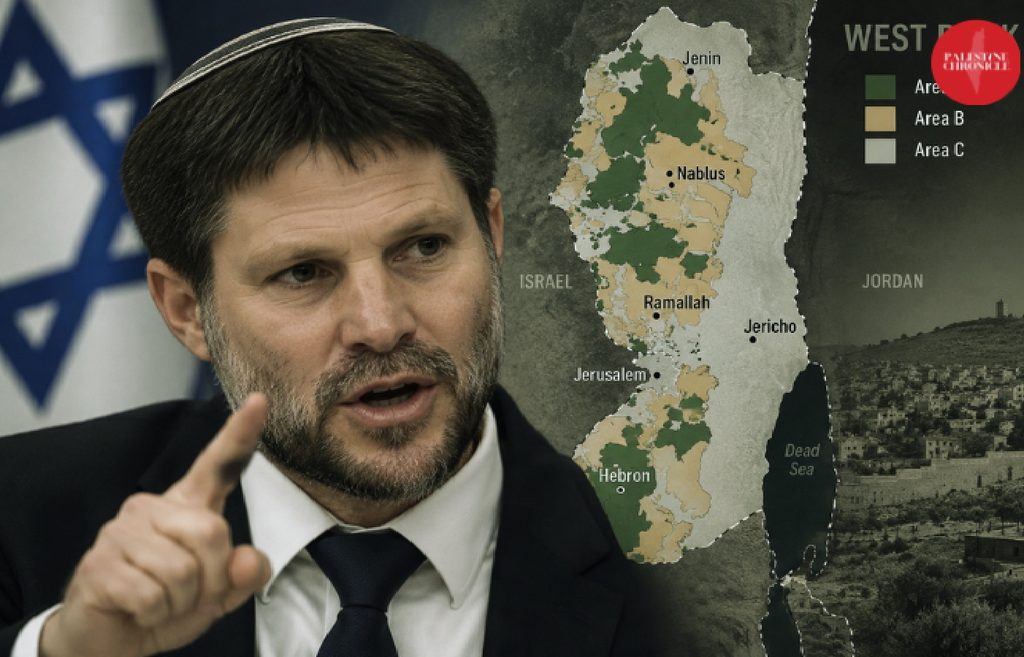
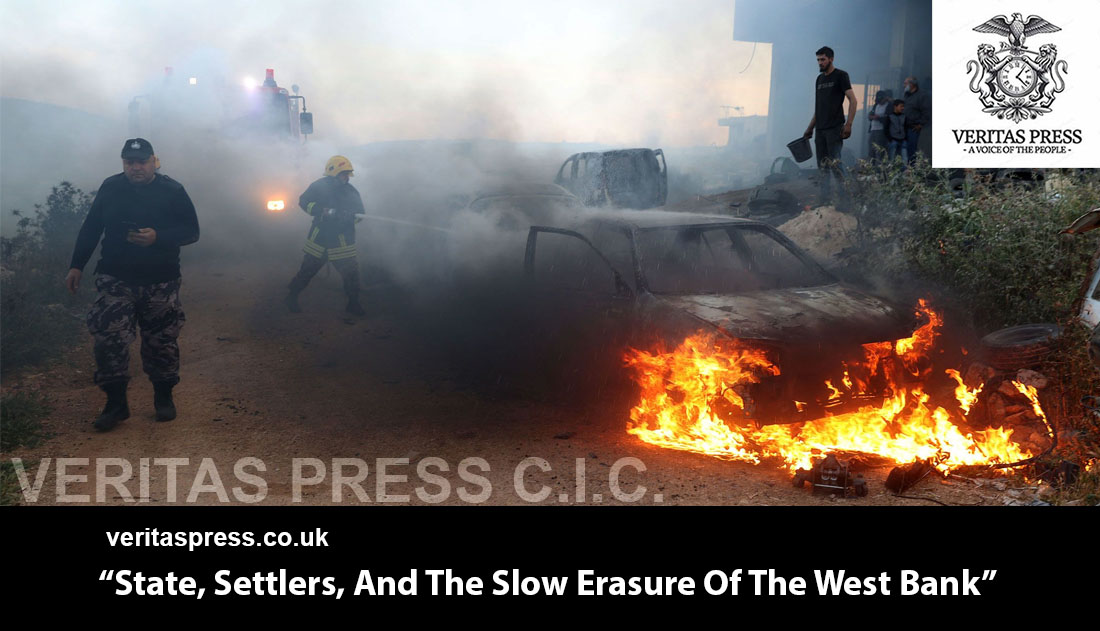
Indeed, settler attacks have become a parallel instrument of state policy. The CWRC documented 3,488 settler assaults in the first half of 2026 – storming villages, shooting at civilians, setting homes alight with occupants inside, and establishing 42 new outposts on private Palestinian land, including four in Area B, which under the Oslo Accords is supposed to be under full Palestinian civil control. Seventeen Palestinians were killed by settlers in these months. “The settler militias act as the shock troops of annexation,” Shaa’ban charged. “They are fully supported and protected by the army. Their violence prepares the ground for later formal confiscation.”
The Legal Mask: How ‘Facts On The Ground’ Become Permanent.
International law could not be clearer. The prohibition of the acquisition of territory by force is a peremptory norm – a jus cogens rule from which no derogation is permitted. Article 2(4) of the UN Charter, the 1970 Declaration on Friendly Relations, and countless Security Council resolutions have repeatedly confirmed that annexation, whether de jure (formal) or de facto (creeping and indirect), is illegal. In the Palestinian context, Israel’s 1967 annexation of East Jerusalem and 1981 annexation of the Syrian Golan were universally rejected. The West Bank has never been formally annexed, but the International Court of Justice, in its 2024 Advisory Opinion, ruled that Israel’s prolonged occupation, settlement enterprise, and associated discriminatory practices amount to de facto annexation – a violation of Palestinian self-determination.
“De facto annexation is more insidious,” explains Dr. Nada Kiswanson, a legal advisor to the Ramallah-based human rights group Al-Haq. “Because it does not happen through one grand declaration, but through a series of seemingly technical measures: modifying master plans, declaring state land, rerouting roads, changing building codes. By the time the international community notices, the occupying power’s fabric has already irreversibly integrated the territory. She points to the CWRC’s finding that Israeli planning authorities are now changing internal settlement regulations – converting land use from commercial to residential, adjusting building lines, amending plot divisions – as a key example. “These are not merely technical changes. They are planning tools that allow for increased colonial density and maximum exploitation of available land, reducing the future need to seize additional land. That is precisely how de facto annexation works: it renders the temporary permanent.”
The integration is comprehensive. The Israeli water company Mekorot maintains a monopoly over Palestinian water resources, forcing Palestinians to buy back their own water at inflated prices while settlers enjoy an unlimited supply. The Jerusalem Light Rail’s expanding Red and Green Lines, built by a consortium including the Spanish/Basque company CAF, and using excavators supplied by Volvo and Doosan – will stretch 27 new kilometres of track and 53 stations deep into the occupied West Bank, physically tethering settlements to West Jerusalem. “Every new road, every new water pipeline, every new electricity grid that exclusively serves colonies while bypassing Palestinian communities, is a nail in the coffin of the two-state solution,” said Shaa’ban.
The Economy Of Genocide: How Global Corporations Finance The Annexation.
On July 15, 2026, the UN Special Rapporteur on the situation of human rights in the Palestinian territories released a devastating report titled “From Economy of Occupation to Economy of Genocide.” Based on over 200 submissions and a database of 1,000 corporate entities, the report exposes how an international web of arms manufacturers, tech firms, banks, pension funds, construction companies, agribusiness giants, and even travel platforms are “enabling and profiting from Israel’s illegal occupation, apartheid and now, genocide.” Its central thesis: the same corporate machinery that has sustained settlement expansion for decades has seamlessly transitioned into fuelling the annihilation of Gaza, while simultaneously speeding up land theft in the West Bank.
“Corporate entities have not only inherited the benefits of a legal veil of separation from colonial crimes, but have become shapers of international law,” the Special Rapporteur writes. “Today, some corporate conglomerates exceed the GDP of sovereign states. The asymmetry of immense power without sufficiently justiciable accountability exposes a fundamental global governance gap.”
The report names names. Caterpillar Inc.whose D9 bulldozers – often automated and remote-controlled – the Israeli military has deployed in almost every military activity since 2000, have demolished thousands of Palestinian homes and, since October 2023, have documented raids on hospitals and the crushing of Palestinians to death in Gaza. In the West Bank, the same machines are used to level ground for new settlement neighbourhoods. Despite repeated human rights appeals, Caterpillar secured another multi-million-dollar contract with Israel in 2025. “Caterpillar’s equipment is the weapon of choice for erasing Palestinian communities,” the report states.
Hyundai Heavy Industries (now HD Hyundai) and Volvo Group, through exclusive Israeli dealers, supply excavators and wheel loaders used in demolitions and construction in both the West Bank and Gaza. Since October 2023, Volvo machinery has been filmed flattening Rafah and Jabalia; logos were later obscured, an act the report calls evidence of “awareness of criminal use.” Heidelberg Materials, through its Israeli subsidiary Hanson, has nearly exhausted a quarry on Palestinian land in the West Bank, supplying aggregate for settlement construction.
The arms sector is the beating heart. Lockheed Martin’s F-35 and F-16 fighter jets, co-produced with Leonardo S.p.A. and over 1,600 other companies, have dropped an estimated 85,000 tons of bombs on Gaza, killing and injuring over 179,000 Palestinians. Elbit Systems and Israel Aerospace Industries, whose profits have surged by double digits since 2023, provide drones, AI-targeting systems, and the surveillance architecture that underpins both the genocide and the apartheid apparatus in the West Bank. The report reveals that Israeli drones acquired automated weapons and swarm capabilities through collaborations with the Massachusetts Institute of Technology (MIT) and other institutions.
Technology behemoths are equally complicit. Microsoft, Alphabet (Google), and Amazon received a $1.2 billion cloud contract (Project Nimbus). This contract places Israeli military and civilian data on servers in Israel, granting the government “virtually government-wide access” to AI and cloud tools. In October 2023, when Israel’s internal military cloud overloaded, Microsoft Azure and the Nimbus Consortium stepped in, providing “critical cloud and AI infrastructure” for the assault on Gaza. An Israeli colonel boasted in July 2024 that cloud tech is “a weapon in every sense of the word.” Palantir Technologies offered its AI Platform for real-time battlefield integration; its CEO, when accused in April 2025 of killing Palestinians in Gaza, responded, “Mostly terrorists, that’s true” – a statement the UN report says indicates “executive-level knowledge and purpose vis-à-vis Israel’s unlawful use of force.”
Finance lubricates it all. BlackRock and Vanguard are among the largest institutional investors in Lockheed Martin, Caterpillar, Palantir, and Elbit. BNP Paribas and Barclays underwrote Israeli government bonds worth billions, allowing the state to fund a ballooning military budget – up 65% to $46.5 billion – despite a credit downgrade. The Norwegian Government Pension Fund Global, which markets itself on ethical guidelines, increased its Israeli investments by 32% to $1.9 billion. “These financial entities channel billions of dollars into companies directly involved in occupation and genocide, all while being ESG-compliant,” the report notes dryly.
Agribusiness and retail chains maintain the settlement economy. Tnuva, now majority Chinese-owned, sources dairy from settlements, selling products that dominate both Israeli and captive Palestinian markets. Netafim, whose Orbia (a Mexican company) owns 80%, provides drip irrigation technology. This technology enables intensive water extraction in the Jordan Valley, where Orbia denies Palestinian farmers access. Meanwhile, Booking.com and Airbnb list properties in illegal settlements. Airbnb has grown from 139 listings in 2016 to 350 in 2025, collecting up to 23% commission. “They are marketing war crimes as holiday experiences,” says Adri Nieuwhof, a researcher with the Dutch Palestine solidarity group Stop the Wall, which filed a criminal complaint against Booking.com in the Netherlands for laundering proceeds from settlement activity.
The Special Rapporteur’s conclusion is blunt: “Business continues as usual, but nothing about this system, in which businesses are integral, is neutral. The enduring ideological, political, and economic engine of racial capitalism has transformed Israel’s displacement-replacement economy of occupation into an economy of genocide. This is a ‘joint criminal enterprise,’ where the acts of one ultimately contribute to a whole economy that drives, supplies and enables this genocide.”
A Thousand Days Of Genocide, A Thousand Days Of Land Theft.
The CWRC’s cumulative statistics are chilling. Since the start of Israel’s genocidal campaign on 7 October 2023 – now surpassing 1,000 days – the occupation has carried out 56,235 attacks against Palestinians in the West Bank and Gaza. In the West Bank alone, 12,506 settler attacks have killed 52 Palestinians and torched 890 properties and fields. The army has seized 60,000 dunams, declared 28,000 dunams as “state land,” and confiscated 20,000 dunams for “nature reserves” that lock Palestinians out. Over 524 colonial master plans have been reviewed, and 103 new settlements approved.
Shaa’ban warns that the process has become self-reinforcing. “Each attack, each new outpost, each road, each military zone, lays the groundwork for the next master plan, which then requires more ‘security’ measures, more buffer zones, more settler roads. The goal is to leave Palestinians with archipelagos of overcrowded, disconnected Bantustans, devoid of resources, and then call it a state.”
In Hebron’s Old City, where settlers committed 840 attacks in six months, Palestinian shopkeeper Jamal Abu Aisha locks his metal grating. “The settlers live above us, throw stones and garbage, and we can’t even walk to the mosque without passing through checkpoints. It’s not just the settlements on the hills; it’s the slow strangulation of the city itself. They want us to leave, one by one.”
Impunity As Statecraft:
At every level, the international community has failed to stop the machinery. The July 17 planning meeting proceeded days after the release of the UN report, and one month after the ICJ ordered Israel to “dismantle all settlements, evacuate all settlers, and make reparation for the damage caused.” In a statement, the European Union expressed “grave concern” but took no concrete action. The United States, Israel’s largest arms supplier, fast-tracked a new $8 billion weapons package in May 2026.
“Verbal condemnation is meaningless when you continue to arm, finance, and trade with an apartheid regime that is openly committing genocide and annexation,” said Shawan Jabarin, general director of Al-Haq. “The world has created a parallel system of accountability: one for white nations, and one for the rest of us. The UN report lays out a roadmap for sanctions, arms embargoes, and prosecutions. What is missing is political will.”
The UN Special Rapporteur’s recommendations are specific: impose a full arms embargo, suspend trade agreements and investment relations, investigate and prosecute corporate executives, and compel the private sector to pay reparations to the Palestinian people. On the ground, Palestinian civil society repeats its long-standing call: Boycott, Divestment, Sanctions (BDS).
“We need to follow the money,” says Riya Hassan, a BDS activist in Ramallah. “Every pension fund manager, every university endowment committee, every church investment board should ask: Are we profiting from the destruction of a people? Because the evidence is now undeniable. If you hold shares in BlackRock or Vanguard funds, you are likely complicit.”
Conclusion: ‘What Comes Next Depends On Us’
As the evening call to prayer echoed over Ramallah, Shaa’ban folded his maps. “We document, we report, we protest. But without international enforcement, this report will be another file in the archives. Israel is not just building settlements; it is building a permanent apartheid reality. The question is whether the world will finally stop the project, or whether it will stand by as the last Palestinian land is swallowed.”
The nine plans discussed in July are more than technical adjustments. They are the latest bricks in a wall that has been under construction since before 1948, a wall built not just of concrete but of laws, trade deals, shareholder profits, and Western silence. The UN report has drawn back the curtain on the economic infrastructure of dispossession. The CWRC data has catalogued the human cost. The only missing piece is the political courage to dismantle the machine.
As the Special Rapporteur wrote in her final paragraph: “This report is written at the cusp of a profound and tumultuous transformation. Globally witnessed atrocities require urgent accountability and justice… What comes next depends on all of us.”
Source:Veritas Press C.I.C. | Multi-News Agencies
Help Support Our Work By Donating
Readers who believe that truth still matters have power over popular information. When just a few more people step up to support this work, it means more lies exposed, more corruption uncovered, and more accountability where it’s long overdue.
Help Protect Independent Journalism, Which Is Currently Under Attack.
If you believe journalism should serve the public, not the powerful, and you’re in a position to help, becoming a DONOR or a PAID SUBSCRIBER truly makes a difference.
DONATION APPEAL: If You Found This Reporting Valuable, Please Consider Supporting Independent Journalism.
Your support fuels our fearless, truth-driven journalism. In unity, we endeavour to amplify marginalised voices and champion justice, irrespective of geographical location. We operate independently, with no financial backing from billionaires; our readers support us.
But it’s also extremely important. One of Veritas Press’s greatest assets is its reader-funded model.
1. Reader funding means we can cover what we like. We’re not beholden to the political whims of a billionaire owner. We are a small, independent and impartial organisation. No one can tell us what not to say or what not to report.
2. Reader funding means we don’t have to chase clicks and traffic. We’re not desperately seeking your attention for its own sake; we pursue the stories that our editorial team deems important and believes are worthy of your time.
3. Reader Funding: enables us to keep our website and other social media channels open, allowing as many people as possible to access quality journalism from around the world, particularly those in places where the free press is under threat.
We know not everyone can afford to pay for news, but if you’ve been meaning to support us, now’s the time.
Your donation goes a long way. It helps us:
Keep the lights on and sustain our day-to-day operations
Hire new, talented, independent reporters
Launch real-time live debates, community-focused shows, and on-the-ground reporting
Cover the issues that matter most to our communities, in real time, with depth and integrity
We have plans to expand our work, but we can’t do it without your support. Every contribution, no matter the size, helps us stay independent and build a truly people-powered media platform.
If you believe in journalism that informs, empowers, and reflects the communities we serve, please donate today.
Submissions:
For The Secure Submission Of Documentation, Testimonies, Or Exclusive Investigative Reports From Any Global Location, Please Utilise The Following Contact Details For Our Investigations Desk: enquiries@veritaspress.co.uk or editor@veritaspress.co.uk
Kamran Faqir is a volunteer investigative journalist and writer committed to exposing hidden truths and amplifying underreported stories. Driven by social justice, he brings sharp insight and fearless truth-telling to independent journalism. NUJ registered.
SEATTLE, TEHRAN — The U.S. Department of Homeland Security (DHS) will allow Iran’s national football team to enter the country 48 hours before their critical World Cup match against Egypt on Friday, a modest concession in a tournament where Team Melli’s travel conditions have sparked claims of oppression and competitive disadvantage.