Kamran Faqir is a volunteer investigative journalist and writer committed to exposing hidden truths and amplifying underreported stories. Driven by social justice, he brings sharp insight and fearless truth-telling to independent journalism. NUJ registered.
Listen to this article
Help support our mission, donate today and be the change. Every contribution goes directly toward driving real impact for the cause we believe in.
Article Date Published:
Article Date Modified:
15 minutes
Views:101
With Welsh Labour reeling from a historic Senedd defeat and Welsh exporters still counting the cost of a hard Brexit, Andy Burnham heads to Brussels accusing the Tories of having “burned all of our bridges” with the EU, and gambling that a narrow trade “reset” can begin to repair the damage before voters deliver their own verdict.
Andy Burnham accuses Tories of ‘burning bridges’ with EU over Brexit
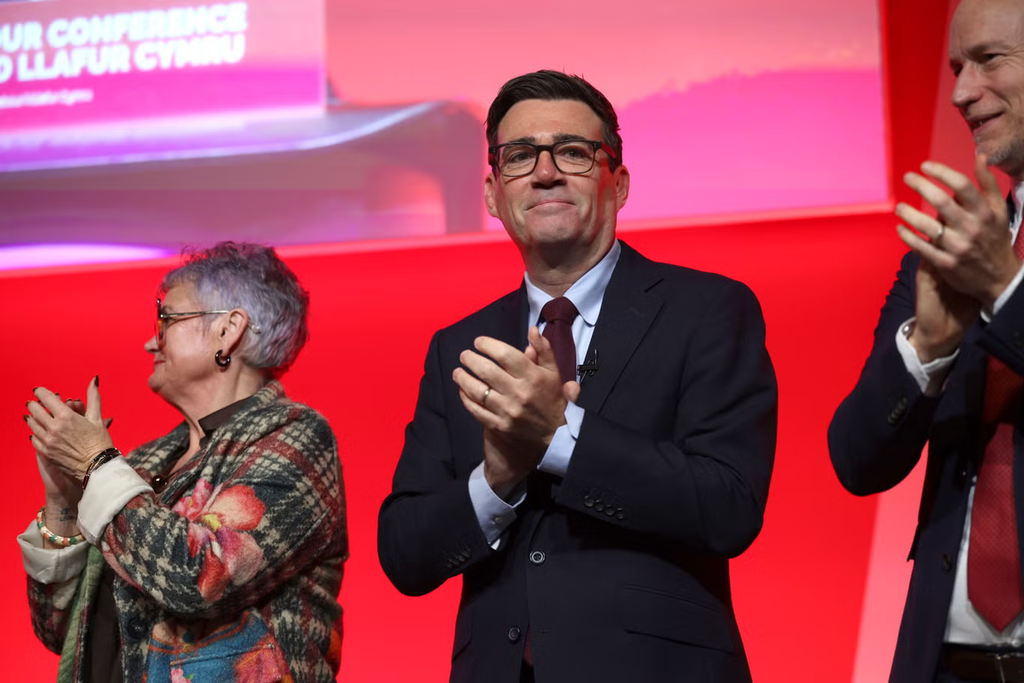
LLANDUDNO, NORTH WALES — Standing before a diminished and visibly shaken Welsh Labour conference in Llandudno, Prime Minister Andy Burnham delivered a blunt, almost forensic verdict on a decade of Conservative stewardship. The Tories, he declared, did not merely negotiate a hard Brexit, they “burned all of our bridges” with the European Union, leaving Britain “lost more than we’ve gained over the last 10 years”.
The Prime Minister’s intervention, timed just days before a critical UK-EU summit in Brussels on November 20, was more than a rhetorical flourish. It was a calculated attempt to reframe the political battlefield, moving the debate from the abstract sovereignty arguments of 2016 to the concrete, painful realities of export bans, collapsed industries, and lost rural funding that have defined the post-Brexit settlement for communities across Wales. Yet, as Burnham attempts to steer a course between the wreckage of the past and the “red lines” of the present, an investigative scrutiny of the record reveals a far more complex and contradictory landscape, one where the Prime Minister’s own commitments, the resistance of his opponents, and the desperate pleas of Welsh producers collide with the harsh arithmetic of a decade of estrangement.
The Arithmetic Of Alienation: What Wales Actually Lost
For the Prime Minister, the numbers are a moral indictment. Speaking to delegates, he argued that the Conservatives gifted Britain a “harsher and harder Brexit than people thought they were getting when they voted in 2016”. The evidence from Wales, a nation that narrowly voted to leave (52.5% to 47.5%), lends significant weight to his critique.
The economic toll is stark. Wales has suffered from nearly £1 billion in lost EU rural funding, a vital lifeline for its agricultural heartlands. The agri-food sector, one of the pillars of the Welsh economy, has been throttled by customs burdens and non-tariff barriers. Since 2018, UK food and agricultural exports to the EU have fallen by approximately 22%, a drop worth almost £4 billion in real terms.
The human cost is most acutely visible in the shellfish industry. The Menai Strait, once Britain’s largest mussel farming area, has become a symbol of the post-Brexit collapse. Mussel production has plummeted from about 10,000 tonnes annually to just five tonnes in 2022, a staggering 99.95% decline. The Valente, a 43-metre dredging boat, is now the last of its kind operating from Port Penrhyn; three others have been sold off.
“We’ve got a Welsh shellfish trader turning down orders because their catch isn’t fresh by the time the paperwork is done,” Environment Secretary Emma Reynolds admitted earlier this year, in a statement that inadvertently indicted the government’s own legacy. The government’s own analysis acknowledges that more than 90% of Welsh landed catch is exported to the EU, making the non-tariff barriers “particularly devastating” for the export of live crustacea. For the Welsh lamb industry, a £190 million sector that sends over 90% of its exports to the EU, the stakes could not be higher.
The Brussels “Prize” And The Ghosts Of Red Lines
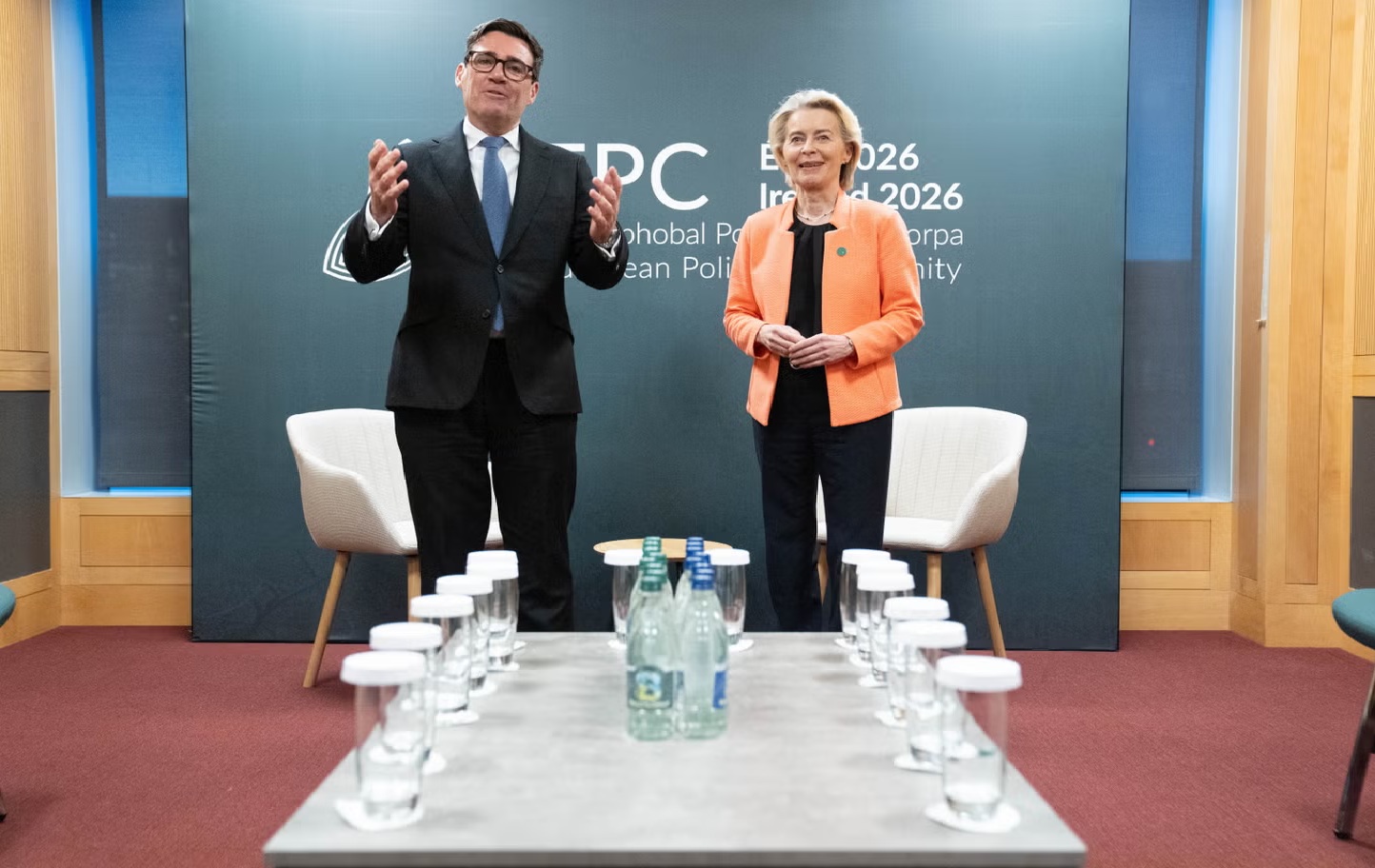
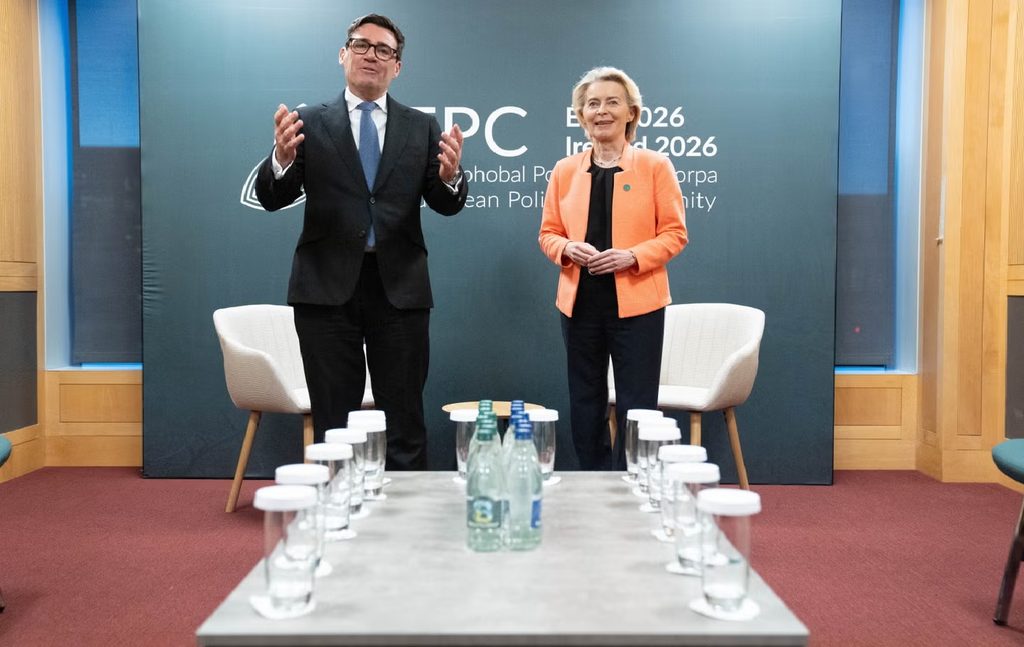
It is this devastation that Burnham hopes to begin reversing on November 20. In Brussels, the Prime Minister is scheduled to meet European Commission President Ursula von der Leyen and European Council President António Costa to sign three agreements he claims could boost GDP by 0.4%, equivalent to £17 billion. These include a Sanitary and Phytosanitary (SPS) agreement to slash red tape for food exports, a deal the government believes will be worth over £5 billion to the UK economy by 2040, a link to the EU’s emissions trading scheme, and a “youth experience scheme” allowing under-30s to live and work on the continent.
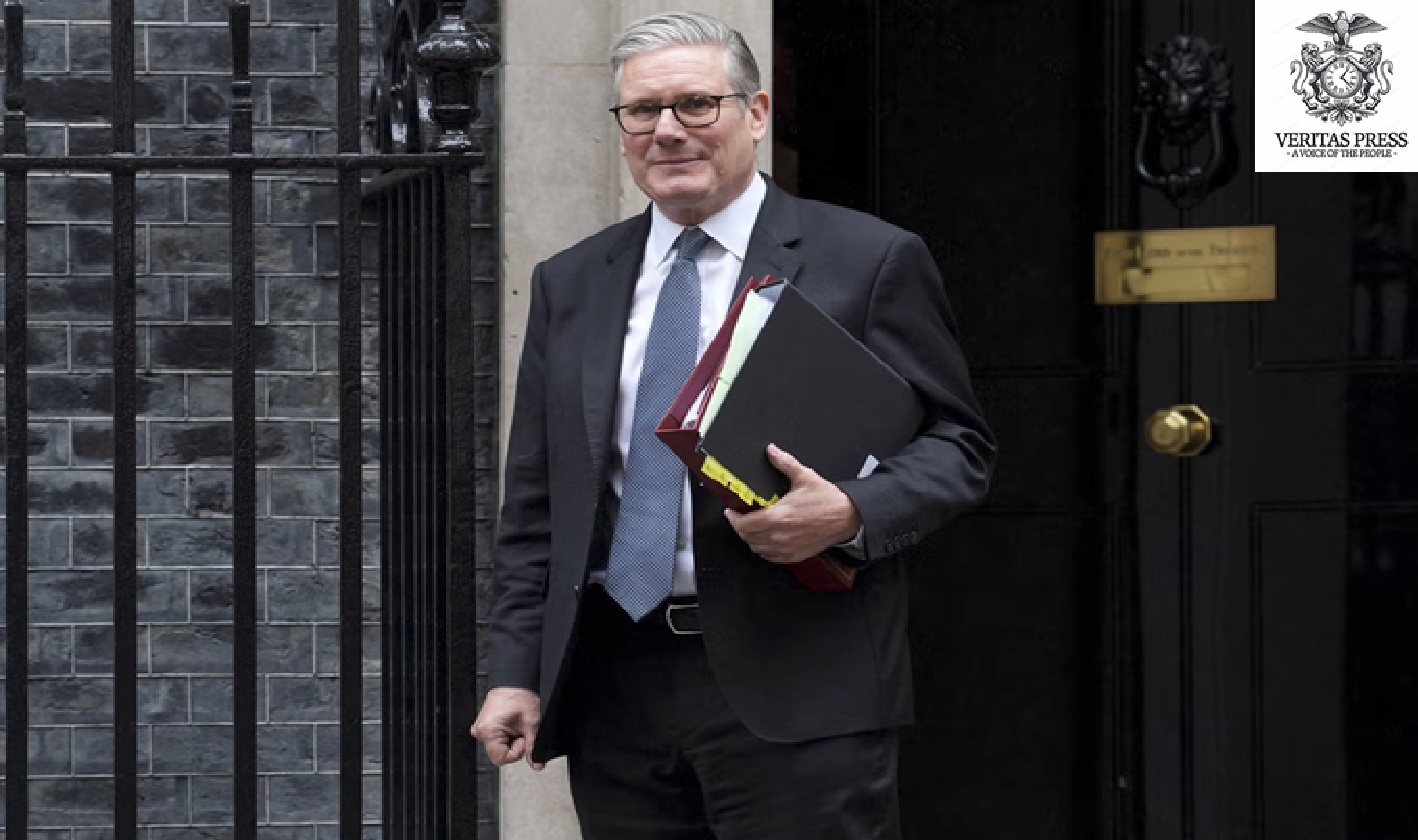
Andy Burnham accused the Tories of having ‘burned all of our bridges’ in the aftermath of Brexit and said the country had ‘lost more than we’ve gained over the last 10 years’ Getty
“There could be a significant prize next week if we successfully secure practical agreements that make the country better off,” Burnham told his cabinet. For the Welsh mussel farmers of the Menai Strait, the resurrection of an SPS deal, first mooted under Keir Starmer’s brief leadership, represents a final, desperate lifeline. The customers, as one farmer put it, “are still there”.
But the Prime Minister’s path is riddled with contradictions. Even as he seeks closer alignment, he is publicly bound by Labour’s manifesto “red lines,” which rule out any return to the customs union, the single market, or freedom of movement. This creates a fundamental dissonance. Burnham promises to “explore options” for a different long-term relationship after the summit, yet insists that voters would be “the boss” of any future changes. He is, in effect, attempting to campaign for the benefits of EU integration while simultaneously promising not to cross the very lines that make those benefits fully achievable.
This tightrope act has drawn fire from all sides. Lord Cameron, the man who triggered the original referendum, warned Burnham against a “very long and painful” debate about rejoining, urging him instead to focus on being the “best friend, best neighbour, best partner”. “If you’re not going to commit to trying to make the partnership stronger because you’re flirting with rejoining, I think there’s some danger there,” Cameron told Bloomberg. The EU’s former chief negotiator, Michel Barnier, has also cautioned that there will be “no cherry picking”.
Domestically, the political attack is equally fierce. Deputy Conservative leader Alex Burghart accused Burnham of reopening a “debate the country settled long ago” as a deliberate “distraction” from soaring welfare costs, crippling taxes, and the government’s failure to properly fund defence. “British taxpayers deserve to know why money is being committed to projects across Europe when this Government claims it cannot afford to address priorities at home,” Burghart said. The Conservatives have vowed to rip up any agreements Burnham signs, threatening a future of perpetual Brexit instability.
The Welsh Political Reckoning
The Llandudno conference was not merely a platform for Burnham’s European vision; it was the stage for a party confronting its own mortality. The Prime Minister acknowledged that Welsh Labour needs to “listen” and “take stock” following a “major defeat” in May’s Senedd election, a historic loss that reduced the party to third place and saw it secure only nine seats.
The new leader of Welsh Labour, Ken Skates, has backed Burnham’s push for closer EU ties, describing the relationship as “the most important matter to the future well-being of the country in terms of the economy and in terms of security”. Yet the political reality is precarious. A pro-EU stance may resonate with the business community and exporters, but it risks further alienating the very Leave-voting constituencies in Wales that Labour must win back to have any hope of recovery. The Prime Minister’s rhetoric, framing Brexit as something “done to” the British people by a reckless Tory elite, rather than a democratic choice, is a high-stakes gamble aimed at bridging that divide.
A Verdict On A Decade
As Burnham prepares to board the plane to Brussels, the “prize” he seeks is real but fragile. The SPS agreement could begin to undo the damage to Welsh farming and the decimated shellfish industry. The youth mobility scheme could reopen cultural and economic doors. But the more serious structural damage, the £1 billion in lost rural funding, the trade friction, the erosion of a trading relationship that took decades to build, cannot be fixed by a single summit.
The Prime Minister’s diagnosis of the last ten years is, by the admission of his own government’s figures, largely accurate. The Conservatives did burn bridges, and Wales, despite its narrow Leave vote, has been left to count the cost. But the critical question that now hangs over British politics is whether Burnham’s “reset” represents a genuine departure from the ideological rigidity of the past, or merely a more courteous management of the same diminished reality. The answer will not be found in the warm words of a conference speech, but in the cold, hard data of export volumes, business survival, and the resilience of the coastal communities that have waited nearly a decade for the tide to turn.
Conclusion
The arithmetic of the past decade is no longer a matter of partisan framing. It is inscribed in the official record. When the Prime Minister told Welsh Labour delegates that Britain has “lost more than we’ve gained,” he was not engaging in rhetorical excess. He was reading from a ledger that Parliament itself has acknowledged: Brexit is reducing UK economic output by approximately £90 billion per year, and has cost the Welsh economy alone at least £4 billion. Welsh exports have fallen by up to £1.1 billion, and the Office for Budget Responsibility’s standing assumption is that the long-run productivity penalty will settle at around 4%, with trade volumes 15% lower than they would otherwise have been. These are not projections from the margins of the economics profession; they are the baseline against which any claim of a “reset” must be judged.
And yet the reset on offer in Brussels is calibrated to a fraction of that damage. The draft sanitary and phytosanitary agreement, the emissions-trading linkage, and the capped youth-mobility scheme, however welcome to the Welsh mussel farmers of the Menai Strait, whose production has collapsed from 10,000 tonnes a year to five, or to the lamb exporters of Powys, are marginal corrections to a structural rupture. They address the symptoms of the border, not the cause of the estrangement. The Prime Minister’s own red lines, no single market, no customs union, no freedom of movement, are precisely the mechanisms through which the deeper costs of Brexit are transmitted. To seek the benefits of integration while foreclosing the instruments of integration is not a strategy; it is a holding operation, designed to manage decline rather than reverse it.
The political foundations of even this modest reset are, moreover, dangerously unstable. Within Burnham’s own Cabinet, the red lines are under open strain. The architect of those red lines, Nick Thomas-Symonds, now concedes that “the status quo is not working” and that the party must debate “the different options available”. Chris Ward, who helped draw them up, has called for their “dignified retirement”. Yet the Housing Secretary, Angela Rayner, is reportedly insisting that the manifesto commitments must hold until the next election. The Prime Minister is thus simultaneously signalling to Brussels that a deeper relationship is conceivable and to his own party that it is not yet on the table, a ambiguity that EU negotiators will inevitably price into any agreement. Lord Cameron’s warning is apposite: “flirting with rejoining” risks persuading the EU that it has no incentive to offer a good partnership deal, because the British will rejoin anyway. The result is the worst of both worlds: insufficient alignment to unlock the growth the Prime Minister promises, and sufficient ambiguity to unsettle the partners whose cooperation is required.
Beyond Westminster, the political ecology of the reset is equally hostile. The Conservatives have vowed to rip up any agreement Burnham signs, converting a trade deal into a partisan weapon. Reform UK frames the entire exercise as a “total betrayal”. In Wales itself, the party that now governs, Plaid Cymru, campaigns not for a reset but for full rejoin, arguing that Wales “cannot afford” the hardship Brexit has caused. The Prime Minister is therefore caught between a Conservative opposition that regards any agreement as a surrender, a nationalist government in Cardiff that regards it as insufficient, and a Reform movement that regards it as treason. There is no stable coalition for incrementalism in British politics, because incrementalism satisfies no one: it delivers too little for exporters, too much for sovereigntists, and nothing durable for either.
The deepest failure, however, is not one of negotiation tactics or partisan management. It is one of diagnosis and remedy. The Prime Minister has correctly identified that the Conservatives “burned all of our bridges” with the EU, that the hard Brexit of 2016 was a political choice, not an economic necessity, and that its costs have fallen disproportionately on the communities Labour claims to represent. But having named the fire, he has committed himself to rebuilding only the footbridge. The £4 billion lost to Wales, the 4% productivity penalty, the £90 billion annual drag on the national economy, these cannot be addressed by paperwork reduction at the border. They are the price of a relationship deliberately severed, and they will persist for as long as the severance itself persists. The Menai Strait mussel farmers who once shipped ten thousand tonnes to Europe and now ship five did not lose their market because of phytosanitary checks alone. They lost it because Britain left the single market. A reset that leaves the single market untouched leaves them, and thousands like them, exactly where they are: on the wrong side of a border that the Prime Minister himself has described as too hard, but which his own red lines keep in place.
The verdict of the next election, and, more importantly, the verdict of the coastal communities, hill farms, and industrial towns that have borne the cost of the last decade, will not turn on the technicalities of an SPS agreement. It will turn on whether Labour can offer a credible account of how Britain escapes the diminished equilibrium it now inhabits. On the evidence of Llandudno, the party has correctly identified the disease. It has not yet found the courage to prescribe the cure.
Veritas Press Investigative Analysis Independent journalism examining global affairs, power, diplomacy, and accountability.Source:Veritas Press C.I.C. | Multi-News Agencies
Help Support Our Work
Readers who believe that truth still matters have power over popular information. When just a few more people step up to support this work, it means more lies exposed, more corruption uncovered, and more accountability where it’s long overdue.
Help Protect Independent Journalism, Which Is Currently Under Attack.
If you believe journalism should serve the public, not the powerful, and you’re able to help, becoming a regular DONOR or a PAID SUBSCRIBER truly makes a difference.
DONATION APPEAL: If you found this reporting valuable, please consider supporting independent journalism.
Your support fuels our fearless, truth-driven journalism. In unity, we endeavour to amplify marginalised voices and champion justice, irrespective of geographical location. We operate independently, with no financial backing from billionaires; our readers support us.
But it’s also extremely important. One of Veritas Press’s greatest assets is its reader-funded model.
1. Reader funding means we can cover what we like. We’re not beholden to the political whims of a billionaire owner. We are a small, independent and impartial organisation. No one can tell us what not to say or what not to report.
2. Reader funding means we don’t have to chase clicks and traffic. We’re not desperately seeking your attention for its own sake; we pursue the stories that our editorial team deems important and believes are worthy of your time.
3. Reader Funding: enables us to keep our website and other social media channels open, allowing as many people as possible to access quality journalism from around the world, particularly those in places where the free press is under threat.
We know not everyone can afford to pay for news, but if you’ve been meaning to support us, now’s the time.
Your donation goes a long way. It helps us:
Keep the lights on and sustain our day-to-day operations
Hire new, talented, independent reporters
Launch real-time live debates, community-focused shows, and on-the-ground reporting
Cover the issues that matter most to our communities, in real time, with depth and integrity
Without your support, independent voices like ours will be silenced.
Furthermore, we have plans to expand our work, but we can’t do it without your support. Every contribution, no matter the size, helps us stay independent and build a truly people-powered media platform.
If you believe in journalism that informs, empowers, and reflects the communities we serve, please donate today.
You Can Make Direct Bank Transfer Donations To
Bank Name: Bank Of Scotland
Account Name: Veritas Press C.I.C.
Sort code: 80-22-60
Account Number: 27540469
IBAN #: GB18-BOFS-6027-5404-69
Donate Online
Submissions
For the safe submission of documentation, testimonies, or exclusive investigative reports from anywhere in the world, please use the following contact details for our Investigations Desk: mailto:enquiries@veritaspress.co.uk or mailto:editor@veritaspress.co.uk.
SEATTLE, TEHRAN — The U.S. Department of Homeland Security (DHS) will allow Iran’s national football team to enter the country 48 hours before their critical World Cup match against Egypt on Friday, a modest concession in a tournament where Team Melli’s travel conditions have sparked claims of oppression and competitive disadvantage.