


Author:
Byline: Investigative Desk
Help support our mission, donate today and be the change. Every contribution goes directly toward driving real impact for the cause we believe in.
Exclusive report from Gaza City, 10 August 2026 — Despite a ceasefire agreement that has supposedly held since October 2025, Israeli forces continue to fire on Palestinian civilians across the Gaza Strip. Medical sources, eyewitness accounts, and freshly collated data from the Gaza Health Ministry paint a picture of a truce that has merely slowed the killing, not stopped it. Sunday’s violence, which left seven people injured in multiple locations, is the latest chapter in what human rights organisations now openly call a “low‑intensity continuation of the genocide.”
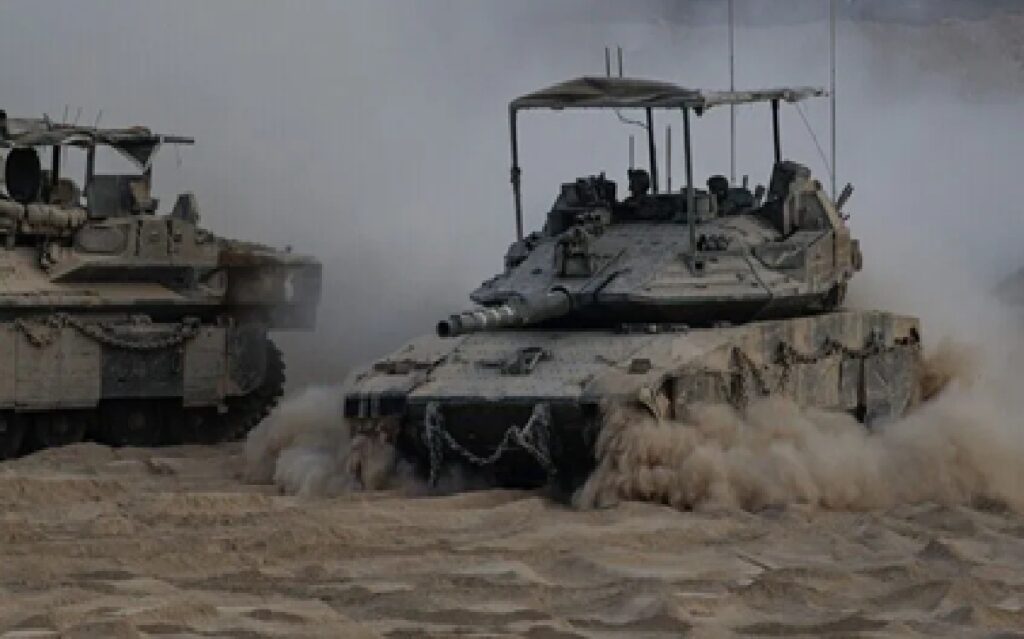
Day Of Fire Across The Enclave:
On Sunday afternoon, Palestinian medical teams scrambled to Nasser Hospital in Khan Yunis after Israeli forces opened fire in the southern and central areas of the city. Within an hour, Palestinian medical teams rushed six wounded people, including a woman and a child, into the emergency department. Medics described shrapnel wounds from tank shells and gunshot injuries consistent with sniper fire. The wounded were all civilians, according to hospital triage logs seen by this reporter.
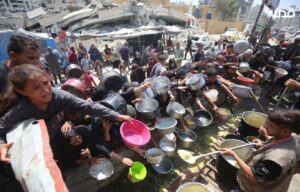
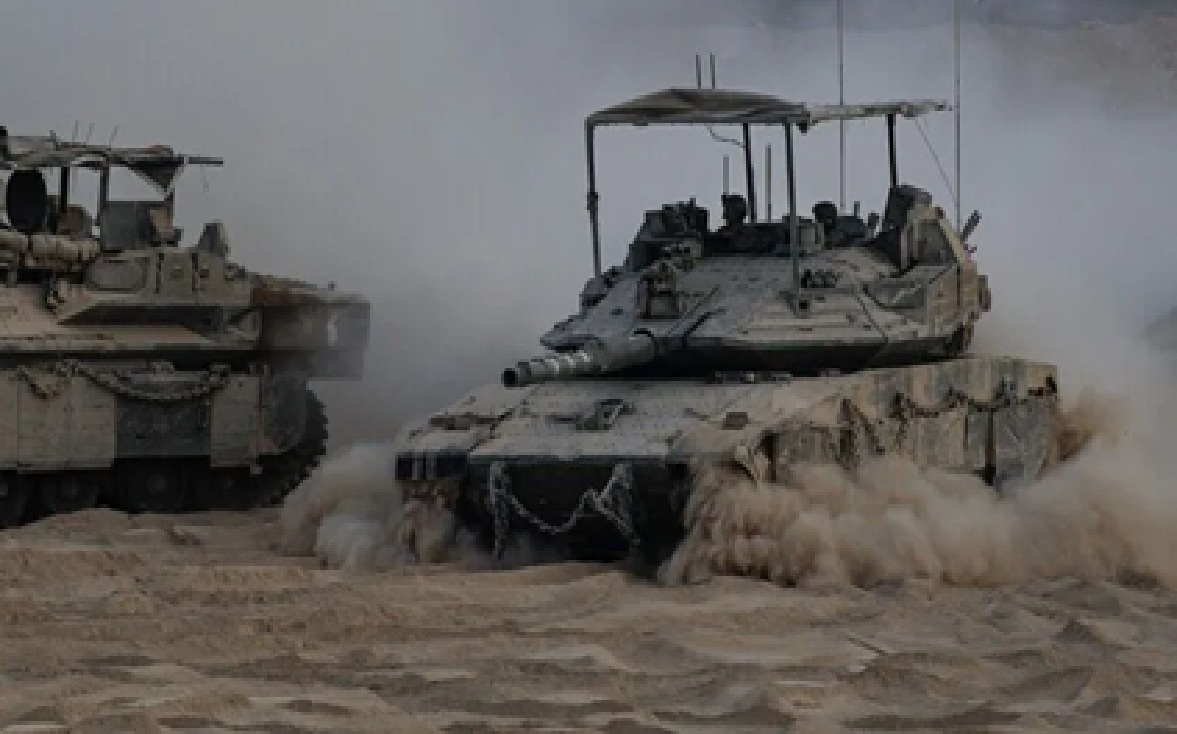
A few kilometres away, in the supposed “humanitarian zone” of Al‑Mawasi, displaced families dived for cover as Israeli tanks fired directly towards clusters of makeshift tents. The coastal strip, squeezed between Khan Yunis and Rafah, currently houses over 300,000 people in tarpaulin shelters. “I saw the turret of the tank turn slowly towards us,” said Um Mohammed al‑Hessi, a 43‑year‑old mother of five sheltering in Al‑Mawasi. “There was no warning, no sound except the shell cutting the air. My neighbour’s tent caught fire. He was cooking for his children. Now he is in Nasser Hospital with burns and shrapnel in his back.”
Simultaneously, in Gaza City, a man was shot on Al‑Nafaq Street in the eastern part of the city. Medical sources confirmed he sustained a bullet wound to the abdomen and was taken to Al‑Shifa Hospital in a critical condition. In the Al‑Tuffah neighbourhood, local journalists and residents reported Israeli quadcopter drones and military vehicles opening fire on homes and displacement tents. WAFA, the Palestinian news agency, said “several Palestinians were injured by Israeli occupation forces’ gunfire in the Al‑Mahatta area of Al‑Tuffah,” and noted Israeli military vehicles “infiltrated the Beit Lahia Project in the northern Gaza Strip, amid heavy gunfire toward homes.”
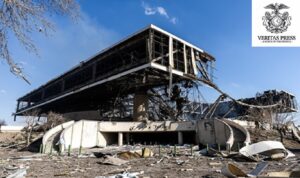
Further north, in Beit Lahia, artillery shells slammed into areas adjacent to Sheikh Zayed City, tearing through the upper floors of several residential buildings. Families seeking shelter still used these buildings, which earlier bombardments had partially destroyed. “Heavy gunfire was heard from the Israeli positions east of the city for almost an hour,” said Salah Abu Warda, a local journalist who moved through the district after the shelling stopped. “People are terrified. They are trapped between the rubble and the gunfire.”
In central Gaza, Israeli forces directed fire at homes east of the Bureij refugee camp, supported by intermittent artillery salvos. Residents reported that the shooting prevented ambulances from reaching several families who had attempted to return to check on their homes, although no casualties were immediately reported there.
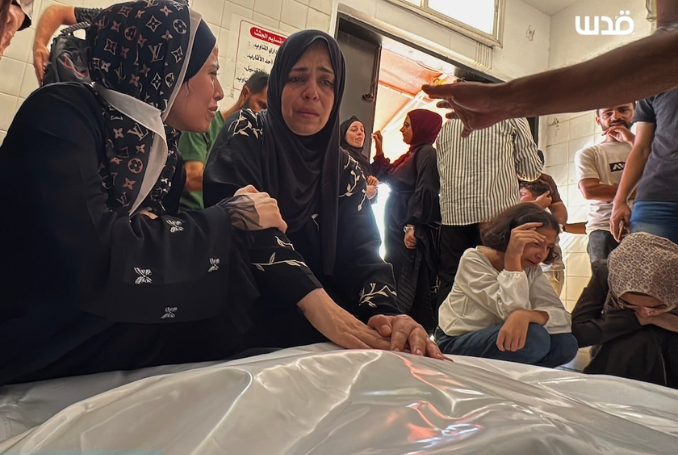
The Dead And The Living Count:
The Gaza Health Ministry’s daily update, released late on Sunday, added a grim layer to the day’s events. In the previous 24 hours, hospitals received two dead Palestinians, one of whom succumbed to wounds sustained days earlier, and eight newly injured people. The overall death toll since 7 October 2023 exceeds 100,000, with over 377,000 injured and maimed. Since the ceasefire took effect on 11 October 2025, the ministry also reported that they recovered 807 bodies from beneath the rubble. An unknown number of dead remain entombed in collapsed buildings and on streets unreachable by emergency crews because of ongoing Israeli fire.
“The ceasefire has not stopped the bloodshed,” Dr. Ashraf al‑Qidra, the Gaza Health Ministry spokesman, said in a telephone interview. “Every day we receive gunshot victims, people hit by tank shells, by drone strikes. The difference is that the massacres are smaller, more spread out, and more invisible to the outside world. Since the ‘ceasefire’, 1,258 Palestinians have died, and 4,139 have sustained injuries. These are not numbers. They are our neighbours.”
UNICEF: One Child Killed Every Day Under The Ceasefire:
The carnage among Gaza’s children is damning. On Friday, UNICEF released a report stating that Israeli occupying forces killed at least 300 Palestinian children in the 300 days since the ceasefire was announced. The agency’s data, drawn from its own verification teams and crosschecked with hospital records, shows an average of one child dying every single day in a territory where hostilities were supposed to have ended.
“The killing of children has not stopped; it has simply changed rhythm,” said UNICEF Regional Director for the Middle East and North Africa, Adele Khodr, in a statement accompanying the report. “An average of one child is killed every day in Gaza under a truce that was meant to protect them. This is an abomination that the international community watches in silence.” According to the report, the overwhelming number of child fatalities were due to gunshot wounds or shrapnel from tank shells and drone-fired munitions, implying that Israeli forces continue to use lethal force in civilian-populated areas, often without warning.
The Architecture Of A Broken Truce:
In October 2025, Egypt, Qatar, and the United States brokered a ceasefire agreement intended to halt the extensive military operations that had already destroyed approximately 90 percent of Gaza’s infrastructure and displaced almost all its inhabitants. Under the terms, Israel was to halt all offensive military actions, withdraw its forces from populated areas, and allow the unimpeded entry of humanitarian aid. In exchange, Palestinian factions were to release all remaining Israeli captives.
What has unfolded instead, according to analysts, rights groups, and Palestinian officials, is a reconfiguration of the violence. Israel has maintained a series of “buffer zones” that it enforces with lethal autonomy, areas that frequently extend well into residential neighbourhoods and humanitarian zones. Soldiers and remote-controlled weapon stations fire on anyone approaching these invisible lines: farmers attempting to reach their land, children playing near ruined homes, families trying to salvage belongings from the rubble.
“This is not a ceasefire; it is a managed slaughter at a lower intensity,” said Shawan Jabarin, director of the Palestinian human rights organisation Al‑Haq. “Israel has unilaterally redefined the terms. The ‘security perimeters’ have become kill zones. The world pretends this is a technical violation, but the numbers are clear: more than 1,200 people have been murdered since the agreement was signed. The systematic nature of these killings, the daily toll, the targeting of children — all of it meets the threshold of crimes against humanity.”
Euro‑Med Human Rights Monitor, which maintains its own field team in Gaza, documented at least 15 separate shooting incidents on Sunday alone. Its spokesperson, Rami Abdo, said the group’s monitors had recorded a pattern of Israeli forces firing “preventively” at individuals or groups even when no immediate threat was apparent. “In Al‑Mawasi on Sunday, our monitors saw a tank open fire on a cluster of tents housing six families,” Abdo said. “There were no armed individuals, no projectiles launched from the area. It was a deliberate act to terrorise and displace. This is policy.”
The Israeli Military Narrative:
Contacted for comment, the Israeli military’s spokesperson’s unit said in a written statement: “The IDF operates in full compliance with the ceasefire agreements. All fire was directed only against immediate threats after warnings were issued in accordance with operational protocols. The Hamas terrorist organisation continues to embed itself among the civilian population, and any harm to non‑combatants is the direct result of Hamas’s actions.”
Yet repeated investigations by international media and human rights bodies, including the UN Commission of Inquiry on the Occupied Palestinian Territory, have failed to find evidence of Hamas military infrastructure in many of the locations where civilians have been shot. In Al‑Mawasi, specifically, the area is a designated humanitarian zone where the Israeli army itself ordered the population to relocate. Saturday’s tank fire occurred less than 500 metres from a field hospital run by Médecins Sans Frontières.
“We have treated gunshot wounds every day since the ceasefire,” said Dr. Tanya Haj‑Hassan, a paediatric intensive care physician working with MSF in Gaza. “These are not combatants. They are children, grandmothers, men trying to find food. The wounds are horrific, high‑velocity gunshots that destroy limbs, shells that tear through canvas tents. The truce is a myth for our patients.”
The Invisible Dead: Bodies Under The Rubble.
Beyond the daily shootings, the health ministry’s statistic of 807 bodies recovered from the rubble since October 2025 points to a parallel, slow-motion catastrophe. Civil defence crews, hampered by a lack of fuel, heavy equipment and constant Israeli fire, can only reach a fraction of the destroyed neighbourhoods. Families often dig through concrete with their bare hands, risking sniper fire and unexploded ordnance. In the Zeitoun neighbourhood of Gaza City, relatives have been trying to recover the remains of 11 members of the al‑Kilani family, buried since an airstrike in January 2025. “Every time we go, we are shot at,” said Rami al‑Kilani, 30. “The Israelis have killed my family twice, once with the bomb, and now by stopping us from burying them.”
The UN Office for the Coordination of Humanitarian Affairs (OCHA) estimates that more than 10,000 people could still be buried under the debris, a figure that may never be fully verified. The stench of decomposition hangs over entire neighbourhoods, residents say, mixing with the dust of pulverised concrete and the ever-present drone of Israeli surveillance quadcopters.
A Political Vacuum And A Diplomatic Failure:
The ongoing violence unfolds against a backdrop of political paralysis. Negotiations over the second phase of the October 2025 ceasefire, which saw a full Israeli withdrawal and a permanent end to hostilities, stalled in January 2026. Israel insisted on maintaining a “security envelope” deep inside Gaza, including full control of the Philadelphi Corridor along the Egyptian border and the Netzarim Corridor dividing the Strip in two. The Palestinian factions rejected these terms as a reoccupation in all but name. The Biden‑era US administration had designated the October 2025 deal as a centrepiece of its legacy; its successor has shown little appetite to apply meaningful pressure on Israel, beyond statements of “deep concern” issued by the State Department.
“The international community is complicit in this charade,” said Philippe Lazzarini, Commissioner‑General of the United Nations Relief and Works Agency for Palestine Refugees (UNRWA), in a recent address in Geneva. “A ceasefire that permits the killing of over 1,250 Palestinians in ten months, while the blockade continues and reconstruction is blocked, is not a peace process. It is a slow-motion atrocity, and history will judge us harshly for normalising it.”
The Daily Rhythm Of A Stalled Slaughter:
In Gaza, the rhythm of death has become so routine that it barely breaks through the noise of global news cycles. The seven wounded on Sunday joined the thousands injured since October, many of them permanently disabled by the lack of proper medical care. Gaza’s health system, shattered by 15 months of bombing before the ceasefire, now operates at a fraction of its pre-war capacity. The European Hospital in Khan Yunis, the major trauma centre for the south, frequently runs out of surgical supplies and blood units. Doctors describe having to amputate children’s limbs without adequate anaesthesia.
“We are a hospital in name only,” said Dr. Mohammed Abu Salmiya, director of Al‑Shifa Hospital, which itself was repeatedly raided and partially destroyed during the war. “We receive the wounded, but we cannot save many of them. The siege continues. The fire continues. Nothing has changed except that fewer international journalists are watching.”
Journalists Under Fire:
Indeed, the media’s ability to document the ongoing violations has been severely curtailed. Israel has maintained a blanket ban on foreign journalists entering Gaza independently since October 2023, and Palestinian journalists working on the ground face direct targeting. The Palestinian Journalists Syndicate reports that over 190 journalists have been killed since the start of the war, many while clearly identifiable as press. On Sunday, as the shooting erupted in Al-Tuffah, local cameraman Ahmed al-Shanti was hit by shrapnel from a quadcopter‑dropped munition while filming the aftermath; he survived, but his camera equipment was destroyed. “They see us, and they shoot anyway,” al-Shanti said from his hospital bed. “They want to erase the witnesses.”
The Committee to Protect Journalists (CPJ) has repeatedly called for an independent investigation into the killing of media workers in Gaza, labelling the pattern of attacks “systematic and intentional.” Without journalists on the ground, much of Sunday’s violence would have gone unreported, reduced to a dry line in a health ministry spreadsheet.
Conclusion: A Truce That Buries The Truth.
As dusk fell over Gaza on Sunday, families in Al‑Mawasi gathered what remained of their belongings and attempted to repair torn tents. In Beit Lahia, residents emerged from their shelters to count the new craters in the rubble. In Khan Yunis, a child wounded by tank fire underwent surgery at Nasser Hospital, another entry in the grim post‑ceasefire tally.
The figures announced by the health ministry, over 100,000 dead, 1,258 of them killed after the ink dried on the ceasefire, are more than statistics. They are a chronicle of a truce that has become a cover for continued but quieter violence, a policy that kills Palestinians at a slower rate while the world looks away. The UNICEF report on children’s deaths offers a daily, unbearable punctuation mark to this reality. As one international aid worker, speaking on condition of anonymity because of fear of expulsion, put it: “We are not in a post‑war period. We are in a period where the war has simply changed its face. Every day, the same number of families are destroyed, just not all at once in a spectacular blast. It is death by a thousand cuts, and the world has decided that is acceptable.”
With no diplomatic breakthrough in sight, no accountability mechanism functioning, and the machinery of the Israeli occupation still grinding over the rubble, the inhabitants of Gaza brace for the next day, the next drone, the next tank shell, praying that their tent will not be the one hit, that their child will not be number 1,259.
Veritas Press Investigative Analysis
Independent journalism examining global affairs, power, diplomacy and accountability.
Source: Veritas Press C.I.C. | Multi-News Agencies
APPEAL: Help Support Our Work By Donating.
Readers who believe that truth still matters have power over popular information. When just a few more people step up to support this work, it means more lies exposed, more corruption uncovered, and more accountability where it’s long overdue.
Help Protect Independent Journalism, Which Is Currently Under Attack.
If you believe journalism should serve the public, not the powerful, and you’re able to help, becoming a regular DONOR or a PAID SUBSCRIBER truly makes a difference.
DONATION APPEAL: If you found this reporting valuable, please consider supporting independent journalism.
Your support fuels our fearless, truth-driven journalism. In unity, we endeavour to amplify marginalised voices and champion justice, irrespective of geographical location. We operate independently, with no financial backing from billionaires; our readers support us.
But it’s also extremely important. One of Veritas Press’s greatest assets is its reader-funded model.
1. Reader funding means we can cover what we like. We’re not beholden to the political whims of a billionaire owner. We are a small, independent and impartial organisation. No one can tell us what not to say or what not to report.
2. Reader funding means we don’t have to chase clicks and traffic. We’re not desperately seeking your attention for its own sake; we pursue the stories that our editorial team deems important and believes are worthy of your time.
3. Reader Funding: enables us to keep our website and other social media channels open, allowing as many people as possible to access quality journalism from around the world, particularly those in places where the free press is under threat.
We know not everyone can afford to pay for news, but if you’ve been meaning to support us, now’s the time.
Your donation goes a long way. It helps us:
- Keep the lights on and sustain our day-to-day operations
- Hire new, talented, independent reporters
- Launch real-time live debates, community-focused shows, and on-the-ground reporting
- Cover the issues that matter most to our communities, in real time, with depth and integrity
Without your support, independent voices like ours will be silenced.
Furthermore, we have plans to expand our work, but we can’t do it without your support. Every contribution, no matter the size, helps us stay independent and build a truly people-powered media platform.
If you believe in journalism that informs, empowers, and reflects the communities we serve, please donate today.
Submissions:
For the secure submission of documentation, testimonies, or exclusive investigative reports from any global location, please utilise the following contact details for our Investigations Desk: mailto:enquiries@veritaspress.co.uk or mailto:editor@veritaspress.co.uk
GENEVA — A United Nations fact-finding mission has concluded there are “reasonable grounds to believe”
Iran’s GDP is projected to contract by 5.4 to 6.1% in 2026, its worst performance
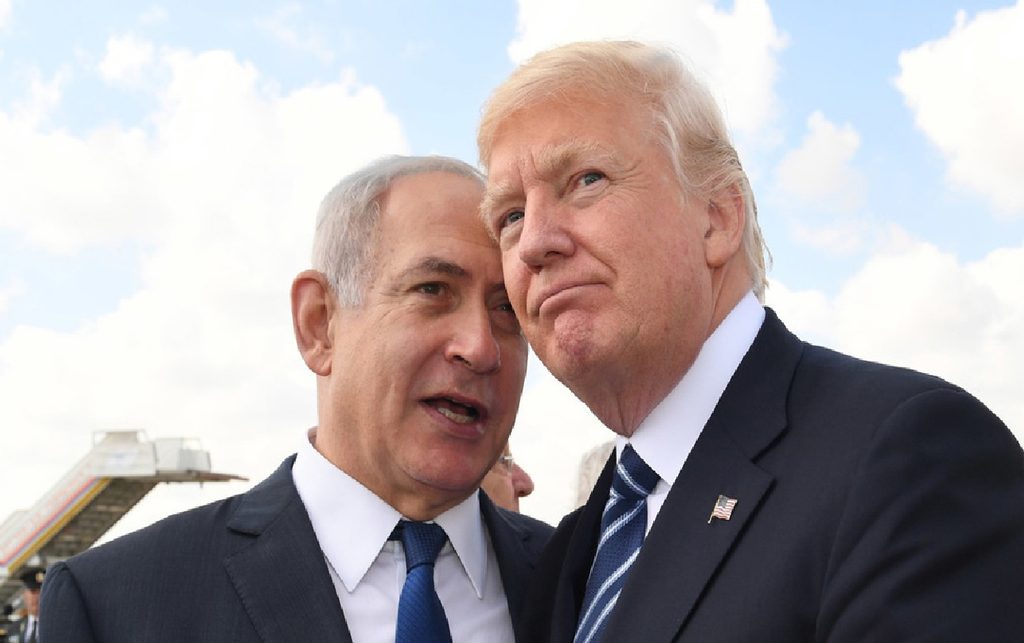
The Trump administration is preparing a $2.8 billion weapons package for Israel containing 40,000 2,000-pound

Film alleges mass civilian deaths are routinely built into military decisions amid Israel’s genocidal war
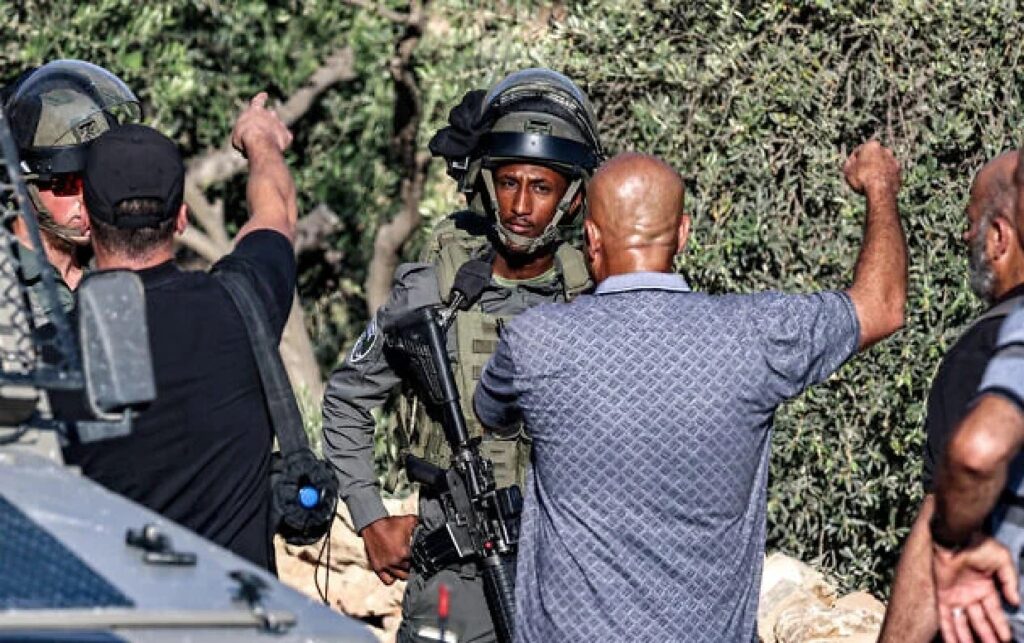
The Israeli rights group says violence, displacement, economic strangulation, and settlement expansion form part of

Houthi forces have captured the historic Red Sea port of Mocha and are advancing on
London’s historic sanctions against Israeli settlements mark a watershed moment in UK foreign policy, but
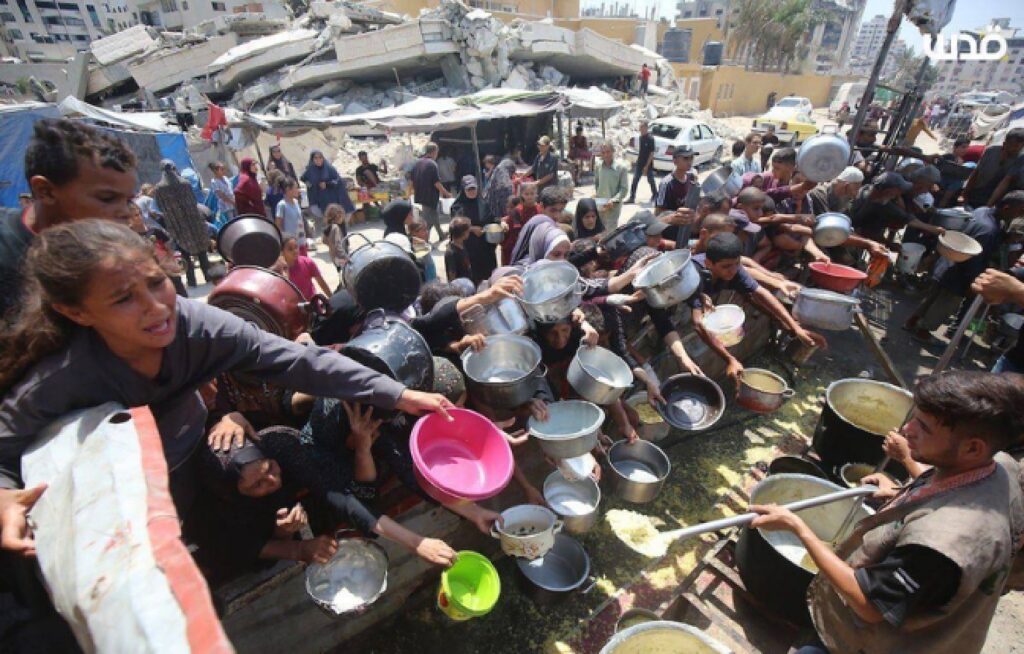
With 95% of Gaza’s population now wholly dependent on aid and more than 90% stripped
India calls for Kashmir and Ladakh to appear only on its official map after a
ISLAMABAD – In the high-stakes political theatre of Pakistan, the battleground has shifted from the