Kamran Faqir is a volunteer investigative journalist and writer committed to exposing hidden truths and amplifying underreported stories. Driven by social justice, he brings sharp insight and fearless truth-telling to independent journalism. NUJ registered.
Listen to this article
Help support our mission, donate today and be the change. Every contribution goes directly toward driving real impact for the cause we believe in.
Article Date Published:
Article Date Modified:
36 minutes
Views:110
Muslim mother Juveriah Alam describes her anguish at the prospect of having to silence her children over Palestine, fearing that strengthened political-impartiality guidance will further suppress their identities and freedom of expression. Her concerns, alongside those of children’s author and refugee-rights activist Onjali Q. Raúf, raise a wider question: is Britain’s attempt to tackle antisemitism and extremism creating a climate in which legitimate criticism of Israel, Palestinian identity and peaceful political dissent are increasingly treated as problems to be managed rather than rights to be protected?
When Neutrality Begins To Look Like Silence
The classroom should be one of the few places where a child can ask difficult questions without fearing that their family’s identity will become a problem, their concerns will be dismissed as political, or their curiosity will be mistaken for extremism.
Yet for some parents and educators, Palestine has become a test of precisely that principle.
A Palestinian flag. A school presentation about a family visit. A question about why children are dying in Gaza. A discussion about occupation, refugees or international law. Each can confront educators with difficult decisions about age-appropriate teaching, political impartiality, safeguarding and the need to protect pupils from prejudice.
But there is a fundamental difference between teaching children to discuss a contentious issue responsibly and teaching them that the issue itself is too dangerous to mention.
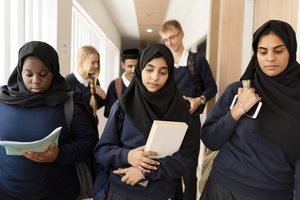
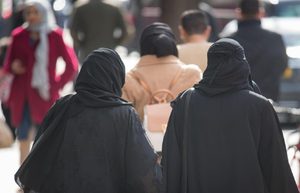
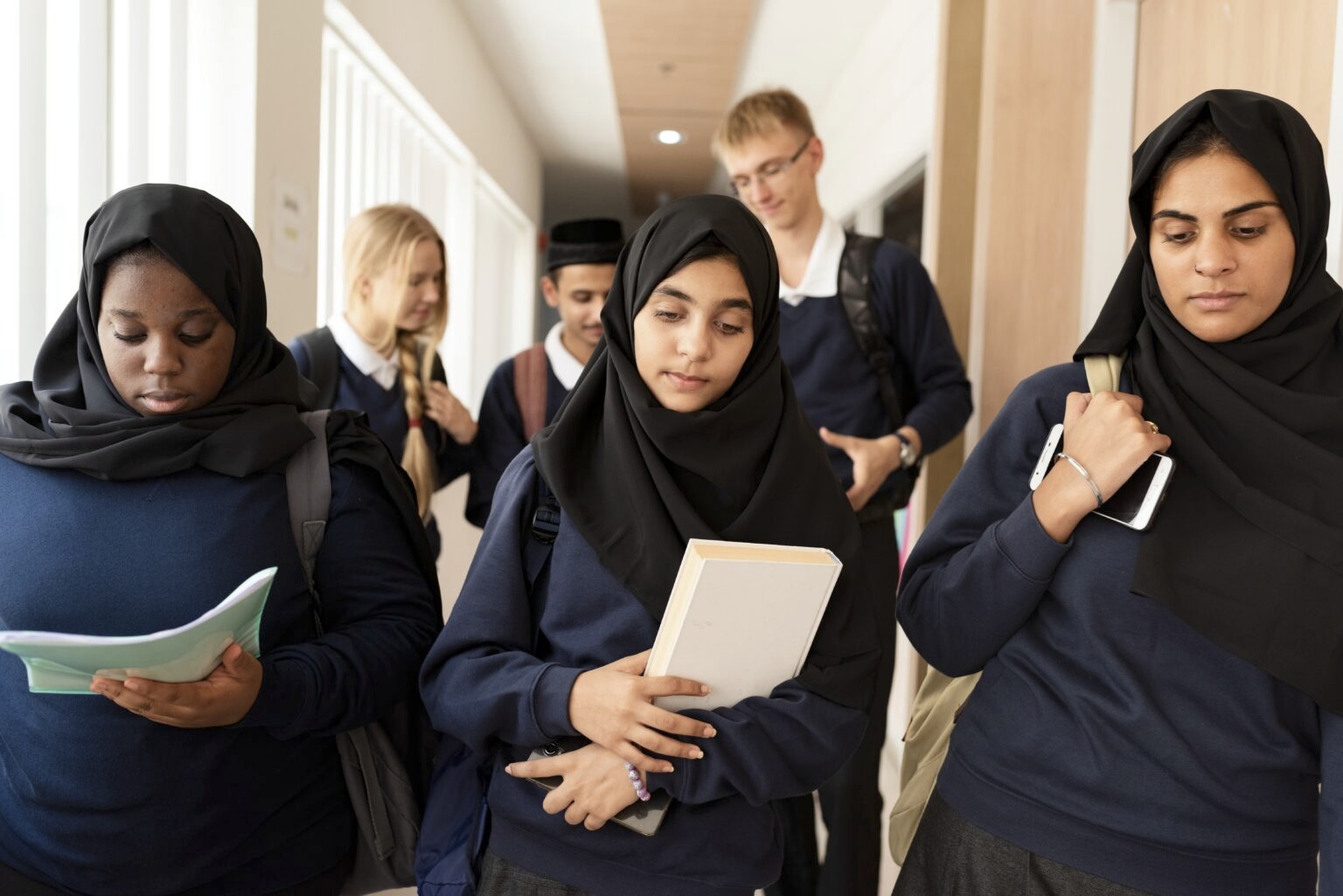
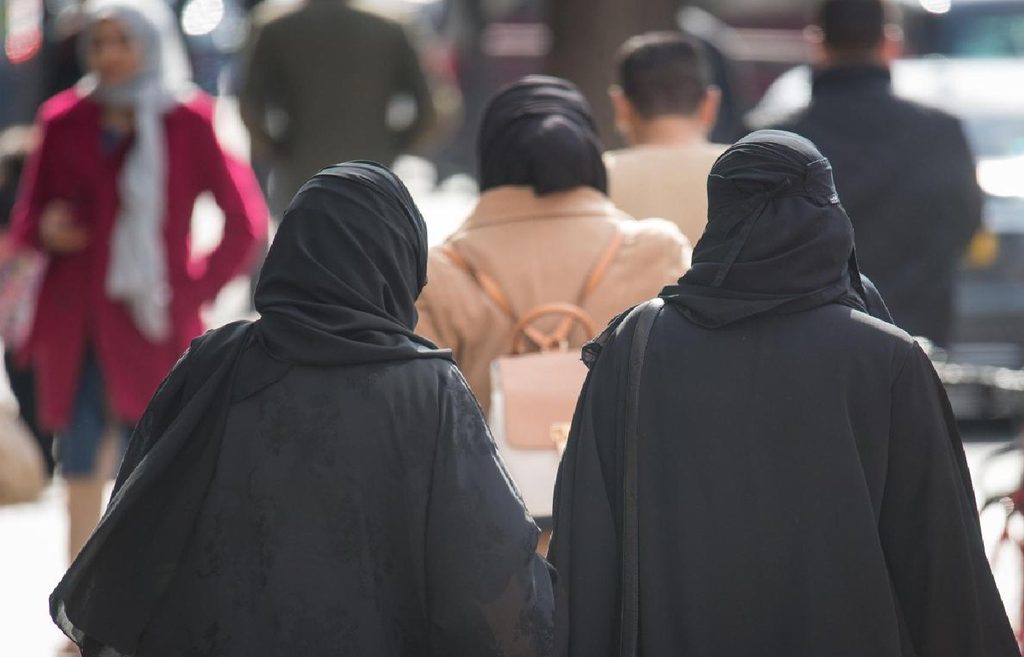
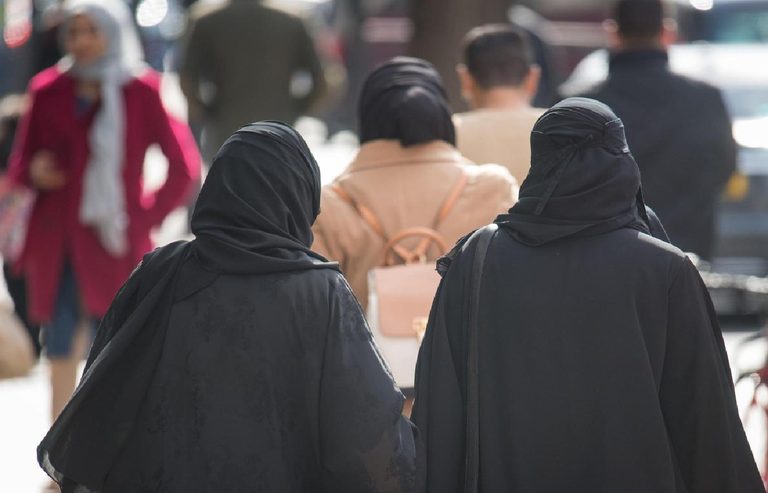
Muslim students in school. Pic: Shutterstock.
For Juveriah Alam, a Muslim mother whose account describes her children’s experiences at school, that distinction has become deeply personal. She recalls a time when teachers praised her sons for their strong sense of identity, curiosity and willingness to share their beliefs. Now, she fears that their attachment to Palestine and their desire to speak about what they have seen may place them in an increasingly uncomfortable position.
Her concerns acquired new urgency when the government published its response to the independent review into antisemitism in schools and colleges, led by Sir David Bell, on 21 October 2026. The government accepted all 27 recommendations, including measures to strengthen antisemitism training, safeguarding, reporting and political-impartiality guidance.
The government says three in five Jewish pupils aged 16–19 had experienced or witnessed antisemitism. The review describes a serious problem requiring a consistent response across the education system. Jewish children must be able to learn without abuse, intimidation or discrimination.
But protecting Jewish pupils and protecting Palestinian expression are not mutually exclusive objectives.
The review did not recommend a blanket ban on Palestinian flags, political symbols or pro-Palestine badges. Reporting by The Independent confirmed that the review’s approach was to support open, respectful discussion while strengthening schools’ ability to identify and challenge antisemitism.
The concern, therefore, is not simply what the government has formally prohibited. It is how schools interpret strengthened guidance, how staff respond to complaints, and whether fear of making a mistake encourages institutions to suppress legitimate discussion before it begins.
For children with personal, cultural or family connections to Palestine, this is not an abstract policy debate. It concerns whether they can participate in ordinary school life without feeling that an important part of their world must be concealed.
It also raises a broader question about Britain itself: when the state responds to political controversy by expanding restrictions, does it protect democratic society, or risk narrowing the freedoms that allow citizens to challenge those in power?
1. The Child Who Discovered That Not Every Story Is Welcome
In her account, Alam describes how her children visited Palestine with their father and produced a video diary of their experience. Like children returning from holidays elsewhere, they wanted to share what they had seen with their classmates.
But, according to her account, the video could be shown only without its audio, which included an explanation of how certain land had been taken over by Israeli settlers.
Her eldest son, then nine, was confused and disappointed.
Alam says the restriction came from the headteacher. His teacher, a Muslim woman who wears the hijab, reportedly expressed appreciation for the video while explaining the decision.
These are recollections from Alam’s account. Nevertheless, the episode illustrates the questions schools must answer when deciding whether a child’s account of a real experience is inappropriate for the classroom.
Was the concern the accuracy of the historical explanation? The language used? The age of the audience? The possibility that the presentation might be interpreted as taking a political position? Or was the subject considered too sensitive in itself?
Those are materially different reasons requiring different responses.
If a presentation contains disputed claims, teachers can explain how to distinguish personal experience, historical evidence and political interpretation. If the language is unsuitable for younger children, it can be adapted. If a subject raises competing historical or political perspectives, it can become an opportunity for structured learning.
Removing the audio without giving the child a meaningful explanation may avoid an immediate disagreement, but it also risks teaching a more troubling lesson: that some experiences cannot be described in their own words.
A nine-year-old does not need to become a political campaigner. Nor should a child be expected to carry the burden of resolving a conflict that adults and governments have failed to resolve.
But children can learn that people experience events differently, that claims should be examined critically, and that civilian suffering deserves attention regardless of nationality or religion.
The proper educational response is not automatically to approve every claim a child makes. It is to help that child understand how to substantiate it, question it and discuss it respectfully.
The question is not whether schools should endorse a child’s political conclusions. It is whether they can teach the child to think critically without making the child’s lived experience unspeakable.
2. What Has The Government Actually Changed?
The immediate policy background is the Independent Review into Antisemitism in Schools and Colleges, published on 21 October 2026, and the government’s accompanying response.
The government accepted all 27 recommendations and announced further training, improved reporting, stronger safeguarding guidance and additional support for schools. It also established an implementation group and commissioned Sir David Bell to conduct a one-year review of progress.
These measures respond to a serious problem. Jewish children must not be expected to tolerate abuse or intimidation because of their identity. Nor should Jewish pupils be held collectively responsible for the actions of the Israeli government.
The policy debate becomes more complicated around political impartiality and symbols.
Existing Department for Education guidance requires schools to avoid promoting partisan political views and to take reasonable, proportionate steps to provide a balanced presentation of opposing views when political issues arise. These duties operate alongside schools’ responsibilities under the Equality Act 2010, the Human Rights Act 1998 and the Prevent duty.
The government intends to strengthen guidance concerning political impartiality, safeguarding and discussions about Israel and the Middle East. But the Bell review did not establish a universal prohibition on Palestinian flags or badges.
That distinction matters. There is a difference between a government imposing a blanket ban and a school deciding, under its existing rules, that a particular item is inappropriate. Yet decentralised decision-making can also produce inconsistent outcomes: a badge permitted in one school may be challenged in another, while staff in a third may decide that avoiding the subject altogether is the safest option.
The practical impact will depend on the wording of the guidance, the proportionality of individual decisions, the quality of staff training and the willingness of school leaders to explain their reasoning.
It would therefore be premature to claim that the government has banned Palestinian symbols from English schools. It would be equally premature to dismiss concerns about how the new framework may be applied.
The real test will be what happens when a pupil arrives wearing a Palestinian badge, asks about the occupation, produces artwork depicting a child killed in Gaza, or questions why different refugee crises appear to receive different levels of public attention.
Will the response be educational engagement? A reasoned and proportionate restriction? Or an automatic presumption that the expression is politically troublesome?
The answer will determine whether the policy protects children or creates a chilling effect on their participation.
3. Onjali Q. Raúf: “You Can Mention Ukraine, But Please Don’t Mention Gaza”
Alam’s account is not the only published testimony describing difficulties discussing Palestine in British schools.
In an opinion article published by The Observer on 22 October 2025, children’s author and refugee-rights activist Onjali Q. Raúf described being warned by a headteacher at a south London school: “You can mention Ukraine, but please don’t mention Gaza.”
Raúf said the school considered the subject too sensitive for children, regardless of their position. She described receiving increasingly formal instructions to avoid politically contentious discussion when speaking about refugees and war.
Her account provides another perspective on the same underlying problem: the gap between the educational principle of discussing difficult issues and the institutional instinct to avoid them.
Raúf also described pupils asking why refugees from Ukraine appeared to receive different treatment from those from Palestine, and why adults told children not to fight while bombs were falling on civilians. She recounted a parent’s allegation that a child’s artwork honouring six-year-old Hind Rajab, who was killed in Gaza, had been deemed too offensive for submission as a GCSE art project.
These are personal accounts, not a representative survey of English schools. They do not establish that every school discriminates against Palestinian expression, or that every decision to restrict a presentation is politically motivated.
But they raise a legitimate question about institutional practice.
If a school discusses the displacement of Ukrainian families but refuses to discuss Palestinian displacement, the relevant question is not whether Ukraine is an appropriate topic. It plainly can be. The question is why the same willingness to educate children about conflict, civilian suffering and forced migration would not extend to Palestine.
There may be legitimate differences between individual lessons, the ages of pupils, the material available, and the circumstances in which a discussion takes place. Those differences should be examined rather than assumed away.
What cannot be justified is treating an entire conflict as educationally untouchable simply because discussing it may generate disagreement.
A classroom does not need to decide every question of international law before children can learn what a refugee is, why civilians require protection, what international humanitarian law seeks to achieve or why people disagree about a conflict.
Nor should an educator have to endorse a political movement to explain the experiences of people affected by war.
Raúf’s testimony makes the issue particularly stark: what happens when the adults responsible for encouraging curiosity become so anxious about a controversy that children learn to keep their questions to themselves?
4. The Palestinian Flag: Political Campaigning Or An Expression Of Identity?
The Palestinian flag has become a powerful symbol of national identity, solidarity and opposition to occupation. For some people, it represents support for Palestinian statehood; for others, it expresses grief, political opposition, family connections or solidarity with civilians.
These meanings can overlap. A symbol may be political without being hateful, and an expression of identity may also communicate a political position.
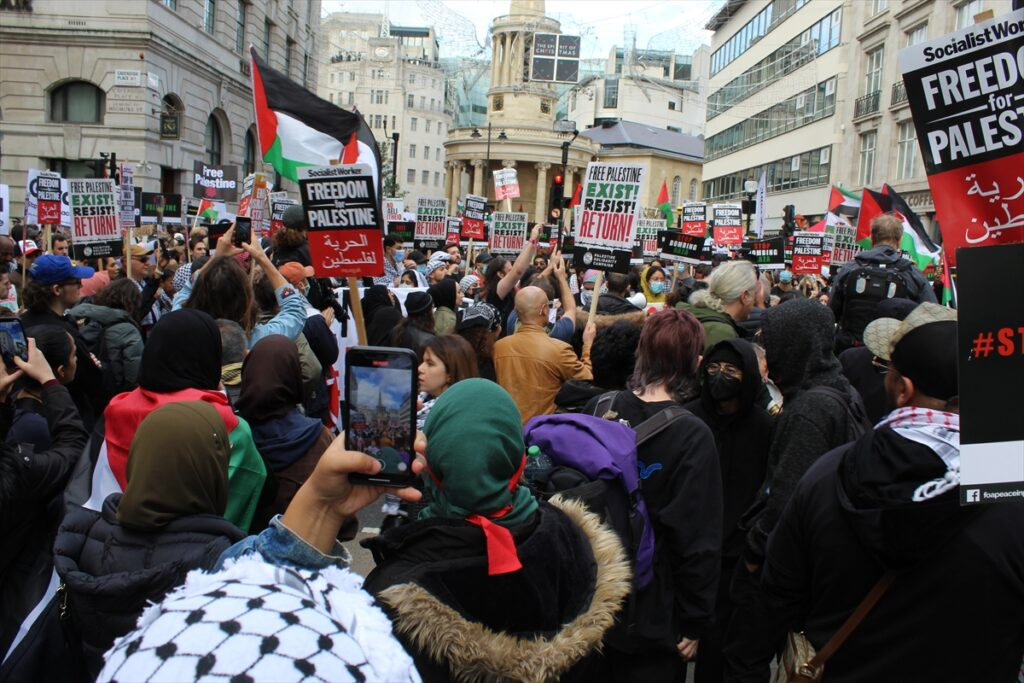
Pro-Palestine protest n London. Pic: AA.
That is precisely why blanket assumptions are dangerous.
Alam fears that Palestinian badges, flags and slogans could attract greater scrutiny under strengthened political-impartiality guidance. Her concern is that a child expressing solidarity with Palestinian civilians may be treated as though they are engaging in political campaigning or displaying extremist sympathies.
But these are not equivalent situations:
A pupil wears a Palestinian flag badge to express solidarity with Palestinian civilians.
A pupil uses a political slogan in a discussion and is asked to explain its meaning.
A pupil directs antisemitic abuse at a Jewish classmate or holds that Jewish people collectively bear responsibility for the Israeli government’s actions.
Each must be assessed according to its actual content and context.
The first may be an expression of identity or political opinion. The second may provide an opportunity for discussion about history, language and political perspectives. The third involves conduct that schools have a responsibility to address.
A school that treats all three as manifestations of the same problem risks confusing political expression of prejudice. Conversely, a school that ignores antisemitic abuse because it occurs during pro-Palestinian activism fails the pupils it is responsible for protecting.
The same principle applies to Jewish symbols, Israeli flags, religious clothing and other expressions of identity. Schools should have clear, consistently applied rules that distinguish expression from harassment and account for the circumstances of individual cases.
The watermelon symbol, which Raúf describes seeing on school staff members’ accessories, illustrates the point. In her account, staff used it to express solidarity with civilians and opposition to suffering.
A school may reasonably consider whether staff members’ public displays could be understood as endorsing a partisan position, particularly given their authority over pupils. But the presence of a symbol alone does not establish what a person believes, whether they have acted improperly or whether a pupil has been harmed.
A fair policy must assess conduct and context rather than assume that every expression of Palestinian solidarity is evidence of extremism, just as it must not assume that every expression of Israeli or Jewish identity is an endorsement of government policy.
5. Prevent: When Does Safeguarding Become A Source Of Fear?
For Alam, one of the most troubling aspects of the debate is the possibility that her children’s words could attract attention under Prevent, the UK’s counter-radicalisation programme.
She describes the anxiety of parenting children who are learning that speaking openly about Palestine may have consequences at school. Even if no referral has been made, the possibility of one can influence how parents advise their children.
It is important to distinguish between a parent’s fear of a referral and evidence that a referral has actually occurred or that the Prevent system is systematically targeting children for pro-Palestinian views.
The official Prevent duty guidance for England and Wales sets out schools’ responsibilities concerning risks of radicalisation. It also connects those responsibilities to political impartiality, safeguarding and the need to ensure that visiting speakers are suitable and appropriately supervised.
Supporting Palestinian rights, criticising Israeli government policy, expressing grief about deaths in Gaza or advocating Palestinian statehood does not, by itself, demonstrate radicalisation.
Equally, political language cannot be exempt from scrutiny simply because it is used in support of Palestine. Threats, incitement to violence, support for terrorism and hatred directed at Jewish people must be assessed on their actual merits.
A properly functioning safeguarding system must distinguish political disagreement from evidence of a genuine safeguarding concern.
That requires staff to consider context, the child’s age, the nature of the expression and any credible indicators of risk. It also requires training that prevents staff from mistaking religious identity, political interest or anger about civilian suffering for proof of extremist intent.
The consequences of getting that distinction wrong can extend beyond a single incident. A child who feels unfairly labelled may lose confidence in teachers and become less willing to discuss difficult subjects with trusted adults.
The same is true of children who experience antisemitic abuse and fear that their complaints will not be taken seriously.
Safeguarding should create the conditions in which children can speak safely and receive appropriate support. It should not encourage silence as a substitute for sound judgement.
6. What Political Impartiality Actually Requires
The phrase “political neutrality” is often used as though it means schools must avoid any subject on which society is divided.
That is not what the existing law requires.
The Department for Education’s political-impartiality guidance explains that schools must not promote partisan political views. When political issues are brought to pupils’ attention, schools must take reasonable steps to ensure a balanced presentation of opposing views. The guidance does not seek to prevent schools from teaching about political issues.
For maintained schools, sections 406 and 407 of the Education Act 1996 are central to these obligations.
Balance does not mean every claim must receive equal time regardless of the evidence. Nor does it mean every human-rights question must be reduced to an artificial contest between two equally substantiated positions.
Schools can teach the history of the Israeli-Palestinian conflict, discuss the establishment of Israel and the displacement of Palestinians, examine competing national narratives, explore the history of antisemitism, and explain contemporary concerns about discrimination and security.
They can also examine occupation, settlements, civilian casualties, international humanitarian law, the role of international institutions and the different legal and political arguments surrounding the conflict.
What matters is that the material is appropriate to pupils’ age, evidence-based, open to critical examination and not used to promote partisan political views.
The government’s own response to the Bell review makes an important distinction: criticism of the policies or actions of the Israeli government is not, in itself, antisemitic. Antisemitic tropes, conspiracy theories, collective blame of Jewish people and hostility towards Jews must be recognised and challenged.
That distinction should be reflected in practice. A child should not have to prove their opposition to antisemitism before being allowed to express concern for Palestinians. Nor should a Jewish child have to tolerate intimidation because a classmate frames it as political activism.
The classroom should make it possible to hold both principles at once.
7. The Human-Rights Question: Whose Freedom Is Being Protected?
The controversy is not solely about school dress codes or classroom management. It raises wider questions about freedom of expression, freedom of thought, religious identity, equality and the right to education.
Article 10 of the European Convention on Human Rights protects freedom of expression, subject to lawful restrictions that can be necessary in a democratic society. Article 9 protects freedom of thought, conscience and religion, including the freedom to manifest religion or belief subject to specified limitations.
Article 11 protects peaceful assembly. In Britain, these protections operate through domestic law and international human-rights commitments, including the Human Rights Act 1998.
These rights do not give pupils an unrestricted right to wear every symbol, use every slogan or interrupt lessons without consequence. Schools can impose lawful, proportionate restrictions to protect others, maintain order and fulfil their educational responsibilities.
But a restriction must be justified by more than the fact that an issue is controversial.
If a pupil’s badge is said to create a problem, what is the actual problem? Has the pupil engaged in harassment? Is there a clearly applicable uniform policy? Is the rule applied consistently? Could the issue be resolved through discussion rather than prohibition?
These questions do not predetermine the outcome of an individual case. They ensure that decisions are reasoned rather than reflexive.
The Equality Act 2010 also matters. Religion or belief is protected, and race protections include nationality and ethnic or national origins. Whether a particular incident amounts to unlawful discrimination depends on the facts and the applicable legal provisions.
A pupil’s support for Palestine is not automatically a protected characteristic in its own right. But the context may involve protected religious or racial identity, and a school must not ignore those considerations when implementing its policies.
This is why a blanket assertion that “schools are neutral” cannot end the discussion. Neutrality is not a substitute for legal analysis.
Nor should human-rights arguments be used carelessly to claim that every restriction is unlawful. The proper demand is for schools to explain their decisions, apply rules fairly and respect the rights of all pupils.
8. Beyond The Classroom: Is Britain Narrowing The Space For Dissent?
The battle over what children may say about Palestine cannot be examined in isolation from a wider debate about civil liberties in Britain.
Across education, public protest and counter-terrorism policy, critics argue that governments have expanded the powers available to public authorities while narrowing the practical space in which citizens can challenge government decisions.
The concern is not simply that a particular school might restrict a Palestinian badge or that a teacher might avoid a difficult discussion. It is whether a broader pattern is emerging in which expressions of dissent are increasingly managed through the language of security, public order and institutional neutrality, and whether those measures risk weakening the freedoms they are supposed to protect.
In its report Silencing the Streets, published in January 2026, Human Rights Watch argued that UK protest legislation and enforcement practices had significantly constrained peaceful assembly and freedom of expression. Its research described arrests, charges and restrictions affecting protesters, including people campaigning for Palestinian rights. The organisation warned that broadly defined offences and expanded police discretion could discourage civic participation and weaken democratic accountability.
This is the assessment of a human-rights organisation, not a judicial finding that every restriction or arrest it discussed was unlawful. Nevertheless, it identifies a serious question about the cumulative effect of legislation and enforcement.
Amnesty International has raised related concerns about the use of counter-terrorism powers against people protesting the proscription of Palestine Action.
In a statement published on 26 May 2026, Amnesty reported that more than 3,300 arrests had been made across the UK since the proscription took effect in July 2025, and that more than 1,200 protesters had been charged with terrorism-related offences. Amnesty called on the authorities to drop charges against people it considered having been targeted simply for exercising freedom of expression and peaceful assembly.
These figures and characterisations are Amnesty’s reported assessment. They should not be taken to mean that every arrest or charge has been found unlawful. The government has maintained that counter-terrorism legislation is intended to address serious security threats, and the legal status of the proscription has been contested through the courts.
The issue is how the relevant powers are used, whether individual restrictions are justified, and whether peaceful dissent is being distinguished adequately from conduct that legitimately warrants criminal intervention.
These criticisms are relevant to the school debate because civil liberties do not exist in separate compartments. A society’s approach to protest, political expression, safeguarding and controversial public discussion reflects how it balances the authority of institutions against the rights of individuals.
The important question is whether that balance is being maintained.
Foreign Policy, Public Accountability And The Right To Criticise
Palestine has become a particularly sensitive test of this balance because public criticism of British policy towards Israel raises questions about arms exports, diplomatic support, international humanitarian law and the government’s responsibility to prevent or respond to serious violations of human rights.
When citizens question those policies, they are exercising a central democratic function: holding elected representatives accountable for decisions taken in their name.
The government’s foreign-policy decisions are not exempt from public scrutiny simply because they concern national security, international relations or a close diplomatic relationship. Nor does criticism of those decisions automatically amount to hostility towards British institutions, Jewish people or any other community.
A more serious concern arises when critics believe that the political consequences of challenging government policy are becoming disproportionate. If peaceful demonstrators fear arrest, students fear being labelled extremists, or teachers fear professional repercussions for facilitating a legitimate discussion, the resulting pressure may discourage participation even where no formal prohibition exists.
That Is The Potential Chilling Effect At The Heart Of The Present Debate.
The distinction between a government’s stated intention and a policy’s practical effect is essential. A measure introduced for a stated security purpose can still undermine fundamental freedoms if it is drafted too broadly, applied inconsistently or enforced disproportionately.
It would be inaccurate to conclude, without further evidence, that every new restriction has been designed specifically to protect British foreign-policy interests or conceal policy failures. Establishing deliberate political intent would require documentary evidence, ministerial statements, policy records or other material demonstrating that connection.
Nevertheless, the government’s decisions should be examined for their foreseeable consequences. Ministers should be required to explain why particular powers are necessary, how they comply with human-rights obligations and what safeguards prevent their disproportionate use.
The proper question is not whether a government is entitled to protect national security. It plainly is. The question is whether the powers used are necessary and proportionate, and whether they are being applied in ways that preserve democratic accountability.
The Palestine Action Controversy And The Limits Of State Power
The proscription of Palestine Action in July 2025 became a major flashpoint in the dispute over protest rights. It raised difficult questions about the threshold for using counter-terrorism legislation against an organisation associated with direct action, and about the legal consequences for people protesting against the ban.
In January 2026, Human Rights Watch criticised UK protest restrictions more broadly, arguing that legislation and enforcement were undermining peaceful assembly. Amnesty International also criticised arrests associated with demonstrations opposing the proscription.
The legal dispute has continued to evolve. In August 2026, Amnesty reported that the Court of Appeal had upheld the proscription in June, overturning the High Court’s February ruling that it was unlawful. Amnesty continued to challenge the use of counter-terrorism powers against protesters opposing the ban.
The distinction between peaceful protest, unlawful direct action, support for a proscribed organisation and terrorism-related offences must be assessed according to the applicable law and the evidence in each case. Defending peaceful protest does not require denying that governments have legitimate responsibilities to prevent violence, protect people and enforce criminal law.
But the use of terrorism legislation carries serious consequences. It demands scrutiny of the legal basis for action, the conduct alleged, the evidence available and the proportionality of the response.
For a democratic government, that is not a technical detail. It is a test of the limits of state power.
Human Rights Cannot Depend On Political Convenience
Freedom of expression, peaceful assembly and freedom of thought are not privileges that governments grant only to people whose opinions they find acceptable. These freedoms are protected through British law and international human-rights commitments, although they are subject to lawful restrictions in specified circumstances.
Articles 10 and 11 of the European Convention on Human Rights protect freedom of expression and peaceful assembly. Restrictions must meet the applicable legal requirements, including the need for a legitimate objective and proportionality. The fact that an expression is politically controversial does not, by itself, settle whether a restriction is lawful.
The same principle applies in schools. Political impartiality is a legitimate educational requirement, but it cannot be treated as a general licence to exclude a subject from discussion. Safeguarding is essential, but it must not become a substitute for evidence-based judgement. Counter-terrorism powers are available to address genuine threats, but their existence does not remove the need for scrutiny of their use.
The government’s obligation is to protect people from antisemitism, anti-Muslim hatred, racism, violence and intimidation while preserving the rights of people to question policy, challenge public authorities and advocate peaceful political change.
These responsibilities should reinforce one another. They should not be placed in competition.
The Unanswered Question Of Political Double Standards
For families concerned about Palestine, the issue is not only whether a particular rule is legally defensible. It is whether institutions apply their principles consistently.
Would a school respond in the same way to comparable expressions of solidarity with different civilian populations? Would a pupil’s concern about Palestinian deaths be treated with the same seriousness as concern about Ukrainian refugees? Would the same standards of evidence and proportionality apply to political symbols associated with different causes?
These are legitimate questions for independent scrutiny, but they require evidence rather than assumption. Comparative records of school decisions, complaints, safeguarding referrals and disciplinary outcomes would help establish whether differences in treatment exist and, if they do, what explains them.
The government should welcome such scrutiny. A policy intended to protect children and strengthen social cohesion should be capable of demonstrating that it operates fairly across communities.
Protecting The State Or Protecting Democracy?
The deepest issue is the relationship between government authority and democratic accountability.
A government has a duty to protect the public, maintain order and address threats. It also has a duty to tolerate criticism, including criticism that is uncomfortable, politically damaging or directed at its foreign policy.
The danger arises when the protection of institutions becomes confused with the protection of political decisions from scrutiny.
If citizens are discouraged from questioning government policy because their views are controversial, if peaceful protest is treated as inherently suspicious, or if schools avoid discussing human-rights concerns because they fear accusations of partisanship, democratic debate becomes narrower.
That does not prove that the government has adopted a coordinated plan to remove human rights or conceal foreign-policy failures. It does, however, identify a serious risk that should be investigated through evidence, parliamentary scrutiny, judicial review and independent monitoring.
The response should not be to abandon safeguards against antisemitism, terrorism or violence. It should be to ensure that those safeguards are not applied so broadly that they suppress legitimate dissent.
A democracy must be able to protect vulnerable communities without silencing those who question the government. It must be able to enforce the law without treating peaceful disagreement as a threat. And it must be able to defend its foreign policy in public rather than relying on restrictions that discourage criticism.
The ultimate test is whether the state can tolerate dissent while continuing to protect the rights of everyone, including those who challenge its decisions.
9. The Political Contradiction: Adults Debate Palestine While Children Learn To Whisper Alam’sAccount Also Raises A Question About Political Consistency.
She refers to remarks attributed to Labour figure Ed Miliband at a recent party conference, in which he acknowledged that pro-Palestinian activists had been right to challenge aspects of the party’s previous approach.
Such comments illustrate how public political positions evolve. Politicians debate, reconsider, acknowledge mistakes and defend revised approaches in front of audiences and the media.
Children, meanwhile, are supposed to learn how democratic debate works.
If political debate is an essential part of democracy, schools should teach pupils how to participate in it responsibly. That includes learning how to challenge arguments, identify evidence, recognise prejudice and distinguish a government’s actions from the identity of a people.
It would be wrong to suggest that politicians’ freedom to advocate a position removes teachers’ obligations to maintain impartiality in the classroom. Teachers hold positions of authority, and their professional responsibilities differ from those of political figures speaking publicly.
The proper comparison is not that teachers and politicians must operate under identical rules. It is that children should be taught the skills of informed disagreement rather than trained to avoid disagreement altogether.
Children are exposed to news and social media whether schools discuss these issues or not. Avoiding a subject in the classroom does not guarantee that pupils will avoid it elsewhere. It may simply leave them with fewer opportunities to question what they see.
A school can acknowledge the emotional intensity of a conflict without abandoning its educational role.
It can set clear expectations about respectful language, explain why antisemitism and anti-Muslim hatred are unacceptable, and give pupils the tools to examine claims critically.
That is not political campaigning. It is education.
10. What The Government Must Do Now
The government’s acceptance of all 27 recommendations of the Bell review creates an opportunity to examine not only whether antisemitism is being tackled more effectively, but whether the revised approach supports open and fair educational discussion.
The government should make clear how it will assess the practical consequences of the changes.
First, protect the distinction between antisemitism and legitimate political criticism. Revised guidance should explicitly distinguish anti-Jewish hatred from criticism of Israeli government policy, advocacy for Palestinian rights and expressions of solidarity with Palestinian civilians.
Second, provide practical training. Teachers need clear examples of how to respond to political symbols, disputed historical claims, controversial slogans and pupils’ questions about current events. Training should explain how context and conduct matter, rather than encouraging automatic assumptions.
Third, monitor consistency. Where schools restrict a symbol or expression, the reasons should be recorded sufficiently to allow decisions to be reviewed and patterns of unequal treatment to be identified.
Fourth, strengthen safeguards around Prevent. Training should reinforce the difference between political expression and evidence of a genuine risk of radicalisation. Staff should recognise antisemitism and other forms of hatred without treating a child’s identity or political concern as proof of extremism.
Fifth, make complaints accessible. Pupils and parents should have clear ways to raise concerns when they believe a restriction has been unfairly applied. Schools should explain their decisions while respecting the confidentiality of individual cases.
Sixth, protect the teaching of difficult subjects. Schools should create opportunities for age-appropriate discussion of Palestine, Israel, antisemitism, Islamophobia, refugees and international humanitarian law. This does not require schools to adopt a particular political position. It requires them to recognise that difficult subjects can be taught responsibly.
Seventh, independently assess the effects on civil liberties. The government should examine whether its wider approach to protest, counter-terrorism, and political expression is necessary, proportionate, and consistent with human-rights obligations. Where restrictions are challenged, the government should provide evidence for their justification and ensure that effective legal safeguards remain available.
Eighth, scrutinise possible double standards. The one-year review of the Bell recommendations should consider the experiences of Jewish, Muslim, Palestinian and other pupils, alongside teachers and school leaders. It should assess whether children feel able to raise concerns about discrimination and whether schools are striking the intended balance between protection from hatred and openness to debate.
These measures would not undermine the fight against antisemitism. They would help ensure that the response to one form of prejudice does not inadvertently create new barriers to equality and freedom of expression.
The government should not have to choose between protecting Jewish children and protecting Palestinian children from discrimination. Its responsibility is to protect both.
Conclusion: Neutrality Must Never Become Silence
The government has a legitimate responsibility to tackle antisemitism and Islamophobic tropes in schools. Jewish pupils must be able to attend school without fear, intimidation or discrimination. The publication of the Bell review and the government’s acceptance of its recommendations reflect the seriousness of that responsibility.
But the success of the reforms will depend on how they are implemented.
A policy intended to protect children from hatred must not become an excuse to avoid teaching about the experiences of other children affected by conflict. Guidance on political impartiality must not be interpreted as a prohibition on discussing Palestine. Safeguarding must be grounded in evidence and context, not assumptions about religion, identity or political concerns.
The evidence does not establish that the government has banned Palestinian flags in schools or that every school is suppressing pro-Palestinian expression. The review itself did not recommend an outright ban on political symbols. Yet the personal accounts published by Alam and Raúf show why implementation deserves scrutiny.
The wider civil-liberties debate makes that scrutiny even more important.
Human Rights Watch has warned that UK protest laws and enforcement practices risk restricting peaceful assembly and discouraging civic participation. Amnesty International has raised concerns about arrests and charges associated with protests against the proscription of Palestine Action. These are serious criticisms from established human-rights organisations, although their assessments should not be confused with judicial findings that every challenged action was unlawful.
Together, these issues raise a broader democratic question: how does Britain protect public safety without weakening the freedoms that enable citizens to challenge the state?
The allegation that government restrictions are deliberately designed to protect foreign-policy interests or conceal political failures requires evidence of intent. But the potential consequences of restrictions can and should be examined independently of whether such intent is established.
A government’s foreign policy must remain open to scrutiny. Peaceful protest must remain a meaningful democratic right. Political criticism must not be automatically equated with extremism. And schools must be able to discuss difficult international events without assuming that controversy itself makes a subject unsuitable for education.
The government should be judged not simply by the guidance it publishes, but by what all children and citizens experience when they exercise their rights.
Can a pupil explain a family visit to Palestine? Can a child ask about civilian deaths in Gaza? Can a student investigate occupation, settlements or the history of displacement? Can a teacher facilitate those discussions without being accused of promoting a partisan position simply because the subject is difficult?
Can citizens protest against government policy without disproportionate restrictions? Can the government explain its decisions on arms exports, diplomatic relationships and international law without treating criticism as a threat? And can the state demonstrate that its security measures are necessary, proportionate and applied consistently?
These are the questions that matter.
If the government wants schools to become places where children recognise prejudice, respect differences and understand democracy, it must ensure that its guidance supports those aims rather than undermining them.
The answer cannot be to remove every uncomfortable symbol, avoid every difficult conversation or teach children that silence is the safest response to injustice.
Nor can it be to permit hatred in the name of free expression.
The challenge is to defend both freedom and responsibility: to ensure that children can speak without being intimidated, that citizens can challenge government policy without being unfairly stigmatised, and that those who hear them can disagree without resorting to prejudice.
Juveriah Alam’s question deserves a serious answer. Why should a mother have to consider teaching her children to hide an important part of their identity simply because the subject is politically sensitive?
There is no educational value in making children afraid of asking questions. There is no virtue in mistaking silence for impartiality. And there is no credible commitment to equality if the experiences of some children are consistently treated as too controversial to acknowledge.
The same principle applies to the country beyond the classroom. Human rights are not meaningful if their exercise depends on whether a government finds the message politically convenient. Public authorities must be able to protect people from genuine threats while tolerating peaceful dissent, criticism and demands for accountability.
The test of a democratic society is not whether its institutions can eliminate controversy. It is whether they can withstand scrutiny without compromising the freedoms that make scrutiny possible.
Palestinian children deserve to be heard. Jewish children deserve to be safe. Muslim children deserve to be treated fairly. And every citizen deserves the ability to question domestic and foreign policy without fear that legitimate dissent will be mistaken for a threat.
The classroom must be a place where children learn how to confront injustice with evidence, empathy and critical thought, not a place where they learn which injustices are safest to leave unspoken.
And Britain must remain a country in which the protection of human rights applies not only when people agree with the government but also when they challenge it.
Veritas Press Investigative Analysis Independent journalism examining global affairs, power, diplomacy, and accountability.
Source:Veritas Press C.I.C. | Multi-News Agencies
Help Support Our Work
Readers who believe that truth still matters have power over popular information. When just a few more people step up to support this work, it means more lies exposed, more corruption uncovered, and more accountability where it’s long overdue.
Help Protect Independent Journalism, Which Is Currently Under Attack.
If you believe journalism should serve the public, not the powerful, and you’re able to help, becoming a regular DONOR or a PAID SUBSCRIBER truly makes a difference.
DONATION APPEAL: If you found this reporting valuable, please consider supporting independent journalism.
Your support fuels our fearless, truth-driven journalism. In unity, we endeavour to amplify marginalised voices and champion justice, irrespective of geographical location. We operate independently, with no financial backing from billionaires; our readers support us.
But it’s also extremely important. One of Veritas Press’s greatest assets is its reader-funded model.
1. Reader funding means we can cover what we like. We’re not beholden to the political whims of a billionaire owner. We are a small, independent and impartial organisation. No one can tell us what not to say or what not to report.
2. Reader funding means we don’t have to chase clicks and traffic. We’re not desperately seeking your attention for its own sake; we pursue the stories that our editorial team deems important and believes are worthy of your time.
3. Reader Funding: enables us to keep our website and other social media channels open, allowing as many people as possible to access quality journalism from around the world, particularly those in places where the free press is under threat.
We know not everyone can afford to pay for news, but if you’ve been meaning to support us, now’s the time.
Your donation goes a long way. It helps us:
Keep the lights on and sustain our day-to-day operations
Hire new, talented, independent reporters
Launch real-time live debates, community-focused shows, and on-the-ground reporting
Cover the issues that matter most to our communities, in real time, with depth and integrity
Without your support, independent voices like ours will be silenced.
Furthermore, we have plans to expand our work, but we can’t do it without your support. Every contribution, no matter the size, helps us stay independent and build a truly people-powered media platform.
If you believe in journalism that informs, empowers, and reflects the communities we serve, please donate today.
Submissions
For the safe submission of documentation, testimonies, or exclusive investigative reports from anywhere in the world, please use the following contact details for our Investigations Desk: mailto:enquiries@veritaspress.co.uk or mailto:editor@veritaspress.co.uk.
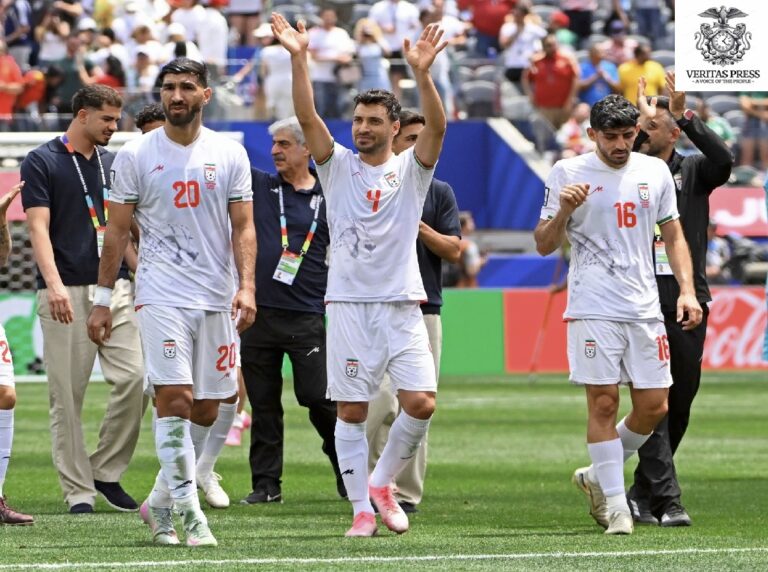
SEATTLE, TEHRAN — The U.S. Department of Homeland Security (DHS) will allow Iran’s national football team to enter the country 48 hours before their critical World Cup match against Egypt on Friday, a modest concession in a tournament where Team Melli’s travel conditions have sparked claims of oppression and competitive disadvantage.