




Author:
Byline: Investigative Desk
Help support our mission, donate today and be the change. Every contribution goes directly toward driving real impact for the cause we believe in.
As social media mobilises thousands for a new mass crossing into Ceuta, evidence mounts that Algiers is strategically funnelling sub-Saharan migrants towards Morocco’s frontier. With Italy reimposing controls on Spain and the EU hailing a “resilience” it has yet to prove, the Maghreb’s long-simmering cold war has found its most combustible theatre: human lives.
OUJDA, MOROCCO — The lorries roll north through the predawn haze of the Hamada du Draâ, a desolate expanse of stone and sand that marks Algeria’s western military frontier. They are not carrying fuel, ammunition, or conventional freight. Satellite imagery analysed by independent monitors and dozens of videos verified by this investigation show open-bed trucks packed with people, men, women, and children from Mali, Niger, Sudan, and Guinea, flanked at the front and rear by olive-green vehicles bearing the insignia of the Armée Nationale Populaire. The Digital Forensics Lab at the University of Madrid has authenticated footage, filmed on August 4th by a local herder, showing the convoy was heading not to an internment centre or a repatriation point. Its trajectory, mapped across multiple clips geo-collected over four days, traces a line directly towards the closed land border with Morocco near Figuig.
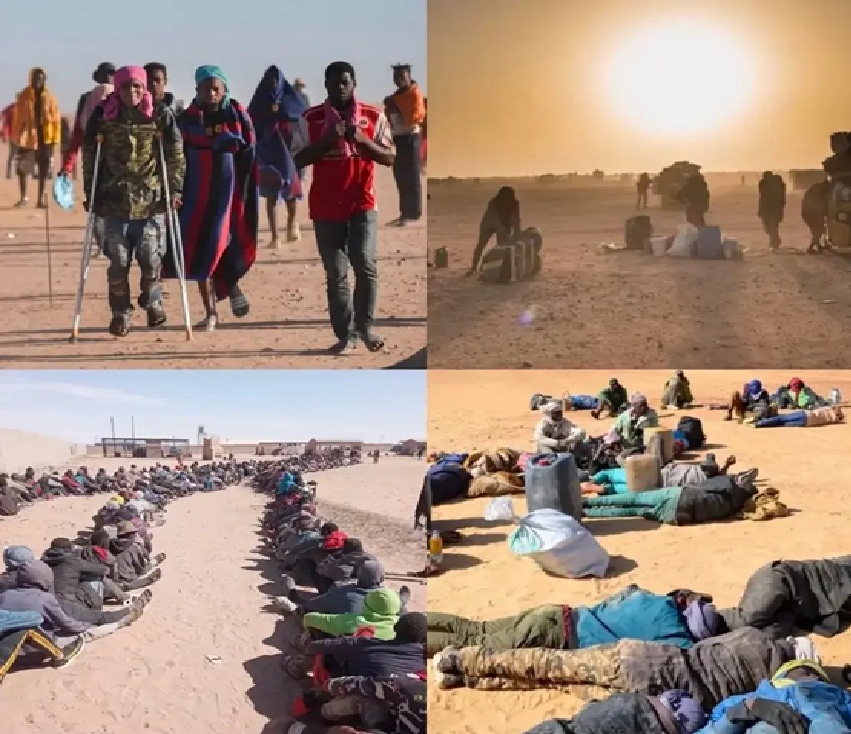
“We saw them every morning for a week,” said Driss El-Habchi, a retired schoolteacher who lives in the Moroccan border settlement of Aïn Chouater. “The Algerian soldiers would stop about three kilometres from the berm, open the tailgates, and point. Then the migrants would start walking. Some had water bottles; most had nothing. It was like watching a slow-motion spill designed to seep through a closed door.”
What is happening on the eastern marches of Morocco is no spontaneous migratory movement. It is, according to half a dozen current and former security officials in the region, international aid workers, and a growing body of open-source evidence, the latest and most brazen iteration of a state-directed strategy: the weaponisation of vulnerable populations as an instrument of coercive diplomacy. Algeria, locked in a decades-long freeze with its western neighbour, a rupture deepened by the 2020 normalisation of Moroccan-Israeli ties, the Western Sahara dispute, and a spiralling arms race, appears to have concluded that migration is a cheap, deniable, and devastatingly effective lever. And it is deploying that lever just as Europe, and the patchwork of external border arrangements on which it depends, faces a defining stress test.
The Convoy Trail: Documenting A Deliberate Pattern.
The notion that Algeria is escorting sub-Saharan migrants towards Morocco is not new, but the scale and systematic character of operations recorded since June 2026 represent a step change. The Spanish news outlet Atalayar first broke the story of military-escorted convoys in late July, citing social media videos and regional security sources. Since then, the flow of verifiable material has become a torrent. The Moroccan Association for Human Rights (AMDH) catalogued 17 separate filmed incidents between 15 July and 7 August. In these incidents, uniformed personnel in identifiable Algerian military vehicles directed groups of between 50 and 400 people towards the frontier zone.
“We are not talking about isolated corrupt gendarmes turning a blind eye for a bribe,” said Fatima Zahra Oukacha, a senior researcher with the North Africa Migration Observatory (NAMO), a Geneva-based independent monitoring group. “In multiple videos you can see logistics trucks, command vehicles, and patterns of movement that require fuel, coordination, and approval from a regional military command. You don’t move 3,000 people through a heavily militarised strip without orders from on high.”
Algerian authorities have rejected the accusations. On 2 August, the Ministry of Foreign Affairs in Algiers issued a statement labelling the reports a “malicious fabrication orchestrated by the Moroccan Makhzen and its media tentacles aimed at masking Rabat’s own systemic failure to control irregular emigration from its shores.” The statement claimed that Algeria was itself a victim of rising migratory pressure and that its forces were engaged in routine patrols to prevent infiltration into Algerian territory. Privately, however, a European intelligence officer who has served in the Sahel told this investigation that the Algerian posture had shifted noticeably. “Until last year, the default was to push people back south, to Niger and Mali, often brutally. Now the push vector has rotated 90 degrees. The message to Rabat, and indirectly to Madrid and Brussels, is unmistakable: if you squeeze us on Sahara, we’ll squeeze you on your soft underbelly.”
Ceuta’s Shock And The Social Media Tinderbox:
The Algerian-manufactured pressure is not the only front. Last week, the Spanish enclave of Ceuta experienced what European Internal Affairs Commissioner Magnus Brunner called “a test of our European resilience.” In the space of a few hours on the night of 1-2 August, more than 70,000 people breached the fortified perimeter fence. A combination of human-wave tactics temporarily overwhelmed Moroccan authorities, who have long served as the EU’s indispensable subcontracted border guard, and the acute disinformation that swirled on TikTok, WhatsApp, and Facebook (META), promising that the border was open. Spanish officials have since confirmed at least 100 deaths, many from suffocation in the crush or drowning in the waters of the breakwater.
“Europe has not had this much control over irregular migration in decades,” Brunner told a press conference in Brussels on 8 August, before adding a critical caveat: “But we remain vulnerable if the security of our external borders depends on the goodwill of one neighbouring state.” The commissioner was referring to Morocco, which has accepted the vast majority of the returnees, Spanish Interior Ministry data show 68,000 repatriations already completed, and it is now prosecuting 25 individuals for facilitating irregular crossings, armed resistance, and human trafficking. But the dependence Brunner diagnosed extends beyond Rabat. The Ceuta rupture, and the Algerian manoeuvre on the eastern border, expose a triangular dependence in which the EU relies on Morocco, Morocco depends on a stable migratory environment, and Algeria has demonstrated it can destabilise that environment at will.
Even as emergency reinforcements from Frontex and Spanish police try to process the thousands still housed in the notoriously overcrowded CETI centre, built for 512 but now sheltering over 1,000, a new social media campaign is gathering momentum. Leaflets and encrypted messages examined by El País and the Moroccan state news agency MAP set the night of 15 August 2026 – next Friday, as the date for a second mass push into Ceuta. The Moroccan authorities say they have raised the alert level to maximum on the border perimeter and launched an investigation into the origins of the call. “Those who promote these calls or incite irregular entry may face severe legal consequences, including prosecution for participation in organised criminal activity,” a Moroccan Interior Ministry spokesperson told the press on 9 August. Yet the shadow of the recent tragedy looms large: a repeat on a similar scale would be a humanitarian and political catastrophe, and this time it could unfold with international cameras fully trained on the fence.
The Balearic Surge And Algeria’s Own Exodus:
While sub-Saharan bodies are being directed east-to-west across the Maghreb, a parallel and possibly complementary pressure is building northwards across the Mediterranean. The Spanish Ministry of the Interior figures obtained by this investigation show that arrivals of small boats to the Balearic Islands surged to 1,161 in July 2026, up from 475 in July 2025, a 144% increase. The overwhelming majority of those intercepted are Algerian nationals, a shift that has prompted Prime Minister Pedro Sánchez to seek an urgent phone call with Algerian President Abdelmadjid Tebboune. Sources suggest Sánchez demanded the activation of a dormant readmission agreement, which Algiers signed with Spain in 2002 but has systematically refused to implement.
“It is no coincidence that the Balearic route is exploding at the same time as the sub-Saharan caravans are being pushed towards Oujda,” said Hana Benaziz, a migration policy analyst at the Barcelona Centre for International Affairs (CIDOB). “Algeria is sending two signals on two axes. To Morocco, it says: ‘manage this chaos we are creating for you.’ To Spain and Europe, it says: ‘we can also release our own population pressure whenever we choose, unless you recognise our interests.’ It’s migration as statecraft.”
The human consequences of the Balearic route are grim. In the first week of August alone, Spanish maritime rescue services recovered 23 bodies off the coast of Cabrera. Activist groups such as Caminando Fronteras estimate that the true death toll on the Algerian route, which has now surpassed 60,000 arrivals to southern and eastern Spain over the past decade, is far higher than official figures reveal. Abdoulaye Diallo, a Malian migrant who arrived in Almería last month after crossing from Mostaganem, described a journey deliberately facilitated by local authorities. “The police came and took half our money, but then they let the boats leave. They said: ‘Go now, don’t come back.’ They didn’t care if we died; they wanted us gone.” Diallo’s account, shared with the NGO Andalucía Acoge, is consistent with testimony gathered along the Oran coast by journalists from Le Monde and Il Manifesto.
Europe’s Fractured Response: Italy Draws A Domestic Battle Line.
If Algiers intended to expose European fault lines, it has succeeded spectacularly. On 7 August, Italy’s Interior Minister, responding to pressure from the right-wing Lega party ahead of next year’s general election, announced the temporary reintroduction of internal border controls on travel from Spain. The measure, which applies to air and sea routes, does not technically break Schengen rules but almost everyone universally condemns it as a symbolic and politically opportunistic act. Because Ceuta’s special status prevents irregular entrants from accessing the mainland Schengen area without undergoing exit controls, the risk of secondary movement from Spain to Italy was negligible.
“This is pure electoral theatre,” said Sergio Carrera, a senior research fellow at the Centre for European Policy Studies (CEPS). “Italy cannot suspend Spain from Schengen. It can make a political gesture that plays well with its domestic anti-immigration constituency. But in doing so, it sends exactly the message that those who weaponise migration want to hear: that Europe can be made to turn on itself under pressure.”
Commissioner Brunner, visibly frustrated during his press conference, insisted that the EU had passed the Ceuta test. He outlined a five-point plan for stronger “migration diplomacy”, leveraging trade, visas, and development aid to cement partnerships with Morocco and other neighbours; accelerating returns; reinforcing Frontex’s operational capacity; building early-warning systems against disinformation; and targeting smuggling networks with sanctions. It is a framework that codifies the Union’s post-2015 shift towards securitisation and externalisation. Yet it conspicuously fails to address what happens when a third country, in this case Algeria, actively spoils those external partnerships. “The EU’s toolbox is full of instruments designed for countries that want to cooperate,” noted Camille Le Coz, associate director at the Migration Policy Institute Europe. “It is nearly empty when it comes to punishing a state that deliberately engineers migratory chaos. What are you going to do? Sanction Algeria’s hydrocarbons? That’s fantasy. The asymmetry is brutal.”
The Human Buffer Zone: Locals Caught In A Geopolitical Storm.
In the border town of Figuig, the atmosphere is a mixture of anxiety and exhaustion. Moroccan Royal Gendarmerie checkpoints have multiplied. Ambulances shuttle between the frontier and the provincial hospital in Bouarfa. Local civil society groups, including the Moroccan Red Crescent, have set up makeshift way stations offering water, bread, and medical screening to the exhausted groups of sub-Saharan migrants who make it across the berm. “These people arrive with horror stories,” said Khadija El-Mouden, a volunteer paramedic. “Women who have been raped in the no-man’s land, children with severe dehydration, men with broken bones from being pushed off trucks. We are trying to be human, but we are a poor community. We cannot become the permanent shock absorber for a diplomatic war waged from Algiers.”
Moroccan authorities have, for now, resisted the temptation to push the new arrivals back across the artificial border – an act that would risk armed clashes. Instead, they are being transported to reception centres in Oujda and Nador, where the International Organization for Migration (IOM) and UNHCR are providing emergency assistance. “We are witnessing a protection crisis superimposed on a political crisis,” said François Dubois, the IOM’s chief of mission in Morocco, on a visit to Oujda on 9 August. “The numbers are not yet overwhelming at the national level, but the concentration in a sensitive militarised zone makes it extremely volatile. We call on all parties to respect the principle of non-refoulement and to de-escalate.”
The African Union has echoed the call for de-escalation, whose Commission Chair issued a statement on 10 August urging “maximum restraint” and offering to mediate between Algiers and Rabat. The UN Special Rapporteur on the human rights of migrants, invited by Moroccan civil society to visit the border region, expressed “deep alarm” at reports that “unarmed civilians are being instrumentalised and placed in harm’s way as pawns in a geopolitical contest.”
The Bigger Picture: Migration As A Permanent Lever.
What is unfolding in the summer of 2026 is not merely the latest chapter in a bilateral squabble. It is a significant change in how migration is weaponised. Moroccan border guards stepped aside, allowing roughly 10,000 people to surge into Ceuta in two days during the 2021 mass crossing. Many interpreted this event as Rabat reminding Madrid of its leverage after Spain admitted the Polisario Front’s leader for medical treatment. Now, analysts argue, Algiers has studied that playbook and refined it – using not a sudden withdrawal of state control, but an active, state-directed propulsion of migrants towards its rival’s border.
“This is a more sophisticated and dangerous model,” said Dr. Anas El-Gomati, director of the Tripoli-based Sadeq Institute. “In 2021, Morocco demonstrated that it could open a tap. Algeria is showing that it can lay new pipes and pump people into a neighbour’s territory in a way that is semi-deniable but qualitatively different. The escorted convoys give Algiers plausible deniability while being so overt that the intended audience, Rabat, Madrid, Brussels, Washington, cannot ignore the signal. It says: ‘We have escalatory dominance in the migration domain.’”
The policy carries immense risks for Algeria itself. The frontier zone is populated by smugglers, armed militias, and jihadist remnants from al-Qaeda in the Islamic Maghreb. Directing large civilian populations into this space could backfire spectacularly if a mass-casualty incident occurs on Algerian soil or if the chaos spills back across its own lines. Still, Western intelligence assessments shared with allied capitals and seen by this investigation suggest that the Algerian security apparatus has judged the potential rewards – extracting political and economic concessions from Europe and humiliating Morocco – outweigh the dangers. The same assessments note that Russian disinformation networks, active in the Sahel and linked to the Wagner successor Afrika Corps, have amplified social media narratives urging sub-Saharan migrants to head for Morocco, with the apparent goal of destabilising a key Western ally.
Ceuta’s Next 72 Hours And A Union At A Crossroads:
As the sun sets over the Mediterranean on 10 August, the immediate focus of Moroccan and Spanish security services is the 15 August date. The Moroccan Auxiliary Forces have been reinforced along the Ceuta fence; Frontex has redeployed thermal-imaging drones; and the EU’s Emergency Response Coordination Centre is pre-positioning humanitarian supplies in Algeciras. The Spanish government is maintaining a public posture of calm, but privately, a Moncloa official conceded that “another 2021-style or August-2026-style event could overwhelm not just the enclave but the credibility of the new Migration Pact.”
In Brussels, Commissioner Brunner’s claim of a Europe in control contrasts starkly with the scenes unfolding on its southern perimeter. The Pact on Migration and Asylum, finalised in 2024 and entering full force this year, was designed for the orderly processing of asylum seekers at the external frontier, not for political tsunamis engineered by hostile third states. “The legal and operational architecture is straining,” admitted a senior Commission official on condition of anonymity. “We have the instruments to screen, to return, to redistribute. But we do not yet have a clear doctrine for confronting a state that weaponises vulnerability as a form of asymmetric warfare.”
The next 72 hours will reveal whether the calls for 15 August materialise into a new human flood. Even if the date passes without mass events, the structural conditions a determined Algeria, an overstretched Morocco, a politically fragmented Europe, and the limitless despair of millions of young Africans – guarantee that the Maghreb migration front will remain at boiling point. The European Union is being tested not merely on its operational competence but on its strategic memory. It has spent a decade building a border architecture dependent on the “goodwill” of neighbours it cannot control. The 10 August 2026 may one day be remembered as the moment that goodwill was formally replaced by the law of the lever, and the Mediterranean became a chessboard where lives are the pieces.
Disclaimer: Reporting for this investigation was contributed by correspondents in Oujda, Madrid, Brussels, and Geneva. Digital verification of convoy footage was carried out by the University of Madrid’s Digital Forensics Lab. The North Africa Migration Observatory (NAMO) provided access to its open-source incident database. Statements have been gathered from Moroccan and Spanish government officials, EU institutions, UN agencies, and humanitarian organisations on the ground.
Veritas Press Investigative Analysis
Independent journalism examining global affairs, power, diplomacy and accountability.
Source: Veritas Press C.I.C. | Multi-News Agencies
APPEAL: Help Support Our Work By Donating
Readers who believe that truth still matters have power over popular information. When just a few more people step up to support this work, it means more lies exposed, more corruption uncovered, and more accountability where it’s long overdue.
Help Protect Independent Journalism, Which Is Currently Under Attack.
If you believe journalism should serve the public, not the powerful, and you’re able to help, becoming a regular DONOR or a PAID SUBSCRIBER truly makes a difference.
DONATION APPEAL: If you found this reporting valuable, please consider supporting independent journalism.
Your support fuels our fearless, truth-driven journalism. In unity, we endeavour to amplify marginalised voices and champion justice, irrespective of geographical location. We operate independently, with no financial backing from billionaires; our readers support us.
But it’s also extremely important. One of Veritas Press’s greatest assets is its reader-funded model.
1. Reader funding means we can cover what we like. We’re not beholden to the political whims of a billionaire owner. We are a small, independent and impartial organisation. No one can tell us what not to say or what not to report.
2. Reader funding means we don’t have to chase clicks and traffic. We’re not desperately seeking your attention for its own sake; we pursue the stories that our editorial team deems important and believes are worthy of your time.
3. Reader Funding: enables us to keep our website and other social media channels open, allowing as many people as possible to access quality journalism from around the world, particularly those in places where the free press is under threat.
We know not everyone can afford to pay for news, but if you’ve been meaning to support us, now’s the time.
Your donation goes a long way. It helps us:
- Keep the lights on and sustain our day-to-day operations
- Hire new, talented, independent reporters
- Launch real-time live debates, community-focused shows, and on-the-ground reporting
- Cover the issues that matter most to our communities, in real time, with depth and integrity
Without your support, independent voices like ours will be silenced.
Further, we have plans to expand our work, but we can’t do it without your support. Every contribution, no matter the size, helps us stay independent and build a truly people-powered media platform.
If you believe in journalism that informs, empowers, and reflects the communities we serve, please donate today.
Submissions:
For the secure submission of documentation, testimonies, or exclusive investigative reports from any global location, please utilise the following contact details for our Investigations Desk: mailto:enquiries@veritaspress.co.uk or mailto:editor@veritaspress.co.uk
GENEVA — A United Nations fact-finding mission has concluded there are “reasonable grounds to believe”
Iran’s GDP is projected to contract by 5.4 to 6.1% in 2026, its worst performance
The Trump administration is preparing a $2.8 billion weapons package for Israel containing 40,000 2,000-pound

Film alleges mass civilian deaths are routinely built into military decisions amid Israel’s genocidal war
The Israeli rights group says violence, displacement, economic strangulation, and settlement expansion form part of

Houthi forces have captured the historic Red Sea port of Mocha and are advancing on
London’s historic sanctions against Israeli settlements mark a watershed moment in UK foreign policy, but
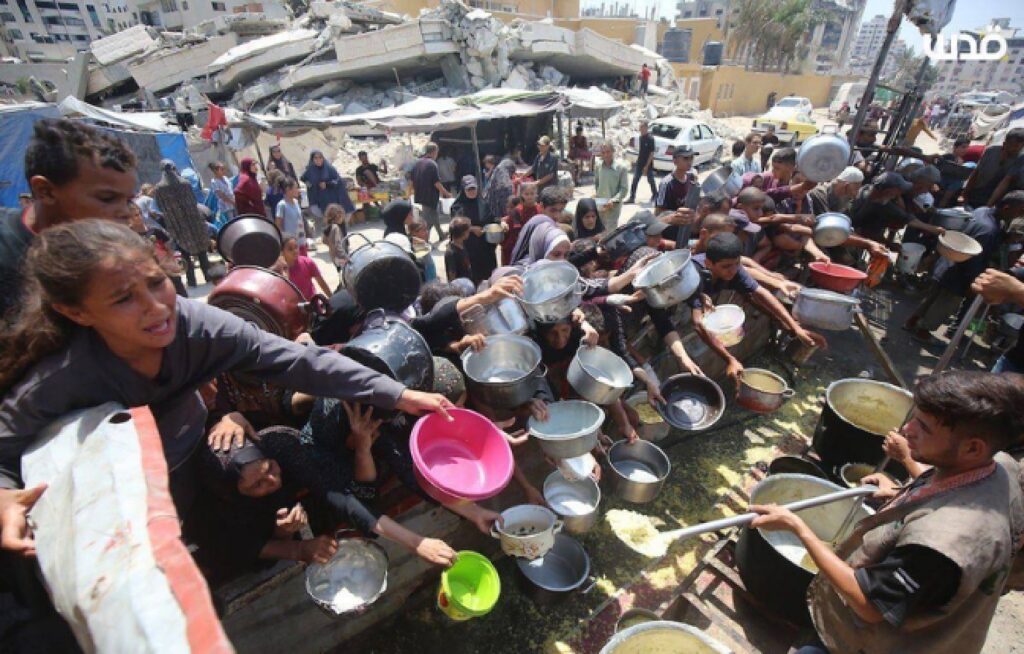
With 95% of Gaza’s population now wholly dependent on aid and more than 90% stripped
India calls for Kashmir and Ladakh to appear only on its official map after a
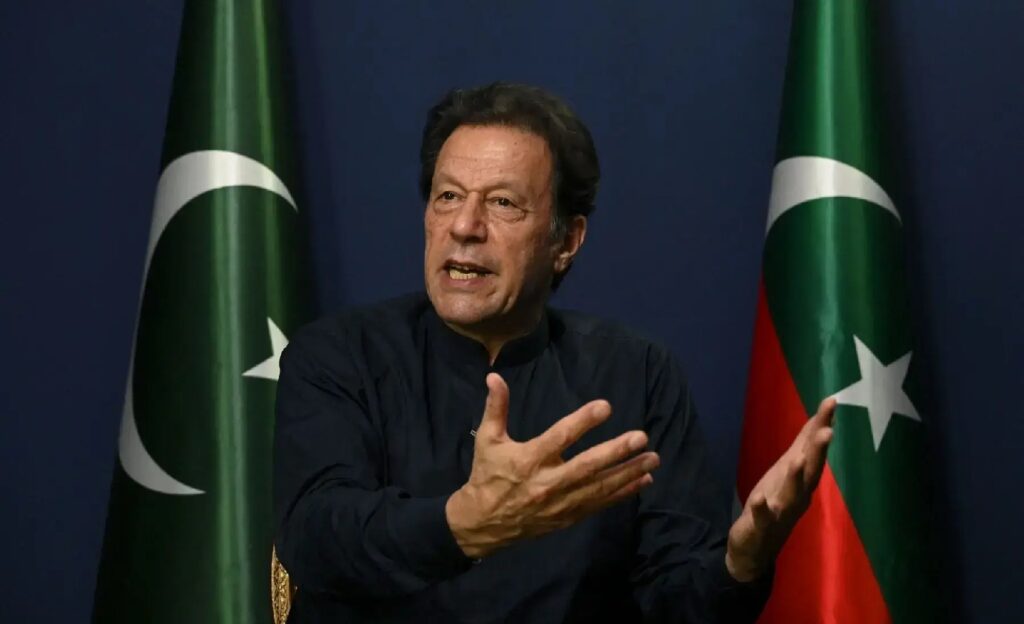
ISLAMABAD – In the high-stakes political theatre of Pakistan, the battleground has shifted from the
















keqj0t
ut3md2
ijbik2