Kamran Faqir is a volunteer investigative journalist and writer committed to exposing hidden truths and amplifying underreported stories. Driven by social justice, he brings sharp insight and fearless truth-telling to independent journalism. NUJ registered.
Listen to this article
Help support our mission, donate today and be the change. Every contribution goes directly toward driving real impact for the cause we believe in.
Article Date Published:
Article Date Modified:
11 minutes
Views:346
As hundreds of protesters gather in Battersea holding “I oppose genocide, I support Palestine Action” signs, the Met’s warning that even logistical helpers face arrest exposes the fault-lines of a terror ban now heading to the Supreme Court.
LONDON — The police vans began queuing along Nine Elms Lane before noon. By the time the first placards appeared outside the US embassy in Battersea, the Metropolitan Police had already made its position clear: this was not, in its assessment, a protest. It was a “meeting to purposefully commit a crime”.
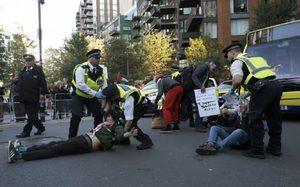
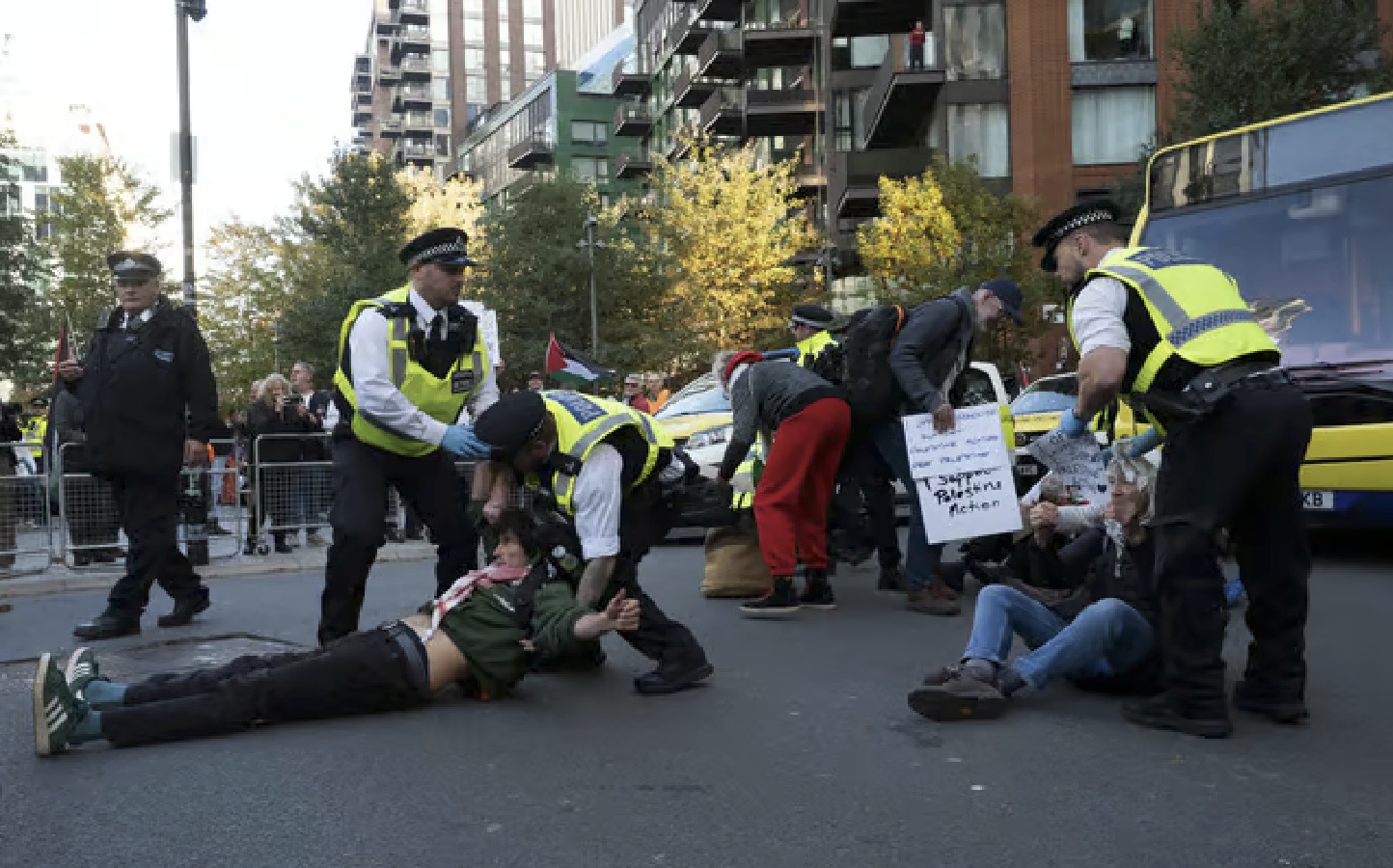
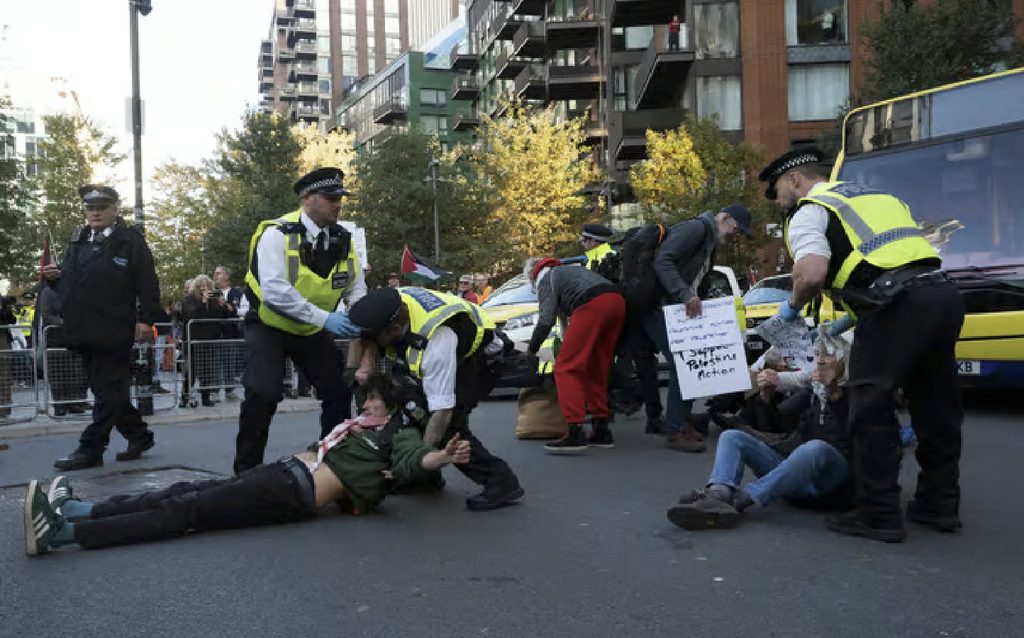
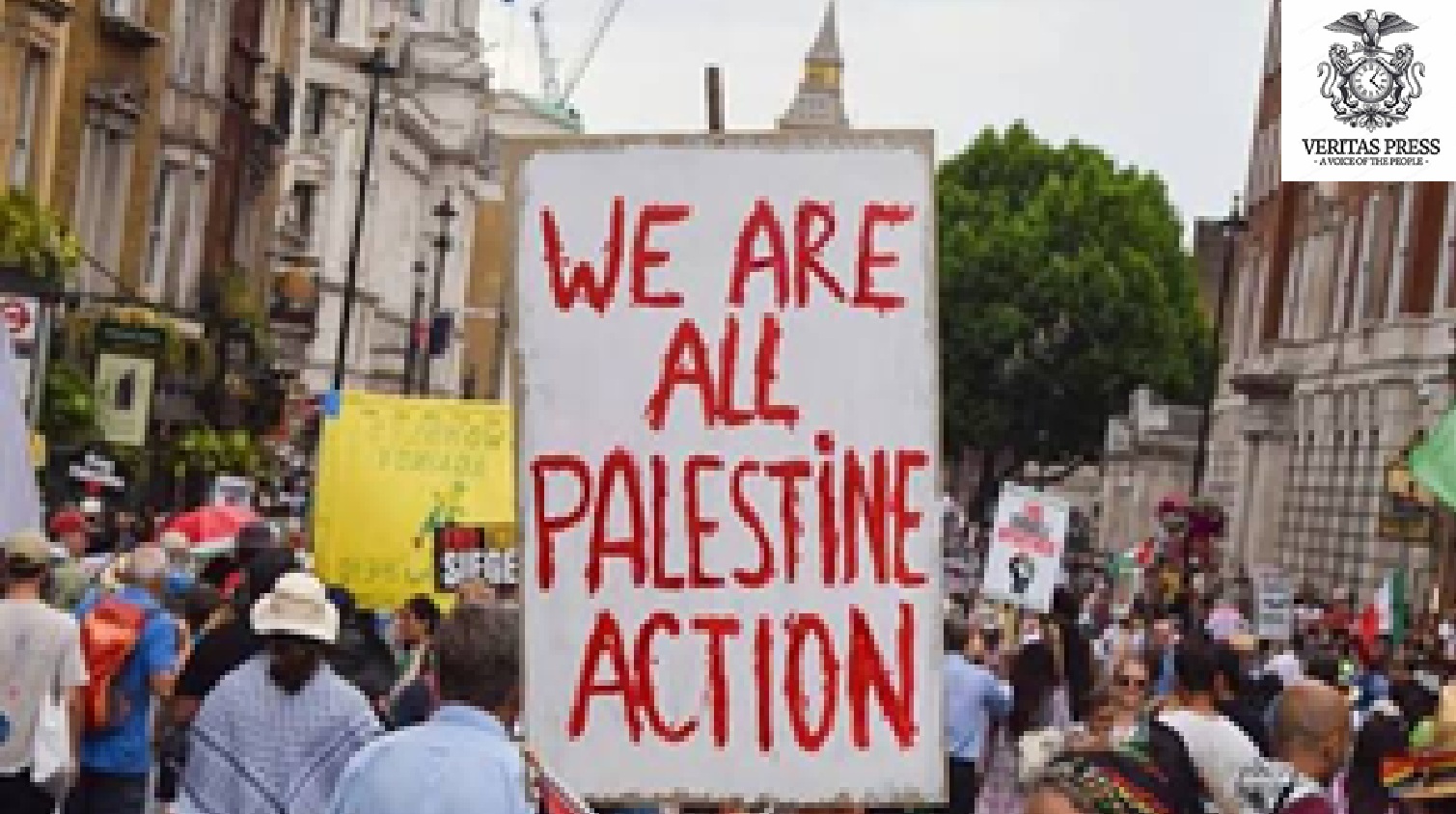
By late afternoon, 48 people had been arrested, the majority for “expressing support for a proscribed organisation”. Around 400 had gathered, elderly retirees, faith leaders, and veteran activists, holding identical signs: “I opposegenocide. I support Palestine Action.” The protest was timed for maximum symbolic impact, days before the Supreme Court was due to hear a challenge to the ban on Palestine Action, and staged outside the embassy of the country that organisers argue is the real author of the proscription.
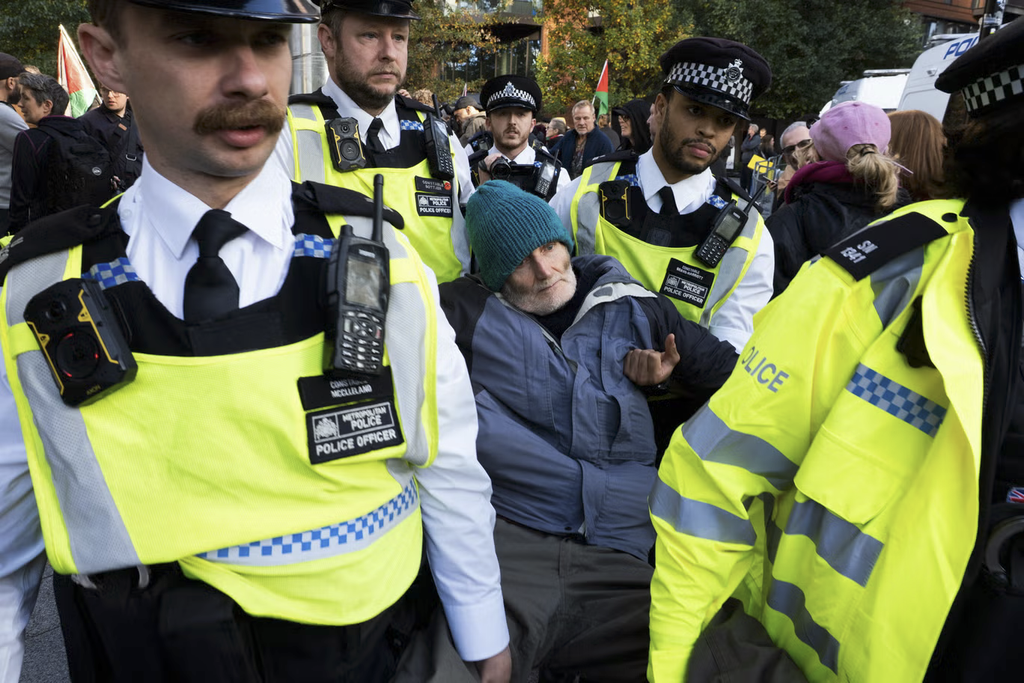
The Met’s operation was, by any measure, extraordinary. A Section 35 dispersal order covered parts of central London from 8 am to 11 pm. Commander Adam Slonecki, leading the operation, warned that it was “not just those who hold up placards who should expect to be arrested.” Anyone “playing a key role in organising the event, giving instructions to others and/or providing logistical support” would “very likely be committing an offence”. In practice, as organisers Defend Our Juries (DOJ) pointed out, that could mean arrest for bringing water to elderly and disabled demonstrators, or for acting as a media liaison.
The Met later clarified that it was relying on Section 44 of the Serious Crime Act 2007, which makes it an offence to “intentionally encourage or assist an offence,” but refused to define “logistical support” beyond its “plain English meaning”. DOJ’s response was blunt: “How can the Met possibly justify arresting people who are not defying the ban themselves, who are simply providing logistical support to the peaceful protesters, many of whom are elderly or disabled and in need of support? … The moral bankruptcy of the Met is complete.”
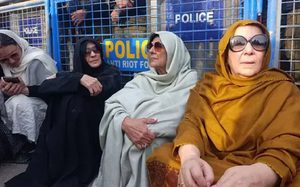
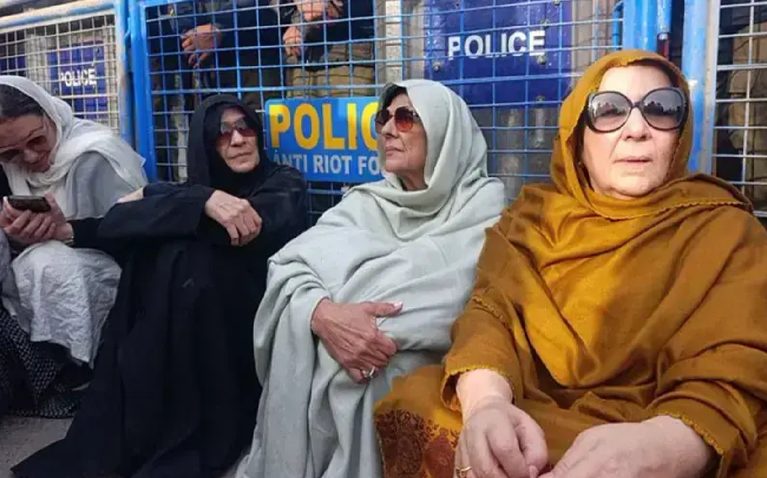
Hundreds attend pro-Palestine Action protest outside US embassy. Protesters carried placards reading “I oppose genocide, I support Palestine Action”. PA
The Human Cost Of A Legal Fiction
Among those sitting on the pavement outside the embassy was Sue Morhall, 79. She has been arrested “five or six” times before and expected to be taken away again. “The USA is complicit in most of the wars that are going on,” she said. “I just feel the leaders of this world, including Trump, need to know that people are so against what’s happening in Gaza.” She was hopeful, though not confident, that the new Prime Minister, Andy Burnham, might rescind the ban. “I think it’s early days. I’m hopeful, though pigs might fly,” she said. “It’s a terrible shame that people who are trying to stop a genocide are being arrested.”
The Rev Bill White, 72, a faith leader, was equally resolute. “I’m appalled that Britain is helping facilitate the genocide that is happening in Palestine. We supply weapons that are being used on Palestinians,” he said. He had resigned from the Labour Party after the proscription and said there was “no choice” but to protest. “This is the right thing to do. There’s a bad law, and it is wrong to criminalise people who are trying to prevent genocide. How can I not be here?”
Their presence, and the Met’s willingness to arrest them, exposed the central contradiction at the heart of the government’s counter-terrorism strategy. Palestine Action was proscribed in July 2025, making it the first direct-action group in British history to be banned as a terrorist organisation. Since then, more than 3,300 people have been arrested for peacefully defying the ban. Home Office figures released in October revealed that Palestine Action-related arrests accounted for 94% of all terrorism arrests in the UK, a statistic that critics say reveals not a wave of terrorism, but a sweeping criminalisation of dissent.
The Politics Of Proscription
The government’s defence has been consistent. Prime Minister Burnham has repeatedly described the proscription as the product of a “rigorous and evidence-based process” endorsed by Parliament. The Home Office has pointed to the Court of Appeal’s finding in June 2026 that Palestine Action “carried out acts of terrorism and promoted the use of violence,” upholding the ban after the High Court had briefly ruled it unlawful. A Home Office spokesperson told The New Arab that “showing support for a proscribed organisation is against the law” and that arrests were “operational matters for the police”.
But the investigative trail leads elsewhere. Defend Our Juries and legal challengers argue that the original proscription was announced under pressure from the Trump administration, following Palestine Action’s spray-painting of Trump’s Scottish golf course in March 2025. The timing is difficult to ignore. The US government designated Palestine Action a terror group in August 2026, months after the UK ban. And the protest’s location, outside the US embassy, not the Home Office, was a deliberate attempt to highlight what organisers call the “special relationship” at work in British terror law.
The US embassy itself issued a security warning to American citizens, urging them to “avoid demonstrations and exercise caution,” and noting that even peaceful protests could turn violent. The warning was generic, but its effect was to reinforce the perception that the embassy was the fulcrum of the dispute.
A Legal Reckoning
The Supreme Court hearing on 4 and 5 November will not be a trial of whether Palestine Action committed criminal damage, that is not in serious dispute. The courts have already accepted that the group organised “violent attacks on an Israeli defence company, its suppliers and aircraft at RAF Brize Norton, which caused criminal damage and injury”. The question is whether the Home Secretary, at the time Yvette Cooper, struck the right balance between national security and the rights to freedom of expression and assembly.
The Observer’s analysis of the court papers noted that the process leading to proscription was advised by Counter Terrorism Policing, the Joint Terrorism Analysis Centre, the Foreign Office, and the housing ministry, but that no institutional voice spoke up for free expression or assembly. When Cooper announced the ban, she insisted that “the right of peaceful protest is a cornerstone of our democracy” and “will be unaffected”. The more than 3,300 arrests since then suggest otherwise.
The legal challenge is being brought by Palestine Action co-founder Huda Ammori, whose case has been partially granted permission to proceed by the Supreme Court. Amnesty International has intervened, calling the ban “a grave misuse of sweeping counter-terrorism powers” and urging the government to withdraw it. Labour peer Baroness Chakrabarti has said the ban “makes a mockery” of counter-terror laws. Even the government’s own supporters are restive: the journalist and author Sarah Helm, wife of the Prime Minister’s national security adviser, was accused of supporting Palestine Action after posting on X: “God help us authors who support Palestine and Palestine Action”. The Met ultimately assessed her post “did not meet the criminal threshold,” yet a 79-year-old woman holding an identical sign was arrested in Battersea.
The Local Cost
The operational burden has not gone unnoticed. Councillor Martin Abrams, the Green leader of Lambeth Council, criticised the deployment of local police resources to the protest. “The proscription of Palestine Action and the resulting police resources needed to arrest peaceful protestors simply does not make our communities safe,” he wrote on X, noting that Lambeth police were “already facing serious resourcing issues for vital community policing”. Freedom of Information figures obtained by The Independent showed that the Met had spent £1.3 million policing Palestine Action-related demonstrations between April and July 2026 alone.
Green Party leader Zack Polanski went further. “This is a deeply worrying escalation from the Met Police and suggests that they feel even more emboldened under Andy Burnham than they did under Keir Starmer,” he said. “The right to peaceful protest is now at serious risk of disappearing in the UK unless the government acts immediately.”
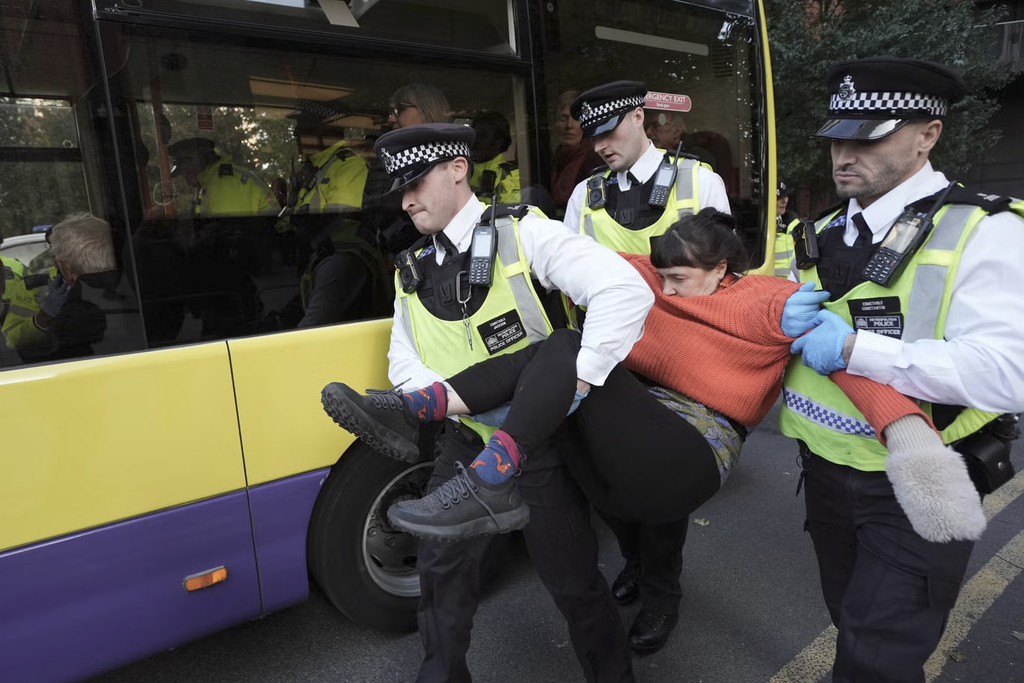
Pictures show police carrying protesters away. PA
What Comes Next?
The Supreme Court will not deliver a verdict on the day of the hearing. But the political clock is already ticking. The government has shown no sign of reviewing the proscription, despite pressure from within Labour, from civil-liberties groups, and from a polling base that Liberty says is increasingly uneasy: 43% of Britons believe arrests for holding signs in support of Palestine Action have had a negative effect on freedom of speech. More than 2,800 people were arrested for Palestine Action-related offences in the year to March 2026, with only 484 charged at the time of the latest published figures, a ratio that suggests the law is being used less to prosecute terrorism and bring criminals to justice than to deter protest.
For the 48 arrested on Saturday, the immediate future is a police station and a potential charge under the Terrorism Act. For the government, the future is a Supreme Court that must decide whether a “rigorous and evidence-based process” can coexist with a society that still permits its citizens to hold a sign outside an embassy and tell the world what they think. For Sue Morhall, the calculation is simpler. “It’s the principle,” she said, “and this is one that I feel very strongly about.”
Veritas Press Investigative Analysis Independent journalism examining global affairs, power, diplomacy, and accountability.
Source:Veritas Press C.I.C. | Multi-News Agencies
Help Support Our Work
Readers who believe that truth still matters have power over popular information. When just a few more people step up to support this work, it means more lies exposed, more corruption uncovered, and more accountability where it’s long overdue.
Help Protect Independent Journalism, Which Is Currently Under Attack.
If you believe journalism should serve the public, not the powerful, and you’re able to help, becoming a regular DONOR or a PAID SUBSCRIBER truly makes a difference.
DONATION APPEAL: If you found this reporting valuable, please consider supporting independent journalism.
Your support fuels our fearless, truth-driven journalism. In unity, we endeavour to amplify marginalised voices and champion justice, irrespective of geographical location. We operate independently, with no financial backing from billionaires; our readers support us.
But it’s also extremely important. One of Veritas Press’s greatest assets is its reader-funded model.
1. Reader funding means we can cover what we like. We’re not beholden to the political whims of a billionaire owner. We are a small, independent and impartial organisation. No one can tell us what not to say or what not to report.
2. Reader funding means we don’t have to chase clicks and traffic. We’re not desperately seeking your attention for its own sake; we pursue the stories that our editorial team deems important and believes are worthy of your time.
3. Reader Funding: enables us to keep our website and other social media channels open, allowing as many people as possible to access quality journalism from around the world, particularly those in places where the free press is under threat.
We know not everyone can afford to pay for news, but if you’ve been meaning to support us, now’s the time.
Your donation goes a long way. It helps us:
Keep the lights on and sustain our day-to-day operations
Hire new, talented, independent reporters
Launch real-time live debates, community-focused shows, and on-the-ground reporting
Cover the issues that matter most to our communities, in real time, with depth and integrity
Without your support, independent voices like ours will be silenced.
Furthermore, we have plans to expand our work, but we can’t do it without your support. Every contribution, no matter the size, helps us stay independent and build a truly people-powered media platform.
If you believe in journalism that informs, empowers, and reflects the communities we serve, please donate today.
Submissions
For the safe submission of documentation, testimonies, or exclusive investigative reports from anywhere in the world, please use the following contact details for our Investigations Desk: mailto:enquiries@veritaspress.co.uk or mailto:editor@veritaspress.co.uk.
SEATTLE, TEHRAN — The U.S. Department of Homeland Security (DHS) will allow Iran’s national football team to enter the country 48 hours before their critical World Cup match against Egypt on Friday, a modest concession in a tournament where Team Melli’s travel conditions have sparked claims of oppression and competitive disadvantage.