Kamran Faqir is a volunteer investigative journalist and writer committed to exposing hidden truths and amplifying underreported stories. Driven by social justice, he brings sharp insight and fearless truth-telling to independent journalism. NUJ registered.
Listen to this article
Help support our mission, donate today and be the change. Every contribution goes directly toward driving real impact for the cause we believe in.
Article Date Published:
Article Date Modified:
19 minutes
Post Views:106
A year of documented violations, blocked aid, forced displacement, and failed mediation has turned the Gaza ceasefire into a mechanism of impunity: 1,467 killed, 5,355 violations, and a population confined to 35% of its own land.
One year after the announcement of a ceasefire agreement that was supposed to end the genocidal war in Gaza, the evidence tells a devastating story: the agreement has been systematically dismantled, its provisions violated with impunity, and its promises of safety and relief reduced to hollow words and complicity. According to a comprehensive government report released by Gaza authorities, Israeli attacks killed 1,467 Palestinians, including 307 children and 152 women, and wounded another 5,161 during nearly twelve months of what was supposed to be a cessation of hostilities.
The report documented 5,355 Israeli violations of the agreement, an average of 14.8 violations every day. These included aerial and artillery bombardments, shootings, military incursions, home demolitions, and detentions. The first phase of US President Donald Trump’s Gaza plan was announced on October 9, 2025, following indirect negotiations between Hamas and Israel in Sharm el-Sheikh, Egypt. The agreement was intended to end the war, secure an Israeli withdrawal from Gaza, and facilitate a prisoner exchange. Hamas said it fulfilled its obligations and repeatedly called on Trump and mediating countries to ensure Israel’s full compliance. One year later, Gaza’s official figures show the ceasefire did not end Israel’s killing, destruction, or restrictions on the enclave’s population.
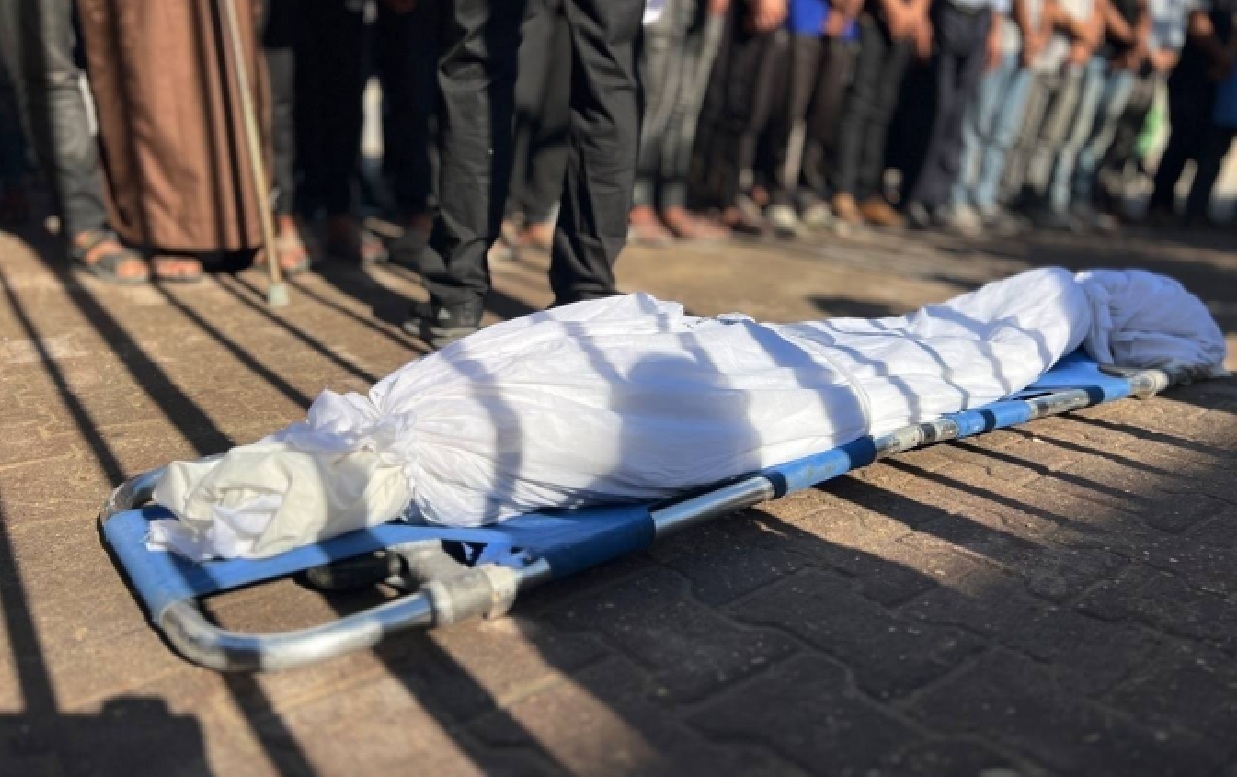
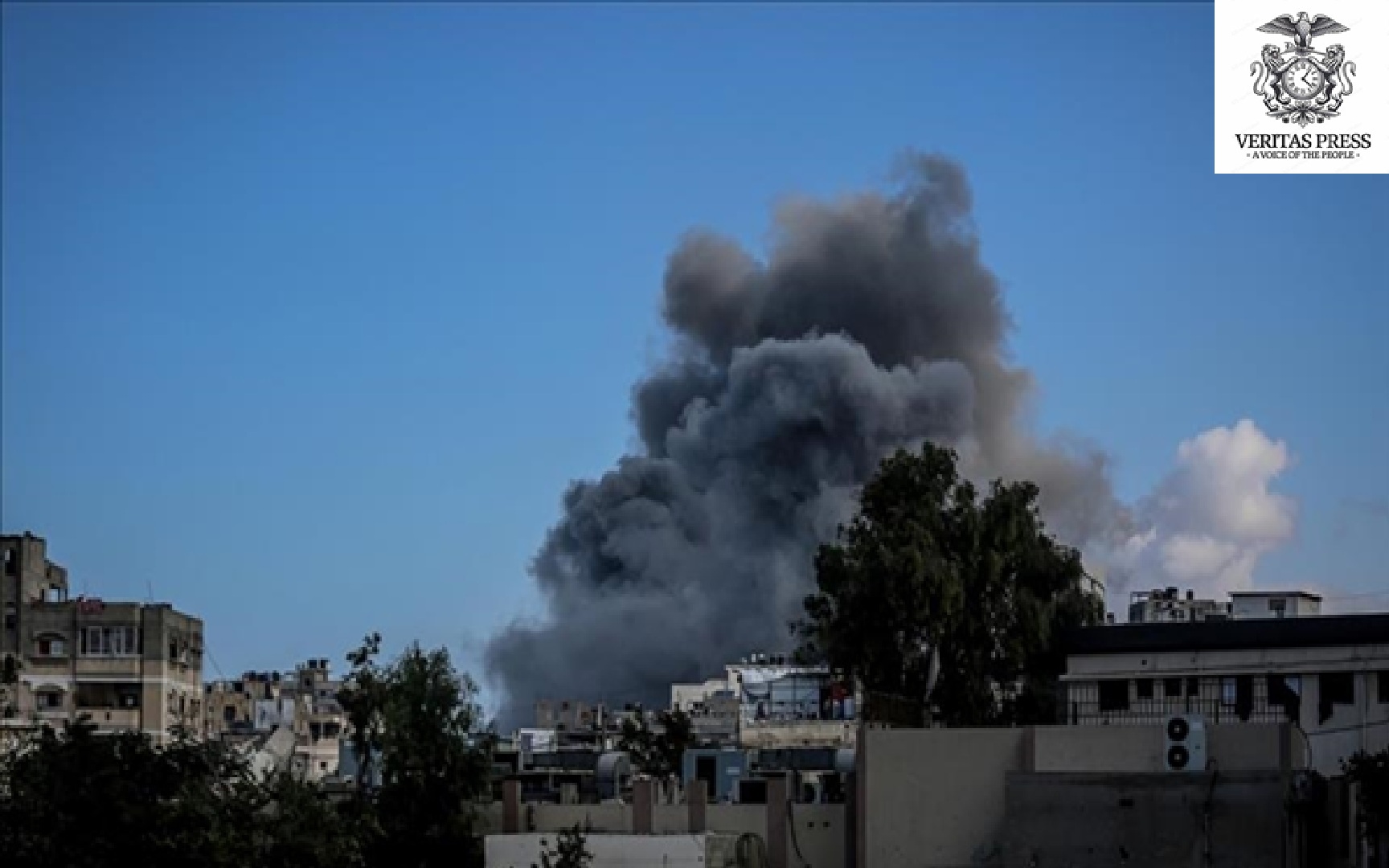
Israeli attacks on Gaza continue. (Photo: QNN)
Children, Women, And The Elderly: The Highest Price
Of the 1,467 Palestinians killed during the ceasefire period, 307 were children, 152 were women, and 44 were elderly people. Together, these vulnerable groups accounted for 503 of those killed, 34.2% of the total. Among the 5,161 wounded were 1,455 children, 889 women, and 212 elderly people, representing 49.5% of all injuries. Gaza authorities also recorded the detention of 202 Palestinians during the same period.
UNICEF reported in August 2026 that at least 300 children in Gaza had been killed in the 300 days following the ceasefire announcement, an average of one child every day. The United Nations confirmed approximately 1,431 people killed and 5,026 injured in Gaza during the same period, figures that align closely with Gaza’s official documentation.
“One Palestinian was killed or wounded in Gaza every 90 minutes since the ceasefire announcement,” Islamic Relief reported. “At least 320 of those killed were children, with a child killed almost every day of the past year on average.”
A Systematic Campaign Of Violations
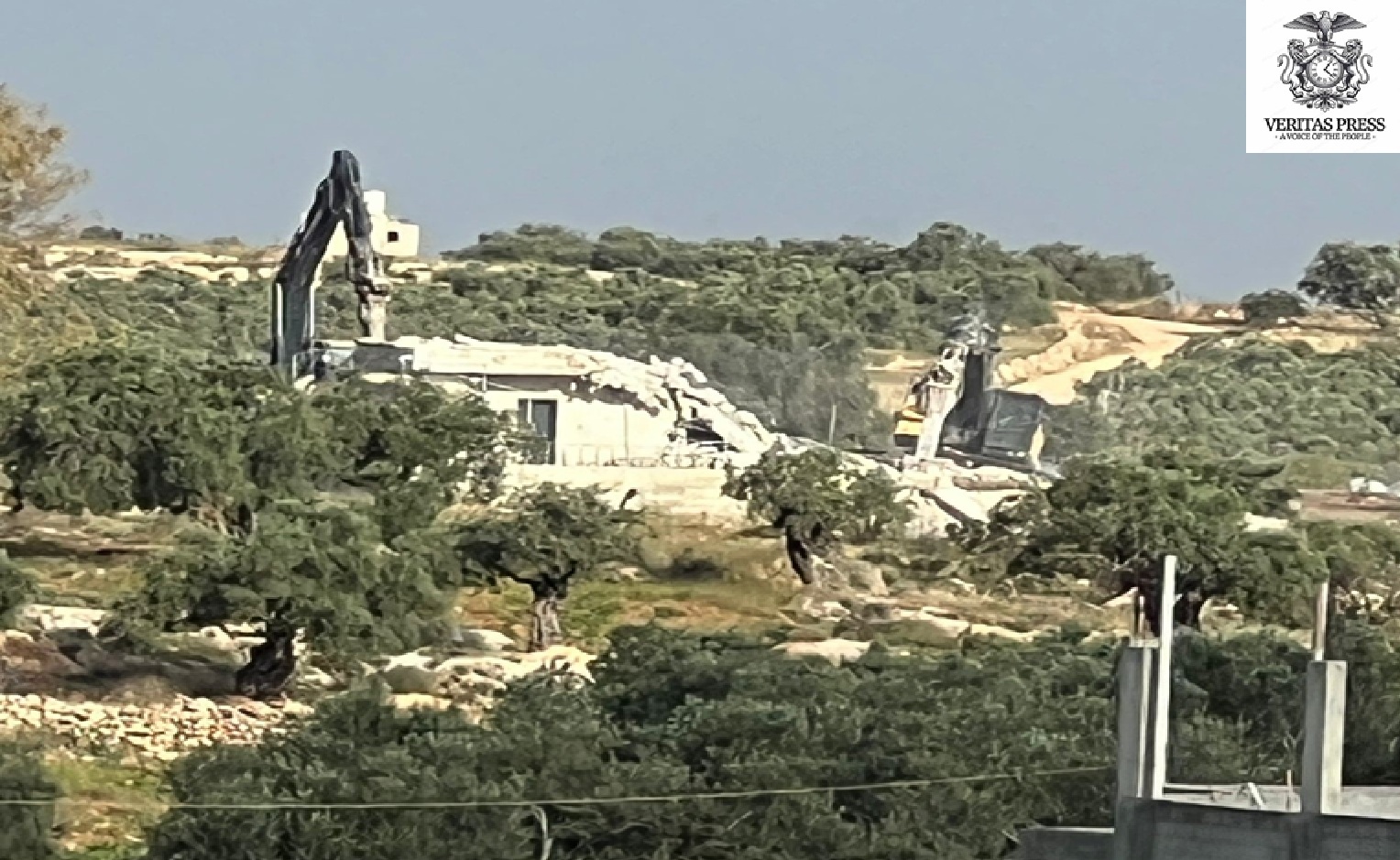
The 5,355 documented violations paint a picture of sustained military aggression: 2,303 bombardments, 2,238 shooting incidents, 215 military incursions, 500 operations involving the demolition or detonation of homes, and 99 arrest incidents. Israeli attacks repeatedly targeted displacement tents and areas in northern and eastern Gaza, while occupation forces continued detonating residential buildings across the enclave.
An Islamic Relief aid worker in Gaza, whose name is withheld for safety reasons, described the reality on the ground: “There is no ceasefire in reality. They target displacement camps and crowded areas, so there is still a lot of fear. We are scared to even leave our homes, and of the noise of the drones above us. Even our homes themselves are unsafe. It’s hard to think you could be next. The killing is non-stop, and we cannot live our lives normally.”
Houssam, who lives in a tent in northern Gaza with his family of six, including his parents-in-law, shared his experience: “Since the ceasefire, we suffer from random gunfire on our tents. You can see the bullet holes in them. We hear about victims all the time. My neighbour is one of them; he is in a coma now. There is not one place where you can walk safely.”
“The ceasefire was announced in the media and officially, but it has not been applied in real life,” Houssam continued. “We sleep preparing ourselves for death, because most of the people who died, died from gunshots while they were sleeping or walking in the street. Tents cannot protect us from gunshots. I feel like a stranger in my own country.”
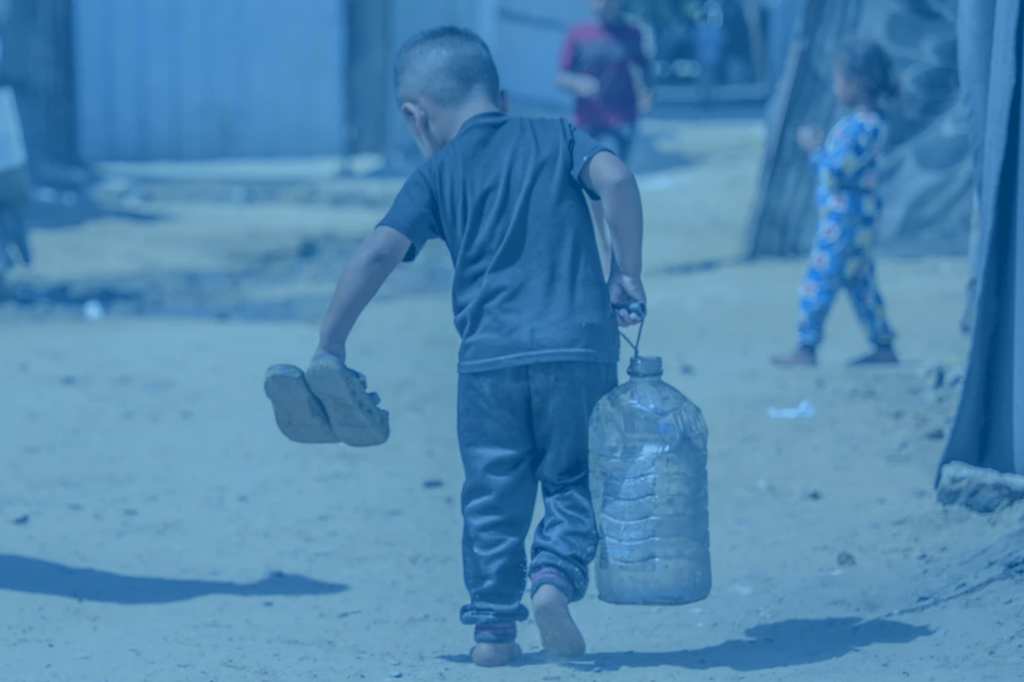
A young boy carries home a bottle of water in Gaza. Photo credit: Taawon / Plan International.
Aid And Fuel: A Trickle Where There Should Be A Flood
The ceasefire agreement stipulated that 600 trucks would enter Gaza every day, including 50 carrying fuel. According to the report, Israel allowed only 74,506 trucks to enter the enclave during the period covered, representing just 34.4 percent of the agreed number. These vehicles included 35,648 humanitarian aid trucks, 36,060 commercial trucks, and 2,798 fuel trucks.
Israel allowed a daily average of 223 trucks to enter Gaza, including 66 humanitarian aid trucks, 145 commercial vehicles, and 12 fuel trucks. Overall deliveries amounted to approximately 35% of the agreed volume, while fuel deliveries reached only 15.5% of the quantities stipulated under the agreement.
The severe shortage continued to obstruct the restoration and operation of hospitals, water facilities, sanitation systems, transportation, and other essential services. Gaza authorities accused Israel of providing mediators with figures that differed from those recorded on the ground and refusing independent international monitoring of truck entries.
“The broken promises of a ceasefire and the failure to deliver lifesaving relief are costing an entire generation of children their childhood and their future,” said Dr. Unni Krishnan, Plan International’s Country Director in the occupied Palestinian territory. “For children in Gaza, the crisis is far from over.”
Rafah Crossing: A Chokepoint Of Suffering
Israel also continued to restrict travel through the Rafah crossing, preventing it from operating according to the humanitarian protocol included in the ceasefire agreement. The report accused Israeli authorities of imposing arbitrary and degrading procedures while limiting the number of Palestinians permitted to cross.
The restrictions affected patients, wounded Palestinians, and other humanitarian cases who were supposed to receive priority access. During the reporting period, 7,215 Palestinians left through Rafah, while 6,797 returned to Gaza. The total movement in both directions amounted to 14,012 travellers out of an expected 36,400, only 38.4% of the agreed figure. Another 91 Palestinians were turned back and prevented from completing their journeys.
More than 20,000 severely ill patients remain blocked from leaving Gaza for treatment, according to Islamic Relief. Field clinics regularly have to close or reduce hours. Medicine to treat illnesses such as diabetes is particularly scarce, and people with cancer or chronic diseases are living in extreme pain due to lack of treatment.
A Territory Transformed: Displacement And Destruction
Since the ceasefire announcement, Israel has expanded and tightened military control over most of Gaza, using the “Yellow Line” to expel Palestinians from 65% of the territory. Almost all of Gaza’s 2.1 million people are now crammed into around 35% of the land, with families living in dangerously overcrowded displacement sites infested with rodents that bite children as they sleep and contaminate water supplies.
Around 82% of all structures in Gaza have been damaged or destroyed, according to UN assessments. More than 8 in 10 buildings are damaged or destroyed. Yet one year since the ceasefire announcement, rebuilding has barely begun.
Many families are now preparing for their third or fourth winter living in damaged tents or buildings without walls that provide little or no protection from rain and cold nights. By the end of April 2026, more than 8 in 10 shelters and displacement sites were reporting infestations of scabies, lice, and other parasitic skin conditions.
Health System In Collapse
Fewer than half of all health facilities are even partially functioning. According to the World Health Organization, not one has been restored to full capacity since the ceasefire, with nearly all of those awaiting rehabilitation held back by a lack of medical equipment. More than half of all health services have shut down, and those that remain open are struggling to operate due to lack of fuel and critical supplies.
The humanitarian situation across Gaza remains dire. Most people in Gaza remain displaced and unable to return to where their homes once stood, confined to less than half of Gaza’s land area.
Hunger And Food Insecurity
The United Nations warns that around two-thirds of Gaza’s population will face crisis levels of food insecurity until the end of the year, and that more than 7 in 10 children under 2 are food insecure. Admissions for the treatment of malnutrition rose by a fifth over the first four months of 2026 compared with the same period in 2025.
Most of Gaza’s agricultural land is now inaccessible and behind the “Yellow Line.” By winter, 1.4 million people in Gaza are forecast to be living in a food crisis unless people have access to their land and more humanitarian aid is allowed in. Even where food is available, the lack of jobs and shortage of cash liquidity across Gaza means many families cannot afford it.
Education: A Generation Lost
Gaza’s education system is in crisis. Around 9 in 10 school buildings require major rehabilitation or full reconstruction, and the overwhelming majority of school-aged children in Gaza still have no access to sustained, formal, in-person learning. Many have now missed three consecutive school years. According to Islamic Relief, 93% of schools have been damaged or destroyed.
“War must stop to give children a chance,” said Dr. Krishnan of Plan International. “Palestinian children in Gaza have witnessed horrors no child should ever see, and some of that damage cannot simply be undone. Children and families need sustained peace, unhindered humanitarian access, and urgent investment in recovery and essential services. The future of a generation depends on the choices made today, the ceasefire must be respected.”
The Broader Context: Three Years Of Devastation
Today marks three years since the October 2023 attacks in Israel and the ensuing escalation of war, which has devastated lives across Gaza, the West Bank, and Israel. More than 1,200 people, including 40 children, were killed in the attacks in Israel on October 7, 2023, by Palestinian armed groups who injured 15,000 people and took 252 people hostage.
In Gaza, over 100,000 people, including 21,000 children, have been killed since October 2023, with 174,995 people injured. In the West Bank, at least 1,136 Palestinians, including at least 250 children, have been killed between October 7, 2023, and mid-September 2026. Roughly 1 in 5 of those killed in the West Bank are children.
Despite the welcome announcement of the ceasefire agreement a year ago, which raised hopes of an improvement in living conditions and the humanitarian situation, missile strikes, insecurity, movement restrictions, displacement, and severe constraints on humanitarian access have continued, prolonging human suffering.
Agreement Without Meaning
The report concluded that Israel’s violations affected nearly every provision of the ceasefire agreement. Killings, bombardments, shootings, incursions, demolitions, and arrests continued alongside restrictions on humanitarian assistance, fuel, food, and civilian movement. According to Gaza authorities, the sustained violations emptied much of the agreement of its practical meaning and demonstrated the failure of international mediators to enforce its provisions.
They called for serious international intervention to protect civilians and compel Israel to implement the agreement fully.
“A ceasefire in name only cannot be an excuse for international inaction,” Islamic Relief stated. “Islamic Relief is calling on world leaders to urgently increase pressure to ensure that civilians are protected and international law is upheld. States must act to end attacks on civilians; ensure sufficient humanitarian aid can reach everyone who needs it; and prevent the permanent, forcible transfer of Palestinians from their land. They must support a genuine reconstruction process that is led by Palestinians, with children and young people at its heart.”
Plan International continues to call for an end to attacks on children, civilians, and humanitarian workers and for rapid and unimpeded humanitarian access. “Gaza needs sustained and reliable long-term funding to support both immediate relief and long-term recovery,” the organisation stated. “This includes investment in education, child protection, and mental health support to help families recover and rebuild their lives. We demand all parties uphold International Humanitarian Law, protect civilians and civilian infrastructure, and ensure that children are never caught in the crossfire of conflict.”
The Failure Of International Mediation
The ceasefire agreement was mediated by the United States, Egypt, and Qatar, with President Trump personally involved in its announcement. Yet one year later, the agreement’s provisions remain largely unimplemented, and the international community has failed to enforce compliance. Gaza authorities accused Israel of providing mediators with figures that differed from those recorded on the ground and refusing independent international monitoring of truck entries, a clear indication that Israel never intended to honour its commitments.
The failure of international mediators to enforce the agreement’s provisions has left Palestinians living in Gaza without protection, without adequate aid, and without hope for a better future. The “ceasefire” has become a mechanism for Israel to continue its military operations while claiming compliance with an agreement it systematically violates.
A Generation At Risk
The humanitarian situation in Gaza represents a catastrophic failure of international law and human rights. Children are still paying the highest price: they are killed, injured, displaced, malnourished, and denied education. An entire generation is being scarred by the horror of the past three years.
“The future of a generation depends on the choices made today, the ceasefire must be respected,” said Dr. Krishnan.
But for the people of Gaza, the ceasefire has not been respected. It has been violated every single day for a year. And the world has watched in silence.
As Houssam said: “I feel like a stranger in my own country.”
For the 2.1 million Palestinians in Gaza, the ceasefire has meant not peace, but a slower form of death—through bombs, bullets, starvation, disease, and the systematic denial of the basic necessities of life. The agreement without meaning has become a mechanism of continued suffering, and the international community’s failure to enforce it has made them complicit in the ongoing catastrophe.
Conclusion: The Ceasefire Was Never Meant To Hold
One year after the announcement of a ceasefire that was supposed to end the war in Gaza, the evidence is no longer ambiguous. The agreement did not fail because of isolated breaches or unexpected complications. It failed because it was never enforced, never monitored independently, and never treated by Israel as a binding legal obligation.
The numbers released by Gaza authorities, 1,467 Palestinians killed, including 307 children and 152 women; 5,161 wounded; 5,355 documented violations, are not anomalies. They are the operating system of a ceasefire that allowed Israel to continue killing while claiming compliance. The United Nations, UNICEF, WHO, Plan International, and Islamic Relief have independently corroborated the pattern. The precise toll varies by source and cut-off date, but the direction is unmistakable: one Palestinian was killed or wounded every 90 minutes. One child was killed almost every day.
This was not a ceasefire. It was a kill zone with a filing system.
The agreement’s technical provisions, 600 trucks per day, 50 fuel trucks, Rafah crossing protocols, were reduced to diplomatic decoration. Israel allowed only 34.4% of the agreed trucks and just 15.5% of the agreed fuel. More than 20,000 severely ill patients remain blocked from leaving Gaza. Hospitals cannot operate. Water systems cannot be restored. Sanitation has collapsed. These are not logistical failures. They are the deliberate strangulation of a civilian population, carried out under the cover of a signed document.
The “Yellow Line” completed what bombs could not. By expelling Palestinians from 65% of Gaza and confining 2.1 million people to 35% of the territory, Israel transformed a temporary military line into a permanent instrument of displacement. Around 82% of all structures in Gaza have been damaged or destroyed. Reconstruction has barely begun. Under international law, forcible transfer is a grave breach. The ceasefire, in effect, became the mechanism for consolidating it.
Children have paid the highest price. At least 300 children were killed in the 300 days following the ceasefire announcement. More than 21,000 children have been killed since October 2023. Around 93% of schools are damaged or destroyed. An entire generation has now missed three consecutive school years. As Dr Unni Krishnan of Plan International warned, “The broken promises of a ceasefire and the failure to deliver lifesaving relief are costing an entire generation of children their childhood and their future.”
The testimonies from Gaza are not abstractions. Houssam, living in a tent in northern Gaza, said: “We sleep preparing ourselves for death, because most of the people who died died from gunshots while they were sleeping or walking in the street. Tents cannot protect us from gunshots. I feel like a stranger in my own country.” An Islamic Relief aid worker, whose name is withheld for safety reasons, said: “There is no ceasefire in reality. They target displacement camps and crowded areas, so there is still a lot of fear. The killing is non-stop, and we cannot live our lives normally.”
These voices describe a reality that the international community has refused to name. The mediators, the United States, Egypt, and Qatar, announced the agreement with fanfare. They did not enforce it. Israel provided figures that differed from those recorded on the ground. It refused independent international monitoring of truck entries. The mediators did not compel compliance. They did not impose consequences. They did not protect civilians. Their silence is not neutrality. It is complicity.
The media, too, must confront its role. Too much coverage treated the ceasefire as a fragile achievement under strain, rather than a cover for systematic violations. When 14.8 violations occur every day for a year, the story is not “ceasefire under pressure.” The story is “ceasefire as camouflage.” Journalists must stop reporting the agreement’s existence and start reporting its function.
The conclusion is unavoidable: the ceasefire did not fail. It succeeded in doing exactly what it was allowed to do, provide diplomatic cover for ongoing violence while denying Palestinians safety, aid, and a future. Gaza authorities have called for serious international intervention. That intervention must include independent monitoring, sanctions for non-compliance, an arms embargo, and accountability through the International Criminal Court and universal jurisdiction. Reconstruction must be Palestinian-led, with children and young people at its heart. The blockade must end. The permanent forcible transfer of Palestinians must be prevented.
A ceasefire in name only cannot be an excuse for international inaction. The evidence is already in. The only remaining question is whether anyone with power will act, or whether the world will continue to count trucks, log violations, and bury children while calling it peace.
References:
Gaza Government Media Office report on ceasefire violations, October 2026
UNICEF statement on child casualties in Gaza, August 2026
United Nations Office for the Coordination of Humanitarian Affairs (OCHA) reports
World Health Organization assessments of Gaza’s health system
Plan International statements and reports on Gaza, 2026
Islamic Relief reports and aid worker testimonies, 2026
Testimonies from Gaza residents, including Houssam, collected by humanitarian organisations
Veritas Press Investigative Analysis Independent journalism examining global affairs, power, diplomacy, and accountability.
Source:Veritas Press C.I.C. | Multi-News Agencies
Help Support Our Work
Readers who believe that truth still matters have power over popular information. When just a few more people step up to support this work, it means more lies exposed, more corruption uncovered, and more accountability where it’s long overdue.
Help Protect Independent Journalism, Which Is Currently Under Attack.
If you believe journalism should serve the public, not the powerful, and you’re able to help, becoming a regular DONOR or a PAID SUBSCRIBER truly makes a difference.
DONATION APPEAL: If you found this reporting valuable, please consider supporting independent journalism.
Your support fuels our fearless, truth-driven journalism. In unity, we endeavour to amplify marginalised voices and champion justice, irrespective of geographical location. We operate independently, with no financial backing from billionaires; our readers support us.
But it’s also extremely important. One of Veritas Press’s greatest assets is its reader-funded model.
1. Reader funding means we can cover what we like. We’re not beholden to the political whims of a billionaire owner. We are a small, independent and impartial organisation. No one can tell us what not to say or what not to report.
2. Reader funding means we don’t have to chase clicks and traffic. We’re not desperately seeking your attention for its own sake; we pursue the stories that our editorial team deems important and believes are worthy of your time.
3. Reader Funding: enables us to keep our website and other social media channels open, allowing as many people as possible to access quality journalism from around the world, particularly those in places where the free press is under threat.
We know not everyone can afford to pay for news, but if you’ve been meaning to support us, now’s the time.
Your donation goes a long way. It helps us:
Keep the lights on and sustain our day-to-day operations
Hire new, talented, independent reporters
Launch real-time live debates, community-focused shows, and on-the-ground reporting
Cover the issues that matter most to our communities, in real time, with depth and integrity
Without your support, independent voices like ours will be silenced.
Furthermore, we have plans to expand our work, but we can’t do it without your support. Every contribution, no matter the size, helps us stay independent and build a truly people-powered media platform.
If you believe in journalism that informs, empowers, and reflects the communities we serve, please donate today.
Kamran Faqir is a volunteer investigative journalist and writer committed to exposing hidden truths and amplifying underreported stories. Driven by social justice, he brings sharp insight and fearless truth-telling to independent journalism. NUJ registered.
SEATTLE, TEHRAN — The U.S. Department of Homeland Security (DHS) will allow Iran’s national football team to enter the country 48 hours before their critical World Cup match against Egypt on Friday, a modest concession in a tournament where Team Melli’s travel conditions have sparked claims of oppression and competitive disadvantage.