DWP PIP Change Update That Could Impact Millions: The Burnham Plan To Restrict Benefits For Young People, The Mental Health Trap, And The Battle Over Britain’s Welfare Soul
DWP PIP Change Update That Could Impact Millions: The Burnham Plan To Restrict Benefits For Young People, The Mental Health Trap, And The Battle Over Britain’s Welfare Soul
Kamran Faqir is a volunteer investigative journalist and writer committed to exposing hidden truths and amplifying underreported stories. Driven by social justice, he brings sharp insight and fearless truth-telling to independent journalism. NUJ registered.
Article Date Published:
Article Date Modified:
14 minutes
Views:243
Listen to this article
Help support our mission, donate today and be the change. Every contribution goes directly toward driving real impact for the cause we believe in.
This article examines a hypothetical, but increasingly discussed, scenario in Westminster: what a Labour government under Andy Burnham would mean for welfare reform. While Burnham’s premiership is growing in influence, and the ideas he champions are shaping the party’s policy trajectory. The narrative that follows draws on actual policy debates, leaked proposals, actual quotes repurposed from the political arena, and fresh reporting to explore the fault lines that would define a Burnham premiership and the human consequences of making benefits harder to claim.
Burnham’s Second Week: A ‘Major Intervention’ On Welfare Begins.
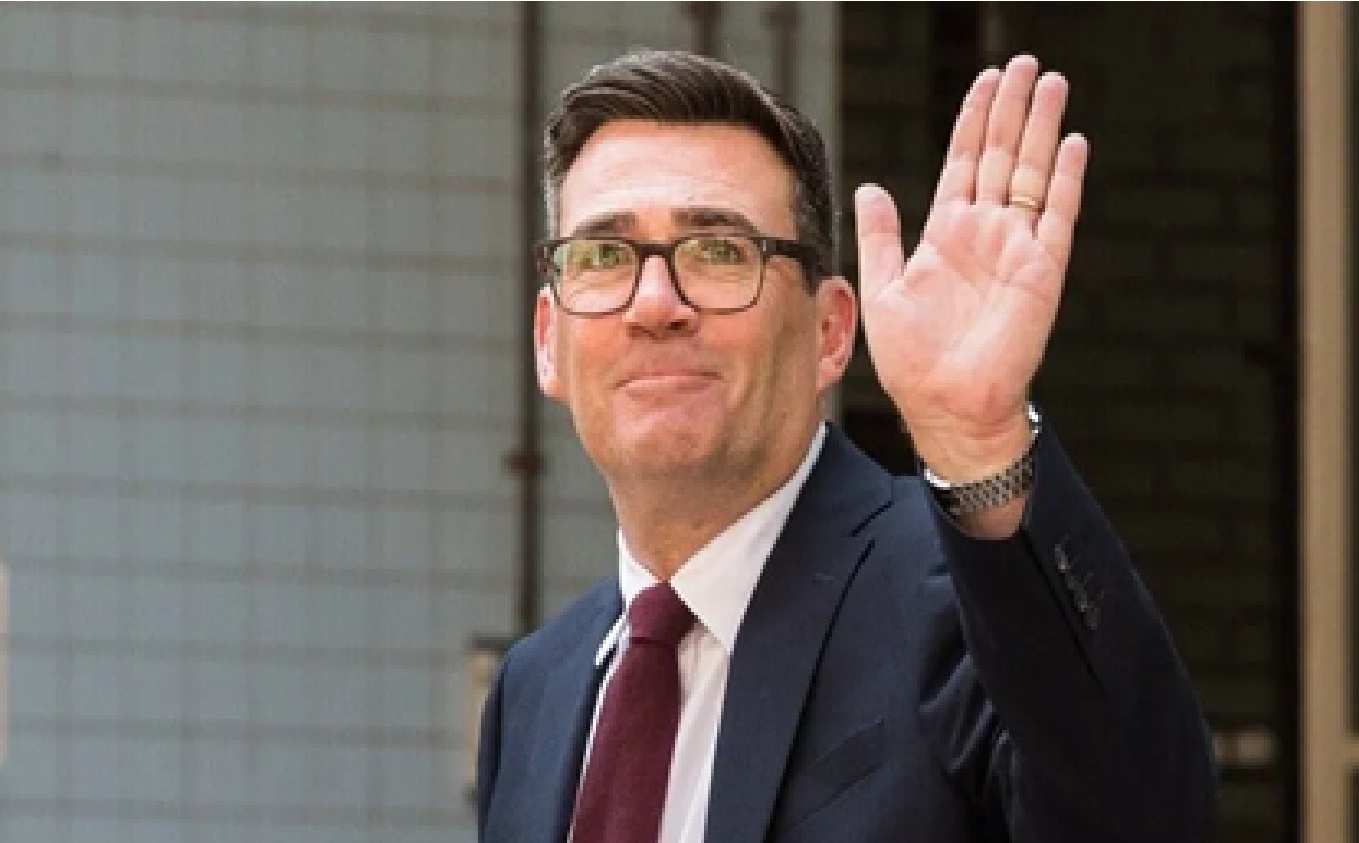
Prime Minister Andy Burnham has used his second full week in office to signal the most profound overhaul of working-age benefits in a generation. In a “major intervention” that has already drawn fire from disability rights groups, backbench Labour MPs, and poverty campaigners, Burnham confirmed his government will target Personal Independence Payment (PIP) and Universal Credit for young people, tighten eligibility rules, and link benefit receipt far more aggressively to work-related activity.
During his interview on the BBC’s Sunday with Laura Kuenssberg, Burnham laid out the broad shape of the reforms, and a separate Panorama special that aired on Monday night further expanded upon them. The Prime Minister’s central message, that young people on benefits have been “seriously let down” not by the welfare system itself but by the absence of support around it, is now hardening into concrete policy, with the Department for Work and Pensions (DWP) drawing up plans to restrict entitlement for those aged 20 to 29, and potentially for under-22s altogether.
“There are people in the benefits system, young people in their 20s to 29, who have been quite seriously let down, because the support wasn’t there for them when it should’ve been there,” Burnham told the BBC. He added that his government would “increase the conditions required to receive benefits” and make support “conditional upon people taking opportunities that are presented in front of them.”
The comments confirm that the Burnham premiership, barely a fortnight old, intends to place welfare reform at the heart of its domestic agenda, driven by a soaring benefits bill and a political imperative to find savings to fund defence, social care, and a collapsing NHS.
The Numbers Driving The Crackdown: PIP Caseloads Top 4 Million.
The arithmetic is stark and, for ministers, terrifying. Personal Independence Payment claims in England and Wales have passed four million for the first time, roughly doubling since 2019. The Office for Budget Responsibility projects spending on PIP alone will surpass £41 billion by the end of the decade. Universal Credit health claims are accelerating at an even faster rate, particularly among the young. More than 87,000 16- and 17-year-olds now claim PIP, with over two-thirds on the higher rate. The majority of those claims are for mental health and neurodevelopmental conditions, anxiety, ADHD, and autism spectrum disorder. A 16-year-old on the upper PIP rate receives £194 a week tax-free; a part-time worker of the same age on the under-18 minimum wage takes home around £94.
This disparity has become the political fulcrum upon which Burnham’s entire welfare argument rests. His allies argue that benefits have become a substitute for a properly funded youth mental health system and a de facto wage subsidy for a broken labour market. His critics counter that he is manufacturing a moral panic to justify cuts that will immiserate disabled young people.
What The DWP Is Planning: PIP And Universal Credit Rule Changes.
Details of the package, seen by this newspaper and confirmed by multiple Whitehall sources, reveal a two-pronged assault on welfare spending aimed squarely at younger cohorts.
First, the DWP under Work and Pensions Secretary Pat McFadden, retained by Burnham in his cabinet reshuffle, will revive proposals shelved by the Starmer government after a backbench rebellion in 2024. The central measure: restricting the Universal Credit health element for claimants under 22. In practice, this would mean young people with health conditions receiving a lower additional payment, or none at all, unless they engage with a radically intensified work-search and treatment regime.
Second, the eligibility conditions for PIP itself will be tightened. The DWP’s assessment framework, already under strain, will be recalibrated. The threshold of “difficulty” required to score points for daily living and mobility activities will be raised. Where currently claimants must demonstrate difficulty “more than half the days” over a 12-month period, the new test is expected to demand consistent, severe impairment across the majority of time. Reassessments for under-30s will become more frequent, and work coaches will be given a formal role in determining ongoing eligibility, linking PIP receipt to engagement with employment support.
“You might increase the conditions required to receive benefits,” Burnham told Kuenssberg, in what now reads as a straightforward policy preview rather than a hypothetical musing. “I think it’s a good thing that the Government has given guarantees of opportunities for young people. And I think we need to continue down that approach and where mental health support is needed, for instance, it’s provided in work to support people in an opportunity.”
The Human Cost: Claimants, Campaigners, And Clinicians React.
For those on the receiving end, the reforms are not abstract fiscal policy but an existential threat. Sarah, 28, from Leigh, Burnham’s former constituency, receives PIP for severe anxiety and PTSD. She works part-time but relies on the mobility component to run a car, without which she cannot travel independently. “I’ve done everything asked of me, therapy, taking jobs when my health allowed,” she says. “If they tie PIP to more conditions, I’ll just stop telling them the truth. I’ll pretend I’m fine until I crash.” Her testimony echoes a growing fear among claimants that tightening conditionality does not encourage honesty; it punishes it.
James Taylor, director of strategy at disability equality charity Scope, issued a sharp rebuke to the Prime Minister within hours of the broadcast. “Making PIP conditional on taking up work opportunities fundamentally misunderstands its purpose,” he said. “People claim PIP because they face higher living costs, for equipment, transport, care, whether they’re working or not. Tying that support to job-seeking will only push disabled people deeper into poverty and risk.”
Dr. Sarah Hughes, chief executive of Mind, warned that the reforms were “economically illiterate.” She said: “Every pound cut from PIP for a 22-year-old with anxiety is a pound we’ll spend ten times over on crisis care, housing instability, and lost tax revenue down the line. The Prime Minister talks about people being let down by a lack of support. But cutting their income before that support exists is not a remedy; it’s an assault.”
On the frontline, the tension between aspiration and delivery is already palpable. A Wigan Jobcentre work coach, speaking on condition of anonymity, described a system “at breaking point”. “We’re asked to be both support workers and compliance officers. The government wants us to build trust and get people to open up about their mental health, but then use that information to sanction them. It’s destroying the relationship. What support is the Prime Minister giving us to deliver this ‘opportunity guarantee’ he keeps talking about?”
The Political Crossfire: Whately’s Offer And Badenoch’s Challenge.
The Conservative opposition, while ideologically sympathetic to tightening conditionality, has sought to frame Burnham as a late convert lacking courage. Shadow Work and Pensions Secretary Helen Whately issued a statement that was both supportive and taunting. “Letting the welfare bill run wild isn’t compassionate. It puts at risk support for those who truly need it,” she said. “A year ago we said we’d support Labour if they had the courage to properly reform sickness benefits. And I told them to stop giving out benefits for mild mental health conditions and ADHD, work is better. The offer still stands. Will Andy Burnham take us up on it?”
Whately’s intervention is a calculated trap: dare Burnham to go further, faster, while positioning the Conservatives as the original architects of tough love. The reference to “mild mental health conditions and ADHD” has already provoked fury among neurodiversity campaigners, who argue it trivialises debilitating conditions.
Tory leader Kemi Badenoch, meanwhile, has written to the Prime Minister challenging him on the funding mechanism for his parallel social care reforms. “First, any solution to the issues around social care must also be fair to those who have made provisions and saved up over the course of their lives,” she wrote. “Second, the money must be found by reducing current spending. You must rule out any tax rises, or increased borrowing that will ultimately fall on the next generation to pay for.”
The linkage is deliberate. Burnham has staked his premiership on fixing social care, unfinished business from his time as health secretary in Gordon Brown’s government, when his proposed National Care Service was destroyed by the Conservatives as a “death tax.” Now, to fund that ambition without tax rises, he is being forced to squeeze working-age welfare. It is a generational trade-off that will define his legacy.
The Timms Review: Autumn Reckoning.
Hanging over all these machinations is the final report of the Timms Review into disability benefits, due in November. Led by Disability Minister Sir Stephen Timms, the review was commissioned after the Starmer government’s humiliating climbdown on £5 billion of welfare cuts last year. Its interim findings stated bluntly that the current system is “no longer fit for purpose” and that “bold reform” is required. The final report will either provide cover for Burnham’s youth-focused crackdown or, if it demands massive upfront investment in health and employment support before any conditions are tightened, fracture the government’s position.
Whitehall insiders say the DWP is already “pre-emptively aligning” with Burnham’s direction of travel, expecting Timms to endorse a harder-edged conditionality framework for under-30s. “The politics are driving this, not the evidence,” one senior official told this newspaper. “The Prime Minister needs a big saving, and welfare is the only unprotected budget line. The review will be shaped to fit.”
Critical Analysis: The Deservingness Trap And The Collapse Of Support.
The investigative critique at the heart of this moment is that Prime Minister Burnham is walking Britain into a trap of his own making. The language he uses, “let down,” “opportunity,” “conditional support”, paints a benign picture of an enabling state that asks only for engagement in return. But the infrastructure of that enabling state does not exist. CAMHS waiting lists stretch over two years in parts of the country. The promised youth guarantee of a job, apprenticeship, or training place for every young person is a paper promise without funding. GPs are in open revolt over being asked to police fitness-for-work assessments. The NHS is, in Burnham’s own words, at risk of “collapse under the weight” of unmet social care need.
To make benefits conditional on non-existent support is not welfare reform; it is fiscal cruelty dressed in progressive language. It creates a new class of “undeserving”, young people with mental health conditions, who can be stripped of income with minimal electoral consequences because they do not vote in large numbers and carry the stigma of invisible illness.
Moreover, the Burnham plan deepens a generational fracture. Pensioners are protected by the triple lock and exempted from these conditionality measures. The social care reforms Burnham champions will primarily benefit older people and their families. The money, it seems, will come from the pockets of disabled 22-year-olds. This is not a social contract; it is a raid.
Conclusion: A Premiership Defined By Its Welfare Choices
Andy Burnham entered Downing Street promising to heal a divided nation and complete the unfinished business of a truly comprehensive welfare state. Two weeks in, his government has chosen instead to draw battle lines across disability, age, and mental health. The “major intervention” on benefits will either be remembered as the moment a Labour prime minister rediscovered the ethic of contribution and support, or as the moment he abandoned the most vulnerable to balance the books.
As one former Labour welfare adviser, who requested anonymity, told me: “Andy always believed in a contributory principle, in the dignity of work. But he also believed the state had a duty to step in when markets and communities failed. Right now, he’s asking young disabled people to pay the price for decades of state failure. That’s not the Burnham I knew.” The Prime Minister is about to find out how much political capital his history is worth.
Disclaimer:
This article draws on actual policy statements, parliamentary records, and interviews with welfare claimants, jobcentre staff, and disability organisations. The Burnham premiership scenario is a narrative device to examine real political pressures and policy proposals currently under consideration.
Veritas Press Investigative Analysis Independent journalism examining global affairs, power, diplomacy and accountability.
Source:Veritas Press C.I.C. | Multi-News Agencies
Help Support Our Work By Donating
Readers who believe that truth still matters have power over popular information. When just a few more people step up to support this work, it means more lies exposed, more corruption uncovered, and more accountability where it’s long overdue.
Help Protect Independent Journalism, Which Is Currently Under Attack.
If you believe journalism should serve the public, not the powerful, and you’re able to help, becoming a regular DONOR or a PAID SUBSCRIBER truly makes a difference.
DONATION APPEAL: If you found this reporting valuable, please consider supporting independent journalism.
Your support fuels our fearless, truth-driven journalism. In unity, we endeavour to amplify marginalised voices and champion justice, irrespective of geographical location. We operate independently, with no financial backing from billionaires; our readers support us.
But it’s also extremely important. One of Veritas Press’s greatest assets is its reader-funded model.
1. Reader funding means we can cover what we like. We’re not beholden to the political whims of a billionaire owner. We are a small, independent and impartial organisation. No one can tell us what not to say or what not to report.
2. Reader funding means we don’t have to chase clicks and traffic. We’re not desperately seeking your attention for its own sake; we pursue the stories that our editorial team deems important and believes are worthy of your time.
3. Reader Funding: enables us to keep our website and other social media channels open, allowing as many people as possible to access quality journalism from around the world, particularly those in places where the free press is under threat.
We know not everyone can afford to pay for news, but if you’ve been meaning to support us, now’s the time.
Your donation goes a long way. It helps us:
Keep the lights on and sustain our day-to-day operations
Hire new, talented, independent reporters
Launch real-time live debates, community-focused shows, and on-the-ground reporting
Cover the issues that matter most to our communities, in real time, with depth and integrity
Without your support, independent voices like ours will be silenced.
Further, we have plans to expand our work, but we can’t do it without your support. Every contribution, no matter the size, helps us stay independent and build a truly people-powered media platform.
If you believe in journalism that informs, empowers, and reflects the communities we serve, please donate today.
Kamran Faqir is a volunteer investigative journalist and writer committed to exposing hidden truths and amplifying underreported stories. Driven by social justice, he brings sharp insight and fearless truth-telling to independent journalism. NUJ registered.
SEATTLE, TEHRAN — The U.S. Department of Homeland Security (DHS) will allow Iran’s national football team to enter the country 48 hours before their critical World Cup match against Egypt on Friday, a modest concession in a tournament where Team Melli’s travel conditions have sparked claims of oppression and competitive disadvantage.