Kamran Faqir is a volunteer investigative journalist and writer committed to exposing hidden truths and amplifying underreported stories. Driven by social justice, he brings sharp insight and fearless truth-telling to independent journalism. NUJ registered.
Original Article Date Published:
Article Date Modified:
34 minutes
Views:407
Listen to this article
Help support our mission, donate today and be the change. Every contribution goes directly toward driving real impact for the cause we believe in.
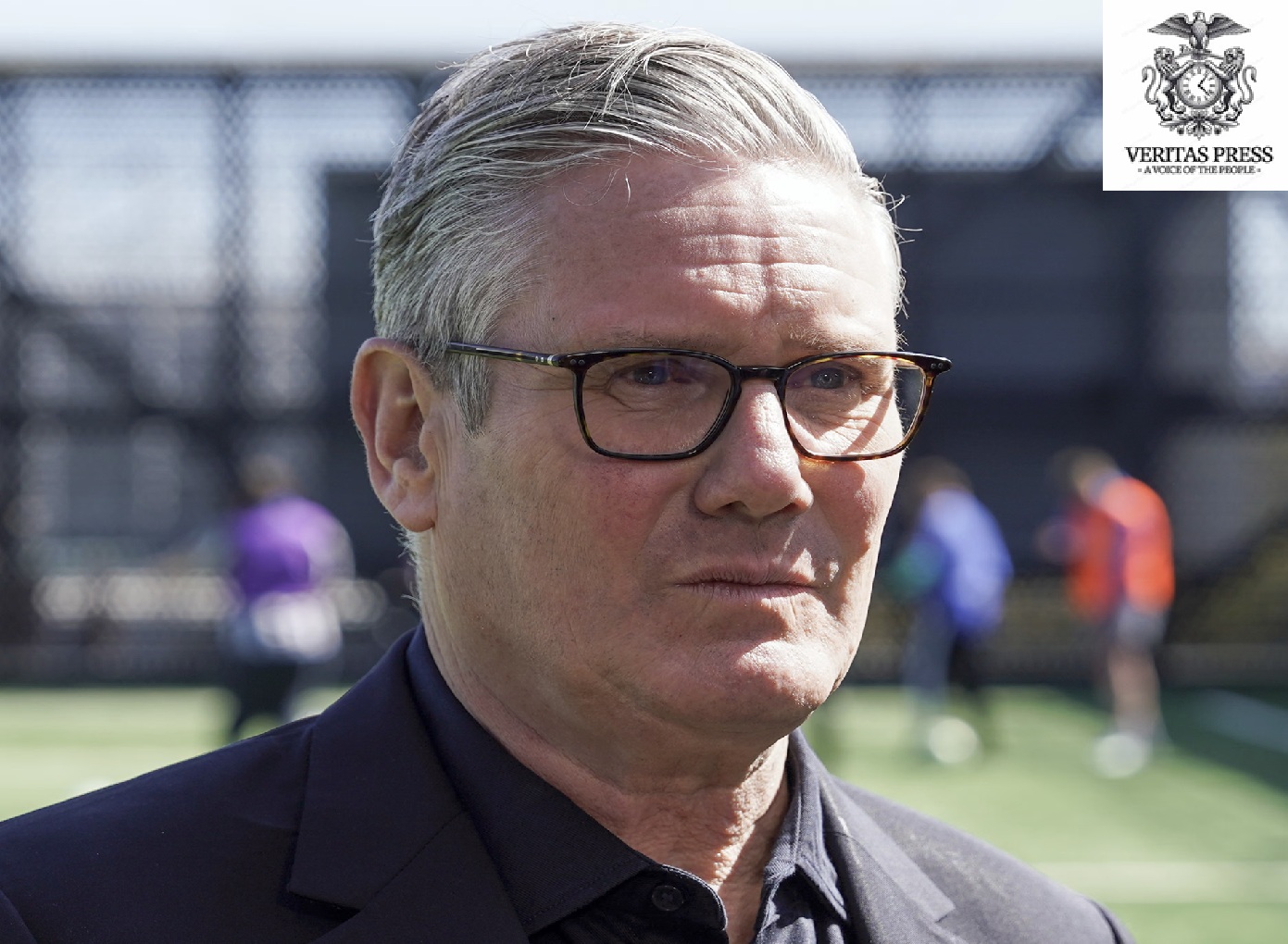
LONDON, UK – Beneath the looming clock face of Big Ben, the House of Commons descended into political theatre of the highest order. At its centre stood Prime Minister Sir Keir Starmer, a man who rose to power on a solemn promise to “restore honesty and integrity to government,” now battling to sustain what remains of his rapidly evaporating authority. Those seated in the gallery could feel the tension almost physically, a chamber bristling with hostility, with Starmer constantly on the ropes, rising repeatedly to defend himself at the despatch box amid all-round jeers.
The spectacle reached its nadir when two MPs, one from Reform UK, the other from a left-wing party, were ceremoniously ordered out of the chamber after accusing the prime minister of blatant lying and refusing to withdraw their statements. Speaker Lindsay Hoyle’s patience snapped in a rare and dramatic intervention that underlined the chaos consuming Westminster.
This was not meant to be the story of Starmer’s premiership. Yet here, less than two years after Labour’s historic return to power, the Prime Minister finds himself ensnared in a scandal of labyrinthine complexity, part security breach, part political cover-up, part intergenerational Labour Party psychodrama. At its centre is a figure who has haunted British politics for three decades: Peter Mandelson, the so-called “Prince of Darkness,” whose appointment as Britain’s ambassador to Washington has become, in the words of one Labour MP, “a horror film for Sir Keir Starmer, stuck on repeat.”
What follows is a deep investigative anatomy of a scandal that has not merely wounded a prime minister but exposed fundamental fractures in British governance: the collapse of Cabinet collective responsibility, the fraying of trust between ministers and civil servants, the hollowing-out of Downing Street decision-making into a closed circle of acolytes, and the reckoning of a political leader whose judgment, once his primary asset, now lies at the centre of every question.
Part I: The Appointment That Should Never Have Been
A “Weirdly Rushed” Process
To understand the crisis that now threatens to end Keir Starmer’s premiership, one must return to December 2024. Donald Trump was weeks away from inauguration. The UK’s most prestigious and consequential diplomatic posting, ambassador to Washington, charged with nurturing the so-called “special relationship”, required a figure of stature and experience.
Two previous shortlists, one compiled by Starmer’s predecessor Rishi Sunak, another by his first chief of staff Sue Gray, had been torn up. Into the void stepped Peter Mandelson, the 71-year-old co-architect of New Labour, twice forced to resign from Cabinet under Tony Blair over minor scandals involving questionable associates, a man whose name had long been synonymous with behind-the-scenes machination.
The appointment was hailed at the time as a political masterstroke, placing a veteran operator with deep trade experience at the heart of the US-UK relationship. But documents released in March 2026 would later reveal the raw politics that greased the wheels. Starmer’s own national security adviser, Jonathan Powell, described the process as “weirdly rushed.” Powell had raised concerns directly with Starmer’s then-chief of staff, Morgan McSweeney, both “about the individual and reputation.”
On 11 December 2024, an advisory note sent to the Prime Minister warned that a 2009 report commissioned by JPMorgan had found Mandelson maintained “a particularly close relationship” with Epstein even after Epstein’s conviction for soliciting prostitution from a minor. The same briefing informed Starmer that government records were likely to surface showing Mandelson had facilitated a meeting between former Prime Minister Tony Blair and Epstein. Nine days later, Mandelson was confirmed as ambassador.
A separate due diligence document, labelled “Advice to the prime minister, checks conducted on 4 December, 2024”, laid out in stark terms the reputational risk. It noted that Mandelson and Epstein were in contact after the latter’s 2008 conviction for sex crimes, including soliciting a minor, with their relationship “continued across 2009-2011.” It also noted that Mandelson had “reportedly stayed in Epstein’s house while he was in jail in June 2009.”
There is no “smoking gun” showing Starmer knew the full depth of Mandelson’s ties to Epstein. But the question, as Politico’s analysis incisively framed it, “has always been whether he should have taken a different course, given what he did know.” The process may have existed, but the final call was political and rested on the PM’s personal judgment.
“He Lied Repeatedly”
Mandelson took up his post in February 2025. Seven months later, in September, he was sacked. A trove of Epstein files released by the US Department of Justice had revealed the depth of the relationship: emails and photos suggesting Mandelson stayed in Epstein’s New York apartment while the financier was serving his prison sentence; documents appearing to show Mandelson leaked sensitive government information to Epstein while serving as Business Secretary during the 2008 financial crash; evidence that Mandelson had encouraged Epstein to fight for early release from prison.
At Prime Minister’s Questions in February 2026, Starmer confirmed for the first time that he knew about Mandelson’s ongoing relationship with Epstein before the appointment, but insisted Mandelson had “lied repeatedly” about the extent of his contact with the convicted sex offender.
“He lied repeatedly to my team when asked about his relationship with Epstein before and during his tenure as ambassador,” Starmer told the Commons. “I regret appointing him. If I knew then what I know now, he would never have been anywhere near government.”
The prime minister went further: “He betrayed our country, our parliament and my party.”
But the admission raised more questions than it answered. If Starmer knew the broad contours of Mandelson’s relationship with Epstein, as he now acknowledged, why had he pressed ahead? What did the “due diligence” process actually reveal, and who had seen it?
Mandelson, for his part, resigned his Labour Party membership on 1 February, saying he did not want to “cause further embarrassment.” Police opened an investigation into allegations of misconduct in public office. Mandelson was arrested and released on bail in February; he has not been charged and denies criminal wrongdoing. Through his lawyers, he has insisted he answered questions about his relationship with Epstein accurately during the vetting process.
Part II: The Bomb That Detonated Last Week.
The Guardian Revelation
For months after Mandelson’s sacking, the political storm appeared to have subsided, or at least to have reached a manageable simmer. Starmer had weathered calls for his resignation in February. Two of his top political aides, including chief of staff Morgan McSweeney, had resigned over their roles in the crisis.
Then, on Thursday, 16 April 2026, the Guardian published a story that detonated beneath Downing Street: Peter Mandelson had failed his security vetting, UK Security Vetting (UKSV) had recommended against granting him developed vetting clearance, but the Foreign Office had overruled that recommendation and granted clearance anyway.
The BBC’s political editor, Chris Mason, described the extraordinary hours that followed. He made immediate calls to the Foreign Office, Downing Street, the then-Foreign Secretary David Lammy’s team, and the Cabinet Office. “None of them engaged for nearly three hours. Usually, when a story isn’t right or has perhaps leapt to conclusions seen to be unreasonable, my phone will be ringing in seconds. But it didn’t.”
The silence spoke volumes. Opposition parties quickly concluded there must be substance to the Guardian’s claims. One after another, they appeared in front of cameras to assert that the prime minister had misled the House of Commons, and that if he had done so knowingly, he would have to resign.
The Sacking Of Sir Olly Robbins:
Starmer’s response was swift and brutal. Within hours, he sacked Sir Olly Robbins, the most senior civil servant at the Foreign Office, the permanent under-secretary who had overseen the Mandelson vetting process. The official reason: Robbins had failed to inform the Prime Minister that UKSV had recommended against granting Mandelson security clearance.
In a statement to the Commons the following Monday, Starmer gave his version of events with unmistakable fury:
“The fact that I wasn’t told that Peter Mandelson had failed his security vetting when he was appointed is astonishing. The fact that I wasn’t told when I said to Parliament that due process had been followed is unforgivable.”
He added: “Not only was I not told, no minister was told, and I’m absolutely furious about that.”
But Robbins’ allies immediately pushed back, arguing that the former permanent secretary was being used as a scapegoat, and that the rules governing the confidential vetting system did not permit him to share its conclusions with ministers.
Lord Sedwill, who served as head of the civil service and National Security Adviser from 2018 to 2020, wrote to The Times urging the prime minister to “retract his accusations” against Robbins and reinstate him. “He made the professional judgment that they could. Unwisely as it turned out, he shouldered his responsibilities rather than shunting them.”
The sacking sent what Dave Penman, head of the FDA trade union representing civil servants, described as “a real chill throughout the civil service.” He told BBC Newsnight: “I think the prime minister is losing the ability to work with the civil service. Who in the civil service would now think they would be immune from being dismissed when it is politically expedient?”
Part III: Robbins Strikes Back
“An Atmosphere of Constant Chasing”
On Tuesday, 21 April, Sir Olly Robbins appeared before the Commons Foreign Affairs Committee. His voice at one point cracking under emotional strain, he delivered nearly two-and-a-half hours of evidence that one BBC analysis described as “at times devastating.”
The core of his testimony was explosive: Downing Street had created an “atmosphere of pressure” around Mandelson’s appointment. There was a “very, very strong expectation coming from Number 10 that he needed to be in post and in America as quickly as humanly possible.”
Robbins elaborated: “I think throughout January (2025), honestly, my office, the foreign secretary’s office, was under constant pressure. There was an atmosphere of constant chasing.” He recalled “frequent phone calls” from Starmer’s private office. The message from No 10, he said pointedly, “wasn’t just, ‘Please get it done quickly,’ it was, ‘And get it done.’”
He described “a generally dismissive attitude toward the security vetting process” within Downing Street’s approach.
Robbins confirmed what had by then become a central element of Starmer’s defence: that the prime minister himself had not been told about UKSV’s recommendation. But he also revealed that No 10’s private office acted as a “vector” for those around Starmer, calling “frequently” to push the issue. He declined to comment on reports that the PM’s then-chief of staff, Morgan McSweeney, had told his predecessor to “just fucking approve it.”
In a remarkable new disclosure, Robbins also told the committee that Downing Street had separately attempted to install Starmer’s former director of communications, Matthew Doyle, himself controversially made a peer, in a diplomatic post. Robbins had refused.
On the specifics of Mandelson’s vetting, Robbins offered a more nuanced picture than the simple “fail” narrative. He said he had been briefed verbally that UKSV considered Mandelson’s case “borderline” and was “leaning towards recommending that clearance be denied”, but that the Foreign Office security department had assessed “that the risks could be managed and/or mitigated.” Robbins insisted that the concerns raised did not relate to Mandelson’s relationship with Jeffrey Epstein, but rather, according to UK media reports, to the links of Mandelson’s now-shuttered lobbying firm to Chinese companies.
The Contradiction At The Heart Of The Crisis:
Here lies the central, and still unresolved, contradiction of the scandal.
Starmer’s position: No 10 applied no improper pressure; Robbins made a serious error of judgment in granting clearance against UKSV’s recommendation and compounded it by failing to inform the Prime Minister.
Robbins’ position: No 10 applied relentless pressure to expedite the appointment and displayed dismissiveness toward security concerns, but the decision to grant clearance was taken independently and properly, and he could not inform ministers because of the confidentiality of the vetting process.
Both cannot be entirely true. And it is this irreconcilable conflict that has drawn the attention of Parliament’s most formidable disciplinary mechanism.
Part IV: The Case For Contempt
Karl Turner’s Intervention
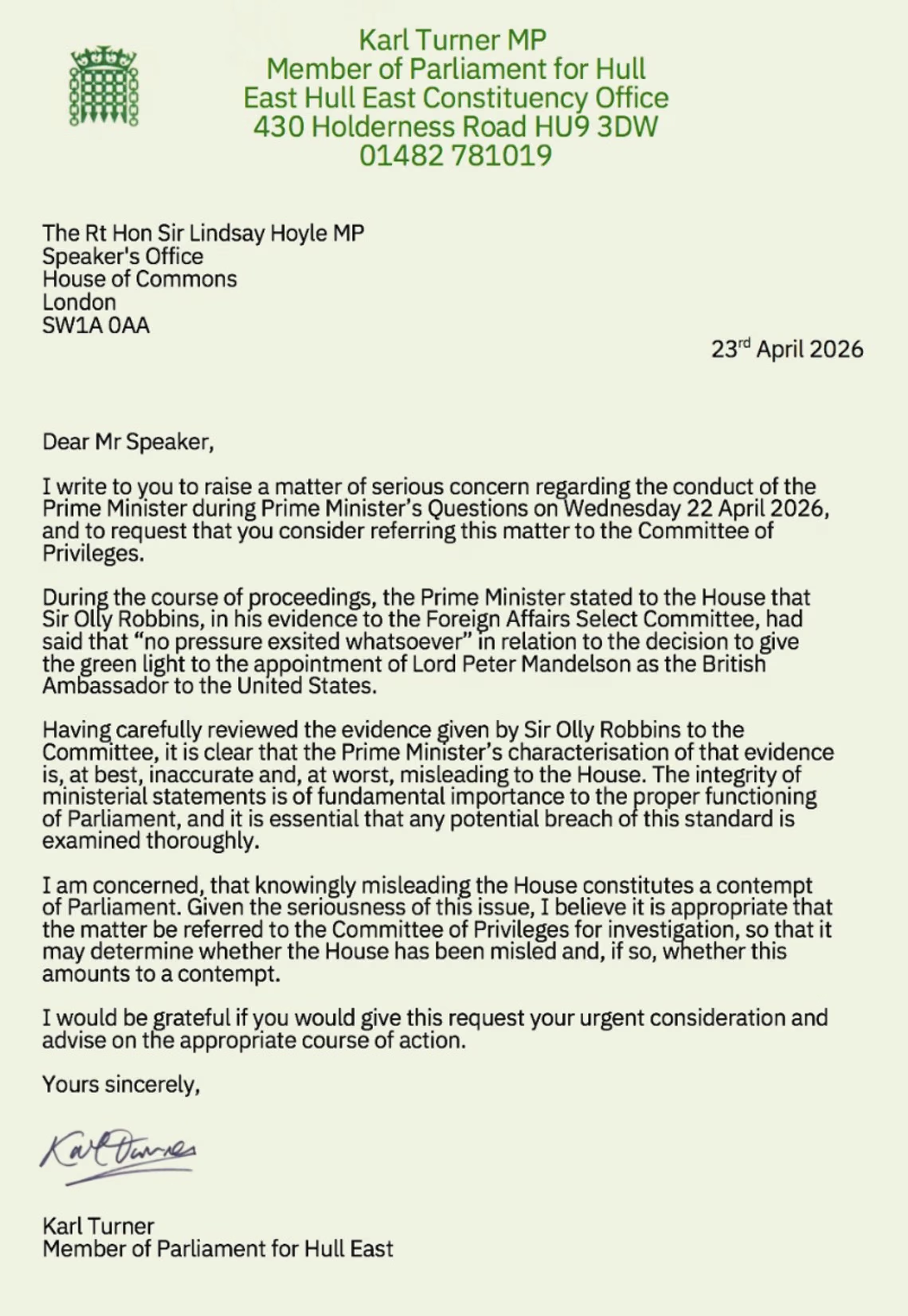
On Wednesday, 23 April, the crisis entered a new and perilous phase for the Prime Minister. Karl Turner, a suspended Labour MP who lost the whip last month after a series of interventions criticising Starmer and No 10, wrote to Commons Speaker Sir Lindsay Hoyle urging him to refer Starmer to the Committee of Privileges.
The same committee that found Boris Johnson had deliberately misled Parliament over the Downing Street partygate scandal, the finding that ultimately forced Johnson to resign as an MP.
Karl Turner’s letter to the speaker. Photograph: Karl Turner
Turner’s letter, briefly posted on X before being deleted in what he later called an “administrative error,” was meticulously argued. He compared Starmer’s statements at Prime Minister’s Questions with the verbatim record of Robbins’ evidence and found a potentially damning discrepancy.
At PMQs on Wednesday, Starmer had quoted Robbins to claim: “No pressure existed whatsoever in relation to this case.”
But the official transcript of Robbins’ testimony shows he actually said: “Officials will have been very aware of the pressure. I also have complete confidence that their recommendations to me and the discussion we had and the decision we made were rigorously independent of that pressure.”
The distinction is critical. Robbins did not deny the existence of pressure; he explicitly acknowledged it. He claimed only that the decision-making remained independent despite the pressure. Starmer’s characterisation that “no pressure existed whatsoever” appears, on the face of the record, to misrepresent what Robbins actually said.
“Having carefully reviewed the evidence given by Sir Olly Robbins to the committee, it is clear that the Prime Minister’s characterisation of that evidence is, at best, inaccurate and, at worst, misleading to the House,” Turner wrote.
“Given the seriousness of the issue, I believe it is appropriate that the matter be referred to the committee of privileges for investigation, so that it may determine whether the House has been misled and, if so, whether this amounts to a contempt.”
Turner followed up with a statement on X: “Let me be clear, I’m not accusing the PM of deliberately misleading the House of Commons. However, there are evident inconsistencies between statements made during PMQs and the evidence given by Oliver Robbins.”
A Coalition Of Opposition:
Turner is not alone. The Conservatives, with the backing of the Liberal Democrats and the SNP, are actively exploring a Johnson-style motion that would allow all MPs to vote on whether the Privileges Committee should investigate Starmer.
The shadow chancellor, Mel Stride, told GB News on Thursday: “Our belief is that the prime minister has misled parliament, because what he’s said in parliament is that pressure was not applied, and he’s been contradicted by Olly Robbins.”
During Cabinet Office questions, shadow Cabinet Office minister Alex Burghart pressed the case: “Yesterday the prime minister also told the house Sir Olly was absolutely clear that nobody put pressure on him to make this appointment, but this is not what Sir Olly said to the committee.”
Liberal Democrat leader Sir Ed Davey has been among the most forceful voices. “We need to get to the bottom of exactly what Keir Starmer knew when, and whether he intentionally misled parliament over this appalling scandal. The public deserves the truth, not another cover-up.” Davey has also called for an investigation by both the Privileges Committee and the government’s independent ethics adviser.
Conservative leader Kemi Badenoch has been unequivocal. In an emergency debate in the Commons on Tuesday, she told MPs:
“This whole affair just goes to show why this country is heading in such a woeful direction under the prime minister’s incurious regime… His defence yesterday summed it up. He says that no one told him that he never thought to ask.”
She continued: “The first duty of any prime minister is to keep this country safe. This prime minister has put the country’s national security at risk. He must take responsibility. It is time for him to go.”
Later, Badenoch added a new dimension to the critique, revealing that Mandelson “remained on the board of a Kremlin-linked defence company long after Putin’s first invasion of Ukraine in 2014,” demanding to know why Starmer had wanted “to make a man with links to the Kremlin our ambassador in Washington.”
Part V: The Cabinet Fractures
Public Distancing, Private Alarm
For any prime minister, Cabinet unity is both a constitutional shield and a political necessity. History teaches that once senior ministers begin to qualify their support, a leader’s departure becomes a matter of time.
The past week has produced a cascade of such qualifications.
Ed Miliband, the Energy Secretary and former Labour leader, publicly admitted he had opposed Mandelson’s appointment from the start. Asked what he had thought at the time, Miliband told Sky News: “That it could blow up, that it could go wrong. I had a conversation with David Lammy about it before the appointment, and I said I was worried about it. I think he was worried about it too.”
He added, with what read as deliberate distance from the Prime Minister: “I steered well clear of Peter Mandelson when I became Labour leader in 2010.”
Yvette Cooper, the Foreign Secretary, was careful to note she was not running the Foreign Office when the seeds of the Mandelson saga were sown, and expressed she was “extremely concerned” about the revelation that No 10’s private office had sought a diplomatic posting for Matthew Doyle.
Pat McFadden, the Work and Pensions Secretary and usually a reliable defender on the morning broadcast round, repeatedly refused to say the sacking of Olly Robbins was “fair.” Pressed on Times Radio, he would only respond: “It’s the prime minister’s judgment.” Asked about the Doyle revelation, he did not pull punches: “I don’t think that would have been the right thing to do. I don’t think he was appropriate to be appointed as an ambassador.”
A Cabinet minister told The i Paper that the entire cabinet would collectively be needed to depose the Prime Minister, describing the situation as “bleak.” POLITICO’s analysis noted that “Starmer’s ministers have failed to offer their resolute support” at every turn, from the initial appointment decision to the snap sacking of Robbins.
The Rayner Question:
Perhaps most tellingly, Deputy Prime Minister Angela Rayner, long seen as a potential successor and a barometer of internal party sentiment, stopped short of directly criticising Starmer at an event last week, but insisted the country “has bigger problems than chaos over Mandelson’s appointment.”
Welsh Labour MPs have been more explicit. One unnamed MP told BBC Wales: “Starmer has to go, do the decent thing. Angela Rayner is probably leading a revolt, but she is not the solution.” Another described “a dire situation,” adding that Starmer should stay but sack his chief of staff, Morgan McSweeney, whom many accuse of poor advice.
Part VI: The Labour Backbench Revolt
“It’s Not a Case of If, It’s When”
The most dangerous development for the Prime Minister is not the opposition’s attacks but the crumbling of support within his own parliamentary party.
Graham Stringer, a veteran Labour MP, used an appearance on GB News to deliver a devastating assessment. “I don’t think the Prime Minister can survive for the rest of this parliament, which is the real issue here.” He called for Starmer to “announce a timetable” for his resignation, arguing that a planned, dignified exit would allow Labour to properly debate its future direction and select a new leader.
Stringer pointed to 18 government U-turns as evidence of dysfunction. “Nothing wrong with a U-turn if you make a mistake and you realise the mistake. But 18 mistakes that have needed rectifying are the hallmark of a Government that doesn’t know what it’s doing and a leadership that is not leading.”
Jonathan Brash, Labour MP for Hartlepool, Mandelson’s former seat, told GB News: “I’ve got to be clear, I am completely fed up to the back teeth of this psychodrama in Westminster, the own goals that are coming from the heart of this government.” He continued: “It’s not a case of if, it’s when. I genuinely think that as far as the prime minister is concerned, it’s not a case of if, it’s when.”
Brash’s frustration was palpable: “You’ve got fantastic Labour councillors, canvassers, activists up and down the country, working hard and delivering for their constituencies, like mine in Hartlepool, facing local elections in the shadow of this absolute mess. They just need to get a grip.”
Dan Carden, a senior Labour MP, pointedly refused to say he had confidence in the Prime Minister during an appearance on BBC Newsnight.
Clive Lewis publicly called for Starmer to resign as far back as November 2025. Brian Leishman, Kim Johnson, Ian Byrne, Jon Trickett, Neil Duncan-Jordan, Rachael Maskell, and Richard Burgon all urged the PM to step down earlier this year.
The BBC’s political team canvassed Labour MPs and found a mood of deepening despair. “I think we’ve now reached the stage where the prime minister was blissfully unaware is a good explanation. That’s where we are,” reflected one. “Lost for words,” said another. “Surely the cabinet now sees it’s dead,” said a third, a long-standing critic of Downing Street, about the prime minister’s future, “implying he should not have much of one in office.”
One Labour MP told the Times that none of his colleagues “reasonably expects” Starmer to last until the next election.
Part VII: The Civil Service Evidence, Cat Little’s Testimony
“Due Process Was Followed”
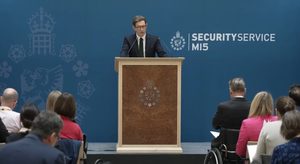
On Thursday, 23 April, the Foreign Affairs Committee heard from Cat Little, the permanent secretary at the Cabinet Office and the most senior civil servant responsible for the Mandelson document release process. Her testimony added new layers of complexity to an already tangled narrative.
In a direct challenge to the Prime Minister’s central claim, Little told the committee: “So my view is that due process was followed, and if I might explain why I believe that it is because the process, as I’ve outlined to the committee, is that UKSV make a recommendation and the Foreign Office make a decision as to whether to grant DV. That is the process, and that is the process that is agreed with the Foreign Office.”
This statement, from the Cabinet Office’s own permanent secretary, directly contradicts the narrative that the Mandelson vetting was an aberration, a rogue decision by a single official. It suggests instead that the system worked precisely as designed: UKSV recommended, and the Foreign Office decided.
Little also twice contradicted Starmer’s claim that he should have been told about the vetting outcome. She said she did not believe the Prime Minister had to be informed, adding that Robbins followed proper process.
The “Very Unusual” Document Request:
Perhaps most revealing was Little’s account of how she herself obtained the vetting information. She revealed that Robbins had refused to share vetting documents with her, forcing her to take what she described as “the very unusual judgment” of requesting information directly from UK Security Vetting. “I specifically ask to see this document and any decision-making audit trail around those judgments at the time. It was made clear to me that that information would not be forthcoming.”
Little had known about the sensitive information since 25 March, weeks before the Guardian story broke, and said she acted “as swiftly and effectively” as she could in informing the Prime Minister, but that it took time to get expert legal advice about how to handle such sensitive material.
The timeline is significant. It suggests the Cabinet Office knew about the vetting concerns for nearly a month before the Prime Minister was informed, and longer still before Parliament was told.
Part VIII: The Deep Structures Of The Crisis
A Closed Circle In Downing Street
Beyond the daily firestorms of PMQs and committee hearings, the Mandelson scandal has exposed structural weaknesses in how Starmer governs.
Three people close to the Downing Street operation told Reuters there had been “an over-reliance on a small group of trusted advisers that meant Starmer, who once vowed to ‘end the chaos of sleaze,’ had been blindsided by outside events and become detached from his party and the public.”
The sources, speaking on condition of anonymity, described how Starmer initially relied on a small group of trusted advisers who acted as “gatekeepers,” often deciding what he did or did not have time for. Many of those advisers have since left, most notably his chief of staff, Morgan McSweeney, a protégé of Mandelson who resigned in February under political pressure for his role in the appointment.
“Starmer presented himself as if he was going to be holier-than-thou and at least competent,” Chris Hopkins, political research director at polling firm Savanta, told Reuters. “When you lose what your main selling points are, you don’t have much left.”
The Independent’s i newspaper captured the paradox at the heart of Starmer’s defence: “Starmer may have acknowledged he made the ‘wrong’ judgment by choosing Lord Peter Mandelson as UK ambassador to the USA, but doubled down in his blame of civil servants for not informing him that Mandelson, twice forced to resign from the New Labour government, had not passed vetting.” The analysis was withering: “a lack of curiosity ain’t a good look for any prime minister.”
The Ministerial Code Question:
A further dimension concerns the Ministerial Code. Evidence shows that senior civil servants knew about Mandelson’s vetting failure in late March and informed Starmer’s aides weeks before he told MPs. Yet Starmer only learned of the issue on Tuesday, 15 April and did not update Parliament before PMQs the following day, as the Ministerial Code requires ministers to correct the record at the earliest opportunity. The delay has prompted accusations from figures including Kemi Badenoch and Liberal Democrat MP Lisa Smart that he breached the code, undermining public trust.
Part IX: The Opposition Piles On
Plaid Cymru, Reform UK, and the Nations
The crisis has rippled beyond Westminster, drawing in leaders from across the political spectrum and across the devolved nations.
Plaid Cymru’s parliamentary leader, Liz Saville Roberts, accused Starmer of “weak leadership and poor judgment.” She noted: “The prime minister could have come to the House on Monday to apologise and take responsibility. Instead, he sent the Chief Secretary to the Prime Minister to answer for a decision that was entirely his own, leaving it until Thursday before apologising. Claiming he was misled does not wash. Responsibility for senior appointments rests with him, and this failure of judgment strikes at the very heart of whether he can continue to lead.”
Plaid Cymru leader Rhun ap Iorwerth wrote to Welsh First Minister Eluned Morgan, calling on the Labour-led Welsh government to conduct an official audit to review the implications of Mandelson’s connections with Epstein on Wales.
Nigel Farage, speaking at a Reform UK event in South Wales, was characteristically blunt. He described watching Labour MPs during Starmer’s Commons statement: “There was almost no support for him at all. I even saw Labour MPs with their eyes shut, just sitting through it, saying to themselves, ‘please could this be over.’” Farage declared Starmer “deeply unloved by his own party” and “the most unpopular prime minister in modern times.” His prediction: “I very much doubt if he will be there in three or four months.”
The Welsh Labour Dimension:
First Minister Eluned Morgan, when asked if Starmer remained the right person to be prime minister, offered a notably qualified defence. She pointed to increased funding for Wales, the Wylfa nuclear development, and coal tip protections, things that “were not there under the Tory prime ministers we’ve had before.” But her answer conspicuously framed support in terms of outcomes rather than personal confidence in the Prime Minister’s leadership.
Part X: Starmer’s Defence
“Wrong, Wrong, Wrong”
Facing the gravest crisis of his premiership, Starmer has adopted a combative posture. At PMQs on Wednesday 22 April, he turned on Badenoch with unusual ferocity, enumerating what he said were her errors:
“She claimed on Friday that Mandelson could not have been cleared against security advice. She was wrong about that. She said that ministers must have been told. She was wrong about that. She claimed there was deliberate dishonesty. She was wrong about that. Wrong, wrong, wrong. She rushed to judgment, as she always does.”
In Newcastle on Thursday, during a visit to celebrate St George’s Day that had been overshadowed by the crisis, Starmer rejected calls to resign and dismissed reports of cabinet divisions. “Let me deal with the issue head-on, because last week my political opponents were saying it was inconceivable that a civil servant wouldn’t have provided the security vetting information to me. Turns out they were wrong about that. Then they accused me of dishonesty. Turns out they were wrong about that. Now my political opponents, by which I mean the Tories, Reform, and all those other parties, are going after any allegation they can.”
In an interview that afternoon, he sharpened the argument: “They are now putting any allegation they can, and I will tell you why, they are opposed politically to what this Government is trying to achieve.”
Starmer insisted that Robbins’ evidence had “put to bed all the allegations levelled at me” by confirming that the vetting recommendation “was not shared with me, Number 10 or any other ministers.”
Asked if he had considered quitting, he was unequivocal: “No.”
But Questions Multiply:
Starmer’s defence, however, rests on a narrow reading of Robbins’ testimony. It focuses on the single point, whether the prime minister personally knew about the UKSV recommendation, while deflecting from the wider allegations about the atmosphere his office created.
As the Observer noted in its analysis, “Both men have focused on questions of process, but what seems likely to stick in the public mind is the sense that Starmer and his team pushed for Mandelson despite clear potential for conflicts of interest because of his widely-reported commercial work, and despite his links with Jeffrey Epstein.”
Labour chair of the Foreign Affairs Committee, Dame Emily Thornberry, whose own position has been closely watched, said after Robbins’ hearing that she too had concluded it was right that he lost his job, providing some cover for No 10. But she also offered a potentially damaging assessment of the wider picture, noting that Downing Street’s desire to appoint Mandelson “was a priority that overrode everything else,” including national security.
Part XI: The Epstein Shadow
The Deeper Questions
The vetting process, however contested, is only one layer of a scandal that has inflicted profound damage on public confidence. Running beneath the procedural disputes is a deeper, more troubling question: why did Starmer choose a man with known, documented ties to a convicted sex offender for Britain’s most important diplomatic posting?
At PMQs in February, Starmer forcefully told the Commons that Mandelson “lied repeatedly” and “betrayed our country.” He agreed with the King that Mandelson should be removed as a privy councillor. He said an investigation was underway into whether Mandelson leaked market-sensitive information to Epstein during the 2008 financial crash.
But critics have noted an uncomfortable paradox: Starmer’s own due diligence report, received on 4 December 2024, warned of “general reputational risk” from Mandelson’s Epstein ties. The Prime Minister acknowledged he knew Mandelson and Epstein remained in contact after the latter’s 2008 conviction. The question Badenoch posed has not been satisfactorily answered: if you knew this much, why didn’t you ask harder questions?
Labour veteran Diane Abbott crystallised the point in the Commons: “Peter Mandelson has a history. What this House wants to know is why, knowing Peter Mandelson’s history, going back 30 years… It’s one thing to say, as he insists on saying, ‘Nobody told me. Nobody told me anything, nobody told me.’ The question is, why didn’t the Prime Minister ask?”
Part XII: The Looming Reckoning
7 May Elections
All of this is unfolding against the backdrop of local and devolved elections on 7 May 2026, effectively Starmer’s mid-term test. Labour is bracing for heavy losses, with Reform UK and the Greens targeting significant gains. In areas like Tyne and Wear, where multiple councils face “all-out” elections with every seat contested, a dramatic power shift is possible.
The elections carry existential stakes for Starmer. A catastrophic result could provide the trigger for cabinet ministers who have so far held their fire to move against him. As one Labour MP told The i Paper, some backbenchers are already wondering whether a leadership change before the summer might be the party’s best hope of stabilising before 2029.
London Mayor Sadiq Khan has warned privately, according to The Independent, that the “omnishambles” surrounding the Mandelson affair could severely damage Labour’s prospects across the capital.
What Happens Next:
Several key developments are imminent:
Morgan McSweeney, Starmer’s former chief of staff and a protégé of Mandelson, is scheduled to appear before MPs on Tuesday next week. His evidence could prove pivotal, particularly on what No 10 knew about the vetting process and when.
Sir Philip Barton, the top civil servant at the Foreign Office when Mandelson’s appointment was announced and Robbins’ direct predecessor, will give evidence the same week. A senior Labour MP has suggested Barton’s testimony “could prove whether Sir Keir Starmer has been telling the truth.”
The Speaker of the Commons must decide whether to refer Starmer to the Privileges Committee, a decision that could trigger a process with the power to end a prime minister’s career, as it did Boris Johnson’s.
The Intelligence and Security Committee continues to review further documents about Mandelson’s appointment. Darren Jones, the Chief Secretary to the Treasury, declined on Thursday to guarantee their release before Parliament is prorogued.
And the criminal investigation into Mandelson’s alleged misconduct in public office, specifically the suspected leaking of sensitive government documents to Epstein, continues. Mandelson remains on bail but has not been charged.
Epilogue: The Hollow Crown
Keir Starmer came to power in 2024 promising competence, integrity, and an end to the chaos of the Conservative years. “Process and procedure and doing things properly matter to me,” he had said.
Less than two years later, that promise lies in ruins. The Mandelson affair has not merely damaged Starmer’s personal standing; polling already showed him to be one of Britain’s most unpopular prime ministers ever, but it has exposed systemic failures in how his government operates.
A prime minister surrounded by a shrinking circle of gatekeepers. A Cabinet signalling discontent through careful public distancing. A civil service reeling from the sacking of a mandarin, many believe, was scapegoated. A parliamentary party openly discussing the timing of their leader’s departure. And a public watching, with what polls suggest is deepening disillusionment, as Westminster consumes itself in what Labour MP Jonathan Brash called a “psychodrama” while they worry about the cost of living, the NHS, and crime on their streets.
On Monday, Starmer told the Commons: “At the heart of this, there is also a judgment I made that was wrong. I should not have appointed Peter Mandelson. I take responsibility for that decision.”
It was an admission that many of his critics had long demanded. But in the brutal arithmetic of British politics, admitting a catastrophic error of judgment is not the same as surviving it. The question now is not whether Starmer was right or wrong to have made the appointment, nor even whether he has been fully honest with Parliament about what he knew.
The question is whether enough of his party still believes he remains the right person to lead it.
As the calendar ticks towards the 7 May elections, and as the select committees continue to gather evidence, the answer to that question will determine not just the fate of Keir Starmer, but the future direction of a Labour government that once promised to be different.
The Prince of Darkness has claimed another victim. This one may prove to be the Prime Minister who summoned him back.
Source: Multiple News Agencies
Submissions:
For The Secure Submission Of Documentation, Testimonies, Or Exclusive Investigative Reports From Any Global Location, Please Utilise The Following Contact Details For Our Investigations DeWsk: enquiries@veritaspress.co.uk or editor@veritaspress.co.uk
Help Support Our Work:
Popular Information is powered by readers who believe that truth still matters. When just a few more people step up to support this work, it means more lies exposed, more corruption uncovered, and more accountability where it’s long overdue.
Help Protect Independent Journalism, Which Is Currently Under Attack.
If you believe journalism should serve the public, not the powerful, and you’re in a position to help, becoming a DONATOR or a PAID SUBSCRIBER truly makes a difference.
DONATION APPEAL: If You Found This Reporting Valuable, Please Consider Supporting Independent Journalism.
Help Support Our Work – We Know, We Know, We Know …
Seeing these messages is annoying. We know that. (Imagine what it’s like writing them … )
Your support fuels our fearless, truth-driven journalism. In unity, we endeavour to amplify marginalised voices and champion justice, irrespective of geographical location.
But it’s also extremely important. One of Veritas Press’s greatest assets is its reader-funded model.
1. Reader funding means we can cover what we like. We’re not beholden to the political whims of a billionaire owner. We are a small, independent and impartial organisation. No one can tell us what not to say or what not to report.
2. Reader funding means we don’t have to chase clicks and traffic. We’re not desperately seeking your attention for its own sake: we pursue the stories that our editorial team deems important and believe are worthy of your time.
3. Reader Funding: enables us to keep our website and other social media channels open, allowing as many people as possible to access quality journalism from around the world, particularly those in places where the free press is under threat.
We know not everyone can afford to pay for news, but if you’ve been meaning to support us, now’s the time.
Your donation goes a long way. It helps us:
Keep the lights on and sustain our day-to-day operations
Hire new, talented independent reporters
Launch real-time live debates, community-focused shows, and on-the-ground reporting
Cover the issues that matter most to our communities, in real time, with depth and integrity
We have plans to expand our work, but we can’t do it without your support. Every contribution, no matter the size, helps us stay independent and build a truly people-powered media platform.
If you believe in journalism that informs, empowers, and reflects the communities we serve, please donate today.
Kamran Faqir is a volunteer investigative journalist and writer committed to exposing hidden truths and amplifying underreported stories. Driven by social justice, he brings sharp insight and fearless truth-telling to independent journalism. NUJ registered.
SEATTLE, TEHRAN — The U.S. Department of Homeland Security (DHS) will allow Iran’s national football team to enter the country 48 hours before their critical World Cup match against Egypt on Friday, a modest concession in a tournament where Team Melli’s travel conditions have sparked claims of oppression and competitive disadvantage.