






Author:
Byline: Investigative Desk
Help support our mission, donate today and be the change. Every contribution goes directly toward driving real impact for the cause we believe in.
A New Phase Of Strategic Warfare
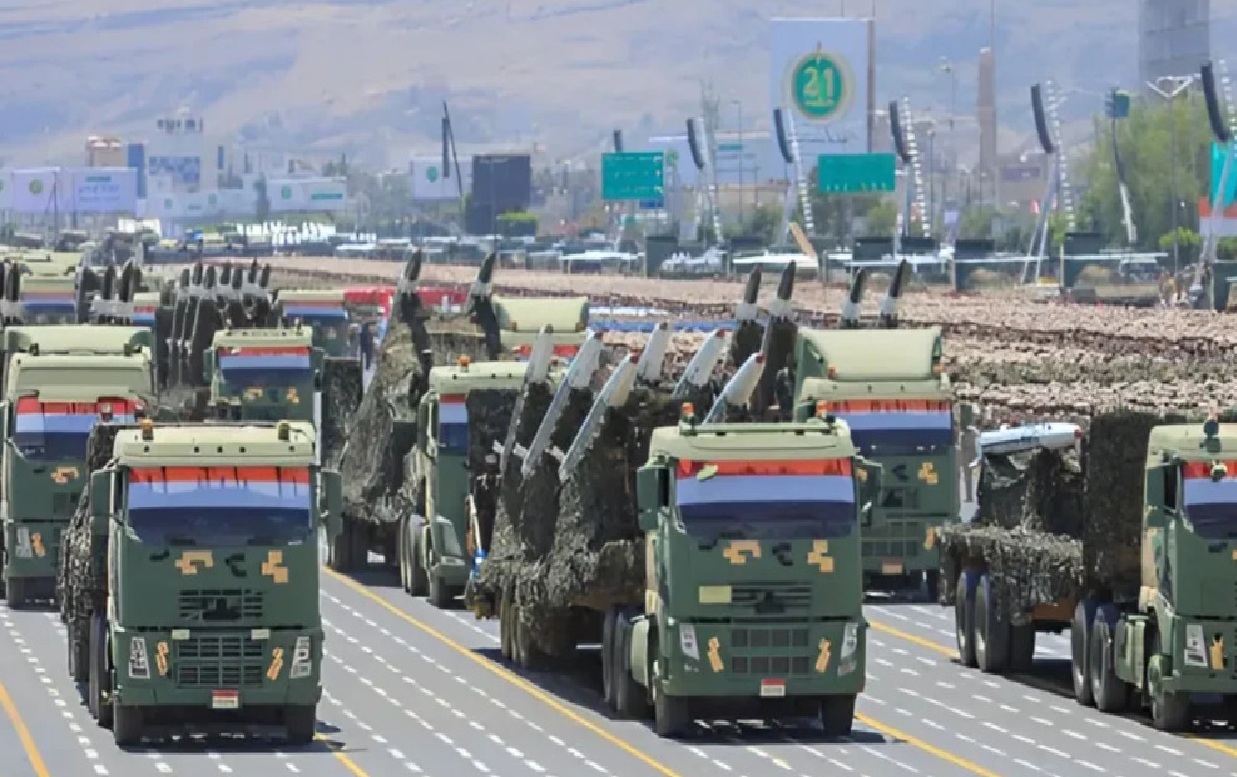
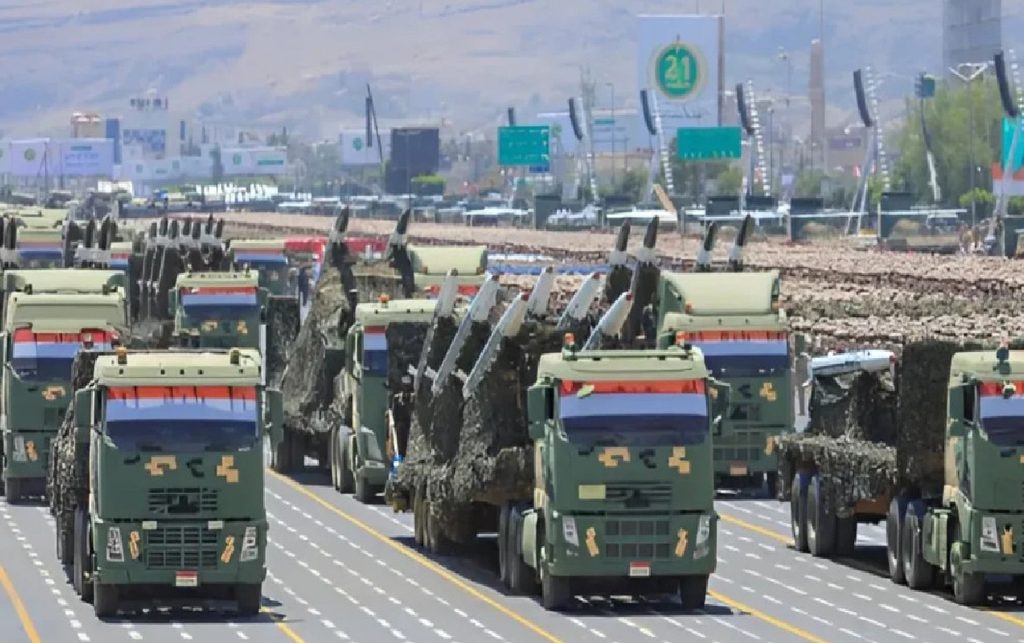
In a dramatic escalation that reverberated through global energy markets and raised urgent questions about Saudi Arabia’s defensive capabilities, Yemeni Armed Forces announced a series of coordinated missile and drone strikes deep inside Saudi territory on Monday, targeting King Khalid International Airport in Riyadh and the Aramco refinery complex in Rabigh. The attacks, which reportedly disrupted civilian aviation and ignited fires at one of the kingdom’s most critical energy facilities, mark a significant expansion in the range and sophistication of Yemeni military operations and underscore the failure of Saudi Arabia’s years-long campaign to neutralise the threat.
The strikes represent the most audacious deep-penetration operation by Yemeni forces since the conflict began, signalling what military analysts describe as a qualitative leap in targeting intelligence, missile range, and strategic ambition. For Riyadh, the attacks expose a troubling vulnerability: despite spending billions on advanced air defence systems, the kingdom remains unable to shield its most vital infrastructure from reprisal strikes launched by a movement it has vowed to defeat.
The Operations: A Detailed Account
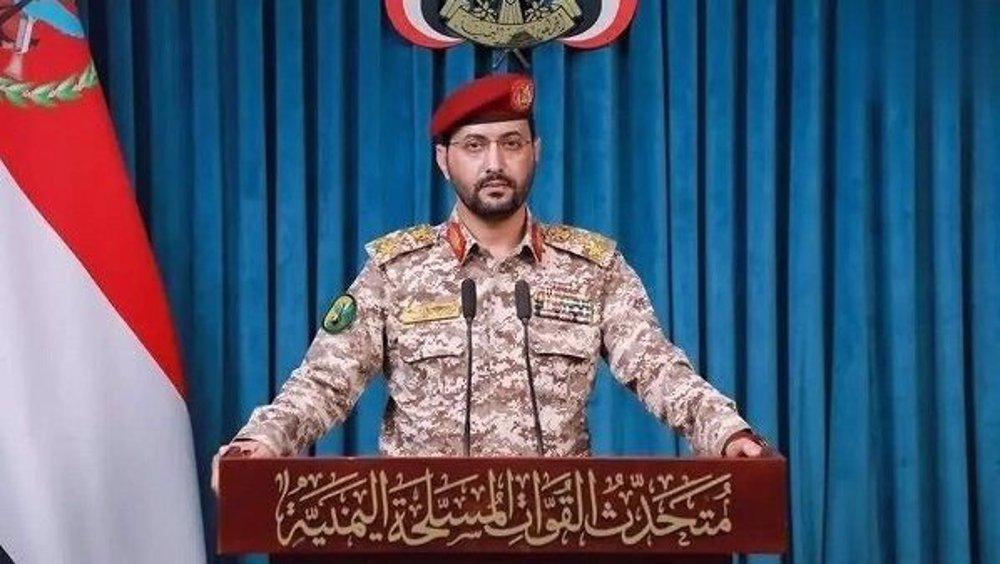
Brigadier General Yahya Saree, the military spokesman for the Yemeni Armed Forces, issued a statement Monday confirming what he described as “precise and successful” operations against multiple Saudi targets. According to Saree, the first wave of attacks employed a large number of ballistic and cruise missiles alongside drones, with King Khalid International Airport struck directly, forcing the suspension of flights and disrupting civilian air traffic.
“The second strike targeted the Aramco facility in Rabigh, igniting fires at the site,” Saree said. “A third operation targeted Abha Airport, Khamis Mushait Air Base, the Akafa camp in Asir, and sensitive military positions in Najran and Jazan provinces. All strikes achieved their objectives.”
Social media feeds and market-monitoring platforms began reporting explosions in Riyadh around 16:57 UTC on Monday, with Iranian outlet Fars cited as reporting a suspension of flights at the Saudi capital’s airport. Minutes later, reports emerged that a Yemeni strike had hit the Petro Rabigh refinery complex near Jeddah, with fire visible at the site. The facility, one of Saudi Arabia’s key refining and petrochemicals hubs on the Red Sea, is adjacent to major export infrastructure.
A Saudi energy sector source, speaking to Agence France-Presse on condition of anonymity, confirmed that an attack on Sunday had again halted pumping through the East-West pipeline to the Red Sea, a critical artery for Saudi oil exports since Iran’s blockade of the Strait of Hormuz at the beginning of the broader Middle East war.
The Yemeni operations came in direct response to what Saree described as “continued Saudi aggression.” According to the Yemeni Armed Forces, the Saudi military launched dozens of airstrikes and missile attacks over the previous 24 hours against Sana’a and the provinces of al-Jawf, Taiz, Hajjah, Saada, and Marib. Those raids killed and wounded civilians, including women and children, according to Yemeni officials. The total number of Saudi attacks since the latest escalation now stands at 1,576, Saree said.
“The blood of Yemeni civilians will not go unanswered,” Saree declared. “The equation of ‘siege for siege and escalation for escalation’ remains in force. Yemeni forces will continue striking Saudi military concentrations and the sources of aggression until the bombardment ceases and the blockade on Yemen is lifted.”
Saree also issued a warning to international airlines, stating that Saudi airspace—excluding the holy cities of Mecca and Medina, now falls within the range of Yemeni operations.
Context: A War Of Attrition And Escalation
The strikes follow weeks of Yemeni operations against Aramco infrastructure and Saudi air bases in the south of the kingdom, which Riyadh has been unable to prevent despite extensive air defences. Yemeni officials have repeatedly stated that energy facilities and military sites used to launch attacks on Yemen constitute legitimate targets under international law.
The current escalation is rooted in the broader regional conflict that has engulfed the Middle East. Saudi Arabia intervened in Yemen’s civil war in 2015 to support the internationally recognised government against the Iran-backed Houthi movement. Since then, the conflict has become a grinding war of attrition, with Houthi forces developing increasingly sophisticated capabilities to strike back at Saudi territory.
According to the Council on Foreign Relations, the Houthi movement is attacking Saudi Arabia to retaliate against Saudi-led airstrikes, gain leverage in political negotiations, and press for economic concessions. Each side responds to the other’s military actions, causing repeated spikes in cross-border violence despite earlier UN-brokered ceasefires.
Houthi forces have recently advanced toward key Red Sea locations, including the Bab al-Mandeb Strait, increasing their military and strategic power. By targeting Saudi oil facilities, energy pipelines, and shipping lanes, the Houthis aim to disrupt the kingdom’s economic lifelines and strengthen their hand in future peace talks.
The Human Toll: Voices From The Ground
In Sana’a, where Saudi airstrikes have killed and wounded civilians in recent days, residents expressed a mixture of defiance and exhaustion.
“We have buried children, mothers, and fathers,” said Ahmed al-Hadrami, a resident of the Yemeni capital. “The world is silent while our blood is spilled. The strikes on Riyadh are a message: we will not be the only ones to suffer.”
In Riyadh, where explosions disrupted the evening calm and flights were suspended, residents expressed shock at the audacity of the attacks.
“I never thought I would see the day when the airport in our capital would be targeted,” said Fatima al-Qahtani, a teacher in Riyadh. “We have been told for years that our defences are impenetrable. Now we are afraid.”
The human stakes are immediate for refinery staff potentially exposed to fire or secondary explosions, airline passengers stranded by the sudden halt in departures, and communities living near military installations in southern Saudi Arabia that have become regular targets.
Military Analysis: A Qualitative Leap
Military analysts say the strikes represent a significant escalation in capability and intent.
“This is not the first time Yemeni forces have struck deep inside Saudi Arabia, but the targeting of King Khalid International Airport and the Petro Rabigh refinery complex represents a qualitative leap,” said Dr. Michael Knights, a senior fellow at the Washington Institute for Near East Policy. “It suggests improved range, accuracy, and targeting intelligence relative to previous waves focused on southern Saudi Arabia and Red Sea shipping.”
The attacks come as Yemen’s Saudi-backed government claims a new offensive against Houthi forces around Taiz and the Red Sea coast. The Saudi-led coalition supporting Yemen’s internationally recognised government said 100 warplanes flew sorties at dawn and reported destroying Houthi targets along the Red Sea coast.
“This raises the risk that Houthi leadership will answer battlefield pressure with more strategic depth attacks on Saudi infrastructure,” Knights added. “The Saudis are caught in a dilemma: they cannot defeat the Houthis militarily, and they cannot protect their own territory from reprisal strikes.”
The reported U.S. approval for Israeli operations against Iranian-backed militias in Iraq widens the potential geography of retaliation. Militias could respond not only in Iraq but via allied networks in Syria, Yemen, or the Gulf, using drones or missiles against oil, gas, or logistics assets. Any perception that Washington is tightening a de facto regional front against Iran will be read in Tehran and Sana’a as validation of targeting U.S. partners’ energy and transport nodes.
Energy Markets: A Precarious Moment
The strikes come at a particularly precarious moment for global energy markets. Oil prices had already risen sharply because of the broader conflict before the Houthis began attacking infrastructure belonging to Saudi Arabia, the world’s largest oil exporter.
Saudi Aramco Chief Executive Amin Nasser warned Monday that global oil inventories were “scarily thin” because of the war.
“The system is already straining,” Nasser told the Energy Intelligence Forum in London. “Any further disruption to supply could have severe consequences for the global economy.”
The reported suspension of flights at Riyadh’s airport and the strike on the Petro Rabigh refinery complex, one of Saudi Arabia’s key refining and petrochemicals hubs, suggest Saudi authorities are treating the security situation as serious enough to interrupt civilian aviation and critical energy operations.
“Sustained disruption would support higher refining margins and push up prices for middle distillates and gasoline, at a time when U.S. political pressure around fuel costs is already intense,” said Dr. Ellen Wald, a senior fellow at the Atlantic Council’s Global Energy Centre. “Insurance premia for assets along the Red Sea coast, including ports and shipping near Jeddah and the Bab el-Mandeb, are likely to rise. Gulf equities, particularly Saudi energy, petrochemicals, aviation, and tourism names, could see near-term selling on security concerns.”
Markets will focus first on whether Petro Rabigh has taken units offline and for how long. Key indicators to watch over the next 24 to 48 hours include official Saudi confirmation of the Jeddah and Riyadh incidents and any disclosure of refinery damage or casualty figures; evidence of follow-on strikes from Yemen or intercept claims by Saudi defences; any Israeli action inside Iraq and subsequent militia statements; and adjustments to shipping patterns near Jeddah and the southern Red Sea.
A verified, prolonged outage at Petro Rabigh or a second wave of long-range attacks into central Saudi Arabia would push this from sectoral risk into a broader Middle East energy security shock.
The Saudi Response: Claims And Contradictions
The Saudi-led coalition claimed its naval forces conducted an operation in Hodeidah governorate, asserting the destruction of weapons stores, explosive-boat warehouses, and sea mines. Yemeni media reported Saudi airstrikes on Kamaran Island and al-Salif district in the same governorate, calling it a continuation of the aggression that has targeted civilian areas and infrastructure across the country.
The coalition’s claims could not be independently verified, and Saudi officials have yet to provide detailed confirmation of the extent of damage from the Yemeni strikes on Riyadh and Rabigh. The lack of transparency has fuelled speculation and uncertainty, both within the kingdom and among international observers.
“The Saudis are in a difficult position,” said Dr. Kristian Coates Ulrichsen, a fellow for the Middle East at Rice University’s Baker Institute. “They cannot admit the extent of the damage without appearing weak, but they also cannot hide it indefinitely. The strikes on Riyadh and Rabigh are a public relations disaster for the kingdom.”
Regional And International Reactions
The strikes drew swift reactions from across the region and beyond.
Iran’s Foreign Ministry spokesperson, Nasser Kanaani, expressed support for what he described as “the legitimate right of the Yemeni people to defend themselves against aggression.”
“The resistance of the Yemeni people is a response to years of brutal aggression and blockade,” Kanaani said. “The international community must act to end the suffering of the Yemeni people and hold the aggressors accountable.”
In Washington, State Department spokesperson Matthew Miller called for de-escalation but stopped short of condemning the Yemeni strikes outright.
“We are closely monitoring the situation and urge all parties to avoid actions that could further destabilise the region,” Miller said. “The United States remains committed to the security of our partners in the Gulf and to the free flow of energy through the region’s critical waterways.”
The United Nations Secretary-General’s office issued a statement expressing “deep concern” over the escalation and calling for “maximum restraint.”
“Further escalation will only lead to more suffering for civilians across the region,” the statement read. “The Secretary-General renews his call for a comprehensive political solution to the Yemen conflict.”
The Broader War: A Region On The Brink
The strikes on Riyadh and Rabigh are the latest developments in a broader regional conflict that has drawn in multiple actors and threatens to engulf the entire Middle East.
The reported U.S. authorisation for Israeli strikes on Iranian-backed militias in Iraq broadens the battlefield and increases the risk of miscalculation that could disrupt Red Sea and Gulf oil flows. Israel has not commented on the reports, but Israeli officials have repeatedly stated their determination to prevent Iran from establishing a permanent military presence in Iraq and Syria.
“Hezbollah, the Houthis, and Iraqi militias are all part of the same Iranian-led network,” said Dr. Matthew Levitt, director of the Reinhard Program on Counterterrorism and Intelligence at the Washington Institute. “An Israeli operation in Iraq would likely trigger responses from multiple fronts, including Yemen. The region is interconnected in ways that make escalation difficult to contain.”
The conflict has already disrupted global supply chains, with Iran’s blockade of the Strait of Hormuz forcing Saudi Arabia to rely more heavily on the East-West pipeline to the Red Sea—a pipeline that has now been repeatedly targeted by Yemeni forces.
“The system is under strain from multiple directions,” said Dr. Wald. “The Saudis are trying to export oil through a pipeline that is vulnerable to attack, while also trying to defend their airports and refineries from missile strikes. It’s an unsustainable situation.”
The Question Of Legitimacy: Legal And Ethical Dimensions
The targeting of energy infrastructure and civilian airports raises complex questions under international humanitarian law.
“Under international law, military objectives are those that make an effective contribution to military action and whose destruction offers a definite military advantage,” said Dr. Adil Haque, a professor of international law at Rutgers University. “Energy facilities that fund a war effort can be considered legitimate targets, but civilian airports are more complicated. If an airport is used for military purposes, it may be a legitimate target, but the principle of proportionality must be respected.”
Yemeni officials have repeatedly stated that energy facilities and military sites used to launch attacks on Yemen constitute legitimate targets. Saudi Arabia has accused the Houthis of indiscriminate attacks on civilian areas, a charge the Houthis deny.
“The Houthis are trying to impose costs on the Saudis for their aggression,” said Dr. April Longley Alley, a senior analyst for the International Crisis Group. “Whether their targeting choices are legally justified is a separate question from whether they are strategically effective. The Houthis have shown that they can reach deep into Saudi territory, and that is a message that Riyadh cannot ignore.”
The Path Forward: Diplomacy Or Further Escalation?
As the region braces for the next phase of the conflict, the prospects for diplomacy appear dim.
“The international community has failed to end the Yemen war,” said Dr. Alley. “The UN-brokered ceasefires have collapsed, and the humanitarian situation continues to deteriorate. The strikes on Riyadh and Rabigh are a symptom of a broader failure to address the root causes of the conflict.”
For the people of Yemen and Saudi Arabia, the human cost continues to mount. In Sana’a, families mourn their dead. In Riyadh, residents wonder if their city will be targeted again. In Washington, Tehran, and Jerusalem, policymakers weigh their next moves, aware that any misstep could plunge the region into an even wider war.
“The region is at a crossroads,” said Dr. Ulrichsen. “The choice is between a negotiated settlement that addresses the legitimate grievances of all parties, or a descent into a wider conflict that will consume the entire Middle East. The strikes on Riyadh and Rabigh are a warning of what is to come if diplomacy fails.”
Conclusion: A New Strategic Reality
The Yemeni strikes on King Khalid International Airport and the Petro Rabigh refinery complex represent a new strategic reality in the Middle East. Yemeni forces have demonstrated their ability to impose costs on the sources of attack, advancing the principle that aggression and blockade will be met in kind.
For Saudi Arabia, the strikes expose the limits of military power and the failure of a campaign that has cost billions of dollars and countless lives. For the region, they signal a dangerous new phase in a conflict that has already drawn in multiple actors and threatens to engulf the entire Middle East.
As the sun sets on another day of violence and uncertainty, the people of Yemen and Saudi Arabia wait, wondering what comes next. The answer, for now, remains written in the smoke rising from Rabigh and the silence of grounded flights in Riyadh.
References
- Agence France-Presse. (2026, October 6). Saudi energy sector source confirms pipeline halt.
- Council on Foreign Relations. (2026). Yemen’s Houthi movement: Strategic objectives and regional context.
- Energy Intelligence Forum. (2026, October 6). Remarks by Saudi Aramco CEO Amin Nasser. London.
- Fars News Agency. (2026, October 5). Reports of explosions in Riyadh.
- Knights, M. (2026, October 6). Interview with the Washington Institute for Near East Policy.
- Levitt, M. (2026, October 6). Interview with the Washington Institute for Near East Policy.
- Longley Alley, A. (2026, October 6). Interview with the International Crisis Group.
- Miller, M. (2026, October 6). Statement by U.S. State Department spokesperson.
- Saree, Y. (2026, October 5). Statement by Yemeni Armed Forces spokesman.
- Ulrichsen, K.C. (2026, October 6). Interview with Rice University’s Baker Institute.
- United Nations Secretary-General’s Office. (2026, October 6). Statement on escalation in Yemen.
- Wald, E. (2026, October 6). Interview with the Atlantic Council’s Global Energy Centre.
Veritas Press Investigative Analysis
Independent journalism examining global affairs, power, diplomacy, and accountability.
Source: Veritas Press C.I.C. | Multi-News Agencies
Help Support Our Work
Readers who believe that truth still matters have power over popular information. When just a few more people step up to support this work, it means more lies exposed, more corruption uncovered, and more accountability where it’s long overdue.
Help Protect Independent Journalism, Which Is Currently Under Attack.
If you believe journalism should serve the public, not the powerful, and you’re able to help, becoming a regular DONOR or a PAID SUBSCRIBER truly makes a difference.
DONATION APPEAL: If you found this reporting valuable, please consider supporting independent journalism.
Your support fuels our fearless, truth-driven journalism. In unity, we endeavour to amplify marginalised voices and champion justice, irrespective of geographical location. We operate independently, with no financial backing from billionaires; our readers support us.
But it’s also extremely important. One of Veritas Press’s greatest assets is its reader-funded model.
1. Reader funding means we can cover what we like. We’re not beholden to the political whims of a billionaire owner. We are a small, independent and impartial organisation. No one can tell us what not to say or what not to report.
2. Reader funding means we don’t have to chase clicks and traffic. We’re not desperately seeking your attention for its own sake; we pursue the stories that our editorial team deems important and believes are worthy of your time.
3. Reader Funding: enables us to keep our website and other social media channels open, allowing as many people as possible to access quality journalism from around the world, particularly those in places where the free press is under threat.
We know not everyone can afford to pay for news, but if you’ve been meaning to support us, now’s the time.
Your donation goes a long way. It helps us:
- Keep the lights on and sustain our day-to-day operations
- Hire new, talented, independent reporters
- Launch real-time live debates, community-focused shows, and on-the-ground reporting
- Cover the issues that matter most to our communities, in real time, with depth and integrity
Without your support, independent voices like ours will be silenced.
Furthermore, we have plans to expand our work, but we can’t do it without your support. Every contribution, no matter the size, helps us stay independent and build a truly people-powered media platform.
If you believe in journalism that informs, empowers, and reflects the communities we serve, please donate today.
Submissions
For the secure submission of documentation, testimonies, or exclusive investigative reports from any global location, please utilise the following contact details for our Investigations Desk: mailto:enquiries@veritaspress.co.uk or mailto:editor@veritaspress.co.uk
A federal judge in Boston on Monday blocked the Trump administration from imposing civil fines
In a dramatic escalation that reverberated through global energy markets and raised urgent questions about

NEWCASTLE UPON TYNE — Health authorities have confirmed two separate cases of Hepatitis A among
Serbian Orthodox leader’s unprecedented intervention exposes the systematic erosion of Christianity’s oldest continuous community, and
GENEVA — A United Nations fact-finding mission has concluded there are “reasonable grounds to believe”
Iran’s GDP is projected to contract by 5.4 to 6.1% in 2026, its worst performance
The Trump administration is preparing a $2.8 billion weapons package for Israel containing 40,000 2,000-pound

Film alleges mass civilian deaths are routinely built into military decisions amid Israel’s genocidal war
The Israeli rights group says violence, displacement, economic strangulation, and settlement expansion form part of

Houthi forces have captured the historic Red Sea port of Mocha and are advancing on