Kamran Faqir is a volunteer investigative journalist and writer committed to exposing hidden truths and amplifying underreported stories. Driven by social justice, he brings sharp insight and fearless truth-telling to independent journalism. NUJ registered.
Article Date Published:
Article Date Modified:
20 minutes
Views:582
Listen to this article
Help support our mission, donate today and be the change. Every contribution goes directly toward driving real impact for the cause we believe in.
Houthi forces have captured the historic Red Sea port of Mocha and are advancing on Dhubab, positioning themselves to control the 20-kilometre-wide Bab el-Mandeb Strait with artillery alone, a strategic prize that, combined with Iran’s effective closure of the Strait of Hormuz, would give the axis of resistance simultaneous leverage over both of the Middle East’s critical maritime chokepoints, threatening to isolate Gulf oil producers, add 0.7 percentage points to global core inflation, displace nearly 20,000 Yemenis in a single week, and shatter a fragile four-year truce that UN mediators had hoped to transform into a political settlement, as Saudi Arabia weighs a decisive military response and analysts conclude that both sides now believe “a return to fighting is in their interest.”
The Offensive
Yemen’s Iran-aligned Houthi rebels are rapidly advancing along Yemen’s Red Sea coast, threatening to gain control over the Bab el-Mandeb Strait, one of the world’s most critical maritime chokepoints. The offensive, launched last week, has already brought the rebels closer to controlling the historic port of Mocha and the coastal area of Dhubab, both of which sit directly along the strait, according to Yemeni government military sources.
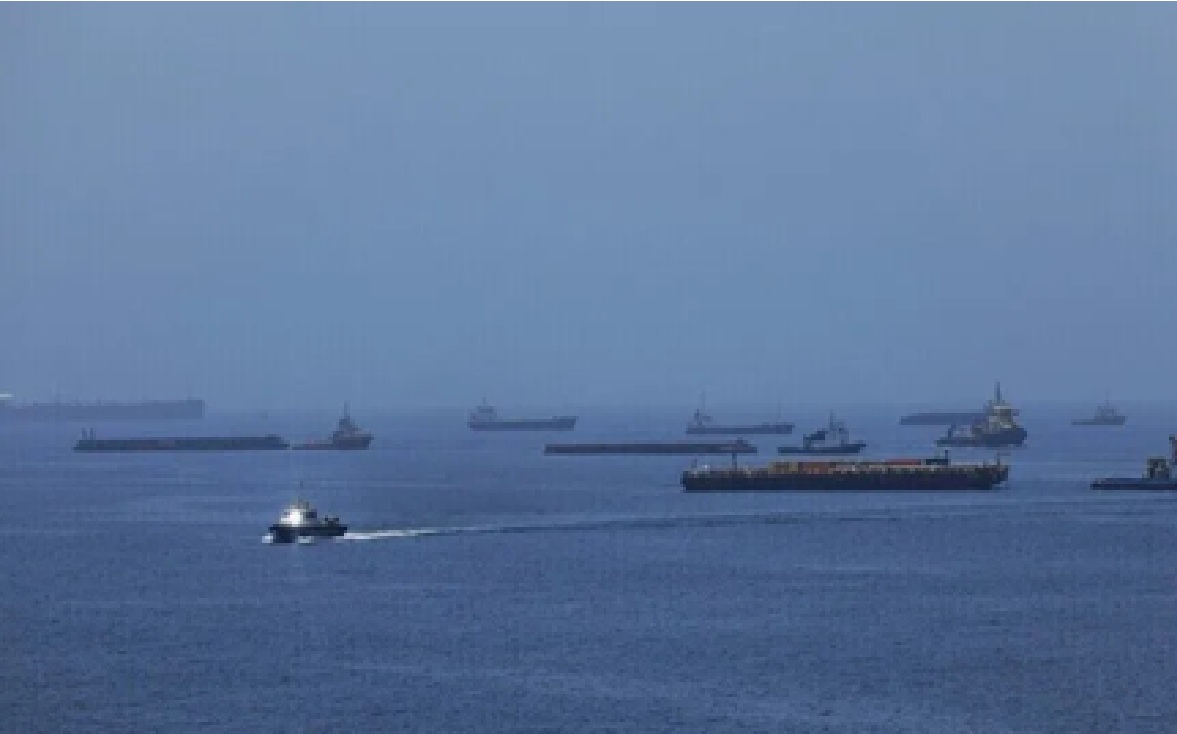
The Bab el-Mandeb, known as the “Gate of Tears” for its perilous navigation conditions, connects the Red Sea to the Gulf of Aden and serves as the southern gateway to the Suez Canal. Approximately 11% of global seaborne oil trade and 8% of liquefied natural gas shipments transit this narrow waterway, making it a vital artery for international commerce.
The Houthis have reportedly seized Mocha, a historic port city on Yemen’s southwestern coast, with three Yemeni government sources confirming the capture to Reuters. Government military sources also indicated that Houthi forces were closing in on Dhubab, another coastal area directly along the Bab el-Mandeb, as they push to control Yemen’s entire Red Sea coastline.
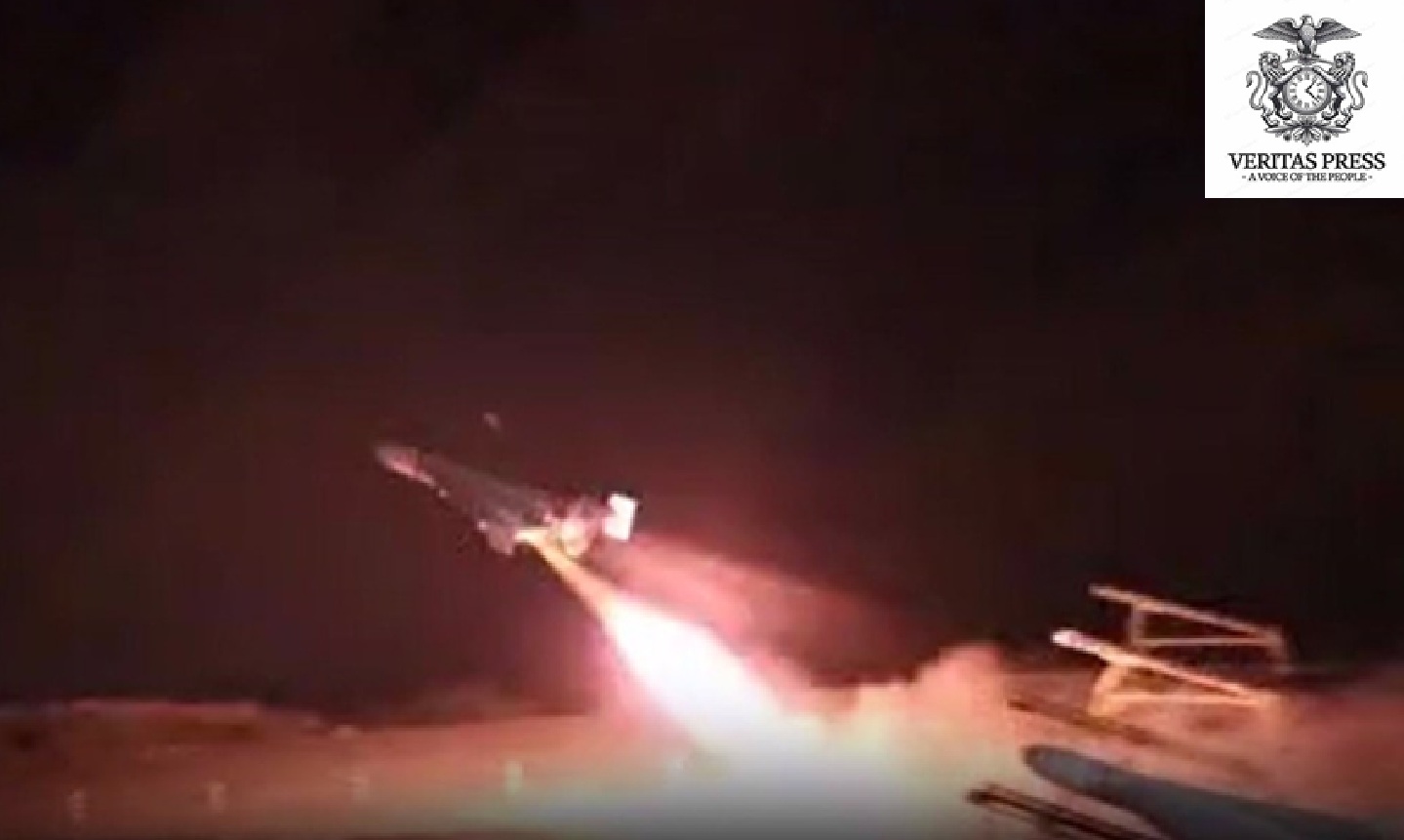
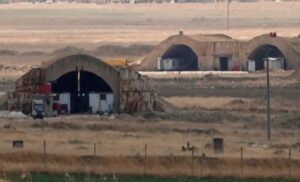
Footage released by the Houthis purportedly shows an attack on weapons and military equipment transferred by Saudi Arabia to a military camp in northern Yemen on Sept. 7 (Photo: AFP PHOTO / ANSARULLAH MEDIA CENTRE, AFP PHOTO / NATIONAL RESISTANCE FORCES IN YEMEN / HANDOUT)
A Second Theatre In A Wider War
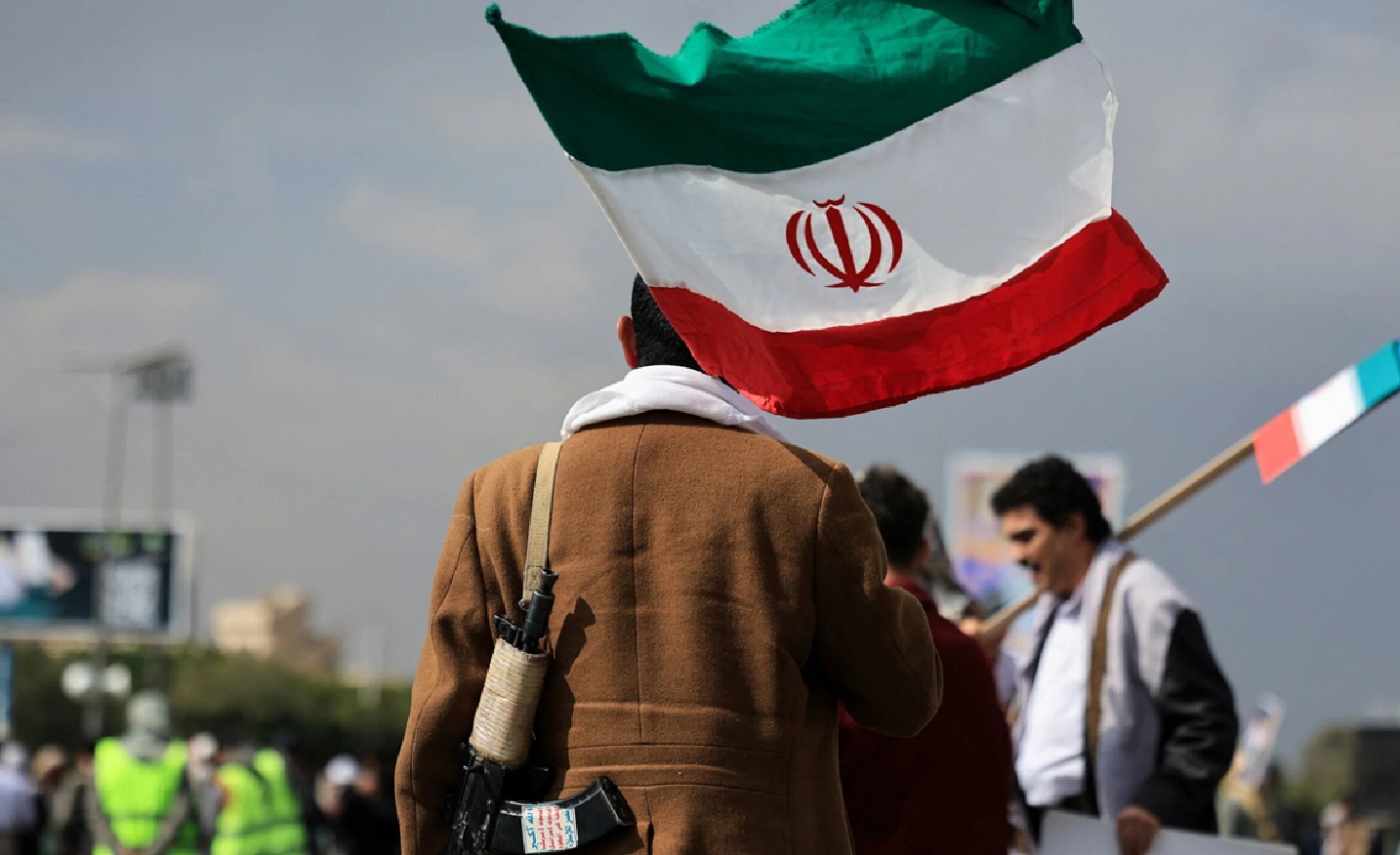
This escalation comes amid a broader regional conflict that erupted in late February with US-Israeli strikes on Iran. Iran has already effectively closed the Strait of Hormuz, the primary maritime energy artery between Asia and Europe, following attacks on shipping and a US naval response. Now, with the Houthi advance on Bab el-Mandeb, the Iran-led “axis of resistance” appears to be opening a second front designed to squeeze US-aligned Gulf states from both sides of the Arabian Peninsula.
The timing is significant. On Wednesday, Iran claimed to have attacked 20 American vessels in the Strait of Hormuz and targeted a US military base in Jordan, in retaliation for US strikes on Iranian oil tankers. Oil prices have returned to $100 a barrel, with Brent crude rising above that threshold for the first time since July as the widening conflict heightens concerns about further disruptions to global energy supplies.
The Strategic Calculus
The implications of a Houthi stranglehold over Bab el-Mandeb are profound. Wolfgang Pusztai, a defence analyst, explained to Al Jazeera that the strait’s narrow width, approximately 20 kilometres, compared to Hormuz’s 50 kilometres, makes it uniquely vulnerable.
“If they take over Mocha, they would control pretty much all of Yemen’s coast on the Red Sea. That means it would be easier to control Bab al-Mandeb… This means they could control it just with artillery; they wouldn’t need to even use missiles or drones to attack ships. This would certainly be a major blow to Saudi Arabian shipping and international shipping.”
Adam Baron, a fellow at the New America Foundation, told France 24 that the dual disruption of both Red Sea and Gulf shipping would represent “a tremendous exercise to put pressure for a resolution”.
Yemen’s Ambassador to Qatar, Rajeh Badi, speaking to Al Jazeera in his first media interview since taking up his post, warned that the consequences could extend far beyond Yemen’s borders.
“We are now facing a real threat that does not stop at Yemen’s borders. It threatens the entire region and the world. If the Houthis manage to choke maritime traffic in the Red Sea, we will be looking at another Hormuz in these waters—with potentially even greater impact.”
Badi recalled a warning from former Yemeni President Abd-Rabbu Mansour Hadi: “If Iran gains control over Bab al-Mandeb and the Strait of Hormuz, it will not need a nuclear weapon—its grip over these two chokepoints would be more powerful than any nuclear arsenal. Events have proved him right”.
Cross-border strikes And Saudi Retaliation
The Houthi ground offensive has been accompanied by a significant escalation in cross-border attacks. On Tuesday, the Houthis launched their heaviest missile and drone assault on Saudi Arabia in years, targeting oil infrastructure and military facilities in the southern cities of Abha, Khamis Mushait, Jazan, and Najran. Saudi authorities reported that 73 people were wounded, with fires breaking out at several energy facilities and utilities, forcing temporary suspensions of operations.
Houthi military spokesperson Yahya Saree claimed the attacks used “dozens of ballistic missiles and drones” and were “precise and direct,” causing “significant damage” to targets including Aramco facilities and King Khalid Air Base.
The Saudi-led coalition vowed to respond. Coalition spokesperson Turki al-Maliki described the attacks as a “dangerous escalation” and said the coalition would take measures to deter further attacks, citing the right to self-defence under international law.
The response came swiftly. Houthi media reported approximately 40 Saudi airstrikes across the provinces of Taiz, Hodeidah, Al-Jawf, and Marib in the hours following the cross-border attacks. Saree later claimed that 54 airstrikes had been conducted over a 12-hour period, targeting six provinces with F-15SA and Typhoon fighter jets.
Saudi civil defence authorities issued multiple emergency alerts for the southwestern province of Khamis Mushait, four within 24 hours, before announcing an all-clear on Thursday.
Iran’s Hand: Proxy Or Autonomous Actor?
The question of Iran’s role in the Houthi offensive has become a point of significant contention. US Secretary of State Marco Rubio was unequivocal in his assessment, telling reporters in Washington: “The Houthis, in many ways, are agents and proxies of the Iranians. I think behind some of this is clearly the Iranian hand”.
Two Iranian sources told Reuters that Tehran had instructed the Houthis last week to attack Saudi Arabia and promised additional funding and weapons, while Iranian Revolutionary Guard commanders travelled to Yemen to help coordinate the attacks. A senior Iranian official, however, denied that Tehran controls the group.
Yemen’s Ambassador Badi asserted that Iran’s relationship with the Houthis is now impossible to hide: “Iranian officials openly boast about it, and Houthi leaders proudly talk about their ‘strategic’ ties with Tehran… The Houthis are one of Iran’s key regional arms, just like Hezbollah in Lebanon or the Popular Mobilisation Forces in Iraq”.
However, Wolfgang Pusztai, the defence analyst, offered a more nuanced assessment. While acknowledging that Iran has “a huge influence on the Houthis,” he told Al Jazeera that “the Houthis are not only proxies of Iran. They are also fighting their own war.” He noted that Houthi-controlled territory is “already pretty much sealed off from support from outside,” and the group has shown over decades that it can fight with existing weaponry. “At the very end, the Houthis have their own will,” Pusztai said.
Adam Baron of the New America Foundation similarly emphasised the Houthis’ dual character as both an autonomous force and part of the axis of resistance, noting that maintaining “a demonstrable capacity to shut down Bab el-Mandeb” remains in their interests regardless of Iranian direction.
Diplomatic Manoeuvres
Pakistan has reportedly conveyed a Saudi warning to Tehran urging it to rein in the Houthis, according to Saudi, Pakistani, and Iranian sources cited by Reuters. The warning suggests that a defence pact between Pakistan, Saudi Arabia, and Turkiye could become operational if Houthi attacks on Saudi territory persist.
Pusztai assessed that joint pressure from Pakistan and Turkiye “will certainly impress the leaders in Tehran,” but the practical effect would be “rather limited” given the Houthis’ isolation from external supply lines.
Saudi Foreign Minister Prince Farhan bin Faisal, speaking in Moscow on Tuesday, refrained from directly blaming Iran but warned the Houthis that they had embarked on a course of action whose consequences “it will not be able to handle.” While reiterating the kingdom’s openness to a negotiated settlement, he stressed that Saudi Arabia “will not hesitate to defend ourselves and we will not hesitate to protect our interests”.
The European Union urged the Houthis to end their attacks, with Anouar El Anouni, spokesman for the bloc’s diplomatic service, calling them a “dangerous escalation” and demanding an immediate halt to “all attacks inside and outside Yemen, including attacks against commercial shipping in the Red Sea”.
A Fragile Truce Unravels
The current escalation threatens to unravel several years of relative calm following a UN-brokered truce that took effect in April 2022. Although the truce formally expired six months later, large-scale fighting remained largely contained until the recent flare-up.
The Houthis triggered the return to hostilities in July when they allowed an Iranian plane to land in defiance of Saudi control of Yemeni airspace. The government retaliated by striking the airport, an attack the rebels blamed on Saudi Arabia.
UN Special Envoy for Yemen Hans Grundberg called the renewed hostilities “an extremely alarming development” and urged all parties to cease hostilities and exercise maximum restraint.
The Humanitarian Toll
The human cost of the renewed fighting is mounting rapidly. More than 500 people have died since the Houthis launched their major offensive last week, according to reports. The International Organisation for Migration reported that nearly 20,000 people had been displaced.
The government-run Executive Unit for the Management of Displaced Persons Camps reported that 1,367 families were displaced from areas in Taiz, Hodeidah, and Lahj provinces over a single 24-hour period. Since the beginning of September, 6,145 families have been recorded as displaced across the three provinces.
Military Dynamics On The Ground
The fighting has centred on Yemen’s western coast, with government forces attempting to halt the Houthi advance toward positions overlooking the Bab el-Mandeb. Yemeni government forces claimed Wednesday that several Houthi commanders involved in operations near the strait had been killed or captured, though the Houthis did not comment on the claim.
Government naval units reportedly exchanged fire with Houthi boats in the Red Sea, forcing them to retreat toward the Houthi-held port city of Hodeidah. Farther north, government forces claimed additional advances in Al-Jawf province, cutting Houthi supply routes.
Ahmed Nagi, a senior Yemen analyst at the International Crisis Group, assessed that the Houthis appeared intent on seizing high ground on the western coastal plain and areas near Mokha port and the Bab el-Mandeb Strait. This would expand their control over terrain overlooking the coast, putting them in a stronger position to target transiting shipping.
By staging this ground assault alongside cross-border attacks against Saudi Arabia and maritime operations against Saudi-linked shipping, Nagi said, the Houthis were “seeking to demonstrate the ability to operate simultaneously across multiple fronts”.
A Return To War?
Both sides now appear to assess that a return to full-scale conflict serves their interests. Ali Shihabi, a Saudi political commentator reputedly close to Crown Prince Mohammed bin Salman, said he expected the kingdom to “respond aggressively and continue its strong support of the Yemeni government forces”.
Analysts note that the competing factions making up the internationally recognised government forces are currently at their strongest since Yemen’s civil war erupted in 2014. Riyadh has worked to consolidate anti-Houthi groups under a unified command, benefiting from Saudi intelligence, better weaponry, and advanced drones that have proven effective in repelling recent rebel ground assaults.
Baron described the line between brinkmanship and aiming for decisive gains as “quite thin,” noting that both the Houthis and their adversaries now “broadly assess that a return to fighting is in their interest”.
Nagi warned that the scale of reinforcements in weapons and manpower on both sides suggested the current battle “may well morph into a prolonged confrontation”.
As the conflict widens and the death toll rises, the world watches with growing alarm. The Bab el-Mandeb Strait, already a chokepoint for global commerce, now stands at the centre of a geopolitical struggle that could reshape the Middle East and disrupt the global economy for years to come.
Conclusion: A Conflict At The Crossroads Of Regional Ambition And Global Consequence
The Houthi advance toward Bab el-Mandeb represents far more than a tactical military manoeuvre in Yemen’s protracted civil war. It constitutes a strategic inflexion point in a broader regional confrontation that threatens to reshape the geopolitical architecture of the Middle East and disrupt the global economy in ways that will be felt from European manufacturing hubs to African food markets.
The EconomicsOf Chokepoint Control
The numbers are stark. With 30% of global container trade transiting through the Suez Canal, the Red Sea shipping crisis has already forced hundreds of vessels to reroute around southern Africa, a detour adding 4,000 miles and approximately 30% to transit times, effectively reducing global container shipping capacity by 9%. Shipping costs from Asia to Europe have surged nearly fivefold, with spot rates from China to the US West Coast spiking 140%.
The human cost of this economic disruption extends far beyond corporate balance sheets. Tom Fletcher, UN Under-Secretary-General for Humanitarian Affairs, delivered a sobering assessment to the Security Council in August 2026: “Over half the population is experiencing acute food insecurity. Six million people, the highest number globally, face ‘Emergency’ levels of deprivation, bordering on famine”. The humanitarian appeal is barely 20% funded, forcing UN agencies to scale back operations even as needs accelerate.
The convergence of conflict, economic collapse, and climate shocks, with El Niño conditions forecast to reduce rainfall by 40% across key agricultural areas, threatens to push Yemen past a tipping point from which recovery may prove impossible. As Fletcher warned, “This unacceptable severity cannot become the new norm”.
The Proxy Question: Iran’s HandOr Houthi Will?
The question of Iranian influence over Houthi decision-making remains contested, with significant implications for any diplomatic resolution. US Secretary of State Marco Rubio was unequivocal: “The Houthis, in many ways, are agents and proxies of the Iranians”. UN investigations have found that missile remnants and military equipment used by the Houthis are “of Iranian origin” and were introduced into Yemen after the imposition of the targeted arms embargo in 2015, constituting Iranian non-compliance with Security Council resolution 2216.
Yet analysts like Wolfgang Pusztai caution against reducing the Houthis to mere proxies. “The Houthis are not only proxies of Iran. They are fighting also their own war,” he told Al Jazeera, noting that Houthi-controlled territory is “already pretty much sealed off from support from outside” and the group has demonstrated over decades that it can fight with existing weaponry. “At the very end, the Houthis have their own will.”
This distinction matters enormously for policy. If the Houthis are autonomous actors pursuing their own strategic objectives, then pressure on Tehran, whether from Pakistan, Turkiye, or Western powers, will yield limited results on the ground. The group’s decision to escalate may reflect its own assessment that “a return to fighting is in their interest,” as Adam Baron observed, rather than simple Iranian direction.
The CollapseOf Diplomacy
The timing of this escalation is particularly damning for the international community’s peace efforts. Just months before the Houthi offensive, UN Special Envoy Hans Grundberg had urged parties to “seize the opportunity created by regional de-escalation following the Iran-U.S. deal” and revive the stalled political process. His office had convened Military Coordination Committee meetings with both Houthi and government representatives, and plans were underway for a trilateral meeting.
The prisoner exchange agreement of May 2026, involving approximately 1,750 detainees and described as the largest since the conflict began, offered a rare glimmer of progress. Saudi Ambassador Mohammed al-Jaber had spoken optimistically of parties being “serious” about peace, though he cautioned that “it’s not easy to be clear about next steps”.
These diplomatic gains now lie in ruins. Grundberg’s warning that renewed fighting would “make an already difficult path toward a political settlement even harder” has proven prophetic. The question now is whether the diplomatic architecture can be rebuilt, or whether Yemen is destined for another decade of war.
The Strategic Calculus: Why Both Sides Chose War
The Houthi offensive reflects a calculated assessment that the benefits of territorial expansion and demonstrated military capability outweigh the risks of renewed conflict. By staging simultaneous operations, ground advances along the Red Sea coast, cross-border attacks on Saudi cities, and maritime operations against shipping, the group has “sought to demonstrate the ability to operate simultaneously across multiple fronts,” as Ahmed Nagi of the International Crisis Group observed.
For the Saudi-backed government forces, the consolidation of anti-Houthi factions under a unified command, with improved weaponry and advanced drones, has created what analysts describe as their strongest position since 2014. This newfound strength may have encouraged Riyadh to abandon its long-standing policy of containment in favour of military deterrence.
Both sides, in other words, have concluded that the current moment offers opportunities for decisive gains that outweigh the costs of continued stalemate. Baron’s assessment that “a return to fighting is in their interest” captures this tragic calculus.
Global Implications: From Regional ConflictTo World Crisis
The broader significance of the Houthi advance cannot be overstated. Combined with Iran’s effective closure of the Strait of Hormuz, control over Bab el-Mandeb would give the Iran-led axis of resistance the ability to “squeeze US-aligned Gulf states from both sides of the Arabian Peninsula,” as Baron noted. This dual chokepoint leverage represents a strategic capability that no nuclear weapon could replicate, as former Yemeni President Hadi presciently observed, “its grip over these two chokepoints would be more powerful than any nuclear arsenal.”
The economic consequences extend far beyond the region. The Red Sea crisis has already added an estimated 0.7 percentage points to global core goods inflation, and the environmental cost, an additional 35.7 million metric tons of carbon dioxide emissions from longer shipping routes, represents a hidden toll on global climate efforts. Egypt has seen Suez Canal receipts fall nearly 60%, depriving a financially strained government of critical revenue.
If Bab el-Mandeb is effectively closed, the implications for global energy markets and supply chains would be catastrophic. The 30% of global container trade that currently transits the Suez Canal would be forced onto even longer alternative routes, further straining shipping capacity and driving costs to levels that could trigger a global recession.
A Crisis Demanding More Than Condemnation
The international response to date has been inadequate to the scale of the challenge. Statements of concern, calls for restraint, and diplomatic mediation have failed to prevent the current escalation or to address the underlying drivers of the conflict. The humanitarian appeal remains less than 20% funded. The 73 UN staff arbitrarily detained by the Houthis remain in captivity, their detention “directly undermining our ability to save lives,” as Fletcher noted.
What is required is not another round of condemnations but a fundamental recalibration of international engagement. This means:
Prioritising humanitarian funding: The gap between needs and resources is unconscionable. Donor nations must step forward with flexible, predictable funding before famine conditions become irreversible.
Rebuilding diplomatic architecture: The MCC framework offers a mechanism for de-escalation, but it must be leveraged effectively. Face-to-face political talks, absent for years, must be revived.
Addressing the proxy dimension: Whether or not Iran controls Houthi decision-making, its material support for the group is a documented violation of international law. Enforcement mechanisms must be strengthened.
Securing maritime corridors: The international community must ensure freedom of navigation in the Red Sea, whether through naval escorts, insurance mechanisms, or negotiated arrangements with all parties to the conflict.
The Houthi advance on Bab el-Mandeb is not merely a Yemeni problem, nor even a regional one. It is a global crisis that demands a global response. The Gate of Tears, as the strait is known, may yet earn its name in ways that will affect every nation that depends on maritime trade, which is to say, every nation on Earth.
Veritas Press Investigative Analysis Independent journalism examining global affairs, power, diplomacy, and accountability.
Source:Veritas Press C.I.C. | Multi-News Agencies
Help Support Our Work By Donating
Readers who believe that truth still matters have power over popular information. When just a few more people step up to support this work, it means more lies exposed, more corruption uncovered, and more accountability where it’s long overdue.
Help Protect Independent Journalism, Which Is Currently Under Attack.
If you believe journalism should serve the public, not the powerful, and you’re able to help, becoming a regular DONOR or a PAID SUBSCRIBER truly makes a difference.
DONATION APPEAL: If you found this reporting valuable, please consider supporting independent journalism.
Your support fuels our fearless, truth-driven journalism. In unity, we endeavour to amplify marginalised voices and champion justice, irrespective of geographical location. We operate independently, with no financial backing from billionaires; our readers support us.
But it’s also extremely important. One of Veritas Press’s greatest assets is its reader-funded model.
1. Reader funding means we can cover what we like. We’re not beholden to the political whims of a billionaire owner. We are a small, independent and impartial organisation. No one can tell us what not to say or what not to report.
2. Reader funding means we don’t have to chase clicks and traffic. We’re not desperately seeking your attention for its own sake; we pursue the stories that our editorial team deems important and believes are worthy of your time.
3. Reader Funding: enables us to keep our website and other social media channels open, allowing as many people as possible to access quality journalism from around the world, particularly those in places where the free press is under threat.
We know not everyone can afford to pay for news, but if you’ve been meaning to support us, now’s the time.
Your donation goes a long way. It helps us:
Keep the lights on and sustain our day-to-day operations
Hire new, talented, independent reporters
Launch real-time live debates, community-focused shows, and on-the-ground reporting
Cover the issues that matter most to our communities, in real time, with depth and integrity
Without your support, independent voices like ours will be silenced.
Furthermore, we have plans to expand our work, but we can’t do it without your support. Every contribution, no matter the size, helps us stay independent and build a truly people-powered media platform.
If you believe in journalism that informs, empowers, and reflects the communities we serve, please donate today.
SEATTLE, TEHRAN — The U.S. Department of Homeland Security (DHS) will allow Iran’s national football team to enter the country 48 hours before their critical World Cup match against Egypt on Friday, a modest concession in a tournament where Team Melli’s travel conditions have sparked claims of oppression and competitive disadvantage.













































An Engaging Blog Post
WOW,Very wonderful
The content is really great
That was amazing
Hi,how are you
Its Amazing
If you are mad at me, just curse me out
HI,I AM HERE AGAIN AND AGAIN