Kamran Faqir is a volunteer investigative journalist and writer committed to exposing hidden truths and amplifying underreported stories. Driven by social justice, he brings sharp insight and fearless truth-telling to independent journalism. NUJ registered.
Listen to this article
Help support our mission, donate today and be the change. Every contribution goes directly toward driving real impact for the cause we believe in.
Article Date Published:
Article Date Modified:
20 minutes
Views:73
Deadliest Week Of Attacks Forces Reckoning With Yemen War’s Blowback
RIYADH — The skies above Saudi Arabia’s capital fell silent this week, not from deference but from destruction.
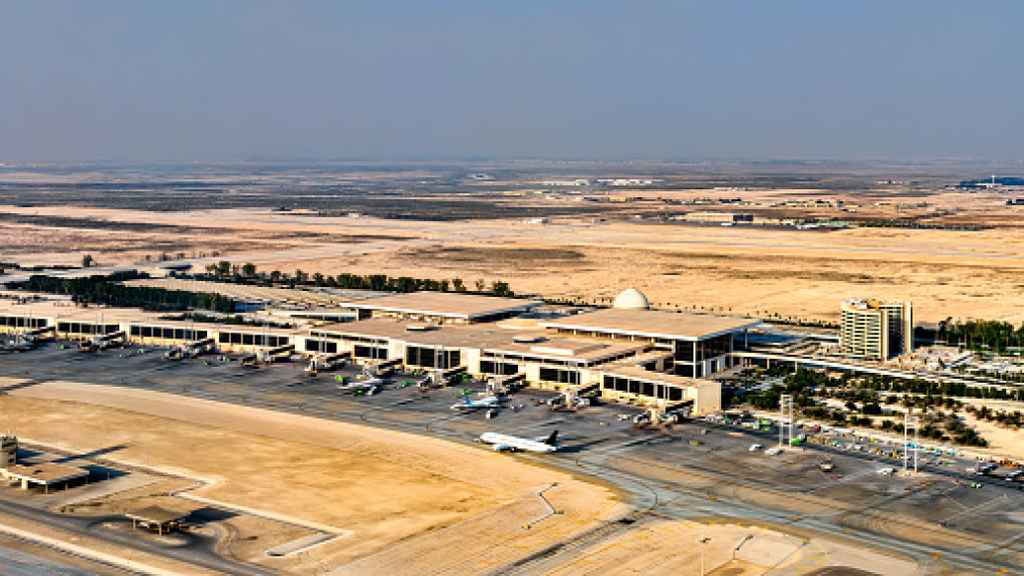
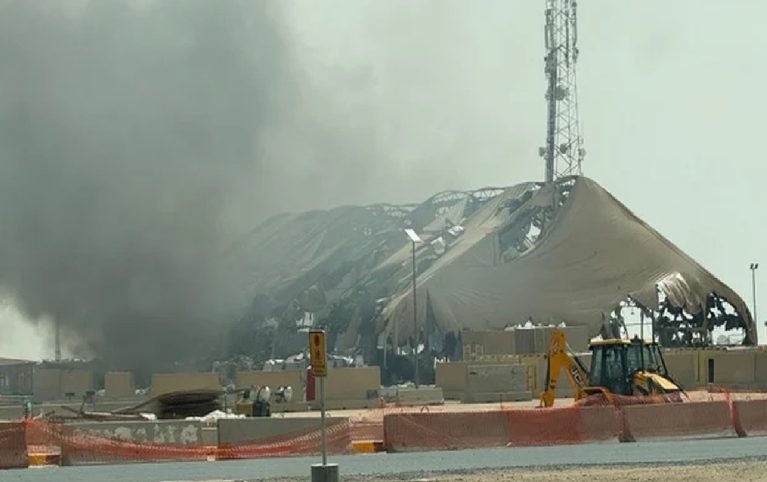
Saudi authorities extended the suspension of all flights to and from King Khalid International Airport on Monday after a second day of Houthi missile strikes killed one person, injured eleven others, and exposed critical vulnerabilities in the kingdom’s air defence systems. The attacks followed Saturday’s devastating strike that killed 13 people and wounded more than 300, the deadliest assault on the Gulf nation in over a decade.
The closure of one of the Middle East’s busiest aviation hubs came as Saudi Energy Minister Prince Abdulaziz bin Salman addressed the 25th WPC Energy Conference in Riyadh, attempting to project an image of normalcy and resolve.
“For Saudi Arabia, these circumstances have tested our infrastructure, our institutions, our people, and our resilience,” the minister told the conference. “Energy security can’t be taken for granted. The events of recent weeks are serious; our response must be equally serious.”
Yet even as the minister declared that “fear has no place in the Saudi lexicon,” the kingdom’s aviation authority was quietly extending the airport shutdown indefinitely, with no timeline for reopening.
A Nation Under Siege: The Human Toll
The attacks have shattered the illusion of safety that Saudi officials have carefully cultivated since the kingdom began its military campaign against the Houthis in 2015.
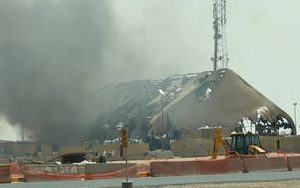
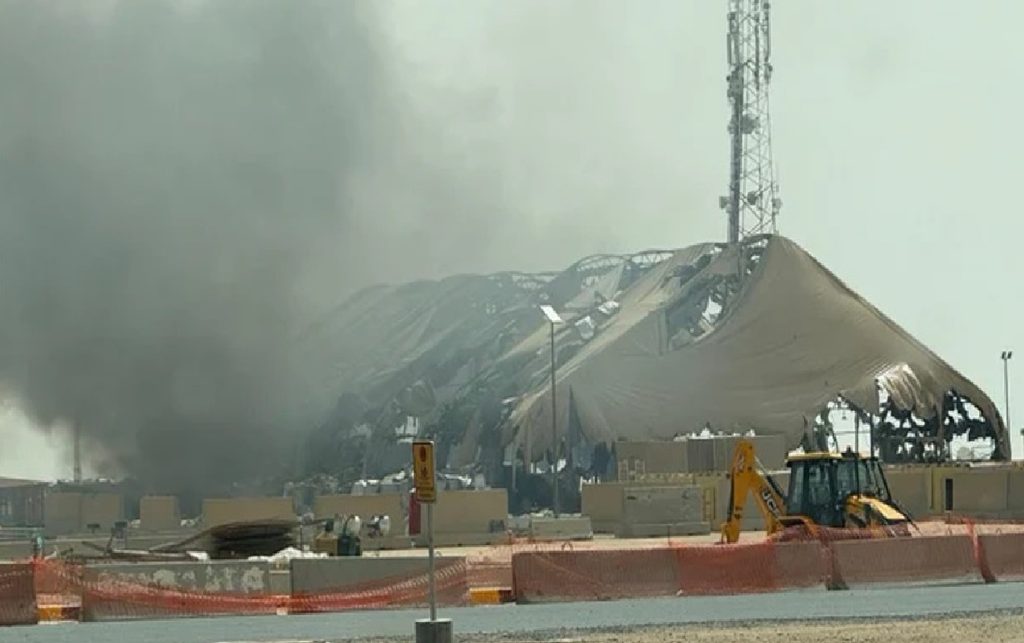
Saudi state television broadcast CCTV footage showing the horror inside the airport terminal on Saturday: passengers deluged in smoke and falling masonry as they queued to board flights, the missile striking without warning. The images, screaming travellers, debris-strewn floors, emergency responders scrambling through chaos, have circulated widely on social media despite official attempts to control the narrative.
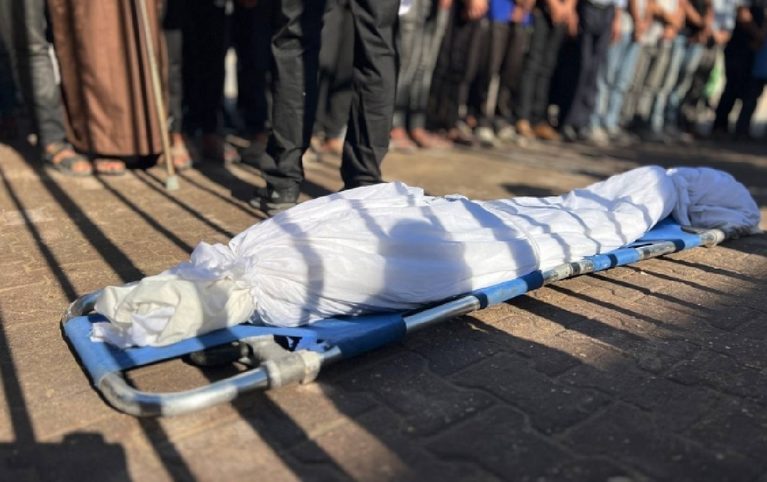
Among the dead were four Saudi citizens and nine foreign nationals: two Bangladeshi workers, a Palestinian, a US citizen, an Egyptian flight attendant, a Jordanian, a Syrian mother of four, and a Sudanese national.
The Egyptian woman was identified as Azza Ramzy, 28, a flight attendant for the Saudi airline Flynas, according to Egyptian state television. The Syrian victim, Buthaina Ahmad Oweida, 56, was a widowed mother of four from Idlib province who had fled Syria’s civil war and was living in Mecca, her niece Nisreen Oweida told the Associated Press.
“She was returning from a visit to her sister in Riyadh when she was killed,” Nisreen said. “She had built a new life here. Now it’s gone.”
An Indian embassy spokesperson confirmed one of its citizens died Sunday after being wounded in Saturday’s attack.
The attacks also trapped hundreds of religious pilgrims. Bangladesh’s expatriates’ welfare ministry said approximately 500 Bangladeshi passengers were stranded in Riyadh, while footage from Saudi state television showed Umraah pilgrims preparing to board flights when the strike triggered panic.
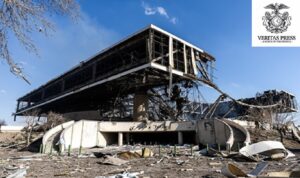
Several countries have advised against travel to Saudi Arabia’s airports in light of escalating threats and strikes from the Houthis in Yemen [GETTY]
Air Defenses Stretched To Breaking Point
The repeated success of Houthi missile and drone strikes has raised urgent questions about how the group continues to penetrate Saudi Arabia’s air defences, which are among the most sophisticated money can buy.
An urgent review is underway, according to Saudi officials, but the fundamental problem is geography. Interceptor missiles, particularly the expensive Patriot systems, are needed to protect government buildings, oil facilities, and infrastructure hubs across a vast territory stretching from the Red Sea to the Persian Gulf.
“The Saudis simply don’t have enough interceptors to cover everything,” said Dr. Michael Knights, a senior fellow at the Washington Institute for Near East Policy who specialises in Gulf security. “The Houthis have figured out that saturation attacks, launching multiple missiles and drones simultaneously, can overwhelm even advanced defence systems. This is a classic asymmetric warfare problem.”
The Houthis have targeted not only Riyadh but also the city of Khamis Mushait and King Fahd International Airport in Dammam, Saudi Arabia’s third-busiest airport. On Sunday, Saudi authorities confirmed Dammam’s airport had been attacked, with the civil aviation authority saying damage assessment and safety verification were “still under way, in coordination with the relevant authorities.”
Houthi attacks since last month have destroyed a parked Airbus A320 passenger plane and damaged at least five other aircraft at Riyadh airport.
“The Houthis are sending a clear message: nowhere is safe,” Knights said. “They’re not trying to win a military victory, they’re trying to inflict maximum psychological and economic damage.”
The Crown Prince’s Silence
Notably absent from public view since Tuesday of last week is Crown Prince Mohammed bin Salman, the architect of Saudi Arabia’s intervention in Yemen and the driving force behind the kingdom’s ambitious Vision 2030 reform agenda.
The crown prince’s absence reflects the intense pressure he faces to find an exit from a war that has intermittently dogged his leadership since 2014, when the Houthis seized Sana’a and prompted the Saudi-led intervention.
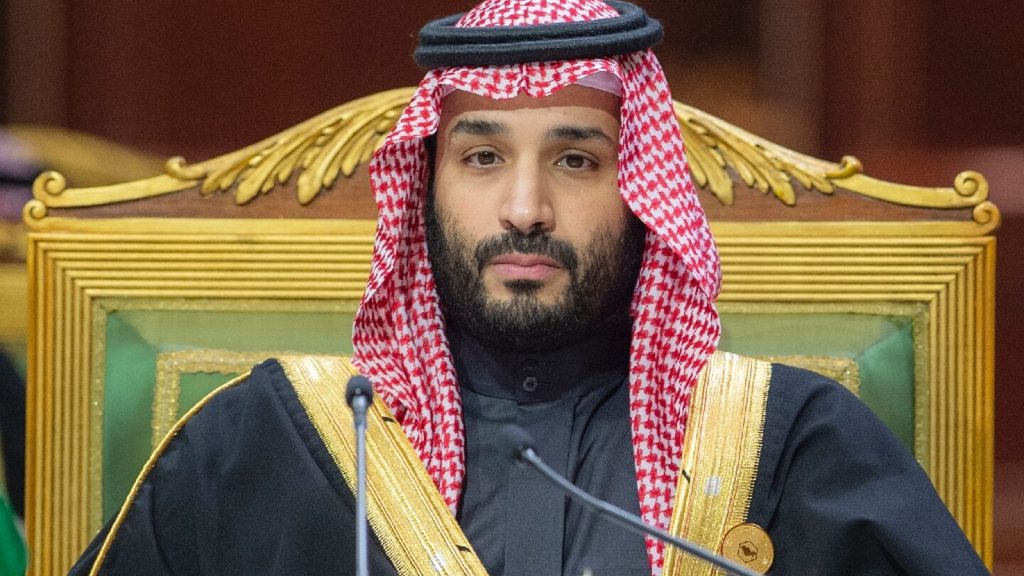
Saudi Crown Prince Mohammed bin Salman, having charmed and plotted his path to power from relative obscurity, has overseen the biggest transformation in the modern history of Saudi Arabia — Bandar AL-JALOUD
“MBS has staked his reputation on this war, and now it’s coming home to roost,” said Dr. Kristian Coates Ulrichsen, a Middle East fellow at Rice University’s Baker Institute. “The attacks on Riyadh’s airport are not just a security failure; they’re a political humiliation. The Crown Prince promised to make Saudi Arabia strong and secure. Instead, the kingdom’s capital is under siege.”
Trump said Saturday night that he would speak to the crown prince after the first attack on the airport.
Ground War Grinds On In Yemen
Inside Yemen, fighting continued unabated. In and around Taiz, the third-largest city and most populous governorate, Saudi planes mounted eight separate strikes on Houthi positions. As many as 60 fighters died on Sunday from both sides.
The governor of Taiz, Nabil Shamsan, issued an urgent call Sunday to lift the Houthi siege, warning that a shortage of medicines meant the city would soon run out of emergency surgical and intensive care services.
“We are facing a humanitarian catastrophe,” Shamsan said in a statement. “The world must act before it’s too late.”
The Houthis claimed the Saudis had mounted 124 raids on Sunday. The Houthi-run Health Ministry said airstrikes on Sana’a killed one person and injured 12 others, including a child killed when a residential home was struck.
Saudi Arabia is seeking to locate Abdul-Malik al-Houthi, the reclusive leader of the Houthi movement, with rumours of his assassination repeatedly circulating. But Saudi Arabia does not appear to have contemporary intelligence on his precise whereabouts, whether in the capital Sana’a or in his stronghold of Saada.
Diplomatic Manoeuvring
On the diplomatic front, Iranian Foreign Minister Abbas Araghchi spoke with Saudi Foreign Minister Faisal bin Farhan on Sunday to explore whether Iran could act as a mediator between the Saudis and the Houthis, a group that Iran has trained and armed.
The offer of mediation comes amid signs of a broader regional realignment. Mohsen Rezaei, the more hardline secretary of Iran’s Supreme National Security Council, claimed Iran was hitting five or six small vessels in the Strait of Hormuz every night, explaining the vessels were being used by the Emirati military to move oil through the strait to larger tankers—thus breaching the blockade Iran is seeking to maintain to push up oil prices.
Esmail Baghaei, the Iranian Foreign Ministry spokesperson, offered a pointed assessment of dealing with the Trump administration, referencing Trump’s treatment of Ukrainian President Volodymyr Zelenskyy.
“Being an enemy of America can be dangerous, but being a friend of America is deadly,” Baghaei said. “You can see for yourself what America’s friendship and enmity with its allies is like.”
A meeting of the UN Security Council in New York on Tuesday is expected to debate a resolution calling the Houthis a foreign terrorist organisation.
Southern Forces Mobilise
The exiled leader of the Southern Transitional Council (STC), Aidarous al-Zubaidi, called for southern forces to fight on all fronts, not just to defend the borders of the former South Yemen, a move likely to be welcomed by Saudi Arabia as it supports the week-old call by the UN-recognised government to drive the Houthis out of the whole of Yemen.
The STC has a vision of an independent South Yemen that would recreate the separate state that existed between 1967 and 1990. The reunification of Yemen at the end of the Cold War proved fragile, and many southerners nurse longstanding grievances about the distribution of resources in the unified state.
However, the STC’s authority has been challenged by Abd al-Rahman al-Mahrami, the Salafist leader who commands the powerful Southern Giants Brigades, a potential fault line in the anti-Houthi coalition.
Economic Fallout
The escalating attacks have sent shockwaves through Saudi Arabia’s economy and raised concerns about broader regional stability.
Aviation analytics firm Cirium reported that approximately 60% of scheduled flights at Riyadh’s airport were cancelled on Monday, following a 99.7% cancellation rate on Sunday. Across Saudi Arabia, more than a third of scheduled flights were expected to be cancelled on Monday, with almost 1,500 flights affected across Riyadh, Jeddah, and Dammam.
International airlines have suspended services. Germany’s Lufthansa Group has cancelled all flights to Riyadh until October 16, while Air France-KLM has extended its suspension until the end of the month. Abu Dhabi’s Etihad Airways, Emirates, and Flydubai have all extended cancellations on Saudi routes.
The US Federal Aviation Administration has urged American airlines to exercise caution when flying to or over Saudi Arabia, while the European Union Aviation Safety Agency widened a Saudi airspace warning, citing missile and drone attacks.
Saudi Arabia’s real GDP is projected to contract by 3.6% this year, reflecting lower oil activity and the compounding effects of regional instability.
The attacks have also put major events scheduled in Riyadh under pressure, including the kingdom’s flagship investment conference and the WPC Energy Congress, where several top oil executives were dropped from the programme.
International Response
The airport attack was met with a wave of international condemnation, including from UN Secretary-General António Guterres and European Commission President Ursula von der Leyen.
“Attacks by Iran’s proxies are pushing the region into a spiral of violence,” von der Leyen wrote on X. “They are destabilising crucial global transport and energy nodes.”
China condemned the attacks, with Foreign Ministry spokeswoman Mao Ning telling reporters: “China condemns the attacks that caused heavy casualties and expresses serious concern over the intensification of the conflict. We call on relevant parties to avoid taking actions that escalate regional tensions.”
The British embassy in Saudi Arabia advised against all but essential travel to Jeddah and Dammam and urged citizens to avoid almost all airports.
On Monday, Saudi Arabia, Pakistan, and Turkey issued a joint statement saying they would move quickly to implement their mutual defence pact, including by speeding up the deployment of military forces in the kingdom. The UK said it would assist with defensive military support, providing refuelling for aircraft working to intercept Houthi missiles.
Saudi Arabia has asked for further assistance from France, Egypt, the UK, and Pakistan as its stock of interceptor missiles runs low.
The American Question
President Trump said Saturday he was weighing whether to join the Saudi military campaign in Yemen, telling reporters: “We’re going to look into it.”
The US has already been assisting with intelligence cooperation and targeting, with about 200 US military advisers stationed in Saudi Arabia. But direct US involvement could lead the Houthis to resume targeting ships passing through the Bab al-Mandab Strait, through which about 10% of global maritime goods transit.
It would also further entangle the US in Middle East wars as the American public grows increasingly frustrated with the continuing Iran conflict. Trump faces midterm elections in November with an unpopular war and soaring prices at home threatening his party’s performance at the polls.
“The last thing Trump needs is another war in the Middle East,” said Dr. Sarah Feuer, a fellow at the Atlantic Council’s Middle East Programs. “But the pressure to support Saudi Arabia is immense, and the Houthis are testing American resolve. This is a classic damned-if-you-do, damned-if-you-don’t scenario.”
The Houthi Threat
The Houthis doubled down on their threats Sunday, warning airlines, passengers, and staff to stay away from Saudi airports.
“We renew our warning to all airlines, experts, employees, workers and travellers against using Saudi airports and airspace, as they are vulnerable to attack and have become a theatre of operations for our forces,” the group said on X.
“The worst is yet to come if Saudi military action in Yemen continues.”
The Houthis launched a military campaign to take Yemen’s Red Sea coast in early September after months of escalating tensions with the Yemeni government and its Saudi patron. The campaign interrupted years of relative calm after a 2022 UN-brokered ceasefire froze frontlines.
Despite the Saudi-supported counteroffensive, the group appears to have held onto its recent gains. It is unclear what further Saudi military action would look like against the Houthis, who resisted years of strikes by an international coalition as well as by the US.
“The Houthis have proven remarkably resilient,” said Elisabeth Kendall, a Yemen expert at the University of Oxford. “They’ve survived years of bombing, a blockade, and internal divisions. They’re not going to be defeated by more of the same. The Saudis need a political strategy, not just a military one.”
A War Without End?
As Saudi Arabia grapples with the immediate crisis, deeper questions loom about the kingdom’s long-term strategy in Yemen and its ability to protect its own citizens.
The war has already killed tens of thousands of Yemenis and created the world’s worst humanitarian crisis, according to the United Nations. The Houthi government’s health ministry said coalition airstrikes over the last six weeks had killed 91 Yemenis and wounded 168, 60% of whom it said were women and children.
Saudi Arabia led an international coalition that intervened against the Houthis in 2015 after the group took over Sana’a and toppled the Yemeni government. Recent Houthi attacks against Saudi energy infrastructure and military advances have pulled Saudi Arabia back into a war it had hoped to wind down.
“The Saudis are trapped,” Ulrichsen said. “They can’t win militarily, they can’t withdraw without losing face, and they can’t negotiate from a position of weakness. The Houthis know this, and they’re exploiting it.”
For the families of those killed in this week’s attacks, the geopolitical calculations matter little. They are left to mourn in a kingdom that promised them safety, and failed to deliver.
As one Riyadh resident, who asked not to be named for fear of reprisal, put it: “The minister says fear has no place in the Saudi lexicon. But tell that to the families of the dead. Tell that to the pilgrims stranded at the airport. Tell that to anyone who has to fly tomorrow.”
“The fear is real. And it’s not going away.”
Conclusion: The Kingdom’s Fear Is Not A Lexicon Problem, It’s A Policy Failure
The official narrative from Riyadh is collapsing under the weight of its own contradictions. While Energy Minister Prince Abdulaziz bin Salman told the WPC Energy Conference that “fear has no place in the Saudi lexicon,” the kingdom’s main international airport remained shut, schools were moved online, foreign airlines suspended services, and more than 1,500 flights were cancelled across Riyadh, Jeddah, and Dammam. The minister promised a response “equally serious” to the attacks. But the evidence in this investigation points to something far more damning: a state that has spent billions on military hardware cannot protect its own capital, its own airports, or its own people.
The failure is not merely tactical. It is strategic, political, and moral. Houthi missiles have repeatedly penetrated Saudi air defences because those defences are stretched across a vast geography and a war without a coherent exit. Interceptor missiles are running low. A parked Airbus A320 was destroyed. At least five other aircraft were damaged. Riyadh’s airport was struck twice in two days. Dammam was hit. Khamis Mushait was targeted. The Houthis have vowed to attack airports across the country, and there is little evidence the kingdom can stop them. The Crown Prince, Mohammed bin Salman, has not been seen in public since Tuesday of last week. There has been no accountability, no explanation, no plan, only silence from the architect of a war that has now come home.
The human cost is not an abstraction. Fourteen people were killed and more than 300 injured in the deadliest attack on Saudi Arabia in a decade. They were not soldiers. They were passengers queuing to board flights. They included a 28-year-old Egyptian flight attendant, Azza Ramzy; a 56-year-old Syrian widow and mother of four, Buthaina Ahmad Oweida, who had fled civil war only to die in an airport terminal; four Saudi citizens; two Bangladeshi workers; a Palestinian; a US citizen; a Jordanian; and a Sudanese national. Hundreds of Bangladeshi pilgrims were stranded. Umrah travellers panicked as smoke filled the terminal. Meanwhile, in Yemen, the siege of Taiz threatens to shut down emergency surgical and intensive care services. Sixty fighters died in a single day. Saudi airstrikes killed a child in Sana’a. The war’s victims are overwhelmingly civilians, migrants, and the poor, people with no say in the geopolitical games that killed them.
The international response has been equally damning. The United States, already providing intelligence and 200 military advisers, is now weighing direct involvement, a move that could drag Washington deeper into another Middle East war while the Houthis threaten global shipping through the Bab al-Mandab Strait. The UK is refuelling aircraft intercepting Houthi missiles. Pakistan and Turkey have signed a defence pact. France and Egypt are being asked for help. Yet none of this addresses the root cause: Saudi Arabia’s inability to either win the war or negotiate an end to it. Iran offers mediation while its hardliners brag about attacking ships in the Strait of Hormuz. The Southern Transitional Council pushes for southern secession, fragmenting the anti-Houthi coalition. The UN Security Council debates labelling the Houthis a terrorist organisation while Yemen starves. The world condemns the attacks, but it also fuels the conflict.
The most damning critique is not that Saudi Arabia is vulnerable. It is that its leadership has prioritised image over safety, war over diplomacy, and energy security over human security. The WPC Energy Conference continued while Riyadh’s airport burned. Top oil executives were dropped from the programme, but the minister still spoke of resilience. That is not resilience. That is denial. “Energy security can’t be taken for granted,” he said. Neither can human lives. The Houthis warned that “the worst is yet to come.” President Trump said, “We’re going to look into it.” The Iranian spokesman mocked America’s friendship as “deadly.” Everyone is talking. No one is stopping the missiles.
The fear that the minister says has no place in the Saudi lexicon is real. It is in the terminal smoke. It is in the cancelled flights. It is in the faces of stranded pilgrims and the families of the dead. It is in the silence of a crown prince who started this war and now cannot face its consequences. Until Riyadh confronts the failure of its Yemen policy, until it chooses accountability over propaganda, diplomacy over bombardment, and the protection of its own people over the projection of strength, the attacks will continue, the death toll will rise, and the fear will remain. The missiles have already written the conclusion. The only question is whether the kingdom will finally read it.
Veritas Press Investigative Analysis Independent journalism examining global affairs, power, diplomacy, and accountability.
Source:Veritas Press C.I.C. | Multi-News Agencies
Help Support Our Work
Readers who believe that truth still matters have power over popular information. When just a few more people step up to support this work, it means more lies exposed, more corruption uncovered, and more accountability where it’s long overdue.
Help Protect Independent Journalism, Which Is Currently Under Attack.
If you believe journalism should serve the public, not the powerful, and you’re able to help, becoming a regular DONOR or a PAID SUBSCRIBER truly makes a difference.
DONATION APPEAL: If you found this reporting valuable, please consider supporting independent journalism.
Your support fuels our fearless, truth-driven journalism. In unity, we endeavour to amplify marginalised voices and champion justice, irrespective of geographical location. We operate independently, with no financial backing from billionaires; our readers support us.
But it’s also extremely important. One of Veritas Press’s greatest assets is its reader-funded model.
1. Reader funding means we can cover what we like. We’re not beholden to the political whims of a billionaire owner. We are a small, independent and impartial organisation. No one can tell us what not to say or what not to report.
2. Reader funding means we don’t have to chase clicks and traffic. We’re not desperately seeking your attention for its own sake; we pursue the stories that our editorial team deems important and believes are worthy of your time.
3. Reader Funding: enables us to keep our website and other social media channels open, allowing as many people as possible to access quality journalism from around the world, particularly those in places where the free press is under threat.
We know not everyone can afford to pay for news, but if you’ve been meaning to support us, now’s the time.
Your donation goes a long way. It helps us:
Keep the lights on and sustain our day-to-day operations
Hire new, talented, independent reporters
Launch real-time live debates, community-focused shows, and on-the-ground reporting
Cover the issues that matter most to our communities, in real time, with depth and integrity
Without your support, independent voices like ours will be silenced.
Furthermore, we have plans to expand our work, but we can’t do it without your support. Every contribution, no matter the size, helps us stay independent and build a truly people-powered media platform.
If you believe in journalism that informs, empowers, and reflects the communities we serve, please donate today.
SEATTLE, TEHRAN — The U.S. Department of Homeland Security (DHS) will allow Iran’s national football team to enter the country 48 hours before their critical World Cup match against Egypt on Friday, a modest concession in a tournament where Team Melli’s travel conditions have sparked claims of oppression and competitive disadvantage.