










Author:
Byline: Investigative Desk
Help support our mission, donate today and be the change. Every contribution goes directly toward driving real impact for the cause we believe in.
NEWCASTLE UPON TYNE — Health authorities have confirmed two separate cases of Hepatitis A among pupils at two primary schools in Newcastle, triggering urgent letters to parents and raising uncomfortable questions about public health preparedness, hygiene infrastructure, and the widening gap between official reassurances and on-the-ground realities in Britain’s most deprived communities.

The UK Health Security Agency (UKHSA) confirmed that pupils at Benton Park Primary School and Central Walker Primary School had contracted the liver infection, prompting health protection teams to work alongside school administrators to implement enhanced hygiene measures. Both schools remain open.
Dr. Jonathan Lawler, consultant in health protection at UKHSA North East, sought to calm fears: “We are working with both schools and other relevant partners to ensure all necessary public health actions are carried out.”
He added: “The cases are not linked and the risk to the public, other pupils and staff remains low. There is no evidence of the illness being transmitted at either school.”
But behind the carefully worded statements lies a more complex picture, one that public health experts, local activists, and community leaders say exposes systemic vulnerabilities that have been decades in the making.
The Science Of A Silent Spreader
Hepatitis A is a viral infection that attacks the liver, typically transmitted through the faecal-oral route, a mode of transmission that speaks volumes about sanitation, hygiene, and socioeconomic conditions.
“The virus is usually acquired by eating food or drinking water that has been contaminated with the virus, and also can also be spread from person to person,” Dr. Lawler explained. “Hepatitis A is present in the faeces of an infected person and can be passed to others if the ill person accidentally contaminates another person, food, water, or the bathroom, toilet, or towels, as a result of poor hand washing.”
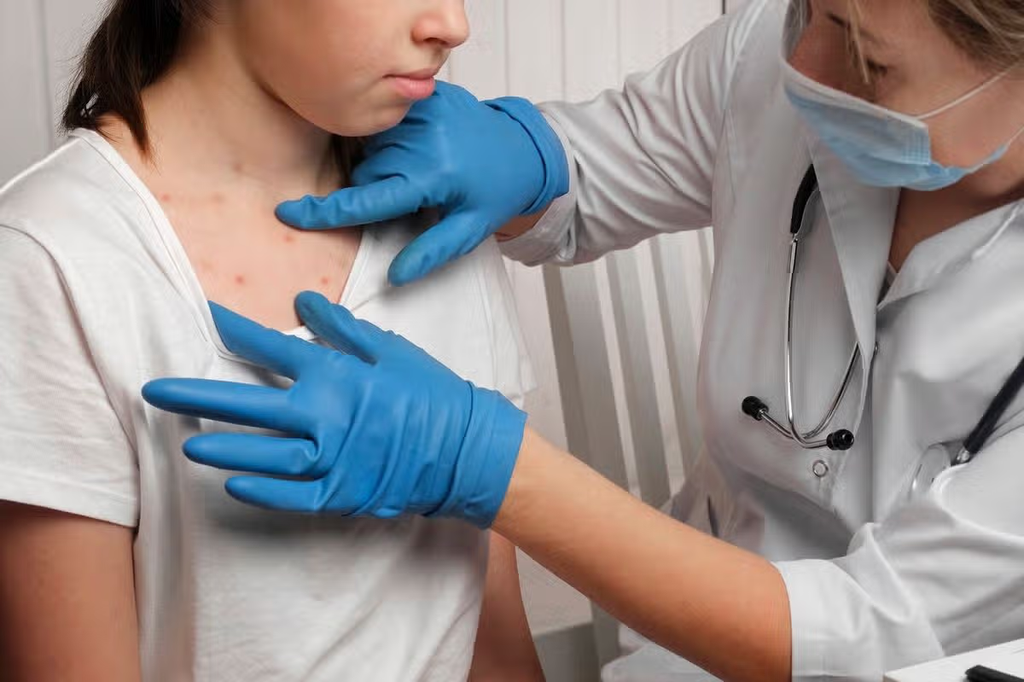
The NHS lists symptoms including high temperature, flu-like symptoms, nausea, abdominal pain, diarrhoea or constipation, pale yellow or grey stools, dark brown urine, itchy skin, and jaundice, the yellowing of skin and eyes that gives the disease its name.
Most people recover fully within three to six months, but for those with underlying liver conditions or compromised immune systems, the consequences can be severe.
A City’s Struggle: Deprivation, Cuts, And The Politics Of Prevention
Newcastle upon Tyne, once the beating heart of Britain’s industrial north, has spent decades grappling with the fallout of de-industrialisation, austerity, and the systematic erosion of public services. The city ranks among the most deprived local authority areas in England, with child poverty rates consistently exceeding national averages.
“This is not just about two cases in two schools,” said Dr. Sarah Whitfield, a public health researcher at Newcastle University who has studied health inequalities in the North East for over a decade. “This is about the conditions that allow preventable diseases to emerge in the first place. When you cut school budgets, when you reduce public health funding, when you allow housing stock to deteriorate, you create the perfect storm for infections like Hepatitis A.”
The UK’s public health grant to local authorities has been cut by nearly 25% in real terms since 2015, according to analysis by the Health Foundation. Newcastle City Council’s public health budget has shrunk correspondingly, leaving fewer resources for health visiting, school nursing, and community outreach.
“It’s a postcode lottery,” said Dr. Whitfield. “Affluent areas have the resources to respond quickly. Deprived areas are left to pick up the pieces with dwindling support.”
Voices From The Ground: Parents, Teachers, And The Anxiety Of Uncertainty
At the school gates of Benton Park Primary, parents expressed a mixture of concern and frustration.
“It’s worrying, of course it is,” said Emma Richardson, 34, a mother of two. “You send your child to school thinking they’re safe, and then you get a letter saying there’s been a case of Hepatitis A. You start questioning everything, are the toilets clean? Are the kids washing their hands properly? Is anyone actually checking?”
Another parent, who asked not to be named, was more pointed: “The letter tells us the risk is low, but it doesn’t tell us what we’re supposed to do. Do we keep our kids off school? Do we get them tested? It feels like we’re being left to figure it out ourselves.”
A teaching assistant at Central Walker, speaking on condition of anonymity, described a school environment under strain.
“We’ve had years of cuts. We don’t have the same level of support that we used to. We do our best, but when you’re dealing with 30 kids in a class and you’re also trying to make sure they’re washing their hands properly, it’s not easy.”
The National Education Union (NEU) has repeatedly warned that inadequate funding for school facilities, including toilets and handwashing stations, poses a risk to pupil health.
“Schools have been crying out for investment in basic infrastructure for years,” said a spokesperson for the NEU’s Northern region. “Handwashing is a basic public health measure, but it requires working facilities, hot water, soap, and the staff to supervise. Cuts have consequences.”
The UKHSA’s Response: Reassurance Or Complacency?
The UKHSA has sought to project calm, emphasising that the risk to the wider public remains low.
“The schools are working with partners and following health protection advice to increase hygiene measures to prevent transmission,” Dr. Lawler said.
But critics argue that the agency’s messaging is overly reassuring and fails to address the root causes of outbreaks.
“The UKHSA’s job is to manage risk, but there’s a difference between managing risk and downplaying it,” said Dr. David McCoy, a professor of global health at Queen Mary University of London. “When you have two cases in two schools in the same city, that’s not nothing. It suggests there may be undetected transmission in the community.”
Hepatitis A is not routinely vaccinated against in the UK because the risk of infection is considered low. The NHS recommends vaccination only for high-risk groups, including travellers to endemic countries, people with chronic liver disease, and certain occupational groups.
But some experts argue that this calculus may need to be revisited.
“We’ve seen a rise in Hepatitis A cases in recent years, particularly in urban areas with high levels of deprivation,” said Dr. McCoy. “The assumption that this is a disease of the developing world is outdated. We need to be thinking about targeted vaccination programmes in at-risk communities.”
A National Trend? Hepatitis A On The Rise
The Newcastle cases are not isolated. According to UKHSA data, Hepatitis A cases in England have fluctuated in recent years, with outbreaks linked to imported food, person-to-person transmission in close-contact settings, and, increasingly, transmission within communities experiencing homelessness and substance use.
In 2023, the UKHSA reported a cluster of Hepatitis A cases in the South West linked to contaminated food. In 2024, outbreaks were reported in several urban centres, prompting calls for improved surveillance and response.
“The pattern we’re seeing is consistent with what we’d expect in a country with growing inequality,” said Dr. Whitfield. “Infectious diseases are not equal-opportunity threats. They disproportionately affect those who are already marginalised.”
The Global Context: A Preventable Disease
Globally, Hepatitis A remains a significant public health challenge. The World Health Organization (WHO) estimates that 1.4 million cases occur annually, though the true burden is likely much higher due to under-reporting.
The disease is endemic in many low- and middle-income countries, where access to clean water and sanitation remains limited. In high-income countries, outbreaks are often linked to imported food, travel, or close-contact transmission in institutional settings.
“The irony is that Hepatitis A is entirely preventable,” said Dr. McCoy. “We have effective vaccines, we know how to prevent transmission, and yet we still see outbreaks. The problem is not a lack of knowledge, it’s a lack of political will and investment.”
The Politics Of Public Health: Austerity’s Long Shadow
The Newcastle cases come amidst a broader crisis in the UK’s public health infrastructure. The Covid-19 pandemic exposed deep fissures in the system, but many of those fissures pre-dated the pandemic, the result of decades of underfunding and fragmentation.
“Public health has been the poor relation of the NHS for years,” said Dr. Whitfield. “It’s always the first thing to be cut and the last thing to be restored. But you can’t have a healthy society without a robust public health system.”
The UK’s Health Security Agency, established in 2021 to replace Public Health England, has faced criticism for its handling of various outbreaks, including the 2022 mpox outbreak and the ongoing challenges of Covid-19 surveillance.
“We need a public health system that is adequately funded, properly staffed, and integrated with local communities,” said Dr. McCoy. “That’s not a luxury, it’s a necessity.”
What Parents Need To Know
For now, parents at Benton Park and Central Walker are being advised to ensure their children practice good hand hygiene and to be vigilant for symptoms.
The NHS advises that anyone with Hepatitis A should stay off work or school for seven days after symptoms begin, and should avoid close contact with others during that period.
Most people recover fully, but a small number may develop more serious liver problems. Vaccination remains the best protection for those at high risk.
“If your child has symptoms, jaundice, dark urine, pale stools, nausea, contact your GP,” said Dr. Lawler. “Most cases are mild, but it’s important to get checked.”
Conclusion: A Warning Sign We Cannot Ignore
The Hepatitis A cases in Newcastle are, in one sense, a local story: two children, two schools, two letters home. But they are also a symptom of something larger: a public health system under strain, a society marked by deepening inequality, and a political class that has consistently prioritised short-term savings over long-term resilience.
“We can’t keep treating outbreaks as isolated incidents,” said Dr. Whitfield. “They’re warning signs. And if we ignore them, we do so at our peril.”
As the UKHSA continues its investigation and schools implement enhanced hygiene measures, the question remains: will this be a wake-up call, or just another footnote in the long history of public health neglect?
References and Further Reading:
- UK Health Security Agency (UKHSA). “Hepatitis A: Guidance, Data and Analysis.” Updated 2024.
- NHS. “Hepatitis A.” NHS.uk, 2024.
- Health Foundation. “The Impact of Austerity on Public Health Funding.” 2023.
- World Health Organization. “Hepatitis A Fact Sheet.” 2024.
- National Education Union. “School Funding Crisis: The Impact on Pupil Health and Wellbeing.” 2023.
- Interviews with parents, teachers, and public health experts conducted for this article.
Veritas Press Investigative Analysis
Independent journalism examining global affairs, power, diplomacy, and accountability.
Source: Veritas Press C.I.C. | Multi-News Agencies
Help Support Our Work
Readers who believe that truth still matters have power over popular information. When just a few more people step up to support this work, it means more lies exposed, more corruption uncovered, and more accountability where it’s long overdue.
Help Protect Independent Journalism, Which Is Currently Under Attack.
If you believe journalism should serve the public, not the powerful, and you’re able to help, becoming a regular DONOR or a PAID SUBSCRIBER truly makes a difference.
DONATION APPEAL: If you found this reporting valuable, please consider supporting independent journalism.
Your support fuels our fearless, truth-driven journalism. In unity, we endeavour to amplify marginalised voices and champion justice, irrespective of geographical location. We operate independently, with no financial backing from billionaires; our readers support us.
But it’s also extremely important. One of Veritas Press’s greatest assets is its reader-funded model.
1. Reader funding means we can cover what we like. We’re not beholden to the political whims of a billionaire owner. We are a small, independent and impartial organisation. No one can tell us what not to say or what not to report.
2. Reader funding means we don’t have to chase clicks and traffic. We’re not desperately seeking your attention for its own sake; we pursue the stories that our editorial team deems important and believes are worthy of your time.
3. Reader Funding: enables us to keep our website and other social media channels open, allowing as many people as possible to access quality journalism from around the world, particularly those in places where the free press is under threat.
We know not everyone can afford to pay for news, but if you’ve been meaning to support us, now’s the time.
Your donation goes a long way. It helps us:
- Keep the lights on and sustain our day-to-day operations
- Hire new, talented, independent reporters
- Launch real-time live debates, community-focused shows, and on-the-ground reporting
- Cover the issues that matter most to our communities, in real time, with depth and integrity
Without your support, independent voices like ours will be silenced.
Furthermore, we have plans to expand our work, but we can’t do it without your support. Every contribution, no matter the size, helps us stay independent and build a truly people-powered media platform.
If you believe in journalism that informs, empowers, and reflects the communities we serve, please donate today.
Submissions
For the secure submission of documentation, testimonies, or exclusive investigative reports from any global location, please utilise the following contact details for our Investigations Desk: mailto:enquiries@veritaspress.co.uk or mailto:editor@veritaspress.co.uk
NEWCASTLE UPON TYNE — Health authorities have confirmed two separate cases of Hepatitis A among

Serbian Orthodox leader’s unprecedented intervention exposes the systematic erosion of Christianity’s oldest continuous community, and
GENEVA — A United Nations fact-finding mission has concluded there are “reasonable grounds to believe”

Iran’s GDP is projected to contract by 5.4 to 6.1% in 2026, its worst performance

The Trump administration is preparing a $2.8 billion weapons package for Israel containing 40,000 2,000-pound

Film alleges mass civilian deaths are routinely built into military decisions amid Israel’s genocidal war

The Israeli rights group says violence, displacement, economic strangulation, and settlement expansion form part of

Houthi forces have captured the historic Red Sea port of Mocha and are advancing on

London’s historic sanctions against Israeli settlements mark a watershed moment in UK foreign policy, but
With 95% of Gaza’s population now wholly dependent on aid and more than 90% stripped