Kamran Faqir is a volunteer investigative journalist and writer committed to exposing hidden truths and amplifying underreported stories. Driven by social justice, he brings sharp insight and fearless truth-telling to independent journalism. NUJ registered.
Listen to this article
Help support our mission, donate today and be the change. Every contribution goes directly toward driving real impact for the cause we believe in.
Article Date Published:
Article Date Modified:
18 minutes
Views:8
Sir Stephen Timms’ year-long review has finally called time on a “dehumanising” PIP regime, recommending fast-tracks, simpler forms and a broader test of daily-life impact, but by making the benefit easier to claim while refusing to say how it should be paid for, it has handed Andy Burnham an explosive dilemma: accept a kinder system that the IFS warns will inflate a £41.5bn bill, or embrace Alan Milburn’s rival demand for £3.6bn of cuts to young claimants and risk another Labour rebellion. As disabled people demand trust, fairness and the Treasury demands savings, the White Paper due next year will decide who pays for compassion.
Sir Stephen Timms’ year-long review has diagnosed the sickness at the heart of Personal Independence Payment with unusual candour. But its prescription, a kinder, faster, more personalised system that does not attempt to cut spending, has triggered a fierce dispute over whether compassion and fiscal control can coexist. As Andy Burnham prepares to reconcile Timms’ vision with Alan Milburn’s demand for £3.6bn in cuts to young claimants, the hardest question remains unanswered: who will be made to pay for a benefit the government now admits has been dehumanising the very people it was designed to support?
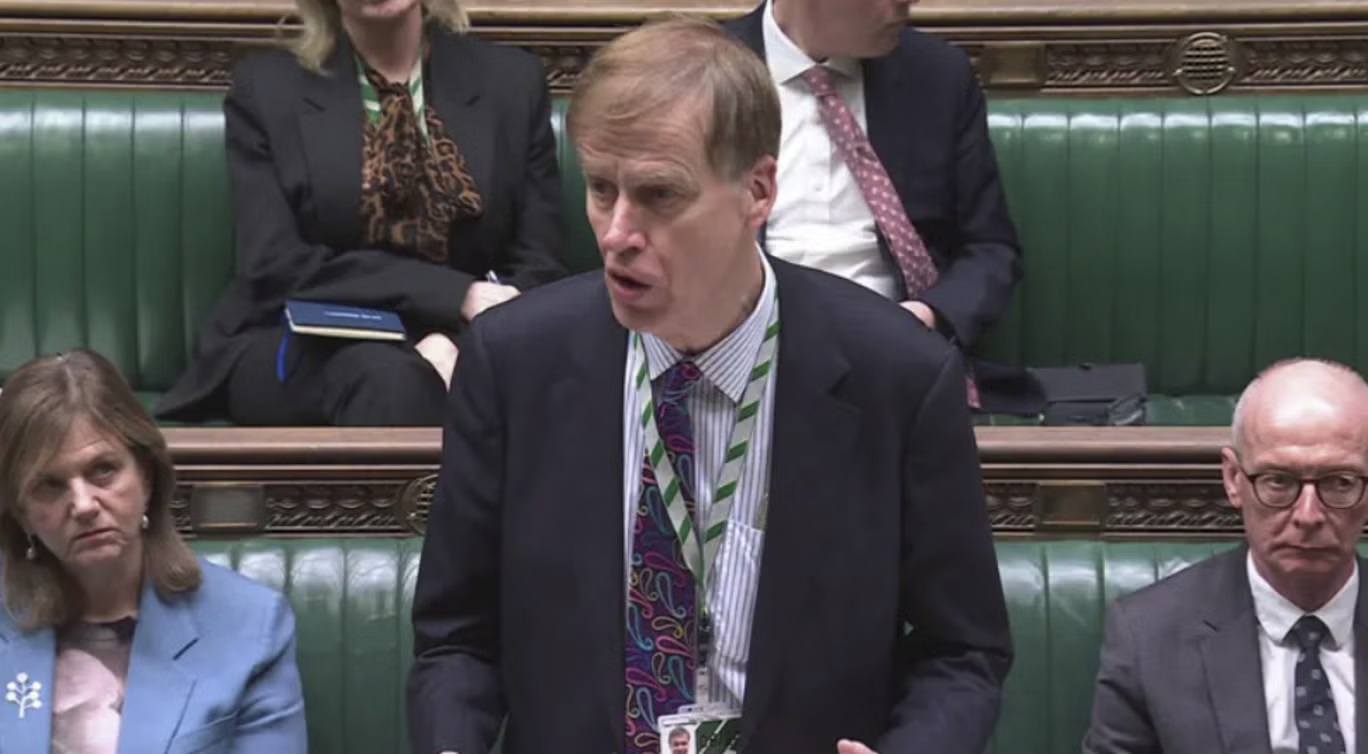
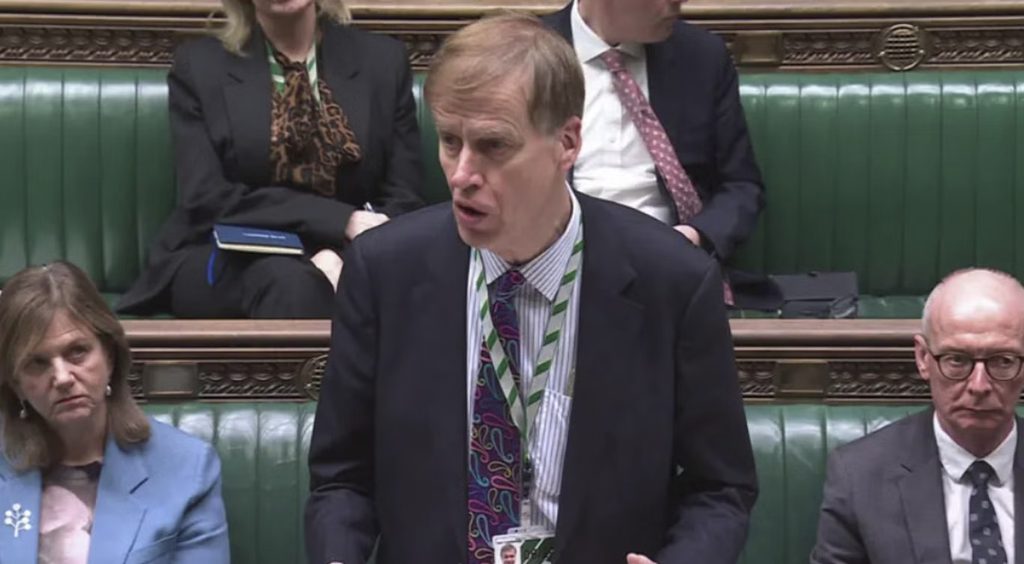
Sir Stephen Timms has published his long-awaited report on Tuesday. Disability benefits reform could drive up welfare bill, experts warn.
The publication of the Timms Review on 24 November 2026 was supposed to mark a break with the punitive logic that has dominated disability welfare reform for more than a decade. Instead, it has exposed a contradiction at the heart of the government’s approach that may prove more politically explosive than the cuts it was designed to avoid.
Sir Stephen Timms, the social security minister who co-chaired the review with disability rights advocates Clenton Farquharson and Sharon Brennan, described his findings in language that would once have been unthinkable from a government minister. The assessment process for PIP, the main disability benefit in England and Wales, was “not fit for purpose”, “adversarial” and “dehumanising”. Claimants, he told MPs, had been left “fearful that work, treatment or greater independence will count against them”. The system asked only “what somebody cannot do”, ignoring their needs, aspirations, barriers and extra costs.
The review’s recommendations are, on their own terms, a significant advance. Cash payments would remain central and unrestricted, ruling out the vouchers that disability charities had feared. People with terminal illnesses or severe, lifelong conditions would be fast-tracked without a full medical assessment. The points-based test would be replaced by a broader assessment of how a condition affects daily life and increases costs. The application form would be simplified, free independent advisers would be offered, and claimants would have a choice of in-person, video or paper assessments.
The government immediately accepted two recommendations: an end to repeated award reviews for people whose conditions are lifelong, progressive or unlikely to improve, and a new fast-track route for those with the most serious, well-evidenced needs, including people receiving end-of-life care. For the charities that had campaigned for years against the cruelty of repeat assessments, this was a genuine victory. Jon Sparkes of Mencap said he was “very pleased” the review had “listened to the thousands of people who have campaigned with us”. David Newbold of Parkinson’s UK called it “fantastic” that long-standing calls for better assessor training and an end to unnecessary reviews had been reflected.
But the warmth of that welcome has not obscured a more uncomfortable reality. The Timms Review was explicitly instructed to operate within the Office for Budget Responsibility’s projections for future PIP expenditure. It made no recommendations to cut the welfare bill. And yet its own proposals, making the application process easier, providing advocacy, simplifying forms, replacing the points test with a more holistic assessment, are, by the admission of the government’s own favoured economists, likely to increase the number of people who successfully claim.
The Economists’ Warning: Easier Access Means Higher Spending
The Institute for Fiscal Studies (IFS) was blunt. Eduin Latimer, a senior research economist, said the review’s short-term changes to the application process “would likely increase the number of claimants, and hence spending”. If the government wished to make PIP easier to apply for while keeping spending in line with current projections, he added, “it would likely have to tighten eligibility criteria or reduce award amounts”. The Resolution Foundation reached a similar conclusion, warning of “an uptick in caseload or costs”. Louise Murphy, a senior economist at the foundation, told *The Independent* that the government “should at least accept that there might be some costs in the shorter term”, adding: “I don’t think we can pretend that there’s no cost at all”.
The numbers involved are not trivial. PIP is claimed by 4.1 million people in England and Wales, up from 2.7 million five years ago. Total spending is forecast to be £32.1bn this year and is projected to reach £41.5bn by 2030/31. The Resolution Foundation has calculated that real-terms spending on working-age disability benefits has more than doubled since PIP was introduced in 2013. Any reform that expands access without a corresponding tightening of eligibility is, on the Treasury’s arithmetic, a reform that costs money.
The political danger for Andy Burnham is acute. The prime minister has repeatedly committed himself to bringing the welfare bill down, telling reporters before the review’s publication that he “won’t shy away from reforming the system”. Yet he is also acutely aware of the backbench rebellion that helped drive his predecessor, Sir Keir Starmer, from office after a planned £4bn–£5bn package of welfare cuts was abandoned in the face of Labour opposition. Burnham now faces a review that his own government commissioned, that his own minister produced, and that makes the system more generous at precisely the moment he is under pressure from the Conservatives and Reform UK to make it less so.
Two Reviews, Two Visions, One Impossible Reconciliation
The collision between the Timms Review and the Milburn Review is not merely a technical disagreement about eligibility criteria. It is a clash of philosophies, and it will define the White Paper on welfare reform expected early next year.
Alan Milburn, the former Labour health secretary, published his review into youth unemployment a week before Timms. His central proposal was radical: scrap PIP and the health element of Universal Credit for 16- to 24-year-olds, replacing them with a “youth allowance” set at the basic rate of Universal Credit, with a higher rate for those living independently. The savings would be £3.6bn a year, equivalent to halving the total health and disability benefit support received by young people. Milburn argued that a different approach was needed to tackle the NEET crisis, and that the current system trapped young people in dependency.
The Timms Review explicitly rejects this approach. It recommends retaining PIP for all adults, regardless of age, and warns that creating a separate system for under-25s would produce “large cliff edges” and extra administrative complexity. Sir Stephen, when pressed in the Commons by Labour MP Neil Duncan-Jordan on how it could be right that a 24-year-old and a 26-year-old were treated differently, appeared to concede some sympathy with Milburn’s argument. He said the Milburn report had argued “pretty compellingly” that “a different approach is needed for young people”. But his own review’s recommendations point in the opposite direction.
The Resolution Foundation, which has consistently argued for a coherent overhaul rather than a patchwork of competing reforms, has described the two reviews as occupying “opposite extremes”. Lindsay Judge, its research director, said Milburn had outlined “implausibly large cuts on young people” without explaining how they would be delivered, while Timms had avoided the question of savings “entirely”. The foundation’s proposed solution, a “Best of Milburn-Timms” White Paper that combines the Timms assessment reforms with a tightening of eligibility for the one in six working-age claimants who report no additional costs, saving up to £4.4bn, is elegant on paper. But it requires the government to make explicit choices about who will lose support, and those choices are precisely what the Timms Review was designed to avoid.
Andrea Egan, general secretary of UNISON, has warned that accepting Milburn’s logic would create a “two-tier welfare system” in which disabled 23-year-olds are treated as having lesser costs than disabled 30-year-olds. “Disability support must be exactly that, based on need, sufficient to meet that need and never used as a disciplinary tool,” she said. The Disability Benefits Consortium, which includes Scope and other major charities, has similarly warned that any move to strip cash support from young claimants would be “cruel” and would undermine the principle that PIP is an extra-costs benefit, not a work-incentive scheme.
The Human Cost Of The Status Quo, And The Risk Of Reform
The case for change is not abstract. The testimony gathered by the Timms Review is a catalogue of bureaucratic cruelty. Claimants described the process as “dehumanising”, “soul-destroying” and “degrading”. More than 90 per cent of respondents to one survey found the experience of claiming PIP to be negative. Some said the assessment process had caused them “severe psychological distress to the point of being suicidal”.
Frankie Bowyer of Scope told the BBC that disabled people found the process “stressful and degrading”. “People have described to us feeling that assessors were trying to catch them out, trying to minimise their needs and that’s really not what we want to see,” she said. Alicia Cartwright, a power wheelchair user and trained benefits adviser from Preston who receives about £500 every four weeks in PIP, told the BBC that even she found the assessment “intimidating and confusing”. “Trust disabled people to know what their needs are,” she said. “Of course, have some checks in there, absolutely, but we really need to start from a place of trust. Currently, in any dealings with the benefits system, you feel like you’re on trial”. Cartwright’s disability-related costs run to a further £1,500 a month, which she pays out of her wages. The mobility component of her PIP pays for her wheelchair; the rest goes on paying someone to help her around the house.
These are the lived realities that the Timms Review sought to address. But the risk is that a reformed system, however humane in its intentions, becomes a victim of its own success. If the application process is made easier, if advocacy is provided, if the points-based test is replaced by a more nuanced assessment of daily life impact, then more people will apply, and more people will qualify. The IFS warns that this is the likely outcome. The Resolution Foundation concurs. And the Treasury, which is already forecasting a £41.5bn bill by the end of the decade, will not passively accept an expansion of eligibility without demanding offsetting savings elsewhere.
The Timms Review’s answer to this dilemma is to propose that overall spending should stay within existing budgets, with more money going to those with high care costs and less, or nothing, going to those without extra disability-related expenses. This is the review’s most politically sensitive recommendation, and it is the one that has received the least attention. It implies that some current claimants, those who cannot demonstrate additional costs, will lose their entitlement. The Resolution Foundation estimates that ending ongoing PIP payments for the one in six working-age claimants who report no additional costs would save up to £4.4bn. But the review does not specify how those claimants would be identified, what evidence would be required, or how the government would avoid the same kind of adversarial, suspicion-laden assessment process that Timms himself has condemned.
The Timms Review was presented by ministers as a groundbreaking “co-produced” policy initiative, an attempt to restore trust among disabled people after the collapse of Starmer’s PIP cuts. The steering group included twelve members, almost all with lived experience of disability or long-term health conditions, and each member, including Timms, had one vote. The review heard from more than 40,000 people and organisations. Its final report is framed as an exercise in “re-humanising” a benefit that had lost sight of the humanity of those who rely on it.
Yet the co-production process has not insulated the review from criticism from within the disability movement. Disability Rights UK has warned that the draft recommendations, published in September, left “much room for speculation and interpretation on whether some Disabled people will be treated less favourably than others”. The organisation expressed “major concerns” that a future PIP would no longer be a cash-only benefit for all, but would instead see some recipients receiving a mixture of cash, services and information, a shift that could, in practice, reduce the autonomy that cash payments provide. The Work and Pensions Committee has also raised concerns about the extent to which the review was genuinely co-produced, writing to Timms to ask for a detailed update on how disabled people’s organisations were being engaged. DPAC Cymru went further, accusing the review of failing to meet “even the most basic standards of co-production” and of treating Welsh disabled people “with disregard”.
These criticisms do not invalidate the review’s achievements. The fast-tracking of terminally ill claimants and the end of repeat assessments for people with lifelong conditions are real improvements that will make a material difference to thousands of lives. But they expose a deeper tension: a review that was designed to rebuild trust by listening to disabled people has produced recommendations that, if implemented in full, would still leave the government facing the same impossible question it has avoided for more than a decade. How do you control the cost of a benefit that is supposed to meet the extra costs of disability without making disabled people poorer?
The White Paper Trap
The government’s response to the Timms Review has been carefully calibrated to avoid committing to anything that might provoke a backbench revolt. Ministers have accepted the two recommendations that cost relatively little and are difficult to oppose, fast-tracking the most severely disabled and ending repeat assessments for those with lifelong conditions. The wider recommendations will be considered “carefully” and answered, “in the new year”. A White Paper on welfare reform is expected early next year, bringing together the Timms and Milburn strands.
That White Paper will be the moment of truth. It will have to decide whether to retain PIP for under-25s, as Timms recommends, or to scrap it for that age group, as Milburn proposes. It will have to decide whether to make the application process easier without tightening eligibility, as Timms recommends, or to impose the kind of eligibility restrictions that the IFS warns are the logical corollary of cost-neutrality. It will have to decide whether to accept the Resolution Foundation’s proposed £4.4bn saving from ending PIP for claimants without extra costs, or to find the money elsewhere. And it will have to do all of this while managing a Labour Party that has already shown it is willing to rebel against welfare cuts, and a public that, according to NatCen’s Social Attitudes Survey, is more sympathetic to disabled people than the current political debate suggests. Nearly half of the public (49%) say there should be more spending on disability benefits, even if it leads to higher taxes, while only 7% favour reducing them.
Helen Whately, the shadow work and pensions secretary, has seized on the IFS’s warning to argue that the Timms Review will “make PIP easier to get” and produce “more claims and an even higher bill”. She has accused the review of “tinkering around the edges of a failed system” and of failing to tackle the growth in claims for mental health conditions and ADHD. Sir Stephen rejects the charge of tinkering. “This is a fundamentally new approach to the assessment for this benefit,” he insisted. But the exchange captures the political dynamic precisely: the government is caught between a review that says the system must become more generous and humane, and an opposition, and a significant section of its own party, that believes the only responsible course is to make it less generous and more restrictive.
Conclusion: The Unresolved Question
The Timms Review has done something valuable: it has forced the government to admit, in unambiguous terms, that the PIP system has been failing the people it was designed to help. It has recommended practical changes that would reduce the bureaucratic cruelty that claimants have endured for years. It has kept cash at the heart of the benefit, resisted means-testing, and rejected the voucherisation that disability charities feared. These are not insignificant achievements.
But it has also exposed the limits of reform without redistribution. A benefit that is made easier to access, but whose overall budget is capped, must inevitably become harder to qualify for in other ways. The review’s proposal to redirect money towards those with high care costs, and away from those without additional disability-related expenses, is a recognition of this arithmetic. But it is a recognition that the review itself does not fully confront. It leaves the hardest question, who will lose, and by how much, to a White Paper that will be written in the full glare of political pressure from all sides.
Andy Burnham came to office promising to bring the welfare bill down without “crude cuts”. The Timms Review has given him a roadmap for making the system more humane. The Milburn Review has given him a roadmap for making it cheaper. The two roadmaps lead in opposite directions. The White Paper will reveal which one he chooses, and whether the compassion that Sir Stephen Timms has articulated so powerfully can survive contact with the fiscal realities that his own review was designed to avoid.
Veritas Press Investigative Analysis Independent journalism examining global affairs, power, diplomacy, and accountability.
Source:Veritas Press C.I.C. | Multi-News Agencies
Help Support Our Work
Readers who believe that truth still matters have power over popular information. When just a few more people step up to support this work, it means more lies exposed, more corruption uncovered, and more accountability where it’s long overdue.
Help Protect Independent Journalism, Which Is Currently Under Attack.
If you believe journalism should serve the public, not the powerful, and you’re able to help, becoming a regular DONOR or a PAID SUBSCRIBER truly makes a difference.
DONATION APPEAL: If you found this reporting valuable, please consider supporting independent journalism.
Your support fuels our fearless, truth-driven journalism. In unity, we endeavour to amplify marginalised voices and champion justice, irrespective of geographical location. We operate independently, with no financial backing from billionaires; our readers support us.
But it’s also extremely important. One of Veritas Press’s greatest assets is its reader-funded model.
1. Reader funding means we can cover what we like. We’re not beholden to the political whims of a billionaire owner. We are a small, independent and impartial organisation. No one can tell us what not to say or what not to report.
2. Reader funding means we don’t have to chase clicks and traffic. We’re not desperately seeking your attention for its own sake; we pursue the stories that our editorial team deems important and believes are worthy of your time.
3. Reader Funding: enables us to keep our website and other social media channels open, allowing as many people as possible to access quality journalism from around the world, particularly those in places where the free press is under threat.
We know not everyone can afford to pay for news, but if you’ve been meaning to support us, now’s the time.
Your donation goes a long way. It helps us:
Keep the lights on and sustain our day-to-day operations
Hire new, talented, independent reporters
Launch real-time live debates, community-focused shows, and on-the-ground reporting
Cover the issues that matter most to our communities, in real time, with depth and integrity
Without your support, independent voices like ours will be silenced.
Furthermore, we have plans to expand our work, but we can’t do it without your support. Every contribution, no matter the size, helps us stay independent and build a truly people-powered media platform.
If you believe in journalism that informs, empowers, and reflects the communities we serve, please donate today.
You Can Make Direct Bank Transfer Donations To
Bank Name: Bank Of Scotland
Account Name: Veritas Press C.I.C.
Sort code: 80-22-60
Account Number: 27540469
IBAN #: GB18-BOFS-6027-5404-69
Donate Online
Submission
For the safe submission of documentation, testimonies, or exclusive investigative reports from anywhere in the world, please use the following contact details for our Investigations Desk: mailto:enquiries@veritaspress.co.uk or mailto:editor@veritaspress.co.uk.
SEATTLE, TEHRAN — The U.S. Department of Homeland Security (DHS) will allow Iran’s national football team to enter the country 48 hours before their critical World Cup match against Egypt on Friday, a modest concession in a tournament where Team Melli’s travel conditions have sparked claims of oppression and competitive disadvantage.