Kamran Faqir is a volunteer investigative journalist and writer committed to exposing hidden truths and amplifying underreported stories. Driven by social justice, he brings sharp insight and fearless truth-telling to independent journalism. NUJ registered.
Listen to this article
Help support our mission, donate today and be the change. Every contribution goes directly toward driving real impact for the cause we believe in.
Article Date Published:
Article Date Modified:
16 minutes
Views:76
Britain’s Security Chief Reveals Terrorists Already Exploiting AI as State Threats Quadruple
LONDON — Britain’s domestic intelligence agency has issued its starkest warning yet about the convergence of artificial intelligence and terrorism, revealing that extremists are already attempting to weaponise emerging technologies in ways that could fundamentally alter the threat landscape facing the United Kingdom.
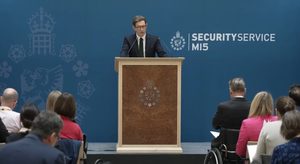
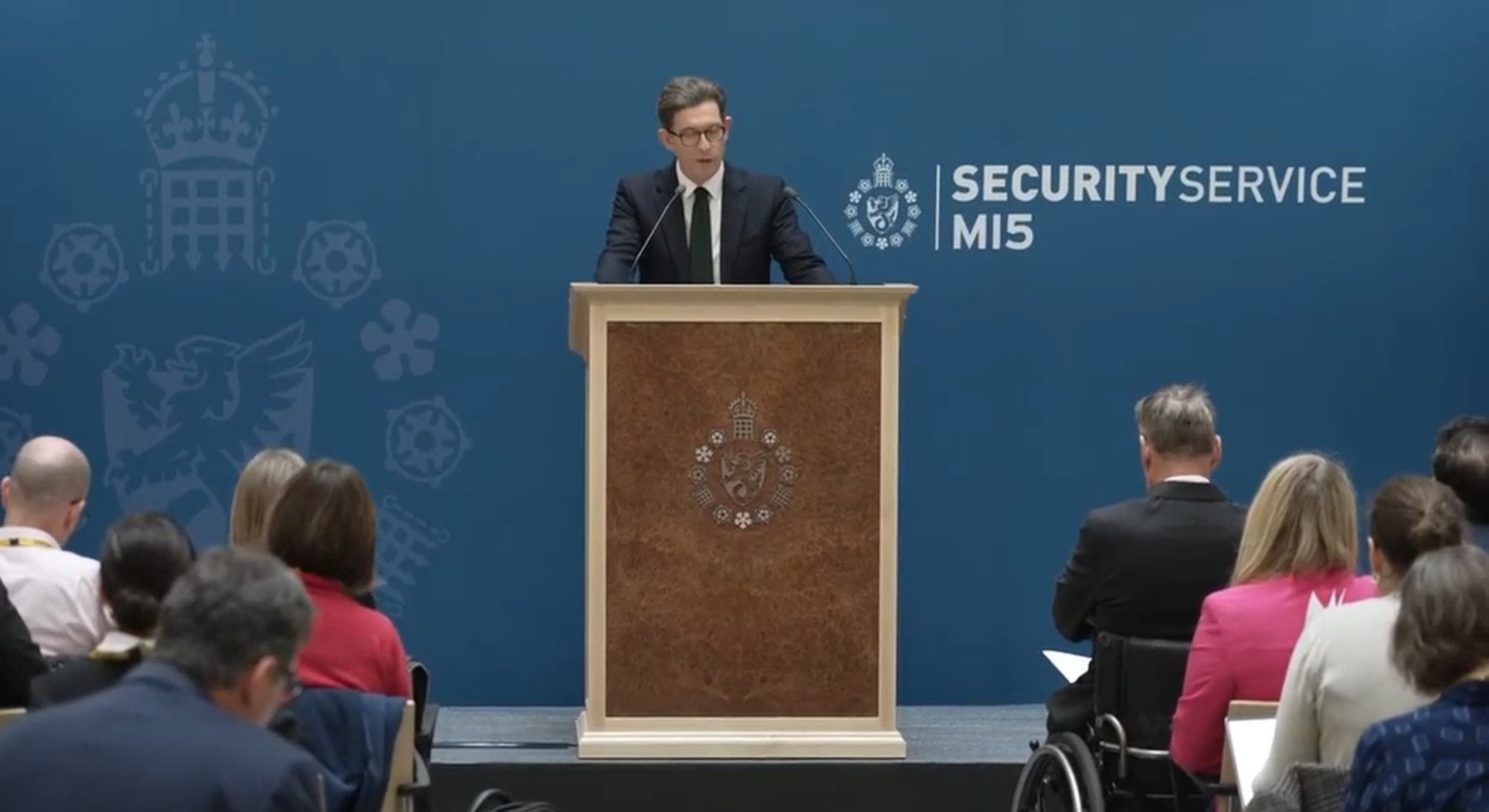
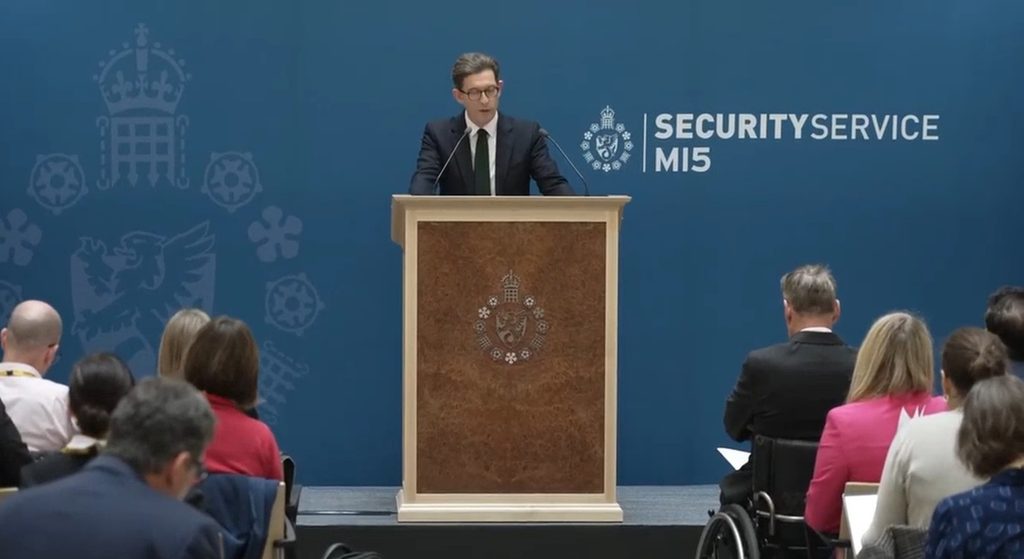
In his annual threat assessment delivered at MI5 headquarters in London on Tuesday, Director General Sir Ken McCallum warned that the UK has entered “a new era of national security”, one in which artificial intelligence is “already supercharging” threats from hostile states and terrorist organisations alike.
“We’ve caught terrorists seeking to exploit AI to improve their reconnaissance and attack methodologies, with AI-enabled drones adding a new twist,” Sir Ken told an audience of journalists, security officials, and invited guests at Thames House.
But it was his warning about biological weapons that sent the sharpest chill through the room.
“Not yet realised, but the misuse case to which I’d attach greatest weight, is AI’s potential to change the stakes on existing or even new bio-weapons,” he said.
The AI Threat Assessment Centre: Britain’s New Front Line
In response to these emerging dangers, MI5 has established a dedicated AI Threat Assessment Centre (AITAC), a specialised unit housed within its headquarters that draws on expertise from across government to evaluate the national security implications of artificial intelligence.
“This team is producing all-source assessments which separate the bluster from the realities,” Sir Ken explained.
The centre represents a significant institutional shift for MI5, which has historically focused on human intelligence and traditional counter-terrorism operations. The creation of AITAC signals that Britain’s security apparatus now views AI as a threat vector requiring dedicated, sustained attention.
Speaking to journalists after his speech, Sir Ken elaborated on the specific concerns driving the initiative.
“In the case of bioweapons, one concern would be that comparatively low-sophistication actors may have a capability uplift in the AI era, if the guardrails don’t operate or do not function as intended,” he said.
The MI5 chief explained that for decades, terrorist organisations have sought chemical or biological weapons capabilities but faced significant technical barriers.
“It has long been the case that many terrorists would dearly love to have some kind of capability around chemical or biological weaponry, but that hasn’t been easy for them to achieve,” Sir Ken said. “One risk is that AI could enable knowledge to get into the hands of people we would not want to have that knowledge.”
He outlined a second, more alarming scenario: “The possibility that AI could generate novel pathogens not previously seen, so these are among the risks that we are seeking to address.”
The UK Intelligence Community, comprising MI5, GCHQ, and MI6, is working closely with the UK’s AI Security Institute to address these threats.
State Threats: More Resources Than The Cold War
Perhaps the most striking revelation from Sir Ken’s address was the scale of the shift in MI5’s operational focus. The agency’s state threats caseload has quadrupled over the past decade, and for the first time since the fall of the Berlin Wall, countering hostile states now consumes more resources than during the Cold War itself.
“You might be surprised to know that in 2026, MI5 is devoting more resources to counter state threats than during the Cold War,” Sir Ken said.
He described MI5’s terrorism and state threats operational missions as “pretty much of equal scale”, “a huge shift across recent years.”
The National Security Act, which came into force three years ago, has been used more heavily than anticipated, with dozens of arrests linked to Russia, Iran, and China.
“Anyone tempted by apparently easy cash from shady overseas taskmasters might want to bear this in mind,” Sir Ken warned.
Russia: ‘Aggressor Number One’
Sir Ken identified Russia as the primary state threat facing the UK, describing the Kremlin as “aggressor number one” and accusing Moscow of escalating hybrid warfare operations that deliberately sit just below the threshold of conventional armed conflict.
“With its traditional covert footprint eviscerated by almost 1,000 expulsions since the invasion, the Kremlin’s global toolkit is weak,” Sir Ken said. “So we see them scrambling to pay criminals to do their bidding.”
He cited a series of hostile actions attributed to Russian intelligence services, including:
A cyber-attack on Polish energy infrastructure
An attempt to use a drone to blow up a cargo plane in Germany
An alleged plot to sabotage a drone factory in Swindon, England
“Russian military and intelligence services [are] once again escalating their attempts at hybrid warfare,” Sir Ken said, noting that Moscow’s “military progress in Ukraine is minimal and horrifically costly.”
Defence Secretary Wes Streeting reinforced the warning later Tuesday, telling the Commons defence committee that Britain and its NATO allies face “a threat of a kind we haven’t seen since the end of the Cold War.”
“We don’t seek conflict with Russia. We don’t seek escalation. We don’t seek to provoke Russia, but we know that every single day Russia is testing us, testing our allies,” Streeting said.
The defence secretary also challenged the language typically used to describe such operations: “The term hybrid threats is a sanitised description of what are acts of sabotage, targeted assassinations, effectively state-backed terrorism. So that’s the world in which we’re living in today.”
Iran: Over 50 Arrests As Tehran Targets Harder Sites
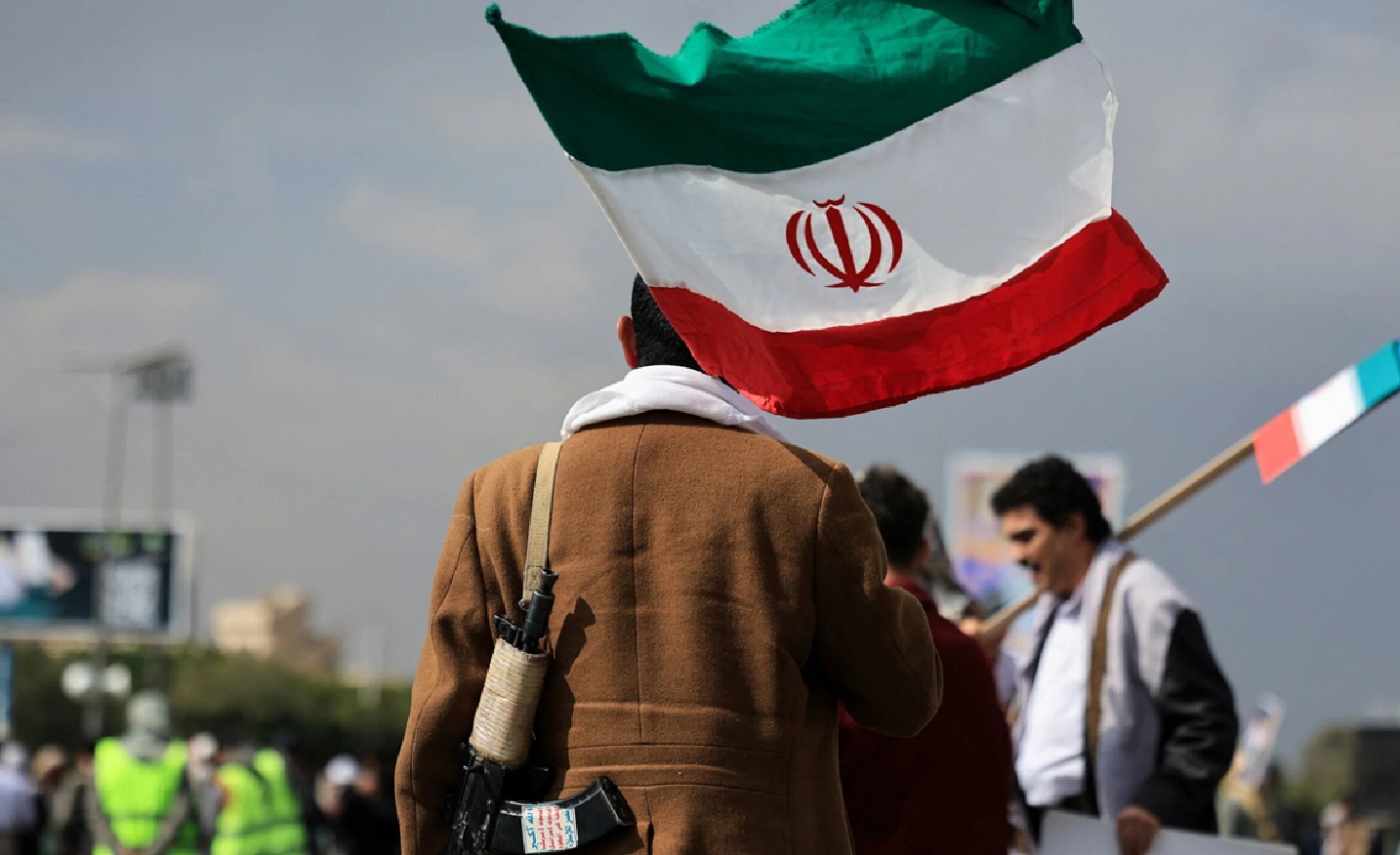
The MI5 chief revealed that authorities have made over 50 arrests in Iran-linked operations across the UK in the past twelve months, as Tehran increasingly subcontracts violence to criminal proxies.
“The Iranians in the UK are principally using a modus operandi of hiring criminals to do their bidding,” Sir Ken said. “Their level of capability is really a function of the sophistication level of those criminals.”
The arrests follow a series of incidents including arson attacks on Jewish sites in London and an alleged terror plot by two Iranian men targeting a synagogue in Manchester.
But Sir Ken warned that Iran is now pursuing “harder targets, like military sites”, a shift highlighted by the suspected plot against RAF Fairford in Gloucestershire, a base used by US bombers conducting strikes against Iranian territory.
Prime Minister Andy Burnham told parliament on Monday that the Fairford plot was “almost certainly” directed by Iran’s Islamic Revolutionary Guard Corps.
“The other major shift this year has been Iranian ambitions to come at harder targets, like military sites,” Sir Ken confirmed, adding that the Fairford incident was “not unique in the UK.”
Seven people were arrested near the base in late September on suspicion of terrorism and explosives offences. They were later released on bail, and no conclusive evidence of an Iranian link has been publicly presented.
Sir Ken issued a direct warning to Tehran and its proxies: “Those who seek to cause mayhem on British streets, whether hired thugs here or their paymasters overseas, will meet an unflinching response.”
Iran Rejects Allegations As ‘False Flag’
Tehran has forcefully rejected the British accusations, with the Ministry of Foreign Affairs issuing a formal statement describing the allegations as a “despicable plot” designed to advance an anti-Iran campaign.
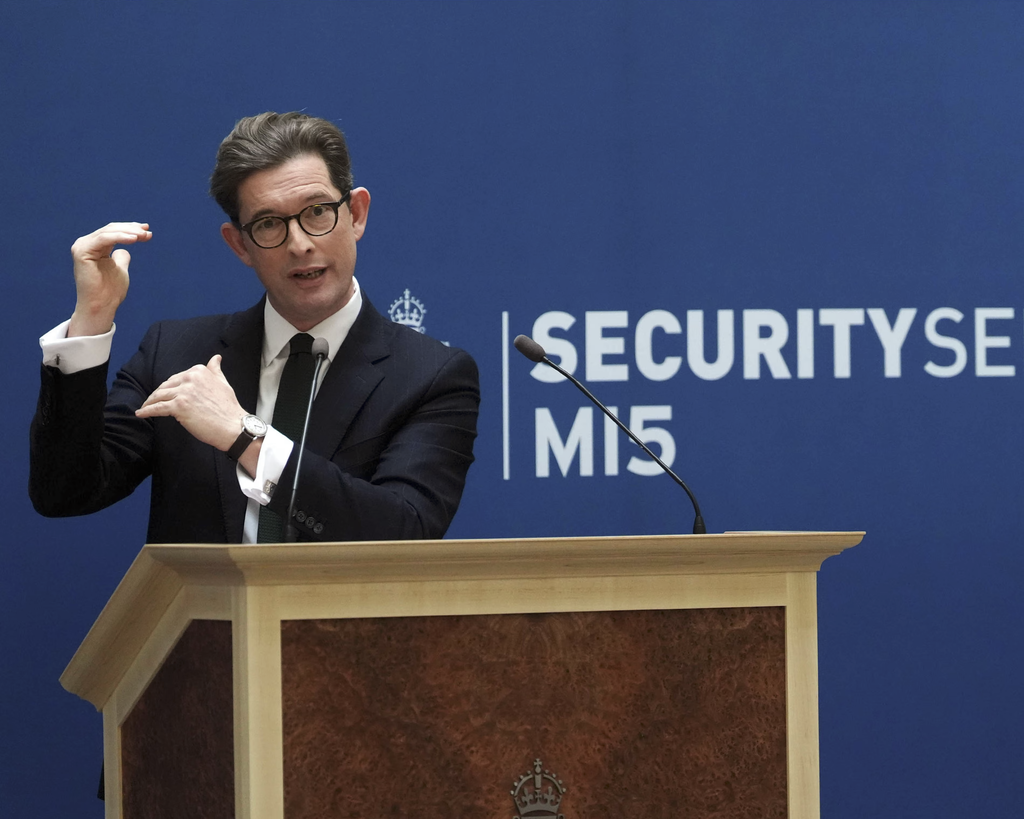
Ken McCallum delivering the annual MI5 director general’s speech at Thames House in London. Photograph: Jonathan Brady/PA
The ministry criticised British officials’ use of terms such as “highly likely” and “almost certainly” as “a blatant attempt to lend false credibility to the attribution while sidestepping accountability for baseless accusations.”
Iran insisted that the British government “cannot escape its political and legal responsibility, or the potential consequences of its claims, by relying on vague language without presenting any solid evidence or proof.”
The statement highlighted Britain’s “well-known track record of fabricating security-related allegations against other nations,” noting that such practices have “in some instances, contributed to tensions and destructive conflicts in West Asia.”
Tehran held the British government “as well as the planners and perpetrators of this clumsy ‘false flag’ operation, fully responsible for all consequences arising from the fabrication.”
The UK announced sanctions on two Iranian nationals over alleged “hostile activity” alongside Burnham’s parliamentary statement.
China: Espionage In Academia
While Russia and Iran dominated the headlines, Sir Ken also flagged China as a continuing concern, noting that MI5 remains focused on Chinese espionage, coercion, and democratic interference.
Just two weeks ago, the agency issued an espionage alert to the academic community warning that agitators posing as a conventional research body have been funding projects linked to AI and cybersecurity in the UK.
Beyond state threats, Sir Ken warned that MI5 continues to face significant challenges from domestic terrorism, including both Islamist extremism and a growing extreme right-wing threat.
“MI5 is still having to respond to attempts to carry out mass casualty attacks in the UK,” he said, noting that while “determined efforts” have degraded Islamic State’s leadership, Al Qaeda and IS continue to “direct and inspire” attacks.
However, it is the rise of extreme right-wing terrorism that has seen the threat level raised to “severe” in Britain.
“Extremist versions of anti-immigration and anti-Muslim grievances are tipping into terrorist intent,” Sir Ken warned.
He cited a case from a few months ago in which MI5 was investigating a radicalised extreme right-wing 13-year-old in the UK. This investigation “generated insight that enabled one of our international partners to prevent a lethal attack on their soil.”
The MI5 chief also referenced the murder of Ann Widdecombe in July, describing the case as “part of a concerning trend of violence targeted at political figures, religious or community groups and more.”
Community cohesion has become “a national security front line,” Sir Ken said, with Britain’s enemies aiming to sow division.
“Those who mean us harm are trying, often with a helping hand from polarising algorithms, to divide our communities and turn us against one another,” he warned.
A ‘Whole-Of-Society’ Response
Sir Ken used his speech to issue a rallying cry to the British public, urging citizens to recognise their role in protecting national security.
“When you hear ‘national security,’ don’t just think of Ukraine, sub-sea cables, armed drones or cyber weapons,” he said. “Think of the place where you live, where you work.”
He outlined three key areas requiring resilience:
Systemic resilience of critical infrastructure, including energy grids, financial systems, and healthcare
Societal resilience in terms of community cohesion
Technological resilience against AI-enabled threats
“Think of a flicker in the power grid supplying your home. Think of your local synagogue or mosque having to install enhanced security measures. Think of a toxic or manipulative post on social media. Think perhaps of what online algorithms are feeding your teenagers in their bedrooms,” Sir Ken said. “We all have a stake in our national security.”
Defence Sector Warned To Strengthen Protections
In a direct message to businesses, Sir Ken urged defence suppliers and critical infrastructure operators to implement security guidance from the National Protective Security Authority (NPSA) and the National Cyber Security Centre (NCSC).
“The whole aim of hybrid tactics is to try to intimidate us. So let’s not fall into that trap. But we do need to be resilient,” he said. “If you work on critical national infrastructure or are part of a sector like energy or defence, implement the NPSA and NCSC guidance on sabotage, drones and cyber. The day before, not the morning after.”
He called on defence suppliers, “large or small”, to follow official counter-sabotage, hostile reconnaissance, and counter-drone guidance.
“Much of the time, those who mean the UK harm aren’t attacking things the government owns or controls,” Sir Ken noted. “They’re aiming at people, businesses, communities.”
A Permanent Shift In The Threat Landscape
Asked whether Britain might return to a less fractious period, Sir Ken was unequivocal.
“Our planning assumption is not that this is a temporary blip, and we will all be back to normal by next Christmas,” he said. “We are planning on the basis that, in effect, the period of comparative geopolitical stability following the end of the Cold War has sadly ended and we are back in a more contested era now. We are planning on the basis that these risks will endure.”
The MI5 chief’s assessment represents a fundamental reframing of Britain’s security posture, one that acknowledges a world in which artificial intelligence, hostile states, and domestic extremists converge to create threats of unprecedented complexity.
As Sir Ken put it: “Human history has given us no experience of facing an actor which is smarter than we are, is capable of out-thinking us. This is genuinely novel and deserves the attention it is getting, including in MI5.”
Critical Perspectives: Questions Of Evidence And Motive
While MI5’s warnings have been widely reported, some observers have raised questions about the evidence base for the more dramatic claims.
The Iranian government’s rejection of the Fairford allegations as a “false flag” operation reflects long-standing tensions between Tehran and Western intelligence agencies. Critics have noted that British officials have presented no public evidence linking Iran to the suspected plot, relying instead on language like “almost certainly”, a formulation that echoes the contested claims made in the run-up to the 2003 Iraq invasion.
Some analysts have also questioned whether the timing of the warnings serves broader geopolitical purposes, particularly given ongoing Western military operations in the Middle East and the ongoing conflict in Ukraine. The emphasis on Iranian threats to military installations comes as the UK has authorised the US to use British bases for strikes against Iranian targets, a decision that Tehran has warned carries consequences.
Domestically, the focus on “community cohesion” as a national security priority has prompted debate about the balance between security and civil liberties, with some Muslim and immigrant communities expressing concern about being disproportionately targeted by counter-terrorism measures.
Conclusion: A Defining Moment
Sir Ken McCallum’s annual threat assessment paints a picture of a nation under siege from multiple directions, hostile states employing hybrid warfare, terrorists exploiting emerging technologies, and domestic extremists radicalised by online algorithms.
The creation of the AI Threat Assessment Centre represents a recognition that the security challenges of the coming decade will be fundamentally different from those of the past. The convergence of artificial intelligence with biological, chemical, and conventional weapons capabilities poses risks that traditional security frameworks were not designed to address.
Whether Britain, and its allies, can rise to these challenges remains an open question. What is clear is that the era of comparative geopolitical stability that followed the Cold War has ended, and the UK is now operating in a security environment more complex and dangerous than at any point in recent memory.
“We are back in a more contested era now,” Sir Ken warned. “We are planning on the basis that these risks will endure.”
Sources:
MI5 Director General’s annual threat speech, Thames House, London
Statements from Prime Minister Andy Burnham to Parliament
The Ministry of Foreign Affairs of the Islamic Republic of Iran
UK Commons Defence Committee testimony from Defence Secretary Wes Streeting
Interviews with journalists following the speech
Veritas Press Investigative Analysis Independent journalism examining global affairs, power, diplomacy, and accountability.
Source:Veritas Press C.I.C. | Multi-News Agencies
Help Support Our Work
Readers who believe that truth still matters have power over popular information. When just a few more people step up to support this work, it means more lies exposed, more corruption uncovered, and more accountability where it’s long overdue.
Help Protect Independent Journalism, Which Is Currently Under Attack.
If you believe journalism should serve the public, not the powerful, and you’re able to help, becoming a regular DONOR or a PAID SUBSCRIBER truly makes a difference.
DONATION APPEAL: If you found this reporting valuable, please consider supporting independent journalism.
Your support fuels our fearless, truth-driven journalism. In unity, we endeavour to amplify marginalised voices and champion justice, irrespective of geographical location. We operate independently, with no financial backing from billionaires; our readers support us.
But it’s also extremely important. One of Veritas Press’s greatest assets is its reader-funded model.
1. Reader funding means we can cover what we like. We’re not beholden to the political whims of a billionaire owner. We are a small, independent and impartial organisation. No one can tell us what not to say or what not to report.
2. Reader funding means we don’t have to chase clicks and traffic. We’re not desperately seeking your attention for its own sake; we pursue the stories that our editorial team deems important and believes are worthy of your time.
3. Reader Funding: enables us to keep our website and other social media channels open, allowing as many people as possible to access quality journalism from around the world, particularly those in places where the free press is under threat.
We know not everyone can afford to pay for news, but if you’ve been meaning to support us, now’s the time.
Your donation goes a long way. It helps us:
Keep the lights on and sustain our day-to-day operations
Hire new, talented, independent reporters
Launch real-time live debates, community-focused shows, and on-the-ground reporting
Cover the issues that matter most to our communities, in real time, with depth and integrity
Without your support, independent voices like ours will be silenced.
Furthermore, we have plans to expand our work, but we can’t do it without your support. Every contribution, no matter the size, helps us stay independent and build a truly people-powered media platform.
If you believe in journalism that informs, empowers, and reflects the communities we serve, please donate today.
SEATTLE, TEHRAN — The U.S. Department of Homeland Security (DHS) will allow Iran’s national football team to enter the country 48 hours before their critical World Cup match against Egypt on Friday, a modest concession in a tournament where Team Melli’s travel conditions have sparked claims of oppression and competitive disadvantage.