Kamran Faqir is a volunteer investigative journalist and writer committed to exposing hidden truths and amplifying underreported stories. Driven by social justice, he brings sharp insight and fearless truth-telling to independent journalism. NUJ registered.
Article Date Published:
Article Date Modified:
16 minutes
Views:329
Listen to this article
Help support our mission, donate today and be the change. Every contribution goes directly toward driving real impact for the cause we believe in.
As Andy Burnham Enters Downing Street Promising A “Circuit Breaker” Moment, Observers Carry Hope And Profound Scepticism About His Transition From Mancunian Metro Mayor To Prime Minister. The Independent’s Investigation Reveals A Country Weary Of Broken Pledges, A Party Riven By Faction, And A New Leader Who Must Prove He Can Govern For The Entire Nation, Not Just The One That Chanted His Name At Glastonbury.
LONDON – The ritual was sombre, swift, and by now unsettlingly familiar. Sir Keir Starmer came out of the black door of Number 10 on a Monday morning with driving rain to give a farewell speech so short it felt like giving up. “My work is done,” he told the cameras, his wife Victoria at his side, before a black Jaguar carried him to Buckingham Palace to tender his resignation to King Charles III. Moments later, Andy Burnham, who was once disregarded as a consistent nearly-man of Labour politics, passed through the palace gates to kiss hands and assume the role of the United Kingdom’s seventh prime minister since 2016.
“This moment will be a circuit breaker for Britain,” Burnham declared in a six‑minute address on the steps of Number 10, his broad Lancashire vowels cutting through the damp air. He promised a ten‑year plan to “bring back hope”, immediate cost-of-living measures, and a “new national sense of unity”. Ukraine’s Volodymyr Zelenskyy and US President Donald Trump would be his first calls, he said, signalling continuity with the West’s embattled frontlines. For a country suffering political whiplash, the words soothed. But beyond the stagecraft, a harsher question hung in the air: can the man who built his brand as the insurgent “King of the North” survive the brutal translation to national leadership, or is Britain simply swapping one crisis for another?
The Unravelling Of Starmerism:
To understand the weight, Burnham now carries requires a reckoning with the wreckage he inherits. Starmer’s two‑year premiership, launched with a 174‑seat landslide in July 2024, collapsed with a speed that stunned even his fiercest critics. By the spring of 2026, the new government’s moral authority had been destroyed by a series of self-inflicted problems, including the means-testing of winter fuel payments, a welfare reform package that disability campaigners called “cruel and incoherent,” and an inheritance tax increase on family farms that sparked widespread protest in rural England. The government’s frequent echoing of Nigel Farage’s anti-immigration stance also contributed to this erosion of its moral authority.
The Peter Mandelson scandal was the blow from which Starmer never recovered. An investigation by The Independent’s sister title revealed in February 2026 that the Labour peer, serving as ambassador in Washington, had used private diplomatic channels to offer undisclosed trade concessions to a consortium of Trump-linked businessmen in exchange for an endorsement of Starmer’s embattled leadership. Though Mandelson denied wrongdoing and the prime minister insisted he had no prior knowledge, the affair cemented a public image of an administration that talked “country first, party second” but operated like a closed court. Three cabinet ministers, including then business secretary Peter Kyle and housing secretary Steve Reed, resigned in protest within a week, their letters citing “a fundamental breach of trust”. Both stood down formally on Monday ahead of the reshuffle, their departures serving as a quiet epitaph to the Starmer project.
The 2026 local elections turned the rot into a rout. Labour lost more than 800 council seats and control of every metro mayor post outside London, Reform UK sweeping up disaffected working-class voters in the Red Wall, while the Greens seized formerly safe urban wards from Bristol to Brighton. Polling published by YouGov on the eve of Starmer’s resignation put Labour at 24%, its lowest recorded share, with Reform on 27%, the Conservatives at 21%, and the Greens surging to 16%. For a party that had boasted of an unassailable electoral coalition, the numbers were an existential howl.
“Starmer treated the electorate like a management problem,” says Prof Tim Bale of Queen Mary University, a leading chronicler of Labour’s modern crises. “He thought competence was enough. But voters don’t just want a well-run machine. They want to know whose side you’re on. With Burnham, the question is whether that perceived authenticity survives contact with the Treasury brief.”
The Cabinet Of Necessity:
Burnham’s first act as prime minister was to dismantle the architecture of his predecessor. The prime minister sacked Rachel Reeves, whose tenure as chancellor had become synonymous with fiscal conservatism and the grinding erosion of public services, before the palace audience. In a terse resignation statement released minutes after Starmer’s departure, Reeves said the economy was “stronger, fairer and more resilient” because of choices Labour had made – a claim that sparked instant derision from unions and antipoverty groups alike. Allies insisted she had been offered a “big job” but declined; Westminster gossips whispered that the offer was an insult, a junior ministerial post that would have humiliated her.
The real shock was the appointment of John Healey as her successor. Many people expected the veteran defence secretary, John Healey, a close confidant of Burnham since the Gordon Brown years, to stay at the Ministry of Defence. The Treasury disclosed his move shortly after 2 pm, causing the pound to rise 0.7% before cautious analysis tempered the rally. “Healey is a safe pair of hands, but he’s never managed an economic portfolio,” says Dr Anna Killick, a political economist at UCL. “This is either a stroke of genius, a cross‑departmental thinker, or a stopgap while Burnham wrestles with the party.”
The Foreign Office brief, another surprise that reshapes the top tier of government, instead went to Home Secretary Shabana Mahmood, whom Westminster betting markets long favoured. Her deep connections with Muslim communities and human rights organisations may recalibrate Britain’s Middle East posture, but they also risk inflaming tensions within a parliamentary party already fracturing over Gaza.
Ed Miliband, previously Labour’s leader and Burnham’s primary rival who later became an ally, has been appointed Chancellor of the Duchy of Lancaster. This role comes with broad responsibilities across various government departments, leading to speculation that a ten-year plan will integrate swift environmental changes throughout each one. Yet Miliband’s appointment was immediately met with suspicion from the Labour right. One centrist MP, granted anonymity to speak freely, texted: “Ed’s back. And he’s got the levers. This is going to be a bumpy ride.”
The cabinet reveals Burnham’s political calculus: an inner circle drawn from the Brownite wing of the party, heavy on northern accents, light on the metropolitan progressivism that defined Starmer’s early team. It is a cabinet built for a country that feels left behind – but whether it can govern a nation as divided as today’s Britain remains wholly unproven.
Manchester’s Son, Westminster’s Question:
The mythology of Andy Burnham has long been burnished by his tenure as Mayor of Greater Manchester. When the Conservative government attempted to impose tier‑3 restrictions without adequate financial support in 2020, Burnham’s furious press conference, “This is not about ideology, it’s about people’s lives”, made him a national figure. He turned the mayor’s office into a stage for constant advocacy: buses were re-regulated, homelessness was reduced, and a “Manchester baccalaureate” was promoted. Evertonian, indie‑music devotee, the politician who shed a tear on camera while discussing the Hillsborough disaster – he achieved what few British politicians manage: being seen as fully human.
Yet, as the former footballer Peter Reid, an old friend who stood among the crowd on Downing Street, told The Independent: “Andy’s got the heart, no question. But managing Manchester is a kickabout compared to the Premier League he’s entering now.”
That sentiment echoes across the city that made him. In the bustling cafe of the Whitworth Art Gallery, Susan Okonkwo, a 52‑year‑old nurse and lifelong Labour voter, expresses a weary hope. “He did right by us here. The buses actually run on time now. But I’ve got a sister in Milton Keynes, and she says it feels like Labour forgot the South East exists. Can he be prime minister for her too?” At the Unison North West office, regional secretary Lynne Morris is more blunt: “We’ll hold him to his promises on public sector pay. The strikes aren’t ending because of a well-delivered speech.”
Union leaders nationally have offered only conditional support. Sharon Graham, general secretary of Unite, issued a statement an hour after Burnham’s address: “We welcome the prime minister’s commitment to ‘breathing space’ for working people. But breathing space isn’t a pay rise. We expect the new government to repeal the anti-union legislation immediately and commit to a £15 minimum wage. If not, the industrial action will continue and intensify.”
Disability rights organisations are even more sceptical. The chronic illness advocacy group Disabled People Against Cuts (DPAC) burned an effigy of Starmer’s welfare green paper outside Parliament in May. Ellen Clifford, a DPAC organiser, told me: “Burnham was part of the shadow cabinet that designed austerity‑lite. His maiden speech as PM mentioned ‘cost-of-living measures’, if that’s more of the same tinkering with sanctions and assessments, we will be on the streets.”
Climate campaigners, too, are watching. Burnham’s support to expand Manchester Airport, the largest carbon emitter in the north‑west, has long irritated the green movement. “He talks a good game on a just transition,” says Areeba Hamid, co‑executive director of Greenpeace UK. “But a ten‑year plan needs to include cancelling the airport expansion and banning new oil and gas licences from day one. We haven’t heard that yet.”
A Ten‑Year Plan Or A Decade Of Stagnation?
The centrepiece of Burnham’s inaugural pitch, a ten‑year plan, is at once audacious and opaque. He stated in his speech that the plan would be detailed later this year, covering housing, defense, and the cost of living. Immediate measures to be announced Tuesday would provide “breathing space now”. The language evokes the post-war consensus, a call for national renewal. But without concrete commitments, critics argue it is little more than a vibey placeholder.
“Ten‑year plans have a terrible track record in British politics,” warns Jonathan Portes, professor of economics and public policy at King’s College London. “Governments change, crises erupt, chancellors panic. The only way a plan survives is if it’s underpinned by binding fiscal rules and genuine cross‑party buy‑in. I’m not seeing evidence of either yet.”
The housing pledge – to “build more council homes” – could be a game‑changer if matched with sufficient funding and planning reform. Shelter’s chief executive Polly Neate released a statement calling the promise “potentially transformative” but added: “We’ve heard warm words before. We need to see a specific target – 90,000 social homes a year – and the borrowing capacity for councils to deliver them. If that’s in Tuesday’s announcement, we’ll be the first to cheer.”
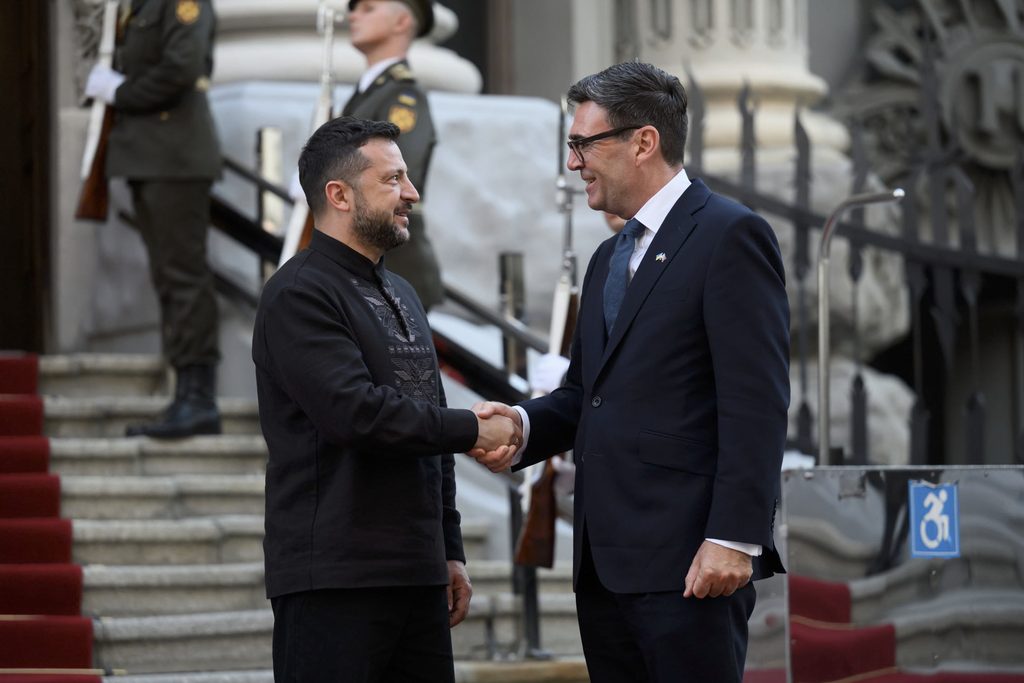
Washington and Kyiv will closely monitor defence commitments, a fraught issue after Starmer’s relationship with Trump and the Iran crisis. Burnham’s decision to call Zelenskyy before any other leader was a deliberate message of continuity, as he himself acknowledged. “I’ll be making very clear later today to President Zelenskyy that, you know, there is no change. I will be with him 100%, as Keir Starmer has been,” he said. Yet the Trump question looms. The 47th president, who retook the Oval Office in January 2025, has made no secret of his desire to cut a deal with Moscow. Burnham’s ability to maintain the UK’s hawkish stance without alienating the White House will be among the severest tests of his diplomacy. A call to Trump was scheduled for Monday evening, UK time.
The View From The Palace And The Pundits:
For the monarchy, the transition was another constitutional exercise in a decade that has tested the Crown’s neutrality to its limits. Buckingham Palace issued the sterile formula that the King had been “graciously pleased to accept” Starmer’s resignation and invited Burnham to form an administration. A senior courtier, speaking off the record, told me: “His Majesty is deeply aware of the turbulence this frequency of prime ministerial change causes. He is concerned about the stability of the realm.” Such a remark, however coded, is unprecedented in modern times and reflects unease at the highest levels.
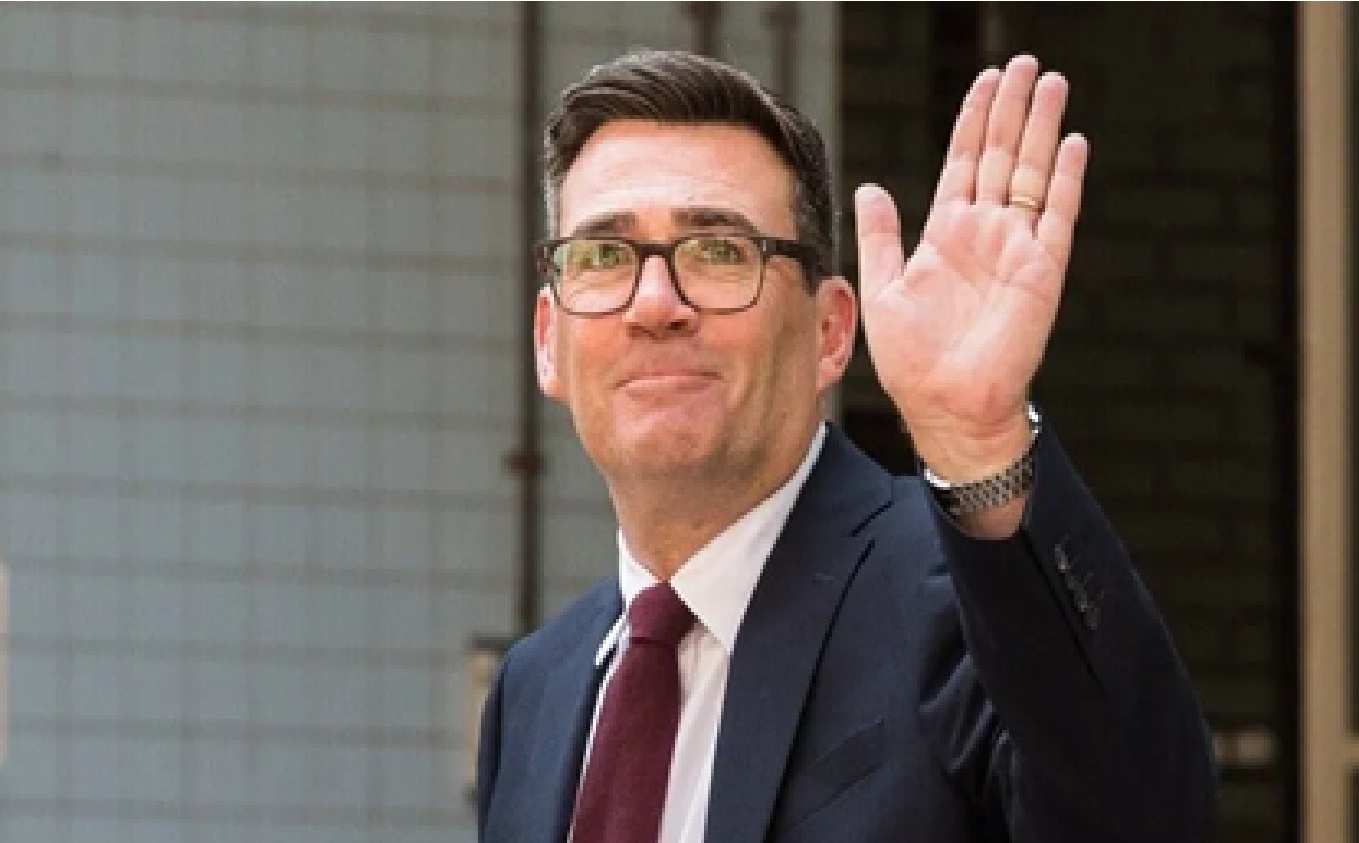
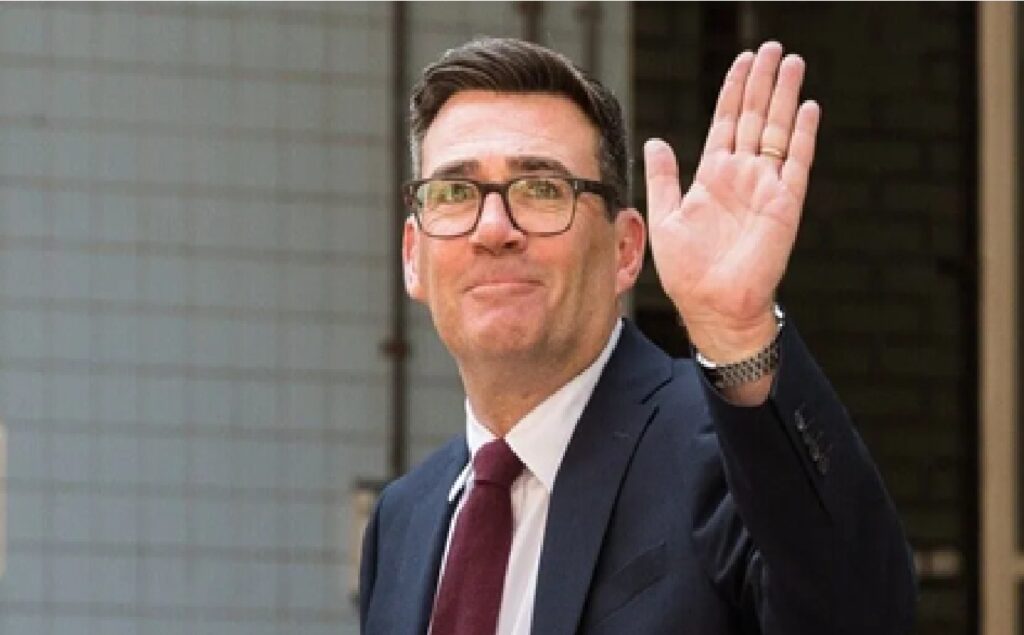
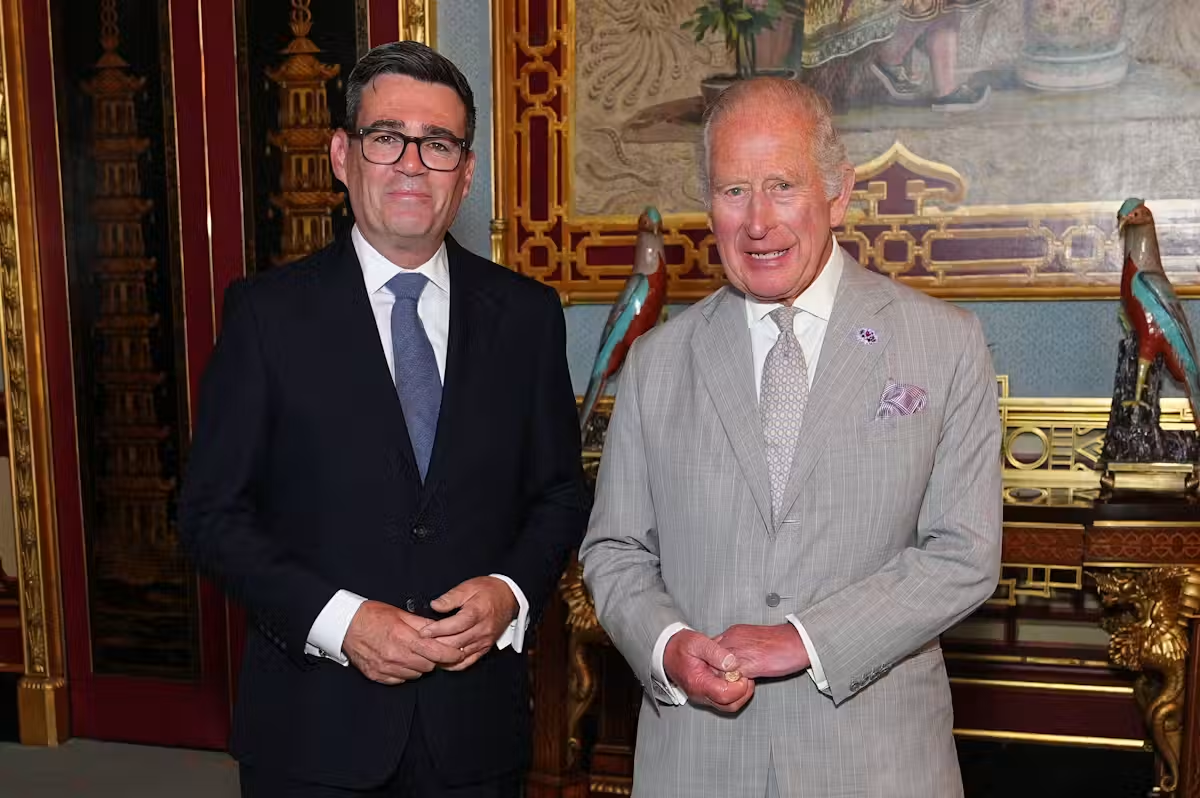
Andy Burnham became prime minister during his meeting with King Charles. Aaron Chown/PA Images/Alamy
Media reaction has been sharply divided. The Daily Telegraph decried Burnham, calling him a “left wing throwback” and stating that his “Manchester experiment will now be inflicted on the whole country”. The Mail branded the cabinet “the revenge of the Brownites”. The Mirror, by contrast, hailed a “true Labour leader” and urged the party to “unite behind Andy”. The Guardian’s editorial struck a cautiously optimistic tone, noting that Burnham’s “instinctive connection with voters outside the metropolitan bubble could be the antidote to Reform’s advance”. The Financial Times led with market jitters over Healey’s appointment and a snap analysis suggesting the FTSE 100’s initial lift was “a relief rally, not a vote of confidence”.
A snap poll by Survation for Good Morning Britain found that 41% of voters thought Burnham would make a good prime minister, against 34% who did not, a far warmer reception than Starmer ever enjoyed. Yet, the same poll indicated that 52% believed he would find it difficult to control his own party, and 61% expressed doubts about his ten-year plan’s implementability.
A Nation Holding Its Breath:
As dusk fell over Westminster on Monday, a small crowd remained behind the barriers on Whitehall, some clutching Everton scarves, others the flags of St George. Among them was Josh Simons, the former MP who had stepped aside in Makerfield to allow Burnham’s return to Parliament, a gesture of political self‑sacrifice that Burnham acknowledged by name in his speech. “We’ve given the country a chance,” Simons said. “Now it’s up to all of us to take it.”
Inside Number 10, the new prime minister’s team were already at work, vetting the final list of junior ministers and preparing the cost‑of‑living package that would define his first full day in office. An aide confirmed that Deputy Prime Minister Angela Rayner, a figure of both immense popularity on the left and fierce distrust on the right, would be given the housing and communities brief, a signal that council‑home building is a frontline priority.
But as I walked away from Downing Street, I spoke to a cleaner mopping the pavement outside the Cabinet Office. He asked not to be named. “They come, they promise, they go,” he said, not looking up. “I’ve worked here for 22 years. I’ve seen Blair, Brown, Cameron, May, Boris, Truss, Sunak, Starmer, and now this one. My wages have barely moved. I still can’t afford a flat within 20 miles of this street. Tell me why I should believe this time is different.”
It is a question that hangs over Andy Burnham’s premiership like a darkening sky. He has talked of a “circuit breaker”. But Britain doesn’t need a new fuse. It needs a whole new wiring. Whether the man from Manchester can re-wire a country before the political current electrocutes him too is the most consequential story in British politics, and it begins now.
Source:Veritas Press C.I.C. | Multi-News Agencies
Help Support Our Work By Donating
Readers who believe that truth still matters have power over popular information. When just a few more people step up to support this work, it means more lies exposed, more corruption uncovered, and more accountability where it’s long overdue.
Help Protect Independent Journalism, Which Is Currently Under Attack.
If you believe journalism should serve the public, not the powerful, and you’re able to help, becoming a regular DONOR or a PAID SUBSCRIBER truly makes a difference.
DONATION APPEAL: If you found this reporting valuable, please consider supporting independent journalism.
Your support fuels our fearless, truth-driven journalism. In unity, we endeavour to amplify marginalised voices and champion justice, irrespective of geographical location. We operate independently, with no financial backing from billionaires; our readers support us.
But it’s also extremely important. One of Veritas Press’s greatest assets is its reader-funded model.
1. Reader funding means we can cover what we like. We’re not beholden to the political whims of a billionaire owner. We are a small, independent and impartial organisation. No one can tell us what not to say or what not to report.
2. Reader funding means we don’t have to chase clicks and traffic. We’re not desperately seeking your attention for its own sake; we pursue the stories that our editorial team deems important and believes are worthy of your time.
3. Reader Funding: enables us to keep our website and other social media channels open, allowing as many people as possible to access quality journalism from around the world, particularly those in places where the free press is under threat.
We know not everyone can afford to pay for news, but if you’ve been meaning to support us, now’s the time.
Your donation goes a long way. It helps us:
Keep the lights on and sustain our day-to-day operations
Hire new, talented, independent reporters
Launch real-time live debates, community-focused shows, and on-the-ground reporting
Cover the issues that matter most to our communities, in real time, with depth and integrity
Without your support, independent voices like ours will be silenced.
Further, we have plans to expand our work, but we can’t do it without your support. Every contribution, no matter the size, helps us stay independent and build a truly people-powered media platform.
If you believe in journalism that informs, empowers, and reflects the communities we serve, please donate today.
Kamran Faqir is a volunteer investigative journalist and writer committed to exposing hidden truths and amplifying underreported stories. Driven by social justice, he brings sharp insight and fearless truth-telling to independent journalism. NUJ registered.
SEATTLE, TEHRAN — The U.S. Department of Homeland Security (DHS) will allow Iran’s national football team to enter the country 48 hours before their critical World Cup match against Egypt on Friday, a modest concession in a tournament where Team Melli’s travel conditions have sparked claims of oppression and competitive disadvantage.



























95m3cx
52n2ve
vqdd6y
sna2d4