Kamran Faqir is a volunteer investigative journalist and writer committed to exposing hidden truths and amplifying underreported stories. Driven by social justice, he brings sharp insight and fearless truth-telling to independent journalism. NUJ registered.
Article Date Published:
Article Date Modified:
17 minutes
Views:438
Listen to this article
Help support our mission, donate today and be the change. Every contribution goes directly toward driving real impact for the cause we believe in.
An Analysis Of Self-Dealing, Well-Timed Stock Purchases, And The Dismantling Of Ethics Guardrails As Washington Wages An Endless War
A Pattern of Self-Enrichment:
When the Department of War announced a $9.7 billion software consolidation contract to Dell Technologies late last year, it was framed as an overdue efficiency measure, a five-year plan to untangle the spaghetti of Microsoft licenses across the military, intelligence community, and coast guard. The Pentagon press release set out $422 million in annual savings to the taxpayer. Wall Street celebrated, pushing Dell’s stock to an all-time high of $305 in after-hours trading.
But buried in the financial disclosure forms and social-media timelines was a less reassuring story, one that government watchdogs and Democratic lawmakers have since seized on as the most brazen example yet of President Donald Trump’s pattern of converting public office into a private wealth-creation machine. In the weeks before the contract was awarded, Trump’s personal portfolio acquired between 1 million and 5 million in Dell stock. Days later, at a campaign-style rally in Georgia, he urged the crowd to “go out and buy a Dell computer.” Three more purchases followed in March. And by the time the Rose Garden luncheon rolled around that spring, the president was giving the company a verbal salute before the cameras, praising its founder, Michael Dell, who happens to sit on the White House Council of Advisors on Science and Technology.
The Dell deal is not an anomaly. It is a chapter in a much larger volume of self-dealing that spans Trump’s private investments, his family’s business ventures, and the war-making machinery of an administration that launched an unprovoked military aggression against Iran on February 28, 2025. Taken together, the transactions paint a picture of an imperial presidency in which the line between national interest and private profit has been erased, not by accident, but by design.
The Dell-Pentagon Bonanza And Trump’s Timely Trades:
The contract, formally known as the “Microsoft Department of War Enterprise Software Agreement II Core Enterprise Technology Agreement,” tasks Dell’s federal subsidiary with functioning as the sole middleman for Microsoft software procurement across the entire U.S. defence apparatus. In practice, it means Dell will resell and manage licenses for everything from Windows and Office to Azure cloud services and Active Directory, a consolidation that does nothing to diversify the Pentagon’s reliance on a single software ecosystem, but does promise to streamline purchasing from a byzantine patchwork into one centrally controlled vehicle.
To Greg Williams, director of the Centre for Defence Information at the nonprofit Project on Government Oversight, the timing of Trump’s stock acquisitions and subsequent endorsements is impossible to ignore. “This absolutely does ring alarm bells with regard to conflicts of interest,” Williams told the Detroit News. “The president is actively promoting a company he has a personal financial stake in, and then that same company receives a multibillion-dollar contract from his own Pentagon. You don’t need a law degree to see the problem.”
Margaret Dylus-Yukins, senior legal counsel at the Campaign Legal Centre and a former attorney at the Office of Government Ethics, stressed that the framework governing presidential conduct is built on norms, not enforceable statutes. “The ethics norm has been for presidents to historically avoid even the appearance of self-enrichment,” she said. “The fact that President Trump promoted a company owned by his friend that he also invests in does, indeed, create an appearance of a conflict of interest.”
The friendship is well-documented. Michael Dell has appeared at White House events, and his company donated $6.5 billion to a Trump-backed charitable investment fund for American children, an act of corporate philanthropy that also cemented a relationship with an administration that steers immense federal dollars toward technology vendors. Dell’s stock had already risen 129% in the six months before the Pentagon announcement, but the contract supercharged the run-up.
Crucially, Trump’s assets are not held in a blind trust managed by an independent fiduciary, as was the practice for previous modern presidents. They sit in a trust controlled by his own children, a structure that allows him to know exactly where his money is invested and to make trading decisions based on information that no ordinary investor could possess. And because U.S. presidents are exempt from the conflict-of-interest laws that bind every other federal employee, there is no criminal backstop, only the soft tissue of tradition, which Trump has torn apart.
Hegseth’s Broker, Blackrock, And The Pre-War Bets:
The Dell contract fits inside a broader mosaic of insider-tinged profiteering that has accompanied the administration’s military adventure in the Persian Gulf. According to an investigation by the Financial Times, a broker linked to Secretary of War Pete Hegseth explored a multimillion-dollar investment in a defence-focused exchange-traded fund just before the U.S.-Israeli attacks on Iran commenced.
The report, published in early 2026, revealed that the broker, operating through Morgan Stanley, contacted asset manager BlackRock in February 2025 about placing client money into the newly launched iShares Defence Industrials Active ETF (ticker: IDEF). The fund, which began trading in May 2025, targets companies that “may benefit from increased government spending on defence and security amid geopolitical fragmentation and economic competition.” Its holdings include major contractors that count the U.S. Department of War as their primary customer.
The investment was never executed, Morgan Stanley had not yet onboarded the fund for its clients at the time, but the inquiry has become a smoking gun in the hands of congressional investigators. It suggests that at least one individual with a direct line into the Pentagon’s war planning attempted to position himself to profit from the impending military action. Hegseth, a former Fox News host who reportedly earned $4.6 million over two years at the network and another 1 million from speaking fees, has been the administration’s most vocal internal advocate for the war, pushing claims about Iranian nuclear capabilities that international inspectors have disputed.
BlackRock’s IDEF fund was marketed explicitly as a vehicle for capitalising on “geopolitical fragmentation.” Its literature, still available on the firm’s website, invites investors to “pursue growth opportunities” arising from escalating defence budgets. The irony, that a fund built to extract profit from war would attract money from individuals who helped initiate that war, has not been lost on ethics advocates.
“The Mar-A-Lago Mafia Are Finding Ways To Profit” – Senator Ossoff’s Bombshell:
No elected official has been more pointed in calling out the convergence of war and personal enrichment than Senator Jon Ossoff of Georgia. Speaking at the state’s annual Democratic gala earlier this year, Ossoff delivered a blistering catalogue of profiteering by what he termed “the Mar-a-Lago mafia.”
The war against Iran, launched on February 28, 2025, in the midst of indirect nuclear talks, has cost the United States “its national power and wealth,” Ossoff said, while forcing families to “pay more for everything.” Yet, he continued, “rest assured, the Mar-a-Lago mafia are finding ways to profit because, of course, they are.”
Ossoff cited the Financial Times report on Hegseth’s broker, then expanded the indictment. A company partly owned by Trump’s sons Eric and Don Jr., he noted, “has been pitching Persian Gulf monarchies on its drone interceptors,” effectively monetising the fear generated by the very conflict their father launched. Jared Kushner, Trump’s son-in-law and Middle East adviser, “is already on the Saudi payroll to the tune of $2 billion, and he’s been soliciting billions more from princes and sheikhs across the region, while leading negotiations on Iran.” The arrangement, Ossoff suggested, transforms U.S. diplomacy into a fee-for-service protection racket.
Then there was the oil trading. “Hundreds of millions of dollars in oil futures,” Ossoff said, were placed “just minutes before a presidential Truth Social post moved the price of oil 13%.” Trump has regularly used his social media platform to make announcements about the trajectory of hostilities, sending crude prices gyrating. Whoever placed those trades enjoyed foreknowledge that would constitute textbook insider trading in any regulated market. “I don’t know who placed those trades,” Ossoff acknowledged, “but I’ll tell you this, the SEC better find out.”
He concluded with a promise of congressional action should Democrats regain majorities in the 2026 midterm elections: “If they won’t, when you elect this new majority in Congress, and you give us gavels and subpoenas, we will.”
Beyond Dell: IRS Settlements And A $1.8 Billion Slush Fund.
The self-dealing extends well beyond the battlefield. In a separate but thematically consistent manoeuvre, Trump dropped a long-running lawsuit against the Internal Revenue Service, an agency he oversees, as part of a settlement that established a $1.8 billion Justice Department fund for people claiming to be victims of a “weaponised” justice system. The fine print of the agreement bars the IRS from pursuing existing tax claims against Trump, his family members, or his businesses, effectively nullifying outstanding liabilities that independent auditors have estimated in the hundreds of millions of dollars.
To critics, the arrangement constitutes a presidential self-pardon by other means. The IRS, an independent bureau within the Treasury Department, answers ultimately to the president. By weaponising the settlement to extinguish his own tax exposure, Trump has used the machinery of the federal government to shield himself from the same laws he is sworn to enforce.
The Iran War Stalemate And Missing Negotiations:
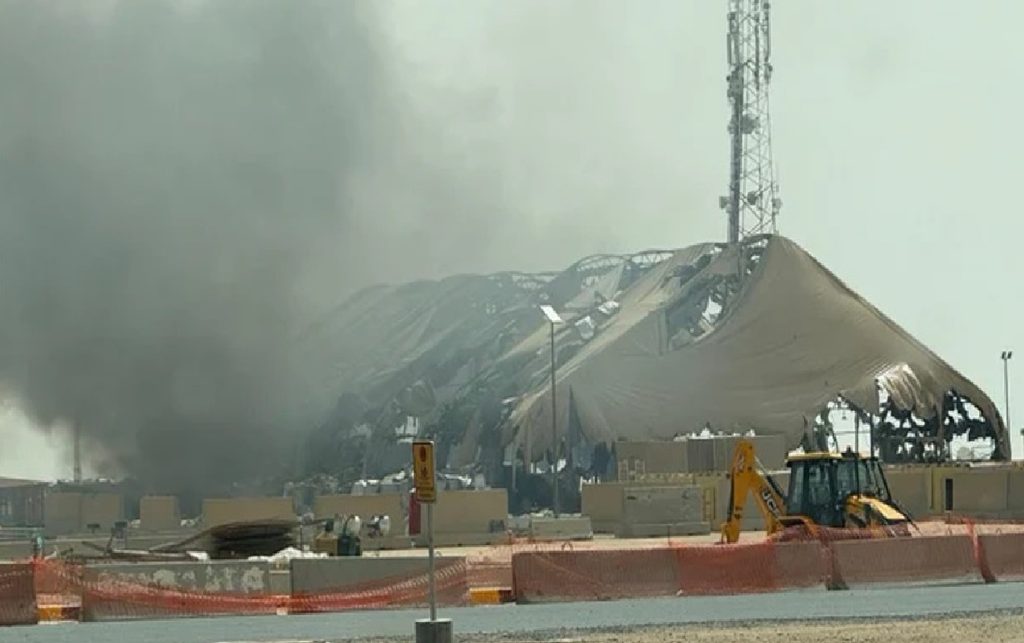
A full fifteen months after the first bombs fell, the Iran conflict remains a bleeding wound with no defined exit strategy. Iranian retaliatory operations, including precision strikes on U.S. bases and assets in the Persian Gulf, have inflicted damage far beyond what Pentagon planners publicly anticipated. War costs have climbed past $200 billion by some estimates, with no enduring achievement of the objectives that were used to justify the intervention in the first place.
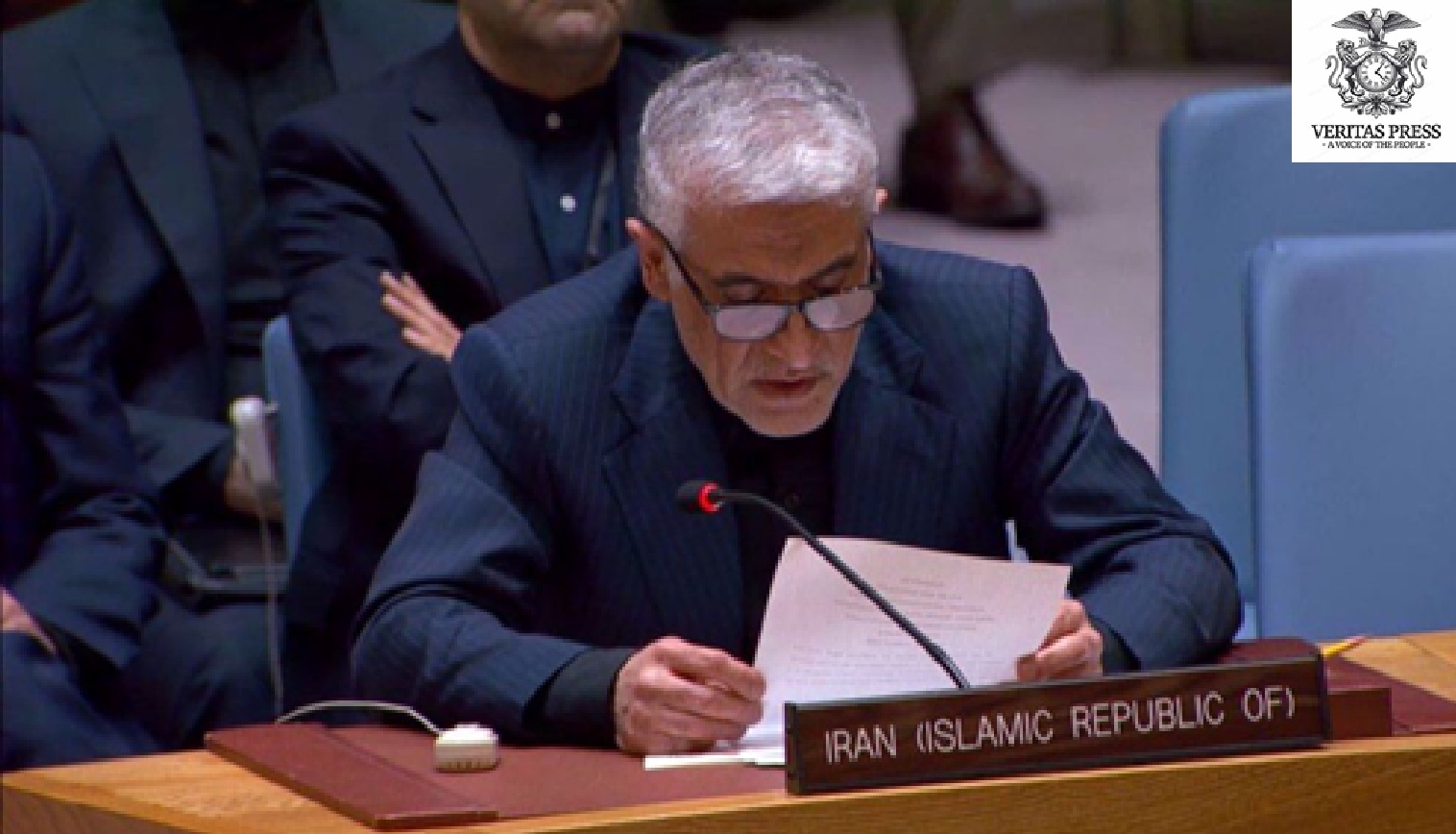
Diplomatically, the picture is equally bleak. After Trump hinted that Iran might relinquish its enriched uranium stockpile as part of a deal to end the war, Iran’s foreign ministry delivered a blunt correction. “At this stage, we are focused on ending the war, and there are no negotiations on the nuclear issue,” ministry spokesman Esmaeil Baqaei told state television, according to AFP. The statement underscored what independent analysts have long warned: that military pressure has hardened Iran’s posture, not softened it.
The absence of a diplomatic track has been a boon for defence contractors and their financial backers. A protracted, grinding conflict sustains the demand for weapons systems, drone interceptors, missile defence, and cloud-based intelligence infrastructure, precisely the products sold by the companies in which Trump’s allies and family members have interests.
Latest Developments: Congressional Inquiries, The SEC Probe, And Mounting Evidence (May 2026).
As the midterm elections draw closer, the convergence of money and war has moved from the periphery of political debate to its centre. Here are the key developments that have emerged in recent months:
House Oversight Investigation. In February 2026, the House Oversight Committee’s ranking Democratic members, supported by a handful of moderate Republicans, launched a formal inquiry into the Dell contract. The committee subpoenaed communications between the White House, the Pentagon, and Dell executives. In a partial disclosure last month, emails showed that Michael Dell personally emailed the president days before the contract announcement, thanking him “for your continued confidence in our company.” The White House has refused to release Trump’s response, citing executive privilege.
Pentagon Inspector General Audit. In March, the Department of War’s Office of Inspector General opened an audit of the Dell procurement, focusing on whether the contract was awarded through an appropriately competitive process. Preliminary findings, leaked to Politico, suggest that the consolidation vehicle was structured as a sole-source modification to an existing agreement, circumventing the normal bidding procedures that might have drawn in other resellers. Dell maintains that it won the contract on technical merit, and a company spokesperson stated, “Dell Technologies has a decades-long track record of delivering mission-critical IT solutions to the Defence Department. Any suggestion of impropriety is baseless and insulting to the federal acquisition professionals who manage these programs.”
SEC Stonewalled on Oil Futures. The Securities and Exchange Commission’s investigation into the pre-Truth Social oil trades has stalled. Multiple sources inside the agency, who spoke on condition of anonymity for fear of retaliation, say that the commission’s enforcement division has been denied access to key trading records by a major brokerage firm, which is itself represented by a law firm that includes a former Trump White House counsel. SEC Chair Karen Tyler, a Trump appointee, has publicly stated that the probe is “ongoing,” but critics note that no subpoenas have been issued to the brokerage in over eight months. Senator Ossoff’s office called the delay “a dereliction of duty that stinks to high heaven.”
BlackRock Testimony and the Hegseth Broker. In April 2026, BlackRock CEO Larry Fink testified before the Senate Armed Services Committee in a closed session. According to a summary released by the committee, Fink confirmed that a Morgan Stanley broker inquired about the IDEF fund in February 2025 on behalf of a client, but that the fund was not available to the brokerage at the time. Fink reportedly described the inquiry as “unusual in its specificity and timing,” though he declined to speculate on the broker’s motives. Separately, a whistleblower inside Morgan Stanley has come forward to the committee, claiming that the client in question was a close personal associate of Secretary Hegseth, with whom the secretary had communicated in the days before the inquiry. Hegseth’s office has denied any prior knowledge, calling the allegations “a partisan smear campaign.”
Ossoff’s Legislative Push. Senator Ossoff, joined by a group of Democratic colleagues, introduced the Presidential Conflicts of Interest Act in the Senate last week. The bill would require presidents to divest any individual stock holdings or place them in a genuinely blind trust managed by an independent trustee, remove the presidential exemption from federal conflict-of-interest statutes, and empower the Office of Government Ethics to enforce the rules with the threat of civil penalties. The legislation faces long odds in the current chamber, but it provides a rallying cry for Democrats heading into November, and polling suggests that the issue resonates with independent voters frustrated by the perception of a government for sale.
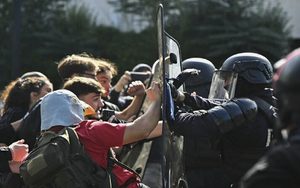
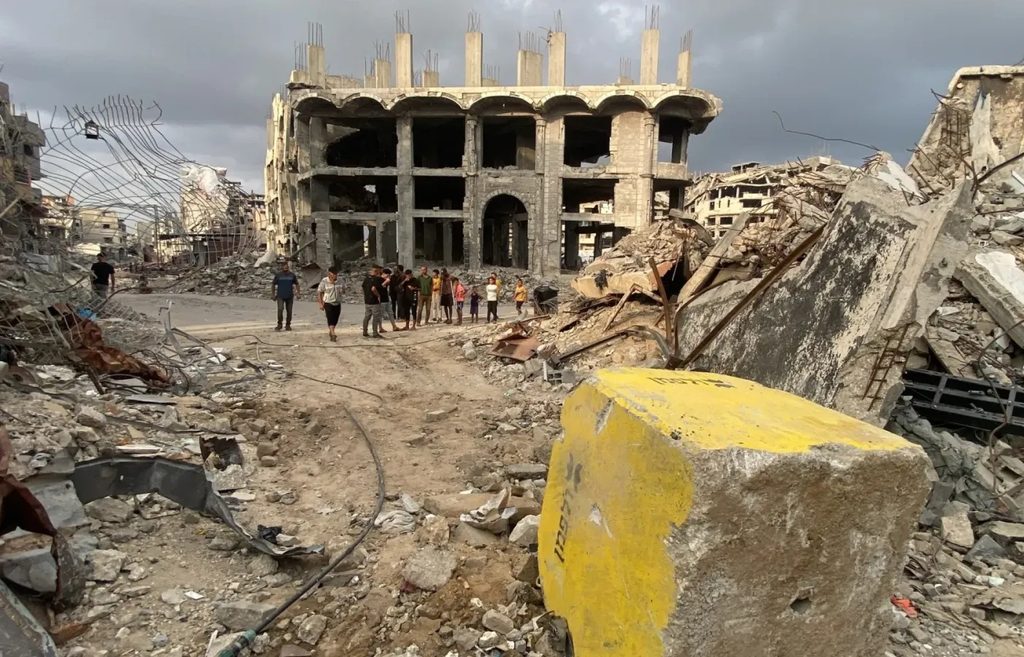
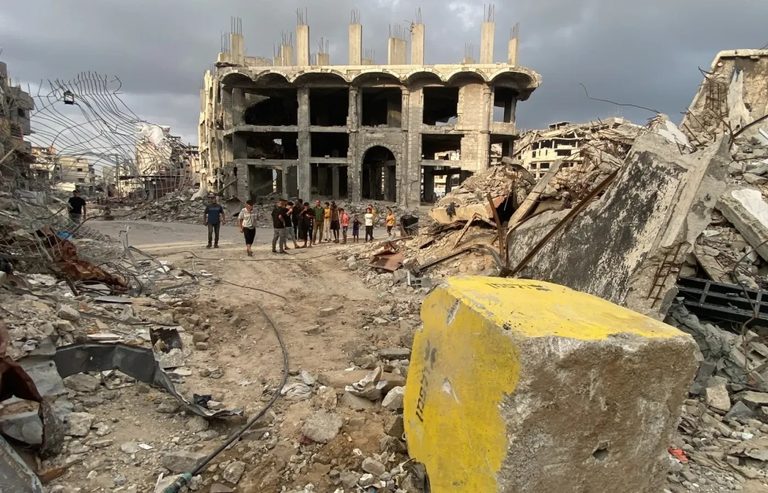
The Human Cost. While Washington debates process, the war grinds on. Local reporting from the Gulf region describes growing displacement, environmental damage from damaged oil infrastructure, and rising civilian casualties from cross-border exchanges. Iranian media quote local officials in Khuzestan province speaking of “unbearable psychological pressure” on communities near U.S. bases. Anti-war demonstrations have flared in major American cities, though they receive sparse attention from cable news network’s whose parent companies hold defence contracts.
Iran’s Stance. In Tehran, officials continue to insist that any diplomatic resolution must begin with an unconditional cessation of hostilities, not nuclear concessions. “The Americans started this war under false pretences,” Baqaei, the foreign ministry spokesman, said at a briefing earlier this month. “They speak of negotiations while bombs fall. This is not diplomacy; it is blackmail. We will not negotiate our defence posture under duress.” Western diplomats privately concede that the administration’s insistence on a pre-emptive nuclear deal as a condition for a ceasefire has been counterproductive, hardening Iran’s resolve.
Corporate Denials And The Legacy Of Impunity:
Dell Technologies did not respond to multiple requests for comment for this article, but previous statements emphasised the company’s “rigorous compliance with all applicable laws and regulations.” Microsoft, whose software underpins the entire arrangement, referred inquiries to Dell, noting only that it “supports efforts to increase efficiency in government IT procurement.”
The administration’s public line, delivered through spokespeople, is one of blanket denial: the Dell contract is a routine consolidation, the Iran war is a necessary national security measure, and the president’s personal investments are irrelevant because he is not governed by the same ethics rules as everyone else. That final point, while legally accurate, is precisely what watchdogs find so alarming.
“We cannot keep relying on the president’s own sense of integrity rather than law to avoid conflicts of interest,” POGO’s Greg Williams warned in a recent updated statement to reporters. “The Dell affair is a textbook case of how the absence of enforceable ethics rules invites corruption. When the commander-in-chief can trade stocks in companies that depend on his own Pentagon’s contracts, and then promote those companies on the stump, we have moved beyond the appearance of impropriety; we are in the territory of systematic self-dealing.”
As the nation enters the summer of 2026, the architecture of profit that surrounds the Trump presidency stands exposed in ever sharper relief. The question that will be put before voters in November is whether they are willing to accept a system in which the business of war and the business of personal enrichment have become indistinguishable. For now, all the indicators point to a Washington where the only enforceable check on presidential greed is the ballot box, and that check, too, is on the ballot.
Source:Veritas Press C.I.C. | Multi News Agencies
Submissions:
For The Secure Submission Of Documentation, Testimonies, Or Exclusive Investigative Reports From Any Global Location, Please Utilise The Following Contact Details For Our Investigations Desk: enquiries@veritaspress.co.uk or editor@veritaspress.co.uk
Help Support Our Work:
Popular Information is powered by readers who believe that truth still matters. When just a few more people step up to support this work, it means more lies exposed, more corruption uncovered, and more accountability where it’s long overdue.
Help Protect Independent Journalism, Which Is Currently Under Attack.
If you believe journalism should serve the public, not the powerful, and you’re in a position to help, becoming a DONATOR or a PAID SUBSCRIBER truly makes a difference.
DONATION APPEAL: If You Found This Reporting Valuable, Please Consider Supporting Independent Journalism.
Help Support Our Work – We Know, We Know, We Know …
Seeing these messages is annoying. We know that. (Imagine what it’s like writing them … )
Your support fuels our fearless, truth-driven journalism. In unity, we endeavour to amplify marginalised voices and champion justice, irrespective of geographical location.
But it’s also extremely important. One of Veritas Press’s greatest assets is its reader-funded model.
1. Reader funding means we can cover what we like. We’re not beholden to the political whims of a billionaire owner. We are a small, independent and impartial organisation. No one can tell us what not to say or what not to report.
2. Reader funding means we don’t have to chase clicks and traffic. We’re not desperately seeking your attention for its own sake: we pursue the stories that our editorial team deems important and believe are worthy of your time.
3. Reader Funding: enables us to keep our website and other social media channels open, allowing as many people as possible to access quality journalism from around the world, particularly those in places where the free press is under threat.
We know not everyone can afford to pay for news, but if you’ve been meaning to support us, now’s the time.
Your donation goes a long way. It helps us:
Keep the lights on and sustain our day-to-day operations
Hire new, talented independent reporters
Launch real-time live debates, community-focused shows, and on-the-ground reporting
Cover the issues that matter most to our communities, in real time, with depth and integrity
We have plans to expand our work, but we can’t do it without your support. Every contribution, no matter the size, helps us stay independent and build a truly people-powered media platform.
If you believe in journalism that informs, empowers, and reflects the communities we serve, please donate today.
Kamran Faqir is a volunteer investigative journalist and writer committed to exposing hidden truths and amplifying underreported stories. Driven by social justice, he brings sharp insight and fearless truth-telling to independent journalism. NUJ registered.
SEATTLE, TEHRAN — The U.S. Department of Homeland Security (DHS) will allow Iran’s national football team to enter the country 48 hours before their critical World Cup match against Egypt on Friday, a modest concession in a tournament where Team Melli’s travel conditions have sparked claims of oppression and competitive disadvantage.