









Help support our mission, donate today and be the change. Every contribution goes directly toward driving real impact for the cause we believe in.
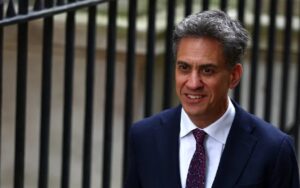
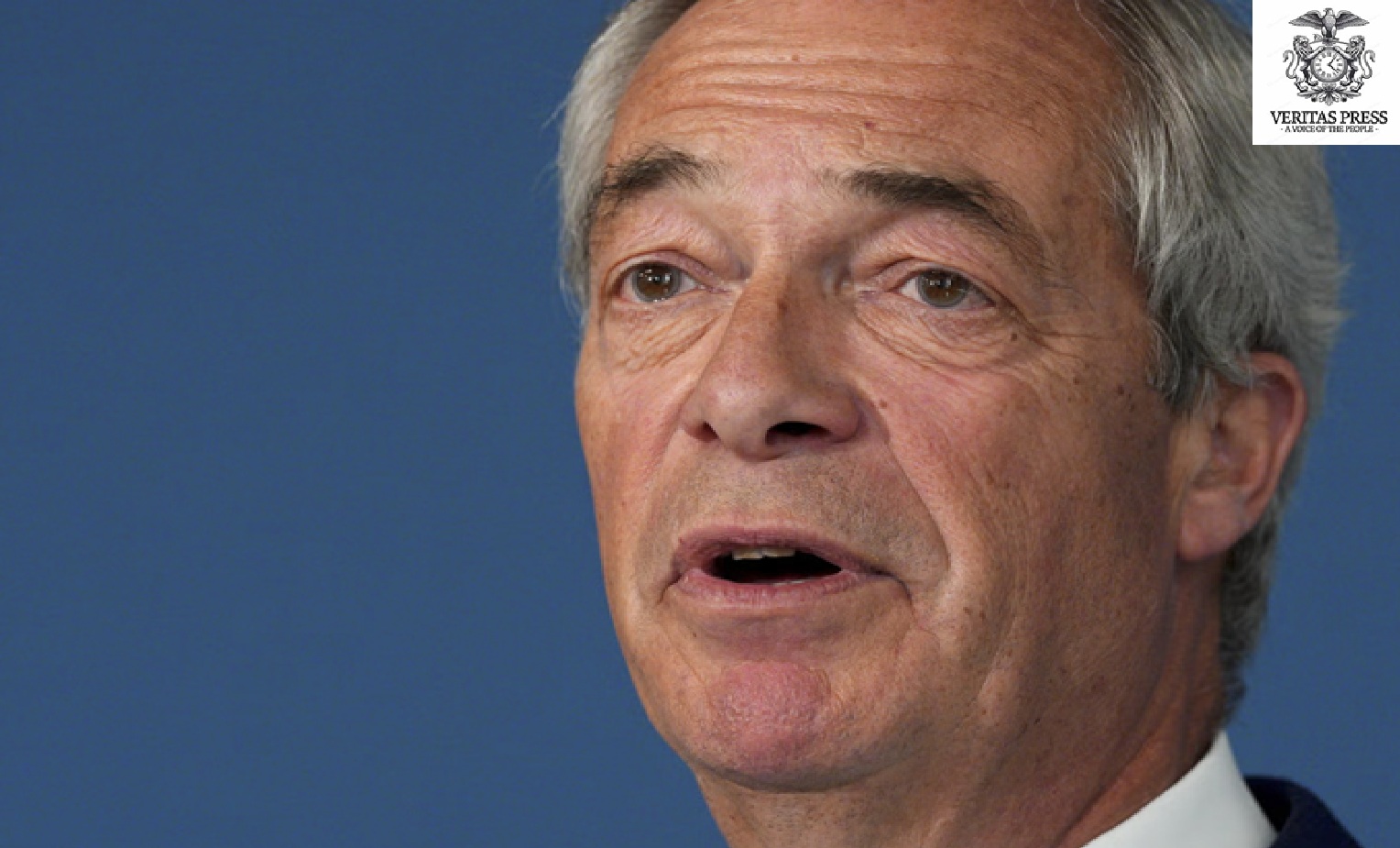
LONDON — The scale and opacity of the financial relationship between Nigel Farage and a reclusive crypto billionaire domiciled in Thailand has been laid bare in a chain of events that culminated on April 29, 2026, with the Conservative Party formally referring the Reform UK leader to the Parliamentary Standards Commissioner. At issue is a £5 million personal gift that Farage accepted in early 2024 and never entered into the Register of Members’ Financial Interests. The case plunges into the unresolved tension at the heart of Britain’s political finance regime: where does a private favour end and a political donation begin?
On the same day the referral was made public, a secondary disclosure ricocheted through the political press: Farage’s home had been firebombed in early 2025, an episode the police investigated but have been unable to attribute to any suspect. By splicing the donation story to a visceral account of the “huge dangers” of his public life, Farage and his team have constructed a narrative of a leader under siege, forced to rely on private beneficence because “the British state” refused to protect him. But a forensic examination of the timeline, the donor’s background, the parliamentary rules, and the political context reveals a far more ambiguous set of facts, and raises questions that go well beyond one MP’s unregistered gift.
The Gift: A Five-Million-Pound Security Blanket.
According to Farage’s own account, published in a pre-emptive interview with The Daily Telegraph on the morning of April 29, 2026, the money was provided by Christopher Harborne, a British national who has lived in Thailand for more than two decades and does business under both his English name and his adopted Thai name, Chakrit Sakunkrit. “This money was given to me so that I would be safe and secure for the rest of my life,” Farage told the newspaper. “I have tried and failed in the past to get security funded by the Home Office, and I don’t think the state will ever help me. I’m very much on my own and will be for the rest of my life, and I have to face up to that grim reality”.
The sheer magnitude of the sum is extraordinary. Five million pounds is roughly 53 times the annual salary of a backbench MP. Reform sources confirmed to the BBC that the funds arrived in “early 2024”. Because the money was characterised as a personal gift rather than a political donation, it was not reported to the Electoral Commission, was not subject to tax, and was not entered into the House of Commons Register of Interests.
Reform UK’s position is succinct: “This was a personal unconditional gift that was given before he was elected. We are confident everything has been declared in accordance with the rules,” a party spokesman said. That confidence is not widely shared.
The Donor: An “Intensely Private” Man With Outsized Leverage.
To understand why alarm bells are ringing across the political spectrum, one must first understand who Christopher Harborne is and why his wealth has become a matter of acute public interest.
Harborne was born Christopher Charles Sherriff Harborne in Mosborough, near Sheffield, on December 18, 1962. A Cambridge alumnus and former McKinsey consultant, he built a string of businesses, many flowing from a self-confessed “passion for aviation.” He is a keen pilot who once crashed a plane into a Hampshire couple’s home. His corporate interests stretch from steel manufacturing to the defence sector.
But it is cryptocurrency, and specifically his stake in Tether, the world’s largest stablecoin by market capitalisation, that appears to constitute the bulk of his fortune. Harborne is not an executive of Tether, but court documents and leaked records identify him as one of a handful of major shareholders, holding approximately 12% of the parent company. Tether declared profits of $13 billion in 2024, more than McDonald’s, yet has never published fully audited accounts, a fact that has attracted the attention of regulators worldwide, including the New York Attorney General, who launched a fraud investigation into the company in April 2019.
That timing is, to put it mildly, noteworthy. Harborne wired his first donation to Farage’s political vehicle, then called the Brexit Party, in 2019, the very month Letitia James announced her probe into Tether. Over the subsequent seven years, Harborne has poured more than £22 million into Farage’s party, making Reform UK “uniquely dependent among British parties on a single benefactor”. The Electoral Commission’s public register records that in 2025 alone, Harborne made donations of £9 million (July 31) and a further £3 million (November 11) to Reform UK, the largest single donation ever given to a British political party by a living person.
Harborne has described himself in legal filings as “an intensely private person” who “does not give speeches or media interviews”. When he does appear publicly, it is often in carefully stage-managed settings, a wellness retreat he owns on the Thai island of Koh Samui, for example, where Farage was a guest in late 2022 in what amounted to a private summit about the future of British conservatism after Liz Truss’s implosion.
On March 24, 2026, Chinese-language crypto media outlet ChainCatcher reported, under the headline “Tether Whale Dumps £12 Million, Backing Crypto’s ‘British Trump’,” that Harborne was the largest shareholder of Tether under his Thai alias. That framing, a crypto whale from the Global South pouring cash into a Western populist movement, feeds directly into the concerns articulated in a government-commissioned review by former senior civil servant Philip Rycroft, which found that the UK faces “a persistent problem of foreign interests seeking to exert influence on and to interfere in our politics, and that the threat has become arguably more acute”.
The Modus Operandi: Getting Ahead Of The Story.
The manner in which the admission became public reveals a textbook example of crisis communications and raises its own set of questions.
According to The Guardian, which had been investigating Reform UK’s finances for months, its reporters contacted both Farage and Harborne on the morning of Monday, April 27, 2026, seeking comment on the undisclosed £5 million gift. Rather than respond substantively, the two men’s representatives appeared to play for time. A lawyer for Reform said he would need extra time to “take instructions from Farage directly.” Schillings, the law firm acting for Harborne, refused to respond unless The Guardian revealed information about its sourcing and also asked for more time, arguing it was “a matter of fairness to allow them to get their ducks in a row”.
In fact, the time was being used for something else: to brief another media organisation. On Wednesday morning, April 29, The Daily Telegraph published its interview with Farage, in which he admitted receiving the £5 million gift and framed it squarely within the context of personal security and a firebomb attack on his home. “Quite apart from the clear attempt to try to get ahead of the story and dictate the narrative, there was a wrinkle in his account,” The Guardian dryly observed.
The wrinkle concerns chronology. Farage linked the donation to the firebombing in the public mind, but the firebombing occurred in early 2025, at least a year after he received the money. “Prior to publication, in correspondence with the Guardian, neither Farage nor Harborne’s representatives mentioned security as being an issue at all,” The Guardian noted. A Reform spokesperson later claimed the firebombing was “just one example” of the security issues Farage has faced.
The Firebombing: Terror On The Doorstep.
The attack itself is unquestionably disturbing. Farage told The Telegraph that a lit incendiary device was shoved through his letterbox in early 2025 in what he described as “an outright arson attempt.” He was not at home at the time. “When I came back and opened the door, I found the damage. Luckily, it had burned itself out in the porch, and we think maybe the perpetrators were disturbed in the act,” he said. Although the police “were all over it,” no suspects have been identified to date.
The attack on Farage’s home occurred in the same period as a spate of arsons targeting properties linked to Prime Minister Sir Keir Starmer. In May 2025, counter-terrorism police began investigating fires at two homes connected to the Prime Minister in Kentish Town, north London. By April 2026, a criminal trial was underway at the Old Bailey, with prosecutors alleging that a Russian-speaking contact calling himself “El Money” had offered cryptocurrency payments to Ukrainian men to carry out the attacks. The juxtaposition is stark: while Starmer’s alleged attackers are being prosecuted in connection with a hostile-state plot, Farage’s attacker remains at large, and the Reform leader claims the state has left him to fend for himself.
“I’m acutely aware of the love for me, but equally the levels of antipathy that exist,” Farage said, cataloguing a laundry list of abuse that includes pints of beer thrown over him, a car written off after a protester attack, and persistent online death threats. “I would rather not be discussing any of this, but I am having to because someone has got hold of material about my private finances, which is outrageous, and which I believe was illegally obtained”.
When asked on BBC Radio Wiltshire about whether the climate of intimidation might deter others from public life, Farage said: “My worry about it is if that if continue down this path, you’ll finish up with good people who should go into public life just not doing it, and that’s a real concern”.
The Rulebook: What The Law Requires.
Irrespective of the genuine sympathy that a violent attack on a politician’s home warrants, the rules governing Members’ financial disclosures are not optional.
The House of Commons Code of Conduct, approved in 2022, states unambiguously: “New Members must register all their current financial interests, and any registrable benefits (other than earnings) received in the 12 months before their election within one month of their election”.
Farage announced his candidacy for Clacton-on-Sea on June 4, 2024, and was elected on July 4, 2024. Under the rules, any registrable benefit received after early June 2023 should have been declared within one month of his entering the Commons, i.e., by early August 2024. Even if the £5 million was received before he formally became a candidate, the 12-month look-back window squarely captures it.
Moreover, the Electoral Commission operates under a separate set of requirements. While political donations above £11,180 must be reported to the Commission, gifts to individuals fall outside that regime only if they are genuinely personal and unrelated to political activity. The characterisation of a £5 million payment from the largest donor to a political party as a purely “personal” matter strains credulity and raises questions, particularly when the recipient himself describes it as funding his ability to continue his political career safely.
Conservative Party chairman Kevin Hollinrake made this argument precisely in a three-page letter to Parliamentary Standards Commissioner Daniel Greenberg, published on Wednesday. “Taking the reported comments of Mr Farage at face value, this was financial support to facilitate (a) the candidature of Mr Farage, (b) his role as a political party leader, and (c) his subsequent role as a Member of Parliament,” Hollinrake wrote, adding: “It is very strange that an upfront, lump-sum payment was made in this way, rather than it being made after he was elected as a Member of Parliament”.
Hollinrake also pointed out that while publicly funded security does not need to be registered, “logically, support from private funding is therefore in scope”, a direct challenge to the Reform argument that the money is outside the rules because it is for security.
The Reaction: A Bipartisan Condemnation.
The response from Farage’s political opponents was swift, coordinated, and unusually bipartisan.
Labour Party chairwoman Anna Turley said: “Nigel Farage appears to have broken the rules again by failing to declare this cash from his billionaire backer. It’s simply not good enough for Reform to gloss over these egregious acts and further erode public trust in politics. It’s just the latest alarming example of Farage and his MPs believing there is one rule for them and another for everyone else”.
Kevin Hollinrake, the Conservative Party chairman, was even more pugnacious. “The Conservatives are today referring Nigel Farage to the Parliamentary Standards Commissioner. This £5 million from the crypto billionaire Christopher Harborne raises serious questions. What is Nigel Farage hiding? And why does Reform think the rules don’t apply to them? This stinks, and Reform should come clean now”.
The referral is not merely performative. Hollinrake’s letter to Commissioner Greenberg details specific rule breaches under Rule 5 of the Code of Conduct, which relates to the registration of financial interests, and requests a formal investigation. The Parliamentary Commissioner has the power to launch an inquiry and, for the most serious breaches, to refer the case to the Committee on Standards, which can recommend sanctions including suspension from the House.
On social media, Hollinrake posted the letter publicly, ensuring the pressure would be sustained beyond the news cycle. “No such £5 million payment was declared by Mr Farage for inclusion in the Register of Interests for the pre-election period,” he wrote. “The Conservatives are therefore today referring Nigel Farage to the Parliamentary Standards…”.
The Good Law Project, a campaign group that has previously referred Farage to the Commissioner over alleged undeclared benefits from a US PR firm, signalled it would be monitoring the case closely. The group has already filed a High Court action against Reform UK over data rights and has accused the party of “selling access” through a £250,000 corporate “champagne breakfast” with Farage at its annual conference.
The Pattern: A Habit Of “Inadvertent” Breaches.
The £5 million controversy does not exist in isolation. It is the latest, and most financially consequential, in a series of transparency failures that have dogged Farage since he entered the Commons.
On January 21, 2026, barely three months before the current scandal broke, Parliamentary Standards Commissioner Daniel Greenberg ruled that Farage had breached the MPs’ Code of Conduct 17 times by failing to register financial interests totalling £384,000 within the required 28-day window. The undeclared earnings included payments from GB News, speaking engagements for Google, and income from the personalised-video platform Cameo.
In his ruling, Greenberg described the breaches as “inadvertent” and declined to refer the case for sanctions, noting that Farage had “acknowledged and apologised for his breaches of the rules.” But the Commissioner also described his decision to close the case without escalation as “finely balanced,” citing the high value of the undeclared sums.
Farage’s defence at the time was memorably eccentric: he claimed he had been “extremely let down by a very senior member of staff” and noted that he is not “computer literate,” describing himself as an “oddball” who delegated his financial registrations to others. Critics were quick to point out that a man who had just failed to declare nearly £400,000 in outside earnings might not be in the strongest position to argue that an additional £5 million from a billionaire donor was somehow exempt from the rules.
In July 2025, Greenberg had opened a separate investigation into Farage following a complaint from a member of the House of Lords, looking into a possible breach of the registration-of-interest rules. And in March 2025, the Good Law Project formally referred Farage to the Commissioner over benefits allegedly received from a US PR firm linked to former Trump strategist Steve Bannon.
The cumulative weight of these inquiries paints a portrait of a politician who treats the transparency regime as an irritating impediment rather than a cornerstone of parliamentary integrity.
The Broader Context: A Party Built On One Man’s Wealth.
Reform UK’s financial architecture is unlike that of any other major British party. According to the investigative platform Donation Watch, over the past seven years, Harborne has contributed more than £22 million, approximately two-thirds of all funding received by Reform UK and its predecessor, the Brexit Party, since 2019. This singular dependency raises profound questions about influence, accountability, and the resilience of the party as a democratic institution.
The Electoral Commission’s database shows that in addition to the two 2025 donations of £9 million and £3 million, Harborne made four separate donations of £2 million each to the Brexit Party in late 2019, plus earlier contributions to the Conservatives. The trajectory is clear: Harborne’s money first went to the Brexit Party in 2019 and 2020, the period when Farage’s pressure on the government over EU withdrawal was at its peak, then briefly to the Tories in 2022, and then back to Farage with vastly increased intensity from 2024 onward.
Just months after the £9 million donation, Farage promoted Tether on a UK talk show, raising questions about whether the political airtime was connected to the financial relationship. Wikibit reported: “In one instance in 2025, Farage promoted Tether on a UK talk show one month after Harborne donated £9 million to Reform UK”.
The money has also crossed borders in ways that conventional British party finance rarely does. In January 2025, Harborne provided £28,000 to fund Farage’s attendance at Donald Trump’s inauguration, the very month the United States placed sanctions on Russian money-laundering networks that were using Tether to evade controls. Harborne’s lawyers have argued that blaming an investor in Tether for crimes committed by users of its tokens would be “akin to claiming the US Treasury is an accomplice in money laundering because it prints the US dollar.” But that analogy has limited purchase in a political context: the US Treasury does not personally fund candidates whose platform might materially affect its business interests.
The Government’s Response: Locking The Stable Door.
The timing of the £5 million disclosure is freighted with irony. On March 25, 2026, just five weeks before the scandal broke, Prime Minister Keir Starmer had stood up in the House of Commons and announced a suite of measures explicitly designed to curtail the kind of financial flows that have sustained Reform UK.
“We will do everything necessary to protect the UK’s democracy,” Communities Secretary Steve Reed told the House, unveiling the government’s response to the Rycroft Review on foreign financial interference. The package included two major planks: a ban on cryptocurrency donations to political parties, and a cap of £100,000 per year on donations from British citizens living abroad.
The implications for Reform UK were immediate and severe. The party had become the first British political party to formally accept donations in cryptocurrency, and Harborne, domiciled in Thailand for decades, is the paradigmatic example of the overseas elector whose contributions the new rules would limit. Reform MPs staged a furious walkout from the Commons during the announcement. Reform’s Richard Tice denounced the measures as a politically motivated attack on the party’s funding base. But transparency campaigners welcomed the move. Dr Parth Patel, IPPR associate director for democracy and politics, said: “We should all be concerned that wealthy individuals are accounting for a growing share of party funding”.
The £5 million gift to Farage, however, predates these new rules, and in any case, the rules govern political donations, not personal gifts. The loophole that Farage and Harborne are driving a coach and horses through is precisely the one that distinguishes “personal” largesse from “political” contributions.
The Unanswered Questions: What The Inquiry Must Examine.
As the Parliamentary Standards Commissioner considers the referral, several critical questions demand answers that go well beyond whether a line was missed on a form:
First, timing and intent. The money arrived in early 2024. On May 24, 2024, Farage posted on X: “I have thought long and hard as to whether I should stand in the upcoming general election. I will do my bit to help in the campaign, but it is not the right time for me to go further than that.” Within two weeks, by June 3, he had reversed himself, announcing both his candidacy in Clacton and his resumption of the party leadership. What changed in those two weeks? Did the assurance of £5 million in personal security facilitate the decision to stand?
Second, the nature of the financial arrangement. Is the £5 million held in a trust, a dedicated bank account, or has it been commingled with Farage’s personal finances? Who controls the disbursement of these funds? What happens to any unspent residue? If the money is genuinely for “security for life,” there should be some form of governance structure, and that structure should be disclosed.
Third, the firebomb timeline. The attack occurred in early 2025, a year after the money changed hands. Farage’s team has attempted to retrofit the donation to the attack, but the chronology does not support that narrative. If Harborne was concerned about Farage’s security in early 2024, what specific threat assessment was that concern based on? Did it relate to the 2019 milkshake incident, to online threats, to intelligence that Farage has not disclosed?
Fourth, the Home Office claim. Farage asserts that he “tried and failed” to obtain Home Office-funded security. A December 2024 report suggested that the Home Office had reduced Farage’s security funding by 75%. Reform UK’s then-chairman Zia Yusuf described this as a “decimation” orchestrated by the Home Office. But MPs are not generally entitled to the kind of lifelong, 24-hour private security that £5 million can buy. Farage’s complaint conflates the publicly funded security available to MPs with the bespoke protection he prefers, a blurring of categories that conveniently justifies the private gift.
Fifth, Harborne’s broader interests. As a major shareholder in Tether, a stablecoin whose profits depend on maintaining the dollar peg and whose opaque reserve structure has attracted regulatory scrutiny, Harborne has a clear financial interest in shaping the regulatory environment for cryptocurrency. Farage, as the leader of a party that polls suggest could be the largest in the next parliament, is in a position to influence that environment. The £5 million “personal” gift, when added to the £22 million in political donations, creates a web of dependence that any robust transparency regime should illuminate.
Conclusion: Democracy’s Stress Test.
The referral of Nigel Farage to the Parliamentary Standards Commissioner over the £5 million Harborne gift is not merely a matter of one MP’s compliance with registration requirements. It is a stress test of the entire architecture of British political finance, an architecture that was designed for a world of constituency donations and Rotary Club fundraisers, not for crypto billionaires operating from Thai wellness retreats with millions of pounds of untraceable digital assets at their disposal.
The government has already moved to cap overseas donations and ban crypto contributions. But the Farage case exposes a deeper vulnerability: the ease with which a “personal gift” can be structured to circumvent rules designed to regulate “political donations.” If a single donor can give an MP £5 million to secure his “safety for life” and that transaction remains outside the scope of electoral law, then the law is not fit for purpose.
In The Guardian’s understated assessment, “If it was for security purposes, that still doesn’t explain why it wasn’t declared in some manner”. The Parliamentary Standards Commissioner will now have to decide whether this is a case of an MP failing to register a benefit, or something more fundamental: a failure of the system to account for money that shapes the very conditions under which political power is exercised.
In the background, a firebomb smouldered in a porch and burned itself out. A suspect has not been found. The trauma is real. But so is the £5 million, parked somewhere between the Register of Members’ Financial Interests and the opacity of the crypto economy, eluding the scrutiny that democracy demands.
Source: Multiple News Agencies
Submissions:
For The Secure Submission Of Documentation, Testimonies, Or Exclusive Investigative Reports From Any Global Location, Please Utilise The Following Contact Details For Our Investigations Desk: enquiries@veritaspress.co.uk or editor@veritaspress.co.uk
Help Support Our Work:
Popular Information is powered by readers who believe that truth still matters. When just a few more people step up to support this work, it means more lies exposed, more corruption uncovered, and more accountability where it’s long overdue.
Help Protect Independent Journalism, Which Is Currently Under Attack.
If you believe journalism should serve the public, not the powerful, and you’re in a position to help, becoming a DONATOR or a PAID SUBSCRIBER truly makes a difference.
DONATION APPEAL: If You Found This Reporting Valuable, Please Consider Supporting Independent Journalism.
Help Support Our Work – We Know, We Know, We Know …
Seeing these messages is annoying. We know that. (Imagine what it’s like writing them … )
Your support fuels our fearless, truth-driven journalism. In unity, we endeavour to amplify marginalised voices and champion justice, irrespective of geographical location.
But it’s also extremely important. One of Veritas Press’s greatest assets is its reader-funded model.
1. Reader funding means we can cover what we like. We’re not beholden to the political whims of a billionaire owner. We are a small, independent and impartial organisation. No one can tell us what not to say or what not to report.
2. Reader funding means we don’t have to chase clicks and traffic. We’re not desperately seeking your attention for its own sake: we pursue the stories that our editorial team deems important and believe are worthy of your time.
3. Reader Funding: enables us to keep our website and other social media channels open, allowing as many people as possible to access quality journalism from around the world, particularly those in places where the free press is under threat.
We know not everyone can afford to pay for news, but if you’ve been meaning to support us, now’s the time.
Your donation goes a long way. It helps us:
- Keep the lights on and sustain our day-to-day operations
- Hire new, talented independent reporters
- Launch real-time live debates, community-focused shows, and on-the-ground reporting
- Cover the issues that matter most to our communities, in real time, with depth and integrity
We have plans to expand our work, but we can’t do it without your support. Every contribution, no matter the size, helps us stay independent and build a truly people-powered media platform. If you believe in journalism that informs, empowers, and reflects the communities we serve, please donate today.

The Trump administration is preparing a $2.8 billion weapons package for Israel containing 40,000 2,000-pound
Film alleges mass civilian deaths are routinely built into military decisions amid Israel’s genocidal war

The Israeli rights group says violence, displacement, economic strangulation, and settlement expansion form part of

Houthi forces have captured the historic Red Sea port of Mocha and are advancing on
London’s historic sanctions against Israeli settlements mark a watershed moment in UK foreign policy, but

With 95% of Gaza’s population now wholly dependent on aid and more than 90% stripped
India calls for Kashmir and Ladakh to appear only on its official map after a
ISLAMABAD – In the high-stakes political theatre of Pakistan, the battleground has shifted from the
Francesca Albanese says third states have an ICJ-mandated obligation to end Israel’s occupation. But with
As Israeli jets bomb a Syrian air base over alleged Turkish deployment plans, Ankara, Washington