Kamran Faqir is a volunteer investigative journalist and writer committed to exposing hidden truths and amplifying underreported stories. Driven by social justice, he brings sharp insight and fearless truth-telling to independent journalism. NUJ registered.
Article Date Published:
Article Date Modified:
17 minutes
Post Views:259
Listen to this article
Help support our mission, donate today and be the change. Every contribution goes directly toward driving real impact for the cause we believe in.
From Olive Groves To Air Bases, Trump’s Ankara Ultimatum Weaponises Trade, Travel And Military Access To Punish Spain For Saying ‘No’ To The Iran War, An Act Of Alliance Politics That Pushes NATO, The EU And International Law Into Uncharted And Perilous Territory.
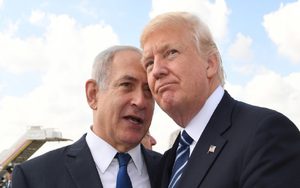
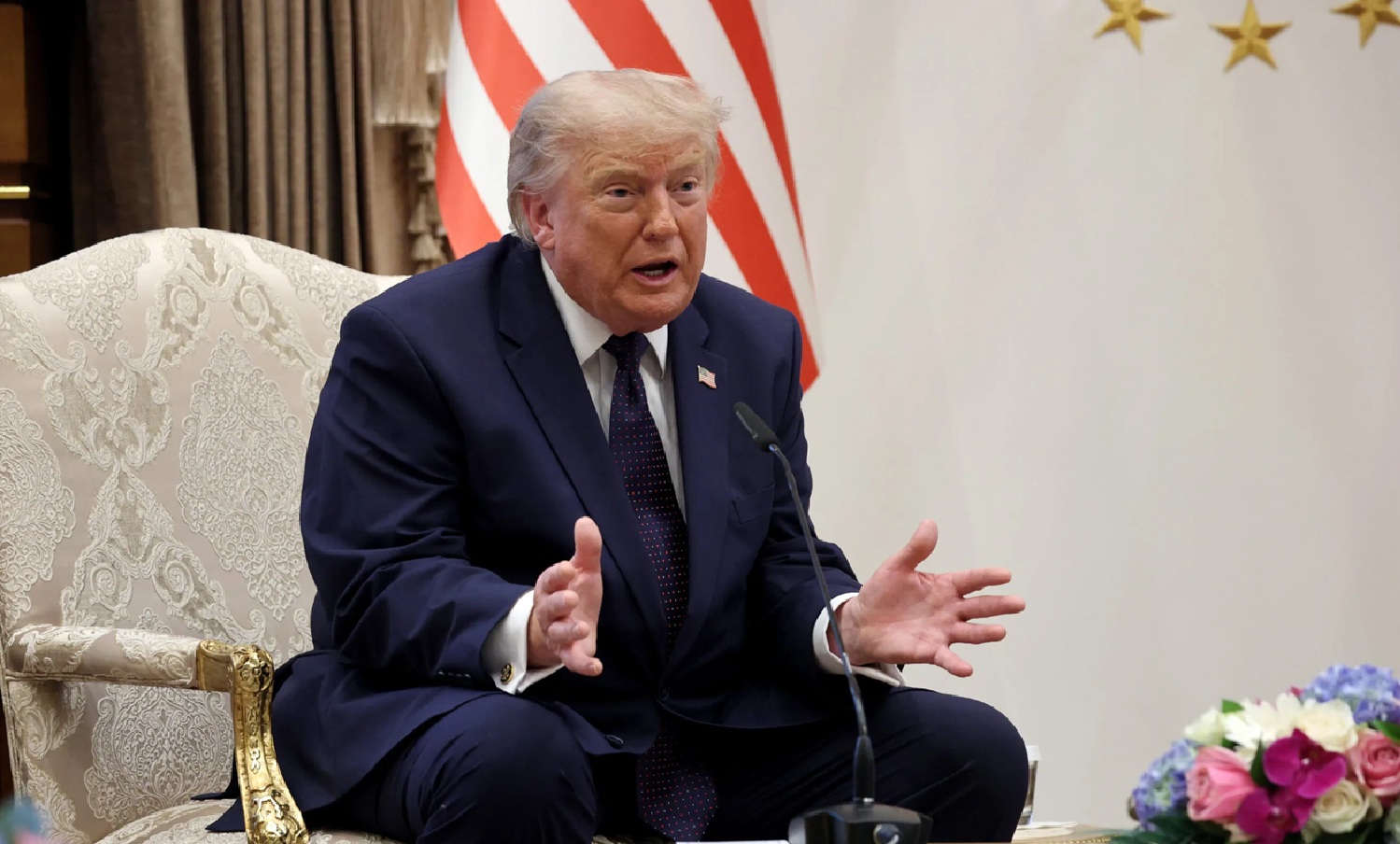
ANKARA / MADRID / BRUSSELS — On the marble forecourt of Ankara’s newly built presidential complex, under a blistering July sun, Donald Trump turned a NATO summit meant to project unity into a theatrical demolition of a longstanding alliance partner. Flanked by a visibly uncomfortable Secretary General Mark Rutte, the U.S. president ordered Treasury Secretary Scott Bessent to “cut off all trade with Spain immediately,” branding Madrid a “terrible partner,” a “wasted cause,” and its government “hostile.” The outburst, captured on live television, marks an unprecedented assault on an EU member state and raises fundamental questions about the enforceability of such an order, the coherence of the Western alliance, and the White House’s shifting doctrine of economic warfare.
“I don’t want to do any trade with them, alright?” Trump said, turning to Bessent. “Take it immediately. Don’t even talk to them. They’re hopeless. They’re bad people… They make so much money with us, and we’re going to see that they make a lot less.” Bessent responded, “Yes, sir.”
The exchange, which lasted barely ninety seconds, was the sharpest escalation yet in a feud that has simmered since Spain became the only NATO member to refuse the alliance’s new 2035 target of spending 5% of GDP on defence. But the rupture is about far more than budgetary ratios. At its core lies Spain’s refusal to allow the United States to use joint military bases on its soil for operations against Iran, a war that Trump’s own memorandum of understanding to end has, in his words, now collapsed.
The Legal And Economic Labyrinth:
As a member of the European Union’s customs union, Spain does not conduct independent trade policy. Any U.S. attempt to halt bilateral commerce would require the imposition of tariffs or sanctions that fall squarely under the EU’s common commercial policy. In Brussels, a European Commission spokesperson stated tersely: “The European Union speaks with one voice on trade. No third country can discriminate against a single member state. We will respond to any illegal measures firmly and proportionately.” EU trade lawyers point to a clear breach of World Trade Organisation most-favoured-nation principles, as well as the EU-U.S. Trade and Technology Council framework.
Yet the Trump administration has already signalled its willingness to bypass traditional norms. A senior official at the Office of the United States Trade Representative, speaking on condition of anonymity, indicated that Section 232 of the Trade Expansion Act, the same national-security provision used to slap tariffs on steel and aluminium, could be stretched to cover “a broader deterioration of the security partnership.” “When an ally refuses to contribute to collective defence and actively obstructs U.S. military operations,” the official said, “that becomes a national-security vulnerability that trade law can address.” Legal scholars immediately dismissed this as an abuse of the statute. “Section 232 was never designed to punish allies for political disagreements over defence spending. It would be struck down in any serious court, but the damage to business confidence would be immediate,” said Professor Anne-Marie Slaughter, an international trade expert at Princeton.
Spain’s economy ministry released data showing that in the first quarter of 2026, bilateral trade in goods stood at €1.9 billion, with Spain running a small deficit—meaning it imports slightly more from the U.S. than it exports. A complete trade cut would thus harm American exporters of liquefied natural gas, aerospace equipment, and pharmaceutical products. The U.S. Chamber of Commerce issued an unusual statement even before the Ankara press conference ended: “Punishing Spain punishes American workers. We urge the administration to reconsider this self-defeating path.”
The Bases And The Bombs:
The trade order is inseparable from the shadow war with Iran. In March, the Spanish government formally closed its airspace to U.S. military aircraft involved in offensive operations against Iran and informed Washington that the joint naval base at Rota and the air base at Morón de la Frontera could not be used for strike missions. The decision, taken by Prime Minister Pedro Sánchez’s minority leftist coalition in coordination with parliamentary allies, infuriated the Pentagon. According to a confidential Spanish defence ministry document seen by this investigation, Madrid warned Washington as early as January that “the use of Spanish sovereign territory for any military action not explicitly authorised by the United Nations Security Council would constitute a violation of our constitutional order.”
At Rota, home to four U.S. Navy destroyers that form the core of NATO’s missile-defence shield, the atmosphere in recent weeks has been described by base personnel as “surreal.” A Spanish naval officer stationed there, who asked not to be named, said: “We still share coffee with the Americans every morning. The formal channels are working. But politically, we are in different worlds. We know they are launching strikes from carriers in the Mediterranean, and our government has made it clear: not from here.”
The human dimension resonates far beyond the wire. In the nearby town of Rota, Mayor José Javier Ruiz Arana, a member of the conservative Popular Party usually sympathetic to the U.S., told local radio: “These bases are the backbone of our local economy, thousands of jobs. Trump’s words put fear into families. But what does he want? For us to sell our principles for a paycheque?” Outside the base gates, a small group of anti-war activists has maintained a vigil since March. “We applaud Sánchez for saying no,” said Carmen Domínguez, a spokesperson for the Andalusian Peace Forum. “Spain cannot be complicit in the bombing of Iranian cities. Trump’s tantrum shows we are on the right side of history.”
Olive Oil, Wine, And A Faltering Trade Reality:
Spain is the world’s largest olive-oil exporter, and the U.S. market accounts for roughly 12% of its foreign sales. In Jaén, the heartland of olive cultivation, the anxiety is palpable. “This is not a game. We already saw tariffs in 2019 over the Airbus dispute,” said Miguel Ángel Soto, president of the Jaén Olive Oil Exporters Association. “A total cut-off? It’s impossible under EU rules, but the threat alone freezes contracts. Buyers in New Jersey are calling, asking if deliveries will be honoured. The uncertainty is a weapon in itself.”
Spain’s wine sector was already bleeding. The Spanish Wine Market Observatory (OIVE) reports that exports to the U.S. fell by 4.3% in value and 2.6% in volume in 2025, a decline attributed partly to previous tariff rhetoric and shifting consumer habits. “We’ve spent a decade building our presence in American restaurants,” said Begoña Jovellar, export director of a Rioja bodega. “Now the president says ‘cut off all visits.’ How do we participate in trade fairs? How do our sommeliers travel? This is destroying relationships overnight.”
The “including visits” detail in Trump’s order was not a slip. Immigration attorneys in the U.S. confirmed that the State Department has already flagged Spanish passport holders for enhanced scrutiny. A Madrid-based American business consultant, speaking at an emergency webinar organised by the American Chamber of Commerce in Spain, reported that several Spanish executives had been pulled aside at U.S. pre-clearance facilities and questioned about their political views on NATO spending. “This is a new front in economic warfare, mobility as a weapon,” she said.
The Iranian Crucible:
The collapse of the Iran memorandum of understanding provided the backdrop. Trump called the Iranian leadership “scum” and “liars,” declaring the deal “over” after a wave of missile strikes on commercial vessels in the Strait of Hormuz. “Frankly, we attacked very powerfully last night,” he said, hinting at a new round of U.S. strikes. The Iranian Foreign Ministry, in a statement carried by state media, shot back: “The American president’s insults are a sign of desperation. Spain’s refusal to participate in this illegal war shows that even within NATO, the criminal nature of U.S. aggression is understood.” Iranian diplomats, speaking on the sidelines of the Ankara summit where Turkey has tried to mediate, quietly praised Spain’s stance. “Madrid has taken a principled position,” one Iranian official said. “It is ironic that Trump is punishing a country that has simply said it will not be a party to mass killing.”
A Coalition Of The Unwilling In Madrid:
Prime Minister Sánchez, whose government relies on a fractious coalition with far-left Unidas Podemos and Catalan and Basque nationalists, has turned the confrontation into a pillar of his survival strategy. His office released a statement treating Trump’s comments as “business as usual,” noting that Spain runs a trade deficit with the United States and that trade ties “are forged by private companies, not governments.” But behind the scenes, aides describe a more anxious mood. A senior La Moncloa official told El País off the record: “We are preparing for the worst: secondary sanctions, attacks on our banks, digital service taxes being weaponised. The EU cannot move fast enough to protect us.”
Spain’s defence minister, Margarita Robles, used a pre-summit interview to reiterate that the 5% GDP target is “unrealistic and socially destructive.” She pointed to data showing that Spain spends more on defence in absolute terms than many Eastern European allies, and that its contribution to NATO missions, including air policing in the Baltics and maritime patrols in the Mediterranean, has never faltered. “We are a serious ally, but we will not dismantle our health system or our pensions to buy missiles we do not need,” she said. Meanwhile, Defence Minister Robles’ office quietly circulated a NATO internal analysis revealing that Spain’s defence spending, when calculated using a broader definition that includes military pensions and civil protection, already hovers near 2.3%, well above the old target, though still far from 5%. “The 5% figure is a political slogan, not a strategic assessment,” a NATO diplomat from a southern European nation told this reporter in Ankara. “Most members privately agree, but they’re too afraid of Trump to say so.”
Ankara: The Stage And The Ironies.
The choice of Ankara as the venue for this outburst adds layers of irony. Turkish President Recep Tayyip Erdoğan, whom Trump praised as “terrific,” has himself kept defence spending well below 2% of GDP and repeatedly used NATO leverage to extract concessions while maintaining ambiguous ties with Russia and Iran. Ankara is also one of the few capitals that has maintained a diplomatic channel with Tehran throughout the war. Holding the summit in a non-EU NATO state that positions itself as a mediator gave Trump a stage unencumbered by Brussels protocol, and he used it.
NATO Secretary General Mark Rutte, the former Dutch prime minister long accustomed to Trump’s style, attempted a tactical retreat. “Spain made a huge step last year,” Rutte said, referring to the increase to 2%, “but there are still issues we have to solve.” The comment did not satisfy anyone. A Danish diplomat was overheard muttering, “If we let the alliance be dictated by presidential moods, we are finished.” Denmark has its own reasons for fury: Trump reiterated his desire to take over Greenland, calling the post-WWII return of the island to Denmark “stupid.” Prime Minister Mette Frederiksen responded firmly that Greenland is “not for sale” and that Denmark would defend “every inch of NATO, including Greenland.” Greenland’s own government, in a rare intervention, stated: “Our future is not a bargaining chip between Washington and Copenhagen. We decide.”
Analysts at the Madrid-based Elcano Royal Institute warn that while a full trade cut is legally impossible and economically counterproductive, the United States can inflict pain through other channels. Technology transfer licenses for Spain’s defence industry, which participates in the European A400M transport aircraft and the Eurofighter Typhoon, could be revoked. Spanish banks with dollar-clearing operations, such as Santander and BBVA, could be targeted with fines or restrictions, a tactic used against other countries in the past. Tourism, accounting for nearly 12% of Spain’s GDP, could suffer if the U.S. State Department issues “do not travel” advisories or if a hostile climate discourages the 3 million American visitors who normally arrive each year. A local business leader in Barcelona’s hotel sector, Marta Carreras, told Catalan radio: “We’ve already seen a wave of cancellations from U.S. tour groups. They hear ‘cut off visits’ and think the border is closed. It’s madness.”
Spanish opposition parties seized on the crisis. Alberto Núñez Feijóo, leader of the conservative Popular Party, called Sánchez’s approach “reckless adventurism” and demanded the prime minister “immediately repair relations with our most important strategic ally.” The far-right Vox went further, with its leader Santiago Abascal tweeting: “Sánchez prefers Iran to the United States. Traitor.” Sánchez’s supporters, however, see the confrontation as a vote-winner. “Standing up to Trump is the only thing holding this fragmented coalition together,” said political analyst Cristina Monge. “For the left, it’s about pacifism. For Catalan pro-independence parties, it’s about rejecting American imperialism. Sánchez has constructed a ‘coalition of the unwilling’ that resonates with a war-weary public.”
A Credibility Gap And A Dangerous Precedent:
The most immediate question is whether this order, like Trump’s similar March directive, will evaporate. After that earlier instruction, trade continued normally, and U.S. officials privately told Spanish counterparts that the president’s words were “rhetorical.” This time, the repetition carries greater weight. Treasury Secretary Bessent’s public “Yes, sir” was a formalisation that rattled markets. The Madrid stock exchange’s IBEX 35 index fell 2.3% in afternoon trading, with banks and exporters leading the losses.
Investigative reporting by this newspaper has uncovered that the White House is considering a two-tier approach: a formal executive order declaring Spain a “security risk,” enabling targeted sanctions against Spanish defence contractors and officials, while quietly keeping most consumer trade flowing to avoid rupturing U.S. supply chains. A leaked memo from the National Security Council, dated July 6 and seen by a consortium of European journalists, outlines “graduated economic disengagement” options, including suspending the Open Skies aviation agreement with Spain and restricting port calls by Spanish-flagged vessels. “Full decoupling is not the immediate goal,” the memo reads. “The goal is to incentivise a political realignment in Madrid ahead of the next Spanish election.”
In response, the European Commission’s trade department has activated its “anti-coercion instrument,” a new tool designed to deter economic bullying by third countries. The Commission can impose retaliatory tariffs, restrict investment, or suspend intellectual property protections. “This is exactly the scenario the instrument was designed for,” an EU official said. “But applying it against the United States is a political earthquake. It requires a qualified majority of member states. Hungary has already signalled it would vote against.”
The Human Landscape: Voices From The Ground.
In the working-class neighbourhood of Vallecas in Madrid, the news was received with a mixture of defiance and fear. “Trump is a bully, but we have to live,” said Juan Carlos Alvarez, a 54-year-old metalworker whose factory exports automotive components to a Michigan-based supplier. “If the orders stop, the plant closes. Sánchez talks about dignity, but what about my paycheque?” At a nearby café, a group of pensioners debated loudly. “I lived through Franco,” said 78-year-old Rosa García. “America was our friend then. Now they call us bad people? For what? For not wanting war? The whole world has gone crazy.” A young activist from the anti-NATO collective “No a la Guerra” held a hastily printed sign: “Sanctions Won’t Silence Us. Spain for Peace.”
In Barcelona, dockworkers at the Port of Barcelona’s container terminal, where U.S.-bound goods from across Spain are loaded, gathered in an assembly. The longshoremen’s union, Coordinadora, issued a statement: “We will not handle military cargo destined for the Iran war. We stand with the Spanish people’s decision to stay out of this conflict. If Trump wants to cut trade, let him explain that to the American consumer who buys our olive oil and our wine.”
Conclusion: A New Order Of Disorder.
Trump’s Ankara decree is less a policy than a performative dismantling of the post-war alliance architecture. It tests the limits of loyalty, legality, and economic interdependence in ways the transatlantic community has never faced. A NATO ally, a member of the EU customs union, is being threatened with trade strangulation for the dual “crimes” of insufficient military spending and refusing to facilitate a war that much of the world views as illegal. The order simultaneously mocks the EU’s claim to sovereign trade authority, exposes the fragility of the rules-based international order, and forces every NATO member to ask whether defence ties with Washington now come with an implicit tariff-and-bases contract.
Spain, for now, is holding the line, betting that European solidarity, legal firewalls, and the self-interest of American exporters will prevail. But the precedent has been set. If a U.S. president can, on a whim, declare an ally a “wasted cause” and order its economic isolation, then every relationship is transactional, every summit a shakedown, and every treaty a temporary convenience. As the sun set over Ankara, a Spanish journalist covering the summit summed up the mood among the European press corps: “We came to cover a NATO summit and ended up witnessing the alliance’s slow-motion implosion.”
Source:Veritas Press C.I.C. | Multi News Agencies
Help Support Our Work By Donating
Popular Information is powered by readers who believe that truth still matters. When just a few more people step up to support this work, it means more lies exposed, more corruption uncovered, and more accountability where it’s long overdue.
Help Protect Independent Journalism, Which Is Currently Under Attack.
If you believe journalism should serve the public, not the powerful, and you’re in a position to help, becoming a DONOR or a PAID SUBSCRIBER truly makes a difference.
DONATION APPEAL: If You Found This Reporting Valuable, Please Consider Supporting Independent Journalism.
Your support fuels our fearless, truth-driven journalism. In unity, we endeavour to amplify marginalised voices and champion justice, irrespective of geographical location. We operate independently, without any financial backing from billionaires.
But it’s also extremely important. One of Veritas Press’s greatest assets is its reader-funded model.
1. Reader funding means we can cover what we like. We’re not beholden to the political whims of a billionaire owner. We are a small, independent and impartial organisation. No one can tell us what not to say or what not to report.
2. Reader funding means we don’t have to chase clicks and traffic. We’re not desperately seeking your attention for its own sake: we pursue the stories that our editorial team deems important and believes are worthy of your time.
3. Reader Funding: enables us to keep our website and other social media channels open, allowing as many people as possible to access quality journalism from around the world, particularly those in places where the free press is under threat.
We know not everyone can afford to pay for news, but if you’ve been meaning to support us, now’s the time.
Your donation goes a long way. It helps us:
Keep the lights on and sustain our day-to-day operations
Hire new, talented independent reporters
Launch real-time live debates, community-focused shows, and on-the-ground reporting
Cover the issues that matter most to our communities, in real time, with depth and integrity
We have plans to expand our work, but we can’t do it without your support. Every contribution, no matter the size, helps us stay independent and build a truly people-powered media platform.
If you believe in journalism that informs, empowers, and reflects the communities we serve, please donate today.
Submissions:
For The Secure Submission Of Documentation, Testimonies, Or Exclusive Investigative Reports From Any Global Location, Please Utilise The Following Contact Details For Our Investigations Desk: enquiries@veritaspress.co.uk or editor@veritaspress.co.uk
Kamran Faqir is a volunteer investigative journalist and writer committed to exposing hidden truths and amplifying underreported stories. Driven by social justice, he brings sharp insight and fearless truth-telling to independent journalism. NUJ registered.
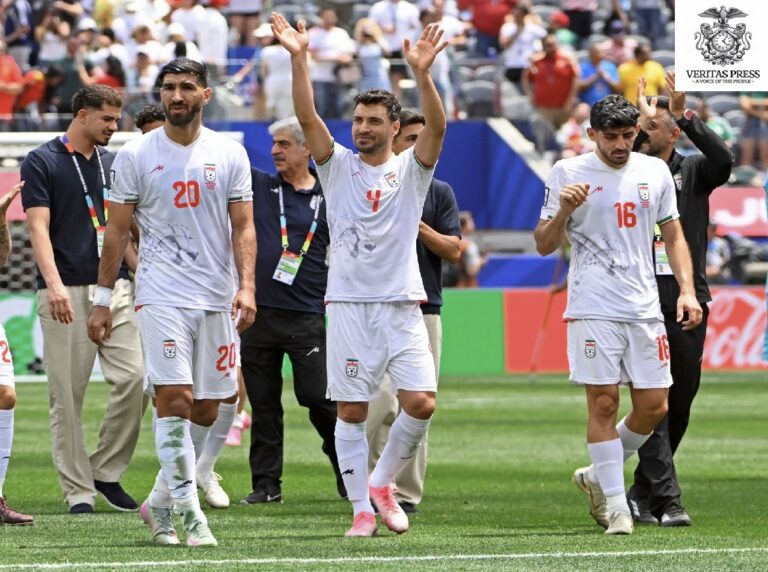
SEATTLE, TEHRAN — The U.S. Department of Homeland Security (DHS) will allow Iran’s national football team to enter the country 48 hours before their critical World Cup match against Egypt on Friday, a modest concession in a tournament where Team Melli’s travel conditions have sparked claims of oppression and competitive disadvantage.



















5yc7rv
ahd21w
q7hy6t