



Author:
Byline: Investigative Desk
Help support our mission, donate today and be the change. Every contribution goes directly toward driving real impact for the cause we believe in.
Iran’s GDP is projected to contract by 5.4 to 6.1% in 2026, its worst performance since 1988. Oil exports have collapsed from 2.12 million barrels per day before the war to roughly 65,000. Food prices have surged 115%. More than one million jobs have been lost. The naval blockade has severed what one analyst called “Iran’s economic lifeline”, and there is no realistic path to revival without sanctions relief Washington shows no sign of granting.
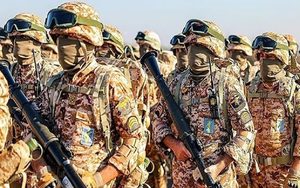
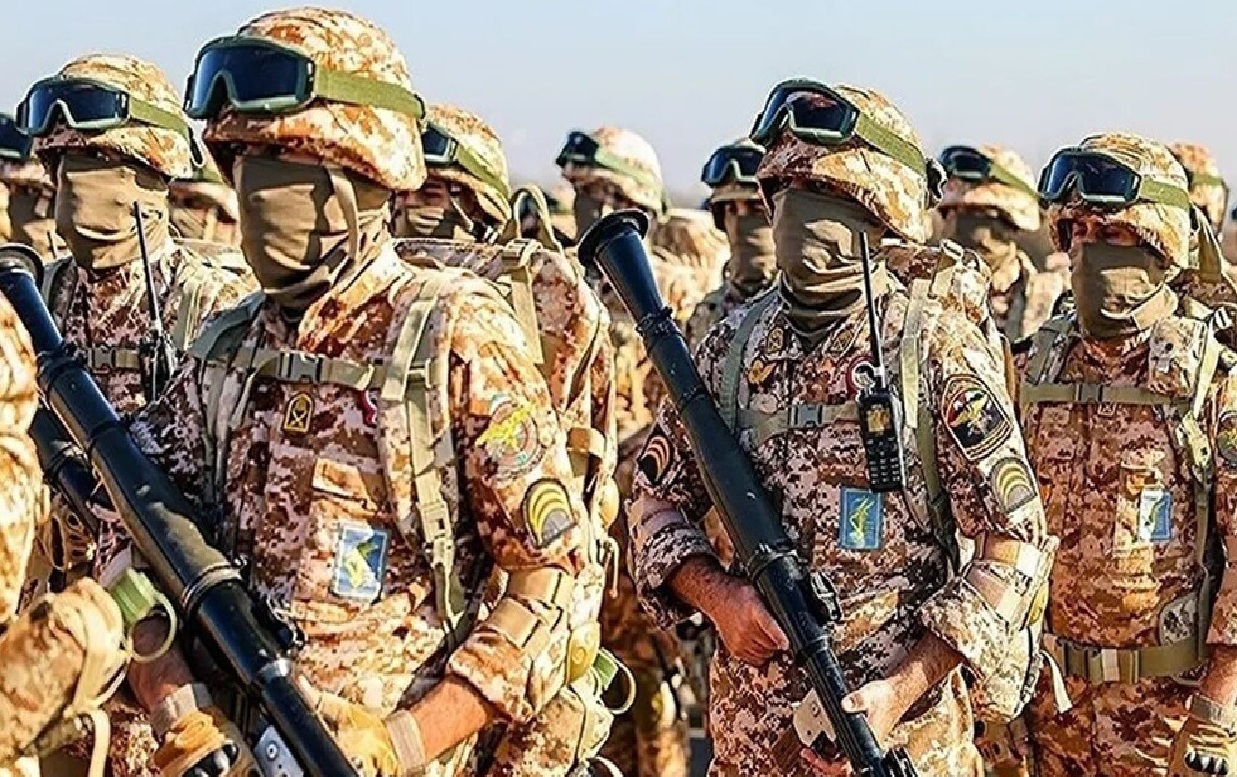
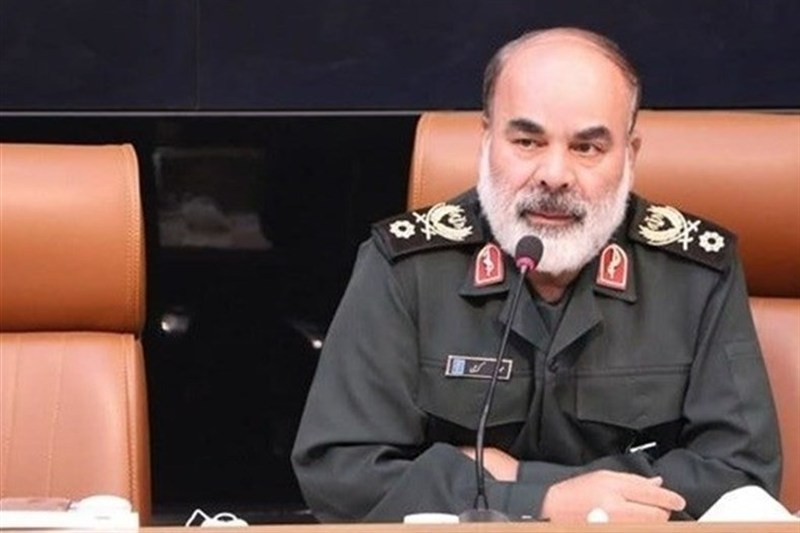
TEHRAN — The commander of the Islamic Revolution Guards Corps (IRGC) Ground Force has issued a stark warning to the United States and Israel, declaring that any act of aggression against Iran will be met with a “decisive” and “powerful” response, as military tensions in the Persian Gulf continue to simmer nearly seven months after the outbreak of a devastating regional war.
Brigadier General Mohammad Karami made the remarks on Thursday during a field visit to Iran’s strategic Persian Gulf islands, a location that has become central to the ongoing standoff over the Strait of Hormuz. “Backed by divine willpower and the support of the steadfast, vigilant, and present-on-the-scene nation, the armed forces of the Islamic Republic of Iran will respond decisively to any miscalculation by the enemy,” Karami said, according to Iranian state media.
The IRGC commander added that “today, the banner of the Holy Prophet of Islam is held by the great and noble nation of Iran,” framing the confrontation in explicitly religious and nationalist terms.
A Ceasefire That Never Held
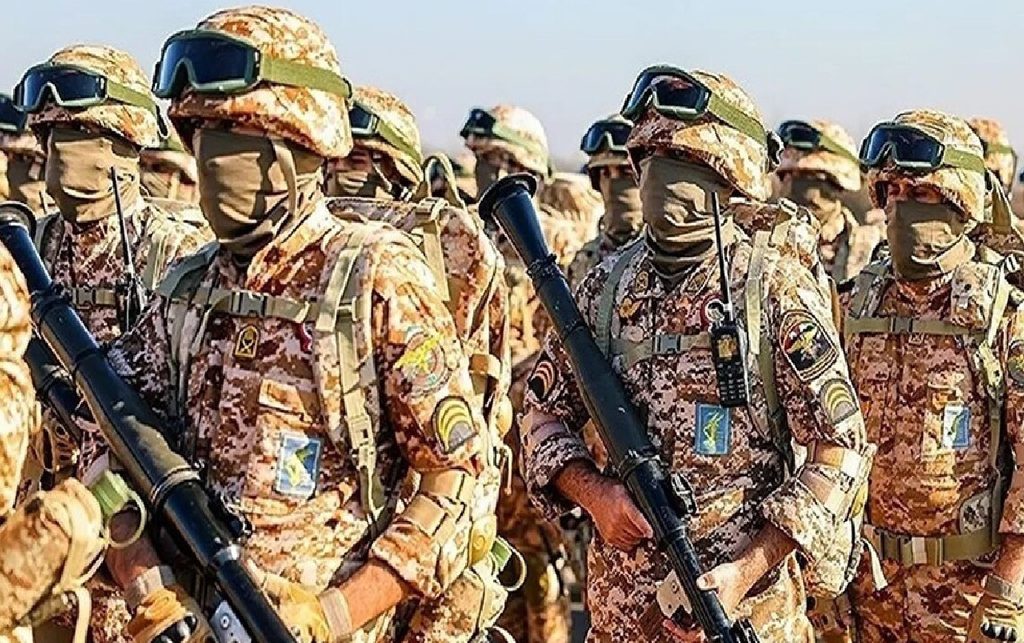
The current crisis traces its origins to February 28, when the United States and Israel launched what Tehran has consistently described as an “illegal war of aggression” against Iran. According to Iranian accounts, the opening salvo included the assassination of the Leader of the Islamic Revolution, Ayatollah Seyyed Ali Khamenei, along with senior military commanders, an allegation that Western media has neither independently confirmed nor thoroughly investigated.
Forty days later, on April 8, a ceasefire was brokered by Pakistan, leading to the so-called Islamabad Memorandum of Understanding signed on June 17. The agreement was hailed internationally as a breakthrough. UN Secretary-General António Guterres called on all parties to “comply with their obligations under international law and to abide by the terms of the ceasefire in order to pave the way toward a lasting and comprehensive peace in the region”.
That peace proved illusory. In July, the United States conducted waves of deadly air raids on Iran and imposed a naval blockade, actions that Iranian officials say violated the Islamabad MoU and effectively “dismantled” the agreement.
“The renewed US blockade has, in a way, dismantled the Islamabad memorandum,” Iranian Deputy Foreign Minister Kazem Gharibabadi stated, adding that Tehran no longer considered itself bound by the agreement’s commitments.
The Strait Of Hormuz: Iran’s Ultimate Leverage
At the heart of the conflict lies the Strait of Hormuz, through which approximately 20% of the world’s oil and natural gas supplies passed before the war. Iran declared the strait closed to all traffic in June following renewed US attacks, a move that sent global energy prices surging. Abu Dhabi’s Murban crude jumped nearly 5% in a single day.
A Tasnim News Agency correspondent who visited the strait in May described a scene of Iranian dominance: “A long line of oil tankers and container ships, as far as the eye can see, stands waiting at designated points to receive permission to pass. These ships have well understood that passage through these 100 nautical miles of entry and exit is only possible by accepting Iran’s sovereignty and oversight”.
The IRGC has warned that if the US continues its blockade, it will halt all regional energy exports. “Oil and gas exports from the region will either be available for everyone or for no one,” the IRGC stated in July, adding that “the enemy must understand that its naval forces have blocked Indian Ocean shipping lanes for global oil and gas exports, putting the economic interests of US competitors at risk”.
Trump’s Threats And Iran’s Defiance
US President Donald Trump has repeatedly threatened to deploy ground forces to seize Kharg Island, Iran’s main oil export hub, which handles approximately 90% of the country’s crude exports. In an interview with Fox News in July, Trump refused to rule out a ground campaign.
“Sometimes you need a ground campaign, but we have other people who will do the ground campaign for us,” Trump said. “But we have already hit Kharg Island twice, even three times. I said, ‘Hit everything but the oil!'”
Trump also vowed to expand strikes to civilian infrastructure: “Next week comes the power plants. Next week comes the bridges. We’re going to knock out all their power plants. We’re going to knock out all their bridges unless they get to the table and negotiate”.
Iranian Army offical Brigadier General Mohammad Akraminia rejected Trump’s claims that Iran’s military power has been destroyed as “sheer lie.” In statements carried by Mehr News Agency, Akraminia said: “We are present in the region, and we control the region. The fact that American vessels are currently at a very great distance from our coasts shows our power and strength. If, as Trump claims, our Navy had been destroyed, the enemy would have approached our coasts, but now it does not dare to do so”.
Akraminia also criticised US reports of a pilot rescue operation inside Iran, suggesting they fabricated the stories to create a “legend of invincibility” reminiscent of Hollywood films. He claimed a major US operation in Dasht-e Mahyar had failed, forcing American forces to destroy their own aircraft and helicopters, “a great scandal, like the scandal Carter suffered at Tabas”.
The army spokesperson issued a final warning: “If they again make a miscalculation and commit a new aggression, they will be targeted more decisively, more broadly and more strongly than before, and will be forced to endure a heavy defeat”.
Voices From The Region
The human cost of the conflict continues to mount. Iran’s Health Ministry reported more than 260 people injured in a single night of US strikes in July, with government spokeswoman Fatemeh Mohajerani stating that more than 30 people had lost their lives in recent clashes.
In Kuwait, which has been repeatedly targeted throughout the war, civilians expressed deepening anxiety. “Every day, I wake up wondering whether the situation will de-escalate or worsen,” said Mustafa Mohamed, a 39-year-old Sudanese accountant. “It has become difficult to feel at ease or plan anything because uncertainty grips everyone”.
George Atef, a 38-year-old Egyptian civil servant in Kuwait, added: “What exhausts me most is not knowing when this situation will end; the waiting itself has become draining”.
A New Iranian Order In The Gulf
Iranian officials have increasingly framed the conflict not as a defensive posture but as the establishment of a new regional order. A political deputy of the IRGC Navy declared in September that Iran’s “intelligence and operational dominance over the Persian Gulf, Strait of Hormuz, and Sea of Oman has reached 100%.”
“No vessel moves in these strategic waters unless it is under our moment-by-moment surveillance, and we have the will to send any aggressor and any foreign vessel to the depths of the sea in a fraction of a second, at any point and with any coordinates,” Ali Mohammadi stated.
Addressing Trump directly, Mohammadi said: “You speak of unfinished business in Iran? Know that we also have unfinished business with you; but this business will only end with your destruction and the destruction of your paper tiger hegemony. We have trained for years for the final confrontation with the enemy, and we eagerly await the day when we come eye to eye with the enemy at sea and settle the score for his injustices”.
The Nuclear Dimension
Amid the military escalation, concerns about Iran’s nuclear program have intensified. US strikes have reportedly targeted areas near the Bushehr nuclear power plant, Iran’s only civilian nuclear facility. The IRGC has warned that any attack on nuclear infrastructure would constitute a red line.
Iran’s ten-point peace plan, submitted during the April ceasefire negotiations, included “acceptance of Iran’s nuclear enrichment rights” as a key demand, a provision that US officials have historically rejected.
A Fragile Status Quo
Nearly seven months into a war that has killed hundreds, displaced thousands, and disrupted global energy markets, neither side has achieved its stated objectives. The United States has failed to topple the Iranian government, reopen the Strait of Hormuz by force, or eliminate Iran’s nuclear program. Iran has suffered devastating losses but has demonstrated remarkable resilience and retained its most powerful leverage: control over the world’s most critical oil chokepoint.
As Brigadier General Karami’s latest warning makes clear, Tehran is prepared for a protracted confrontation. The question now is whether Washington, mired in domestic political opposition to the war, with Senate Democrats blocking defence authorisation over the campaign, has the appetite for a ground invasion that military analysts warn would be “a high-risk operation involving large numbers of U.S. forces that could lead to significant casualties”.
For the people of the Gulf, the waiting continues. And as one Kuwaiti resident put it, “the waiting itself has become draining”.
Investigative Conclusion: The “Decisive Response” Doctrine as a Strategic Cul-de-Sac
The IRGC commander’s latest warning is not, in substance, a military statement. It is a performance of credibility aimed at an audience that is no longer watching. The deeper investigative truth of this war, now approaching its seventh month, is that Iran’s threat architecture, however loudly reiterated, has been progressively hollowed out by a convergence of economic asphyxiation, diplomatic isolation, and the slow erosion of its most potent leverage: the Strait of Hormuz.
The Strait As A Diminishing Asset
Iranian commanders continue to affirm “complete control” over the Strait of Hormuz. But control of a chokepoint is only valuable if the threat of closure generates leverage. And that leverage is decaying. Shipping data shows an average of just ten commodity vessels transiting the strait daily, the lowest level since May. This is not evidence of Iranian dominance; it is evidence of global adaptation. The 18-nation Consultative Shipping Group has described the Hormuz disruption not as a temporary shock but as “a signal of a structural shift in the operating environment of global trade”. The world is not waiting for Iran to reopen the strait. It is rerouting, repricing, and building resilience around Iran’s capacity to disrupt.
Worse for Tehran, the closure is inflicting far more damage on Iran than on its adversaries. Iran’s GDP is projected to contract by 5.4 to 6.1% in 2026, its worst performance since 1988. Oil exports have collapsed from 2.12 million barrels per day before the war to a low of roughly 65,000 barrels per day. The naval blockade has severed “Iran’s economic lifeline,” as one analyst put it, and there is no realistic path to revival without sanctions relief that Washington shows no inclination to grant. The rial has crashed, food prices have surged 115%, and more than one million jobs have been lost.
The Military Reality Behind The Rhetoric
Iran’s recent military operations illustrate the gap between rhetoric and capability. The IRGC’s September 8 retaliation, attacking two U.S. vessels and eight oil tankers, was a response to the U.S. destruction of five Iranian tankers. The cycle is telling: Iran attacks, suffers disproportionate losses, retaliates, and suffers more. Jordan’s air defence system reportedly intercepted 18 of 20 Iranian ballistic missiles fired at a U.S. base. The U.S. warship targeted by Iran’s advanced Qassem Basir missile “successfully evaded” the attack.
This is not to suggest that Iran is militarily impotent. It retains the capacity to inflict pain, on Gulf shipping, on regional bases, on the global economy. But the strategic math has inverted. Every Iranian escalation now accelerates the mechanisms of its own economic undoing while generating diminishing coercive returns.
The West’s Own Contradictions
The United States does not emerge from this investigation unscathed. The war’s stated aims, ending Iran’s nuclear program, halting its regional aggression, creating conditions for regime change, remain unfulfilled. American public opinion has turned decisively against the conflict: only one in three Americans supports the war, and just 7% support a ground invasion. Even Republican lawmakers acknowledge there is no appetite for a land campaign.
Meanwhile, U.S. strikes have produced documented civilian casualties that international investigators say raise questions of war crimes. A September 1 strike on a wedding in Hormozgan killed five, including two children. A July 30 strike on a home on Qeshm Island killed a family of three. The UN Independent International Fact-Finding Mission on Iran has warned that “the parties must fulfil their obligations under international humanitarian law, otherwise it may lead to international responsibility including war crimes”.
A War Without A Theory Of Victory
The deeper failure is conceptual. Neither side has articulated a coherent theory of how this war ends. Trump’s social media promises that “oil prices will drop precipitously… when we WIN the war” substitute sloganeering for strategy. Iran’s insistence that it will respond “decisively” to any miscalculation presupposes an adversary that can be deterred, but the adversary has demonstrated it is willing to absorb costs and escalate, regardless.
The global economy is paying the price for this strategic vacuum. Freight rates for a single VLCC from the U.S. Gulf to China have hit $44.8 million, up from $17.8 million before the war . Wheat prices have climbed 24%, urea 82%. For hundreds of millions of people in import-dependent economies, the war in the Persian Gulf has become a bread-and-fertiliser crisis.
The Unanswered Question
Brigadier General Karami’s warning to the “enemy” is, in the end, a message to the already-converted. It reassures a domestic audience that the regime remains resolute. But resolve is not a strategy. Iran’s most powerful weapon, the Strait of Hormuz, is a wasting asset. Its economy is in freefall. Its diplomatic options are narrowing. And the enemy it warns against has demonstrated, repeatedly, that it will not be deterred by the very threats Iran considers its ultimate leverage.
The investigative conclusion is uncomfortable for all parties: this war is being fought without a viable exit for either side. Iran cannot win by closing the strait; the United States cannot win by bombing Iran into submission. The “decisive response” doctrine, for all its rhetorical force, is a cul-de-sac. The only question that matters now is how many more people, Iranians, Americans, and the civilians of a destabilised region, will be asked to pay the price of a conflict whose architects have run out of ideas but not out of ammunition.
Veritas Press Investigative Analysis
Independent journalism examining global affairs, power, diplomacy, and accountability.
Source: Veritas Press C.I.C. | Multi-News Agencies
Help Support Our Work By Donating
Readers who believe that truth still matters have power over popular information. When just a few more people step up to support this work, it means more lies exposed, more corruption uncovered, and more accountability where it’s long overdue.
Help Protect Independent Journalism, Which Is Currently Under Attack.
If you believe journalism should serve the public, not the powerful, and you’re able to help, becoming a regular DONOR or a PAID SUBSCRIBER truly makes a difference.
DONATION APPEAL: If you found this reporting valuable, please consider supporting independent journalism.
Your support fuels our fearless, truth-driven journalism. In unity, we endeavour to amplify marginalised voices and champion justice, irrespective of geographical location. We operate independently, with no financial backing from billionaires; our readers support us.
But it’s also extremely important. One of Veritas Press’s greatest assets is its reader-funded model.
1. Reader funding means we can cover what we like. We’re not beholden to the political whims of a billionaire owner. We are a small, independent and impartial organisation. No one can tell us what not to say or what not to report.
2. Reader funding means we don’t have to chase clicks and traffic. We’re not desperately seeking your attention for its own sake; we pursue the stories that our editorial team deems important and believes are worthy of your time.
3. Reader Funding: enables us to keep our website and other social media channels open, allowing as many people as possible to access quality journalism from around the world, particularly those in places where the free press is under threat.
We know not everyone can afford to pay for news, but if you’ve been meaning to support us, now’s the time.
Your donation goes a long way. It helps us:
- Keep the lights on and sustain our day-to-day operations
- Hire new, talented, independent reporters
- Launch real-time live debates, community-focused shows, and on-the-ground reporting
- Cover the issues that matter most to our communities, in real time, with depth and integrity
Without your support, independent voices like ours will be silenced.
Furthermore, we have plans to expand our work, but we can’t do it without your support. Every contribution, no matter the size, helps us stay independent and build a truly people-powered media platform.
If you believe in journalism that informs, empowers, and reflects the communities we serve, please donate today.
Submissions:
For the secure submission of documentation, testimonies, or exclusive investigative reports from any global location, please utilise the following contact details for our Investigations Desk: mailto:enquiries@veritaspress.co.uk or mailto:editor@veritaspress.co.uk
GENEVA — A United Nations fact-finding mission has concluded there are “reasonable grounds to believe”
Iran’s GDP is projected to contract by 5.4 to 6.1% in 2026, its worst performance
The Trump administration is preparing a $2.8 billion weapons package for Israel containing 40,000 2,000-pound

Film alleges mass civilian deaths are routinely built into military decisions amid Israel’s genocidal war
The Israeli rights group says violence, displacement, economic strangulation, and settlement expansion form part of

Houthi forces have captured the historic Red Sea port of Mocha and are advancing on
London’s historic sanctions against Israeli settlements mark a watershed moment in UK foreign policy, but
With 95% of Gaza’s population now wholly dependent on aid and more than 90% stripped
India calls for Kashmir and Ladakh to appear only on its official map after a
ISLAMABAD – In the high-stakes political theatre of Pakistan, the battleground has shifted from the