


Help support our mission, donate today and be the change. Every contribution goes directly toward driving real impact for the cause we believe in.
A Deep Dive into the Strategic, Legal, and Humanitarian Dimensions of a Conflict Inching Toward the Unprecedented.
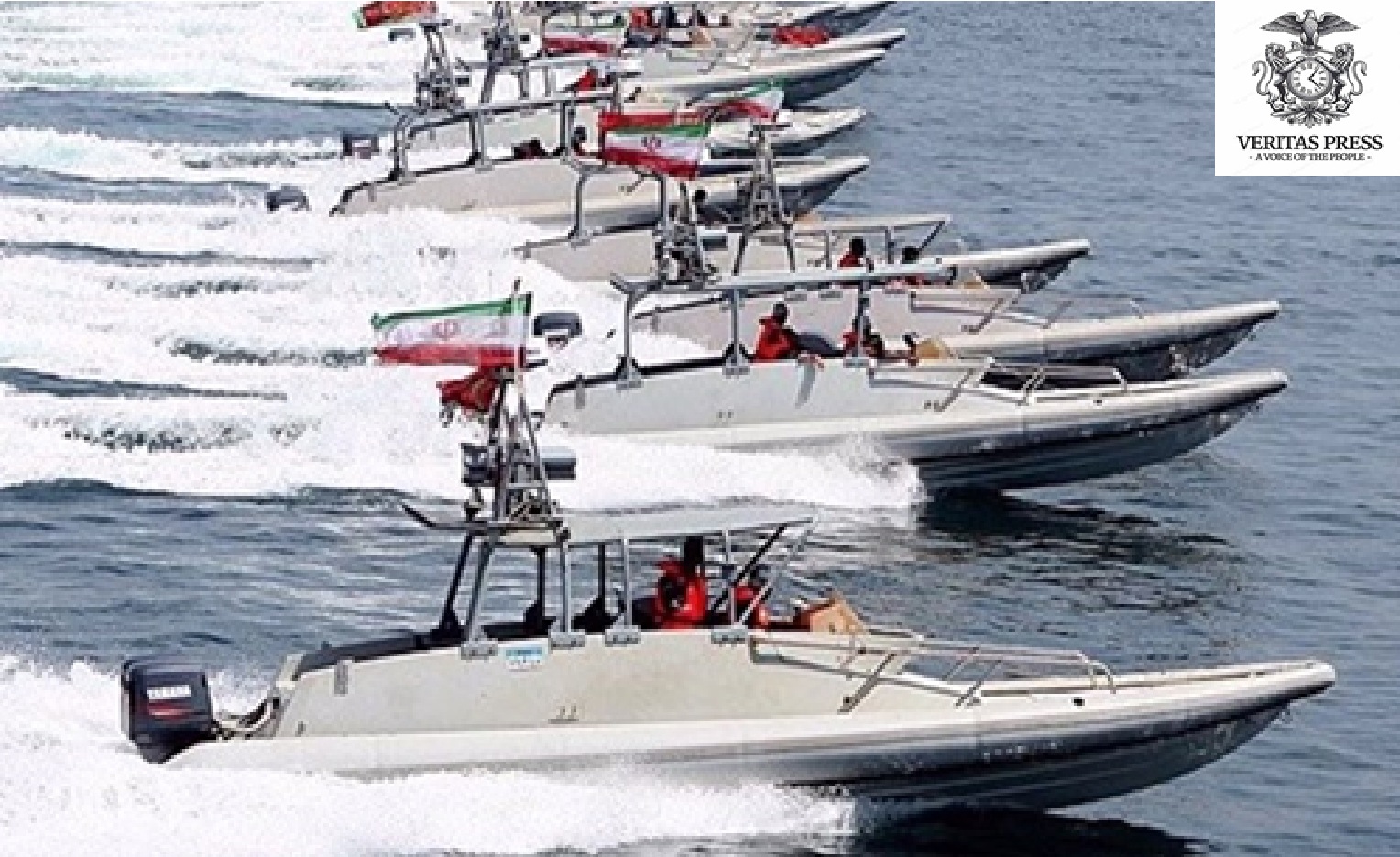
TEHRAN – The narrow, 30-kilometre-wide corridor of water known as the Strait of Hormuz has long been the world’s most critical energy chokepoint, a maritime highway through which a fifth of the planet’s oil supplies once flowed in peacetime. Today, it is a militarised dead zone. Since late February 2026, the strait has been the epicentre of a rapidly spiralling confrontation between the Islamic Republic of Iran and a United States-led coalition that has moved far beyond the familiar contours of shadow wars and proxy conflicts. In an exclusive briefing with Press TV, a high-ranking Iranian security source, operating under the authority of the Khatam al-Anbiya Headquarters, delivered a stark warning: the continued American “maritime piracy and banditry” will soon be met with a “practical and unprecedented action.”
This is not merely rhetorical escalation. It is a carefully calibrated signal that Iran’s armed forces believe “patience has limits” and that a “punishing response” has become necessary if Washington maintains its illegal naval blockade. This investigation, drawing on exclusive statements, diplomatic correspondence, open-source maritime data, and interviews with regional officials and analysts, dissects the anatomy of a crisis that has already claimed thousands of lives, pushed the global economy to the edge of recession, and now threatens to trigger a military response unlike any the region has witnessed.
The “Win Card” Warning: Inside Khatam Al-Anbiya’s Calculus.
The warning issued by the Khatam al-Anbiya Central Headquarters is the most significant public articulation of Iran’s military posture since the ceasefire first took hold. Speaking to Press TV, the source emphasised that the United States no longer faces a “passive or predictable adversary.” Through the “spirited resistance of its people and armed forces, and the wise, courageous, and decisive leadership of the Leader of the Islamic Revolution, Ayatollah Seyyed Mojtaba Khamenei,” Iran claims to have systematically “neutralised and discredited” every American option on the table.
This language is carefully chosen. The invocation of the new Supreme Leader, who assumed the mantle after the martyrdom of Ayatollah Seyyed Ali Khamenei during the initial US-Israeli strikes on February 28, serves a dual purpose: it signals political continuity at the highest level of the Islamic Republic’s power structure, and it frames the current standoff as an existential struggle rooted in the blood of its most senior figures. The original conflict was unleashed, Iran argues, as an “unprovoked and illegal war of aggression” amidst ongoing nuclear negotiations.
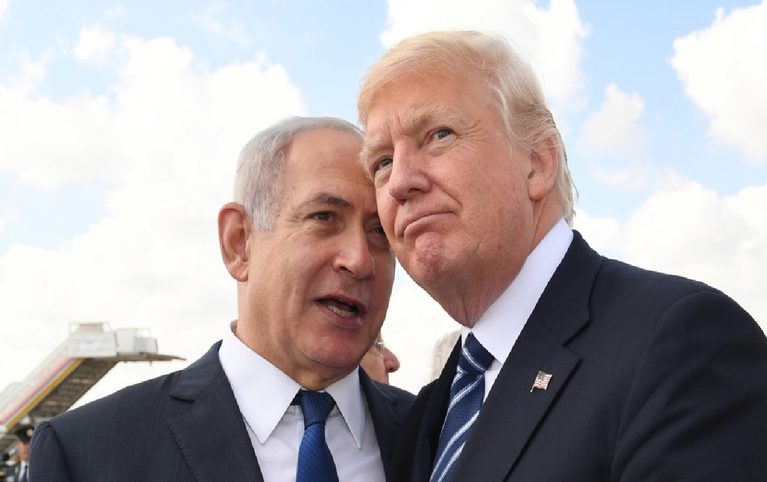
According to the source, the “restraint” shown by the armed forces so far was a deliberate, strategic pause, a window for diplomacy, specifically designed to “give President Donald Trump an opportunity to pull the United States out of the current quagmire and reload.” This pause, however, was not indefinite. “If American obstinacy and delusions continue and Iran’s conditions are rejected,” the source warned, the enemy should expect a “different kind of response.”
Brigadier General Mohammad Akraminia, the Iranian Army’s spokesman, separately reinforced this timeline. In a televised address, he stated bluntly: “We have not considered the war to be over.” He revealed that from the very first day the ceasefire took effect, Iranian forces, operating with a “lack of trust in the enemies”, had been continuously updating their target banks, maintaining rigorous training, and drawing operational lessons from the 40-day conflict. “Conditions remain effectively wartime for Iran,” he said. Critically, Akraminia claimed Iran possesses numerous “winning cards” that have not yet been played, warning that any renewed aggression would be met with “new tools, new methods, and in new arenas.”
He further warned that the armed forces had both produced and upgraded their equipment, and that if the enemy resorts to another act of aggression, “it would face Iran with new tools, methods, and in new arenas.” The spokesman described Iran’s wartime experience as a crucible that had forged a more formidable fighting force. “By relying on the experience of the previous wars, the country has acquired new tools and methods of warfare that would enable it to deliver a stronger and more decisive response to any future attack.”
“State-Sponsored Piracy”: The Tanker Seizures And The Legal War.
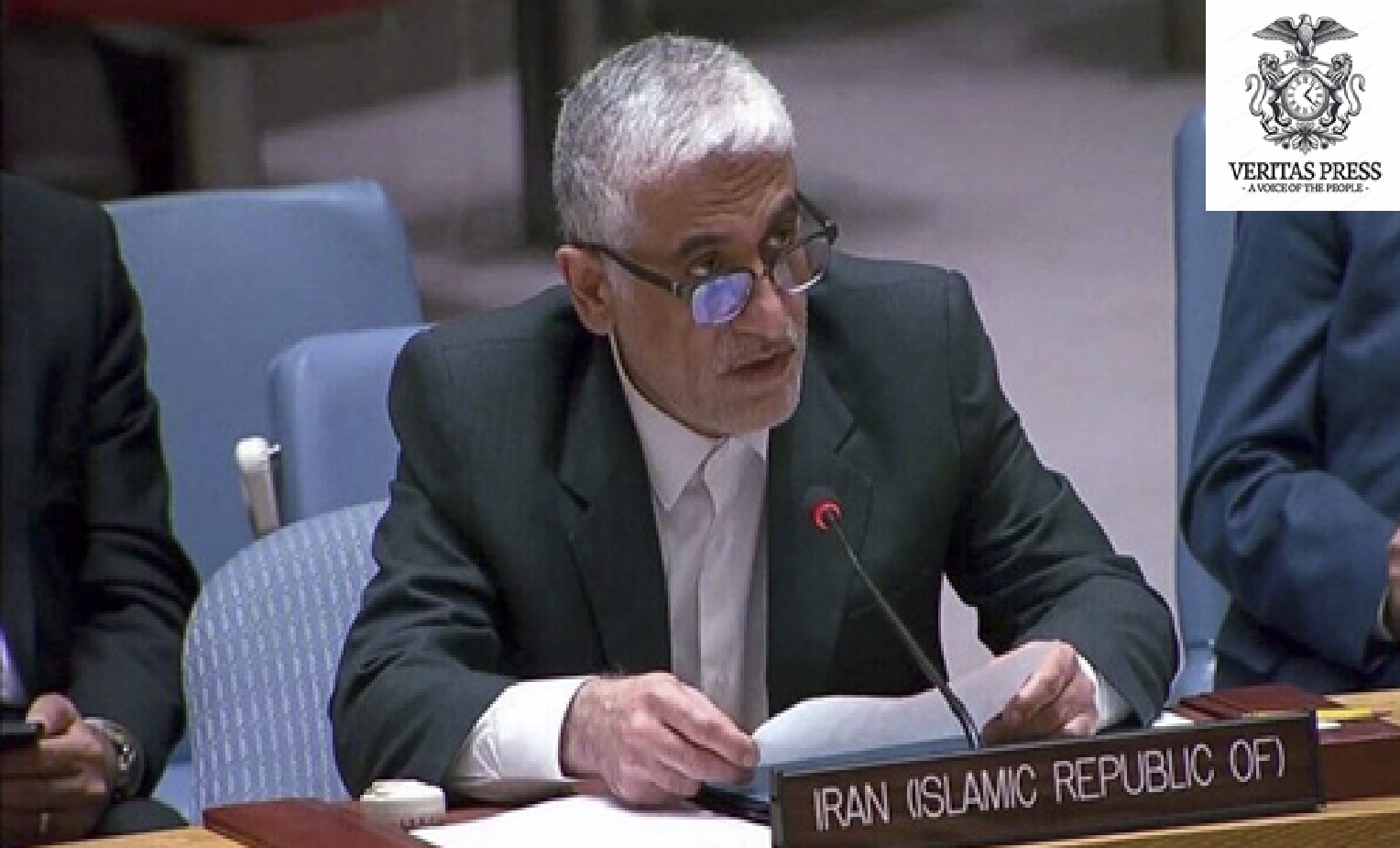
“Iran’s ambassador to the United Nations underlines that the Islamic Republic reserves all rights to duly confront the United States’ seizure of Iranian vessels as part of Washington’s continued illegal blockade against the country.”
If the Khatam al-Anbiya warning represents the military dimension of Iran’s response, the battle over the oil tankers M/T Majestic and M/T Tifani represents its legal and diplomatic front. The United States confirmed this week that its forces had interdicted and seized the two vessels in the Indian Ocean, confiscating a combined 3.8 million barrels of Iranian crude oil. US Attorney Jeanine Ferris Pirro publicly “boasted” of the operation, declaring that the seizures were executed under court-approved warrants as part of a broader effort to disrupt Iran’s so-called “dark fleet” and illicit oil networks.
Iran’s response was swift and multi-layered. Foreign Ministry spokesman Esmaeil Baghaei took to social media to declare, “Welcome to the age of the return of pirates. With the difference that this time, they operate under official flags and government orders, calling their actions ‘law enforcement and implementation’.” He accused Washington of “legitimising piracy and armed robbery at sea.”
Simultaneously, Iran launched a formal diplomatic offensive at the United Nations. In an urgent letter dated April 28 to UN Secretary-General António Guterres and Security Council President Jamal Fares Alrowaiei, Ambassador Amir Saeid Iravani framed the seizures as a flagrant violation of Article 2(4) of the UN Charter, which prohibits the threat or use of force against the territorial integrity of any state. “Such conduct is nothing but another clear example of US addiction to lawlessness,” Iravani wrote, describing the actions as “identical to state-sponsored piracy and terrorism” carried out “under the guise of domestic processes that have no standing under international law.”
The ambassador’s letter went further, invoking UN General Assembly Resolution 3314 of 1974, which defines aggression as the use of armed force by one state against another, specifically including “attacks by the armed forces of a State against the marine fleet of another State.” Iravani argued that the US, by its own official confession, had confirmed the use of armed force against vessels engaged in legitimate commercial activity. He demanded that the Security Council condemn the seizures in the strongest possible terms, order the immediate and unconditional release of all vessels and cargo, and take concrete measures to prevent recurrence.
The legal challenge posed by Iran is significant. The US has justified its actions under domestic court orders and its own sanctions regime. But as Iravani noted, “The invocation of domestic arrangements, which are illegal by nature, cannot, under any circumstances, justify such an abhorrent crime committed by the use of force.” This argument goes to the heart of the international legal order: can a single state unilaterally enforce its domestic laws on the high seas through military interdiction? For Iran and many Global South nations, the answer is an unequivocal no.
At the Security Council session on maritime security, Iravani expanded his critique, accusing certain unnamed countries of applying “double standards” when invoking freedom of navigation while ignoring what he characterised as unlawful US actions. “Responsibility for any disruption, obstruction or other interference with maritime transport in the Persian Gulf, Gulf of Oman and the Strait of Hormuz lies directly with the aggressors, the United States and its supporters,” he declared.
The Blockade And Its Discontents: A Leaky Siege.
The US naval blockade, formally announced by CENTCOM and effective from April 13, was intended to strangle Iran’s economic lifeline by blocking all vessels “entering or departing Iranian ports and coastal areas.” President Trump declared the operation a “tremendous success” on April 21, claiming that at least 27 ships had been turned back. CENTCOM later raised that figure to 31, with the USS Spruance intercepting and redirecting vessels attempting to evade the cordon. Rear Admiral Brad Cooper, CENTCOM commander, embarked on a second regional tour within 15 days to reinforce the message of an ironclad blockade. The White House claims the blockade costs Iran approximately $500 million daily.
But open-source maritime data paints a starkly different picture. Cargo tracking firm Vortexa identified at least 34 Iranian-linked tankers that successfully slipped past the US naval cordon between April 13 and April 22, directly contradicting Trump’s assertion. Among them was the US-sanctioned supertanker Dorena, spotted near India’s southern coastline within a day of departing Iranian waters, and the Hero II and Hedy, two very large crude carriers capable of carrying up to 4 million barrels combined, which cleared the blockade line on April 20. Vortexa’s satellite data showed 19 vessels moving outbound through the Gulf and 15 transiting inward. Six of the outbound tankers carried approximately 10.7 million barrels of Iranian crude, representing an estimated $910 million in revenue for Tehran.
The discrepancy between CENTCOM’s count and Vortexa’s data is explained by methodology: US forces count ships intercepted or redirected; Vortexa’s satellite surveillance captures vessels that bypass enforcement entirely, the majority by “going dark” and switching off their mandatory transponder beacons.
The blockade has also drawn international criticism. Saudi Arabia, despite its traditional rivalry with Iran, is reported to have privately urged Washington to halt actions that risk destabilising other critical shipping routes. China’s Foreign Ministry called the blockade “dangerous and irresponsible,” warning it would “escalate tensions, undermine the existing fragile cease-fire agreement, and further endanger the safety of navigation through the strait.” Even Russian-linked vessels have been affected, with a Russian billionaire’s $500 million superyacht reportedly slipping through Hormuz despite the blockade.
The War That Preceded The Blockade: February 28 And Its Aftermath.
Understanding the current crisis requires reckoning with the devastating 40-day war that preceded it. On February 28, 2025, the United States and Israel launched a massive joint offensive against Iran, striking targets in Tehran and across multiple provinces with air and naval assets. Explosions rocked University Street and the Jomhouri area of the capital, while strikes were reported in Ilam province and other locations. Israeli Defence Minister Israel Katz stated the operation was designed to “eliminate threats to the State of Israel.” President Trump, announcing “major combat operations,” claimed the goal was to “eliminate the imminent threat from the Iranian regime.”
The initial wave of attacks reportedly killed senior military figures, including the then-Supreme Leader Ayatollah Seyyed Ali Khamenei, whose office area was among the targets struck. Iranian state media confirmed the leadership losses while emphasising that the Supreme Leader had been moved to a secure location before the strikes.
Iran’s response was immediate and devastating. Over 40 days, the Islamic Republic launched what officials describe as 100 waves of counterattacks, a combination of missile and drone strikes targeting American and Israeli military positions across the occupied territories and the Persian Gulf region. The Iranian Armed Forces inflicted what Tehran characterises as heavy damage on coalition assets, including strikes on American bases in Qatar and other Gulf states where US troops are deployed.
The human toll has been catastrophic. According to official figures released by Iran’s Foundation of Martyrs and Veterans Affairs and reported by IRNA, the 40-day war claimed 3,468 lives in Iran alone, of whom 1,460, approximately 45%, were civilians. Jamshid Nazmi, senior adviser to the foundation’s head, disclosed that the casualties included “women, men, children and elderly people,” with nationals from Lebanon, Palestine, Iraq, and Pakistan also among the dead. Farideh Oladqobad, a deputy head of the foundation, provided a demographic breakdown: 499 women and 2,969 men, with 2,008 military personnel killed.
The single deadliest incident reported may have been the bombing of a school in Minab, southern Iran, on the first day of the conflict, which reportedly claimed 155 lives, including 120 children. Independent verification of these figures remains difficult given the near-total information blackout in the conflict zone, but UN officials and humanitarian organisations have described the civilian toll as “unprecedented in the region’s modern history.”
The Strait Standoff: A Double Blockade And Global Economic Shock.
The closure of the Strait of Hormuz has triggered what the International Energy Agency describes as the “most severe supply shock in history.” With the waterway, which normally carries approximately 20% of global oil supply, effectively paralysed under a dual blockade, physical crude oil prices have surged to record levels. Brent crude, the international benchmark, is now nearly 50% higher than when the war began, closing above $111 per barrel.
The economic consequences cascade far beyond energy markets. The International Monetary Fund has warned that the global economy faces a serious risk of recession if the conflict persists and high energy prices remain entrenched. US Energy Secretary Chris Wright acknowledged the gravity of the situation, stating that oil prices could keep rising until “we get meaningful ship traffic through the Strait of Hormuz.” A UN spokesperson warned there is “no military solution,” noting that approximately 20,000 vessels remain stranded, with supply chains, including for critical commodities like fertiliser, under severe strain.
The Swiss bank UBS reported that average global energy prices jumped 5.5% in March alone, the largest single-month increase in a quarter-century. European and Asian economies, heavily dependent on Gulf energy exports, face acute vulnerability. Germany has been particularly affected, with Chancellor Friedrich Merz openly criticising the US strategy, accusing Washington of having “no strategy” and suggesting that Tehran is “humiliating” the United States. Trump retaliated via Truth Social, claiming Merz “doesn’t know what he’s talking about.”
The economic weapon cuts both ways. The Iranian government’s preliminary damage assessment from the US-Israeli strikes has reached $270 billion. Storage facilities at Kharg Island, Iran’s primary oil export terminal, are reportedly nearing capacity as crude continues to accumulate, raising the spectre of production shutdowns that could cause long-term damage to oil wells.
Iran’s counter-blockade, closing the strait to all traffic except vessels authorised by Iranian authorities, has been formalised through parliamentary action. The Iranian Parliament (Majlis) voted in June 2025 to close the Strait of Hormuz following US strikes on nuclear facilities, and is now working on a 12-article legislative plan to place the waterway under formal military administration. The proposed legislation includes a ban on ships bound for Israel and the imposition of transit fees payable in Iranian rials.
US Secretary of State Marco Rubio has categorically rejected this framework: “We cannot tolerate the Iranians trying to create a system where they decide who can use an international sea lane.” The Rubio Doctrine, as it is increasingly called, holds that freedom of navigation is non-negotiable and that Iran’s assertion of sovereign control over the strait constitutes an unacceptable challenge to the rules-based international order, a position critics note is undermined by Washington’s own unilateral blockade of Iranian ports.
The Pakistani Mediation Track: Diplomacy On Life Support.
Pakistan has emerged as the indispensable, and increasingly strained, intermediary in the crisis. Prime Minister Shehbaz Sharif and Army Chief General Asim Munir have been personally involved in shuttle diplomacy, with Munir reported to have held multiple direct conversations with President Trump in recent weeks.
The diplomatic architecture is complex. A two-week ceasefire was successfully brokered on April 8, with Pakistan crafting a crucial “bridging proposal” that softened language from an original 10-point Iranian plan that Washington had swiftly rejected. According to officials familiar with the negotiations, the US was “on the verge of collapse” before the Pakistani intervention. Washington’s rapid acceptance of the bridging proposal, one official told The Times of Israel, “pointed to how badly the US wanted a ceasefire, despite Trump’s threat that ‘a whole civilisation will die.’”
But the Islamabad track has since stalled dramatically. Negotiations held on April 11-12, historic face-to-face talks led by US Vice President JD Vance and Iranian Parliament Speaker Mohammad Baqer Qalibaf, ended without an agreement after 21 hours of deliberation. Core disputes over Iran’s nuclear program, the Strait of Hormuz, and the sequencing of concessions remain unresolved.
Subsequent efforts to reconvene talks have collapsed in acrimony. On April 26, Iran’s Foreign Minister Abbas Araghchi left Islamabad after waiting for a US delegation that never arrived, President Trump had abruptly cancelled the trip, posting on social media: “Too much time is wasted travelling, too much work! We have all the cards, and they have none! If they want to talk, all they have to do is call!!”
The diplomatic rupture reflects a deeper breakdown in trust. Araghchi, shuttling between Pakistan, Oman, and Russia, has articulated Iran’s core grievance: “Shared Iran’s position concerning a workable framework to permanently end the war on Iran. Have yet to see if the US is truly serious about diplomacy.” Tehran has made clear that any return to negotiations is conditional on the lifting of the US naval blockade, a demand Washington has flatly rejected as rewarding Iranian intransigence.
The Iranian proposal, conveyed through Pakistani intermediaries, envisions a phased approach: first, an end to the blockade and the reopening of the Strait of Hormuz; second, negotiations on Iran’s nuclear program. The US insists on a comprehensive “all-in-one” agreement covering all disputed issues simultaneously, arguing that partial concessions would weaken its negotiating leverage.
Pakistan’s role, while discreet, remains pivotal. Diplomatic sources describe ongoing “formulas and counter-formulas” being exchanged between Washington and Tehran through Pakistani channels. Pakistani Foreign Minister Ishaq Dar and Army Chief Munir are described as seeking a “middle way” to reconcile irreconcilable positions. The odds of a breakthrough by April 30, according to one predictive market, have collapsed to just 3.2%, down from 18% a week ago.
The Regional Chessboard: Realignments And Escalation Risks.
The crisis has triggered a significant reconfiguration of regional alliances. The United Arab Emirates, one of OPEC’s largest producers, announced its exit from the oil cartel, a move analysts say could fundamentally reshape global oil supply dynamics and reflects growing frustration with production constraints. The Gulf Cooperation Council has condemned Iran’s “blatant attacks” while simultaneously urging de-escalation, reflecting the deep unease among Arab Gulf states caught between their security reliance on Washington and their geographic exposure to Iranian retaliation.
Israel’s role has been particularly consequential. The deployment of Iron Dome air defence systems to the UAE, the first time the system has operated outside Israeli borders, represents a significant expansion of the Israeli-Emirati military relationship and underscores the multinational character of the coalition confronting Iran. Israel’s ongoing campaign against Hezbollah in Lebanon, which Tehran insists must be covered by any comprehensive ceasefire, has further complicated the diplomatic landscape. Netanyahu’s order to “vigorously attack Hezbollah targets” has undermined the fragile Israel-Lebanon truce and provided Tehran with additional justification for its maximalist negotiating posture.
Qatar has warned of the possibility of a “frozen conflict” in the Gulf, a protracted stalemate in which neither side achieves its objectives while the economic and humanitarian costs continue to accumulate. Russia and China have both signalled willingness to assist in mediation, with Russian Foreign Minister Lavrov visiting Beijing as part of what appears to be a coordinated effort by non-Western powers to shape the conflict’s resolution.
The US has simultaneously tightened the economic screws through “Operation Economic Fury,” with Treasury Secretary Scott Bessent warning businesses worldwide that providing services to Iranian airlines, including jet fuel, catering, landing services, or maintenance, could expose them to severe sanctions. Secretary of State Marco Rubio has promised more sanctions, asserting that the US has imposed “extraordinary” pressure on Iran but that “more can still be done.”
The “Different Kind Of Response”: What Iran’s Warning Portends.
The most ominous dimension of the current crisis lies in Iran’s repeated allusion to an “unprecedented” and “practical” response. The high-ranking security source who briefed Press TV was unambiguous: if the blockade continues, the enemy should “soon expect a different kind of response.”
What might such a response entail? Iranian military spokesman Brigadier General Akraminia’s reference to “new tools, new methods, and new arenas” suggests capabilities that have been deliberately held in reserve. Analysts point to several possibilities: the deployment of advanced anti-ship missile systems not yet seen in combat, swarming drone attacks on US naval assets beyond the Persian Gulf, cyber operations targeting critical infrastructure, or the activation of proxy forces in unexpected theatres. The IRGC’s seizure of two ships in the Strait of Hormuz on April 23, and the earlier seizure of the US-sanctioned vessel Touska on April 19, may represent a down payment on a larger campaign.
The Khatam al-Anbiya Headquarters statement emphasised that Iranian forces are “monitoring the movements of foreign forces in the region” and “continue to manage and control the strategic Strait of Hormuz.” This suggests a high degree of situational awareness and operational readiness. The headquarters also warned that any resumed “aggression” by the US or Israel would be met with “more severe damage.”
The economic dimension of Iran’s threat calculus is equally significant. The source acknowledged that closing the Strait of Hormuz affects all countries, including Iran, but argued that Iran’s “decades of experience in circumventing sanctions, its thousands of kilometres of land borders, and its pre-existing measures to counter maritime sieges” make it “far more resilient to economic pressure than the United States.” This is a crucial assertion: Tehran believes it can outlast Washington in a protracted economic war of attrition.
The source made an additional, psychologically pointed observation: Iranian public opinion holds the US responsible for the current situation, whereas “American public opinion does not side with its own government, instead blaming the incumbent government for the unprovoked war on Iran and its aftermath.” Whether this assessment accurately reflects American domestic sentiment is debatable, but it reveals Tehran’s strategic belief that time and domestic pressure are on its side.
Conclusion: The Narrowing Path To De-escalation.
More than two months into a war that began with the stated aim of “eliminating threats and regime change” and has instead metastasised into the most severe international crisis since the Second World War, the path to de-escalation has narrowed to a razor’s edge. The United States, having launched an offensive that killed a sitting Supreme Leader and thousands of civilians, now finds itself bogged down in a naval standoff that its own data cannot convincingly show is succeeding. Iran, battered and bleeding but demonstrably unbroken, has made clear that it will not negotiate under the shadow of a blockade it considers an act of war.
Pakistan, the lone diplomatic bridge between the two antagonists, continues its quiet but increasingly desperate mediation. But the arithmetic of the Islamabad track is unforgiving: Iran insists on the blockade’s lifting as a precondition for talks; Washington insists that the blockade is its primary source of leverage. The resulting deadlock is a textbook example of the negotiator’s dilemma; both sides are trapped in positions from which retreat carries prohibitive domestic political costs.
The humanitarian catastrophe continues to unfold. The 3,468 confirmed dead in Iran, 45% of them civilians, represent only the officially counted toll. The true human cost, including those buried under rubble, the displaced, the wounded, and those facing the slow violence of economic strangulation, is incalculable. The school bombing in Minab, the shattered infrastructure of Tehran, the millions of barrels of oil rotting in storage at Kharg Island, these are the tangible markers of a conflict that was, as Iran’s UN envoy stated, “unwarranted” and launched without UN Security Council authorisation.
As the world watches and energy markets convulse, the question is no longer whether the blockade will provoke a strong Iranian retaliatory response, but when, and in what form. The Khatam al-Anbiya Headquarters has drawn its red line. The United States, for its part, appears to be betting that Iran’s “winning cards” are a bluff. History offers few comforts for those who underestimate the Islamic Republic’s capacity for asymmetric escalation. The Strait of Hormuz, that narrow ribbon of water separating Iran from the Arabian Peninsula, has become the fulcrum upon which the global order now teeters. The coming days and weeks will determine whether the unprecedented response that Tehran has promised remains a threat or becomes a reality.
Source: Multiple News Agencies
Submissions:
For The Secure Submission Of Documentation, Testimonies, Or Exclusive Investigative Reports From Any Global Location, Please Utilise The Following Contact Details For Our Investigations Desk: enquiries@veritaspress.co.uk or editor@veritaspress.co.uk
Help Support Our Work:
Popular Information is powered by readers who believe that truth still matters. When just a few more people step up to support this work, it means more lies exposed, more corruption uncovered, and more accountability where it’s long overdue.
Help Protect Independent Journalism, Which Is Currently Under Attack.
If you believe journalism should serve the public, not the powerful, and you’re in a position to help, becoming a DONATOR or a PAID SUBSCRIBER truly makes a difference.
DONATION APPEAL: If You Found This Reporting Valuable, Please Consider Supporting Independent Journalism.
Help Support Our Work – We Know, We Know, We Know …
Seeing these messages is annoying. We know that. (Imagine what it’s like writing them … )
Your support fuels our fearless, truth-driven journalism. In unity, we endeavour to amplify marginalised voices and champion justice, irrespective of geographical location.
But it’s also extremely important. One of Veritas Press’s greatest assets is its reader-funded model.
1. Reader funding means we can cover what we like. We’re not beholden to the political whims of a billionaire owner. We are a small, independent and impartial organisation. No one can tell us what not to say or what not to report.
2. Reader funding means we don’t have to chase clicks and traffic. We’re not desperately seeking your attention for its own sake: we pursue the stories that our editorial team deems important and believe are worthy of your time.
3. Reader Funding: enables us to keep our website and other social media channels open, allowing as many people as possible to access quality journalism from around the world, particularly those in places where the free press is under threat.
We know not everyone can afford to pay for news, but if you’ve been meaning to support us, now’s the time.
Your donation goes a long way. It helps us:
- Keep the lights on and sustain our day-to-day operations
- Hire new, talented independent reporters
- Launch real-time live debates, community-focused shows, and on-the-ground reporting
- Cover the issues that matter most to our communities, in real time, with depth and integrity
We have plans to expand our work, but we can’t do it without your support. Every contribution, no matter the size, helps us stay independent and build a truly people-powered media platform.
If you believe in journalism that informs, empowers, and reflects the communities we serve, please donate today.
The Trump administration is preparing a $2.8 billion weapons package for Israel containing 40,000 2,000-pound

Film alleges mass civilian deaths are routinely built into military decisions amid Israel’s genocidal war
The Israeli rights group says violence, displacement, economic strangulation, and settlement expansion form part of

Houthi forces have captured the historic Red Sea port of Mocha and are advancing on
London’s historic sanctions against Israeli settlements mark a watershed moment in UK foreign policy, but
With 95% of Gaza’s population now wholly dependent on aid and more than 90% stripped
India calls for Kashmir and Ladakh to appear only on its official map after a
ISLAMABAD – In the high-stakes political theatre of Pakistan, the battleground has shifted from the
Francesca Albanese says third states have an ICJ-mandated obligation to end Israel’s occupation. But with
As Israeli jets bomb a Syrian air base over alleged Turkish deployment plans, Ankara, Washington