Kamran Faqir is a volunteer investigative journalist and writer committed to exposing hidden truths and amplifying underreported stories. Driven by social justice, he brings sharp insight and fearless truth-telling to independent journalism. NUJ registered.
Original Article Date Published:
Article Date Modified:
13 minutes
Views:337
Listen to this article
Help support our mission, donate today and be the change. Every contribution goes directly toward driving real impact for the cause we believe in.
TEHRAN, WASHINGTON – A tenuous pause in hostilities between Iran and the United States is increasingly overshadowed by escalating rhetoric, Hollywood-style theatrics, unresolved military realities, and mounting evidence that a wider regional conflict is not only possible, but, in many respects, already underway.
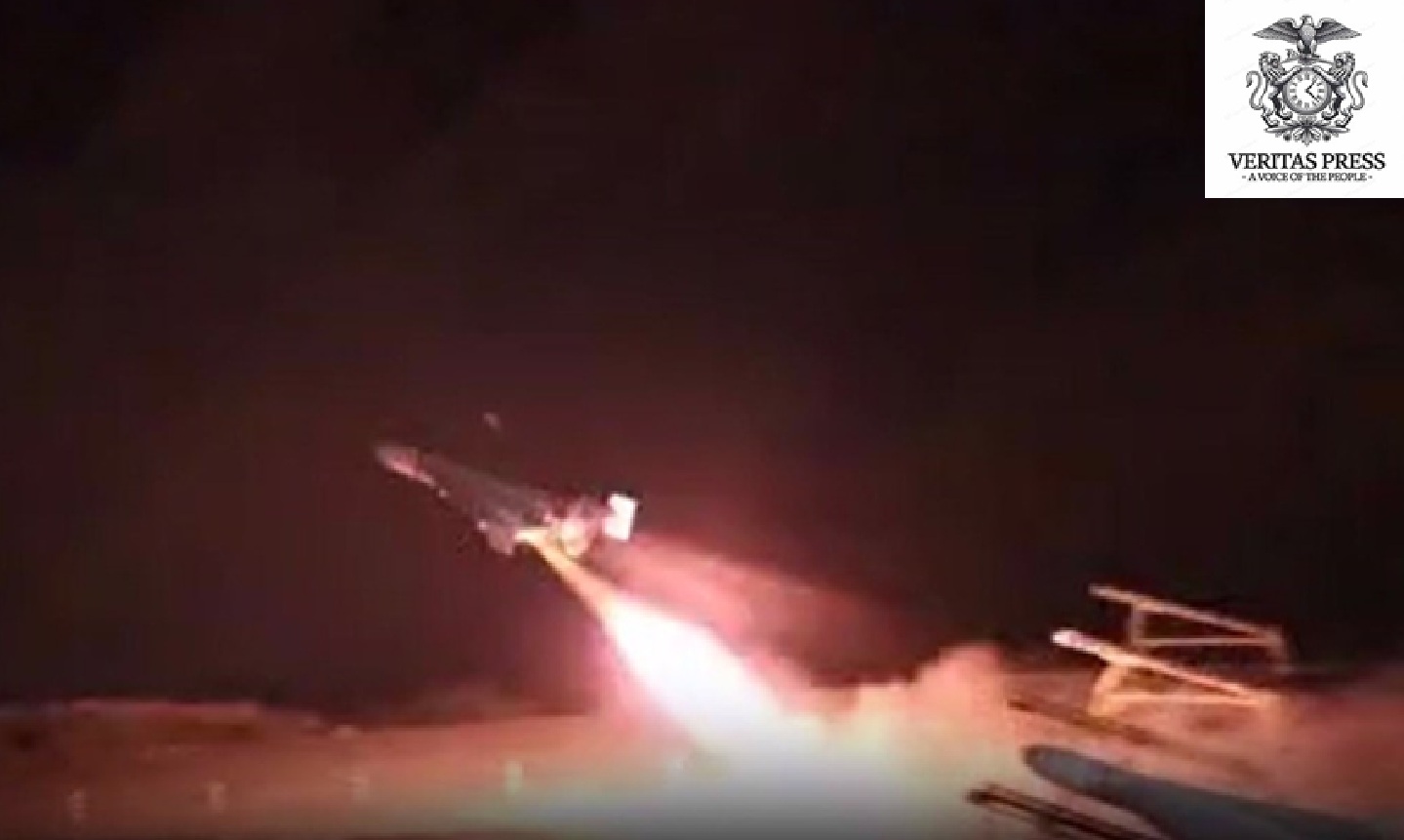
Senior commanders in the Islamic Revolutionary Guard Corps are now openly warning that any renewed American military action would trigger a qualitatively different response, one defined by “surprise tactics,” undeclared capabilities, and a multi-front retaliation stretching far beyond Iran’s borders.
“Surprise Tactics” And A Message From Minab:
Speaking on Tuesday in Minab, IRGC Navy political deputy Mohammad Akbarzadeh delivered one of the clearest articulations yet of Tehran’s evolving deterrence doctrine.
“The IRGC Navy’s surprise tactics await the United States in the event of any fresh miscalculation,” he said.
Akbarzadeh framed Iran’s posture not as reactive, but prepared and layered:
“In the event of any military action by the United States against Iran, the IRGC Navy will deploy its new capabilities… We will employ new cards, including in the field of smart targeting, and set massive vessels ablaze with their fury and take them out of operation.”
He added that Tehran would not limit its response to maritime confrontation alone:
“The Islamic Republic will also utilise its other instruments of power across other resistance fronts.”
The symbolism of Minab is central to Iran’s narrative. Iranian authorities say more than 170 schoolchildren and staff were killed there on February 28, the opening day of what Tehran describes as a joint US-Israeli assault. While independently verified casualty data remains scarce, the incident has become a cornerstone of Iran’s political messaging, used to frame the conflict as both defensive and retaliatory.
A War Fought In Waves:
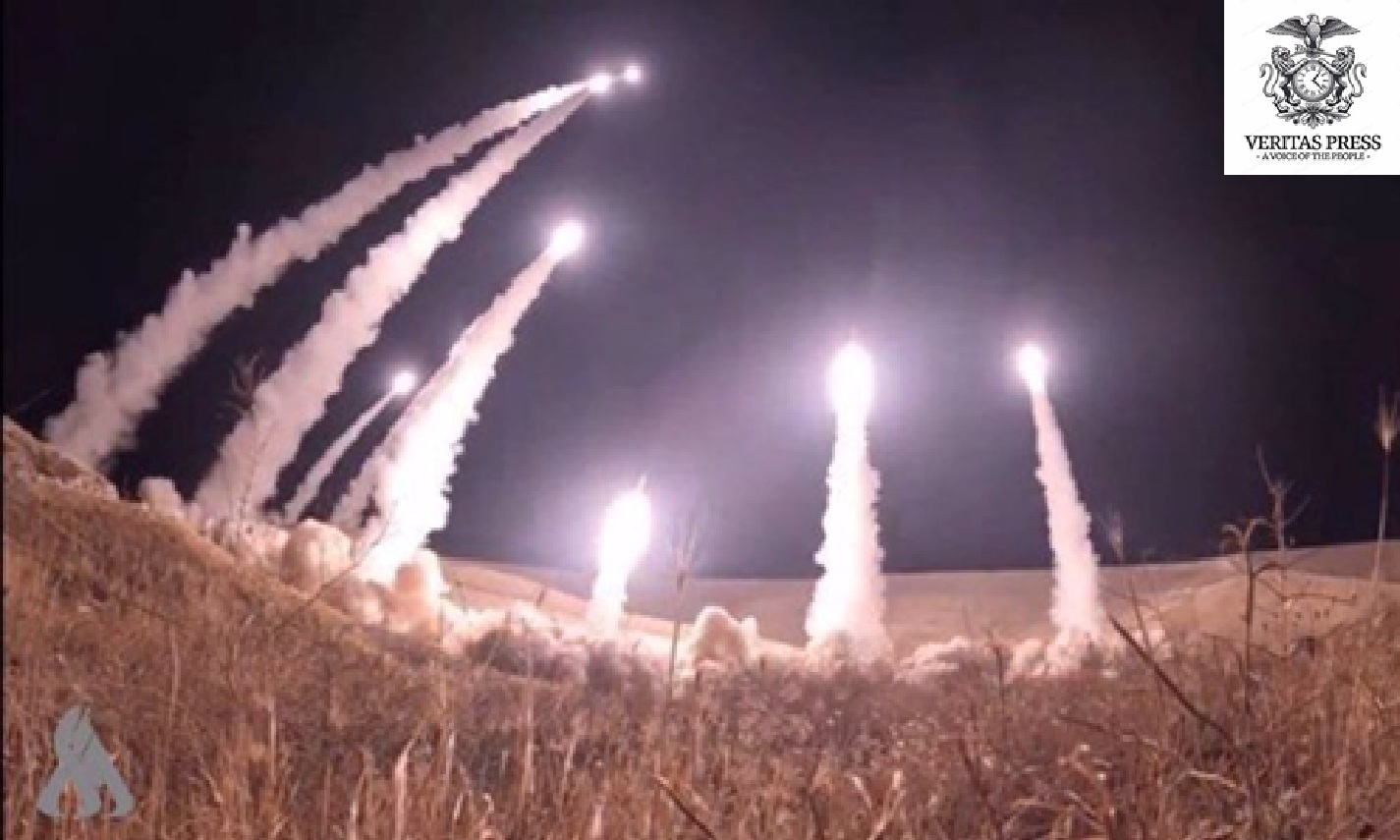
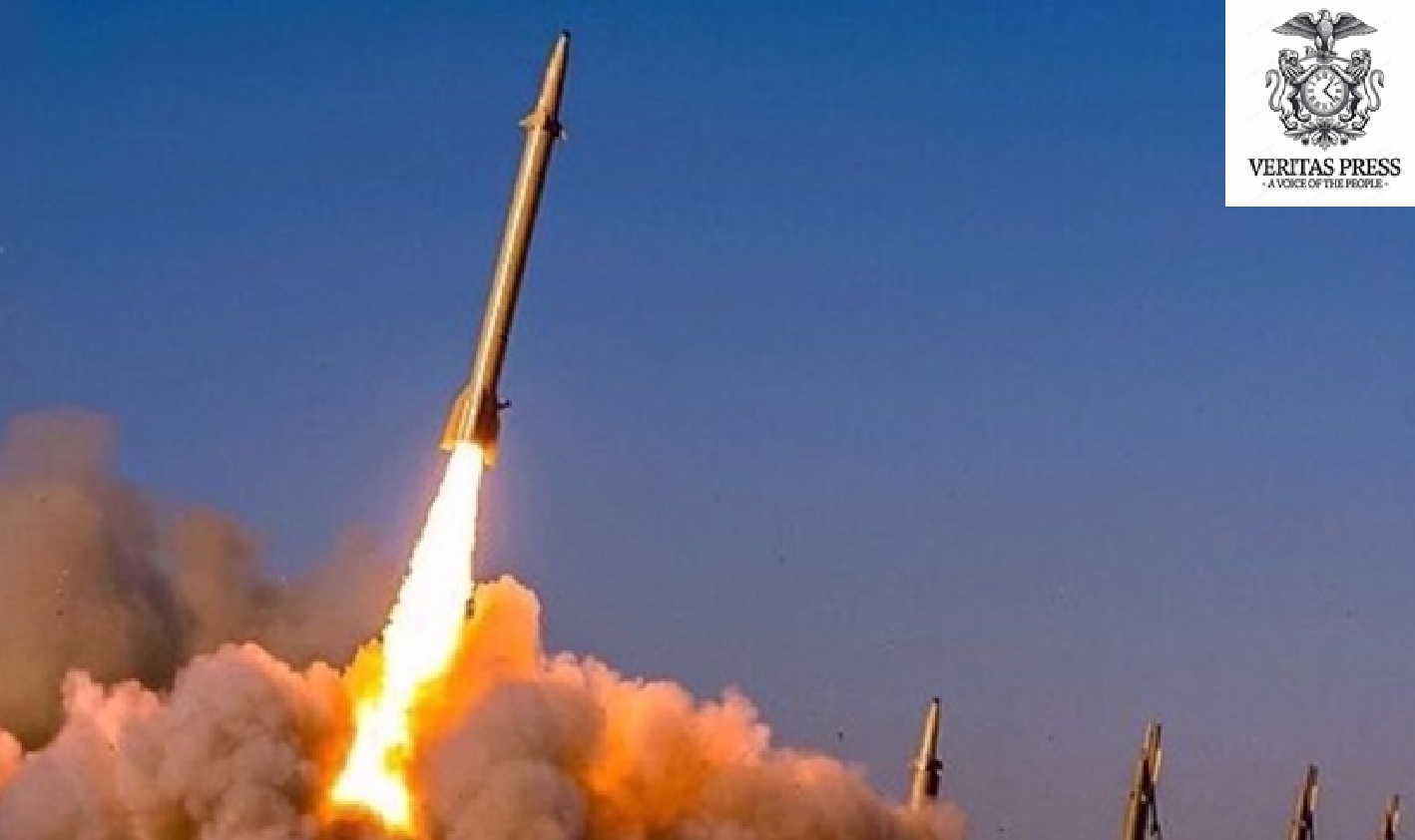
Iranian officials say their response to the February escalation was both immediate and sustained. According to military sources, Iran’s Armed Forces carried out at least 100 waves of retaliatory strikes targeting what they described as sensitive US and Israeli-linked assets across West Asia.
These operations, Tehran claims, were conducted partly in coordination with allied regional groups, an assertion that aligns with observed increases in militia activity across Iraq, Syria, and beyond.
The scale and persistence of these strikes appear to have shaped Washington’s response. On April 7, the United States announced what it described as a two-week pause in military operations, a move later extended, effectively forming an informal ceasefire.
Yet analysts caution against interpreting this as de-escalation.
A regional security researcher told independent media:
“This wasn’t a negotiated ceasefire; it was a pause under pressure. The operational tempo dropped, but the strategic confrontation didn’t.”
The Reality Behind The Ceasefire:
Despite weeks of sustained strikes, US officials have quietly acknowledged that Iran’s military capabilities remain far from neutralised.
Reporting by CBS News revealed internal assessments suggesting that public statements from the White House and Pentagon may understate the extent of Iran’s remaining strength.
According to three officials cited in the report:
Roughly half of Iran’s ballistic missile stockpile remained intact at the start of the ceasefire
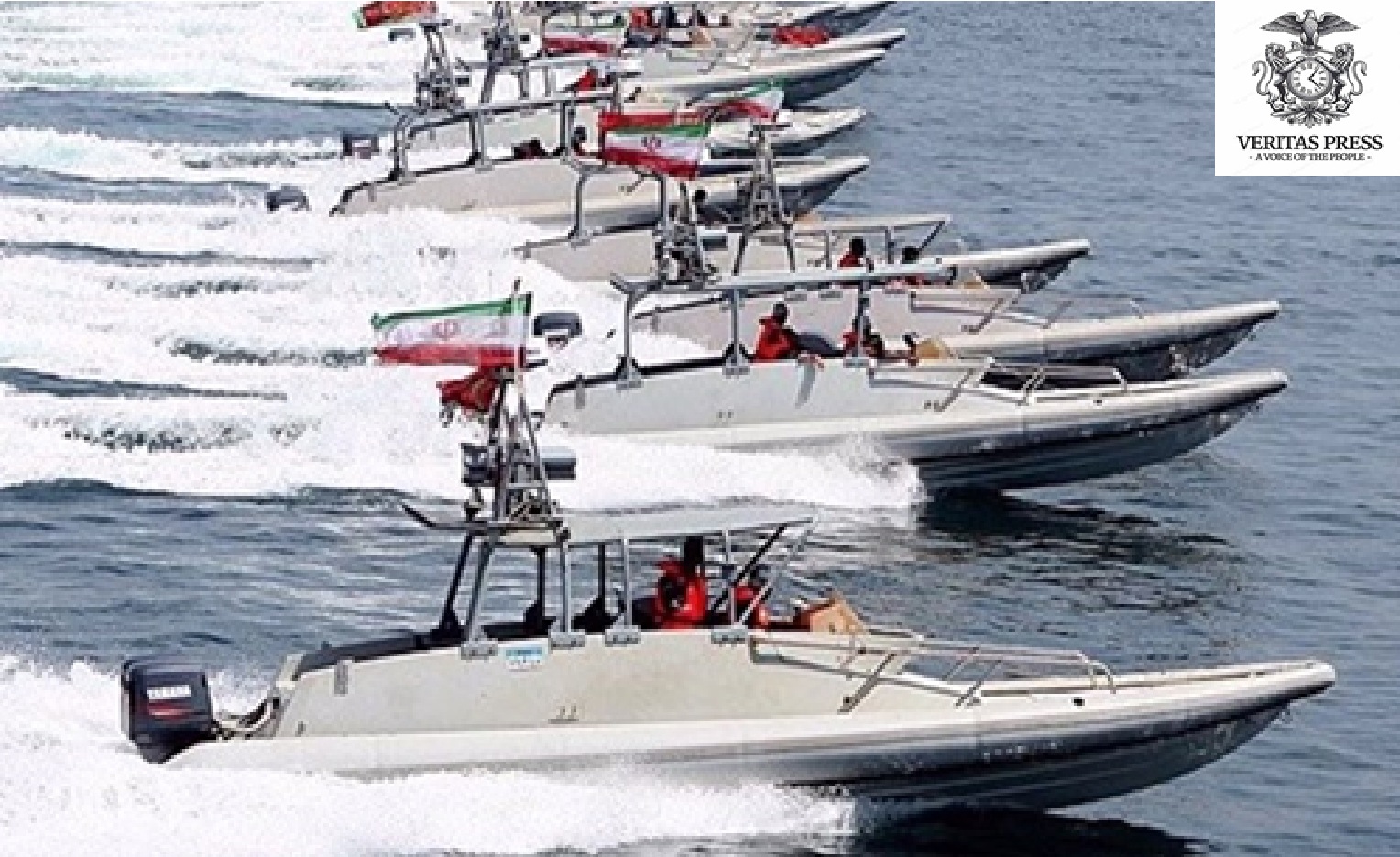
Approximately 60% of the IRGC Navy’s assets survived, including its fleet of fast-attack speedboats, central to swarm warfare tactics
These disclosures underscore a widening gap between public narratives and operational realities.
A European defence official, speaking to journalists, said:
“The idea that Iran has been significantly degraded is misleading. Their core deterrent capabilities are still very much in play.”
The Strait Of Hormuz: Leverage That Remains Intact.
At the heart of Iran’s strategic posture is the Strait of Hormuz, a narrow but critical artery for global energy supplies.
Despite the US naval presence in the region, Iran retains the ability to disrupt shipping through a combination of mines, drones, coastal missile systems, and fast-attack vessels.
IRGC adviser Mohammad Reza Naqdi pointedly challenged claims that Iran’s naval capabilities had been dismantled:
“If the enemies have eliminated it, why are they unable to open the Strait of Hormuz?”
Maritime analysts say the question cuts to the core of the strategic balance.
“Control doesn’t require dominance,” one Gulf-based shipping consultant explained. “It requires credible disruption, and Iran still has that.”
“Other Instruments Of Power”: The Regional Dimension.
Akbarzadeh’s warning that Iran would activate “other instruments of power across resistance fronts” highlights a critical dimension of the conflict: it is not confined to Iran’s borders.
From Lebanon to Yemen, armed groups aligned with Tehran have increasingly demonstrated their ability to engage US and allied interests. Conflict monitors report a surge in drone activity, rocket attacks, and cross-border operations since late February.
A Beirut-based analyst described the structure of this strategy:
“Iran’s deterrence is decentralised. Even if one front is contained, others can be activated. That’s what makes escalation so difficult to control.”
Civilian Toll And Contested Narratives:
Amid the military posturing, the humanitarian dimension remains deeply contested and underreported.
Iran’s claim that over 170 civilians, many of them schoolchildren, were killed in Minab has not been independently verified, but it has been widely circulated in Iranian media and invoked by officials as evidence of disproportionate force.
Human rights organisations say the broader regional picture is equally concerning.
A field coordinator with an international NGO operating in the region said:
“Civilian harm is happening across multiple countries, but it’s fragmented; there’s no single narrative, no unified reporting. That makes accountability much harder.”
Washington’s Dilemma:
For Washington, the challenge is balancing deterrence with restraint.
While officials have maintained a posture of military readiness, the decision to pause strikes suggests a recognition of the risks inherent in further escalation, particularly against an adversary capable of asymmetric retaliation.
Iranian officials, including Naqdi, have openly criticised Donald Trump, accusing him of erratic decision-making and attempting to downplay the true costs of confrontation.
Yet analysts argue that both sides are engaged in calibrated signalling, projecting strength while quietly avoiding triggers that could spiral into full-scale war.
“Winning Cards” Still Unplayed:
Perhaps the most consequential aspect of Iran’s messaging is its insistence that it has not yet deployed its most advanced capabilities.
Naqdi has pointed to newly developed missile and drone systems, as well as underutilised ground forces, as part of what he calls Iran’s “winning cards.”
Whether this reflects genuine restraint or strategic ambiguity, Western intelligence assessments broadly agree on one point: Iran retains significant military depth.
A War Without A Name:
What is unfolding across West Asia is not a conventional war, but neither is it peace.
It is a conflict fought in waves, through proxies, across sea lanes and airspace, and through narratives as much as missiles.
As one veteran regional journalist put it:
“This is a war in fragments. It doesn’t begin or end, it just shifts shape.”
For now, the ceasefire holds.
But beneath it lies a volatile equation: unresolved grievances, intact arsenals, and a growing acceptance, distrust, theatre, on all sides, that the next phase of confrontation may not look like the last.
And as IRGC officials continue to warn of “surprise tactics” and “new cards,” the question is no longer whether escalation is possible, but how long it can be deferred.
Conclusion: A War Of Choice With Global Consequences.
What emerges from the latest statements by the Islamic Revolutionary Guard Corps, and the quiet admissions from US officials, is not a story of de-escalation, but of managed volatility built on competing fictions.
On one side, Tehran projects-controlled defiance: “surprise tactics,” “new cards,” and “unused capabilities” framed as deliberate restraint. On the other hand, Washington publicly signals dominance while privately acknowledging that Iran’s core military infrastructure, from ballistic missiles to naval swarm assets, remains substantially intact.
This dissonance is not accidental. It is structural.
Both states are engaged in a dual-track strategy: performative deterrence for domestic and international audiences, coupled with calibrated restraint to avoid uncontrollable war. The result is a geopolitical grey zone where escalation is always possible, but rarely declared.
Nowhere is this contradiction more dangerous than in the Strait of Hormuz. The continued vulnerability of this corridor, despite overwhelming US naval presence, undermines claims of strategic control and reinforces Iran’s asymmetric leverage. As long as Tehran can credibly threaten disruption without firing a shot, it retains a veto over regional stability that no air campaign has yet neutralised.
But the deeper issue lies beyond military balance.
Iran’s repeated invocation of mass civilian casualties in Minab, particularly the deaths of schoolchildren, illustrates how human suffering is being weaponised within the information battlefield. Whether fully verified or not, such narratives serve to legitimise retaliation, entrench public support, and reframe strategic aggression as a moral necessity.
At the same time, the fragmented nature of the conflict, stretching across Iraq, Syria, Lebanon, Yemen, and maritime corridors, has created what human rights observers describe as an accountability vacuum. Civilian harm is diffused across geographies, reported inconsistently, and often subsumed beneath competing state narratives. In this environment, the absence of a single, defined battlefield becomes a mechanism for impunity.
Even more concerning is the normalisation of proxy warfare as a primary instrument of state policy. By signalling its readiness to activate “other instruments of power,” Iran is not merely issuing a threat, it is reaffirming a regional doctrine in which conflict is decentralised, deniable, and perpetually expandable. For Washington and its allies, this creates a strategic trap: any response risks widening the theatre of confrontation, yet inaction cedes initiative.
The role of leadership further compounds this instability. Iranian officials’ characterisation of Donald Trump as “reckless and impulsive” reflects more than rhetorical hostility; it points to a mutual perception problem in which each side views the other as both unpredictable and strategically deceptive. In such an environment, miscalculation is not a possibility; it is a structural risk.
Crucially, this is not an inevitable war; it is a war of choice.
A conflict sustained not by immediate necessity, but by strategic calculation, political signalling, and entrenched doctrines of deterrence. And like many wars of choice, its consequences extend far beyond the battlefield.
Any sustained disruption in the Strait of Hormuz, or even the credible threat of it, would reverberate through global energy markets, driving up oil prices, inflating shipping costs, and destabilising already fragile supply chains. Economists warn that prolonged volatility in the Gulf could trigger a cascading economic shock, pushing vulnerable economies toward recession.
For populations already grappling with inflation, debt crises, and post-pandemic recovery, the result would be stark: rising poverty, deepening inequality, and renewed hardship on a global scale.
Even without full-scale war, the current trajectory is economically corrosive.
Insurance premiums for maritime transit are rising. Investment confidence in the region is eroding. Governments are reallocating resources toward defence rather than development. These are not abstract shifts; they translate directly into fewer jobs, higher living costs, and shrinking public services worldwide.
Ultimately, the most revealing admission is not what has been used, but what has not.
When Iranian officials insist that key capabilities remain “unused,” and US intelligence assessments confirm that significant portions of Iran’s arsenal survived, they are collectively acknowledging a reality neither side will state outright: this confrontation has been deliberately contained, not conclusively fought.
That distinction matters.
Because a contained conflict can be resumed at any time.
And as long as both sides continue to invest in deterrence narratives while preserving escalation capacity, the region remains suspended in a state of strategic pre-war, where every pause is temporary, every red line is flexible, and every “ceasefire” is, in effect, a countdown.
The danger is no longer confined to the region.
It is global, systemic, and cumulative.
A war of choice, if allowed to persist, will not only redraw military boundaries but also reshape economic realities, deepen human suffering, and entrench a cycle of instability whose costs will be borne far beyond West Asia.
The question, then, is no longer whether escalation can be avoided indefinitely, but whether the world can afford the consequences if it is not.
Source: Multiple News Agencies
Submissions:
For The Secure Submission Of Documentation, Testimonies, Or Exclusive Investigative Reports From Any Global Location, Please Utilise The Following Contact Details For Our Investigations Desk: enquiries@veritaspress.co.uk or editor@veritaspress.co.uk
Help Support Our Work:
Popular Information is powered by readers who believe that truth still matters. When just a few more people step up to support this work, it means more lies exposed, more corruption uncovered, and more accountability where it’s long overdue.
Help Protect Independent Journalism, Which Is Currently Under Attack.
If you believe journalism should serve the public, not the powerful, and you’re in a position to help, becoming a DONATOR or a PAID SUBSCRIBER truly makes a difference.
DONATION APPEAL: If You Found This Reporting Valuable, Please Consider Supporting Independent Journalism.
Help Support Our Work – We Know, We Know, We Know …
Seeing these messages is annoying. We know that. (Imagine what it’s like writing them … )
Your support fuels our fearless, truth-driven journalism. In unity, we endeavour to amplify marginalised voices and champion justice, irrespective of geographical location.
But it’s also extremely important. One of Veritas Press’s greatest assets is its reader-funded model.
1. Reader funding means we can cover what we like. We’re not beholden to the political whims of a billionaire owner. We are a small, independent and impartial organisation. No one can tell us what not to say or what not to report.
2. Reader funding means we don’t have to chase clicks and traffic. We’re not desperately seeking your attention for its own sake: we pursue the stories that our editorial team deems important and believe are worthy of your time.
3. Reader Funding: enables us to keep our website and other social media channels open, allowing as many people as possible to access quality journalism from around the world, particularly those in places where the free press is under threat.
We know not everyone can afford to pay for news, but if you’ve been meaning to support us, now’s the time.
Your donation goes a long way. It helps us:
Keep the lights on and sustain our day-to-day operations
Hire new, talented independent reporters
Launch real-time live debates, community-focused shows, and on-the-ground reporting
Cover the issues that matter most to our communities, in real time, with depth and integrity
We have plans to expand our work, but we can’t do it without your support. Every contribution, no matter the size, helps us stay independent and build a truly people-powered media platform.
If you believe in journalism that informs, empowers, and reflects the communities we serve, please donate today.
Kamran Faqir is a volunteer investigative journalist and writer committed to exposing hidden truths and amplifying underreported stories. Driven by social justice, he brings sharp insight and fearless truth-telling to independent journalism. NUJ registered.
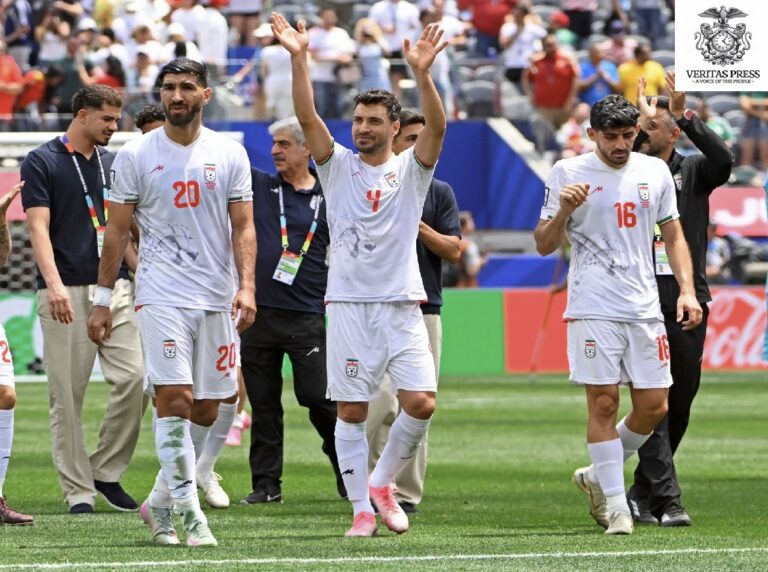
SEATTLE, TEHRAN — The U.S. Department of Homeland Security (DHS) will allow Iran’s national football team to enter the country 48 hours before their critical World Cup match against Egypt on Friday, a modest concession in a tournament where Team Melli’s travel conditions have sparked claims of oppression and competitive disadvantage.