












Author:
Byline: Investigative Desk
Help support our mission, donate today and be the change. Every contribution goes directly toward driving real impact for the cause we believe in.
A Shipment Whose Scale Is Difficult To Comprehend
The Trump administration is preparing a $2.8 billion weapons package for Israel containing 40,000 2,000-pound bombs, according to US officials cited by The Washington Post, Reuters and the Associated Press.
The proposed package comprises 20,000 MK-84 general-purpose bombs and 20,000 BLU-117 bombs, with a further 20,000 I-2000 Penetrator warheads included in the reported package. The proposal has been informally presented to relevant congressional committees, but the formal approval process still governs it, according to the reporting.
The arithmetic alone illustrates the extraordinary physical scale.
Forty thousand bombs, each weighing 2,000 pounds, amount to approximately 80 million pounds, or 40,000 US short tons, of bomb bodies.
That is the figure conservative commentator Tucker Carlson seized upon when he described the proposal as potentially the “largest transfer of conventional explosive ordnance from the United States in modern history.”
Carlson compared the proposed transfer with major American bombing operations during the Second World War. Carlson noted that Allied aircraft dropped approximately 3,000 tons of bombs during the March 1945 bombing of Berlin, while the forces involved in Operation Meetinghouse over Tokyo dropped roughly 1,600 tons of bombs. On that comparison, the proposed Israeli transfer is about 13 times the Berlin figure and 25 times the Tokyo figure in bomb weight.
The comparison requires an important qualification: bomb weight is not equivalent to explosive yield or destructive effect, and comparing a proposed stockpile transfer with individual historical bombing raids does not establish that the weapons would be used in the same manner.
Nevertheless, the physical scale of the proposed transfer raises an unavoidable question: what operational requirement does Washington believe justifies placing tens of thousands of 2,000-pound bombs at Israel’s disposal?
The Bombs At The Centre Of The Controversy
The MK-84 is a 2,000-pound general-purpose aerial bomb. The BLU-117 is a related 2,000-pound bomb body with a thermal protective coating primarily associated with safer storage and handling.
The I-2000 Penetrator is designed for hardened targets, including fortified or underground structures.
These Are Not Small Battlefield Munitions.
Human Rights Watch has previously documented the use of 2,000-pound bombs by Israeli forces in densely populated areas of Gaza and warned that the use of wide-area explosive weapons in populated environments raises serious questions under the principles of distinction and proportionality. HRW also reported that Israel had repeatedly used 2,000-pound bombs in Gaza and that US-origin munitions had been identified in attacks causing civilian deaths.
The issue therefore extends beyond the quantity of weapons.
The matter involves where individuals use such weapons, against which targets, with what intelligence, what precautions they take, and what foreseeable consequences they pose for civilians.
That Distinction Is Central To International Humanitarian Law.
A 2,000-pound bomb is not unlawful merely because of its size. International humanitarian law does not establish a simple rule that heavy bombs may never be used. Rather, the legality of a particular attack depends upon factors including the nature of the target, the distinction between military and civilian objects, proportionality, precautions, and the circumstances known to the attacker at the time.
The investigation therefore cannot stop at the question of whether Washington is supplying Israel with bombs.
The more consequential question is how Washington assesses the foreseeable use of those weapons in an environment in which hundreds of thousands of civilians remain surrounded by damaged infrastructure, displaced populations, and unexploded ordnance.
The Biden Precedent: The Same Bomb That Became A Political Red Line
The proposed transfer is particularly significant because the Biden administration previously paused the delivery of 2,000-pound bombs over concerns about their potential use in densely populated Gaza.
The Associated Press reports that the weapons in the proposed Trump package are the same class of munitions whose delivery had previously been halted amid concerns about mass civilian casualties.
That creates a striking policy reversal.
A weapon considered sufficiently dangerous to warrant withholding under one administration is now at the centre of a proposed transfer involving 40,000 individual 2,000-pound bombs under another.
Human Rights Watch noted in 2025 that Trump had authorised the release of previously withheld 2,000-pound bombs and argued that US arms assistance could expose Washington to questions of legal responsibility where weapons are knowingly used in serious violations of international law.
The debate therefore involves more than Trump or Biden.
It raises a longer-running question about the degree to which US administrations have been willing to use arms transfers as leverage over Israeli military conduct.
‘Taxpayer-Funded Bombs’
The word sale can obscure the financial architecture behind the transaction.
According to the reporting, the United States’ Foreign Military Financing programme would finance much of the proposed $2.8 billion package. Under FMF, the US government funds a recipient country’s purchase of American defence equipment.
In other words, although the parties formally structure the transaction as a sale, US government funding ultimately bears a substantial part of the financial burden.
Israel’s existing 2019–2028 US military-aid framework provides approximately $3.8 billion annually, including $3.3 billion in Foreign Military Financing and $500 million for joint missile-defence programmes.
The proposed package consequently becomes part of a much larger architecture of US-Israeli military cooperation rather than an isolated commercial transaction.
Senator Chris Van Hollen, a Democratic critic of the proposed sale, described the issue in explicit taxpayer terms.
“This is not putting Americans first. We will work to stop it.”
He also criticised the administration for sending weapons funded by American taxpayers while Israel continues military operations in Gaza and Lebanon.
The significance of Van Hollen’s intervention is not that it settles the debate. It does not.
It demonstrates instead that the proposed transfer is becoming a question of domestic American budgetary priorities, congressional oversight, and the conditions attached to US military assistance.
The Congressional Dimension: From Weapons Transfers To Deeper Military Integration
There is another development that makes the proposed bomb package significant.
In 2026, Congress has been considering legislation designed to deepen US-Israeli defence cooperation.
The proposed United States-Israel Defence Technology Cooperation Initiative appeared in the House version of the FY2027 National Defence Authorisation Act. The House provision directs the Pentagon to designate an executive agent responsible for synchronising US-Israeli cooperation in defence research, development, testing, evaluation, integration, and industrial cooperation.
The proposal covers areas including:
- artificial intelligence;
- autonomous systems;
- counter-drone technology;
- missile and air defence;
- cyber warfare;
- electronic warfare;
- directed energy;
- quantum technologies;
- subterranean warfare;
- biotechnology;
- data fusion;
- data centres;
- defence-industry cooperation;
- joint manufacturing and production.
The Senate’s FY2027 NDAA summary similarly describes the initiative as a mechanism to expand and accelerate bilateral defence technology cooperation.
This is important because the relationship between Washington and Tel Aviv is consequently moving beyond the traditional question of “How much military aid does the United States provide Israel?”
The emerging question is increasingly:
How deeply are the two defence establishments becoming institutionally intertwined?
The claim that a “new US-Israel wars act” formally merges the two countries’ armed forces is a characterisation used by critics of a provision in the proposed 2027 National Defence Authorisation Act (NDAA). The House version labels the provision as Section 219, while the Senate version calls it Section 1217, and it carries the title United States-Israel Defence Technology Cooperation Initiative. This provision would create a formal merger between the United States and Israeli armed forces, establishing an unprecedented framework that grants both nations joint authority over defence technology, industrial cooperation, and strategic coordination. Under this arrangement, the legislation effectively empowers Israeli and U.S. officials to operate within a unified defence structure, giving them shared control over military planning and decision-making in ways that bypass ordinary congressional oversight.
That distinction matters.
Nevertheless, the proposed framework would facilitate the development, testing, procurement and integration of technologies between the two defence sectors.
The combination of this institutional deepening with a proposed $2.8 billion heavy-munitions package raises a broader strategic question about the direction of US policy: is Washington merely supplying Israel with weapons, or is it gradually embedding the Israeli defence industry and military technology ecosystem within America’s own defence architecture?
Gaza Is Not An Abstract Battlefield.
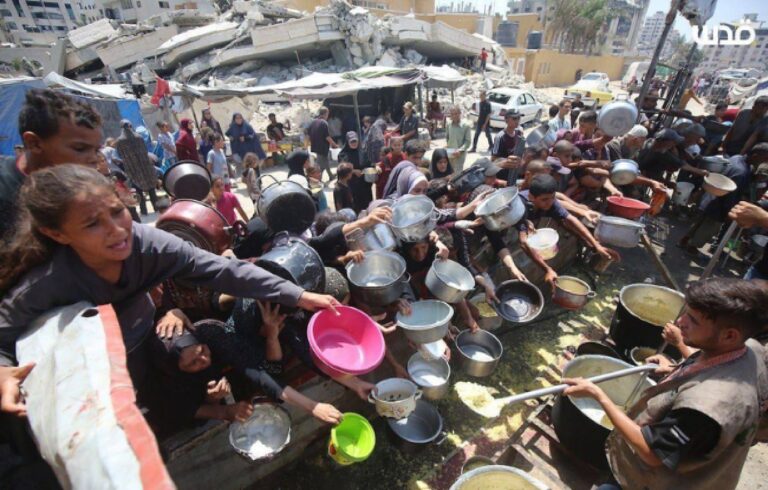
For those living in Gaza, the debate over the specifications of MK-84s and BLU-117s is inseparable from the physical reality of living beneath bombardment and among buildings already weakened by previous attacks.
On September 16, Reuters reported that a damaged seven-storey residential building in Gaza City collapsed, killing at least 12 Palestinians, including five children, while rescuers searched for people believed to be trapped beneath the rubble. Reuters reported that the building had been damaged in an earlier Israeli strike.
Raed Al-Dahshan, director of Gaza City’s Civil Defence service, said that at least ten families had lived in the building and that rescuers still hoped to find survivors.
The previous week, residents of the Nuseirat refugee camp described another Israeli strike that destroyed a residential block.
Reuters reported that residents said they had been given approximately 10 minutes to evacuate before the attack, after which more than 60 families were displaced.
These accounts provide an essential human dimension to what can otherwise become an abstract discussion about inventories, procurement programmes and defence budgets.
The question for residents is not whether a weapon is categorised as a “general-purpose bomb”.
It is whether the building in which their children sleep will still exist when the aircraft leaves.
The Casualty Question
Gaza’s Health Ministry reported a cumulative Palestinian death toll of over 73,000 by June 2026, with continued deaths reported during the subsequent ceasefire period.
As of September 16, Palestinian official sources cited by WAFA reported a cumulative death toll of over 73,789 Palestinians, although casualty figures from an active conflict remain subject to verification and revision.
Reuters reported this week that more than 630 bodies lay beneath buildings destroyed during Israeli strikes, prompting UN High Commissioner for Human Rights Volker Türk to raise concerns about possible war crimes and call for international investigators to access the evidence.
The Israeli government and military continue to maintain that their operations are directed against Hamas and other armed groups and that Israel has the right to defend itself following the October 7, 2023 Hamas-led attack, which killed about 1,200 people in Israel and involved the taking of hostages.
That context cannot simply be removed from the analysis.
Nor can it automatically answer the separate legal question of whether individual Israeli attacks complied with international humanitarian law.
Those are distinct issues.
The Genocide Finding, And The Dispute Surrounding It
The debate has become even more legally charged following the September 2025 findings of the UN Independent International Commission of Inquiry.
The Commission concluded that Israeli authorities and security forces had committed four of the five acts identified under the Genocide Convention: killing members of the protected group; causing serious bodily or mental harm; deliberately inflicting conditions of life calculated to bring about physical destruction; and imposing measures intended to prevent births.
Israeli authorities, who characterised the report as false and politically motivated, rejected the Commission’s findings.
Therefore, one should describe the legal significance precisely.
The Commission of Inquiry’s conclusion is not the same thing as a final judgment by the International Court of Justice.
But neither is it an ordinary political commentary.
It is the conclusion of a UN-mandated investigative body applying the Genocide Convention framework to evidence gathered during its investigation.
That distinction is essential when discussing the legal status of the allegation.
The Question Of American Responsibility
The proposed transfer also brings renewed attention to the responsibility of the supplying state.
Human Rights Watch has argued that the United States could face questions of legal responsibility if it knowingly provides material assistance that is subsequently used in serious violations of international law. The organisation has specifically cited the identification of US-origin weapons in Israeli attacks and argued that Washington should suspend arms transfers where there is a substantial risk of unlawful use.
The US legal framework contains its own requirements governing arms exports.
Under the Arms Export Control Act, the President must make specified findings concerning US security and peace objectives before defence articles and services can be sold. The legislation also places restrictions on the use and transfer of US defence articles.
This means congressional oversight is not merely ceremonial.
Washington must ultimately examine the proposed transaction against the legal framework governing US arms transfers, the factual record concerning previous weapons use, and the assurances and end-use controls it obtains from Israel.
That is where the proposed package faces its most consequential test.
The Pentagon’s Technological Relationship With Israel Is Expanding At The Same Time
The arms debate is taking place against a rapidly changing military relationship.
The proposed US-Israel Defence Technology Cooperation Initiative would institutionalise cooperation across artificial intelligence, autonomous systems, cyberwarfare, data fusion, subterranean warfare, missile defence and other technologies.
Supporters describe this as a means of improving technological cooperation and maintaining US and Israeli military capabilities.
AIPAC, for example, has argued that the initiative would strengthen the alliance and give the US greater access to Israeli defence technology.
Critics, including analysts at the Quincy Institute and Responsible Statecraft, have raised a different concern: that institutionalising defence cooperation could make future US-Israeli military relationships less dependent on annual political scrutiny and congressional debate.
Again, the underlying legislative language is important.
The proposal establishes mechanisms for cooperation; it does not literally create a single US-Israeli military command.
But the direction is unmistakable: greater technological, industrial and operational interdependence.
The Media’s Role: Exposing The Machinery Behind The Headlines
The significance of the proposed sale has been amplified by investigative and mainstream reporting.
The Washington Post broke the initial story after obtaining information from a US official familiar with the proposal. Reuters subsequently confirmed the central details through its own source. The Associated Press independently reported the 40,000-bomb figure and the history of the Biden administration’s decision to pause comparable weapons because of civilian-casualty concerns.
Meanwhile, Israeli journalists and filmmakers have increasingly challenged aspects of the government’s narrative from within Israel itself.
The documentary NAZA, produced by Israeli filmmakers Yuval Abraham and Rachel Szor, draws on testimony from Israeli military and intelligence personnel and investigative reporting concerning targeting systems and civilian casualties in Gaza. The Guardian reported that more than 1,500 Israeli filmmakers signed a petition supporting the filmmakers after political attacks against them.
Prime Minister Benjamin Netanyahu has rejected the documentary’s portrayal of Israel’s conduct, describing it as “shocking incitement”, while the Israeli military has disputed its allegations.
That internal Israeli disagreement is journalistically important.
The international debate is not simply one between Israel and its external critics. Israeli journalists, filmmakers, human-rights organisations and former officials are also contesting how the war is being conducted and represented.
What Does $2.8 Billion Actually Purchase?
The price tag can obscure another dimension of the story.
The proposed package is not simply 40,000 pieces of metal.
It represents:
- manufacturing capacity.
- logistics.
- transportation.
- storage.
- aircraft compatibility.
- targeting infrastructure.
- maintenance.
- replacement stocks.
- industrial contracts.
- future operational capacity.
Weapons transfers are therefore investments in military capability over time.
This significant shipment offers Israel more than bombs for immediate operations and regional militarisation, influencing the broader strategic landscape. Over the years, it may gradually replenish and grow its stockpile, bracing for further bloodshed.
That is why the proposal should be examined not merely as an arms transaction but as a statement about the strategic relationship Washington intends to maintain with Israel.
The Gaza Ceasefire Paradox
The timing is equally significant.
The reported package is emerging while a fragile ceasefire framework has reduced the intensity of the wider war but has not eliminated Israeli military activity or Palestinian casualties.
Reuters reported that more than 1,300 Palestinians had been killed since the October 2025 ceasefire, according to Gaza officials, with Israel and Hamas continuing to accuse one another of violations.
That creates a profound policy contradiction.
If Washington’s strategic objective is ultimately to stabilise Gaza and facilitate reconstruction, what role does the acquisition of tens of thousands of 2,000-pound bombs play in that strategy?
There may be a conventional military answer.
- Stockpiles can serve deterrence.
- They can replace weapons already expended.
- They can support potential future operations.
- They can provide leverage against armed groups.
But each explanation requires an accompanying answer to a different question:
What safeguards prevent those weapons from being used in circumstances where civilian harm is foreseeable and potentially unlawful?
The Strategic Contradiction
Washington’s position has increasingly contained two simultaneous messages.
One message is diplomatic:
ceasefire, stabilisation, reconstruction and regional security.
The other is military:
- expanded weapons supplies, deeper defence cooperation, and replenishment of Israel’s heavy-munitions stockpile.
Whether those objectives are compatible is now a question for Congress, the administration, and the wider American public.
The proposed $2.8 billion package makes the contradiction unusually visible because of the sheer physical scale involved.
Forty thousand 2,000-pound bombs are not an ordinary ammunition order.
They represent 80 million pounds of bomb weight.
And the proposed transfer also includes a further 20,000 I-2000 Penetrator warheads, according to The Washington Post.
That means the reported package extends beyond conventional bombing of surface targets to include substantial quantities of weapons designed to attack hardened or underground structures.
What Remains Unanswered
Despite the growing reporting, several important questions remain unanswered.
1. What is the precise operational requirement?
The Trump administration has not publicly provided a detailed explanation for why Israel requires 40,000 additional 2,000-pound bombs.
2. Where will the weapons be used?
No public target list exists, and the eventual use of the weapons cannot be established merely from the sales proposal.
3. What end-use assurances will Washington receive?
The effectiveness of such assurances depends on monitoring, verification, and enforcement.
4. What congressional scrutiny will occur?
The proposal has been informally communicated to relevant committees, but the final congressional process remains unfinished.
5. How will international humanitarian law be incorporated into US decision-making?
Previous US administrations have faced repeated criticism over whether arms transfers adequately account for documented civilian harm.
6. What happens if US-supplied weapons are subsequently linked to unlawful attacks?
This is perhaps the most consequential unresolved question for Washington’s legal and political accountability.
A Deeper Question For Washington
The debate ultimately reaches beyond Donald Trump.
The United States has supported Israel militarily across successive administrations, including Democratic and Republican governments. The difference today is the scale, institutionalisation and political visibility of that relationship.
- The 2026 congressional defence initiative points toward deeper technological integration.
- The $2.8 billion proposal points toward continued heavy-munitions replenishment.
- The Gaza casualty figures point toward the human consequences of the conflict.
And the UN Commission of Inquiry’s genocide finding has placed the relationship under an even more serious international-law spotlight.
The resulting picture is therefore considerably larger than a single weapons deal.
It is a question about how far an alliance can become militarily integrated before the distinction between supplying a partner and sharing responsibility for the consequences of its military conduct becomes politically and legally unavoidable.
That is not a question that can be answered by the size of a bomb shipment alone.
It requires examining the chain connecting Congressional appropriations, Foreign Military Financing, defence contractors, Pentagon policy, intelligence cooperation, Israeli targeting practices, civilian casualties and international law.
Conclusion: The Real Story Is Not Only The Bombs
The headline number is extraordinary:
40,000 bombs.
Each weighing approximately 2,000 pounds.
Together, approximately 40,000 tons of bomb weight.
The proposed package is reportedly worth $2.8 billion, much of it supported through US Foreign Military Financing. It comes after previous American concerns about the use of 2,000-pound bombs in densely populated Gaza and at a time when the humanitarian and legal consequences of the war remain the subject of intense international scrutiny.
Tucker Carlson’s comparison with the bombing raids of the Second World War is deliberately provocative, but it succeeds in making the scale comprehensible.
Chris Van Hollen’s intervention reframes the same issue around American taxpayers and congressional responsibility.
Human Rights Watch raises the question of potential US responsibility where American weapons are knowingly supplied despite evidence of unlawful use.
The UN Commission of Inquiry has concluded that Israel committed genocide in Gaza, a finding rejected by Israel and distinct from a final judicial determination by an international court.
And in Gaza itself, rescue workers continue pulling children and families from buildings damaged or destroyed by the war.
The central investigative question is therefore not simply:
How many bombs is Washington sending Israel?
It is:
What does Washington believe these weapons will be used for, what safeguards will govern their use, who will monitor the consequences, and what responsibility will the United States accept if American-made weapons contribute to further unlawful civilian harm?
Those questions remain unanswered.
Until they are addressed transparently, the reported $2.8 billion package will remain more than an arms transaction.
It will be a test of American foreign policy, congressional oversight, military accountability and the credibility of the international legal principles Washington routinely invokes elsewhere in the world.
Sources and reporting base
- The Washington Post, John Hudson, “Trump’s planned sale of 2,000-pound bombs to Israel is largest in years,” 15 September 2026.
- Reuters, “Trump administration plans $2.8 billion munitions sale to Israel, sources say,” 15 September 2026.
- Associated Press, “Trump administration plans to send powerful bombs to Israel in $2.8 billion weapons sale,” 15 September 2026.
- Human Rights Watch, research concerning US weapons, Israeli conduct and the use of 2,000-pound bombs in Gaza.
- UN Independent International Commission of Inquiry, report concerning genocide in Gaza, 16 September 2025.
- US House Armed Services Committee, FY2027 NDAA provision establishing the United States-Israel Defense Technology Cooperation Initiative.
- US Senate Armed Services Committee, FY2027 NDAA executive summary.
- Reuters reporting on continuing civilian casualties and Israeli military operations in Gaza.
- Reuters reporting on the September 2026 Gaza City building collapse and rescue operation.
- Reuters reporting on UN concerns following the discovery of hundreds of bodies beneath destroyed buildings.
- The Guardian, reporting on Israeli filmmakers’ documentary NAZA and its examination of Israeli military targeting practices.
Editorial note: The proposed arms package was still being described by US officials as not yet final in the reporting available on 16 September 2026. Claims concerning battlefield use, civilian casualties and international-law violations should therefore be distinguished between independently verified facts, statements by parties to the conflict, investigative findings and legal conclusions by relevant institutions.
Veritas Press Investigative Analysis
Independent journalism examining global affairs, power, diplomacy, and accountability.Source:Veritas Press C.I.C. | Multi-News Agencies
Help Support Our Work By Donating
Readers who believe that truth still matters have power over popular information. When just a few more people step up to support this work, it means more lies exposed, more corruption uncovered, and more accountability where it’s long overdue.
Help Protect Independent Journalism, Which Is Currently Under Attack.
If you believe journalism should serve the public, not the powerful, and you’re able to help, becoming a regular DONOR or a PAID SUBSCRIBER truly makes a difference.
DONATION APPEAL: If you found this reporting valuable, please consider supporting independent journalism.
Your support fuels our fearless, truth-driven journalism. In unity, we endeavour to amplify marginalised voices and champion justice, irrespective of geographical location. We operate independently, with no financial backing from billionaires; our readers support us.
But it’s also extremely important. One of Veritas Press’s greatest assets is its reader-funded model.
1. Reader funding means we can cover what we like. We’re not beholden to the political whims of a billionaire owner. We are a small, independent and impartial organisation. No one can tell us what not to say or what not to report.
2. Reader funding means we don’t have to chase clicks and traffic. We’re not desperately seeking your attention for its own sake; we pursue the stories that our editorial team deems important and believes are worthy of your time.
3. Reader Funding: enables us to keep our website and other social media channels open, allowing as many people as possible to access quality journalism from around the world, particularly those in places where the free press is under threat.
We know not everyone can afford to pay for news, but if you’ve been meaning to support us, now’s the time.
Your donation goes a long way. It helps us:
- Keep the lights on and sustain our day-to-day operations
- Hire new, talented, independent reporters
- Launch real-time live debates, community-focused shows, and on-the-ground reporting
- Cover the issues that matter most to our communities, in real time, with depth and integrity
Without your support, independent voices like ours will be silenced.
Furthermore, we have plans to expand our work, but we can’t do it without your support. Every contribution, no matter the size, helps us stay independent and build a truly people-powered media platform.
If you believe in journalism that informs, empowers, and reflects the communities we serve, please donate today.
Submissions:
For the secure submission of documentation, testimonies, or exclusive investigative reports from any global location, please utilise the following contact details for our Investigations Desk: mailto:enquiries@veritaspress.co.uk or mailto:editor@veritaspress.co.uk
The Trump administration is preparing a $2.8 billion weapons package for Israel containing 40,000 2,000-pound

Film alleges mass civilian deaths are routinely built into military decisions amid Israel’s genocidal war
The Israeli rights group says violence, displacement, economic strangulation, and settlement expansion form part of

Houthi forces have captured the historic Red Sea port of Mocha and are advancing on

London’s historic sanctions against Israeli settlements mark a watershed moment in UK foreign policy, but
With 95% of Gaza’s population now wholly dependent on aid and more than 90% stripped
India calls for Kashmir and Ladakh to appear only on its official map after a
ISLAMABAD – In the high-stakes political theatre of Pakistan, the battleground has shifted from the
Francesca Albanese says third states have an ICJ-mandated obligation to end Israel’s occupation. But with
As Israeli jets bomb a Syrian air base over alleged Turkish deployment plans, Ankara, Washington