


Author:
Byline: Investigative Desk
Help support our mission, donate today and be the change. Every contribution goes directly toward driving real impact for the cause we believe in.
The Israeli rights group says violence, displacement, economic strangulation, and settlement expansion form part of a single project (The Elimination Project), transforming the occupied West Bank. Drawing on 2,000 testimonies and three decades of documentation, the report arrives amid escalating settler attacks, record settlement approvals, and a growing international sanctions push that stops short of the action B’Tselem demands.
Key Takeaways:
- B’Tselem identifies five interconnected mechanisms aimed at dismantling collective Palestinian presence in the occupied West Bank.
- 75 Palestinian communities have been displaced, while settler outposts and farms control 18% of West Bank land.
- The report links current policies to Bezalel Smotrich’s 2017 “Decisive Plan,” aimed at making Israeli-Jewish sovereignty irreversible.
- Palestinians killed in the West Bank since October 2023 number 1,107, including 245 children.
- International response intensifies: 12 countries, including the UK, France and Canada, announced settlement trade restrictions days before the report’s release.
A Single Project, Not Isolated Incidents
Israeli human rights organisation B’Tselem has accused Israel of pursuing a coordinated project aimed at dismantling Palestinian presence in the occupied West Bank and establishing permanent Israeli-Jewish control over the territory. In its 245-page report titled “The Elimination Project: Israel’s Systematic Dismantling of Palestinian Collective Life in the West Bank,” published Monday, the organisation argues that developments often reported separately, settler violence, military attacks, forced displacement, economic pressure, political repression and settlement expansion, should instead be understood as interconnected components of a single policy.
“What Palestinians in the West Bank are experiencing is part of a single political project that permeates every aspect of life,” B’Tselem Executive Director Yuli Novak said at a press conference in Jerusalem. The report draws on over 2,000 testimonies B’Tselem collected from Palestinians since October 2023, alongside over three decades of documentation of Israeli policies in the West Bank.
According to the organisation, Israeli policy entered a new phase following the formation of Prime Minister Benjamin Netanyahu’s government at the end of 2022, with measures aimed at dispossession and territorial control becoming increasingly explicit and accelerated. The report traces the framework to Finance Minister Bezalel Smotrich’s 2017 “Decisive Plan,” which envisions making Israeli-Jewish sovereignty over the occupied territory irreversible through settlement expansion, land seizure, and Palestinian displacement.
Under that framework, according to B’Tselem, Palestinians are ultimately presented with three possibilities: accept Jewish supremacy, leave the territory, or face military repression.
Mechanism One: Violence And Terror
B’Tselem identified “violence and terror” as the first mechanism, involving both the Israeli military and armed illegal settlers. The organisation said Israeli forces and settlers killed over 1,107 Palestinians, including 245 children, in the occupied West Bank between October 7, 2023, and August 31, 2026.
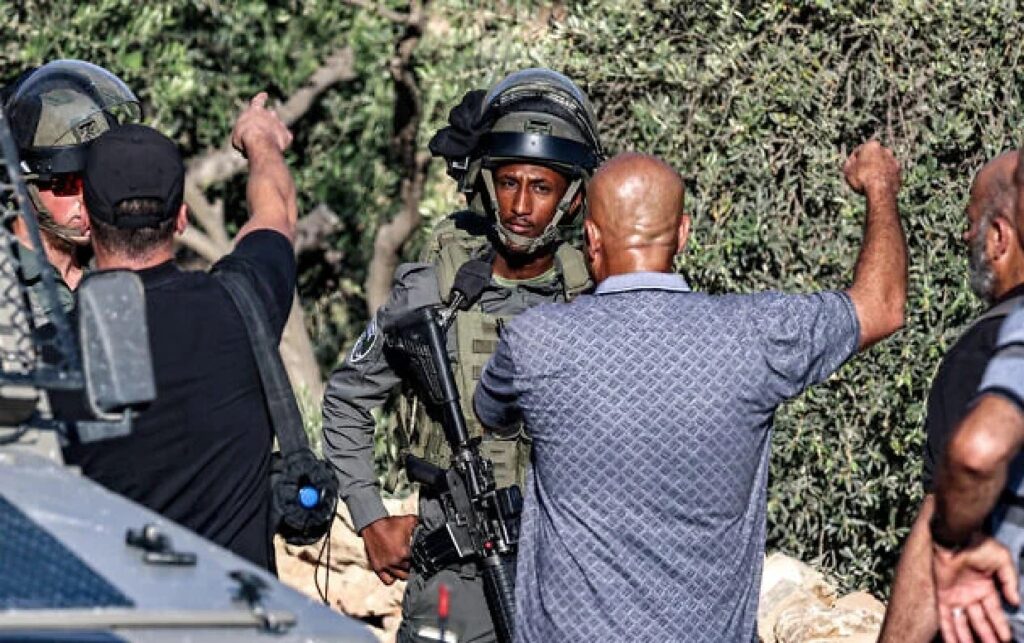
The violence is not incidental to the project but central to it. The report described how Israeli authorities arm violent settlers, provide them with vehicles, and ensure military forces do not intervene when attacks occur, sometimes soldiers participate directly.
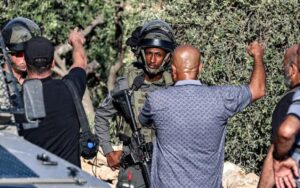
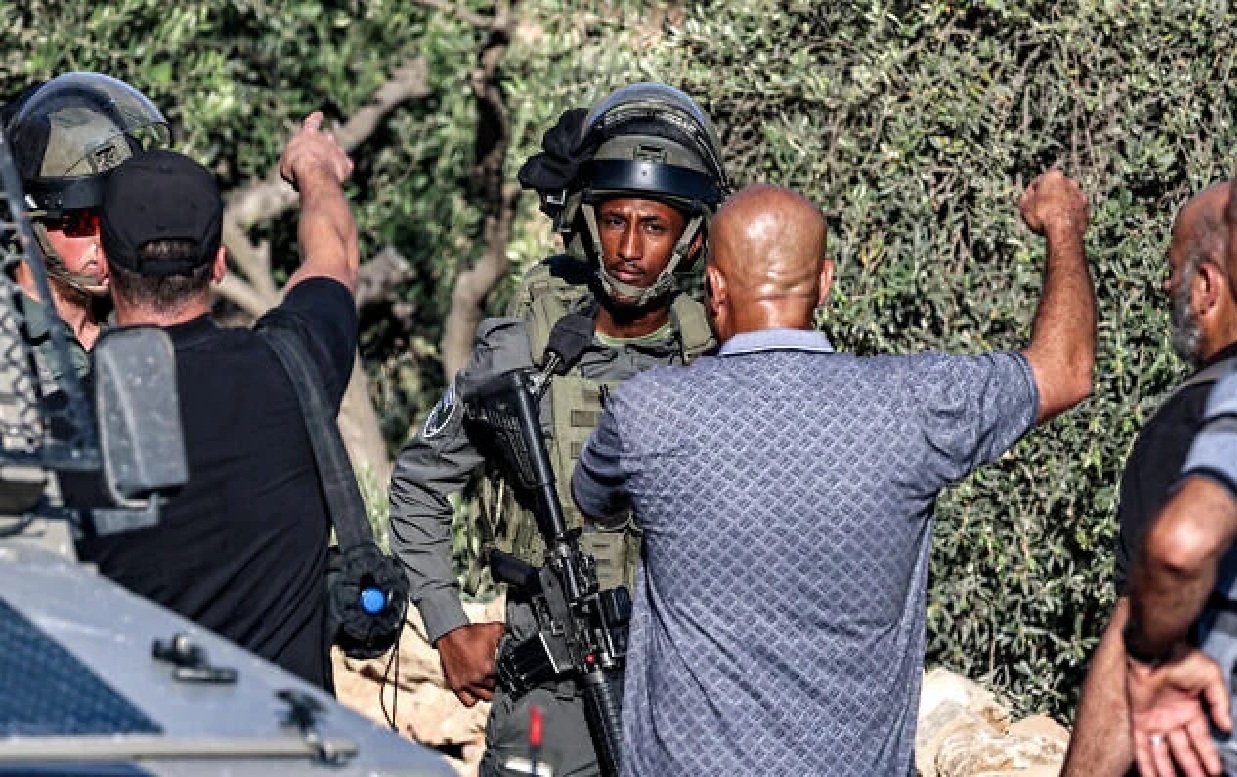
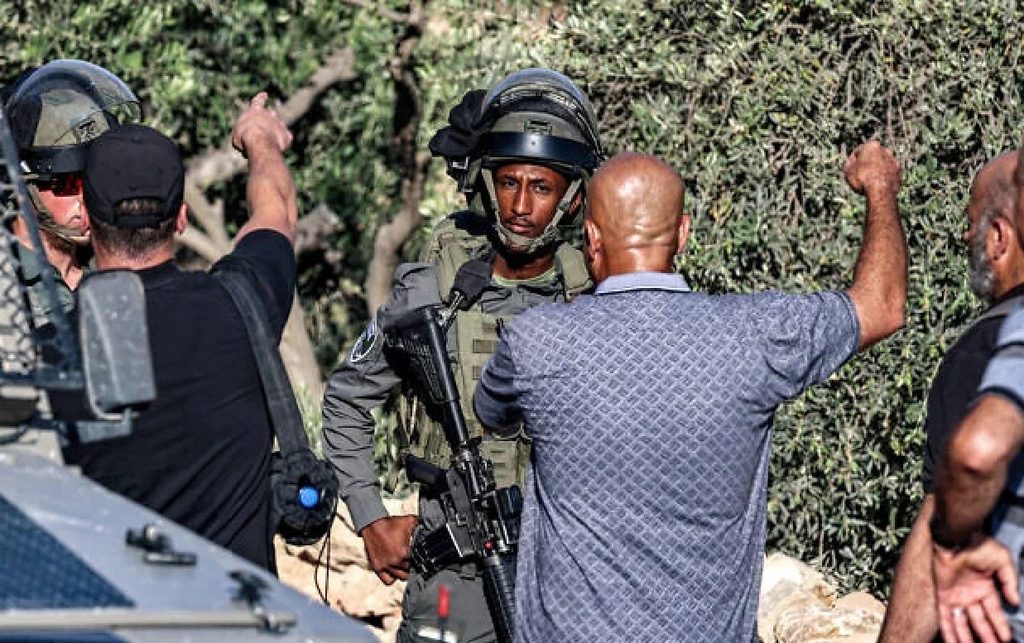
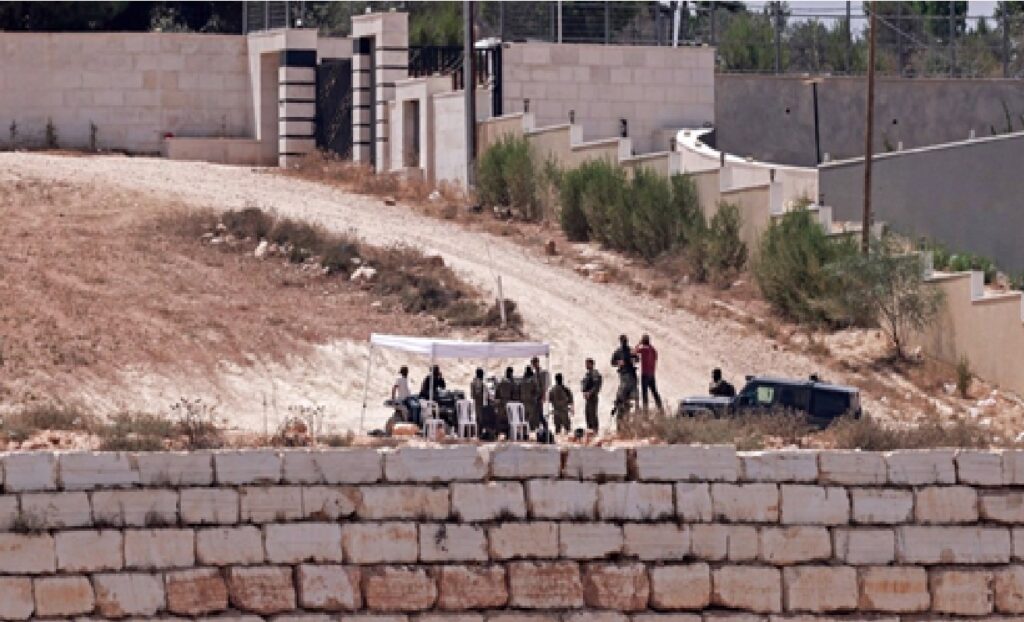
The pattern has intensified in recent weeks. On Monday alone, settler gangs under Israeli military protection escalated attacks across the West Bank, firing live rounds among homes in Deir Jarir east of Ramallah, assaulting residents in Beita and Wadi Al-Sha’er, and storming residential neighbourhoods in Nablus. In Qusra, south of Nablus, three Palestinian families have been kept under siege inside their homes for more than a month, with water and power cut off.
The International Bar Association’s Human Rights Institute renewed its warnings Monday, noting that settler attacks in the first half of 2026 reached record levels. UN Deputy Special Coordinator for the Middle East Peace Process Ramiz Alakbarov said the West Bank was at “breaking point,” with settler attacks increasingly spreading from Area C into Areas A and B.
Mechanism Two: Ethnic Cleansing And Takeover Of Space
The violence, B’Tselem says, operates alongside a second mechanism it describes as “ethnic cleansing and takeover of space.” According to the report, 75 Palestinian communities have already been displaced, while settler outposts and agricultural farms have taken control of approximately 1.07 million dunams, around 264,000 acres, representing 18% of the occupied West Bank. Around 33,000 Palestinians have also been forcibly displaced from refugee camps in the northern West Bank.
The displacement has coincided with accelerated settlement construction. B’Tselem found that since Netanyahu’s government took office in late 2022, Israeli authorities have approved 104 new settlements. In a single cabinet decision in March 2026 that was declassified in July, Israel approved 34 new settlements, allocating 1.3 billion shekels to expedite settlement and 1 billion shekels for infrastructure development.
The pattern is not limited to new construction. In early September, Israeli forces demolished every home in Khirbet al-Tabban in Masafer Yatta, leaving about 70 people, including 30 children, without shelter.
Mechanism Three: Economic Strangulation
The third mechanism is what the rights organisation calls “economic strangulation.” Israel exercises extensive control over Palestinian employment, tax revenues, financial flows, and infrastructure. B’Tselem said these powers are being used to deepen the Palestinian economic crisis while increasing Palestinian dependence on Israel.
A central component is Israel’s withholding of Palestinian clearance revenues, taxes and customs duties that Israel collects on behalf of the Palestinian Authority. The revenues represent approximately 56% of the PA’s total public income. Israel began deducting portions of the funds in 2019 and stopped transferring them entirely around a year ago, according to the report. More than $6 billion has subsequently been withheld, contributing to a severe financial crisis that has left the PA unable to regularly pay full salaries to public employees.
The report also notes that Israel has revoked almost all permits allowing West Bank Palestinians to work inside Israel, “cutting more than 140,000 people off from their main source of livelihood”. Unemployment in the West Bank rose from 13.1% in 2022 to over 31% in 2024.
The economic pressure is not incidental. As Al Jazeera reported, the logic is explicit: a family that cannot earn is easier to uproot, and when Palestinians fall back on their own land, the pressure follows them there. Jamil Abu Rayan, a Palestinian from Halhul, told B’Tselem he lost about 60% of his 2025 grape harvest after settlers established an illegal outpost on his main plot and soldiers barred him from another, calling it state land.
Mechanism Four: Political And Social Repression
B’Tselem identified the destruction of Palestinian political and social life as another component of the same process. The organisation said Israel criminalises political affiliation, raids and closes civil society organisations, suppresses demonstrations and arrests activists, students and journalists.
At least 60 Palestinian journalists have been detained in the occupied West Bank since October 2023, according to B’Tselem . The Palestinian Prisoner Society reported Sunday that Israel is currently holding 37 Palestinian journalists in its prisons, including 19 under administrative detention without charge or trial. All were detained following October 2023.
Among the most recent cases: Israeli forces detained journalists Sabri Mousa Jibril and Muath Ammarna on Thursday after raiding their homes in Bethlehem. Ammarna has been detained three times for his journalistic work. Journalist Ali al-Samoudi, released in April after a year in administrative detention, was raided again on Saturday in Jenin; his son was beaten, and he was given one hour to turn himself in.
Palestinian organisations put the overall number of Palestinians detained in the West Bank since October 2023 at over 25,000.
The report also accused Israeli security forces of arresting election officials, activists, and academics; restricting Palestinian demonstrations; and expanding surveillance over social media posts. “Incarceration serves not only to punish individuals but also to deter the public and restrict the possibility of collective action,” the report states.
Mechanism Five: Making Control ‘Irreversible’
The fifth mechanism concerns the political framework underlying these measures. B’Tselem links the current trajectory to Smotrich’s “Decisive Plan,” which the report describes as the operational framework guiding current policies.
Under that framework, according to B’Tselem, Palestinians are presented with three possibilities: accept Jewish supremacy while giving up national claims, leave the territory, or face violent suppression.
The organisation argues that these mechanisms cannot be understood separately. “Together, these domains restrict West Bank Palestinians’ ability to maintain the basics of daily life while also undermining the conditions that enable Palestinian society to exist as a political, social and territorial body with institutions, collective rights, and a shared future,” the report asserts.
The result, B’Tselem warns, is an increasingly explicit attempt to transform both the demographic and geographical reality of the occupied West Bank — to make Israeli control “continuous, entrenched, and permanent” while Palestinian existence becomes “fragmented, vulnerable, and dependent”.
On The Ground: ‘We Don’t Know What To Do Or Where To Go’
The report’s abstractions translate into concrete daily realities for the roughly 3.5 million Palestinians in the West Bank and occupied East Jerusalem.
By December 2025, Israel had established at least 925 physical obstacles across the West Bank, the most the United Nations has recorded in two decades. Yusef Kashur, a driver and father of six from Dura, south of Hebron, told B’Tselem that the growing network of gates and checkpoints had turned his work into a “torment,” forcing him onto long, dangerous back roads and to turn down fares he once relied on. “These drives are exhausting, take a very long time, and the fuel costs so much that I don’t make enough to cover our household needs,” he said.
The UN has documented similar dynamics in Gaza, where the “yellow line”, initially set up following the October 2025 ceasefire, has gradually pushed inward, confining Palestinians to less than 40% of the Strip’s land area. Safaa Mushtaha, a resident of Al-Tuffah, told UN News: “‘Where do we go?’ This is a question we’ve been asking ourselves for three years. We accepted living near the yellow line, but it’s become unbearable”.
While B’Tselem’s report focuses on the West Bank, the parallel dynamics in Gaza underscore what critics describe as a coherent territorial logic across both arenas, one that the report explicitly frames within the context of an “ongoing project of elimination” operating “within the Israeli apartheid regime”.
International Response: Sanctions, But Not Enough
The report’s release comes as international pressure on Israel has intensified, though B’Tselem argues it remains insufficient.
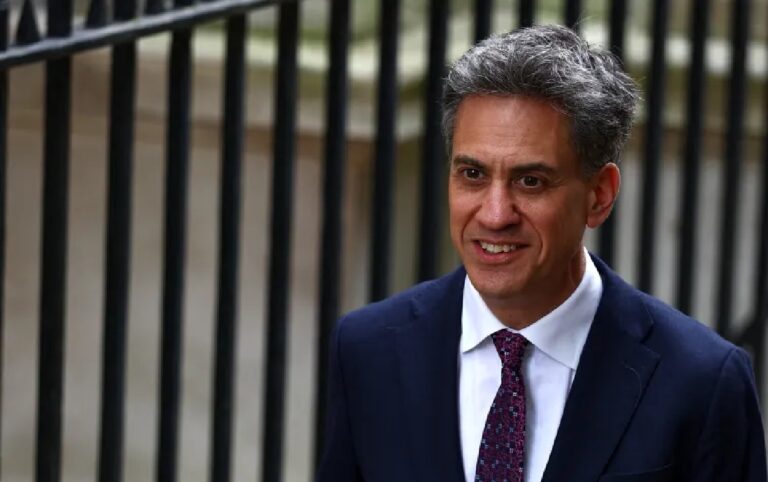
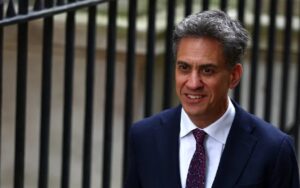
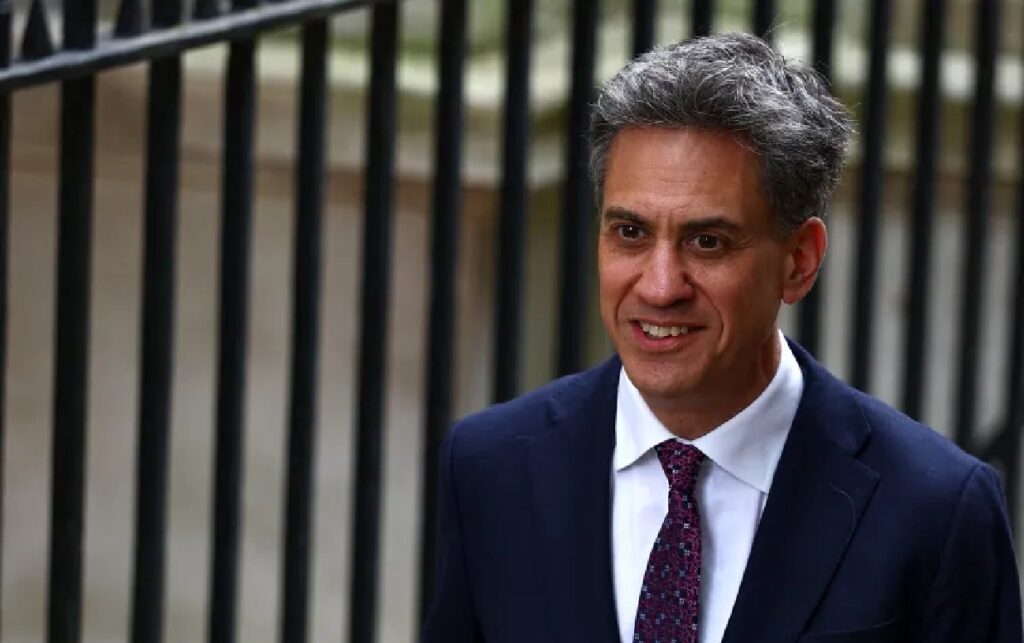
Days before the report’s publication, 12 countries, including the UK, France, Canada, Denmark, Finland, Iceland, Ireland, Norway, Poland, Portugal, Spain and Sweden, confirmed their intention to introduce restrictions on trade in goods with illegal settlements. UK Foreign Secretary Ed Miliband announced the measures in Parliament on 8 September, describing settlement expansion as “illegal under international law”.
The Israeli response was swift and defiant. National Security Minister Itamar Ben-Gvir called on Netanyahu to close the British consulate in East Jerusalem, claiming it “operates openly on behalf of the Palestinian Authority.” US Ambassador to Israel Mike Huckabee told the BBC the sanctions would “without a doubt” provoke a US reaction.
Novak acknowledged the significance of the sanctions but argued they do not go far enough. “Recent steps by the UK and other governments matter because they begin to move from condemnation to consequences,” she said. “But the response cannot stop with measures focused only on settlements. The violations described here are funded, protected and embedded in Israeli state policy, and carried out within a system of impunity”.
She was more pointed in her assessment of the broader international posture: “The genocide in Gaza should have fundamentally changed international policy towards the Israeli regime. It didn’t. The same international community is now enabling the destruction of Palestinian collective life in the West Bank” .
B’Tselem called on the international community to stop viewing Israel’s violations as isolated incidents and to end complicity in its actions. The organisation urged states and international institutions to “use every means available under international law to stop Israel’s crimes and halt the machinery of violence and destruction that is tearing Palestinian life apart” .
‘No Change’ Under Any Government?
The report arrives as Israel prepares for elections late next month at the end of Netanyahu’s term. But Novak warned that even if the far-right government is defeated, there will be no fundamental change to Israel’s approach to the West Bank.
“There is agreement among the entire Israeli-Zionist political spectrum in their attitudes towards Palestinians,” she said. “There is a total consensus about keeping control, keeping Jewish supremacy and also about what Israel is conducting in Gaza”.
That assessment challenges the assumptions underlying much international diplomacy, which has often treated the Netanyahu government as an aberration rather than an expression of deeper structural consensus. If Novak is correct, then the mechanisms B’Tselem documents, the violence, the displacement, the economic strangulation, the political repression, the territorial takeover, are not policies that will be reversed by a change in coalition arithmetic.
The report’s authors are explicit about what they believe is at stake. “Palestinians’ right to liberty, equality, self-determination and to live collectively as a people are the premise, not a matter subject to the consent of the regime that controls them,” the report concludes. “Palestinians’ political status and the conditions of their lives cannot continue to be determined through Israeli coercion, military control or arrangements that preserve existing relations of domination”.
Whether the international community, now moving toward sanctions but still far from the “consequences” B’Tselem demands, will act on that premise remains an open question. The report’s 245 pages implicitly challenge readers: it documents the evidence, establishes the patterns, and names the mechanisms. What remains is the will to stop them.
Conclusion: The Elimination Project And The Limits Of The Possible
The evidence is documented. The report names the mechanisms. The complicity is mapped. What remains is the question B’Tselem’s report forces upon the international community: whether it possesses the will to act, or whether the “project” will continue to completion while the world watches in silence.
B’Tselem’s 249-page report arrives at a moment of unusual diplomatic ferment. Twelve Western nations, including the UK, France, Canada, and eight other European states, announced restrictions on trade with illegal settlements just days before their publication. The EU High Representative declared that all member states agree that settlements violate international law. The British Foreign Secretary, speaking as “a proud British Jew,” accused settler terrorists of conducting “ethnic cleansing” in parts of the West Bank.
These are, by any measure, significant developments. They mark the first time that major Western governments have moved from condemnation to consequence, however limited. The Dutch legislation taking effect on September 22 carries penalties of up to six years’ imprisonment for importers of settlement goods, a provision that Israeli officials privately fear could trigger a “quiet, broader boycott” as companies avoid verification costs by simply refusing all Israeli products.
Novak acknowledged the significance. Then she named its limits.
“Recent steps by the UK and other governments matter, because they begin to move from condemnation to consequences,” she said at the report’s launch in Jerusalem. “But the response cannot stop with measures focused only on settlements. The violations described here are funded, protected and embedded in Israeli state policy, and carried out within a system of impunity.”
The distinction is not semantic. The sanctions target settlements, discrete entities that can be listed, their goods identified, and their exports restricted. The “Elimination Project” targets a population. Its mechanisms are not confined to any single settlement, outpost, or farm. They operate through the Israeli military’s checkpoints and demolition orders, through the Finance Ministry’s withholding of clearance revenues, through the military court system that convicts Palestinians at rates approaching 100%, through the surveillance apparatus that treats a Facebook post as evidence of incitement, through the legal architecture that declares Palestinian land “state land” and then transfers it to Jewish settlements.
None of these mechanisms can be addressed by sanctions on settlement goods. None would be meaningfully disrupted by a settlement freeze, even if one were imposed. They are, as the report insists, “funded, protected and embedded in Israeli state policy”.
This is the abyss that B’Tselem’s report opens. The international response, such as it is, addresses the most visible expression of the project, the settlements themselves, while leaving its infrastructure untouched. The UK sanctions settlement goods; Israel continues to withhold $6 billion in Palestinian tax revenues, strangling the PA’s capacity to pay salaries or provide services. Twelve countries restrict trade with illegal outposts; Israel continues to demolish homes in Masafer Yatta, where the UN documented the displacement of nearly 60 Palestinians, including 30 children, in a single week. European governments condemn settler violence; the Israeli military court system continues to grant impunity to the soldiers who enable it.
The mechanisms operate across different domains: physical, economic, legal, bureaucratic, and psychological. The international response operates in one area: trade. The gap between the two is not a matter of degree. It is a matter of categories.
Novak’s warning that “there will be no change” under any Israeli government deserves to be taken seriously, not as a prediction but as a structural analysis. The report traces the elimination project to Smotrich’s 2017 “Decisive Plan,” but it also insists that the mechanisms have run for decades, across governments of different coalitions and ideological compositions. Netanyahu’s government accelerated what was already underway; it did not invent it.
If that analysis is correct, and the evidence in the report, drawn from 2,000 testimonies and three decades of documentation, is difficult to dismiss, then the international community’s focus on this or that Israeli government, this or that settlement, this or that incident of violence, is a category error. It addresses symptoms while the underlying project proceeds.
What would it mean to address the project itself? B’Tselem’s answer is not ambiguous. The organisation rejects “partial fixes, like minor checkpoint removals or limited settlement freezes.” It calls for “a complete end to military rule and apartheid, urging full political and human rights for Palestinians”. It insists that “Palestinians’ right to liberty, equality, self-determination and to live collectively as a people are the premise, not a matter subject to the consent of the regime that controls them.”
This is a demand for decolonisation, not reform, not mitigation, not humanitarian palliation, but the dismantling of the system itself. It is a demand that the international community has never been prepared to meet and shows no sign of preparing to meet now. The UK sanctions target settlements, not the occupation. The EU condemns settlement expansion, not apartheid. The United States, through Secretary of State Rubio, “shares the goal of stability”, a formulation that treats the elimination project as a source of instability rather than a crime.
Rubio’s language is revealing. Stability, not justice. Order, not rights. The elimination project, in this framing, is problematic not because it destroys Palestinian life but because it threatens to destabilise a region already consumed by the consequences of the Gaza war. The concern is not that Palestinians are being eliminated; it is that their elimination might provoke a reaction.
This is the complicity that B’Tselem names. Not active participation, but passive enablement. Not the supply of weapons or diplomatic cover at the Security Council, though those continue, but the refusal to deploy the tools that exist. The UN Security Council could impose sanctions. The International Criminal Court could issue warrants. The General Assembly could suspend Israel’s credentials. The signatories to the Geneva Conventions could convene a High Contracting Parties conference and enforce their obligations. None of this is happening.
The “Elimination Project” is not a metaphor. It describes a process that is visible on the ground, documented in the report’s 249 pages, and confirmed by the daily reporting of organisations like OCHA, which recorded 1,500 Palestinians displaced by demolitions across the West Bank this year, and more than 2,600 displaced by settler violence and related restrictions. It describes a process that has accelerated to the point where, in the first week of September alone, Israeli forces killed two teenagers in al-Mughayyir, demolished every home in Khirbet al-Tabban, and kept three families under siege in Qusra.
The report’s authors understand what they are asking. They understand that the demand for decolonisation, for the dismantling of apartheid, for the recognition of Palestinian collective rights, is not a demand that the international system is structured to grant. They understand that the mechanisms they describe are not accidents or excesses but the operating logic of a settler-colonial state.
That is why the report’s conclusion is not a policy recommendation but a moral challenge. It asks the international community to stop treating Israeli violations as isolated incidents. It asks governments to stop granting impunity while condemning crimes. It asks, in effect, whether the words “never again” have any meaning beyond the historical context in which they were coined.
The answer, at present, is being written in the ruins of Khirbet al-Tabban, in the sieges of Qusra, in the withheld revenues of the Palestinian Authority, in the administrative detention of journalists, in the 925 checkpoints that fragment Palestinian space. It is being written in the gap between what the world says and what the world does.
B’Tselem has documented the project. The question now is whether anyone with the power to stop it will read the documentation and act. The sanctions are a start. They are not the answer. And the distance between the start and the answer is measured in the lives of 3.5 million Palestinians who cannot wait for the international community to decide whether their elimination is a crime or an inconvenience.
Veritas Press Investigative Analysis
Independent journalism examining global affairs, power, diplomacy, and accountability.
Source: Veritas Press C.I.C. | Multi-News Agencies
Help Support Our Work By Donating
Readers who believe that truth still matters have power over popular information. When just a few more people step up to support this work, it means more lies exposed, more corruption uncovered, and more accountability where it’s long overdue.
Help Protect Independent Journalism, Which Is Currently Under Attack.
If you believe journalism should serve the public, not the powerful, and you’re able to help, becoming a regular DONOR or a PAID SUBSCRIBER truly makes a difference.
DONATION APPEAL: If you found this reporting valuable, please consider supporting independent journalism.
Your support fuels our fearless, truth-driven journalism. In unity, we endeavour to amplify marginalised voices and champion justice, irrespective of geographical location. We operate independently, with no financial backing from billionaires; our readers support us.
But it’s also extremely important. One of Veritas Press’s greatest assets is its reader-funded model.
1. Reader funding means we can cover what we like. We’re not beholden to the political whims of a billionaire owner. We are a small, independent and impartial organisation. No one can tell us what not to say or what not to report.
2. Reader funding means we don’t have to chase clicks and traffic. We’re not desperately seeking your attention for its own sake; we pursue the stories that our editorial team deems important and believes are worthy of your time.
3. Reader Funding: enables us to keep our website and other social media channels open, allowing as many people as possible to access quality journalism from around the world, particularly those in places where the free press is under threat.
We know not everyone can afford to pay for news, but if you’ve been meaning to support us, now’s the time.
Your donation goes a long way. It helps us:
- Keep the lights on and sustain our day-to-day operations
- Hire new, talented, independent reporters
- Launch real-time live debates, community-focused shows, and on-the-ground reporting
- Cover the issues that matter most to our communities, in real time, with depth and integrity
Without your support, independent voices like ours will be silenced.
Furthermore, we have plans to expand our work, but we can’t do it without your support. Every contribution, no matter the size, helps us stay independent and build a truly people-powered media platform.
If you believe in journalism that informs, empowers, and reflects the communities we serve, please donate today.
Submission
For the secure submission of documentation, testimonies, or exclusive investigative reports from any global location, please utilise the following contact details for our Investigations Desk: mailto:enquiries@veritaspress.co.uk or mailto:editor@veritaspress.co.uk

Film alleges mass civilian deaths are routinely built into military decisions amid Israel’s genocidal war
The Israeli rights group says violence, displacement, economic strangulation, and settlement expansion form part of

Houthi forces have captured the historic Red Sea port of Mocha and are advancing on
London’s historic sanctions against Israeli settlements mark a watershed moment in UK foreign policy, but
With 95% of Gaza’s population now wholly dependent on aid and more than 90% stripped
India calls for Kashmir and Ladakh to appear only on its official map after a
ISLAMABAD – In the high-stakes political theatre of Pakistan, the battleground has shifted from the
Francesca Albanese says third states have an ICJ-mandated obligation to end Israel’s occupation. But with
As Israeli jets bomb a Syrian air base over alleged Turkish deployment plans, Ankara, Washington
QUSRA, OCCUPIED WEST BANK – In the rugged hills south of Nablus, a slow-motion displacement