Kamran Faqir is a volunteer investigative journalist and writer committed to exposing hidden truths and amplifying underreported stories. Driven by social justice, he brings sharp insight and fearless truth-telling to independent journalism. NUJ registered.
Original Article Date Published:
Article Date Modified:
20 minutes
Views:387
Listen to this article
Help support our mission, donate today and be the change. Every contribution goes directly toward driving real impact for the cause we believe in.
A $334 Million Settlement Expansion Plan Meets A Geopolitical Vacuum:
KATZRIN, OCCUPIED SYRIAN GOLAN — On a crisp morning in mid-April 2026, Yehuda Dua, head of the Katzrin Local Council, stood before a gathering of Israeli officials and local residents and declared, “We will strengthen academia, research, and the University of Kiryat Shmona with a branch in Katzrin, a faculty, and a veterinary hospital.” The celebratory language, “strengthen,” “grow,” “blossom”, belied a far more ominous reality: Israel had just approved a five-year, 1 billion shekel ($334 million) plan to entrench its illegal occupation of the Syrian Golan Heights, aiming to bring 3,000 new Israeli families to the territory and transform the small settlement of Katzrin into “the Golan’s first city.”
The approval, which came on Thursday, April 16, 2026, was presented by Israeli officials as a routine developmental initiative. Ze’ev Elkin, a minister in the Finance Ministry tasked with rehabilitating the country’s north and south, framed it as a demographic and strategic project that would “add thousands of housing units and families to Katzrin and surrounding communities.” But beneath the bureaucratic veneer lies a calculated, decades-long project to erase Syria’s sovereign claim to the Golan Heights, a territory Israel seized by force in 1967, effectively annexed in 1981, and has since populated with tens of thousands of settlers in direct violation of international law.
This investigation, drawing on the latest developments through mid-April 2026, examines the machinery of Israel’s settlement enterprise in the Golan, the geopolitical currents that enable it, the communities caught in its wake, and the international community’s conspicuous failure to stop it.
The Plan: From “Settlement” To “City”.
The newly approved plan is the latest and most ambitious phase in a long-term strategy to normalise Israeli control over the Golan Heights. The Directorate of Tnufa for the North, in coordination with local Israeli authorities, will oversee the implementation of the 5-year initiative, which covers the period 2026 to 2030. Its stated goals include strengthening infrastructure, promoting Israeli population growth, expanding academic institutions, and cementing Katzrin’s status as a genuine urban centre.
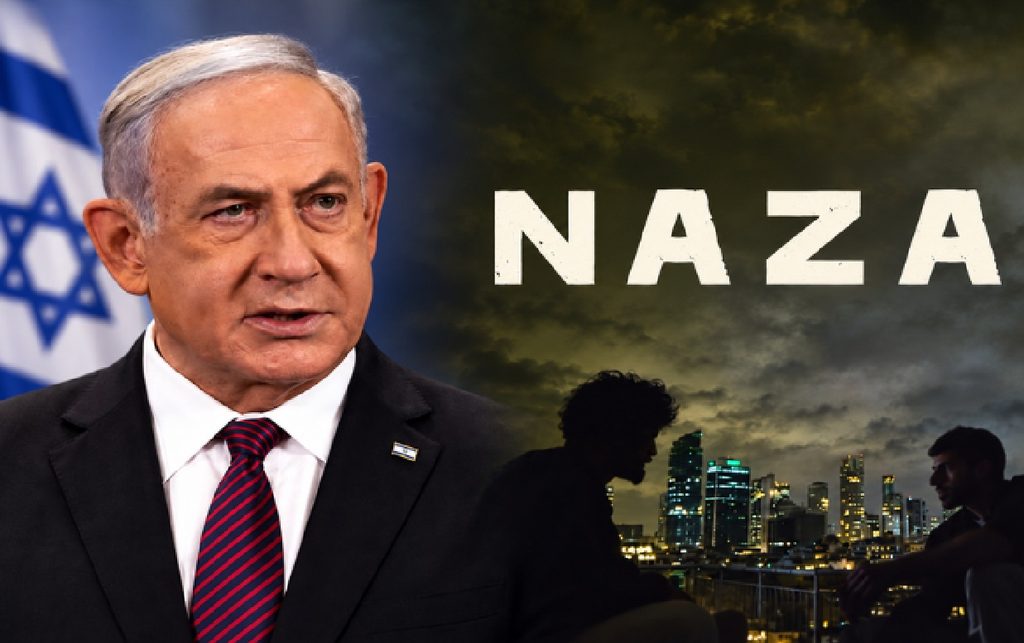
“Strengthening the Golan is strengthening the State of Israel, and it is especially important at this time,” Prime Minister Benjamin Netanyahu declared following the government’s unanimous approval. “We will continue to hold onto it, cause it to blossom, and settle in it.” The language is intentional: it reframes the occupation as an act of cultivation and permanence, obscuring the fact that the land in question is internationally recognised Syrian territory.
Yet the plan’s demographic engineering is impossible to ignore. By the end of the decade, the Directorate aims to bring 3,000 new Israeli families to Katzrin and the broader Golan Heights region. This influx would significantly alter the territory’s demographic balance, which currently comprises approximately 31,000 Israeli settlers living alongside a minority Druze population that predominantly identifies as Syrian and has largely refused Israeli citizenship.
Crucially, this latest plan pertains only to the portion of the Golan Heights that Israel has occupied since 1967, territory it effectively annexed in 1981. It does not encompass the additional Syrian land seized by Israeli forces following the December 2024 collapse of Bashar al-Assad’s regime, including the strategically vital Mount Hermon overlooking Damascus. That separate land grab, which saw Israeli troops enter a previously demilitarised buffer zone established after the 1973 war, represents yet another layer of territorial expansion that has proceeded with minimal international pushback.
The Legal Void: International Law, UN Resolutions, And Impunity.
Under international law, the status of the Golan Heights is unambiguous. The territory is sovereign Syrian land, illegally occupied by Israel since the 1967 Six-Day War. United Nations Security Council Resolution 497, adopted unanimously in 1981, declared Israel’s imposition of its laws, jurisdiction, and administration over the Golan “null and void and without international legal effect.” The Fourth Geneva Convention explicitly prohibits an occupying power from transferring its own civilian population into territory it occupies.
In December 2024, the International Court of Justice (ICJ) issued an advisory opinion that reaffirmed the illegality of Israel’s annexation of the Golan Heights and underscored the prohibition of acquiring territory by force as enshrined in the UN Charter. The opinion was unequivocal, yet it has done nothing to alter Israeli policy.
A report by the UN Secretary-General released in September 2025 documented the continued unlawful advancement of Israeli settlements in the occupied Golan and Palestinian territories, noting that settlement activity had risen sharply since October 2023. The report called upon Israel to desist from changing the physical character, demographic composition, institutional structure, and legal status of the occupied Syrian Golan, and in particular to cease the establishment of settlements.
In November 2025, UN Secretary-General António Guterres reiterated that Israeli settlements in the occupied Golan “violate international law,” and noted that the Israeli army had maintained a continuous presence in the buffer zone since December 8, 2024. Guterres further highlighted that the Israeli cabinet had approved approximately $11 million to support settlement expansion in the occupied Golan Heights, a precursor to the far larger $334 million plan now being implemented.
The UN Special Committee to Investigate Israeli Practices, in a November 2025 report, went further, calling for an arms embargo and sanctions against Israel, citing its “relentless” settlement expansion and territorial ambitions. The report noted that Israel’s seizure of additional Syrian territory east of the Golan in December 2024 was “aligned with the vision of ‘Greater Israel'”, a term that has historically denoted expansionist, irredentist aspirations.
And yet, the resolutions, the reports, the legal opinions, and the condemnations have amounted to little more than paper. The gap between international law and its enforcement has become a chasm, and Israel has demonstrated time and again that it can act with impunity.
The Geopolitical Chessboard: Regional Reactions And Non-Reactions.
The international response to Israel’s latest illegal settlement expansion plan has been a study in contrast: swift condemnation from some quarters, deafening silence from others.
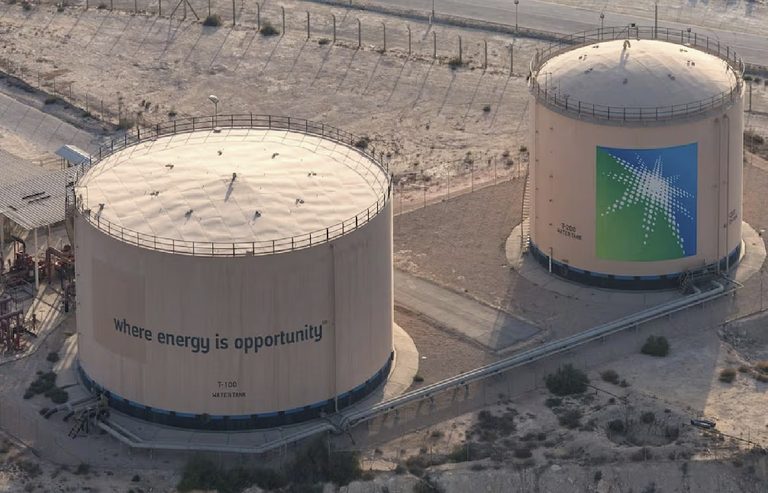
Saudi Arabia was among the first to denounce the plan, with officials accusing Israeli leaders of seeking to “sabotage Syria’s fledgling transition” following the fall of the Assad regime. The Saudi statement, while forceful, also reflected a broader regional anxiety: that Israel’s land grabs are destabilising an already volatile post-Assad Syria and undermining any prospect of a peaceful transition.
The Arab League and numerous Muslim-majority nations have repeatedly condemned Israeli settlement expansion. Iraq’s Foreign Ministry, for example, issued a statement in late 2024 strongly condemning Israel’s decision to expand settlements in the Golan, calling it a “blatant violation of international law and United Nations resolutions” and declaring that any measures aimed at changing the legal status and demographic situation of the Golan Heights were “null and void.”
Turkey, a long-time critic of Israeli policies in the occupied territories, has consistently condemned settlement expansion. Turkish media outlets, including state-affiliated Anadolu Agency (AA), have been at the forefront of reporting on the Golan plan, consistently framing it as “illegal” and part of a broader pattern of occupation.
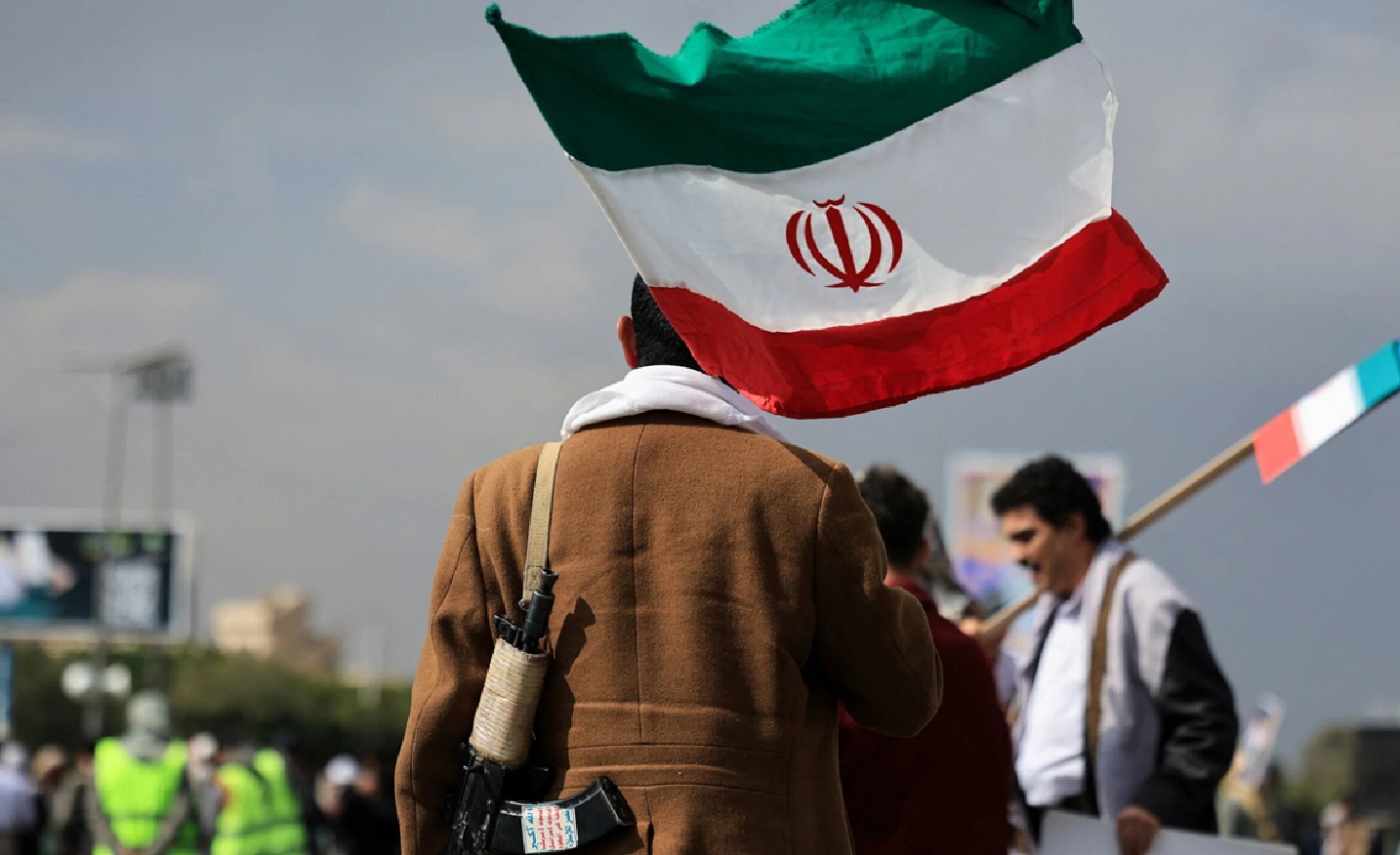
Iran, Israel’s primary regional adversary, has also condemned the settlement expansion, with state-affiliated media characterising it as part of a “Zionist raid” to entrench occupation.
Yet for all the rhetorical condemnation, practical action has been conspicuously absent. The Arab states that normalised relations with Israel under the Abraham Accords have not suspended or downgraded ties. The Gulf states, preoccupied with their own economic diversification and security concerns, have issued statements but taken no concrete measures. Turkey, despite its vocal criticism, maintains complex economic and diplomatic ties with Israel. Iran, engaged in its own regional power struggles, has been unable to translate its anti-Israel posture into any meaningful challenge to Israeli settlement expansion.
The European Union has consistently maintained that Israeli settlements in the occupied Golan are illegal under international law. As British Foreign Secretary Jeremy Hunt stated, “We should never recognise the annexation of territory by force,” adding that “Israel’s claim to the Golan was illegal because annexation of territory is prohibited under international law.” But the EU’s position, like that of the broader international community, has been limited to statements and diplomatic démarches, with no tangible consequences for Israeli policy.
This pattern of condemnation without consequence has been a recurring theme. On December 3, 2025, the UN General Assembly adopted a resolution, sponsored by Egypt, reaffirming that Israel’s occupation and annexation of the Golan are “illegal” and calling for a withdrawal to the June 4, 1967 lines. The resolution passed with 123 votes in favour, a resounding numerical majority, but it was immediately rejected by Israel’s UN envoy, who declared that Israel “will not abandon the Golan.” The vote, like so many before it, changed nothing on the ground.
The American Wild Card: Trump’s Enduring Shadow.
No analysis of the Golan situation can be complete without examining the transformative role of the United States, and specifically, of Donald Trump.
In 2019, during his first term as president, Trump made the United States the first country in the world to officially recognise Israeli sovereignty over the Golan Heights. The move shattered decades of bipartisan U.S. policy and international consensus, which had consistently treated the Golan as occupied Syrian territory. Trump’s decision was not the product of a deliberative foreign policy process; it was a personal, impulsive gesture, one that he has since boasted about repeatedly.
During a Hanukkah speech in December 2025, Trump revisited his Golan decision, describing it as swift, decisive, and long sought by Israel. “Nobody thought it was possible,” he said. The statement was a stark reminder that the American position on the Golan is now tethered to the whims of a single politician whose second term began in January 2025 and who has shown little interest in international law or multilateral diplomacy.
The implications of Trump’s recognition have been profound. It provided Israel with a veneer of legitimacy for its annexationist policies, emboldening settlement expansion and undermining any diplomatic leverage that might have been used to press for a negotiated solution. Israeli officials have since cited U.S. recognition as justification for their actions. As Defence Minister, Israel Katz declared in November 2025, “Israel will not allow the establishment of a Palestinian state or the erosion of its security control, whether in Gaza, the Golan Heights, or Judea and Samaria.”
The Trump administration’s posture has been described by critics as “complicity” with Israeli illegal settlement plans, providing “cover” for actions that violate international law. While the Biden administration, in its brief interregnum, reverted to the traditional U.S. position that settlements are an obstacle to peace, it took no concrete action to reverse Trump’s Golan recognition or to penalise settlement expansion. With Trump back in the White House as of January 2025, any hope of a course correction has evaporated.
Voices From The Golan: The Druze Caught Between.
While diplomats issue statements and politicians make declarations, the people whose lives are most directly affected by Israel’s illegal settlement expansion are the Druze community of the Golan Heights.
The Druze of the Golan are a distinct minority group, numbering around 25,000, who have lived in the region for centuries. Despite more than five decades under Israeli occupation, the vast majority have refused Israeli citizenship and remain fiercely connected to their Syrian identities. They are, in effect, a population trapped between two nations: they reject Israeli sovereignty, yet they are unable to return to a Syria that has been ravaged by civil war and now governed by an uncertain transitional administration.
This predicament has been exacerbated by recent developments. In March 2025, Syrian Druze religious leaders visited Israel in the first such meeting since 1948, a move that “immediately raised suspicions among Druze Syrians in the occupied Golan Heights.” The visit signalled a potential realignment that could fracture the community’s long-standing loyalty to Syria and create new opportunities for Israeli co-optation.
At the same time, many Druze in the Golan feel betrayed by Syria’s new interim government. Some welcomed Israel’s strikes on Syrian military sites following Assad’s fall, seeing them as targeting a regime that had long oppressed them. This complex emotional landscape, loyalty to a Syrian homeland that seems increasingly distant, resentment toward a Syrian government that failed to protect them, and daily life under Israeli occupation, has created a volatile dynamic.
Long-time Druze activist Salman Fakhreddin has been campaigning against Israeli occupation for decades and has been jailed by Israeli authorities 13 times as a result. His story is emblematic of the community’s resistance. Yet the Israeli government has also pursued a strategy of economic integration, offering permits for Syrian Druze workers to enter the occupied Golan and reportedly preparing “more than $1 billion in funding to support the Druze in Golan.” The aim, according to analysts, is to “persuade members of the community to reject the new government in Damascus” and deepen their ties to Israel.
The settlement expansion plan adds yet another layer of pressure. As Israeli settlements grow and the demographic balance shifts, the Druze community’s ability to maintain its distinct identity and political aspirations diminishes. The plan to bring 3,000 new Israeli families to Katzrin and the Golan will inevitably encroach on Druze lands and resources, further marginalising an already vulnerable population.
Tensions have already flared over other Israeli development projects in the Golan. In late 2025, Druze residents staged violent protests against a long-stalled wind turbine project in the northern Golan Heights, forcing construction workers to withdraw from the site. The incident underscored the deep-seated grievances that lie just beneath the surface, and the potential for settlement expansion to ignite further unrest.
Syria’s Response: A Nation In Disarray.
The Syrian response to Israel’s latest settlement plan has been complicated by the country’s own internal turmoil. The fall of Bashar al-Assad in December 2024, following a rapid offensive by opposition forces led by Hayat Tahrir al-Sham (HTS), left Syria in a state of profound transition. The new administration, struggling to consolidate control and gain international recognition, has been forced to address the Golan issue from a position of profound weakness.
Syria’s interim government has demanded Israel’s withdrawal from the territory it occupied following Assad’s fall and has expressed readiness to redeploy forces to the Golan in line with the 1974 disengagement agreement, “provided Israeli forces withdraw immediately.” But these demands ring hollow given the new government’s limited military capacity and its preoccupation with internal stabilisation.
The Syrian position on the Golan has also shown signs of potential flexibility, or desperation. In July 2025, a source close to Syrian President Ahmed al-Sharaa told Israeli media that Syria was demanding that Israel hand over at least one-third of the Golan Heights territory seized prior to the 1974 armistice agreement. The proposal, which was neither confirmed nor denied by official Syrian channels, suggested a willingness to bargain over territory that international law declares to be sovereign Syrian land. “There’s no such thing as peace for free,” the source was quoted as saying.
This apparent openness to negotiation has been met with scepticism by many Syrians and regional observers, who view any compromise on the Golan as a betrayal of national sovereignty. Syrian Vice President Farouk Al-Sharaa has made it clear that Syria will not accept any political deal unless there is “real progress on the Golan Heights issue.” Yet the very fact that such discussions are taking place, with Syria demanding only a fraction of its occupied territory, illustrates the profound asymmetry of power in the Israeli-Syrian equation.
In December 2025, Syria welcomed a UN General Assembly vote in which 123 nations reaffirmed their support for Syrian sovereignty over the Golan and demanded an Israeli withdrawal. The vote was a symbolic victory, but it did nothing to change the facts on the ground. Israel’s rejection of the resolution was immediate and absolute.
Perhaps most troublingly, in December 2025, a controversial map published by the Syrian interim government’s Foreign Ministry appeared to erase the Golan Heights from Syria’s borders, sparking “widespread reactions” and “a wave of criticism and anger on social media.” The incident, whether a clumsy error or a deliberate signal, exposed the deep anxieties among Syrians that their new leadership might be willing to abandon the Golan in exchange for normalisation or economic support.
Connecting The Dots: A Pattern Of Expansion.
The Golan settlement plan cannot be viewed in isolation. It is part of a broader Israeli strategy of territorial entrenchment that encompasses the occupied West Bank, East Jerusalem, and now additional Syrian land seized in December 2024.
Israel’s settlement enterprise has accelerated dramatically since the October 2023 Hamas attacks and the subsequent war in Gaza. The UN Secretary-General’s report noted that settlement advancement in the occupied Palestinian territory had “risen sharply since October 2023.” The Israeli government has approved thousands of new housing units in the West Bank, retroactively legalised outposts previously considered illegal under Israeli law, and intensified efforts to alter the demographic and geographic character of occupied territories.
In the Golan, this pattern is equally evident. The $11 million settlement expansion approved in late 2024 was followed by the far larger $334 million plan now underway. Israeli officials have made no secret of their intentions. As Netanyahu declared, “We will continue to hold onto it, cause it to blossom, and settle in it.”
The timing of these moves is not coincidental. The collapse of the Assad regime created a power vacuum in Syria that Israel has exploited to seize additional territory and to entrench its control over the Golan. The return of Donald Trump to the White House has removed any prospect of American pressure. And the international community’s attention remains fixated on Gaza, Lebanon, and the broader Middle East crisis, providing Israel with a permissive environment for settlement expansion.
The Silence Of The West: Complicity Or Fatigue?
The question that hangs over the Golan, and indeed over the entire Israeli settlement enterprise, is why the international community has proven so ineffective at halting it.
Part of the answer lies in the unique position of the United States. As the world’s preeminent military and diplomatic power and Israel’s most steadfast ally, the U.S. possesses the leverage to influence Israeli policy. Yet under Trump, and to a lesser extent under Biden, that leverage has not been used. Trump’s recognition of Israeli sovereignty over the Golan was a watershed moment that signalled to Israel that its annexationist policies would not only be tolerated but endorsed by its most powerful patron.
European nations have been more critical, but their criticism has been confined to statements and symbolic votes. The EU maintains that Israeli settlements are illegal, and individual European foreign ministers have condemned the annexation of territory by force. But the EU has not imposed sanctions on Israeli settlement goods, has not suspended trade agreements, and has not taken any meaningful action to penalise Israeli policy.
The Arab world, too, has been largely passive. The Abraham Accords normalised relations between Israel and several Arab states without securing any concessions on the Palestinian or Syrian fronts. The Gulf states, focused on economic development and countering Iranian influence, have shown little appetite for confronting Israel over the Golan. Saudi Arabia’s condemnation of the latest settlement plan is notable, but it comes against a backdrop of ongoing normalisation discussions that could further erode Arab leverage.
This collective inaction has created a self-reinforcing cycle: Israeli settlement expansion proceeds unchecked, the international community issues statements of concern, the facts on the ground become more entrenched, and the diplomatic costs of reversing course become higher. The result is a de facto acceptance of Israel’s territorial gains.
Conclusion: A Future Foreclosed.
As the $334 million plan rolls out across the Golan Heights, as roads are paved, housing units constructed, academic institutions expanded, and 3,000 new Israeli families settle on occupied Syrian land, the possibility of a negotiated return of the territory recedes further into the realm of fantasy.
The plan to transform Katzrin into “the Golan’s first city” is more than an infrastructure project; it is a deliberate, strategic act of demographic and territorial engineering designed to make Israeli control permanent and irreversible. It is the latest chapter in a long history of settlement expansion that has systematically eroded the prospects for peace and violated the most fundamental principles of international law.
For the Druze community of the Golan, the plan represents another step toward marginalisation and erasure. For Syria, it is a reminder of its powerlessness in the face of Israeli military might and American diplomatic backing. For the international community, it is a test of its own relevance, a test it has thus far failed.
“The people are with the Golan and the Government of Israel is with the Golan; we are coming with a massive development surge,” Netanyahu proclaimed. The statement was meant as a boast. It should be understood as a warning.
Source: Multiple News Agencies
Submissions:
For The Secure Submission Of Documentation, Testimonies, Or Exclusive Investigative Reports From Any Global Location, Please Utilise The Following Contact Details For Our Investigations Desk: enquiries@veritaspress.co.uk or editor@veritaspress.co.uk
Help Support Our Work:
Popular Information is powered by readers who believe that truth still matters. When just a few more people step up to support this work, it means more lies exposed, more corruption uncovered, and more accountability where it’s long overdue.
Help Protect Independent Journalism, Which Is Currently Under Attack.
If you believe journalism should serve the public, not the powerful, and you’re in a position to help, becoming a DONATOR or a PAID SUBSCRIBER truly makes a difference.
DONATION APPEAL: If You Found This Reporting Valuable, Please Consider Supporting Independent Journalism.
Help Support Our Work – We Know, We Know, We Know …
Seeing these messages is annoying. We know that. (Imagine what it’s like writing them … )
Your support fuels our fearless, truth-driven journalism. In unity, we endeavour to amplify marginalised voices and champion justice, irrespective of geographical location.
But it’s also extremely important. One of Veritas Press’s greatest assets is its reader-funded model.
1. Reader funding means we can cover what we like. We’re not beholden to the political whims of a billionaire owner. We are a small, independent and impartial organisation. No one can tell us what not to say or what not to report.
2. Reader funding means we don’t have to chase clicks and traffic. We’re not desperately seeking your attention for its own sake: we pursue the stories that our editorial team deems important and believe are worthy of your time.
3. Reader Funding: enables us to keep our website and other social media channels open, allowing as many people as possible to access quality journalism from around the world, particularly those in places where the free press is under threat.
We know not everyone can afford to pay for news, but if you’ve been meaning to support us, now’s the time.
Your donation goes a long way. It helps us:
Keep the lights on and sustain our day-to-day operations
Hire new, talented independent reporters
Launch real-time live debates, community-focused shows, and on-the-ground reporting
Cover the issues that matter most to our communities, in real time, with depth and integrity
We have plans to expand our work, but we can’t do it without your support. Every contribution, no matter the size, helps us stay independent and build a truly people-powered media platform.
If you believe in journalism that informs, empowers, and reflects the communities we serve, please donate today.
Kamran Faqir is a volunteer investigative journalist and writer committed to exposing hidden truths and amplifying underreported stories. Driven by social justice, he brings sharp insight and fearless truth-telling to independent journalism. NUJ registered.
SEATTLE, TEHRAN — The U.S. Department of Homeland Security (DHS) will allow Iran’s national football team to enter the country 48 hours before their critical World Cup match against Egypt on Friday, a modest concession in a tournament where Team Melli’s travel conditions have sparked claims of oppression and competitive disadvantage.