Kamran Faqir is a volunteer investigative journalist and writer committed to exposing hidden truths and amplifying underreported stories. Driven by social justice, he brings sharp insight and fearless truth-telling to independent journalism. NUJ registered.
Article Date Published:
Article Date Modified:
20 minutes
Views:298
Listen to this article
Help support our mission, donate today and be the change. Every contribution goes directly toward driving real impact for the cause we believe in.
BRUSSELS / RAMALLAH — The European Union’s decision this Thursday to blacklist four Israeli settler organisations and three of their leaders for “serious and systematic human rights abuses” against Palestinians marks a belated, politically tortuous, but symbolically significant step. The sanctions, announced by the Council of the European Union, freeze the assets of the entities and individuals and impose travel bans, targeting what Brussels now officially labels “extremist Israeli settlers and organisations that support them.” Yet the move arrives in a week when Israeli Prime Minister Benjamin Netanyahu ordered the military to extend its operational control over the Gaza Strip from 60 to 70% of the territory, and Israel’s UN ambassador declared the government would “have no further contact” with UN Secretary-General António Guterres after Israeli forces were included on a UN blacklist for sexual violence in conflict zones. The juxtaposition is stark: while the EU seeks to punish the ideological and logistical infrastructure of West Bank land theft, the Israeli state simultaneously expands its hold over Gaza and rejects any form of international accountability. This investigation unpacks the sanctioned network, the political battle that delayed EU action for years, and the reality on the ground, where Palestinian communities see sanctions as long-overdue recognition of a state-backed machinery of dispossession.
A Thaw In Brussels: The Sanctions Package.
The EU’s 28 May 2026 designations fall under the Global Human Rights Sanctions Regime, established in December 2020 to punish acts of genocide, crimes against humanity, and other grave abuses. With the latest additions, 136 individuals and 41 entities worldwide are now subject to asset freezes and travel prohibitions. The Council’s statement specifies that the listed Israeli actors have violated, among others, “the right of everyone to enjoy the highest attainable standard of physical and mental integrity, the right to property, the right to private and family life, to freedom of religion or belief and the right to education.”
In a separate decision the same day, the Council also expanded its Hamas-related sanctions to target ten members of the movement’s Political Bureau.d This twin-track approach, hitting both Hamas’s political leadership and far-right settler organisations, is designed to signal even-handedness. But for Palestinians in the occupied West Bank, the message is more specific: after years of diplomatic paralysis, Europe is finally naming the central role of organised settler movements in the forced displacement of their communities.
The decision was unlocked by a seismic political shift in Budapest. For years, the self-styled illiberal government of former Hungarian premier Viktor Orbán had single-handedly blocked any EU listing of Israeli settlers, deploying its veto to shield the settlement enterprise. When Orbán’s successor, newly appointed Prime Minister Péter Magyar, took office earlier this month, that veto was lifted within days. A senior EU diplomat told QNN on condition of anonymity: “We knew exactly which legal texts were ready. The moment Hungary’s political obstruction ended, the Council could move. The packages on settlers and on Hamas were agreed at the Foreign Affairs Council on 11 May, and we pushed them through immediately.” The episode exposes how a single member state can hold European foreign policy hostage, and how quickly the landscape can change when domestic politics shift.
The Architects Of Displacement:
The EU has not simply sanctioned unknown extremists; it has targeted a sophisticated, interlocking network that provides the legal, financial, and logistical backbone for Israel’s settlement expansion.
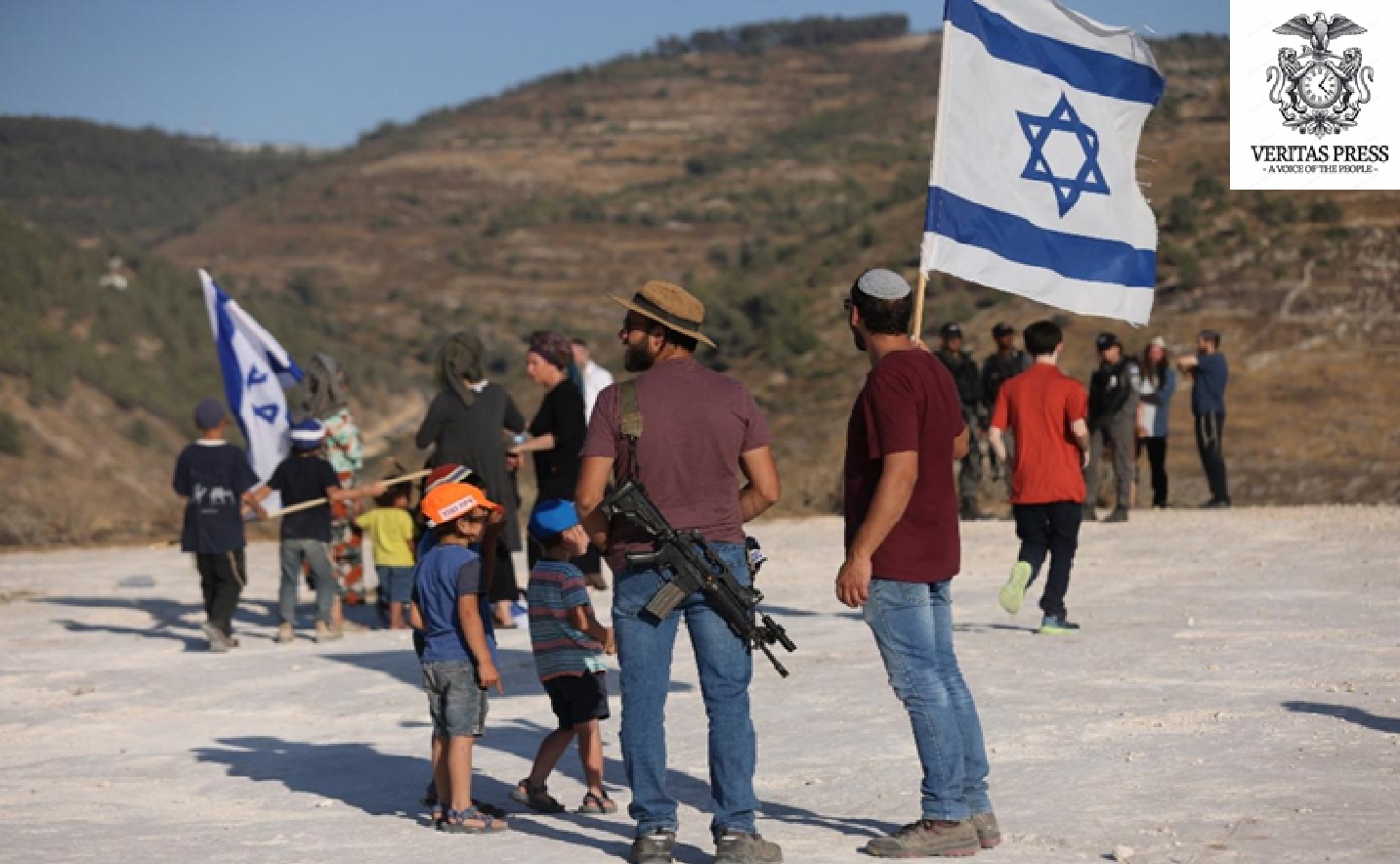
Nachala Settlement Movement and Director Daniella Weiss Daniella Weiss, often described as the grande dame of the settler right, has spent decades pursuing a vision of Jewish sovereignty from the Jordan River to the Mediterranean Sea. The EU statement says Nachala “encourages and facilitates coercive acts that lead to the forced displacement of Palestinians.” Its outposts, frequently erected on privately owned Palestinian land, obstruct access to agricultural and grazing areas and act as persistent sources of violence. “In her capacity as director, Daniella Weiss plans, directs and publicly supports the acts of Nachala,” the Council notes. Weiss has repeatedly boasted about establishing illegal hilltop outposts, deliberately placed between Palestinian villages to fragment territory and strangle any possibility of a contiguous Palestinian state.
Reached by phone, Weiss dismissed the sanctions as “a badge of honour.” In a statement posted on social media, she said, “The European Union has again proven it sides with the enemies of the Jewish people. We will continue to redeem the Land of Israel, hilltop by hilltop.”
Regavim and Director Meir Deutsch The Israeli NGO Regavim presents itself as a research institute dedicated to “the protection of national lands and properties.” In reality, as the EU now officially recognises, it systematically lobbies for the demolition of Palestinian structures to expand Israeli control over the whole West Bank. The Council specifically cites Regavim’s campaign that led to the demolition of an EU-funded Palestinian primary school in the village of Jabbet al Dhib, near Bethlehem. For the 150 schoolchildren of that community, the consequences were immediate and devastating.
“I watched my daughter’s classroom crushed by bulldozers paid for by European taxpayers’ friends,” said Umm Yasser, a mother of four from Jabbet al Dhib, speaking to QNN earlier this year. “Regavim took photos from the hill and sent them to the courts. They said our school was ‘illegal’, but our children have nowhere else to learn. We now hold classes in a tent that the army threatens to confiscate every month.” Meir Deutsch could not be reached for comment, but Regavim’s website describes the Jabbet al Dhib operation as a victory against “illegal Palestinian construction funded by foreign governments that aim to create facts on the ground.”
Hashomer Yosh and President Avichai Suissa Less well known internationally, Hashomer Yosh operates in the shadows of the herding farms scattered across the West Bank’s Area C. The EU accuses it of materially supporting “at least 28 violent outposts and settlements,” recruiting armed volunteers, and supplying guards who engage directly in violent attacks against Palestinians and their livestock. The organisation’s president, Avichai Suissa, is described as having “facilitated and encouraged serious human rights abuses” and supporting outposts founded by individuals already under EU sanctions. Rights groups have long documented how “herding farm” outposts, small clusters of trailers and animal pens, act as beachheads for seizing large swaths of grazing land, driving Bedouin and herding communities into ever-shrinking enclaves.
Amana Cooperative Association Amana, the settlement-building arm of the Gush Emunim movement, is the oldest and most institutionalised of the sanctioned entities. For over four decades, it has served as the practical engine of the West Bank settlement enterprise. The EU states that Amana “has played a key role in initiating, financing, and facilitating at least 30 violent outposts and settlements,” including many founded by already-sanctioned individuals. “Along with the settler violence they generate, these outposts have forced widespread displacement of vulnerable Palestinian communities and dispossession of Palestinian properties,” the Council declared.
A Pattern Of State-Sanctioned Violence:
The EU’s designations break with the narrative that settler violence is the work of isolated “extremist” fringe elements. By sanctioning structured organisations like Amana and Regavim, Brussels implicitly acknowledges that the violence flows from a deliberate, state-enabled strategy.
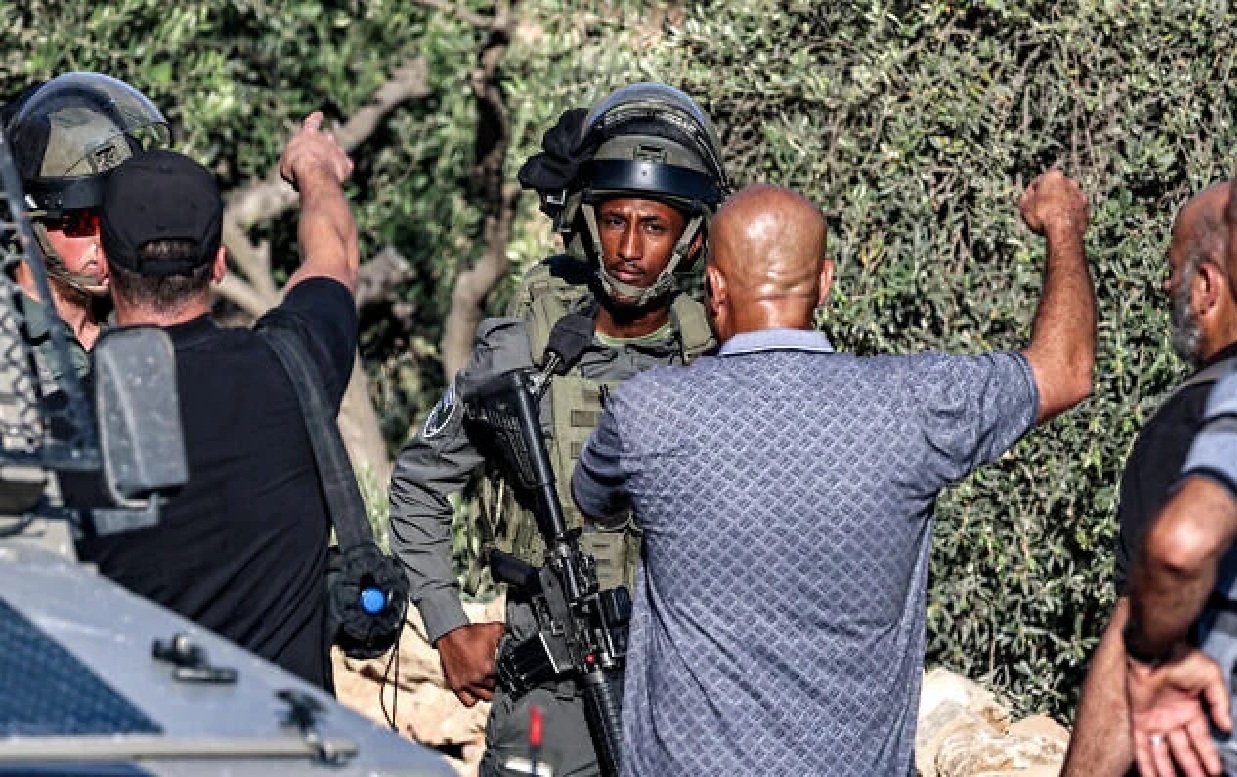
“These are not rogue individuals throwing stones. These are corporations with budgets, lawyers, and direct lines to government ministries,” said Dror Sadot, spokesperson for the Israeli human rights group B’Tselem. In a report released earlier this year, B’Tselem concluded that Israel actively aids settler violence “as part of a strategy to cement the takeover of Palestinian land.” The report documents how Israeli security forces routinely stand aside during settler attacks, refuse to accept Palestinian complaints, and in many cases participate directly in violence. The United Nations Office for the Coordination of Humanitarian Affairs (OCHA) reached the same assessment last year, warning that settler attacks are carried out “with the acquiescence, support, and in some cases participation, of Israeli security forces.”
The statistics paint a grim picture. According to the Palestinian Health Ministry, since 7 October 2023, Israeli forces and settlers have killed more than 1,152 Palestinians in the occupied West Bank, including 239 children, and wounded over 11,885. OCHA’s own verified data, covering the period from 7 October 2023 to 22 April 2026, records 1,081 Palestinians killed, at least 235 of them children, in the West Bank, including East Jerusalem. Thirty-five of these killings took place in the first four months of 2026 alone. Settler attacks on Palestinian villages have surged in both frequency and ferocity, with entire communities forced to abandon their homes under a campaign of intimidation that UN experts have described as creating a “coercive environment” aimed at wholesale population transfer.
In 2025, Israeli settlement expansion reached its highest level since the UN began systematically tracking data in 2017. The approval of thousands of new housing units deep inside the West Bank, the retroactive legalisation of outposts, and the acceleration of demolitions all point to a government determined to foreclose any possibility of Palestinian sovereignty. “What we are witnessing is annexation in real time, dressed in the language of security,” said Francesca Albanese, UN Special Rapporteur on the occupied Palestinian territories, in a recent interview. “The settlements are not just illegal under international law; they are the primary driver of the violence and the greatest obstacle to peace.”
The Hungarian Hurdle And A Political Shift:
For years, EU foreign policy on Israel and Palestine has been paralysed by the requirement of unanimity among the 27 member states. Viktor Orbán’s Hungary, styling itself as Israel’s foremost ally in Europe, blocked any concrete measures against settlers. Orbán’s government openly declared that it would veto sanctions, framing them as an attack on Jewish rights. The former Hungarian premier’s close relationship with Netanyahu, who hailed Orbán as a “true friend of Israel,” allowed the settlement enterprise to operate with total impunity in the European space.
The election and installation of Péter Magyar as prime minister earlier this month broke the logjam. Magyar, who comes from a conservative but less confrontational strain of Hungarian politics, signalled during his campaign that he would not maintain the “Orbán doctrine” of unconditional Israeli immunity on human rights issues. Within days of taking office, Hungary’s new foreign minister informed Brussels that the veto was lifted.
“Orbán’s blockade was never about principle; it was about demonstrating power inside the EU and pleasing Netanyahu’s right-wing coalition,” said a European Parliament member who has long pushed for settler sanctions. “Magyar wants to show he is a more constructive European partner. Israel’s settler project just lost its most reliable shield in Europe.” The speed with which the sanctions were adopted, agreed at the 11 May Foreign Affairs Council and formally enacted two weeks later, demonstrates that the legal and political groundwork had been completed long ago, waiting only for the political obstruction to vanish.
As Settlers Expand, So Does The Military Occupation Of Gaza:
Even as the EU rolled out its settler sanctions on Thursday, Netanyahu was staging a conference in the Jordan Valley, celebrating Israel’s accelerating military control over the Gaza Strip. “We were in control of 50% of the territory of the Gaza Strip, and moved to 60%,” he told the crowd. When asked about the next target, attendees chanted “100%.” Netanyahu replied, “Go in order, first 70%, we’ll start with that. We’re grasping Hamas tightly from all sides, and we’ll then deal with the remains.” He added that Israel still needs to “crush Hezbollah.”
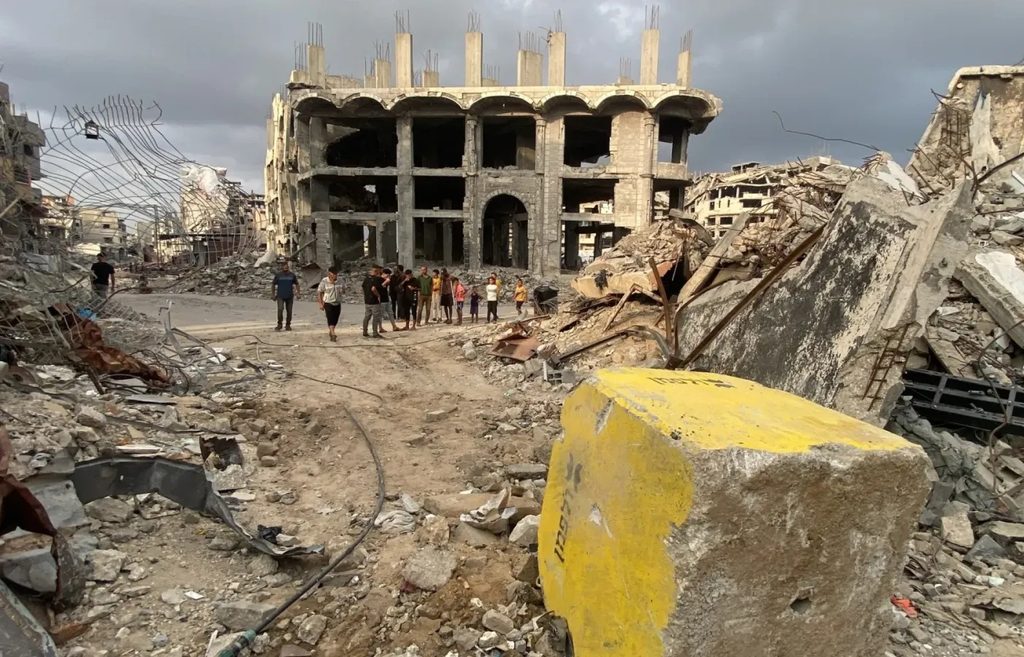
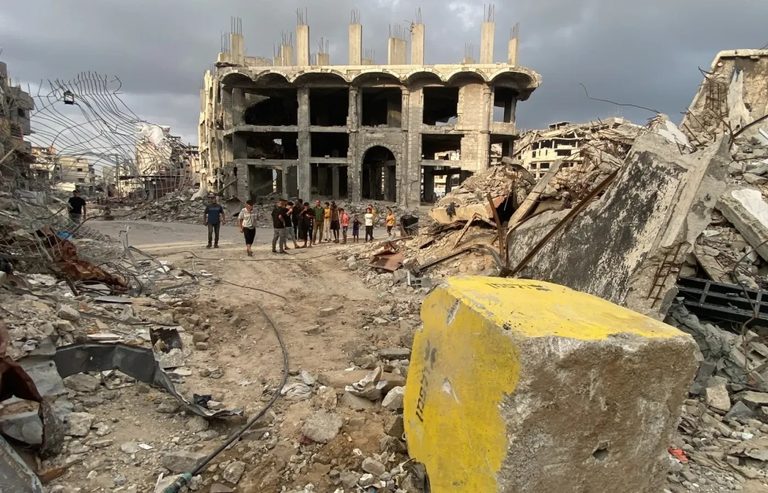
The prime minister’s directive to extend the military’s hold over 70% of Gaza formalises a process that has been underway since the devastating war began in October 2023. Large swathes of northern Gaza and the Netzarim Corridor that bisects the enclave have been cleared of their Palestinian population and transformed into militarised zones. Human rights organisations and UN agencies have warned that the creation of these “buffer zones” amounts to a permanent seizure of Palestinian territory, likely in violation of the Fourth Geneva Convention’s prohibition on the destruction of property not rendered absolutely necessary by military operations. The same day, the Israeli military announced it had killed Ihab Khrizim, described as the head of a central Hamas funds transfer network, in an airstrike in Khan Younis on Tuesday. The announcement, part of Israel’s continued campaign of targeted killings across the Strip, underscores that the military’s presence is consolidating, not withdrawing.
At the United Nations, Israel’s ambassador Danny Danon escalated the confrontation with the international body. After Israeli entities were included on a UN blacklist for sexual violence in conflict zones, Danon posted on social media platform X: “We’re done with this Secretary-General. We will have no further contact with António Guterres.” The blacklist places Israel alongside groups such as Hamas and the Palestinian Islamic Jihad, a move that has infuriated the Israeli government and its supporters. Danon’s declaration effectively cuts off what remained of Israel’s engagement with the UN chief, a diplomat who has repeatedly condemned settlement expansion and called for a ceasefire in Gaza.
Reactions From The Ground:
In the West Bank village of Al-Mufaqara, south of Hebron, where a community of Palestinian herders has been repeatedly attacked by settlers from a nearby outpost established with the help of Amana, the EU sanctions were greeted with cautious, almost weary acknowledgement. “We have heard many words from Europe over the years,” said Hajj Mahmoud, a community elder. “Sanctions on paper will not stop the bulldozers. But if they freeze their money, if they cannot travel, maybe they will think twice before sending their armed volunteers to beat us and poison our sheep.” He gestured toward the hilltop where a cluster of caravans stood, protected by a small unit of Israeli soldiers. “That outpost is there because Amana paid for it. Hashomer Yosh supplies the guards. Everyone in the village knows the names the EU listed. The question is: will Europe enforce this, or is it just another report to file?”
The Palestinian Authority’s Ministry of Foreign Affairs and Expatriates welcomed the EU decision but stressed that sanctions must be part of a broader campaign of accountability. “These designations are a necessary step toward dismantling the infrastructure of occupation and colonialism,” said a ministry statement. “However, without meaningful consequences imposed on the State of Israel itself, the ultimate sponsor of all settlement activity, these measures will remain incomplete. We call on the EU to go further, to ban settlement products, and to suspend the EU-Israel Association Agreement until Israel complies with international law.”
Israeli settlement advocacy groups condemned the move. The Yesha Council, the umbrella organisation of municipal councils in the settlements, called the sanctions “a disgraceful surrender to Palestinian terrorism propaganda.” It accused the EU of “criminalising the natural return of the Jewish people to their homeland.” A statement released on Thursday said: “The State of Israel must respond with strength, by authorising thousands of additional homes and by formally annexing the communities that the EU dares to sanction.”
Analysis: Symbolic Gestures Or Turning Point?
The EU’s Global Human Rights Sanctions Regime was designed for individuals and entities responsible for the world’s worst abuses, torturers, war criminals, and slave traders. Applying it to the organised settler movement in the West Bank sends a powerful normative signal: the infrastructure of settlement expansion is, in the eyes of the European Union, on a par with the instruments of state repression elsewhere. Yet the regime’s practical impact is limited. An asset freeze affects European bank accounts that these organisations may not hold in significant quantities. A travel ban can be circumvented; the United States does not enforce EU sanctions, and Israeli settlers frequently travel to non-EU destinations.
More importantly, the sanctions do not touch the Israeli state institutions that enable, fund, and legally protect these groups. Amana benefits from public land allocations by Israeli authorities, from tax breaks, and from government contracts. Regavim’s petitions are adjudicated by Israeli courts that consistently rule in its favour. Hashomer Yosh’s “herding farm” outposts are connected to state-provided water and electricity grids. Without confronting this state apparatus, sanctions on secondary actors risk being more cosmetic than transformative.
“This is a positive development that breaks a long-standing taboo, but it is not a game-changer,” said Sarit Michaeli, international advocacy lead at B’Tselem, in an interview with QNN. “The EU has finally acknowledged that the settlement movement is a human-rights-violating enterprise. The logical next step is to address the Israeli government policies that make the work of these organisations possible. Without that, we are treating symptoms, not the disease.”
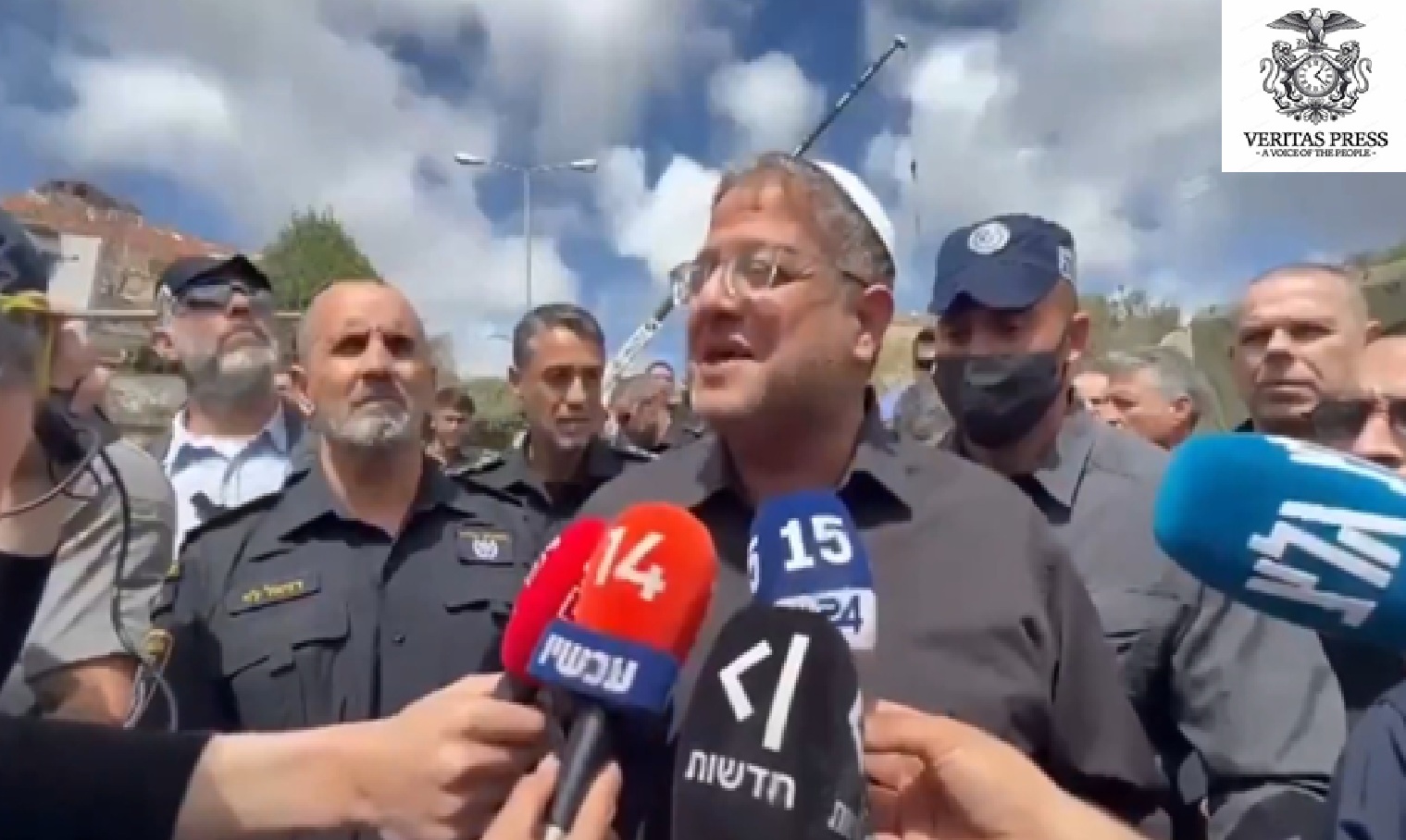
The timing, too, is fraught. The sanctions come as the Israeli government intensifies its military hold over Gaza and deepens settlement in the West Bank, with a cabinet stacked with far-right ministers who themselves openly advocate annexation. Finance Minister Bezalel Smotrich, who holds significant authority over West Bank planning, has described the settlement project as “the real Zionist answer” to any international pressure. National Security Minister Itamar Ben-Gvir, whose party’s base includes the most violent settler youth, has called for a return to the “complete land of Israel.” Sanctioning Amana and Nachala may embarrass the Israeli establishment; it will not deter a government whose ideological core views the West Bank as an inseparable part of Israel, to be settled by any means necessary.
The EU’s dual listing of settler organisations and Hamas political bureau members also reveals the bloc’s ongoing struggle to position itself. By coupling the two, the EU seeks to insulate itself against accusations of anti-Israel bias. But the equivalence is morally and legally dubious. Hamas, designated as a terrorist organisation by the EU, has committed atrocities against civilians. The settlers and their support organisations operate with the blessing of a state that receives substantial European trade and research cooperation. Equating the two in a single sanctions package may make political sense in European capitals, but it obscures the fundamental asymmetry of an occupying power and a subjugated population.
The Unfinished Road To Accountability:
The EU’s announcement of 28 May 2026 has undeniably expanded the frontiers of what was diplomatically possible just one month ago. By naming Daniella Weiss, Meir Deutsch, Avichai Suissa, and the organisations they lead, Brussels has lifted the veil on a network that has, for decades, operated with impunity, reshaping the geography of the occupied West Bank at the expense of Palestinian lives and rights. The lengthy preamble of the Council decision, which details forced displacement, obstruction of education, and the destruction of EU-funded infrastructure, represents a comprehensive indictment.
Yet the broader political context is one of escalating, not diminishing, Israeli control. As the EU’s sanctions came into force, Israeli soldiers and bulldozers in Gaza were carving out new lines of military occupation, pushing toward 70% territorial control. Settler outposts in the West Bank, many sustained by the very entities now under sanction, continued to receive electricity and armed protection from the state. The Israeli government cut off contact with the UN’s highest official, effectively telling the international system that its findings of sexual violence and human rights abuse are irrelevant.
“We have seen this film before,” said a Western diplomat who has worked on the Israeli-Palestinian file for over a decade. “The international community takes a step forward on accountability, and the Israeli government responds with a sprint of settlement expansion. The only difference now is the sheer audacity. They are no longer pretending. They are openly declaring their intention to keep the land, all of it, and to ignore every ruling, every blacklist, every sanction. Europe is trying to hold a line, but it’s holding it with paper.”
For Palestinians in villages like Jabbet al Dhib and Al-Mufaqara, the test of the EU’s resolve will not be the elegance of its legal language but the sights and sounds of their daily existence. Will the demolition orders stop? Will the armed guards disappear from the hilltops? Will their children be able to attend school in a building, not a tent? The EU’s sanctions are a recognition of their suffering; whether they become a catalyst for change depends on the willingness of European governments to move beyond targeted listings and finally confront the state that underwrites the entire enterprise. Until then, the architects of displacement will continue their work, perhaps slightly inconvenienced, but scarcely deterred.
Source:Veritas Press C.I.C. | Multi News Agencies
Submissions:
For The Secure Submission Of Documentation, Testimonies, Or Exclusive Investigative Reports From Any Global Location, Please Utilise The Following Contact Details For Our Investigations Desk: enquiries@veritaspress.co.uk or editor@veritaspress.co.uk
Help Support Our Work:
Popular Information is powered by readers who believe that truth still matters. When just a few more people step up to support this work, it means more lies exposed, more corruption uncovered, and more accountability where it’s long overdue.
Help Protect Independent Journalism, Which Is Currently Under Attack.
If you believe journalism should serve the public, not the powerful, and you’re in a position to help, becoming a DONATOR or a PAID SUBSCRIBER truly makes a difference.
DONATION APPEAL: If You Found This Reporting Valuable, Please Consider Supporting Independent Journalism.
Help Support Our Work – We Know, We Know, We Know …
Seeing these messages is annoying. We know that. (Imagine what it’s like writing them … )
Your support fuels our fearless, truth-driven journalism. In unity, we endeavour to amplify marginalised voices and champion justice, irrespective of geographical location.
But it’s also extremely important. One of Veritas Press’s greatest assets is its reader-funded model.
1. Reader funding means we can cover what we like. We’re not beholden to the political whims of a billionaire owner. We are a small, independent and impartial organisation. No one can tell us what not to say or what not to report.
2. Reader funding means we don’t have to chase clicks and traffic. We’re not desperately seeking your attention for its own sake: we pursue the stories that our editorial team deems important and believe are worthy of your time.
3. Reader Funding: enables us to keep our website and other social media channels open, allowing as many people as possible to access quality journalism from around the world, particularly those in places where the free press is under threat.
We know not everyone can afford to pay for news, but if you’ve been meaning to support us, now’s the time.
Your donation goes a long way. It helps us:
Keep the lights on and sustain our day-to-day operations
Hire new, talented independent reporters
Launch real-time live debates, community-focused shows, and on-the-ground reporting
Cover the issues that matter most to our communities, in real time, with depth and integrity
We have plans to expand our work, but we can’t do it without your support. Every contribution, no matter the size, helps us stay independent and build a truly people-powered media platform.
If you believe in journalism that informs, empowers, and reflects the communities we serve, please donate today.
Kamran Faqir is a volunteer investigative journalist and writer committed to exposing hidden truths and amplifying underreported stories. Driven by social justice, he brings sharp insight and fearless truth-telling to independent journalism. NUJ registered.
SEATTLE, TEHRAN — The U.S. Department of Homeland Security (DHS) will allow Iran’s national football team to enter the country 48 hours before their critical World Cup match against Egypt on Friday, a modest concession in a tournament where Team Melli’s travel conditions have sparked claims of oppression and competitive disadvantage.