Kamran Faqir is a volunteer investigative journalist and writer committed to exposing hidden truths and amplifying underreported stories. Driven by social justice, he brings sharp insight and fearless truth-telling to independent journalism. NUJ registered.
Listen to this article
Help support our mission, donate today and be the change. Every contribution goes directly toward driving real impact for the cause we believe in.
Article Date Published:
Article Date Modified:
15 minutes
Post Views:101
A diplomatic firestorm over human rights and protest
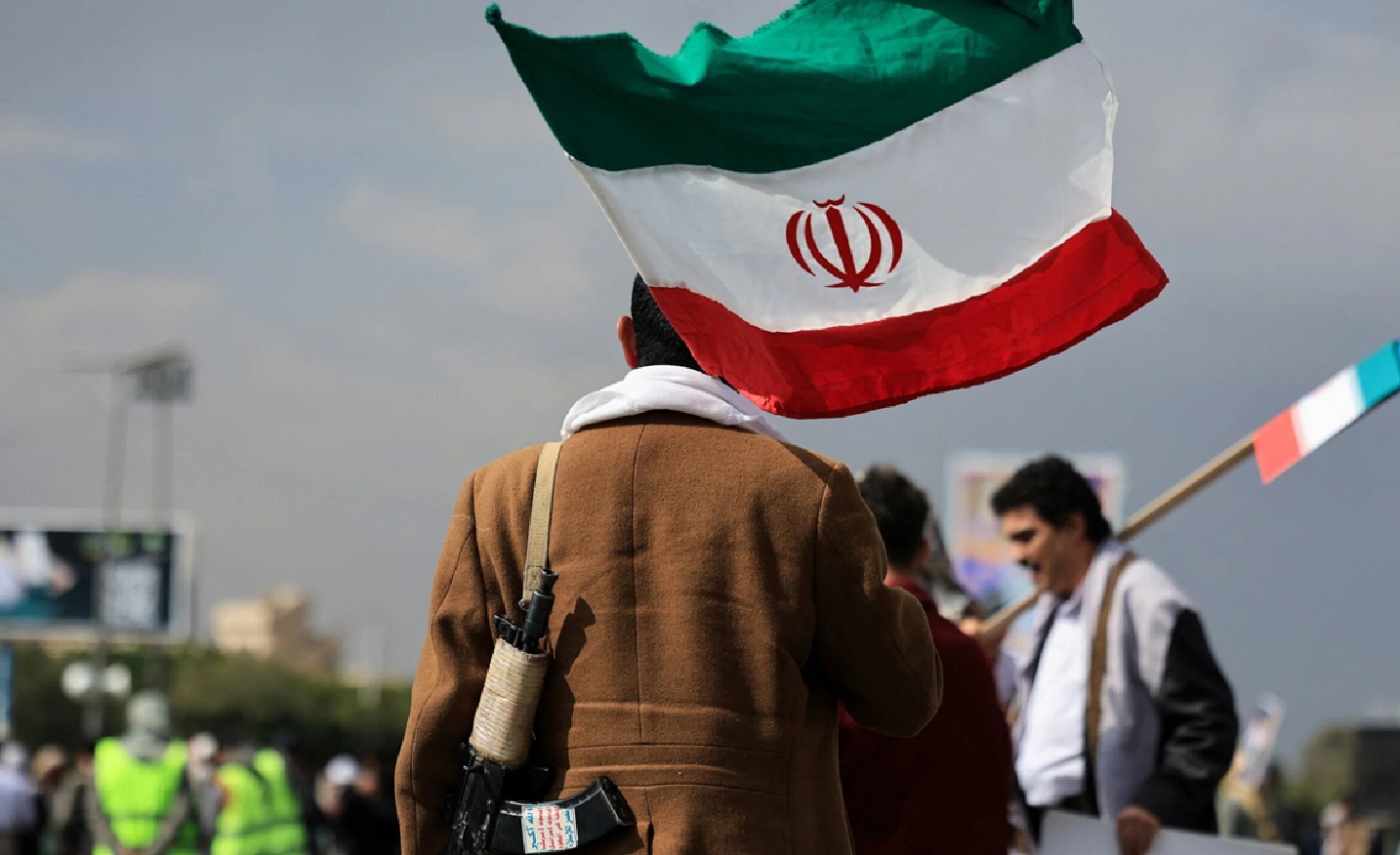
In an extraordinary diplomatic confrontation that has exposed the fault lines of international human rights discourse, Iran has accused France of applying glaring double standards in its treatment of protesters, transforming a domestic crisis into a global referendum on Western moral authority.
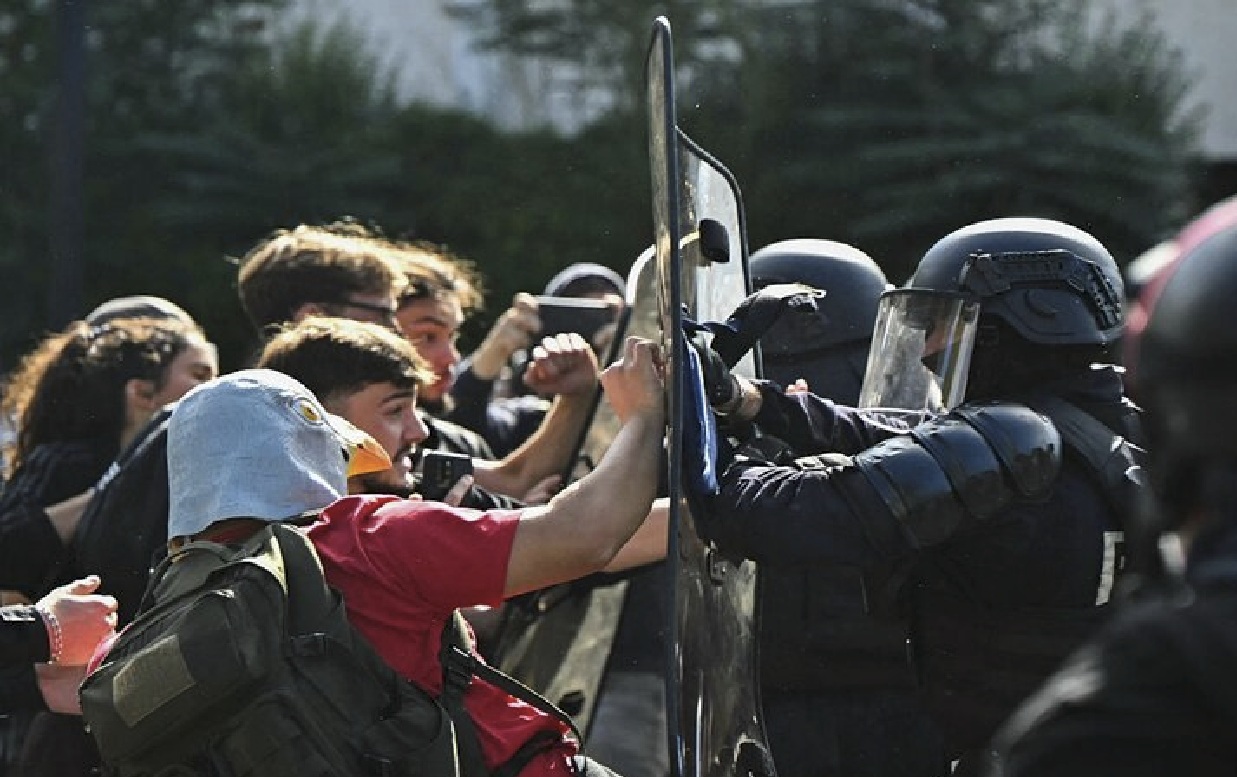
The Islamic Republic’s sharp rebuke came Tuesday as French security forces faced mounting allegations of brutal crackdowns on an unprecedented student movement that has swept across the nation, leaving thousands arrested, hundreds injured, and an entire generation of French youth questioning the Republic’s founding principles.
Tehran’s Charge: “The Problem Is the Double Standard”
In a carefully calibrated diplomatic offensive, Iranian Foreign Ministry Spokesperson Esmaeil Baghaei took to X (formerly Twitter) to deliver a scathing indictment of French hypocrisy, posting in French to ensure maximum domestic impact.
“In January 2026, France called on Iran to guarantee the ‘right to demonstrate peacefully without fear of reprisals’ and to exercise restraint in its response to the protests,” Baghaei wrote. “Despite calls for revolt coming from abroad and reports of armed attacks against centres and security forces in Iran, the French Foreign Minister even described the situation as a ‘peaceful revolt.'”
The Iranian official then delivered the rhetorical dagger: “Today, in France, high school student protests are described as ‘urban violence.’ The Interior Minister seems far less inclined toward restraint and calls for swift intervention and the use of force to restore order. The government also evokes ‘political manipulation’ and the role of far-left movements.”
Baghaei’s conclusion cut to the heart of the matter: “The issue is not the act of protesting; the problem is the double standard. If human rights and the right to demonstrate are universal principles, their interpretation should not change based on the protester’s geography.”
The diplomatic escalation continued as Iran summoned French Ambassador Pierre Cochard to Tehran’s Foreign Ministry, formally conveying “deep concern” over what Iranian authorities described as “the violent repression of peaceful gatherings” and “widespread violations of human rights” attributed to French security forces.
The French Reality: A Nation On Fire
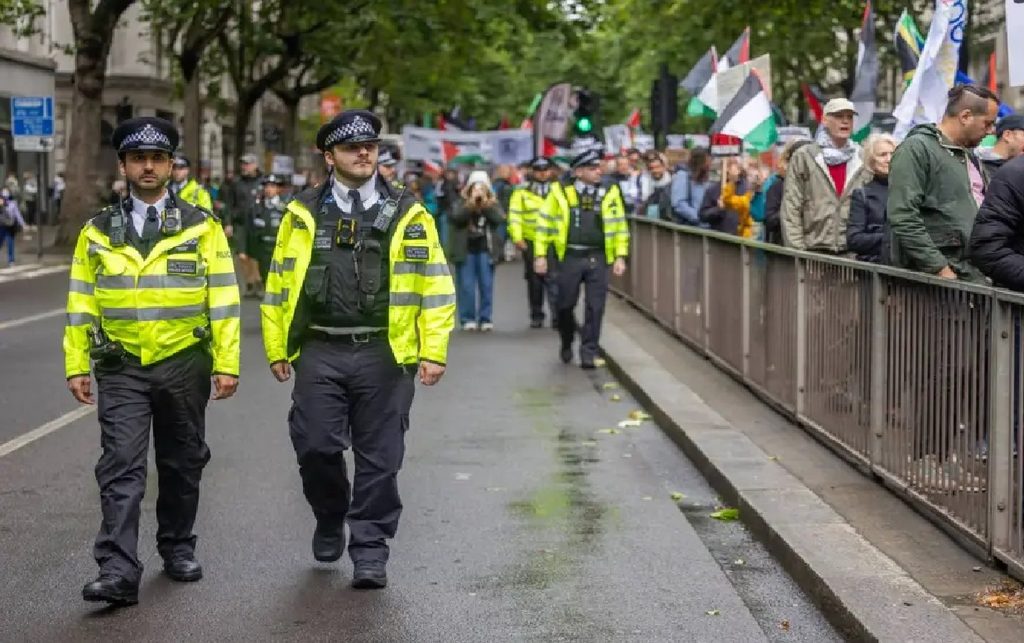
The Iranian accusations did not emerge in a vacuum. They landed amid the most significant youth uprising France has witnessed in decades, a movement that began outside a single school in a low-income Paris suburb and metastasised into a nationwide rebellion against educational neglect and state violence.
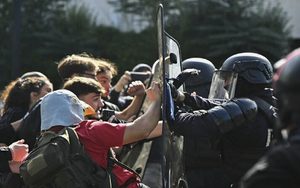
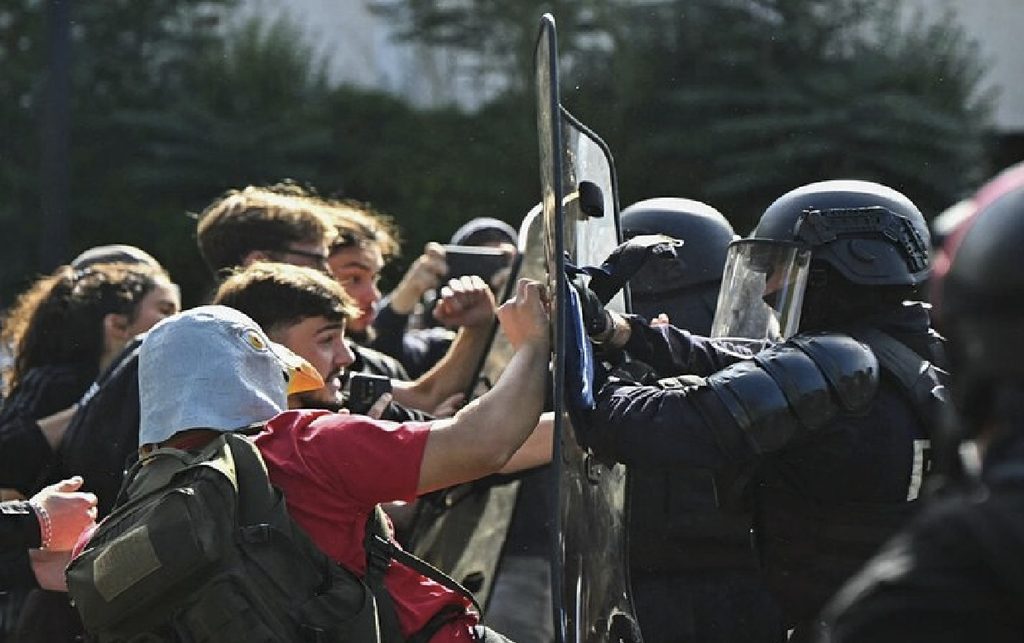
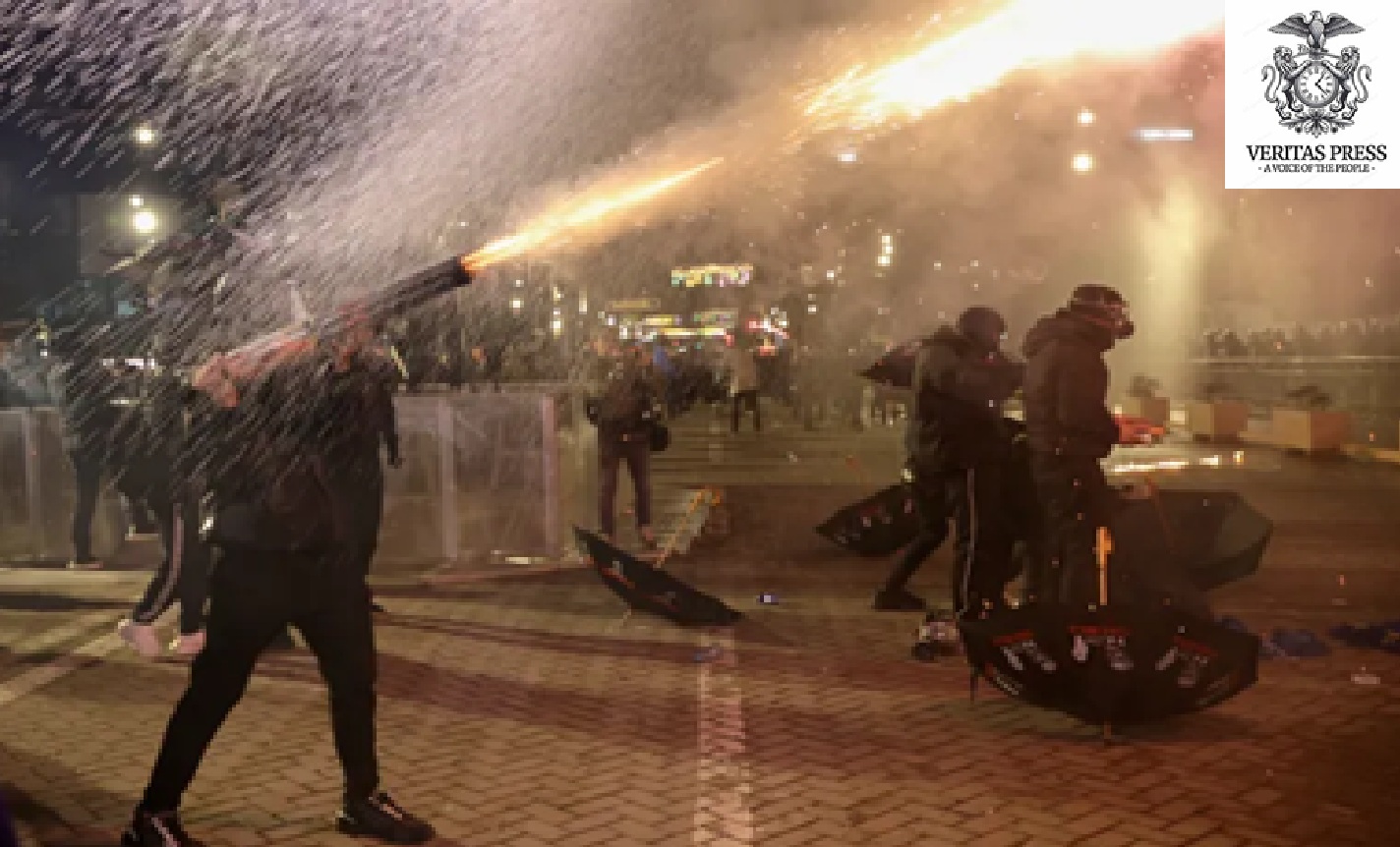
What started as protests against teacher shortages, deteriorating school buildings, and overcrowded classrooms has evolved into something far more visceral. Hundreds of high schools have been barricaded and forced to close. Students have erected barricades in streets, clashed with riot police, and faced tear gas in scenes that evoke the urban warfare of France’s banlieues.
According to France’s Justice Ministry, 5,060 people have been arrested since the protests began, 87% of them minors. More than 1,800 have been prosecuted, including 1,483 minors. The government reports that 24 schools have been burned or ransacked.
The human toll is staggering. Ten investigations into possible police brutality are underway following injuries caused by the use of police weapons. Among the injured: a 15-year-old who lost his hand, another teenager who lost an eye, and a boy whose jaw and teeth were shattered, leaving him barely able to eat with a straw in his hospital bed.
“The policing is catastrophic. People have been mutilated by weapons, one boy has lost an eye. It’s horrible,” said Lily, 17, a final-year social sciences student who requested her name be changed for safety. She was protesting for greater funding for what she described as a discriminatory education system that leaves poorer children behind.
“My parents support me being on the barricades and at the protests. They’re worried about the policing, but they said they’d come and get me from the police station if I was arrested,” she told reporters.
Voices From The Barricades
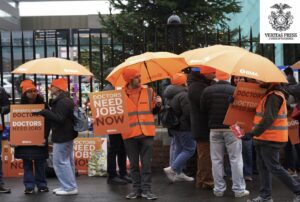
Nearby, teenagers held cardboard signs that captured the anger and desperation of a generation. One banner read, “A state that gases high school students is a weak state.” Another declared, “Gas rapists, not children,” referencing calls for stronger laws against sexual violence. A third simply stated, “Not here to riot.”
The protests have been driven by grievances that resonate far beyond the classroom. Students have complained about long and overloaded timetables, unbearable temperatures in classrooms during heatwaves earlier this year, and a system that appears designed to fail the most vulnerable.
The unrest is unfolding against a backdrop of mounting economic anxiety. Inflation reached 2.4% year-on-year in August, while energy prices have risen sharply, additionally pressuring lower-income households already struggling to make ends meet.
France’s Response: From “Restraint” To “Firmness”
The French government’s response has been starkly different from the rhetoric it directed at Iran just months ago.
Interior Minister Bruno Retailleau has called for swift and decisive intervention by security forces, explicitly advocating for the use of force to restore order. The government has characterised the protests as the work of “political manipulation” and far-left agitators, specifically pointing to the hard-left France Unbowed party (LFI).
The contrast with January 2026 could not be more pronounced. At that time, French officials lectured Iran on the necessity of respecting “peaceful assembly without fear of punishment” and urged government “restraint” toward demonstrators. French Foreign Minister Jean-Noël Barrot described Iran’s protests as a “peaceful uprising”, characterisation that now appears almost satirical when applied to France’s own streets.
French authorities have dismissed Iranian criticism as cynical manipulation. A Foreign Ministry official, speaking on condition of anonymity, told reporters: “Iran has no standing to lecture anyone on human rights. The difference is that in France, protests are allowed to happen, even when they turn violent. In Iran, they are crushed before they begin.”
But critics note that this distinction rings hollow when French police are accused of deploying weapons that have permanently maimed children.
The CNCDH’s Warning: A Domestic Reckoning
The Iranian accusations found unexpected reinforcement from within France’s own human rights apparatus. The National Consultative Commission on Human Rights (CNCDH) expressed “utmost concern” over the “disproportionate use of force” by police during the student protests.
The CNCDH’s intervention is significant, it represents an official French body acknowledging that the state’s response may have violated its own human rights commitments. The commission called for investigations into police conduct and urged the government to respect the right to peaceful assembly.
“We are witnessing a troubling pattern where the state treats its own youth as enemies rather than citizens,” said a CNCDH spokesperson. “The use of military-grade weapons against children is not law enforcement, it is state violence.”
The Political Dimension: Elections And Exploitation
The protests have acquired an unmistakable political dimension, with France only months away from its presidential election. The government’s accusation that LFI is encouraging the unrest has been met with counter-accusations that the ruling party is using the crisis to consolidate power.
Marine Le Pen, leader of the far-right National Rally, has seized on the unrest to attack the government’s immigration policies, while simultaneously criticising the “anarchist left” for destabilising the nation. Her party has called for even more aggressive policing.
Jean-Luc Mélenchon, the firebrand leader of LFI, has expressed solidarity with the student protesters, calling them “the true voice of the Republic” and accusing the government of waging “class warfare against the youth.”
“The Republic is supposed to be the homeland of human rights,” Mélenchon declared at a rally in Marseille. “But these children are being treated like enemies of the state. Where is the France of 1789? Where is the France of the Resistance?”
The Global Context: Human Rights As Geopolitical Weapon
The Iranian-French confrontation is emblematic of a broader shift in global politics: the weaponisation of human rights discourse as a tool of geopolitical competition.
For decades, Western nations, particularly France and the United States, have positioned themselves as arbiters of human rights, frequently criticising Iran, China, Russia, and other nations for their treatment of protesters and dissidents. This moral authority has now been called into question.
“This is a gift to authoritarian governments everywhere,” said Dr. Shirin Sadeghi, a professor of international relations at Sciences Po in Paris. “When France lectures Iran about human rights and then gasses its own children, it undermines the entire edifice of liberal internationalism. The Iranians are not wrong to point this out—they are simply exploiting a genuine contradiction.”
Iran’s diplomatic offensive is part of a broader strategy to challenge Western narratives. Tehran has consistently argued that human rights are used selectively by Western powers to justify intervention and sanctions while ignoring their own violations.
“The problem is not the protest; the problem is the double standard,” Baghaei repeated in his statement. “If human rights and the right to protest are fundamental principles, they should not change based on the geography of the protester.”
The Media Battlefield
International media coverage has reflected the polarised nature of the conflict. French outlets have largely focused on the violence and disruption caused by protesters, framing the unrest as a threat to public order. Meanwhile, outlets in Iran and the Global South have highlighted police brutality and the government’s authoritarian response.
Firstpost America ran a segment titled “‘Stop Lecturing…’: Iran Slams Macron As France Student Protests Rage,” emphasising Tehran’s challenge to French moral authority.
The Iranian state news agency ISNA reported the story under the headline “Iran slams France’s ‘double standards’ on human rights amid protest crackdown,” framing the diplomatic confrontation as a principled stand against Western hypocrisy.
French media, by contrast, has been more circumspect. Le Monde acknowledged the “disproportionate use of force” but emphasised that “the context in France is fundamentally different from Iran.” Le Figaro accused Tehran of “instrumentalising” the protests for propaganda purposes.
The Human Cost: Children In The Crossfire
Beyond the geopolitical manoeuvring, the human cost continues to mount. The 15-year-old who lost his hand will never play the violin again. The teenager who lost an eye will navigate life with a permanent disability. The boy with the shattered jaw faces months of reconstructive surgery.
“These are children,” said Dr. Amélie Renard, an emergency physician who has treated injured protesters. “They are not terrorists. They are not foreign agents. They are French teenagers who believe their education system is failing them. And they are being maimed by their own state.”
The psychological toll extends beyond physical injuries. Teachers report students exhibiting symptoms of trauma, fear of police, and a profound sense of betrayal.
“I used to teach them about the Rights of Man,” said Marie Dubois, a history teacher at a high school in Lyon. “Now I have to explain why those rights don’t apply to them. It’s the hardest lesson I’ve ever had to teach.”
Diplomatic Fallout: A New Cold War?
The Iranian-French confrontation has the potential to escalate into a broader diplomatic crisis. Iran has signalled that it may raise the issue at the United Nations Human Rights Council, putting France on the defensive.
France, for its part, has refused to back down. “Iran’s human rights record is abysmal,” said a statement from the French Foreign Ministry. “They have executed thousands, imprisoned journalists, and crushed peaceful protests. They have no moral authority to criticise France.”
But critics note that this response—essentially arguing that Iran is worse, does not address the fundamental question raised by Tehran: If human rights are universal, why are they applied selectively?
The Historical Echo: France’s Legacy Of Protest And Repression
France has a complex history with protests. The Revolution of 1789, the Paris Commune of 1871, the student uprising of 1968, these moments are celebrated as defining chapters in the nation’s democratic heritage. Yet the state has also consistently repressed popular movements, often with brutal force.
In 1961, French police massacred hundreds of Algerian protesters in Paris, a crime that was denied for decades. In 2005, the banlieues erupted in riots after the deaths of two teenagers fleeing the police. In 2018, the Yellow Vest movement was met with tear gas, rubber bullets, and mass arrests.
“The French state has always had a difficult relationship with its own people,” said Dr. François Dupont, a historian at the Sorbonne. “It celebrates revolution in the abstract but fears it in practice. The student protests are just the latest chapter in this long, troubled history.”
What Comes Next?
As the protests continue, and the diplomatic confrontation intensifies, several scenarios loom.
Escalation: If the French government maintains its hardline stance, the protests could grow more radical, potentially leading to widespread unrest and economic disruption.
Concession: The government could offer concessions on educational funding and police reform, defusing the crisis but potentially emboldening future protests.
Internationalisation: Iran could succeed in internationalising the issue, damaging France’s reputation on the global stage and complicating its diplomatic efforts.
Election Impact: The protests could reshape the presidential election, benefiting either the far-right (which promises order) or the left (which promises justice).
Conclusion: The Mirror France Refuses To Look Into
The Iranian accusation of double standards is not merely a diplomatic jab, it is a mirror that France refuses to look into. The nation that once proclaimed the Rights of Man now faces the uncomfortable reality that it is gassing its own children, arresting teenagers en masse, and deploying military-grade weapons against protesters.
Iran’s motives may be cynical, but its observation is accurate. Human rights cannot be applied selectively without losing their meaning. The right to protest cannot be sacred in Tehran but negotiable in Paris.
As Lily, the 17-year-old protester, put it: “We learned in school that France is the country of human rights. We believed it. Now we know it’s just a slogan, a slogan they used to criticise other countries while they do the same thing here.”
The question now is whether France will listen to its own children, or continue to gas them into silence.
Veritas Press Investigative Analysis Independent journalism examining global affairs, power, diplomacy, and accountability.
Source:Veritas Press C.I.C. | Multi-News Agencies
Help Support Our Work
Readers who believe that truth still matters have power over popular information. When just a few more people step up to support this work, it means more lies exposed, more corruption uncovered, and more accountability where it’s long overdue.
Help Protect Independent Journalism, Which Is Currently Under Attack.
If you believe journalism should serve the public, not the powerful, and you’re able to help, becoming a regular DONOR or a PAID SUBSCRIBER truly makes a difference.
DONATION APPEAL: If you found this reporting valuable, please consider supporting independent journalism.
Your support fuels our fearless, truth-driven journalism. In unity, we endeavour to amplify marginalised voices and champion justice, irrespective of geographical location. We operate independently, with no financial backing from billionaires; our readers support us.
But it’s also extremely important. One of Veritas Press’s greatest assets is its reader-funded model.
1. Reader funding means we can cover what we like. We’re not beholden to the political whims of a billionaire owner. We are a small, independent and impartial organisation. No one can tell us what not to say or what not to report.
2. Reader funding means we don’t have to chase clicks and traffic. We’re not desperately seeking your attention for its own sake; we pursue the stories that our editorial team deems important and believes are worthy of your time.
3. Reader Funding: enables us to keep our website and other social media channels open, allowing as many people as possible to access quality journalism from around the world, particularly those in places where the free press is under threat.
We know not everyone can afford to pay for news, but if you’ve been meaning to support us, now’s the time.
Your donation goes a long way. It helps us:
Keep the lights on and sustain our day-to-day operations
Hire new, talented, independent reporters
Launch real-time live debates, community-focused shows, and on-the-ground reporting
Cover the issues that matter most to our communities, in real time, with depth and integrity
Without your support, independent voices like ours will be silenced.
Furthermore, we have plans to expand our work, but we can’t do it without your support. Every contribution, no matter the size, helps us stay independent and build a truly people-powered media platform.
If you believe in journalism that informs, empowers, and reflects the communities we serve, please donate today.
Kamran Faqir is a volunteer investigative journalist and writer committed to exposing hidden truths and amplifying underreported stories. Driven by social justice, he brings sharp insight and fearless truth-telling to independent journalism. NUJ registered.
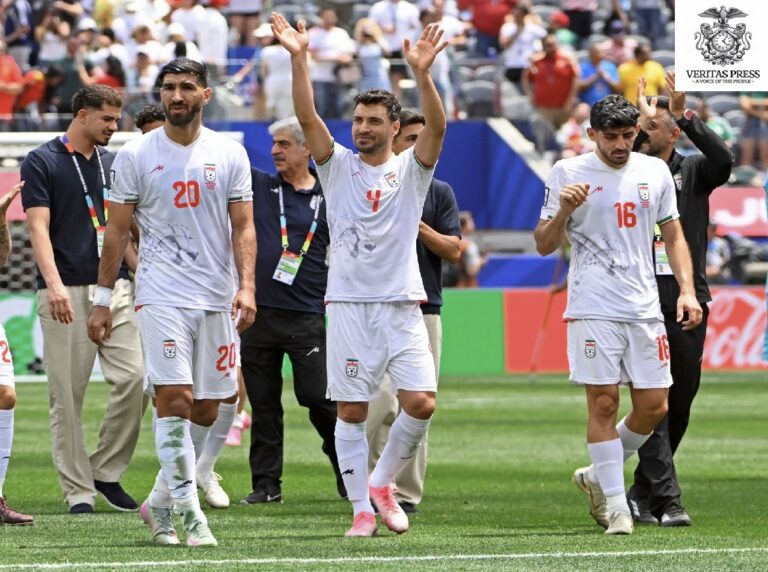
SEATTLE, TEHRAN — The U.S. Department of Homeland Security (DHS) will allow Iran’s national football team to enter the country 48 hours before their critical World Cup match against Egypt on Friday, a modest concession in a tournament where Team Melli’s travel conditions have sparked claims of oppression and competitive disadvantage.