




Author:
Byline: Investigative Desk
Help support our mission, donate today and be the change. Every contribution goes directly toward driving real impact for the cause we believe in.
With Damascus silent, weekly incursions and home raids turn Quneitra countryside into a militarised frontier. Human Rights groups warn of war crimes, while settlement expansion on the Golan moves forward.
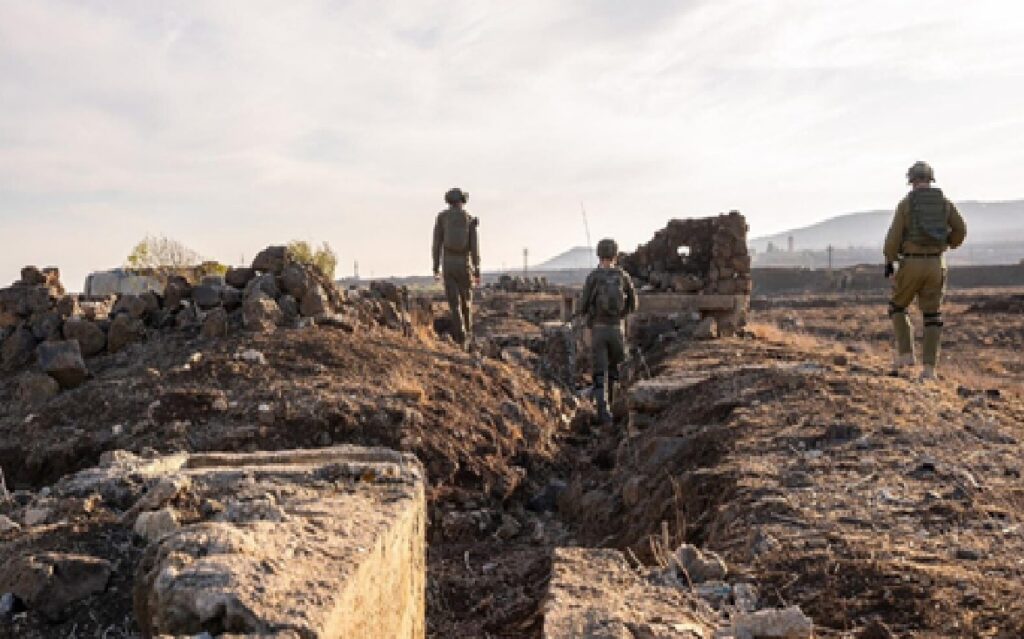
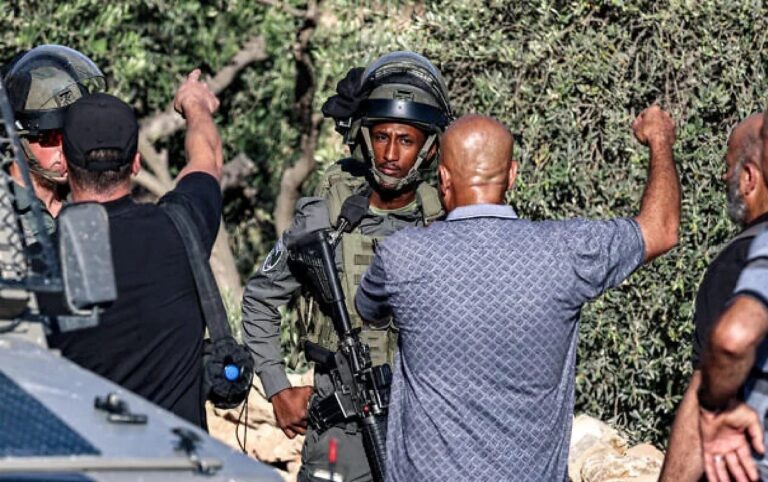
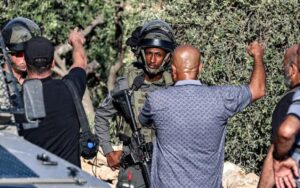
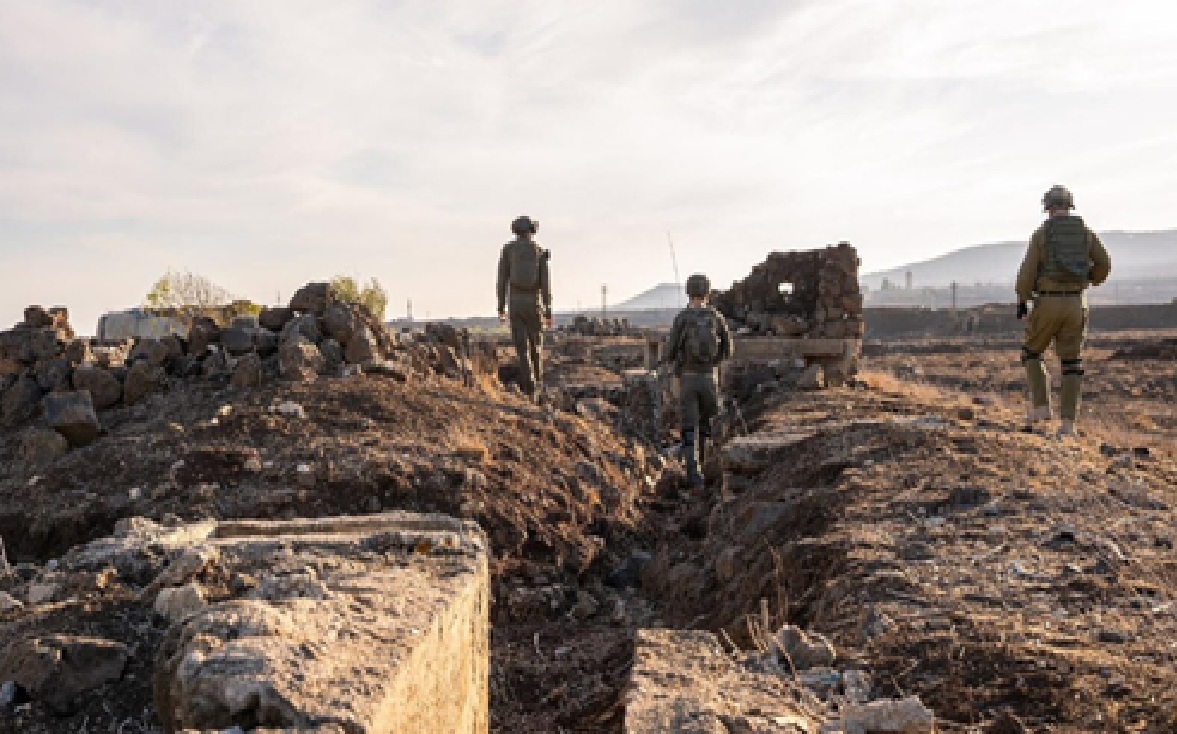
QUNEITRA, SYRIA / JERUSALEM — A patrol of three Israeli military vehicles rumbled down the narrow road linking the villages of al‑Hiran and al‑Rafid in southern Quneitra province on Sunday morning, stopping civilian cars and searching pedestrians. Soldiers set up a temporary checkpoint, inspected documents and waved through those who passed the checks. Soldiers made no arrests, but the scene has become a grim routine for residents of Syria’s southwestern countryside.
Sunday’s ground incursion, reported by the state‑run Syrian Arab News Agency (SANA), was only the latest in a series of operations that have intensified since the fall of Bashar al-Assad’s government in December 2024. Just 24 hours earlier, on Saturday, an Israeli force of five vehicles entered the village of al-Ajraf in northern Quneitra, erected a checkpoint, searched passers-by and installed a large surveillance camera that was later dismantled before the troops withdrew. On the same day, another unit raided the Wadi al‑Raqad area in western Daraa province, set up a temporary checkpoint at the Wadi al‑Raqad bridge and searched a residential house before pulling back without making any arrests, Syria’s al‑Ekhbariya TV reported.
These operations are no longer exceptional. According to the Syrian Observatory for Human Rights, Israeli forces have carried out more than 150 ground incursions into Quneitra and Daraa provinces since Assad’s ouster, establishing dozens of temporary checkpoints, raiding homes and, in at least three villages, demolishing civilian structures and displacing families. The pattern, rights monitors say, goes far beyond the “defensive measures” Israel publicly claims.
“What we are witnessing is not temporary, nor purely security‑driven,” said Rami Abdulrahman, director of the Syrian Observatory. “Israel is creating facts on the ground, checkpoints, cameras, bulldozed land, that mirror the architecture of a long-term occupation. Every week brings new violations, and the new authorities in Damascus do nothing.”
A Creeping Annexation:
Since 8 December 2024, when rebel forces led by Hay’at Tahrir al‑Sham (HTS) swept into Damascus and toppled Assad, Israel has declared the 1974 Disengagement Agreement dead and pushed troops well beyond the old ceasefire lines into the demilitarised buffer zone patrolled by UN observers. The incursions have now reached some 15 kilometres inside Syrian territory, with officials in Tel Aviv saying the aim is to defend the border and intercept weapons that could reach “hostile forces”. On the ground, the actions are increasingly resembling a slow annexation of more land, characterised by checkpoints, home searches, artillery strikes on farms, and a government-backed plan to double the Israeli settler population in the occupied Golan Heights.
Last Saturday’s events underscored the shift. In al‑Ajraf, a unit of five military vehicles set up a checkpoint, searched civilians and placed a large surveillance camera before withdrawing, a technique that combines population control with persistent surveillance. Hours later, another force searched a home at Wadi al‑Raqad bridge, a strategic crossing point. On Sunday, the al‑Hiran–al‑Rafid road turned into another snap checkpoint. None of these actions produced arrests, and Israel’s military seldom comments on specific operations. But local residents describe an atmosphere of intimidation.
“They stopped my car, pointed guns at me and made me open the trunk,” said Abu Khaled, a farmer who was travelling to al‑Rafid on Sunday. “They were looking for weapons, but all I had were vegetables. They didn’t say anything and waved me on. This happens two or three times a month now.”
Farmland Shelled, Homes Demolished:
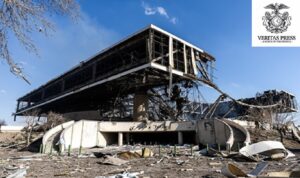
The checkpoint incursions are only one element of an expanding military footprint. Israeli forces have also repeatedly shelled agricultural lands near the village of Tarnajah in Quneitra, destroying crops and forcing farmers to abandon fields on which entire families depend. The shelling, coupled with the broader destruction of civilian homes, has drawn sharp condemnation from international rights organisations.
In May 2026, Amnesty International released a report documenting the damage or destruction of at least 23 civilian structures in three Quneitra villages since Assad’s fall. The group said entire families had been displaced and called for an investigation into possible war crimes. “Israel’s pattern of demolishing homes in Gaza, southern Lebanon and southern Syria has been carried out with total impunity, displacing and shattering the lives of countless families across the region,” Aya Majzoub, Amnesty’s deputy regional director for the Middle East and North Africa, said in the report.
New York‑based Human Rights Watch went further in April, when Israel’s Cabinet approved a $334 million plan to bring thousands more Israeli civilians into the occupied Golan. The group stated that the decision was a “clear statement of intent to commit war crimes,” because the Fourth Geneva Convention prohibits the transfer of an occupying power’s civilian population into occupied territory. Israeli Prime Minister Benjamin Netanyahu has separately instructed the military to push deeper into Syria and capture strategic sites beyond the 1967 lines.
Damascus’s Silence And A “Security Agreement” That Never Comes:
Under HTS’s fledgling government, Syria has repeatedly denounced the incursions and called on the United Nations to enforce the country’s sovereignty. “All Israeli measures are null and void and have no legal effect,” the foreign ministry in Damascus said in a statement after the weekend’s operations. Yet on the ground, HTS forces have not resisted. Intermittent talks between the two sides aimed at reaching a “security agreement” have produced no tangible progress, and Israeli troops have shown no inclination to retreat.
The inaction has fuelled local anger. “The new government speaks on television, but the Israelis are the real authority here,” said Warda al‑Hussein, an activist from Quneitra who documents incursions for a local rights network. “They enter when they want, search who they want, and demolish what they want. Our leaders do nothing but issue statements.”
The military has exploited that vacuum not only by Israeli settler groups, who have regularly infiltrated Syrian territory in attempts to grab land for a Jewish outpost. In several documented cases, armed settlers accompanied by soldiers have surveyed villages, while military bulldozers cleared land under the pretext of security.
International Law And The Collapse Of Accountability:
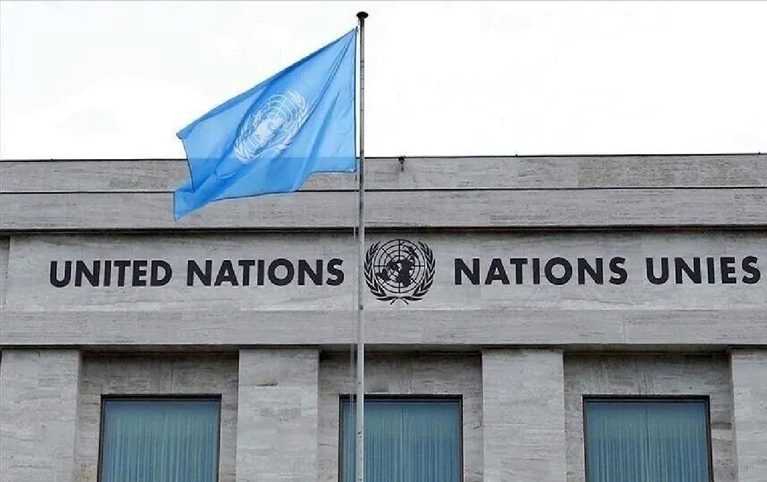
The United Nations and many Arab states have denounced Israel’s actions as violations of international law and Syrian sovereignty. The UN Disengagement Observer Force (UNDOF), long relegated to observing a buffer zone that no longer exists, has lodged repeated protests. “We have conveyed our concerns to the Israeli authorities and called for the full respect of the 1974 Disengagement Agreement,” a UNDOF spokesperson said. Yet the Security Council remains paralysed, with the United States shielding Israel from any meaningful enforcement.
Rights advocates argue that the international community’s failure to hold Israel to account mirrors its inaction over Gaza and southern Lebanon, reinforcing a culture of impunity. “The same playbook is being used across three fronts: home demolitions, displacement, and the construction of a buffer that becomes an occupation,” said Raja Sourani, director of the Palestinian Centre for Human Rights, drawing parallels. “Southern Syria is being quietly transformed into a militarised Israeli zone.”
In Quneitra, they might dismantle temporary checkpoints after a few hours, but the message will remain permanent. “They want us to know they can come any time,” said Abu Khaled, the farmer stopped on Sunday. “And they want the world to know that no one will stop them.”
Veritas Press Investigative Analysis
Independent journalism examining global affairs, power, diplomacy and accountability.
Source: Veritas Press C.I.C. | Multi-News Agencies
APPEAL: Help Support Our Work By Donating
Readers who believe that truth still matters have power over popular information. When just a few more people step up to support this work, it means more lies exposed, more corruption uncovered, and more accountability where it’s long overdue.
Help Protect Independent Journalism, Which Is Currently Under Attack.
If you believe journalism should serve the public, not the powerful, and you’re able to help, becoming a regular DONOR or a PAID SUBSCRIBER truly makes a difference.
DONATION APPEAL: If you found this reporting valuable, please consider supporting independent journalism.
Your support fuels our fearless, truth-driven journalism. In unity, we endeavour to amplify marginalised voices and champion justice, irrespective of geographical location. We operate independently, with no financial backing from billionaires; our readers support us.
But it’s also extremely important. One of Veritas Press’s greatest assets is its reader-funded model.
1. Reader funding means we can cover what we like. We’re not beholden to the political whims of a billionaire owner. We are a small, independent and impartial organisation. No one can tell us what not to say or what not to report.
2. Reader funding means we don’t have to chase clicks and traffic. We’re not desperately seeking your attention for its own sake; we pursue the stories that our editorial team deems important and believes are worthy of your time.
3. Reader Funding: enables us to keep our website and other social media channels open, allowing as many people as possible to access quality journalism from around the world, particularly those in places where the free press is under threat.
We know not everyone can afford to pay for news, but if you’ve been meaning to support us, now’s the time.
Your donation goes a long way. It helps us:
- Keep the lights on and sustain our day-to-day operations
- Hire new, talented, independent reporters
- Launch real-time live debates, community-focused shows, and on-the-ground reporting
- Cover the issues that matter most to our communities, in real time, with depth and integrity
Without your support, independent voices like ours will be silenced.
Further, we have plans to expand our work, but we can’t do it without your support. Every contribution, no matter the size, helps us stay independent and build a truly people-powered media platform.
If you believe in journalism that informs, empowers, and reflects the communities we serve, please donate today.
Submissions:
For the secure submission of documentation, testimonies, or exclusive investigative reports from any global location, please utilise the following contact details for our Investigations Desk: mailto:enquiries@veritaspress.co.uk or mailto:editor@veritaspress.co.uk
GENEVA — A United Nations fact-finding mission has concluded there are “reasonable grounds to believe”
Iran’s GDP is projected to contract by 5.4 to 6.1% in 2026, its worst performance
The Trump administration is preparing a $2.8 billion weapons package for Israel containing 40,000 2,000-pound

Film alleges mass civilian deaths are routinely built into military decisions amid Israel’s genocidal war
The Israeli rights group says violence, displacement, economic strangulation, and settlement expansion form part of

Houthi forces have captured the historic Red Sea port of Mocha and are advancing on
London’s historic sanctions against Israeli settlements mark a watershed moment in UK foreign policy, but
With 95% of Gaza’s population now wholly dependent on aid and more than 90% stripped
India calls for Kashmir and Ladakh to appear only on its official map after a
ISLAMABAD – In the high-stakes political theatre of Pakistan, the battleground has shifted from the