




Author:
Byline: Investigative Desk
Help support our mission, donate today and be the change. Every contribution goes directly toward driving real impact for the cause we believe in.
MUZAFFARABAD / RAWALAKOT / ISLAMABAD — The Pakistan-administered territory of Azad Jammu and Kashmir (AJK) is convulsing through its gravest political and humanitarian crisis in decades. What began in early June as protests over electricity tariffs, wheat subsidies, and corruption has morphed into a region-wide revolt against an entrenched system of political control, and has been met, residents and rights groups say, with a lethal military crackdown, a months-long communications blackout, and an electoral process so tainted by violence and fraud that it risks shredding the territory’s already fragile democratic legitimacy.
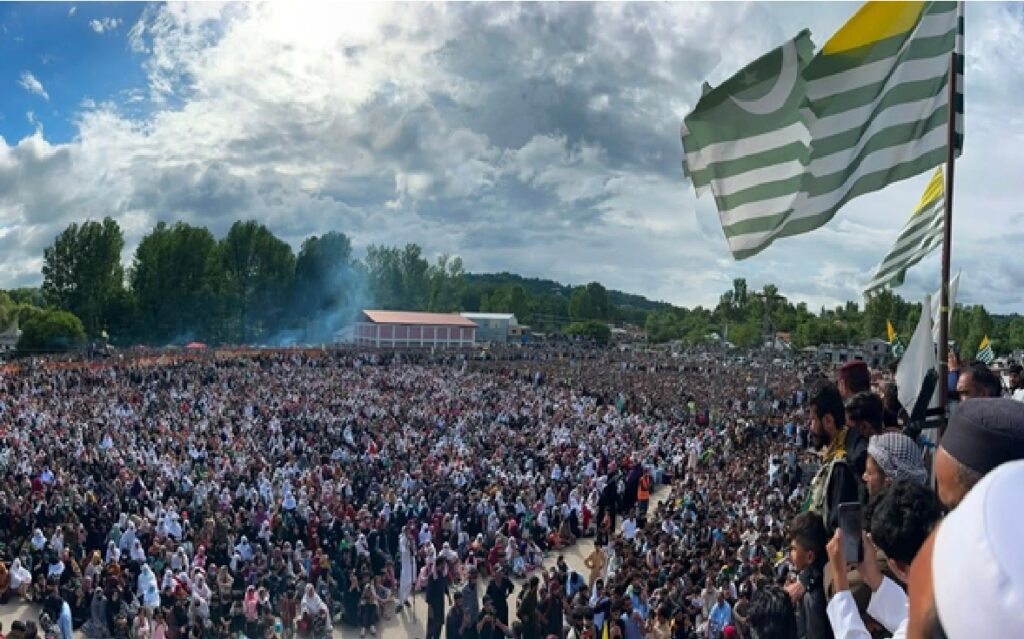
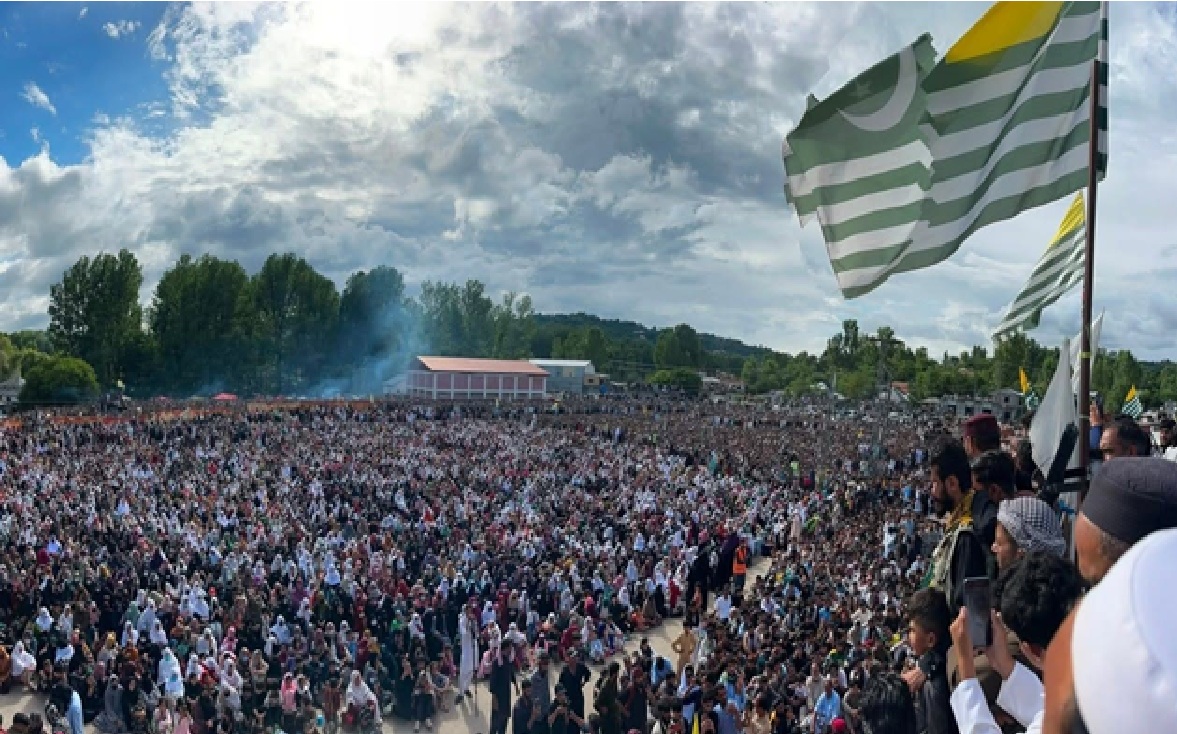
Over the past week, staggered legislative elections took place under the shadow of gunfire, and the competing narratives of the Pakistani state and of the protesters diverged so sharply that truth itself suffered as a casualty. Fresh violence and a bitter war of words between the two main ruling parties at the federal level – the Pakistan Muslim League-Nawaz (PML-N) and the Pakistan Peoples Party (PPP) – over alleged ballot-stuffing, intimidation, and killings immediately marred the latest phase of voting, which they conducted in Muzaffarabad division and refugee constituencies on Sunday. Meanwhile, the protest movement led by the now-proscribed Jammu Kashmir Joint Awami Action Committee (JAAC) insists that the deaths of scores of unarmed civilians at the hands of security forces far exceed the grudging admissions of officials, and that a population is being collectively punished for demanding democratic rights.
A Protest Movement Transformed And A Crackdown Unleashed:
The roots of the current unrest lie in a charter of 38 demands that JAAC, a broad coalition of traders, transporters, lawyers, students, and civil society activists, has been pressing upon authorities for over a year. While early protests targeted the cost of living, the central demand crystallised around electoral reform: the abolition of 12 reserved assembly seats for Kashmiri refugees now settled in Pakistan’s other provinces. Critics argue that these seats allow the military establishment and the federal government to manipulate the AJK legislature, installing pliable leadership and overriding the democratic will of the territory’s residents.
Initially, the government appeared to capitulate. After eight protesters died, they signed an agreement in September 2025, accepting several demands, including electoral reform. However, as the 2026 elections drew near, those promises went unfulfilled, and a recent wave of demonstrations erupted in June.
The state’s response has been immediate and ferocious. On 5 June, the AJK government formally designated JAAC a terrorist organisation under Pakistan’s sweeping Anti-Terrorism Act, listing 147 of its members. An ambush near Rawalakot killed JAAC activist Shahzaib Habib the next night. Within 24 hours, clashes in the city left seven civilians and three police officers dead, according to local authorities. Authorities imposed a curfew across the Poonch division, suspended cellular and internet services, and sealed off the area from the outside world. This communications blackout has now lasted for over eight weeks.
“No journalist is allowed to move; in fact, no journalist is acknowledged as a member of the press even if they have a card identifying them as such,” Harris Qadeer, editor of the local newspaper Roznama Jeddojehad. “Everyone with video recordings in their phones are forced to delete them. They torture everyone attempting any journalistic activity. They have beaten me up in public as well.”
Qadeer, who had to relocate his family to Rawalpindi for safety, meticulously documents the fatalities. By 28 July, he had compiled a list of 89 deaths in Rawalakot and Mirpur alone: 45 before 27 July, 37 on 27 and 28 July, and additional casualties on subsequent days. His figures, gathered from funeral records and direct family testimonies, starkly contradict the official numbers.
‘The Streets Of Rawalakot Are Drenched In Blood’
The authorities scheduled elections in AJK in three phases: Mirpur division on 27 July, Muzaffarabad division on 2 August, and Poonch division on 10 August. The first phase became a flashpoint. Despite the curfew, thousands of protesters marched into Rawalakot city, defying the ban. Security forces, including Pakistan Rangers and Frontier Constabulary personnel, had taken up positions on rooftops and at checkpoints. What followed, according to multiple eyewitnesses and civil society reports, was a massacre.
Hassan Zohaib, a resident of Gehl Topi village near Rawalakot, told Drop Site News that paramilitary Rangers opened fire on a gathering outside his village on 9 July, killing his cousin Muhammad Nasir Khan, a 39-year-old night caretaker at a government school, and 22-year-old Wajid Siddique. “I am not sure what kind of ammunition they are using, because he was shot in his lower abdomen, which was blown away, and he died instantly. We could not even take him to the hospital,” Zohaib said. Khan left four children, the eldest ten years old.
Shehreyar Zulfiqar, a Rawalakot native now living in Lahore, recounted the death of his neighbour Farrukh Aziz, a grocer who was not part of the protest. “He was not a part of the march; he had nothing to do with the political atmosphere in the city. He was only grabbing groceries from his own store for his family members. Snipers on a nearby building killed him with a headshot as he returned home.
Rangers shot dead Usman Nazir, the brother of JAAC leader Sardar Umar Nazir, when they opened fire on protesters in Rawalakot on 27 July, in one of the most emblematic killings. On the same day, a geology PhD scholar from Quaid-i-Azam University, Osama Jameel, was gunned down at Chinar Chowk while marching towards Muzaffarabad after reciting the revolutionary poem Sarfaroshi Ki Tamanna. A young vlogger, identified only as Aqeel, captured the sound of gunfire in a video, telling his viewers, “The streets of Rawalakot are drenched in blood. They are shooting our brothers with the bullets they purchase with our taxpayer money.”
On July 28, The Guardian reported that JAAC claimed Pakistani security forces killed at least 30 people in the preceding two days. “Security forces have taken away the dead bodies and locked away the hospital in Mirpur,” JAAC spokesperson SA Khan said. “We have the photos and video evidence of dead bodies lying on streets in a pool of blood. The security forces abducted the dead bodies to erase the evidence.” Independent verification remains impossible because of the blockade.
Amnesty International’s regional director for South Asia, Isabelle Lassée, issued a sharp condemnation: “The disturbing reports emerging from Rawalakot are consistent with the Pakistani authorities’ long history of unlawful violence against protesters in Jammu and Kashmir. We must order a prompt, independent, and transparent investigation into how the security forces used force against protesters. So long as an internet and mobile services blackout remains in place, it will severely impede the independent verification of the full extent of the situation on the ground.”
Elections At Gunpoint And A Feud Between Coalition Partners:
As the violence raged, voting proceeded in an atmosphere of intimidation. The second phase of polling on Sunday in eight of the nine Muzaffarabad division constituencies and the 12 refugee seats was immediately marred by accusations of brazen rigging, principally from the PPP, a party that shares power with the PML-N in the federal government.
PPP Chairman Bilawal Bhutto-Zardari launched a blistering attack on the PML-N, accusing it of “robbing the votes of the people of Azad Kashmir through bullets, batons and coercion.” He condemned an attack on the party’s regional president and candidate Chaudhry Latif Akbar in LA-31 (Muzaffarabad-V) and alleged that a party worker, Mushtaq Shah, died in the same constituency. “The PML-N is robbing the votes of the people of Azad Kashmir through bullets, batons and coercion,” he posted on X.
The PPP presented a cascade of formal complaints to the Election Commission: polling agents excluded from stations, ballot boxes placed outside and stuffed with pre-stamped papers, forged voting at sensitive polling stations, and a “deliberate” absence of polling staff in dozens of stations to delay the process. The party claimed that it ignored evidence of rigging in four Mirpur constituencies after the first phase, and that the commission’s inaction endangered the legitimacy of the entire exercise.
In a closed-door meeting, a PML-N source reportedly acknowledged to Dawn that irregularities had occurred, though framing them as “isolated acts at places where supporters of one candidate enjoyed numerical dominance over their opponents” and “unfortunately part of the territory’s polling atmosphere.” Bilawal immediately seized on the remark as an admission of guilt, demanding re-polling in affected constituencies.
The PML-N, for its part, dismissed the allegations as the tantrums of a losing party. Punjab Senior Minister Marriyum Aurangzeb argued that the man claimed by the PPP as a murdered party worker had actually died of heart failure after a scuffle between rival supporters. “Will you do politics on bullets? Will you sabotage a democratic process by spreading such fake claims?” she retorted, before reminding Bilawal of his lineage: “You should remember that you are Zulfikar Ali Bhutto’s grandson. We will keep reminding you because we will not let their sacrifices go to waste.”
Adviser to the Prime Minister Rana Sanaullah called the second phase “the most transparent and non-violent electoral process,” acknowledging only a “verbal argument” in one incident. The Information Ministry, meanwhile, accused Al Jazeera of “selective reporting” aimed at delegitimising the election.
A Long Shadow Of State Repression:
The bloodshed in AJK does not exist in a vacuum. It is the latest expression of a well-worn pattern in which the Pakistani state, heavily dominated by its military and intelligence apparatus, equates political dissent with national security threats and responds with overwhelming force. As the analytical piece “Pakistan’s Human Rights Hypocrisy” notes, Pakistan annually commemorates “Youm-e-Istehsal” on 5 August to decry the alleged exploitation of Kashmiris under Indian rule, yet the events in its own administered territory reveal a profound gap between diplomatic rhetoric and domestic practice.
Nowhere was the state’s mindset more chillingly articulated than by Defence Minister Khawaja Asif, who on Tuesday told reporters, “There will be no dialogue with the protesters. I bracket them with India. I put them in the same category as India and consider them as enemies of Pakistan.” For a cabinet minister to equate protesting citizens with a foreign adversary is to strip them of legal protection and to licence lethal force. Once such language becomes official, the distance between policing and repression collapses.
The historical echoes are heavy. The 1971 Bangladesh Liberation War was the catastrophic result of a similar dynamic: a legitimate political movement in East Pakistan met with military brute force, mass atrocities, and a cynical branding of dissidents as Indian agents. History does not repeat itself in neat cycles, but its lessons are blunt: you cannot shoot your way to national unity.
Moreover, the AJK crackdown fits into a broader national landscape of state violence. In Balochistan, families have been marching for years with portraits of the disappeared, alleging a machinery of enforced disappearances and extrajudicial killings. In Khyber Pakhtunkhwa, Pashtun rights activists have faced harassment and prolonged detentions for demanding accountability for military operations. In Sindh, nationalist voices complain of arbitrary arrests. The Drop Site investigation reveals that even retired military personnel and their families have not been spared in Rawalakot: gunmen shot dead Squadron Leader Uzair Aziz’s father, a school teacher, and wounded his brother. Their bodies were taken, and the family was not involved in any protest.
“They are punishing us all indiscriminately; they are subjecting us to collective punishment, and they want to make an example out of us. They are using battle-grade weapons; the violence is senseless,” said journalist Harris Qadeer.
Diplomatic Fallout And The International Gaze:
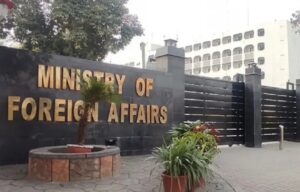
The international community has been slow to react, but pressure is mounting. Amnesty International and the Human Rights Commission of Pakistan (HRCP) have both called for independent investigations into the killings and for the immediate restoration of communications. The UN High Commissioner for Human Rights, Volker Türk, had already voiced concern in June. Pakistan’s Foreign Office predictably rejected any commentary from India as interference, but the rare spectacle of political leaders from Indian-administered Jammu and Kashmir, who normally line up behind Delhi, condemning Pakistan’s use of lethal force against peaceful demonstrators underscores the crisis’s gravity.
Within Pakistan, dissent has come from unlikely quarters. Former Ambassador Maleeha Lodhi publicly questioned Prime Minister Shehbaz Sharif’s silence on the killings while he found time to express sympathy for European wildfire victims. Her intervention, and that of other establishment figures, signals an acute unease within sections of the elite about the reputational damage and moral bankruptcy the crackdown is inflicting.
Yet, the government’s information apparatus has responded with propaganda. The Ministry of Information accused Al Jazeera of “delegitimising” the elections through “scripted statements” and “handpicked polling stations.” The PML-N simultaneously celebrated huge voter turnouts on social media while its coalition partner screamed fraud. The result creates a hall of mirrors that deliberately obscures the very reality of what happened in Mirpur and Rawalakot.
A Fluid Crisis Heading For Further Violence:
Security remains extraordinarily tight. Additional forces fanned out across AJK; they fortified government buildings and election centres, and intermittent transport and communication restrictions persist. Basic supplies, including food and medicine, are running dangerously low in the sealed-off areas. Residents report that Rangers have confiscated shopkeepers’ remaining stock for their own consumption, and the sick cannot access treatment. A long-time observer described the situation as a “humanitarian stranglehold” designed to break the will of the population.
JAAC, despite being outlawed and its leaders hunted, has vowed to continue protests. Sardar Umar Nazir, in a video message, declared the ongoing election “fraudulent and farcical” and called upon residents of Muzaffarabad to reject the polls and take to the streets. The organisation is planning further marches, even as the third phase of voting in Poonch division on 10 August draws near. With both sides dug in and no credible dialogue channel open, the risk of a fresh spiral of bloodshed is acute.
Observers argue that restoring stability will require far more than heavy-handed security measures. A meaningful political dialogue must be initiated, one that genuinely addresses the protesters’ core demands of electoral reform and local self-governance. An impartial and independent body needs to investigate the serial abuses that residents and journalists documented. Those who gave orders to fire on unarmed civilians must be held to account. Without accountability, the anger simmering in the streets of Rawalakot, Mirpur and Muzaffarabad will not dissipate – it will only fester, corroding whatever remains of the state’s legitimacy.
The events in Azad Kashmir are not a mere local difficulty; they are a test of Pakistan’s entire democratic and human rights architecture. As the commentary “Pakistan’s Human Rights Hypocrisy” reminds us, nations earn moral authority not through eloquent speeches at international forums but through the consistency of their conduct at home. When the government’s own defence minister brands protesting citizens as enemies of the state, and when sniper rifles are turned on a grocer fetching bread for his family, the rhetoric of “Kashmir self-determination” preached to the world rings devastatingly hollow.
For now, the casualty count remains disputed, the internet blackout endures, and the election results are being compiled in an atmosphere of coercion and fraud. The people of Azad Kashmir, who dared to demand a voice in their own governance, have been met with a message that the state’s writ is backed by bullets. The coming days will determine whether that writ is challenged further, and at what human cost. As the poem Osama Jameel recited before he was silenced forever goes: “The desire to sacrifice our lives is now in our hearts; let us see how much strength is in the arms of our executioner.”
Veritas Press Investigative Analysis
Independent journalism examining global affairs, power, diplomacy and accountability.
Source: Veritas Press C.I.C. | Multi-News Agencies
APPEAL: Help Support Our Work By Donating
Readers who believe that truth still matters have power over popular information. When just a few more people step up to support this work, it means more lies exposed, more corruption uncovered, and more accountability where it’s long overdue.
Help Protect Independent Journalism, Which Is Currently Under Attack.
If you believe journalism should serve the public, not the powerful, and you’re able to help, becoming a regular DONOR or a PAID SUBSCRIBER truly makes a difference.
DONATION APPEAL: If you found this reporting valuable, please consider supporting independent journalism.
Your support fuels our fearless, truth-driven journalism. In unity, we endeavour to amplify marginalised voices and champion justice, irrespective of geographical location. We operate independently, with no financial backing from billionaires; our readers support us.
But it’s also extremely important. One of Veritas Press’s greatest assets is its reader-funded model.
1. Reader funding means we can cover what we like. We’re not beholden to the political whims of a billionaire owner. We are a small, independent and impartial organisation. No one can tell us what not to say or what not to report.
2. Reader funding means we don’t have to chase clicks and traffic. We’re not desperately seeking your attention for its own sake; we pursue the stories that our editorial team deems important and believes are worthy of your time.
3. Reader Funding: enables us to keep our website and other social media channels open, allowing as many people as possible to access quality journalism from around the world, particularly those in places where the free press is under threat.
We know not everyone can afford to pay for news, but if you’ve been meaning to support us, now’s the time.
Your donation goes a long way. It helps us:
- Keep the lights on and sustain our day-to-day operations
- Hire new, talented, independent reporters
- Launch real-time live debates, community-focused shows, and on-the-ground reporting
- Cover the issues that matter most to our communities, in real time, with depth and integrity
Without your support, independent voices like ours will be silenced.
Further, we have plans to expand our work, but we can’t do it without your support. Every contribution, no matter the size, helps us stay independent and build a truly people-powered media platform.
If you believe in journalism that informs, empowers, and reflects the communities we serve, please donate today.
Submissions:
For the secure submission of documentation, testimonies, or exclusive investigative reports from any global location, please utilise the following contact details for our Investigations Desk: mailto:enquiries@veritaspress.co.uk or mailto:editor@veritaspress.co.uk
GENEVA — A United Nations fact-finding mission has concluded there are “reasonable grounds to believe”
Iran’s GDP is projected to contract by 5.4 to 6.1% in 2026, its worst performance
The Trump administration is preparing a $2.8 billion weapons package for Israel containing 40,000 2,000-pound
Film alleges mass civilian deaths are routinely built into military decisions amid Israel’s genocidal war
The Israeli rights group says violence, displacement, economic strangulation, and settlement expansion form part of

Houthi forces have captured the historic Red Sea port of Mocha and are advancing on
London’s historic sanctions against Israeli settlements mark a watershed moment in UK foreign policy, but
With 95% of Gaza’s population now wholly dependent on aid and more than 90% stripped
India calls for Kashmir and Ladakh to appear only on its official map after a
ISLAMABAD – In the high-stakes political theatre of Pakistan, the battleground has shifted from the

















zhh1nx
3s4rf7