Kamran Faqir is a volunteer investigative journalist and writer committed to exposing hidden truths and amplifying underreported stories. Driven by social justice, he brings sharp insight and fearless truth-telling to independent journalism. NUJ registered.
Original Article Date Published:
Article Date Modified:
16 minutes
Views:416
Listen to this article
Help support our mission, donate today and be the change. Every contribution goes directly toward driving real impact for the cause we believe in.
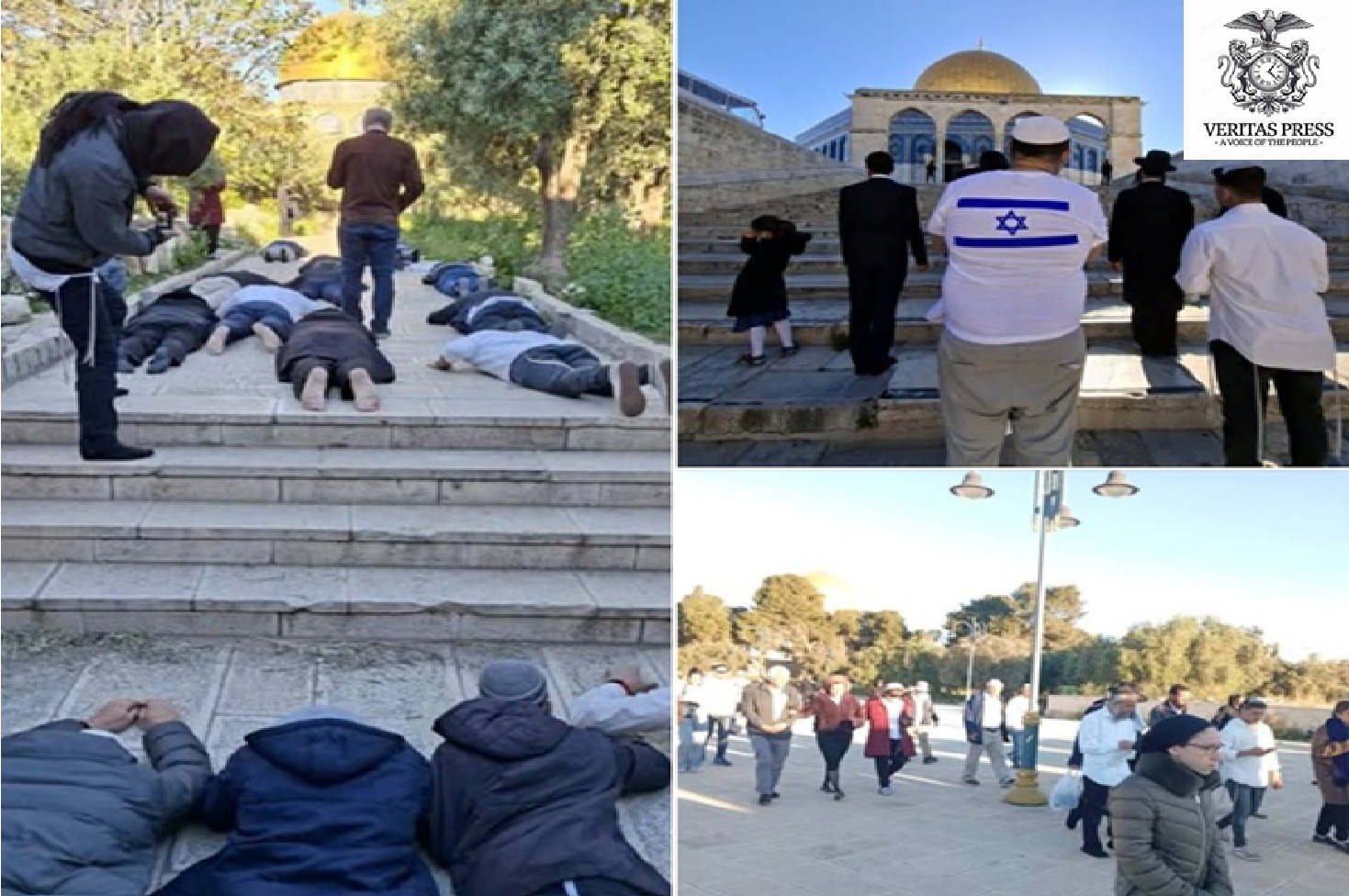
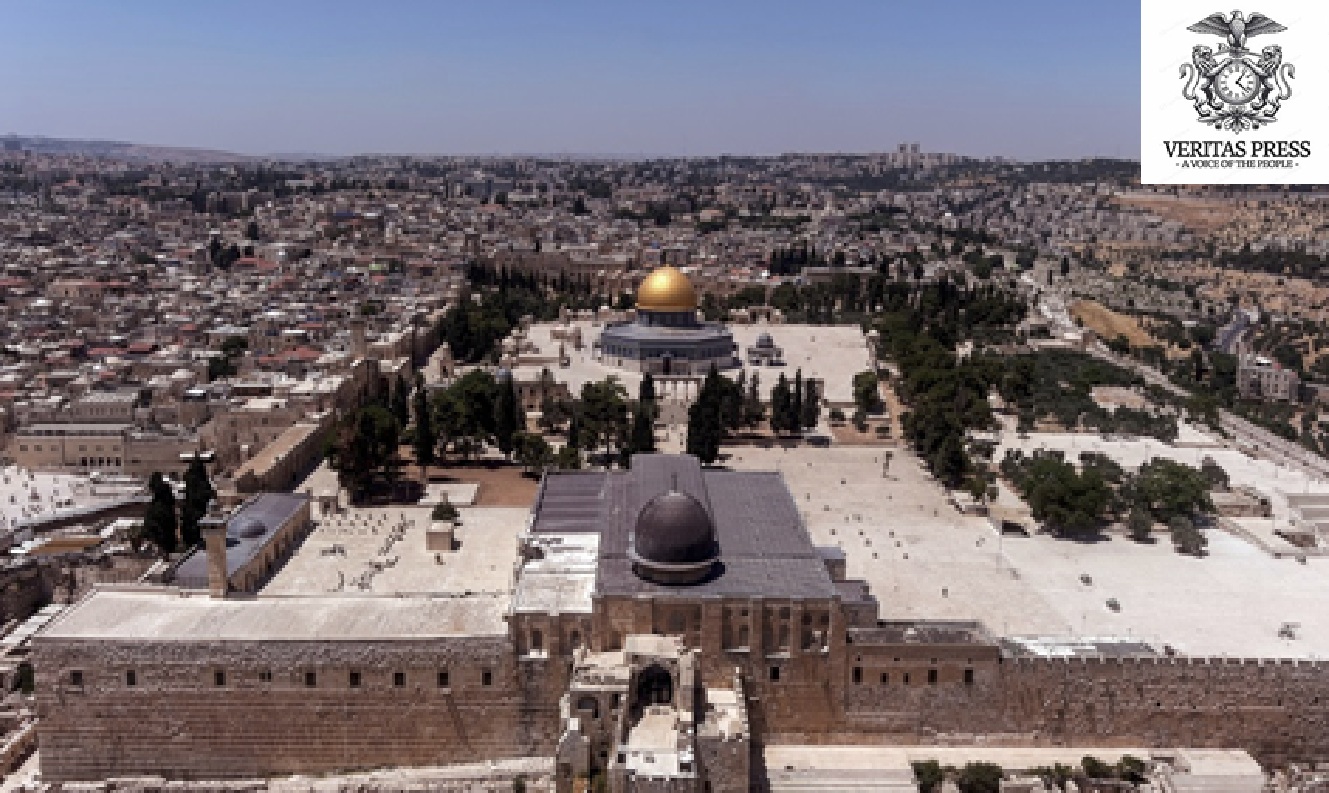
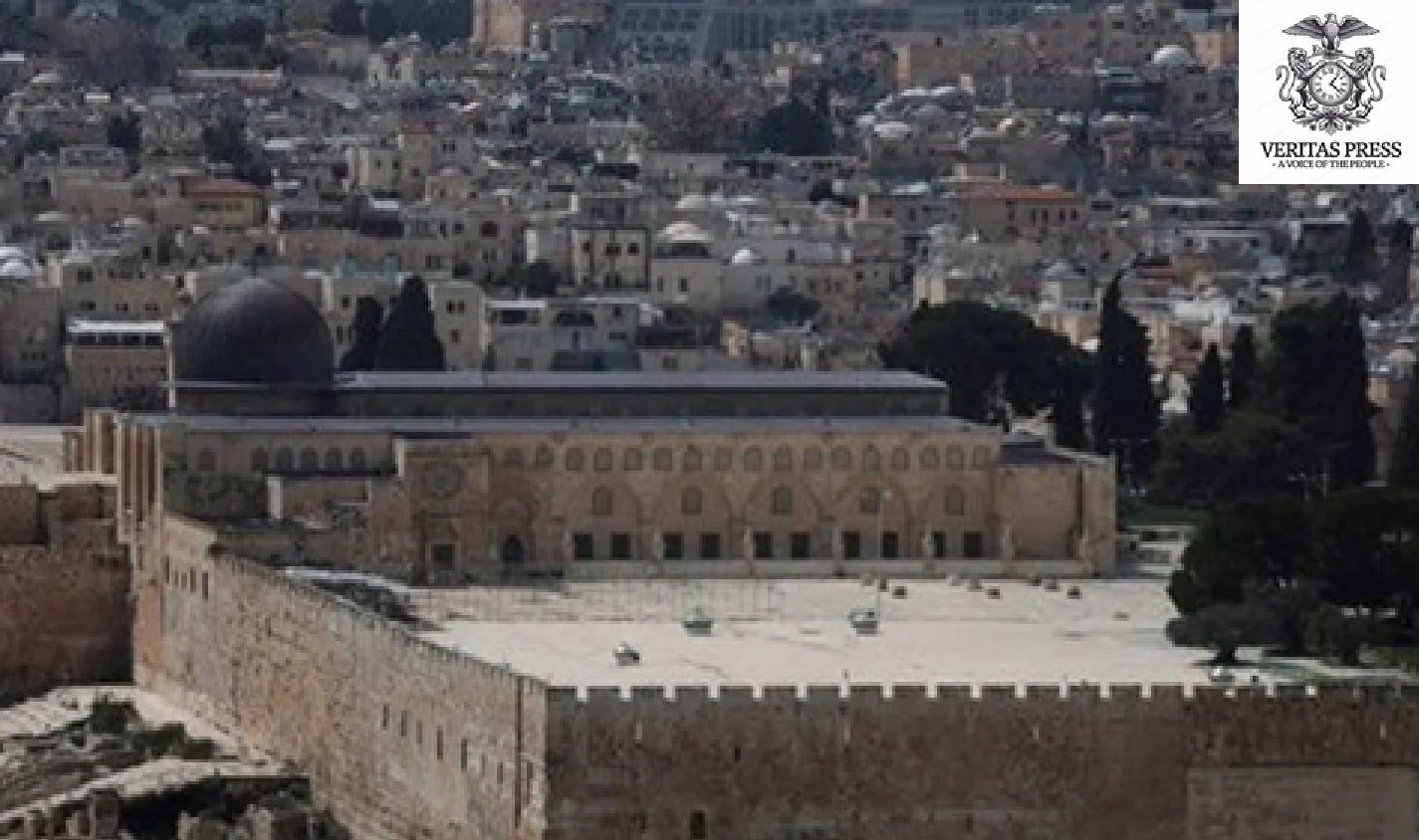
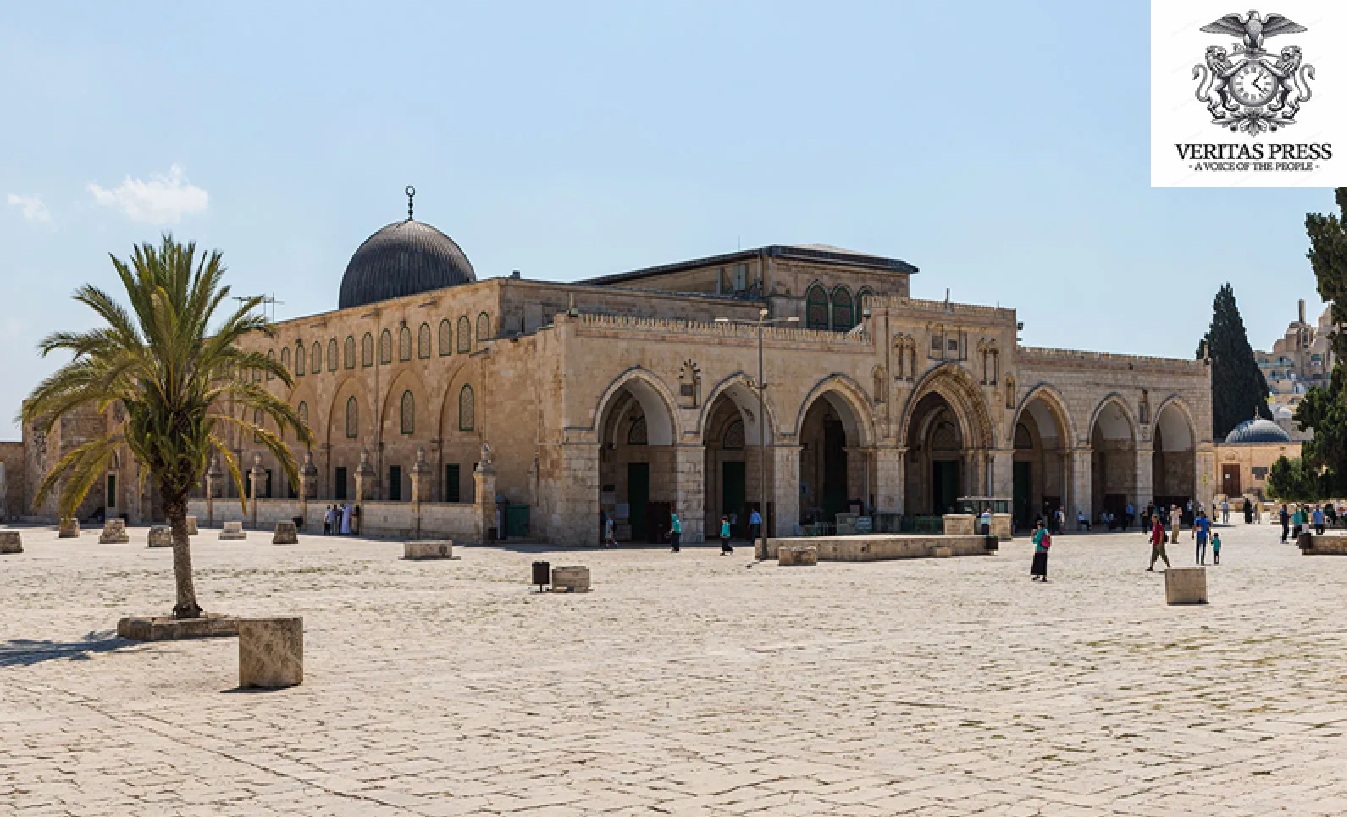
JERUSALEM — Under a pale morning sky in occupied East Jerusalem, a column of Israeli settlers filed through the Mughrabi Gate on Wednesday, April 22, 2026, their path cleared and guarded by heavily armed Israeli police. They spread across the ancient limestone courtyards of the Al-Aqsa Mosque compound, Islam’s third holiest site, and, within sight of the golden Dome of the Rock, performed Talmudic rituals including “epic prostration” near the Bab al-Rahma prayer hall. Videos posted to social media showed some settlers wearing clothing emblazoned with the Israeli flag and chanting slogans.
What unfolded on Wednesday was not an isolated incident. It was the latest, and most symbolically charged, escalation in a rapidly intensifying campaign by Israel’s far-right settler movement and its political patrons to fundamentally alter the religious and historical character of the site Muslims call al-Haram al-Sharif (the Noble Sanctuary) and Jews know as the Temple Mount. As the number of incursions has multiplied in recent weeks, culminating in a coordinated mass raid of more than 500 settlers on what Palestinians commemorate as Nakba Day and Israelis mark as “Independence Day”, a growing chorus of regional powers, UN bodies, and international observers is warning that the region’s most sensitive religious flashpoint is being pushed toward a point of no return.
A Day Of Dual Symbolism: Nakba, “Independence,” And The Flag.
The timing of Wednesday’s mass storming was deliberate. April 22, 2026, corresponds in the Hebrew calendar to the date Israel celebrates its “Independence Day,” which falls one day after its “Memorial Day” for fallen soldiers. For Palestinians, the same day marks the Nakba (“catastrophe”), the mass displacement and dispossession of over 750,000 Palestinians during the creation of the State of Israel in 1948. In a powerful symbolic juxtaposition, the Muslim call to prayer was not sounded from Al-Aqsa’s minarets for the evening Isha prayer on Monday, April 20, as Israel held memorial sirens at the adjacent Western Wall Plaza.
The raid was not spontaneous. For days, groups affiliated with the extremist “Temple Mount” movement had circulated calls on social media and encrypted messaging apps, urging settlers to “mobilise” for a massive incursion to “raise the occupation flag” in the courtyards of Al-Aqsa, coinciding with the “Independence Day” holiday. The campaign succeeded. The Jerusalem Governorate reported that 508 settlers entered the compound on Wednesday through the Bab al-Maghariba gate.
“The desecration of the courtyards of the blessed Al-Aqsa Mosque by settler groups indicates the escalation of the religious war that the occupiers have waged against Al-Aqsa,” declared Harun Nasser al-Din, a member of Hamas’s political bureau and head of its Jerusalem Affairs Bureau. “This is in continuation of efforts to consolidate the Judaization project, divide time and space, and impose Talmudic rituals.” He called on the Palestinian people “in Jerusalem, the occupied territories, and all points of contact to mobilise for widespread presence and retreat in the courtyards of Al-Aqsa Mosque.”
The Political Architect: Ben-Gvir’s “Landlord” Doctrine.
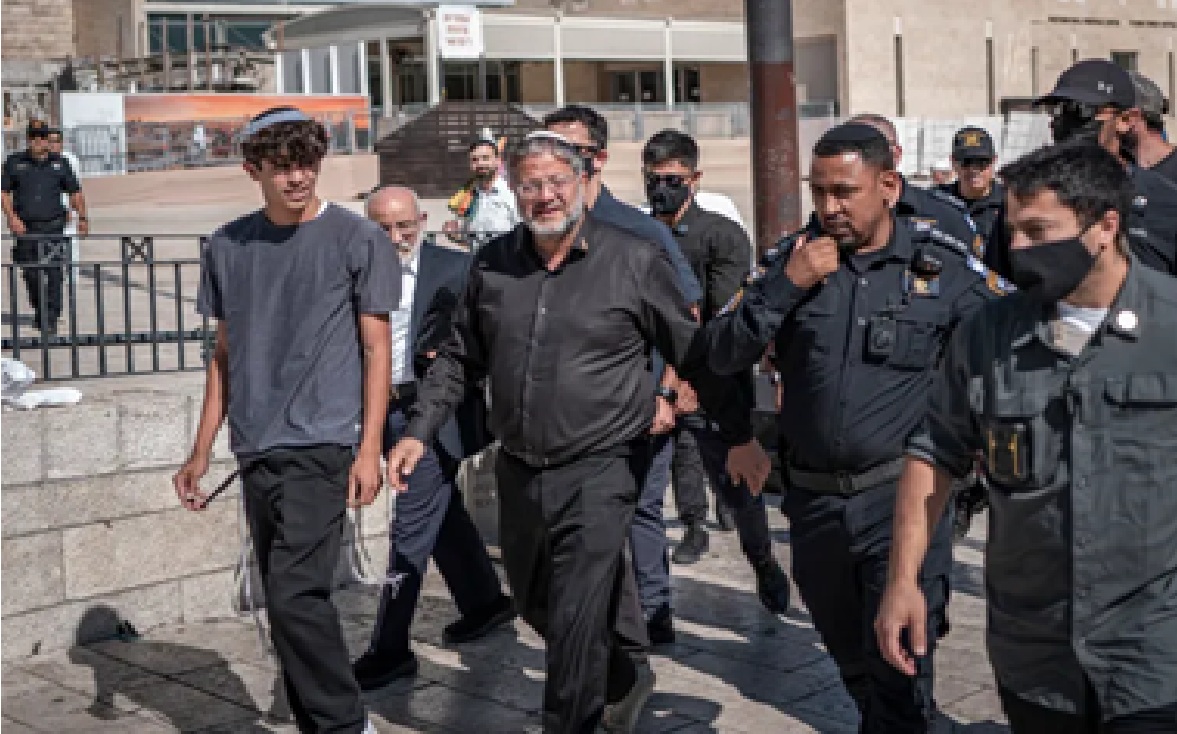
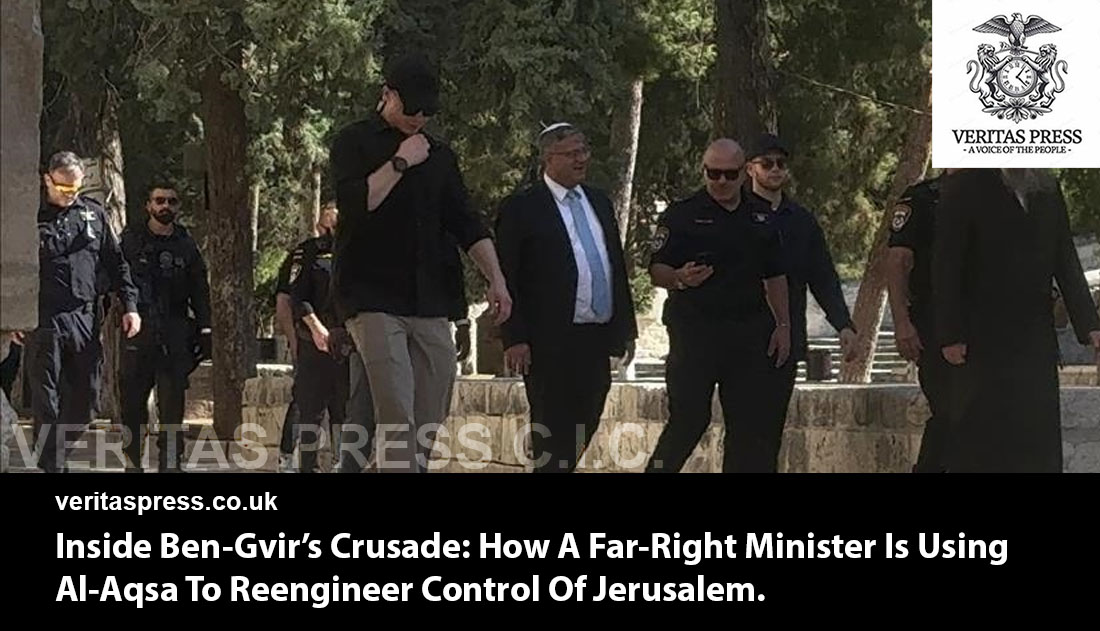
Standing behind this escalating campaign is not merely a fringe movement but a powerful government minister who has made his intentions unmistakably clear. Just ten days before Wednesday’s mass raid, on April 12, Israel’s far-right National Security Minister Itamar Ben-Gvir himself stormed the Al-Aqsa compound under heavy police protection. Surrounded by settlers, Ben-Gvir performed Talmudic prayers, acts explicitly prohibited under the historic status quo arrangement that has governed the site since 1967, which allows Jewish visits but forbids non-Muslim prayer.
In a video distributed by his office and filmed during the incursion, Ben-Gvir declared: “Today, I feel like the owner here. There is still more to do, more to improve. I keep pushing the prime minister to do more and more.” The statement encapsulates a policy of overt and unapologetic assertion of Israeli sovereignty over the compound, a position that directly challenges the internationally recognised role of the Jordanian-administered Islamic Waqf (religious trust) as the sole custodian of the site.
This was Ben-Gvir’s third incursion since the beginning of 2026 and his 16th since assuming office in late 2022. He is part of a growing settler movement that has openly expressed its intention to eventually build a Jewish synagogue in place of the Al-Aqsa Mosque. Ben-Gvir’s repeated violations, carried out in his official capacity as a senior minister, lend state legitimacy to the actions of settler groups and send an unmistakable signal of governmental approval.
The Palestinian Presidency, in a statement carried by the official WAFA news agency, condemned Ben-Gvir’s visit as a “dangerous escalation” and an “unacceptable provocation,” warning it was part of a broader effort to “impose new realities” at the compound. “Continued violations at Islamic and Christian holy sites in Jerusalem could have serious consequences for regional security and stability,” the presidency cautioned, calling on the international community to “take a firm stance to compel Israel to halt unilateral actions.”
The Systematic Erosion Of The Status Quo:
The status quo governing Al-Aqsa, a delicate arrangement under which the site is administered by the Jerusalem Islamic Waqf, affiliated with Jordan’s Ministry of Awqaf and Islamic Affairs, has been under relentless assault for decades. But since early April 2026, the pace and brazenness of violations have accelerated dramatically.
According to the Jerusalem Governorate, the frequency of settler incursions has markedly increased since the beginning of April, with settlers now performing public rituals and “collective prostrations” inside the courtyards on a near-daily basis. Since 2003, Israeli police have unilaterally allowed settlers to enter the mosque compound during two daily periods, morning and afternoon, except on Fridays and Saturdays. But those windows, according to WAFA, have now been extended by an additional 30 minutes, further encroaching on Muslim prayer times.
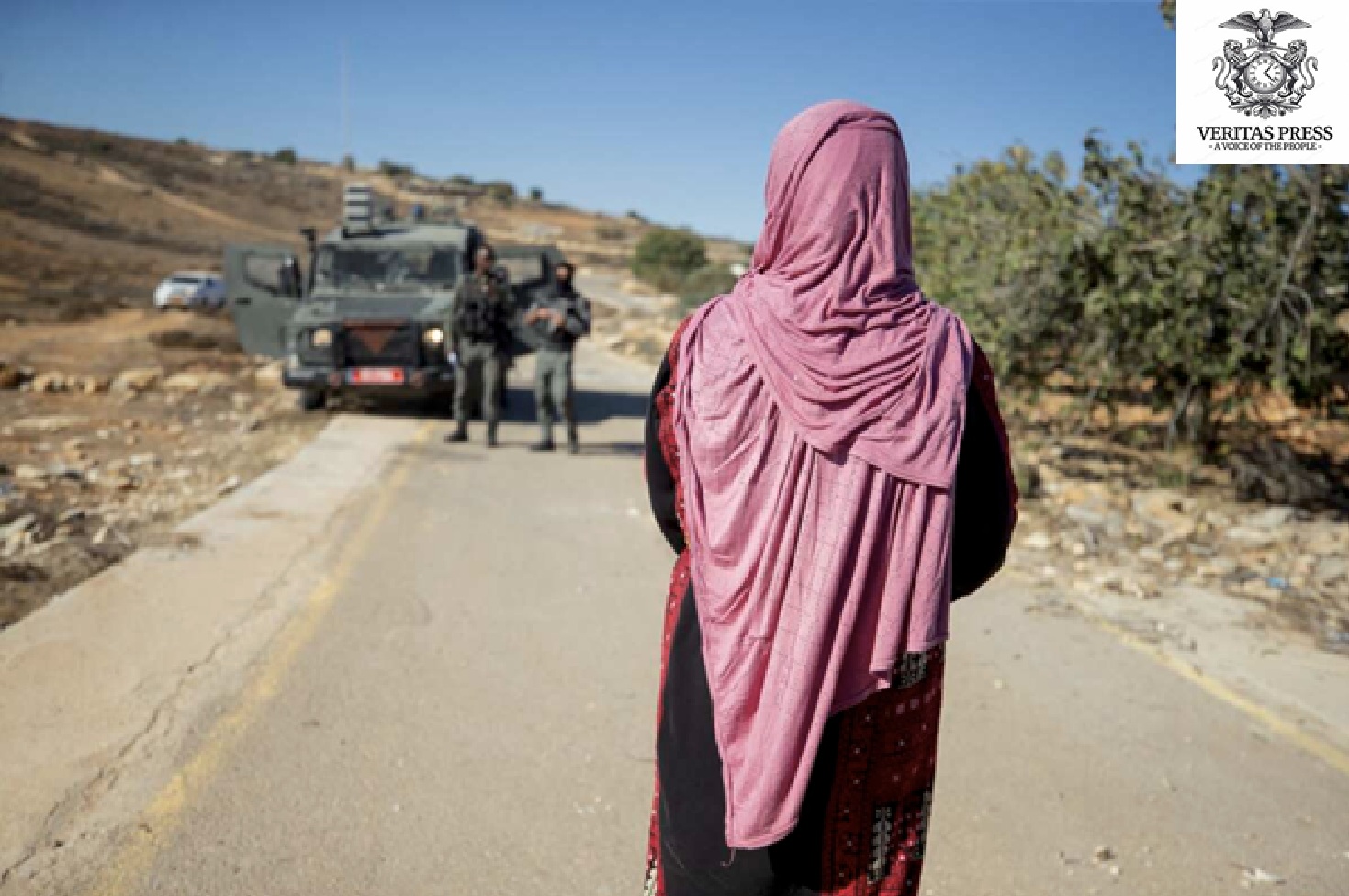
The incursions are accompanied by an increasingly draconian system of restrictions targeting Palestinian worshippers. On Wednesday, as settlers streamed into the compound, Israeli police intensified access restrictions, conducting strict identity checks and imposing prolonged delays on Palestinian worshippers attempting to enter. This follows a pattern documented in recent weeks: checkpoints, road closures, ID confiscations, and the removal of worshippers from the courtyards. The Jerusalem Governorate reported that during Wednesday’s raid, six women and three elderly worshippers were arrested.
The imbalance is stark and systematic. As Ahmad Jalajel, a Jerusalem-based journalist and Al-Aqsa affairs specialist, explained to Al-Ahram Weekly: “These violations could erode the identity of Al-Aqsa as a historic Muslim place of worship.” He described the measures as part of a broader Israeli approach aimed at “reshaping the demographic and political reality of Jerusalem’s Old City and the surrounding areas.” Jalajel noted that while Israeli authorities often justify such measures on security grounds, the policies reflect “a systematic effort to assert control over Islamic landmarks in Jerusalem and alter their character as part of the ongoing settlement expansion.”
The 40-Day Closure: A Precedent Of Exclusion.
The current wave of incursions cannot be understood in isolation from the unprecedented 40-day closure of Al-Aqsa that preceded it. Following Israel’s launch of military strikes on Iran on February 28, 2026, Israeli authorities imposed a complete shutdown of the compound, barring all Palestinian worshippers, including for Friday prayers, the last ten days of Ramadan, and Eid al-Fitr prayers.
For 40 days, Al-Aqsa’s courtyards lay empty of Muslim worshippers, while Israeli police maintained a heavy deployment around the compound and at the gates of Jerusalem’s Old City, forcing residents to describe daily life as brought to a “near standstill.” During this period, Ben-Gvir made at least one visit to the compound, entering through the Mughrabi Gate under police protection while Palestinian worshippers were completely absent.
The Palestinian Ministry of Awqaf described Ben-Gvir’s entry during the closure as a “dangerous step” that undermined the religious sanctity of the site, “particularly in the absence of Muslim worshippers.” The ministry urged Arab and Islamic institutions to take action and push for reopening the mosque and ending restrictions on access.
When Al-Aqsa finally reopened on April 9, more than 100,000 worshippers streamed in for Friday prayers. But the reopening was immediately followed by a settler incursion that same day, with nearly 450 settlers entering the compound. The pattern is unmistakable: prolonged closures create a vacuum, followed by intensified settler activity and increasingly restrictive conditions for Palestinian access.
A Dangerous New Threshold: Flags And Rituals.
What distinguishes the current wave of incursions from previous years is not merely their frequency but their symbolic content. The raising of Israeli flags inside the Al-Aqsa compound, an act captured in photos and videos circulated widely on social media, represents a new threshold of provocation. Images showed settlers posing with the Israeli flag in front of the Dome of the Rock, a visual assertion of sovereignty that Palestinians view as an existential threat to the site’s Islamic identity.
The Islamic Waqf Department in Jerusalem considers such practices a violation of the longstanding status quo, yet Israeli police have not prevented settlers from carrying them out. The Waqf described the flag-raising as a “flagrant breach of international law and the status quo.”
Beyond flags, there are more alarming developments. Hardline groups advocating expanded religious rituals have openly called for the introduction of practices historically absent from the compound, including animal sacrifice rites linked to Passover traditions. Promotional material circulating online has depicted such ceremonies taking place at Al-Aqsa, reinforcing concerns that these ideas are being normalised. Previous attempts to smuggle animals or related materials into the site, though limited, are seen as early indicators of a growing push to implement these practices more openly.
“Recent campaigns by groups promoting temple-related practices have openly called for the introduction of sacrificial rituals within the compound during Passover,” reported Safa News, noting that the near-total absence of Palestinian worshippers during closures “has coincided with a visible rise in activities by hardline groups.”
The Regional And International Response:
The escalating violations have drawn sharp condemnation from across the Arab and Islamic world, as well as from international organisations.
Jordan, as the custodian of Islamic and Christian holy sites in Jerusalem under the 1994 peace treaty with Israel, issued one of the strongest warnings. The Jordanian Foreign Ministry condemned the latest raid, citing “provocative acts including the raising of Israeli flags under police protection,” and called it a “flagrant breach of international law and the status quo.” The ministry warned of “serious repercussions over continued incursions” and rejected “repeated incursions and attempts to impose new realities, including temporal and spatial division of the site.” It reaffirmed that the mosque, with its “144 dunams, remains an exclusively Muslim place of worship under the Jerusalem Waqf and that Israel has no sovereignty over occupied Jerusalem.”
Pakistan condemned “in the strongest terms the storming of the Al-Aqsa Mosque compound and the raising of the occupying power’s flag within its courtyard by illegal Israeli settlers.” The Pakistani Foreign Office called “for all possible measures to protect holy sites under Israeli occupation and to end the impunity of illegal settlers operating under its patronage.”
The Gulf Cooperation Council (GCC), through its Secretary-General Jasem Mohamed Albudaiwi, expressed “strongest condemnation and denunciation” of the storming, describing the actions as “a flagrant and dangerous violation of the sanctity of the holy site and a provocative affront to the sentiments of Muslims worldwide.” Albudaiwi stated: “Such aggressive practices constitute a blatant violation of all international laws and charters,” adding that they “reflect systematic efforts by the Israeli occupation forces to undermine security and stability in the region.” He called upon the international community “to uphold its legal and moral responsibilities by taking immediate and decisive action to halt these serious violations.”
Egypt and Qatar issued similar condemnations, with Qatar affirming its “categorical rejection of attempts to undermine the status of Al-Aqsa Mosque” and stressing “the need for the international community to uphold its moral and legal responsibilities towards Jerusalem and its holy sites.”
Despite this chorus of condemnation, the international response remains largely rhetorical. As the Jerusalem Governorate noted in a press release: “The continued violations and incitement against Al-Aqsa Mosque, in light of international silence, encourages the occupation to continue its violations, which represent a provocation to the feelings of millions of Muslims and a flagrant violation of international law and international humanitarian law.”
The governorate further emphasised that “the blessed Al-Aqsa Mosque, with its area of 144 dunams, is a place of worship exclusively for Muslims, and that the Jerusalem Waqf Department, affiliated with the Jordanian Ministry of Awqaf, is the only entity authorised to manage its affairs according to the existing historical status quo. Any claim of Israeli sovereignty over occupied Jerusalem is invalid and has no legal effect.”
The Human Dimension: Jerusalemites Under Siege.
Beneath the geopolitical manoeuvring and diplomatic statements lies the daily reality for Palestinian residents of East Jerusalem. The tightening restrictions, checkpoints, and closures are not abstract policies; they are lived experiences that shape every aspect of daily life.
“For Jerusalem residents, it means being denied access to a place that is part of their daily identity,” Ahmad Jalajel explained. “The closure of Al-Aqsa represents more than a security measure; it is a restriction on a central religious and national symbol for Palestinians.”
During the 40-day closure, residents reported that heavy Israeli deployment around the Old City and widespread closure of shops brought daily life to a “near standstill,” part of what they described as “a broader effort to isolate the site and impose new realities affecting its religious and historical status.”
The silencing of the call to prayer from Al-Aqsa’s minarets on Monday evening, an annual occurrence during Israel’s Memorial Day, is a particularly poignant example of how religious and national symbols are contested and controlled. For Palestinians, the call to prayer is not merely a religious ritual but a sonic affirmation of presence and identity in a city under occupation.
A Tipping Point?
The events of April 2026 represent more than a spike in settler incursions. They reflect a coordinated, multi-pronged strategy to fundamentally alter the status quo at Al-Aqsa. The components of this strategy are now clearly visible: prolonged closures that empty the compound of Muslim worshippers; the extension of settler visitation hours; the open performance of Jewish prayers and rituals in violation of the status quo; the raising of Israeli flags as an assertion of sovereignty; the participation of senior government ministers who lend state legitimacy to the campaign; and the intensification of restrictions on Palestinian access that make the compound increasingly inaccessible to its Muslim faithful.
Each element on its own might be manageable. Together, they constitute what many observers warn is an irreversible transformation. “These violations could erode the identity of Al-Aqsa as a historic Muslim place of worship,” Jalajel warned.
The silence of the international community, which has issued statements of condemnation but taken no concrete action to halt the violations, is itself a form of complicity. As the Jerusalem Governorate observed, international silence “encourages the occupation to continue its violations.”
For Palestinians, Al-Aqsa is more than a mosque. It is a symbol of national identity, a connection to history, and a focal point of resistance to occupation. For extremist Israeli settlers and their political patrons, it is the ultimate prize, the site where, according to their ideology, a Third Temple must be built. The battle for Al-Aqsa is not merely about religion; it is about sovereignty, identity, and the future of Jerusalem itself.
As Harun Nasser al-Din of Hamas declared on Wednesday, “Al-Aqsa Mosque is a completely Islamic right and no attempt to erase its identity or change its characteristics will succeed.” But the forces arrayed against that right are more powerful, more determined, and more protected by state power than at any point in recent memory. The question that remains is whether the international community will continue to watch in silence as one of the world’s most sacred and contested sites is transformed, brick by brick, ritual by ritual, flag by flag, into something unrecognisable, and with consequences that will reverberate far beyond the ancient walls of Jerusalem.
Source: Multiple News Agencies
Submissions:
For The Secure Submission Of Documentation, Testimonies, Or Exclusive Investigative Reports From Any Global Location, Please Utilise The Following Contact Details For Our Investigations Desk: enquiries@veritaspress.co.uk or editor@veritaspress.co.uk
Help Support Our Work:
Popular Information is powered by readers who believe that truth still matters. When just a few more people step up to support this work, it means more lies exposed, more corruption uncovered, and more accountability where it’s long overdue.
Help Protect Independent Journalism, Which Is Currently Under Attack.
If you believe journalism should serve the public, not the powerful, and you’re in a position to help, becoming a DONATOR or a PAID SUBSCRIBER truly makes a difference.
DONATION APPEAL: If You Found This Reporting Valuable, Please Consider Supporting Independent Journalism.
Help Support Our Work – We Know, We Know, We Know …
Seeing these messages is annoying. We know that. (Imagine what it’s like writing them … )
Your support fuels our fearless, truth-driven journalism. In unity, we endeavour to amplify marginalised voices and champion justice, irrespective of geographical location.
But it’s also extremely important. One of Veritas Press’s greatest assets is its reader-funded model.
1. Reader funding means we can cover what we like. We’re not beholden to the political whims of a billionaire owner. We are a small, independent and impartial organisation. No one can tell us what not to say or what not to report.
2. Reader funding means we don’t have to chase clicks and traffic. We’re not desperately seeking your attention for its own sake: we pursue the stories that our editorial team deems important and believe are worthy of your time.
3. Reader Funding: enables us to keep our website and other social media channels open, allowing as many people as possible to access quality journalism from around the world, particularly those in places where the free press is under threat.
We know not everyone can afford to pay for news, but if you’ve been meaning to support us, now’s the time.
Your donation goes a long way. It helps us:
Keep the lights on and sustain our day-to-day operations
Hire new, talented independent reporters
Launch real-time live debates, community-focused shows, and on-the-ground reporting
Cover the issues that matter most to our communities, in real time, with depth and integrity
We have plans to expand our work, but we can’t do it without your support. Every contribution, no matter the size, helps us stay independent and build a truly people-powered media platform.
If you believe in journalism that informs, empowers, and reflects the communities we serve, please donate today.
Kamran Faqir is a volunteer investigative journalist and writer committed to exposing hidden truths and amplifying underreported stories. Driven by social justice, he brings sharp insight and fearless truth-telling to independent journalism. NUJ registered.
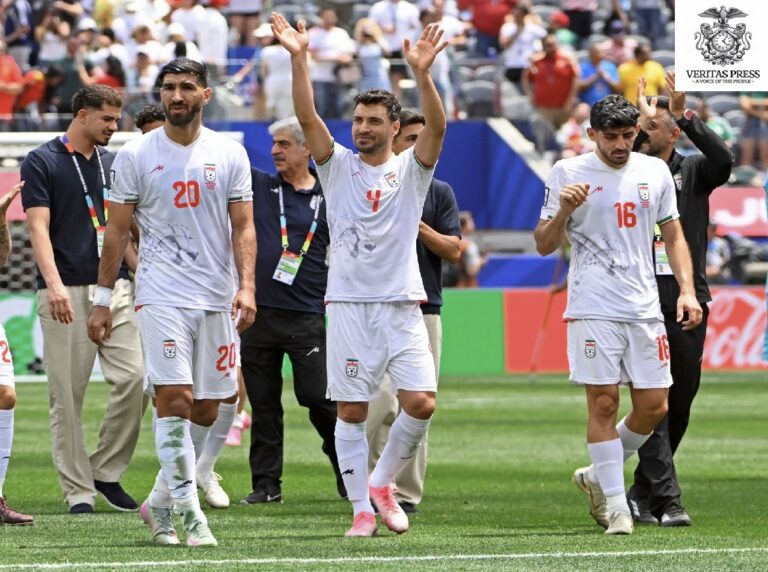
SEATTLE, TEHRAN — The U.S. Department of Homeland Security (DHS) will allow Iran’s national football team to enter the country 48 hours before their critical World Cup match against Egypt on Friday, a modest concession in a tournament where Team Melli’s travel conditions have sparked claims of oppression and competitive disadvantage.