




Author:
Byline: Investigative Desk
Help support our mission, donate today and be the change. Every contribution goes directly toward driving real impact for the cause we believe in.
A spiralling confrontation in the Persian Gulf, the collapse of a fragile ceasefire, and the shadow war over the world’s most vital maritime artery.
MUSCAT, OMAN / WASHINGTON, D.C. — In the early hours of Saturday, as U.S. media buzzed with reports that President Donald Trump had ordered fresh military strikes on Iran that could commence “as soon as this weekend,” Iran’s top security official fired back with a warning calibrated to resonate not just in the corridors of power in Washington and Tel Aviv, but at kitchen tables from Houston to Hamburg. Secretary of Iran’s Supreme National Security Council (SNSC) Mohammad Bagher Zolqadr (also transliterated Zolghadr) declared that continued American “warmongering” and a naval blockade would not only tighten the Islamic Republic’s grip on the Strait of Hormuz, but “also close other straits and chokepoints.” Then, in a rhetorical flourish aimed squarely at an American electorate already reeling from soaring fuel costs ahead of midterm elections, he added: “The global economy, energy markets, and American voters will pay the price.”
The warning, carried simultaneously by Iranian state broadcaster IRIB, the semi-official Tasnim and Mehr news agencies, and international wire services early Saturday, marks a perilous new phase in a seven-month cycle of escalation that began with what Tehran calls “unprovoked American-Israeli aggression” on 28 February 2026. What followed was a cascade of retaliatory strikes, a temporary maritime truce brokered last month, its rapid collapse amid disputes over shipping lanes, the reimposition of a U.S. naval blockade, and now the spectre of a direct, large-scale military assault on Iranian energy infrastructure. Interviews with officials, regional analysts, maritime security experts, anti-war activists, and residents paint a picture of a flashpoint where miscalculation could trigger a global economic shock of historic proportions.
The Broken MoU: A Truce Undone By “Illegal Passageways”
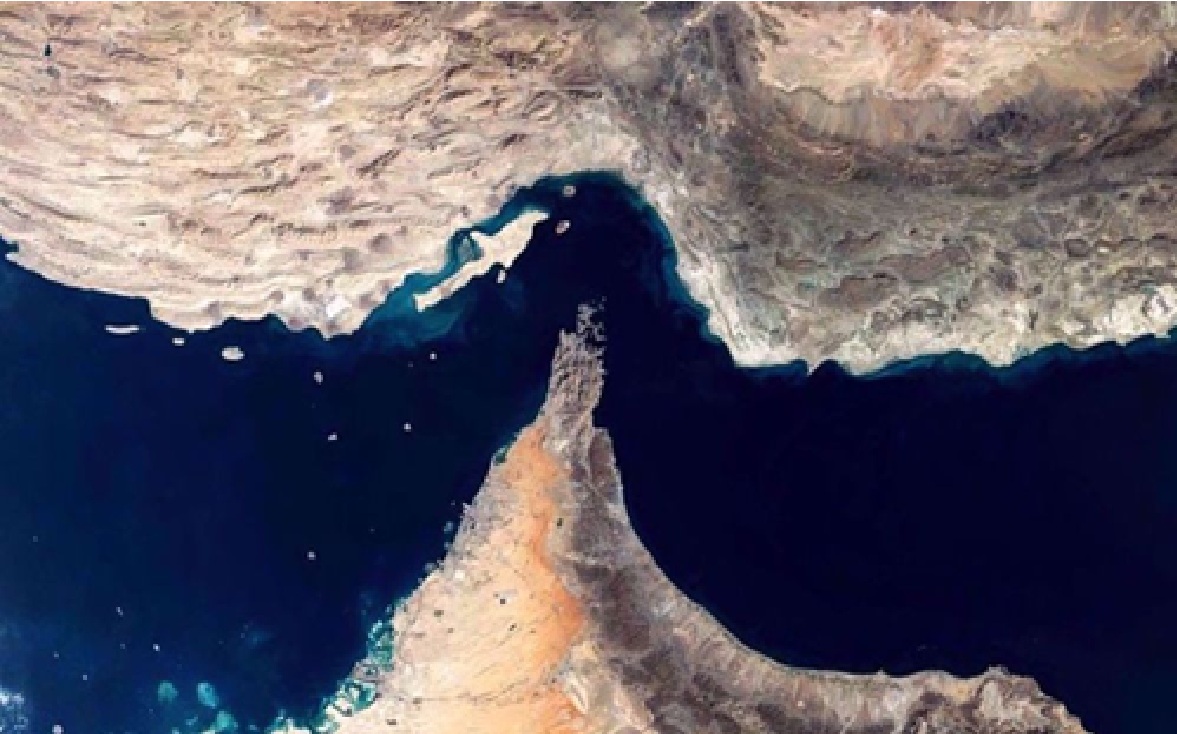
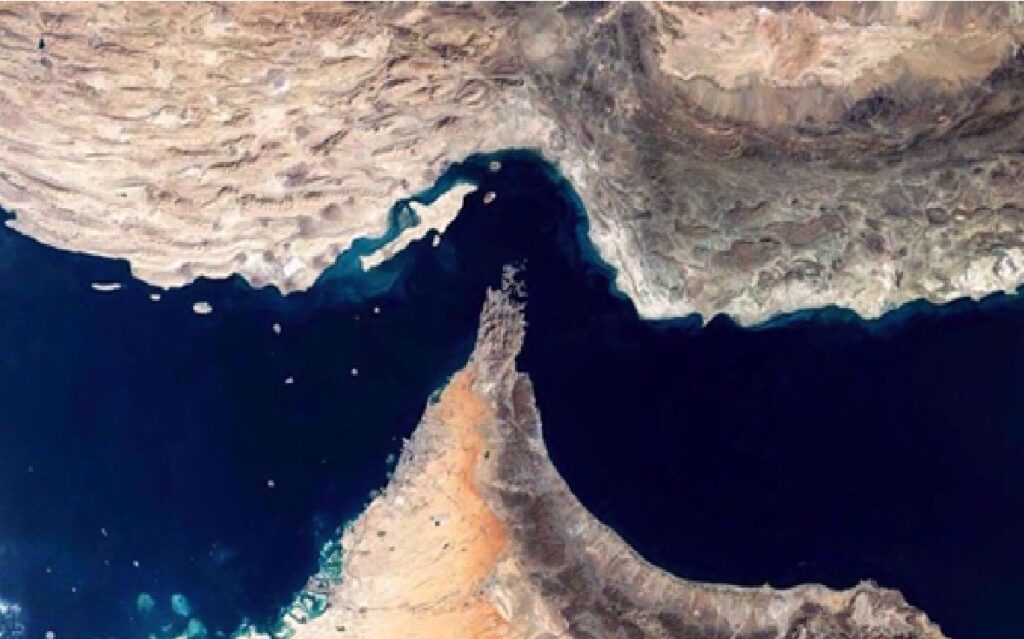
To understand the brinkmanship of 1 August, one must revisit the Memorandum of Understanding (MoU) signed in July after a blistering round of hostilities that had sent oil prices above $150 a barrel and led to the effective closure of the Strait of Hormuz, the narrow chokepoint through which roughly one-fifth of the world’s petroleum consumption transits. Omani and Chinese intermediaries hammered out the precise terms of the MoU, but they have not fully made them public. However, Iranian accounts consistently describe a framework under which Iran agreed to allow “fee-free maritime transit” through the Strait for a renewable 60-day period, provided the U.S. halted its “illegal naval blockade” and ceased its interference in regional maritime movement. In compliance, Tehran devised a designated sea lane hugging its coastline, warning vessels against straying into what it termed “illegal routes.”
The arrangement was fragile from the start. “The MoU was essentially a gentleman’s agreement between adversaries who don’t trust each other one inch,” said Dr. Anwar al-Rawas, a Muscat-based maritime conflict mediator who tracked the Backchannel negotiations. “There was no agreed map, no joint patrol mechanism. Each side interpreted ‘free transit’ differently.”
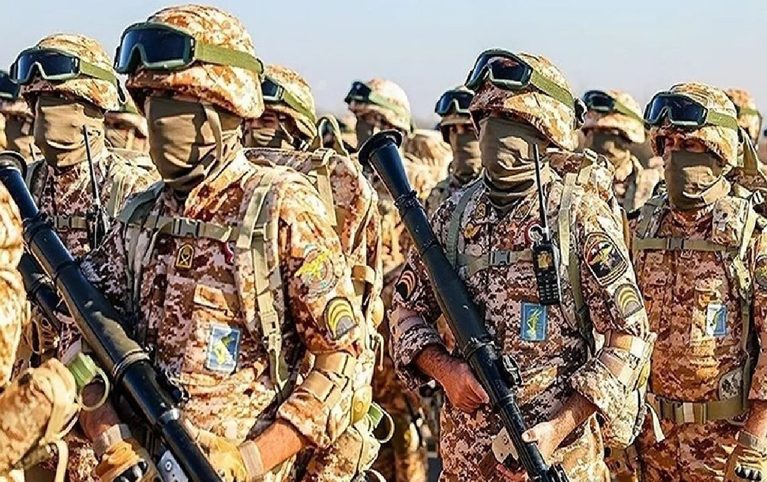
Washington’s interpretation, according to U.S. Central Command (CENTCOM) statements from late July, is that freedom of navigation is absolute and cannot be conditioned on following a route unilaterally established by Iran. The U.S. Navy, enforcing a restored maritime blockade announced on 14 July, a blockade Tehran deems illegal under international law, began escorting commercial tankers through a more southerly corridor, one that Iran insists was never authorised. When an Iranian Revolutionary Guard Corps Navy (IRGCN) fast-attack craft confronted an escorted Greek-flagged tanker on July 20 , it escalated to a standoff involving warning shots. Iran subsequently declared the corridor “shut” until Washington ceases its “instigated transit.”
A local fisherman from Khasab, Oman, whose traditional dhow now shares waters with warships, described the atmosphere: “We see the Iranian speedboats on one side, the American destroyers on the other. At night, you hear the thunder of jets. Everyone knows it takes one hot-headed commander to start a war.” Speaking anonymously, the fisherman pointed to a charred hull half-submerged near the Musandam Peninsula, a reminder, he claimed, of a recent encounter that went unreported.
Imminent Strikes And An “Extensive” Iranian Retaliation Plan:
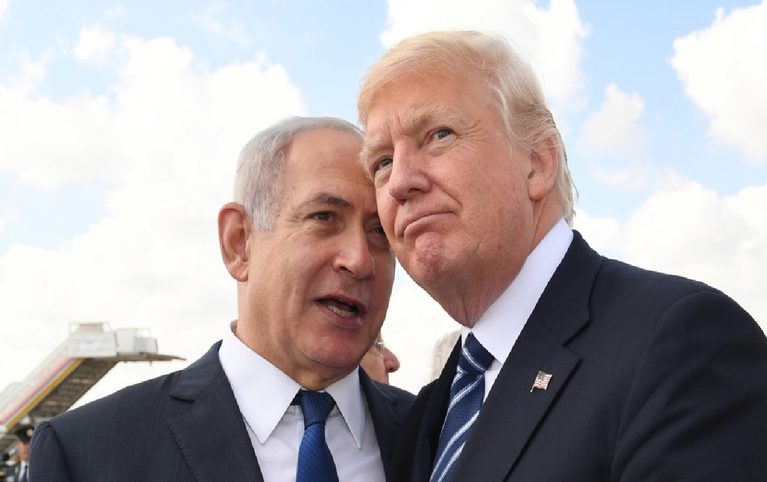
The tension snapped to a new level on Friday, 31 July. The Wall Street Journal, citing U.S. officials, reported that President Trump “has ordered the military to launch a fresh attack on Iran that could begin as soon as this weekend and last a few days.” CBS News corroborated that the United States and Israel were preparing “intense strikes against Iranian energy infrastructure,” targeting refineries, storage terminals, and port facilities critical to Iran’s ability to sustain its blockade and export its own oil. Pentagon spokespersons would not comment on operational matters, but a senior defence official, speaking on condition of anonymity, told this reporter that “the President has made clear Iran will not be allowed to strangle global commerce.” In Israel, a spokesperson for the Prime Minister’s Office said only that Israel “retains the right to defend itself against existential threats.”
Within hours, Iran’s SNSC circulated a statement via Tasnim that the country had prepared an “extensive” response plan. Intelligence sources in the region, who requested not to be named because of the sensitivity of the matter, say the plan involves two main tracks: a reciprocal strike on Israeli vital infrastructure, likely power plants, desalination facilities, and offshore gas platforms—and coordinated attacks on U.S. energy assets across West Asia. The latter could include missile and drone salvos aimed at Saudi Aramco’s Ras Tanura export terminal, the Al Dhafra Air Base in the UAE from which U.S. strike aircraft operate, or even the sprawling U.S. naval support facility in Bahrain. “The Iranians are signalling that no American ally’s oil will flow if theirs is hit,” commented former CIA Middle East analyst Bruce Riedel.
From One Strait To Many: The Chokepoint Escalation
It is Zolqadr’s mention of closing “other straits and chokepoints” that has sent shudders through shipping boardrooms and chancelleries worldwide. While the Strait of Hormuz remains the most critical artery, the warning implicitly invokes the network of Iran-allied militias and proxies capable of disrupting maritime commerce far beyond the Persian Gulf.
Dr. Nima Khorram, a maritime security specialist at the University of Tehran who maintained contacts within the IRGC’s strategic planning circles, explained: “The doctrine has evolved. If the Strait of Hormuz is attacked or if Iran’s export capability is completely destroyed, the response will not be symmetric. The Bab el-Mandeb, off Yemen, where Ansarallah [the Houthis] have already demonstrated an ability to strike vessels and block traffic, will be the first to close. After that, one can imagine pressure on the eastern Mediterranean approaches, perhaps even threats to the Suez Canal via drone swarms. The message is: if our oil is stopped, everyone’s oil stops.”
Recent incidents support this chilling projection. In June, Houthi forces claimed a drone boat attack on a tanker in the Red Sea that temporarily halted traffic through the Bab el-Mandeb. The Houthi movement’s political bureau stated on Friday night, coordinated with Tehran, vowing to “stand with the Islamic Republic in besieging the arteries of the arrogant powers.”
The head of a major London-based marine war risk insurance syndicate, who asked not to be identified due to the market sensitivity, said that hull and cargo premiums for Gulf transits have already risen forty-fold since February, and that a multi-chokepoint closure would represent an “insurability event”, meaning “no commercial underwriter would write a policy for anything transiting anywhere near the Middle East.” The International Association of Independent Tanker Owners (INTERTANKO) warned in an urgent bulletin Saturday that “safe passage can no longer be guaranteed”. It urged members to suspend voyages to the region pending further notice.
The Price At The Pump And The Ballot Box:
Zolqadr’s explicit address to “American voters” is no mere rhetorical device. With U.S. midterm elections less than 100 days away, the Trump administration is navigating the geopolitical crisis against a backdrop of domestic economic pain that Democrats are already weaponising. According to the American Automobile Association (AAA), the national average price for a gallon of regular gasoline touched $5.12 on Friday, up from $3.67 a year ago. In California, prices exceeded $7.00. The Energy Information Administration (EIA) attributes the surge directly to the effective closure of the Strait of Hormuz and the removal of a significant volume of Iranian, Iraqi, and Saudi crude from global markets.
“President Trump campaigned on energy dominance and low prices, but his strategy of maximum pressure combined with a naval blockade and now threatened bombing has brought us to the brink of an economic catastrophe,” said Lindsay Koshgarian, program director at the National Priorities Project, an anti-war advocacy group. “Working families are paying for this gamble at the pump, and the corporations that continue to profit from price gouging are the only winners.”
The political calculus is opaque. A Republican strategist familiar with White House thinking, speaking on condition of anonymity, suggested that the president’s team sees a short, sharp “decapitation” strike against Iran’s nuclear and energy infrastructure as a way to restore deterrence and then negotiate from strength, all before the election. Yet leaked intelligence assessments, parts of which were read to this reporter, cast doubt on the assumption that Iran’s retaliation can be contained. “Even a 72-hour campaign will likely trigger a cascade of asymmetric responses that will outlast any bombing window and cause enduring energy market dislocation,” one senior European intelligence official said.
Activist And Local Voices: Environmental And Humanitarian Fears
Beyond the macroeconomic numbers, local communities across the Gulf are bracing for a potential environmental calamity. The Persian Gulf is already one of the most ecologically stressed marine environments on Earth. An exchange of strikes against offshore platforms such as Iran’s Abuzar field or Saudi Arabia’s Safaniya, the world’s largest offshore oilfield, could unleash a spill rivalling or exceeding the 1991 Gulf War disaster.
Fatima al-Hammadi, a marine biologist at the UAE University in Al Ain, warned that “the Gulf’s coral reefs, dugong population, and mangrove forests are already on life support from desalination brine and climate change. A major oil spill would cause an ecosystem collapse from which recovery could take a century.” Greenpeace MENA issued a statement overnight condemning “all military actions that risk turning our shared sea into an inferno.”
In Bandar Abbas, on Iran’s Gulf coast, residents reached by messaging apps described a city under quiet siege. “The bazaars are still open, but the shelves are half empty because shipping is frozen,” said Reza, a 43-year-old schoolteacher. “We hear the air raid sirens tested every week. My children ask if the Americans will bomb us. I tell them no, but I don’t believe it myself.” Anti-war sentiment is cautiously voiced. A Tehran-based activist with the human rights group Campaign for Human Rights in Iran (CHRI), speaking via encrypted call, noted that “ordinary Iranians are already ground down by sanctions and repression. The regime’s adventurism in the Strait, while framed as defending national sovereignty, is pushing the country toward a conflict that will only immiserate the people further.”
Legal Limbo and International Pariahdom:
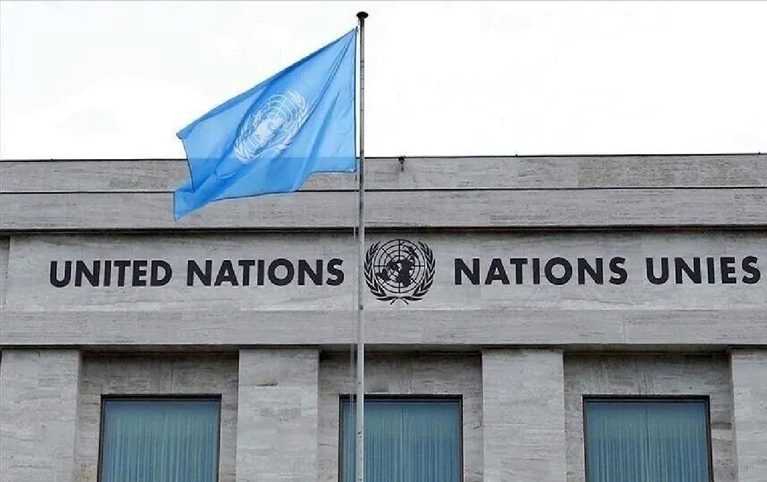
The legal foundations of both American and Iranian actions are hotly disputed. The U.S. naval blockade, designated a “maritime interception operation” by CENTCOM, is not authorised by the United Nations Security Council, and Russia and China have denounced it as a “unilateral coercive measure” tantamount to an act of war. Iran’s closure of the Strait, while presented as a reciprocal measure to violations, flouts the customary international law principle of transit passage enshrined in the United Nations Convention on the Law of the Sea (UNCLOS), to which Iran is a signatory. Legal scholars note that neither side holds the moral high ground.
“We have two states claiming exemptions from the rules-based order,” said Professor James Kraska, chair of international maritime law at the U.S. Naval War College. “The U.S. is arguing collective self-defence to enforce a blockade against Iran, stretching the Caroline test beyond recognition. Iran is asserting a right to condition passage that undermines the entire architecture of freedom of navigation. Both are violating international law in a contest of will, and the global commons are the victim.”
Congress, too, is being bypassed. Despite the 1973 War Powers Resolution requiring the president to seek authorisation for the use of military force, the Trump administration has, according to senior congressional staffers on the House Foreign Affairs Committee, provided only classified briefings and asserted inherent Article II powers to defend U.S. forces already deployed in the blockade. A bipartisan group of senators is drafting a resolution. This resolution will force a debate and vote on any prolonged offensive operation. However, the Senate may not take up the resolution before strikes commence.
The Precipice Ahead:
As dawn broke over the Gulf on Saturday, the world held its breath. Iran’s SNSC message was more than a warning; it was a loudly telegraphed red line that, if crossed by U.S. and Israeli warplanes, would trigger a retaliatory architecture designed to internationalise the pain. “The logic of mutual assured disruption,” Dr. Khorram noted, “is that if the Strait of Hormuz is going to be shut by fire, then everyone’s economic lifeline should feel the heat.”
The MoU that briefly held the door open now lies in tatters. Iran accuses the U.S. of using the truce to reposition an escort fleet along what it terms an “illegal passageway.” Washington accuses Iran of interpreting the MoU in bad faith to impose a chokehold under the guise of a “special maritime route.” Neither side appears willing to blink. President Trump, his re-election a memory but his party’s congressional majority at stake, faces the classic wartime gamble that a display of force will rally a weary electorate. Iran’s theocratic-military establishment, whose legitimacy has been battered by years of protest, sees the confrontation as an existential test of sovereignty.
Mohammad Bagher Zolqadr’s closing line, “The global economy, energy markets, and American voters will pay the price”, is both a prophecy and a threat. As oil futures markets prepare to open in Asia on Monday, and as U.S. and Israeli munitions are loaded onto aircraft in undisclosed locations, the question is no longer whether the price will be paid, but how devastatingly high the bill will climb, and who will be left to foot it. In a globalised world knitted together by maritime chokepoints, the coming hours could unravel the thread that binds us all.
Veritas Press Investigative Analysis
Independent journalism examining global affairs, power, diplomacy and accountability.
Source: Veritas Press C.I.C. | Multi-News Agencies
Help Support Our Work
Readers who believe that truth still matters have power over popular information. When just a few more people step up to support this work, it means more lies exposed, more corruption uncovered, and more accountability where it’s long overdue.
Help Protect Independent Journalism, Which Is Currently Under Attack.
If you believe journalism should serve the public, not the powerful, and you’re able to help, becoming a regular DONOR or a PAID SUBSCRIBER truly makes a difference.
DONATION APPEAL: If you found this reporting valuable, please consider supporting independent journalism.
Your support fuels our fearless, truth-driven journalism. In unity, we endeavour to amplify marginalised voices and champion justice, irrespective of geographical location. We operate independently, with no financial backing from billionaires; our readers support us.
But it’s also extremely important. One of Veritas Press’s greatest assets is its reader-funded model.
1. Reader funding means we can cover what we like. We’re not beholden to the political whims of a billionaire owner. We are a small, independent and impartial organisation. No one can tell us what not to say or what not to report.
2. Reader funding means we don’t have to chase clicks and traffic. We’re not desperately seeking your attention for its own sake; we pursue the stories that our editorial team deems important and believes are worthy of your time.
3. Reader Funding: enables us to keep our website and other social media channels open, allowing as many people as possible to access quality journalism from around the world, particularly those in places where the free press is under threat.
We know not everyone can afford to pay for news, but if you’ve been meaning to support us, now’s the time.
Your donation goes a long way. It helps us:
- Keep the lights on and sustain our day-to-day operations
- Hire new, talented, independent reporters
- Launch real-time live debates, community-focused shows, and on-the-ground reporting
- Cover the issues that matter most to our communities, in real time, with depth and integrity
Without your support, independent voices like ours will be silenced.
Furthermore, we plan to expand our work, but we can’t do so without your support. Every contribution, no matter the size, helps us stay independent and build a truly people-powered media platform.
If you believe in journalism that informs, empowers, and reflects the communities we serve, please donate today.
Submissions:
For the secure submission of documentation, testimonies, or exclusive investigative reports from any global location, please utilise the following contact details for our Investigations Desk: mailto:enquiries@veritaspress.co.uk or mailto:editor@veritaspress.co.uk
GENEVA — A United Nations fact-finding mission has concluded there are “reasonable grounds to believe”
Iran’s GDP is projected to contract by 5.4 to 6.1% in 2026, its worst performance
The Trump administration is preparing a $2.8 billion weapons package for Israel containing 40,000 2,000-pound

Film alleges mass civilian deaths are routinely built into military decisions amid Israel’s genocidal war
The Israeli rights group says violence, displacement, economic strangulation, and settlement expansion form part of

Houthi forces have captured the historic Red Sea port of Mocha and are advancing on
London’s historic sanctions against Israeli settlements mark a watershed moment in UK foreign policy, but
With 95% of Gaza’s population now wholly dependent on aid and more than 90% stripped
India calls for Kashmir and Ladakh to appear only on its official map after a
ISLAMABAD – In the high-stakes political theatre of Pakistan, the battleground has shifted from the


















qpbama
9ap1a2
ab22ck