Kamran Faqir is a volunteer investigative journalist and writer committed to exposing hidden truths and amplifying underreported stories. Driven by social justice, he brings sharp insight and fearless truth-telling to independent journalism. NUJ registered.
Listen to this article
Help support our mission, donate today and be the change. Every contribution goes directly toward driving real impact for the cause we believe in.
Article Date Published:
Article Date Modified:
17 minutes
Views:96
A landmark medical journal article documents recurring sexual violence against Palestinians, including rape, genital torture, humiliation, and abuse of women and children.
Content warning: This article contains graphic descriptions of sexual violence and torture.
A comprehensive analysis published Tuesday in the British Medical Journal (BMJ) has brought together years of scattered evidence documenting what the authors describe as systematic patterns of conflict-related sexual violence (CRSV) against Palestinians, evidence they argue is so consistent across different settings that it can no longer be dismissed as isolated incidents.
The article, titled “Sexual Violence against Palestinians,” was authored by five medical, public health and human rights experts: Dr Rubin Minhas, Professor Neve Gordon, Dr Mishal Khan, Dr Nick Maynard and Professor Gene Feder. Drawing on investigations by United Nations bodies, Israeli human rights organisations, medical professionals and international humanitarian groups, the authors examine recurring patterns of sexual violence against Palestinian men, women and children across Israeli detention facilities, military operations, checkpoints and illegal settler attacks in the occupied West Bank.
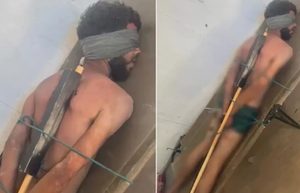
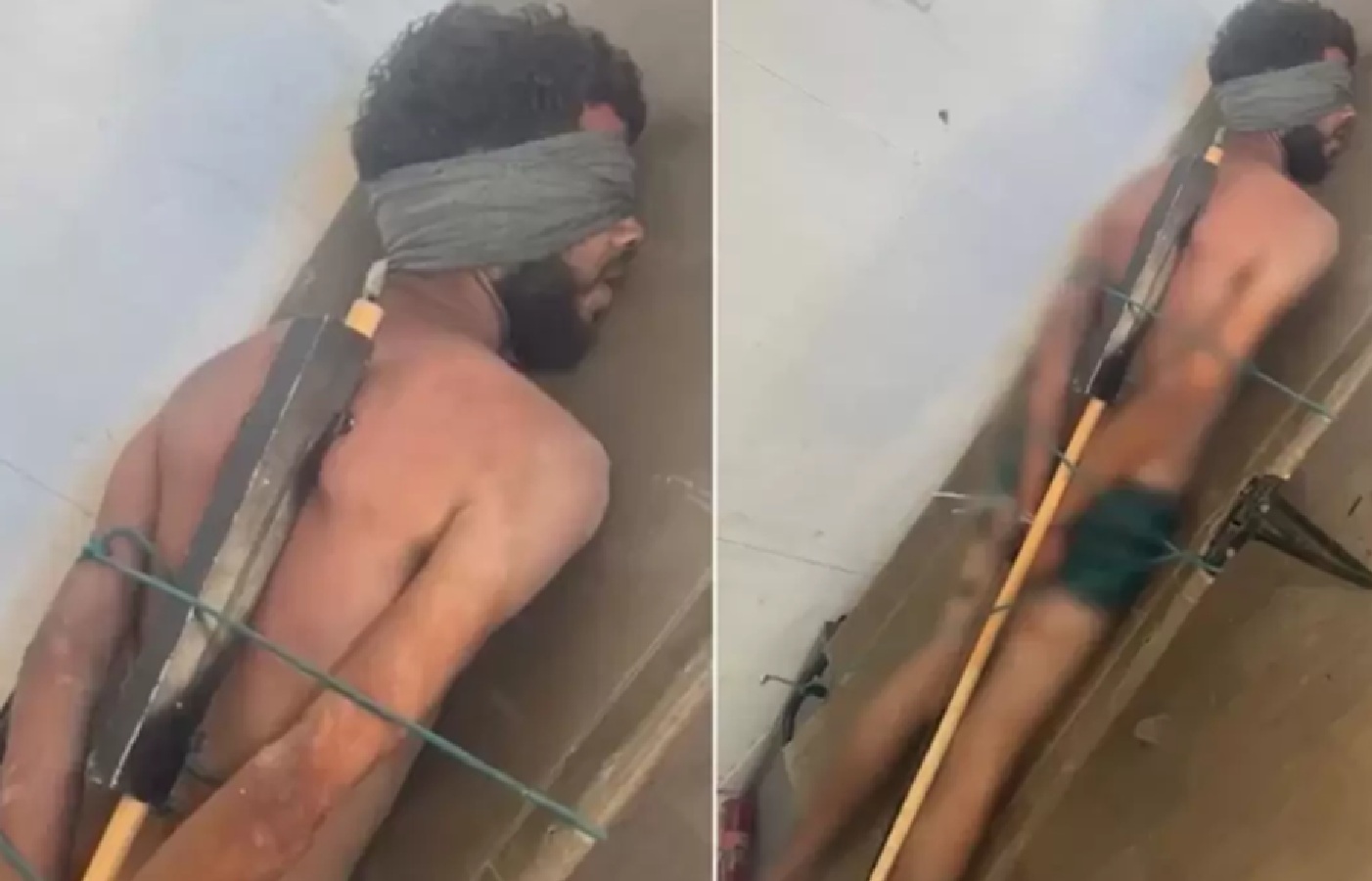
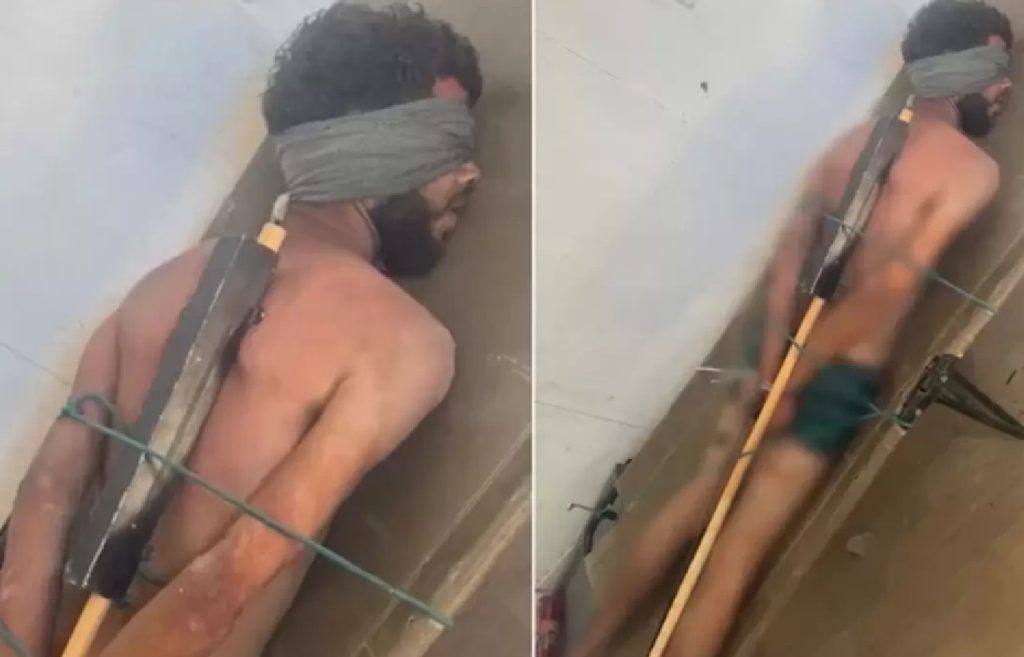
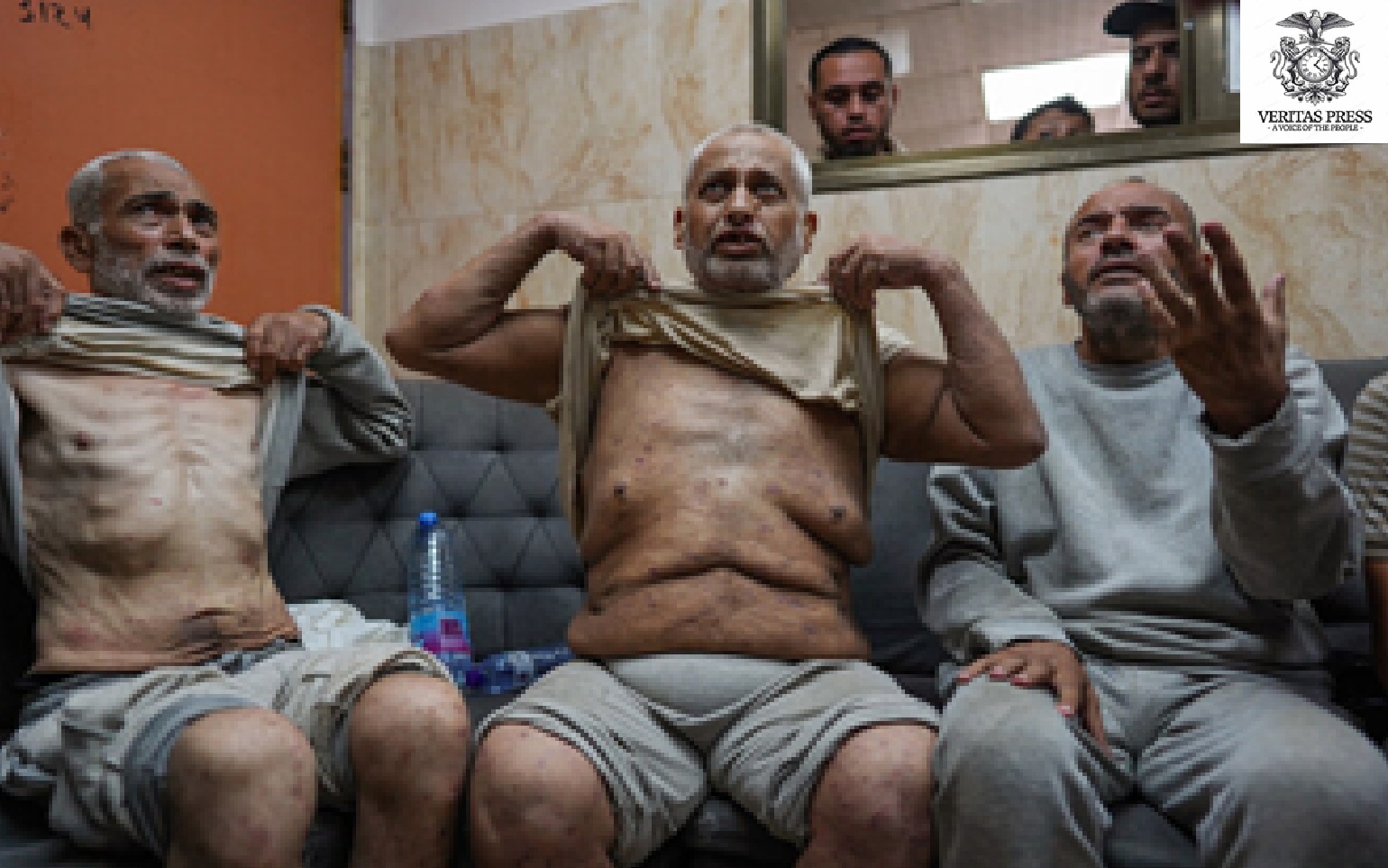
A viral image showing the abuse of a Palestinian prisoner from Gaza. (Photo: via social media)
Key Takeaways
A BMJ opinion article cites a UN investigation concluding that sexual and gender-based violence had become part of Israeli security forces’ “standard operating procedures” toward Palestinians.
Among 59 Palestinian journalists interviewed after Israeli detention, 17 reported sexual violence, while more than half of 165 detained children reported witnessing or experiencing sexual abuse.
The authors warn that sexual violence contributes to forced displacement, causes lasting physical and psychological harm, and persists amid serious failures of accountability.
‘Haunting’ Testimonies Prompt Calls For Justice
For Dr Rubin Minhas, a co-author of the BMJ article, the accounts of Palestinian schoolgirls afraid to cross Israeli military checkpoints after soldiers exposed themselves to women and girls stayed with him long after he reviewed the evidence.
“I think it just brought home to me how absolutely bizarre it is that having to go to school and pass through military checkpoints is the norm before we even get to the sexual violence,” Minhas told The New Arab.
The descriptions were “haunting,” he said, not only because of the sexual abuse, but because Palestinian children were forced to navigate military checkpoints simply to reach their classrooms.
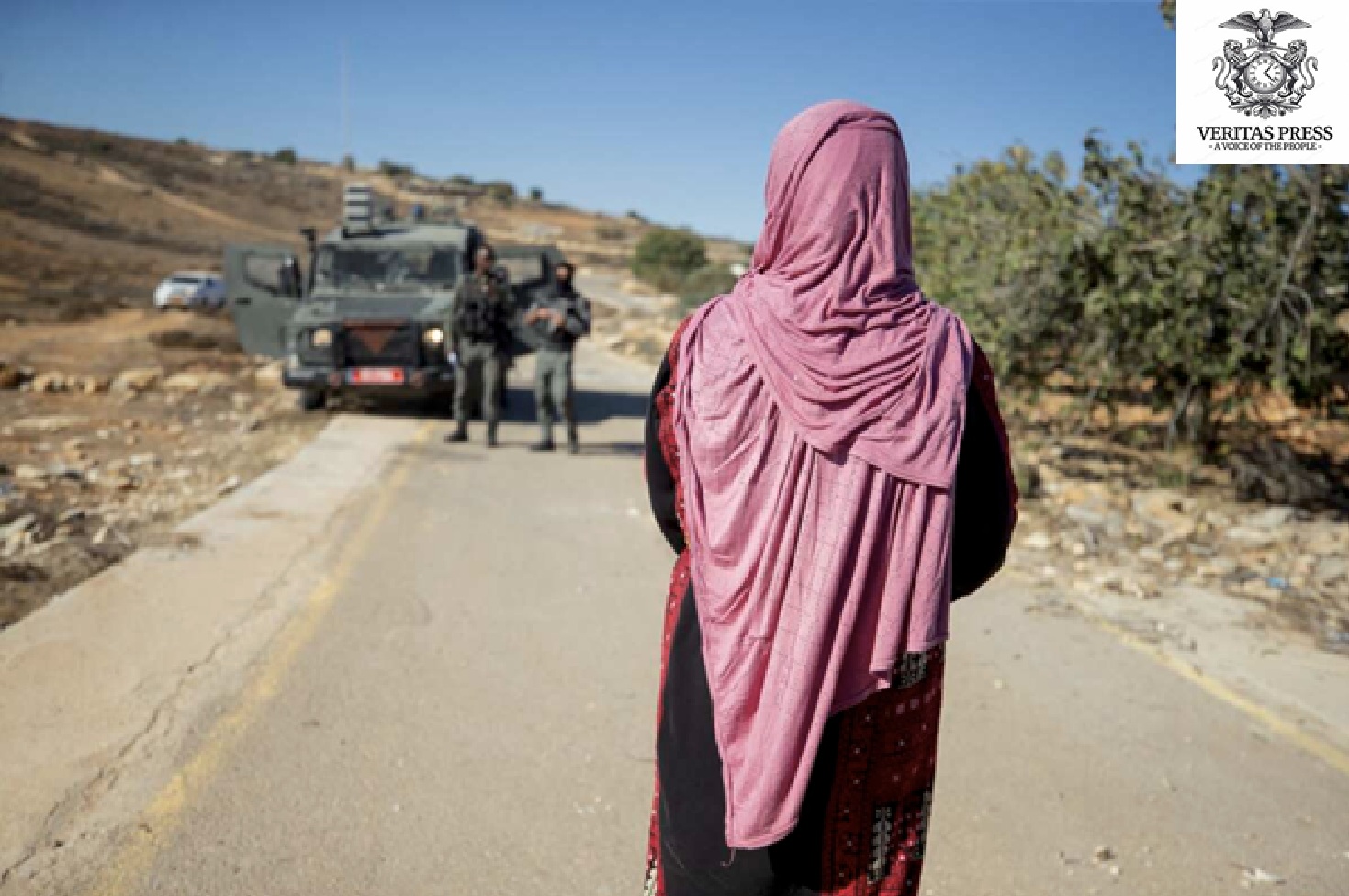
The accounts include Palestinian schoolgirls in Hebron who feared passing through a checkpoint where Israeli soldiers had reportedly exposed their genitals to women and girls, according to a UN investigation cited by the authors.
Published on Tuesday, the article brings together evidence of conflict-related sexual violence against Palestinian women, men, and children, exposing patterns of abuse across Israeli detention facilities, military checkpoints, raids, and displacement sites, and demanding independent investigations and accountability.
The purpose, Minhas said, was to draw together evidence “dispersed across accounts of detention, gendered abuse, humiliation, and displacement, and harm to children, to actually paint a picture of what was going on.”
Sexual Violence As A Pattern Of Israeli Abuse
Sexual violence against Palestinians has been documented across Israeli detention facilities, military operations, checkpoints and illegal settler attacks in the occupied West Bank, according to the BMJ article.
The article cites a 2025 UN Commission of Inquiry finding that specific forms of sexual and gender-based violence “de facto form part of” Israeli security forces’ “standard operating procedures” toward Palestinians.
The commission further concluded that sexualized torture, including rape and genital violence, was “committed with either explicit orders or an implicit encouragement by the top civilian and military leadership.”
According to the BMJ authors, the evidence extends beyond individual cases of abuse and must be examined in the context of Israel’s occupation, detention practices and wider system of control over Palestinians.
In its 2026 report, the UN listed Israeli armed and security forces for suspected patterns of CRSV, providing a basis for more focused UN engagement on prevention and accountability.
Understanding CRSV requires attention to forms and patterns of violence, not only incident counts, the authors write. It includes rape, sexual torture, sexualised humiliation, and reproductive harm directly or indirectly linked to conflict. CRSV often arises in coercive settings shaped by occupation, detention, displacement, obstructed access, and command tolerance or complicity.
Rape And Genital Torture In Israeli Detention
The BMJ article identifies Israeli detention facilities as particularly dangerous environments for Palestinians because of the extreme power imbalance between detainees and their captors.
“People in detention are at high risk of experiencing CRSV because extreme power asymmetry, dependency, and restricted oversight facilitate coercive control, dehumanisation, and sexual humiliation,” the authors write.
The article cites a February 2026 investigation by the Committee to Protect Journalists (CPJ) involving 59 Palestinian journalists released from Israeli detention. Seventeen of those interviewed, representing 29%, reported experiencing sexual violence, including two who described rape.
The article also draws on investigations by Israeli human rights organisations B’Tselem and Physicians for Human Rights Israel, alongside UN and medical sources.
These investigations documented recurring allegations of forced nudity, sexual humiliation, rape threats, rape and anal assault with objects.
Other reported abuses included sexualized torture involving batons and electric shocks applied to the genitals and anus.
Medical accounts documented severe genital and anorectal injuries, including penile and rectal bleeding and blood in the urine. One case examined by the UN involved a rectal rupture so severe that the victim required surgery and the creation of a stoma.
Other accounts described Palestinian detainees losing one or both testicles following beatings to their genitals.
The BMJ authors warn that the available evidence likely understates the extent of the abuse because sexual violence, particularly against men and children, is frequently under-reported.
“Given under-reporting among men and children, and limited scrutiny, the convergence of accounts across settings and sources warrants consideration as a pattern rather than isolated incidents,” they write.
Palestinian Women Targeted With Sexual Humiliation
The article also documents sexual violence and humiliation directed against Palestinian women and girls during military raids, at checkpoints, in detention facilities, and in displacement settings.
According to the sources reviewed by the authors, Palestinian women have reported being forced to undress, sometimes publicly or while accompanied by their children.
“Sources describe forced undressing, sometimes in public or while travelling with children, sexual touching during searches, and sexualised humiliation,” the article states.
Other accounts describe unwanted sexual touching during searches, beatings after refusing to undress, sexual insults, and rape threats. Women also reported threats that degrading photographs or videos would be circulated online.
The article notes that some detained women were denied sanitary pads while menstruating.
The UN Commission of Inquiry additionally documented the publication by Israeli National Security Minister Itamar Ben-Gvir of photographs showing detained Palestinian women in degrading and coercive circumstances.
Israeli soldiers were also reported to have posted photographs and videos displaying Palestinian women’s underwear taken from homes in Gaza. Many of those images were subsequently removed, while the accounts responsible were closed or made private.
The BMJ article places these incidents within a broader pattern of sexualized humiliation used against Palestinians.
Sexual Violence And Forced Displacement
The authors also examine the role of sexual violence in the forced displacement of Palestinian communities in the occupied West Bank.
Drawing on humanitarian and human rights investigations, the article describes rape threats, sexual harassment, genital exposure and attempts to touch Palestinian women during attacks by illegal Israeli settlers.
Some women reported being followed by settlers while walking to the latrines.
Fear of sexual violence was also reported to prevent women from working and girls from attending school. In some cases, families resorted to early marriage for their children amid concerns about their safety.
The BMJ article cites research involving 39 displaced Palestinian households in Area C of the occupied West Bank. Over 70% identified threats against women and children, particularly sexualised violence, as a decisive reason for leaving their homes.
“Sexual violence in conflict is recognised as a means of terrorisation and forced displacement,” the authors write.
They connect these findings to international humanitarian law, under which forcible transfer of protected civilians is prohibited except in narrowly defined circumstances.
They also cite UN experts who have warned that sexual and gender-based violence is being used as a tool of occupation, contributing to Palestinian displacement.
A UN report documented how more than half of 165 children interviewed, aged 12 to 17 at the time of detention, reported witnessing or experiencing sexual violence in Israeli detention [Getty]
More Than Half Of Detained Children Report Sexual Abuse
The article devotes particular attention to Palestinian children, citing evidence of sexual violence and other forms of abuse during Israeli military detention.
“Children are at particular risk of CRSV because conflict, displacement, family separation, and detention compound their developmental vulnerability to abuse,” the authors note.
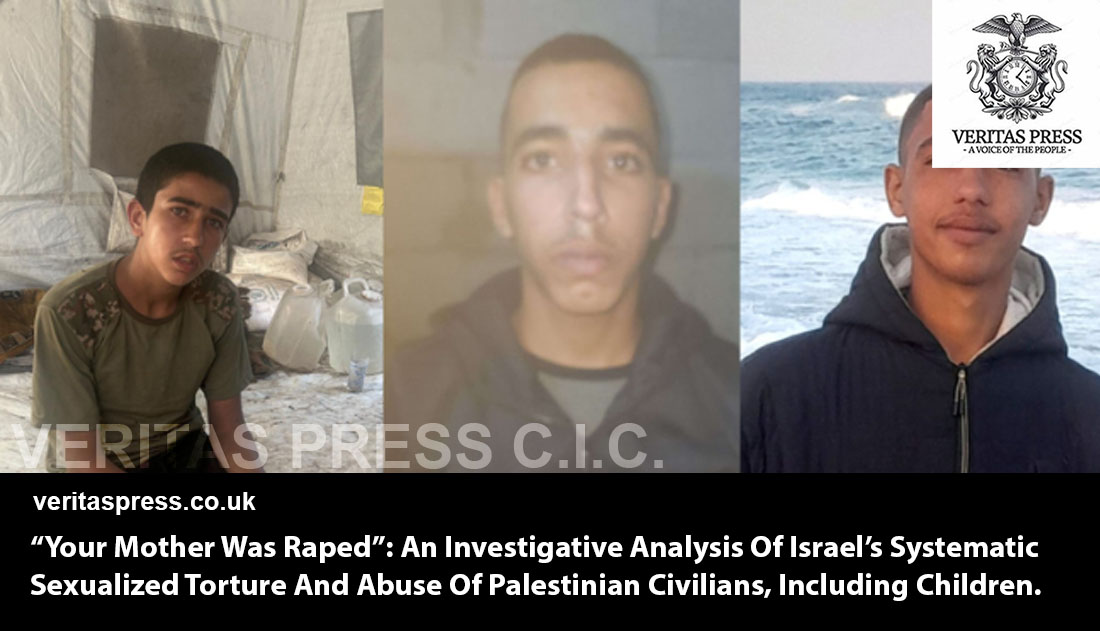
According to research published by Save the Children in 2025, more than half of 165 Palestinian children, aged between 12 and 17 at the time of detention, reported witnessing or experiencing sexual violence.
The reported abuses included rape threats, forced stripping, and genital assault.
Earlier Save the Children investigations, published in 2020 and 2023, also documented recurring patterns of mistreatment, including solitary confinement, denial of family contact, beatings, strip searches, and restrictions on healthcare.
A 2026 UN Commission report documented sexual and gender-based violence against children during arrest and detention, including forced public nudity and sexualised humiliation. It also recorded allegations of rape, threats, and genital violence and rape.
Beyond detention facilities, the BMJ article cites reports of Israeli settlers sexually harassing and humiliating Palestinian children in the West Bank. One boy was reportedly stripped and urinated on.
The article also describes Palestinian schoolgirls fearing military checkpoints, including one in Hebron where Israeli soldiers had reportedly exposed their genitals to women and girls.
Lasting Psychological And Physical Harm
The authors warn that the consequences of sexual violence extend well beyond the immediate physical injuries suffered by survivors.
According to Save the Children’s 2020 investigation, 85% of Palestinian children interviewed said detention had changed them, affecting their sense of identity and relationships with others.
The organisation’s 2025 report documented lasting psychological symptoms, including anxiety, panic attacks, nightmares, depression, emotional numbness, and social withdrawal.
Twenty percent of the children surveyed reported intentional self-harm. Another 45% did not return to school following their release from detention.
“We’re now moving away from the immediate act and are thinking about the long-term effects, the effects on their education, psychology, their development, it becomes intergenerational,” Minhas told The New Arab.
The BMJ authors stress that children exposed to sexual violence and abuse during conflict face potentially long-term psychological, developmental, educational, and social consequences.
They also warn that the conditions associated with occupation, detention, displacement, and restricted humanitarian access can prevent survivors from reporting abuse or obtaining medical and psychological treatment.
Israeli Justice System Fails To Ensure Accountability
The article cites the UN Commission of Inquiry’s conclusion that Israeli civilian and military justice systems have failed to ensure accountability for sexual crimes committed against Palestinians.
The commission found that sexual and gender-based violence was used to “further accentuate the subordination of the occupied people” and “maintain the Israeli system of oppression.”
The BMJ authors also highlight broader evidence of impunity involving Israeli military personnel.
Of 1,260 cases of alleged offences by Israeli soldiers against Palestinians known to the military law enforcement system between 2017 and 2021, only 11 resulted in indictments. That represents approximately 0.87% of the cases, according to figures from Israeli rights group Yesh Din.
The authors further note that independent investigations have faced significant obstacles.
Since October 2023, the UN Commission of Inquiry has lacked access to Israel and the occupied Palestinian territories. The International Committee of the Red Cross has also been unable to visit Palestinians held in Israeli custody.
Although Israel’s Supreme Court ruled in June 2026 that the prohibition on such visits must be revoked, the visits had not resumed by the time of the BMJ article’s publication.
“The first instance is we need to get independent investigators into those settings,” Minhas said. “And it’s only once you’ve got independent investigators in those settings that there’s actually a prospect that people may find that the impunity that they’ve enjoyed disappears.”
The authors call for unrestricted access for independent investigators, medical professionals, and humanitarian organisations.
“Full and unrestricted access for independent investigators and medical and humanitarian organisations must be guaranteed,” they write.
A Pattern Of Violence, Not Isolated Incidents
The BMJ article brings together existing investigations and testimonies rather than presenting new primary research. Its authors warn that sexual violence remains significantly under-reported, particularly among men and children, while restrictions on independent investigations have helped sustain impunity.
Minhas told The New Arab that medical research into sexual violence against Palestinians remained strikingly limited compared to other conflicts.
“The interesting thing here, from a medical perspective, was the remarkable lack of documentation and publication of conflict-related sexual violence in this setting,” he said, contrasting it with the much larger body of research into sexual violence in other conflicts, including Ukraine.
He suggested that political pressures could discourage academics and researchers from investigating abuses against Palestinians.
“I think there’s a degree of personal and professional exposure for academics and for researchers seeking to try and study and understand this subject,” Minhas said.
The article concludes that all credible allegations and patterns of conflict-related sexual violence must be investigated, regardless of the identity of the victims or perpetrators.
“Its central finding is that sexual violence against Palestinians cannot be understood solely through isolated incidents, but must also be examined within the wider conditions of detention, occupation, displacement, and institutional impunity.”
“Sexual violence in conflict is a grave violation of human dignity that can inflict profound physical and psychological harm; its consequences can fracture communities and endure across generations,” the authors write. “All credible patterns of sexual violence must be subject to accountability, regardless of who the victims or perpetrators are or where the violence occurs.”
Conclusion: A Medical Record Of Atrocity, And A Political Record Of Impunity
The BMJ article is not merely a catalogue of horrors. It is a synthesis of evidence that, taken together, meets the threshold of a system. The UN Commission’s finding that sexual and gender-based violence “de facto form part of” Israeli security forces’ “standard operating procedures” is not an allegation of isolated misconduct. It is a finding of institutional practices. When rape, genital torture, forced nudity, and the sexual abuse of children are described as routine, the question is no longer whether individual perpetrators should be prosecuted. The question is why the system that produced them remains protected.
That protection is not maintained by Israel alone. It is maintained by Western governments. The United States has repeatedly vetoed UN Security Council action, continued arms transfers, and sanctioned ICC personnel. Britain and Germany have continued arms sales or components while issuing statements of concern. The European Union has failed to suspend its association agreement with Israel. Western states suspended UNRWA funding based on allegations, deepening the humanitarian crisis. These are not passive failures. They are active choices. The West has not merely failed to stop sexual violence against Palestinians; it has helped to sustain the conditions in which it continues.
The ICC’s inability to enforce its warrants is the sharpest illustration of the gap between law and power. The court has jurisdiction over Palestine. It has issued arrest warrants. But enforcement depends on states. When those states are allies of the accused, the warrants become paper. The same governments that championed the ICC’s pursuit of Russian officials have equivocated, refused, or remained silent when the accused are Israeli. This is not a technical problem. It is a political decision. It is selective enforcement. It is the architecture of impunity.
International law has not failed because it lacks rules. It has failed because it lacks enforcement against the powerful. The Geneva Conventions prohibit forcible transfer. The Rome Statute prohibits sexual violence as a war crime and crime against humanity. The ICJ has issued provisional measures. The UN Commission has documented patterns. And yet the investigators are barred. Since October 2023, the UN Commission of Inquiry has lacked access to Israel and the occupied Palestinian territory. The ICRC has been unable to visit Palestinians in Israeli custody. Even Israel’s Supreme Court ruled in June 2026 that the prohibition on Red Cross visits must be revoked, yet by publication, the visits had not resumed. The law is not absent. It is being blocked.
The BMJ authors call for unrestricted access for independent investigators. That is the minimum. But access without enforcement is documentation without consequence. Accountability requires more: universal jurisdiction prosecutions, arms embargoes, asset freezes, travel bans, suspension of trade privileges, and the political will to treat Israeli officials like any other accused. It requires Western states and their allies to stop shielding the accused and start obeying the law they claim to uphold. It requires media that treats Palestinian testimony with the same urgency as testimony from other conflicts, not as a niche story, but as a front-page indictment of a global order.
Until then, the BMJ article will stand as a haunting record, not only of what was done to Palestinians, but of what the West chose not to do about it. The evidence is in. The system is not. And the silence is complicity.
Veritas Press Investigative Analysis Independent journalism examining global affairs, power, diplomacy, and accountability.
Source:Veritas Press C.I.C. | Multi-News Agencies
Help Support Our Work
Readers who believe that truth still matters have power over popular information. When just a few more people step up to support this work, it means more lies exposed, more corruption uncovered, and more accountability where it’s long overdue.
Help Protect Independent Journalism, Which Is Currently Under Attack.
If you believe journalism should serve the public, not the powerful, and you’re able to help, becoming a regular DONOR or a PAID SUBSCRIBER truly makes a difference.
DONATION APPEAL: If you found this reporting valuable, please consider supporting independent journalism.
Your support fuels our fearless, truth-driven journalism. In unity, we endeavour to amplify marginalised voices and champion justice, irrespective of geographical location. We operate independently, with no financial backing from billionaires; our readers support us.
But it’s also extremely important. One of Veritas Press’s greatest assets is its reader-funded model.
1. Reader funding means we can cover what we like. We’re not beholden to the political whims of a billionaire owner. We are a small, independent and impartial organisation. No one can tell us what not to say or what not to report.
2. Reader funding means we don’t have to chase clicks and traffic. We’re not desperately seeking your attention for its own sake; we pursue the stories that our editorial team deems important and believes are worthy of your time.
3. Reader Funding: enables us to keep our website and other social media channels open, allowing as many people as possible to access quality journalism from around the world, particularly those in places where the free press is under threat.
We know not everyone can afford to pay for news, but if you’ve been meaning to support us, now’s the time.
Your donation goes a long way. It helps us:
Keep the lights on and sustain our day-to-day operations
Hire new, talented, independent reporters
Launch real-time live debates, community-focused shows, and on-the-ground reporting
Cover the issues that matter most to our communities, in real time, with depth and integrity
Without your support, independent voices like ours will be silenced.
Furthermore, we have plans to expand our work, but we can’t do it without your support. Every contribution, no matter the size, helps us stay independent and build a truly people-powered media platform.
If you believe in journalism that informs, empowers, and reflects the communities we serve, please donate today.
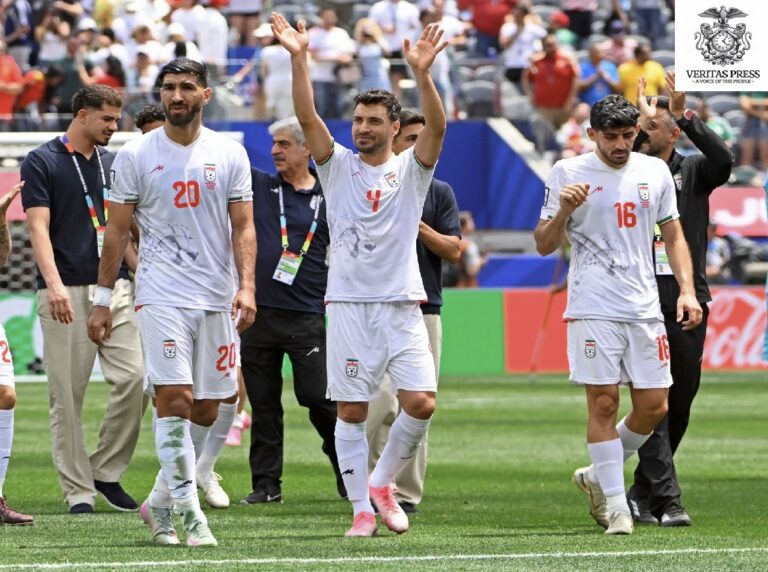
SEATTLE, TEHRAN — The U.S. Department of Homeland Security (DHS) will allow Iran’s national football team to enter the country 48 hours before their critical World Cup match against Egypt on Friday, a modest concession in a tournament where Team Melli’s travel conditions have sparked claims of oppression and competitive disadvantage.