


Help support our mission, donate today and be the change. Every contribution goes directly toward driving real impact for the cause we believe in.
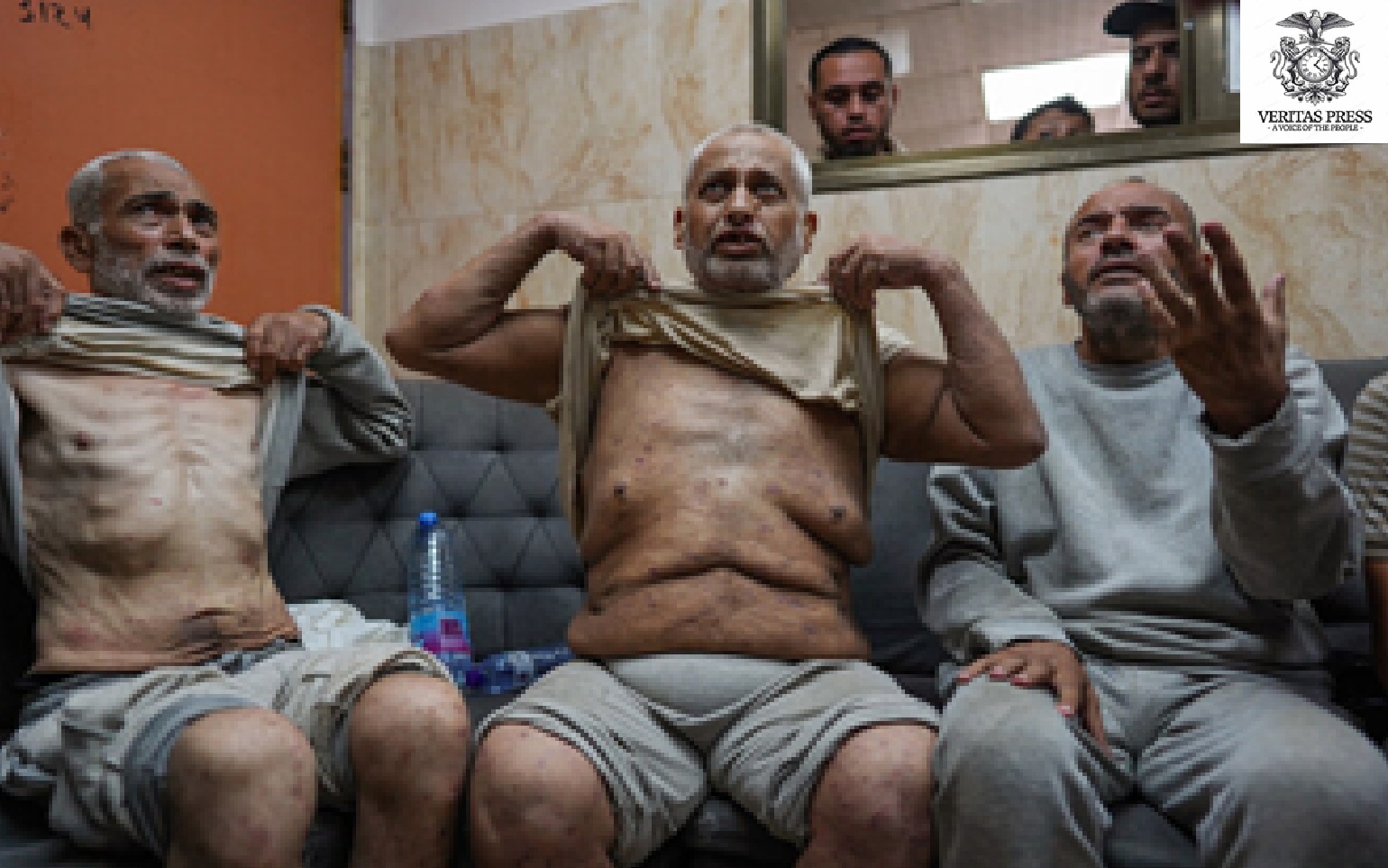
GAZA – On Sunday, April 26, 2026, fifteen Palestinian detainees were released from Israeli custody through the Kerem Shalom crossing in southern Gaza. They were not freed into a world of rehabilitation or family reunification. Instead, they were immediately hospitalised at Al-Aqsa Martyrs Hospital in central Gaza, their bodies so depleted, their frames so emaciated, that witnesses and journalists on the scene reported they appeared “severely thin and exhausted, with some showing visible signs of injury”.
The releases have become a grim, repetitive ritual since the US-backed ceasefire took effect on October 10, 2025. Each small batch of detainees returned from Israeli prisons serves as a barometer of what occurs behind the walls of a detention system that leading Israeli, Palestinian, and international human rights organisations now characterise as a “network of torture camps”.
The Prisoners’ Media Office, a non-governmental monitoring body, confirmed the transfer but withheld medical details. The visual testimony, however, was indisputable. “Every time prisoners are released, we find the prisoners’ bodies reflecting the level of crimes committed against them,” the Palestinian Prisoners’ Society (PPS) declared in a statement released concurrently. “These include medical abuses, starvation, and brutal beatings that continued until the last days of their release.”
The fifteen individuals are but a fraction of a larger incarcerated population. Official Palestinian figures now place the number of Palestinians held in Israeli jails at over 9,600, including 90 women and at least 350 children. According to data from the Israeli NGO HaMoked, as of early 2026, the number stood at 9,446.
The Architecture Of Abuse, Beyond The “Torture Camp” Label:
The systematic nature of the abuses inflicted upon Palestinian detainees has been meticulously documented by a chorus of authoritative voices, transforming the discourse from isolated allegations to a documented state policy.
B’Tselem’s Indictment: In August 2024, the respected Israeli human rights organisation B’Tselem published “Welcome to Hell,” accusing Israeli authorities of systematic abuse in what it directly labelled “torture camps”. In January 2026, the organisation released a damning follow-up report, “Living Hell: The Israeli Prison System as a Network of Torture Camps.” Building on testimony from 21 recently released Palestinians, B’Tselem concluded that “Israeli prisons continue to function as a network of torture camps for Palestinians, with the systematic abuse even more extensive than before”. The report detailed a catalogue of horrors: electric shocks, use of tear gas and stun grenades, burning by extinguishing cigarettes on inmates’ bodies, pouring boiling liquids, firing rubber-coated metal bullets, beatings with batons, and setting dogs on detainees. Critically, B’Tselem documented sexual violence ranging from threats and forced stripping to “beatings to the genitals that caused severe injuries, setting dogs on prisoners, and forced anal penetration with various objects”.
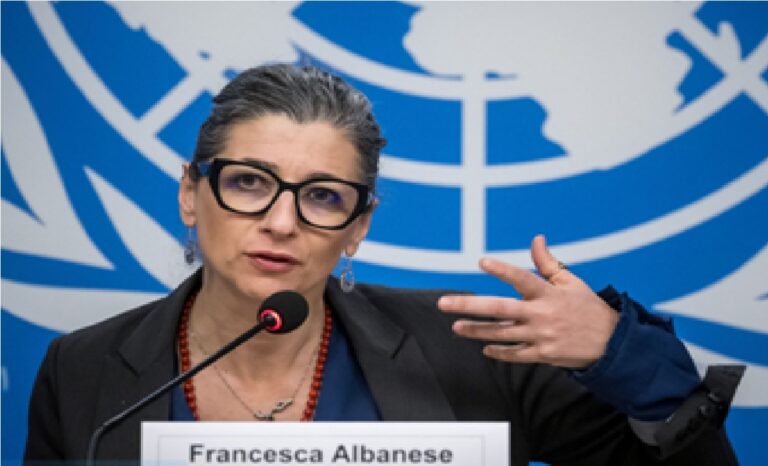
The UN’s Verdict: In November 2025, the United Nations Committee Against Torture (CAT) published findings that crystallised the international consensus. The committee expressed “deep concern over allegations of repeated severe beatings, dog attacks, electrocution, waterboarding, use of prolonged stress positions [and] sexual violence”. In language that carries profound legal gravity, the CAT concluded that Israel maintains “a de facto state policy of organised and widespread torture”. The report noted that 75 Palestinians had died in custody over the course of the war, a toll it described as “abnormally high” and one that “appears to have exclusively affected the Palestinian detainee population”. The UN Human Rights Office, in an earlier 2025 report, detailed testimonies of detainees “held in cage-like facilities, stripped naked for prolonged periods, wearing only diapers,” subjected to “prolonged blindfolding, deprivation of food, sleep and water,” and “being burnt with cigarettes”. UN Human Rights Chief Volker Türk decried “a range of appalling acts, such as waterboarding and the release of dogs on detainees, amongst other acts, in flagrant violation of international human rights law and international humanitarian law”. In March 2026, UN Special Rapporteur Francesca Albanese warned that the systematic torture practised by Israel against Palestinians has become “a central tool in the ongoing grave violations” and a “state doctrine”.
The Testimony of Doctors: Perhaps the most chilling evidence of systemic targeting comes from Gaza’s medical professionals. An investigation by the Arab Reporters for Investigative Journalism (ARIJ) and The Guardian revealed that over 160 Gazan medics were held in Israeli prisons. Dr. Issam Abu Ajwa, a 63-year-old surgeon, described being dragged from an operating theatre at al-Ahli Arab Hospital, beaten, and subjected to months of torture. “There were no rules,” Dr. Abu Ajwa testified. “They would throw me on the ground. One would hit me on the head while the other opened my ear and poured water inside”. He recounted guards forcing a toilet brush into his mouth while chanting, “Today we are going to brush your teeth,” breaking his teeth in the process. Dr. Hussam Abu Safiya, the director of Kamal Adwan Hospital, remains detained under Israel’s Unlawful Combatants Law. His lawyer has described his detention conditions as “inhumane,” alleging he faces “physical and psychological intimidation”. Amnesty International has demanded his immediate and unconditional release. Dr. Ahmed Mehana, Director of Al-Awda Hospitals, revealed after his own release that detained doctors were subjected to “the worst types of torture and harsh treatment” during interrogation. According to Healthcare Workers Watch, 339 healthcare workers from Gaza have been detained by the Israeli military, with at least 160 still inside Israeli prison facilities.
Starvation as Policy: The emaciated frames of the fifteen released detainees are not incidental; they are the product of deliberate policy. Amnesty International has explicitly stated that “starvation is being used as a tool to torture Palestinians”. The broader context of famine in Gaza amplifies the cruelty. As of April 2026, the World Health Organization (WHO) confirmed that 99 people in Gaza had died from malnutrition so far this year, including 29 children under five, with numbers considered underestimates. An April 2026 WHO report found that “nearly 12,000 children under five years were identified as suffering from acute malnutrition” in July 2025 alone, the highest monthly figure ever recorded. The WHO chief reported that 2 million people in Gaza are facing starvation amid a deliberate blockade of food supplies. For detainees inside Israeli prisons, the deprivation is engineered. B’Tselem’s “Living Hell” report documents “deliberate starvation and denial of medical care, all of which have led to numerous deaths”. The PPS has catalogued abuses, including “thirst torture” and the systematic denial of adequate nutrition.
The Accounting Of The Dead:
The death toll among Palestinian detainees represents the bloodiest chapter in the history of the prisoner movement. The Palestinian Detainees’ Affairs Commission and the PPS place the number of known detainee deaths since October 7, 2023, at over 98, a figure Amnesty International corroborated in March 2026. B’Tselem, relying on its own monitoring, documented 84 identified Palestinian prisoners and detainees who died in Israeli custody between October 2023 and January 2026, acknowledging that other organisations have reported “at least 94 deaths, including some whose identities are unknown”. As of March 2026, the PPS reported 89 detainee deaths, 52 of them from Gaza. Since 1967, the total number has reached approximately 326.
The causes of death converge on a lethal triad: torture, starvation, and medical neglect. B’Tselem’s analysis of ten autopsies performed on Palestinians who died in Israel Prison Service (IPS) custody since October 2023 found that “denial of medical treatment was documented in six of 10 cases”. The human rights centre described denial of medical treatment as “a method of torture in itself, leading to irreversible harm that ranges from limb amputations to loss of hearing and eyesight, and even cases of death”. Skin diseases, particularly scabies, are “particularly rampant, as it is not adequately treated and continue to spread throughout the facilities”.
The return of more than 300 unidentified bodies in early 2026, many decomposed or mutilated, has further complicated identification efforts amid Israeli restrictions on forensic resources entering Gaza. The Palestinian Centre for Human Rights (PCHR) has characterised these returns as part of a broader pattern of concealment.
The Wall Of Impunity, Sde Teiman And The Failure Of Accountability:
The most notorious facility in Israel’s detention archipelago is Sde Teiman, a military prison in the Negev desert described by international and local human rights organisations as “Israel’s Guantanamo”. The camp was established after October 7, 2023, to hold Palestinians rounded up in Gaza and quickly gained notoriety as employees and released detainees described scenes of horrific abuse and torture.
In July 2024, five Israeli reservists were alleged to have committed brutal sexual assault against a Palestinian detainee, resulting in severe injuries, including a rectal tear. An Israeli TV station leaked video footage showing soldiers sexually assaulting a prisoner. In a decision that sent shockwaves through the human rights community, Israel’s Military Advocate General dropped all charges against the five soldiers on March 12, 2026.
Amnesty International’s Senior Director for Research, Advocacy and Policy, Erika Guevara Rosas, issued a blistering condemnation: “This decision marks yet another unconscionable chapter in the Israeli legal system’s long-standing history of granting impunity to perpetrators of grave crimes against Palestinians. This, and Prime Minister Benjamin Netanyahu’s welcoming of the decision, illustrate the Israeli system’s ‘unwillingness or inability’ to prosecute crimes under international law, stressing the urgent need for international justice as the only remaining avenue for Palestinians”. Amnesty noted that “since the start of Israel’s genocide against Palestinians in the occupied Gaza Strip, and despite overwhelming evidence of widespread torture and abuse, including sexual violence, against Palestinians in Israeli detention centers, only one Israeli soldier has been so far sentenced over torturing a Palestinian detainee”.
The Euro-Mediterranean Human Rights Monitor called the decision to drop charges “a practical declaration of impunity” and “further evidence of the deliberate and structural collapse of the justice and accountability system in Israel”. The Palestinian Prisoners’ Club condemned the move as “an additional green light” for the continuation of torture. The UN Committee Against Torture observed that Israel had secured “just one conviction for torture or ill-treatment” in the two-year period under review, a seven-month sentence for a soldier who attacked bound and blindfolded detainees, and that the inspector charged with investigating complaints “brought no criminal prosecutions for acts of torture and ill-treatment” over the same period.
The Legal And Political Infrastructure Of Repression:
The abuses are not rogue actions but are embedded in a legal and political architecture designed to facilitate them.
The Unlawful Combatants Law: Thousands of Palestinians from Gaza, at least 1,251 as of April 2026, are held without charge or trial under Israel’s Unlawful Combatants Law, a statute that the UN Committee Against Torture has criticised as enabling “prolonged detention without trial of thousands of Palestinian men, women and children”.
Administrative Detention: As of late 2025, B’Tselem reported that 3,474 Palestinians were held in “administrative detention”, imprisonment without trial or the opportunity to mount a defence against allegations. Human Rights Watch, Amnesty International, and B’Tselem have all documented that this practice violates fundamental due process rights and constitutes arbitrary detention under international law.
The Death Penalty Law: On March 31, 2026, Israel’s Knesset passed legislation imposing the death penalty on Palestinians convicted of carrying out fatal attacks deemed acts of terrorism by military courts. The law is explicitly discriminatory, applying only in the occupied West Bank and not to Israeli citizens. Under the legislation, execution is by hanging, carried out inside prison facilities under the supervision of the Israeli Prison Service, with solitary confinement arrangements for condemned prisoners and restricted access to them. The law does not apply retroactively to current prisoners. Jordan’s Lower House Speaker, Mazen Qadi, condemned the law as “vindictive, enshrining racism and demonstrating a blatant display of brutality and discrimination”. The PCHR warned that the legislation “could institutionalise what it described as extrajudicial practices”. The law’s passage triggered mass protests across the West Bank, Gaza, and internationally on Palestinian Prisoners’ Day (April 17), with demonstrators carrying photos of detainees and demanding the repeal of the execution law.
The ICRC Ban: Since October 7, 2023, Israel has barred the International Committee of the Red Cross (ICRC) from accessing Palestinian detainees in Israeli prisons. The ban was formalised by Israeli Defence Minister Israel Katz on October 29, 2025, under the pretext of “security concerns”. The PPS warned that the decision “provides further cover for prison authorities to intensify crimes against detainees, including slow and deliberate killing, while concealing evidence of abuse”. The EU Commissioner for Crisis Management, Hadja Lahbib, criticised the ban, stating, “Denying our partner @ICRC_ilot access to Palestinian prisoners, who face dire conditions, violates humanitarian principles”. The ICRC itself emphasised that “under international humanitarian law, detainees must be treated humanely, provided with adequate conditions of detention, and allowed to communicate with their families”. The Israeli Supreme Court upheld the ban in October 2025, tying it to the continued captivity of Israeli hostages in Gaza. Human rights organisations argue that the ban constitutes a violation of the Third and Fourth Geneva Conventions, which guarantee the right of prisoners to receive periodic ICRC visits without arbitrary restrictions.
Political Leadership: Israel’s Ministry of National Security, headed by far-right minister Itamar Ben-Gvir, has openly acknowledged making conditions worse for Palestinian detainees “as a policy of deterrence.” The ministry has purposefully overcrowded cells for Palestinians held on security charges since the war broke out. In February 2026, Ben-Gvir stormed Ofer Prison in the occupied West Bank in a visit marked by intimidation and abuse of detainees, later posting a video boasting about the implementation of his harsh policies. He stated the prisons he oversees are “real prisons and not hotels as they used to be”. The visit was widely condemned; Hamas called it a “new war crime”, and rights organisations decried the incident as an act of “revenge”.
The Geography Of Asymmetry:
The release of Palestinian detainees stands in stark contrast to the parallel release of Israeli hostages under the ceasefire framework. Israeli hostages return to intact homes, functioning infrastructure, and the embrace of families free to celebrate their release. Palestinian detainees, by contrast, are released into a devastated landscape where over 72,000 people have been killed, mostly women and children, and more than 172,000 injured since October 2023, according to Gaza’s Health Ministry. As one rights group observed, “Israeli hostages return to intact homes… Palestinian detainees, by contrast, return to utter devastation in Gaza, where homes are destroyed, hospitals obliterated, and infrastructure reduced to rubble”. Gaza’s healthcare system has all but collapsed, with 94% of hospitals destroyed or damaged, and 51% of essential medicines at zero stock. The ICRC’s limited role, facilitating prisoner transfers and reconnecting families, underscores the profound power imbalance: it can escort the released to hospitals but remains powerless to monitor the conditions of those still detained.
The Demand For Justice:
The international legal machinery has begun to stir, but accountability remains elusive. The International Criminal Court (ICC) continues its investigation of crimes within its jurisdiction committed since 2014. In July 2025, ICC judges rejected Israel’s request to withdraw the 2024 arrest warrants against Prime Minister Benjamin Netanyahu and former Defence Minister Yoav Gallant for war crimes and crimes against humanity in Gaza, confirming that the warrants remain valid. However, state parties to the Rome Statute have not enforced them.
The PCHR has urged the international community to impose sanctions and an arms embargo on Israel and encouraged the ICC to investigate alleged crimes against Palestinian detainees and issue arrest warrants for those responsible. Amnesty International has called on state parties to the Rome Statute to “support ICC investigation of ongoing crimes in Palestine and Israel,” warning that “the world cannot look the other way while Palestinians continue to be denied even a semblance of justice”.
In a March 2026 statement marking Palestinian Prisoners’ Day, the PCHR warned of an “unprecedented escalation” in abuses, citing widespread torture, enforced disappearances, and arbitrary detention. The organisation documented testimonies from hundreds of detainees, including women, children, journalists, and medical personnel, describing “severe ill-treatment such as beatings, sleep deprivation, starvation and medical neglect, as well as sexual violence.” It noted that many detainees are held incommunicado, denied access to lawyers, family members, and the ICRC, and that “the fate of hundreds remains unknown, raising concerns about enforced disappearance”.
Epilogue: Bodies As Archive.
The fifteen men transferred to Al-Aqsa Martyrs Hospital on April 26 carry within their emaciated frames an archive of atrocity. Their bones protrude like filing cabinets of evidence. Their scars, both visible and invisible, are entries in a ledger that human rights organisations, UN bodies, and journalists are struggling to keep.
As the PPS stated, “These actions represent a long-standing, systematic history of crimes perpetrated by the occupation, which escalated dangerously since the start of the genocide campaign”. The releases of April 2026 are not an act of mercy; they are a window into a system that has, in the words of B’Tselem, transformed prisons into “a space of this kind, in which anyone who enters is condemned to deliberate, severe, and unrelenting pain and suffering”, a space that “functions de facto as a torture camp”.
The question that hangs over the international community is not whether the evidence exists. It is whether the political will to act upon it will ever be summoned, or whether the bodies, like so many before them, will be buried under the rubble of impunity.
Source: Multiple News Agencies
Submissions:
For The Secure Submission Of Documentation, Testimonies, Or Exclusive Investigative Reports From Any Global Location, Please Utilise The Following Contact Details For Our Investigations Desk: enquiries@veritaspress.co.uk or editor@veritaspress.co.uk
Help Support Our Work:
Popular Information is powered by readers who believe that truth still matters. When just a few more people step up to support this work, it means more lies exposed, more corruption uncovered, and more accountability where it’s long overdue.
Help Protect Independent Journalism, Which Is Currently Under Attack.
If you believe journalism should serve the public, not the powerful, and you’re in a position to help, becoming a DONATOR or a PAID SUBSCRIBER truly makes a difference.
DONATION APPEAL: If You Found This Reporting Valuable, Please Consider Supporting Independent Journalism.
Help Support Our Work – We Know, We Know, We Know …
Seeing these messages is annoying. We know that. (Imagine what it’s like writing them … )
Your support fuels our fearless, truth-driven journalism. In unity, we endeavour to amplify marginalised voices and champion justice, irrespective of geographical location.
But it’s also extremely important. One of Veritas Press’s greatest assets is its reader-funded model.
1. Reader funding means we can cover what we like. We’re not beholden to the political whims of a billionaire owner. We are a small, independent and impartial organisation. No one can tell us what not to say or what not to report.
2. Reader funding means we don’t have to chase clicks and traffic. We’re not desperately seeking your attention for its own sake: we pursue the stories that our editorial team deems important and believe are worthy of your time.
3. Reader Funding: enables us to keep our website and other social media channels open, allowing as many people as possible to access quality journalism from around the world, particularly those in places where the free press is under threat.
We know not everyone can afford to pay for news, but if you’ve been meaning to support us, now’s the time.
Your donation goes a long way. It helps us:
- Keep the lights on and sustain our day-to-day operations
- Hire new, talented independent reporters
- Launch real-time live debates, community-focused shows, and on-the-ground reporting
- Cover the issues that matter most to our communities, in real time, with depth and integrity
We have plans to expand our work, but we can’t do it without your support. Every contribution, no matter the size, helps us stay independent and build a truly people-powered media platform.
If you believe in journalism that informs, empowers, and reflects the communities we serve, please donate today.

Houthi forces have captured the historic Red Sea port of Mocha and are advancing on
London’s historic sanctions against Israeli settlements mark a watershed moment in UK foreign policy, but
With 95% of Gaza’s population now wholly dependent on aid and more than 90% stripped
India calls for Kashmir and Ladakh to appear only on its official map after a
ISLAMABAD – In the high-stakes political theatre of Pakistan, the battleground has shifted from the
Francesca Albanese says third states have an ICJ-mandated obligation to end Israel’s occupation. But with
As Israeli jets bomb a Syrian air base over alleged Turkish deployment plans, Ankara, Washington
QUSRA, OCCUPIED WEST BANK – In the rugged hills south of Nablus, a slow-motion displacement
Beneath the wreath-laying and “plunder” rhetoric lies a contest for Iraq’s logistical arteries and post-war
As mediators push for ceasefire extensions, airstrikes on police infrastructure reveal a strategic campaign to