



Help support our mission, donate today and be the change. Every contribution goes directly toward driving real impact for the cause we believe in.
The Global Sumud Flotilla interception off Crete reveals a chilling pattern of state‑orchestrated sexual assault, deprivation, and diplomatic impunity, while Washington moves to thwart the next aid mission before it sails.
ROME / ISTANBUL / GAZA CITY — When the Global Sumud Flotilla’s Spring 2026 mission set sail in mid‑April from Barcelona, Marseille, and Genoa, the 177 activists on board believed they were embarking on a historic humanitarian voyage: more than 50 small and medium‑sized vessels, painted white and draped with the flags of a dozen nations, carrying medical supplies, water purification units, and baby formula to a population that the International Court of Justice has ruled is at plausible risk of genocide. Ten days later, after being stormed by Israeli naval commandos in international waters off Crete, the survivors began to speak of what they endured in custody, a catalogue of abuses so severe that independent legal experts are now assessing whether they constitute war crimes of a sexual nature.
Testimonies gathered by the coalition and shared with QNN, Italian prosecutors, and a joint diplomatic front of 12 nations paint a harrowing picture: forced anal penetration by soldiers’ fingers, repeated strikes to the genitals, verbal sexual humiliation, deliberate environmental deprivation designed to induce hypothermia and hyperthermia, and, in the cases of two activists who remain in Israeli detention, death threats and a hunger strike that has now entered its second week.
“These are not incidental excesses,” said Dr. Helena Varela, a forensic psychologist who debriefed 11 of the released activists in Barcelona on behalf of the flotilla’s legal committee. “What we are seeing is a ritualised degradation script, sexualised touching, exposure, flooding of sleep surfaces, confiscation of clothes, that aims to strip people of their humanity and send a message to anyone who dares to break the siege.”
“I Felt They Wanted To Break Something Inside Me”
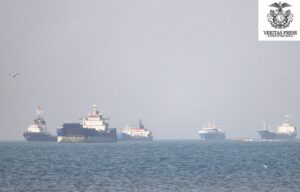
The spring mission, named Sumud‑2 (Arabic for steadfastness), departed on 12 April with the stated goal of breaching Israel’s blockade of the Gaza Strip, in force since 2007 and tightened into a near‑total siege during the genocidal military campaign that began in October 2023. By 26 April, the flotilla had gathered near Crete, still more than 600 nautical miles from Gaza. On the night of 29 April, Israeli navy vessels surrounded the convoy in international waters, just a few miles from Greece’s maritime boundary, and launched a coordinated boarding operation. Helicopters dropped commandos onto the decks; rigid‑hull inflatable boats rammed hulls. In the ensuing chaos, engines and navigation systems were sabotaged, and 22 boats were seized with all passengers.
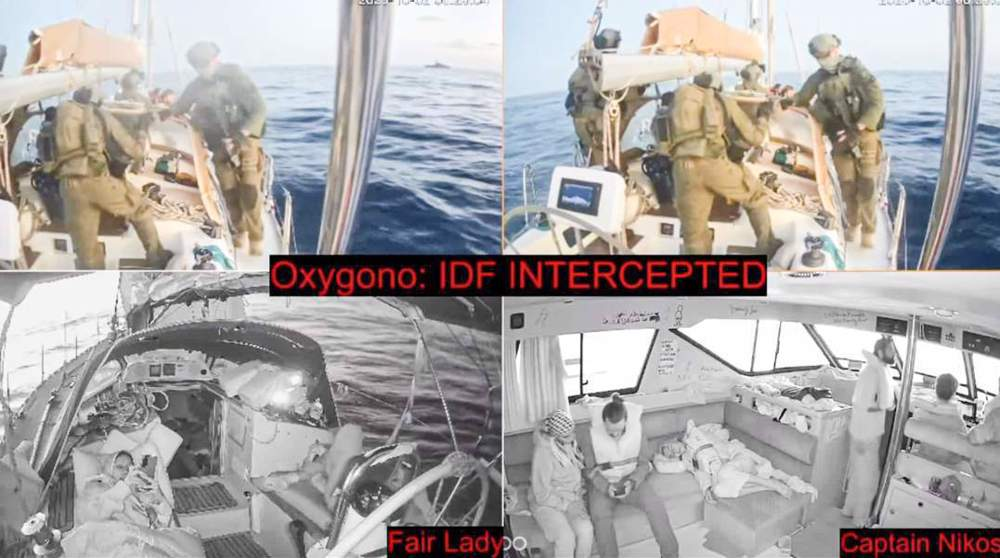
“When the military moved to abduct two participants, our crew peacefully resisted, and the response was sheer violence,” the flotilla’s commanding organiser, retired Irish merchant captain Liam O’Sullivan, told reporters in Valletta after his release. “Participants were punched, kicked, and dragged across the deck with their hands bound behind their backs. They suffered broken noses, cracked ribs and bloody beatings. Shots were even fired at them in the chaos.”
Yet it is what happened after the physical assault, during the transfer to Israeli naval vessels and in the makeshift detention facilities on land, that has drawn the sharpest international condemnation.
The flotilla coalition’s formal statement, issued on Thursday, 7 May, asserts that at least four activists were sexually assaulted. “Two detainees were subjected to severe abuse by touching their private parts; others reported anal penetration with a finger and forceful strikes to the genitals,” the statement reads. “Verbal sexual abuse and humiliating treatment accompanied the physical attacks.” Some released captives described soldiers forcing them to strip, then humiliating them with sexually explicit taunts in broken English while filming on mobile phones.
A 34‑year‑old Italian nurse, who asked to be identified only as Giulia M. because of ongoing trauma, recounted her experience in a notarised deposition to Rome prosecutors: “They took away my hijab substitute, the scarf I wore out of respect for Muslim colleagues. An officer mocked my body and told me, ‘Maybe you will have a baby from Palestine now.’ Then he pressed his fingers into me. I felt they wanted to break something inside me, to make me never come back.” Hers is one of three Italian depositions that led the Rome public prosecutor’s office to open a formal torture investigation on 6 May, invoking both domestic law and the UN Convention against Torture.
Deprivation As A Weapon: Floors Flooded, Clothes Confiscated.
Testimonies converge not only around sexualised attacks but around a systematic policy of sensory and environmental deprivation. Detainees were held for up to five days on an Israeli navy vessel where, according to the organisers, “they were forced to sleep on floors that were deliberately and repeatedly flooded” in cold conditions. Warm clothing was confiscated; thin blankets were provided erratically, often drenched in seawater. Meals, mouldy bread and a single cup of water per day, according to several accounts, were given unpredictably. Activists reported shivering uncontrollably at night and, conversely, being locked in unventilated metal containers under the Mediterranean sun during daytime transfers, triggering cases of both hypothermia and hyperthermia that required hospitalisation upon release.
“They were denied adequate food and water,” O’Sullivan stated bluntly. “The deliberate exposure to cold, the wet floors, the lack of bedding, this was not logistical incompetence. It was a conscious technique to weaken us physically and psychologically.” Medical reports from the Spanish hospital in Barcelona, where dozens of the released were evaluated, noted first‑degree frostbite on extremities, acute kidney injury from dehydration, and symptoms consistent with post‑traumatic stress disorder.
The flotilla’s statement explicitly frames the treatment as part of “a broader pattern of treatment intended to dehumanise those standing in solidarity with the Palestinian people.” Observers point to a long lineage: from the 2010 Mavi Marmara raid, where nine activists were killed, to the mass detention of more than 450 participants in an October 2025 flotilla that included Mayibuye Mandela, grandson of Nelson Mandela, climate campaigner Greta Thunberg, and European Parliament member Rima Hassan. In that earlier operation, released detainees spoke of beatings, sleep deprivation, and being forced into stress positions, but the newly disclosed sexual violence marks an escalation.
“This is a deliberate strategy to terrorise international civil society,” said Shawan Jabarin, director of the Palestinian human rights organisation Al‑Haq, in a telephone interview from Ramallah. “When Israel stops a boat, they are not just preventing aid; they are performing a ritual of impunity, testing what the international community will permit. Every time there is no accountability, the abuse becomes more extreme.”
Disappeared, Interrogated, Starved:
As of 9 May, two activists have not been released: Saif Abu Keshek, a Spanish‑Palestinian aid worker from Barcelona, and Thiago Ávila, a Brazilian documentary filmmaker. Both were allegedly singled out during the interception, organisers believe, because of their public profiles in previous solidarity campaigns, and forcibly transferred to an interrogation facility inside Israel. Their exact location remains unknown. Neither has been charged with any offence; the International Committee of the Red Cross has been denied access.
Reports filtering through diplomatic channels and family members indicate that the two men have been subjected to severe physical abuse and explicit death threats. “During interrogation, they told Saif they would send him back to Gaza in pieces,” said his brother, Youssef Abu Keshek, in an emotional press conference in Barcelona. “They beat him on the soles of his feet, deprived him of sleep for 72 hours, and threatened to rape him.”
On 4 May, after days of incommunicado detention, Abu Keshek and Ávila began a hunger strike demanding immediate consular access, legal representation, and release. Flotilla organisers say that as of Thursday, their condition is “extremely fragile” and accuse Israel of using forced feeding or medical neglect as a further weapon. The Brazilian and Spanish foreign ministries have summoned Israeli ambassadors, but privately, diplomats concede they have received only bland assurances that the men are “being treated according to law.”
“They have disappeared,” Ávila’s long‑time collaborator, journalist Carolina Dantas, told QNN. “Thiago’s only crime was holding a camera. He wasn’t even piloting a boat. The only reason for this treatment is to make an example of them, to tell the next flotilla: this could be you.”
International Law, Diplomatic Theatre, And A Second Flotilla Under Pressure:
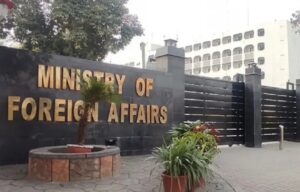
The interception in international waters, approximately 80 nautical miles off Crete, beyond any state’s territorial sea, has drawn a rare flurry of coordinated diplomatic censure from the Global South and parts of Europe. On 30 April, the foreign ministers of Türkiye, Brazil, Jordan, Pakistan, Spain, Malaysia, Bangladesh, Colombia, the Maldives, South Africa, and Libya issued a joint statement describing the operation as an “act of piracy” and demanding accountability under international law. The Turkish Ministry of Foreign Affairs went further in a separate communiqué, labelling the boarding “a grave violation of the United Nations Convention on the Law of the Sea and a crime against humanity given its place in the broader context of the ongoing genocide.”
Yet the diplomatic responses have so far remained rhetorical. The United Nations Security Council, paralysed by the United States veto, has not convened a formal session. The International Criminal Court’s Prosecutor, already investigating Israeli conduct in Gaza, has acknowledged receiving a new dossier of evidence concerning the flotilla but has not yet requested additional warrants.
Meanwhile, the United States has moved to pre‑empt the next phase of the Solidarity movement. According to an exclusive report by Israel’s Ynet, US Secretary of State Marco Rubio has relayed urgent messages to Ankara demanding that Turkish authorities prevent 15 vessels currently harboured in Turkish ports from joining the existing 35‑boat cluster off Crete and 10 additional boats in Sicily. The combined 60‑vessel flotilla, envisioned as a “Freedom Armada”, is scheduled to depart towards Gaza by 15 May. Washington’s intervention echoes the Obama administration’s 2011 pressure on Turkey that ultimately prevented a second Mavi Marmara sailing, but this time the stakes appear higher: Rubio has reportedly threatened “consequences” for bilateral security cooperation should Ankara fail to act.
“It is outrageous that while victims are still being treated for hypothermia and sexual assault, the United States is actively assisting Israel in blockading another humanitarian mission,” said Nour Naim, head of the International Legal Forum for Gaza, a coalition of jurists assisting the flotilla. “This is not diplomacy; it is complicity in the siege, which is itself a war crime.”
Türkiye, for its part, is in a delicate position. President Erdoğan has been a vocal critic of Israel’s war and a patron of the Palestinian cause, but his government has repeatedly pulled back from direct confrontation with Washington. Turkish intelligence sources told the independent outlet Medyascope that Ankara has indeed received a “stern request” from Washington and is considering “administrative measures” such as vessel safety checks that could delay, though not cancel, the departure.
In Greece, where 35 ships remain anchored near Crete under heavy Israeli surveillance, the conservative government has so far refused to intervene, arguing that the vessels are in international waters and that any dispute is between the flag states and Israel. Activists, however, accuse Athens of bowing to pressure from its strategic ally. “We have a clear legal right to be here,” said Captain O’Sullivan. “Greece could at least offer humanitarian assistance to the vessels that are under Israeli interdiction, but they do nothing.”
Breaking The Blockade, Breaking The Silence:
The flotilla’s ordeal has reignited a debate that has simmered since the Mavi Marmara: can citizen‑led aid missions pierce a blockade enforced by a major military power with near‑total US backing, or are they destined to be crushed in the same geographical and legal grey zone that has swallowed thousands of Palestinian lives? For the activists aboard Sumud‑2, the answer lies in the very abuse they are now documenting.
“Every broken rib, every violation, every wet floor is a testimony that the blockade is not a sterile security measure, it is a violent, perverted enterprise that must be physically enforced against the will of ordinary people,” said Lubna al‑Hussein, a Sudanese‑British organiser who was among those released. “They think that by humiliating us, they will make us retreat. But when a soldier forces his finger into you to make you give up on Gaza, he only proves why we must never give up.”
The movement is methodically compiling forensic evidence: medical reports from Barcelona and Rome, photographic injuries, contemporaneous notes written on smuggled paper, and multiple sworn depositions. Legal teams are pursuing complaints under universal jurisdiction in at least five European countries, and a formal communication is being prepared for the UN Committee Against Torture.
Still, the machinery of the blockade grinds on. The 60‑vessel armada, if it sails, may encounter an Israeli response that is, by the logic of impunity, even more ferocious. Israeli officials, speaking anonymously to Hebrew media, have signalled that the state views the flotillas as a “strategic threat” and will “employ all necessary means” to stop them, regardless of location or civilian character. The Israeli military spokesperson’s office did not respond to multiple requests for comment on the sexual violence allegations, and the Defence Ministry maintains that all operations are conducted in accordance with international law.
But for the two men lying on bare mattresses in a secret detention site, with only the strength of a hunger strike between them and forced disappearance, the legal and diplomatic abstractions are irrelevant. A handwritten note smuggled out through a Palestinian lawyer who briefly gained access on 8 May, the first contact since capture, bore a simple message from Thiago Ávila: “They want us to vanish. Please don’t let them.”
What You Can Do:
The Global Sumud Flotilla has called for immediate protests outside Israeli embassies worldwide and a targeted campaign demanding that the US and EU suspend all arms transfers to Israel. The Spanish and Brazilian governments have been urged to issue formal arrest warrants for Israeli personnel involved in the abuse. A petition to the ICC prosecutor has gathered over 200,000 signatures in 48 hours. In Gaza itself, where the spring ceasefire remains fragile, local civil society groups have held small maritime demonstrations, wooden fishing boats draped in white sheets, declaring, “We see you, we are with you, we will not be silenced.”
Source: Multiple News Agencies
Submissions:
For The Secure Submission Of Documentation, Testimonies, Or Exclusive Investigative Reports From Any Global Location, Please Utilise The Following Contact Details For Our Investigations Desk: enquiries@veritaspress.co.uk or editor@veritaspress.co.uk
Help Support Our Work:
Popular Information is powered by readers who believe that truth still matters. When just a few more people step up to support this work, it means more lies exposed, more corruption uncovered, and more accountability where it’s long overdue.
Help Protect Independent Journalism, Which Is Currently Under Attack.
If you believe journalism should serve the public, not the powerful, and you’re in a position to help, becoming a DONATOR or a PAID SUBSCRIBER truly makes a difference.
DONATION APPEAL: If You Found This Reporting Valuable, Please Consider Supporting Independent Journalism.
Help Support Our Work – We Know, We Know, We Know …
Seeing these messages is annoying. We know that. (Imagine what it’s like writing them … )
Your support fuels our fearless, truth-driven journalism. In unity, we endeavour to amplify marginalised voices and champion justice, irrespective of geographical location.
But it’s also extremely important. One of Veritas Press’s greatest assets is its reader-funded model.
1. Reader funding means we can cover what we like. We’re not beholden to the political whims of a billionaire owner. We are a small, independent and impartial organisation. No one can tell us what not to say or what not to report.
2. Reader funding means we don’t have to chase clicks and traffic. We’re not desperately seeking your attention for its own sake: we pursue the stories that our editorial team deems important and believe are worthy of your time.
3. Reader Funding: enables us to keep our website and other social media channels open, allowing as many people as possible to access quality journalism from around the world, particularly those in places where the free press is under threat.
We know not everyone can afford to pay for news, but if you’ve been meaning to support us, now’s the time.
Your donation goes a long way. It helps us:
- Keep the lights on and sustain our day-to-day operations
- Hire new, talented independent reporters
- Launch real-time live debates, community-focused shows, and on-the-ground reporting
- Cover the issues that matter most to our communities, in real time, with depth and integrity
We have plans to expand our work, but we can’t do it without your support. Every contribution, no matter the size, helps us stay independent and build a truly people-powered media platform.
If you believe in journalism that informs, empowers, and reflects the communities we serve, please donate today.
Donate Today.
GENEVA — A United Nations fact-finding mission has concluded there are “reasonable grounds to believe”
Iran’s GDP is projected to contract by 5.4 to 6.1% in 2026, its worst performance
The Trump administration is preparing a $2.8 billion weapons package for Israel containing 40,000 2,000-pound

Film alleges mass civilian deaths are routinely built into military decisions amid Israel’s genocidal war
The Israeli rights group says violence, displacement, economic strangulation, and settlement expansion form part of

Houthi forces have captured the historic Red Sea port of Mocha and are advancing on
London’s historic sanctions against Israeli settlements mark a watershed moment in UK foreign policy, but
With 95% of Gaza’s population now wholly dependent on aid and more than 90% stripped
India calls for Kashmir and Ladakh to appear only on its official map after a
ISLAMABAD – In the high-stakes political theatre of Pakistan, the battleground has shifted from the