Kamran Faqir is a volunteer investigative journalist and writer committed to exposing hidden truths and amplifying underreported stories. Driven by social justice, he brings sharp insight and fearless truth-telling to independent journalism. NUJ registered.
Article Date Published:
Article Date Modified:
14 minutes
Views:440
Listen to this article
Help support our mission, donate today and be the change. Every contribution goes directly toward driving real impact for the cause we believe in.
BIRMINGHAM – Across Britain, families continue to bury children lost to knife crime, county lines violence and organised criminal exploitation.
Behind every headline is a story of failure: safeguarding systems stretched beyond capacity, youth services hollowed out by years of cuts, organised criminal gangs recruiting ever younger children, and communities struggling with poverty, exclusion and insecurity.
Yet as communities grapple with the devastating consequences of serious youth violence, another phenomenon has emerged alongside it.
A growing ecosystem of far-right activists, anti-immigration campaigners and online influencers has increasingly sought to transform acts of violence into political propaganda, weaponising public fear to advance anti-migrant, anti-Muslim and ethnonationalist agendas.
Rather than confronting the complex social realities driving violence, they present knife crime as evidence of immigration failure, multiculturalism’s collapse and what they describe as the demographic replacement of Britain’s white population.
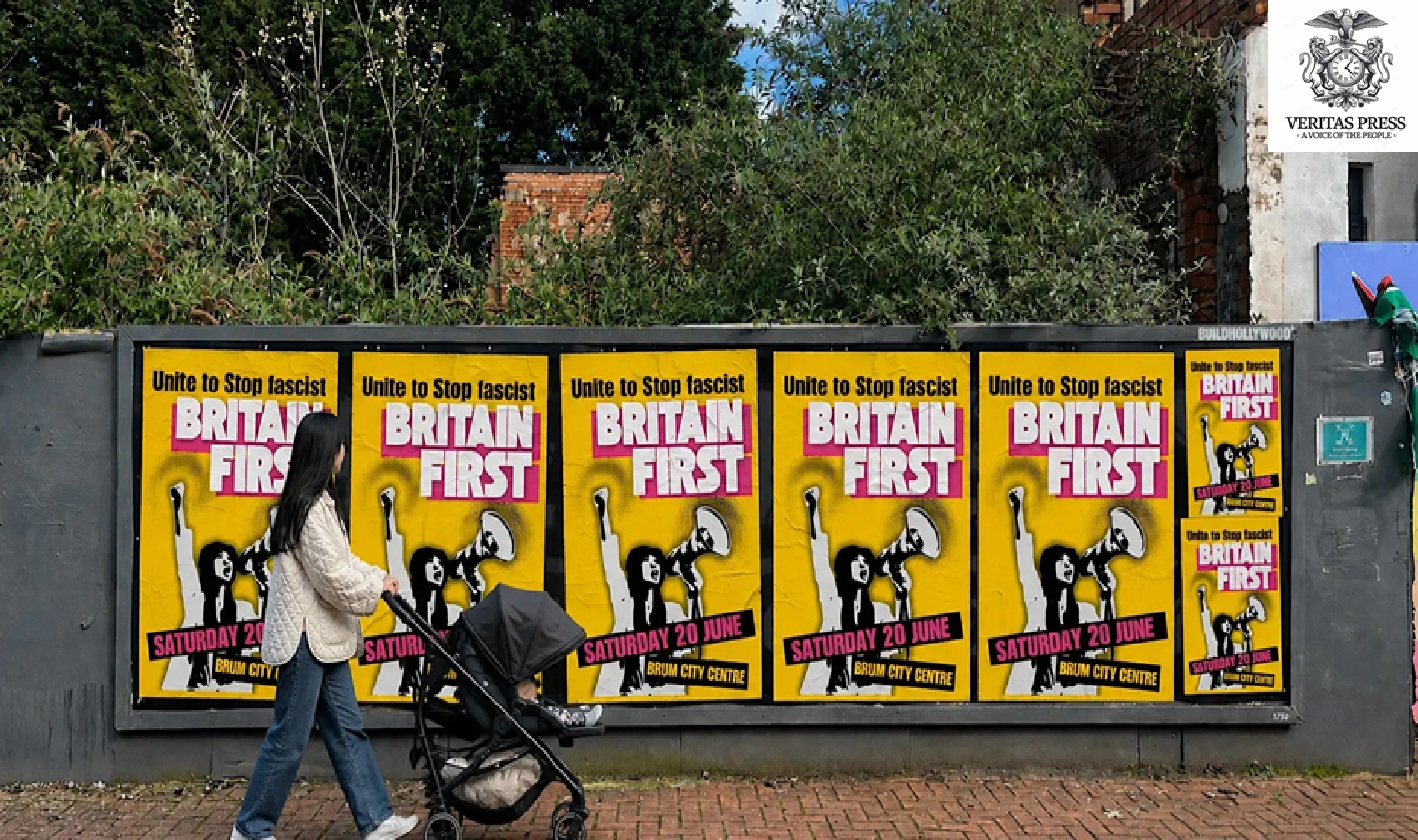
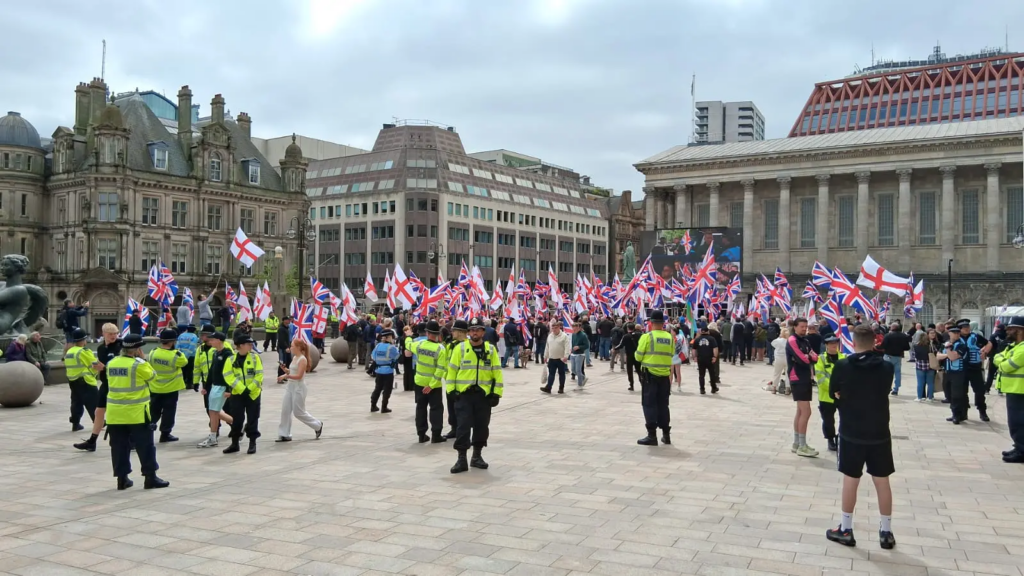
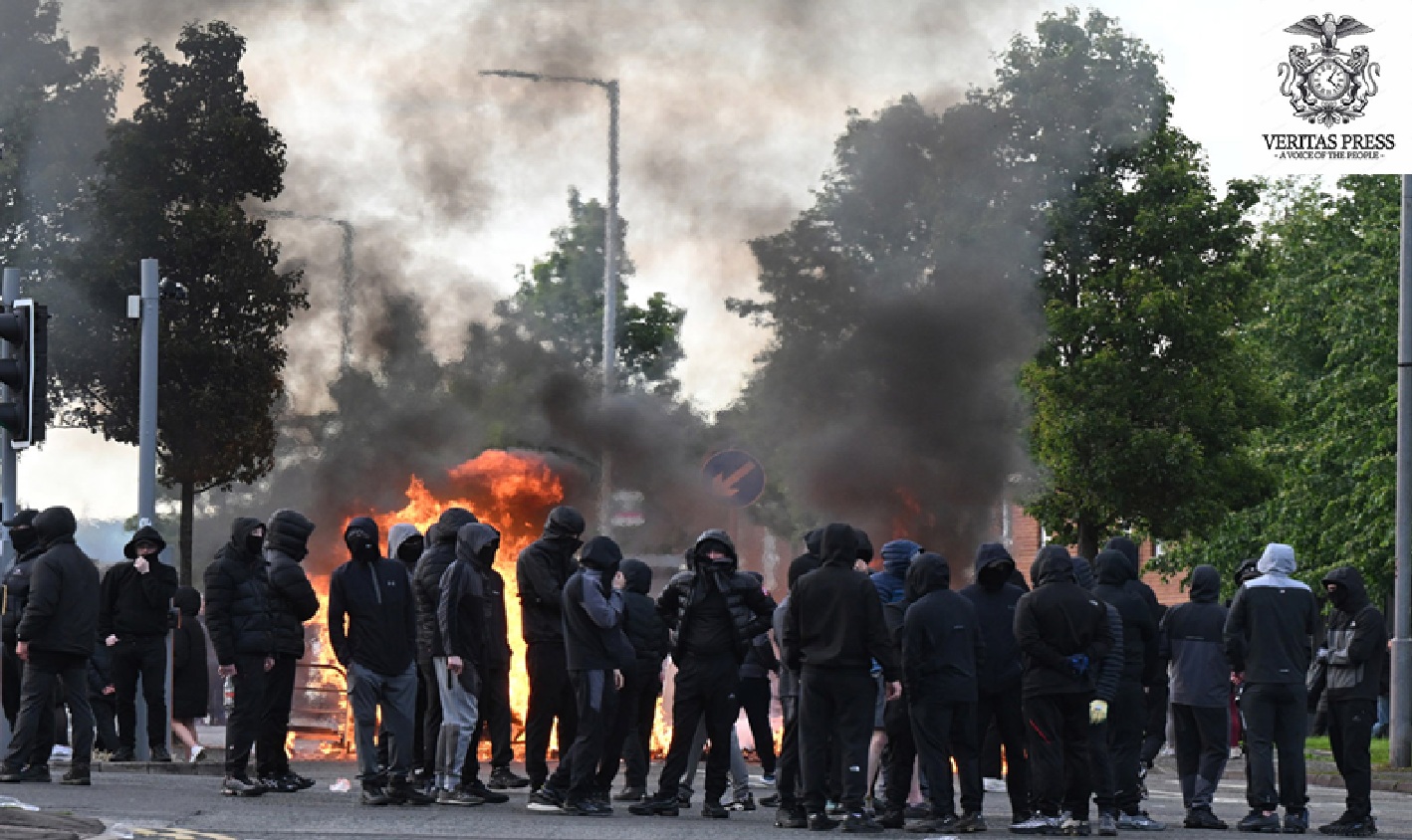
Britain First’s Birmingham rally – and that’s all of it
In doing so, campaigners, researchers and anti-racism organisations warn that they are exploiting tragedy to manufacture division while obscuring the real causes of violence.
The Contagion Of Hate:
Researchers monitoring extremist movements have documented a recurring pattern following major violent incidents.
Before police investigations conclude, social media accounts linked to far-right networks frequently circulate unverified claims regarding suspects’ ethnicity, religion or immigration status. Images, rumours and selectively presented statistics are rapidly amplified across social media platforms and encrypted messaging channels.
A local crime becomes national outrage.
A criminal act becomes evidence of a civilisational conflict.
A victim becomes political ammunition.
Anti-racism organisations argue that the objective is not public safety but mobilisation.
Every stabbing, grooming case or county lines prosecution becomes an opportunity to reinforce broader narratives about immigration, Islam and demographic change.
Experts have increasingly warned that knife crime has become one of the most powerful tools in the contemporary far-right propaganda ecosystem.
The Real Drivers Of Knife Crime:
Official crime data paints a far more complex picture than the narratives promoted by extremist groups.
Police forces, criminologists and safeguarding organisations consistently identify organised criminal networks, deprivation, social exclusion, adverse childhood experiences, school exclusion and drug markets as among the strongest drivers of serious youth violence.
County lines operations remain central to this landscape.
These networks recruit children into transporting drugs, carrying weapons, storing cash and undertaking dangerous tasks on behalf of adult criminal groups. Many children become trapped through grooming, debt bondage, intimidation and violence.
The Home Office’s County Lines Programme has repeatedly described the model as one of the most significant threats facing vulnerable young people in Britain.
Safeguarding experts stress that many children involved in serious violence are themselves victims of exploitation.
Reducing knife crime, therefore, requires understanding not simply who commits violence, but the systems that recruit, coerce and profit from it.
Immigration, Labour Exploitation, And Vulnerability:
The relationship between immigration policy and criminal exploitation is often absent from political debate.
Rights groups argue that Britain’s restrictive immigration framework has created conditions in which vulnerable workers are increasingly exposed to exploitation, wage theft and coercion.
Migrant rights organisations have documented cases where individuals fear reporting abuse due to concerns about immigration enforcement. Trade unions have similarly warned that insecure immigration status can leave workers vulnerable to unsafe conditions and economic exploitation.
Community advocates argue that these same vulnerabilities can be exploited by organised criminal networks.
Young people from marginalised backgrounds, including migrant and refugee communities, often face barriers to accessing support services, making them attractive targets for gangs seeking recruits.
While anti-immigration campaigners frequently present migrants as a source of criminality, child protection organisations increasingly point to migrants and refugees as among those most vulnerable to trafficking, labour exploitation and criminal coercion.
County Lines, Mini-Marts, And Hidden Exploitation:
The geography of modern criminal exploitation is often hidden in plain sight.
Police investigations have uncovered county lines activity operating through ordinary commercial premises, including convenience stores, takeaway outlets, barber shops, vape stores and other businesses.
Investigators stress that such businesses are not inherently criminal and that criminal involvement spans every ethnic and national background.
The common denominator is organised criminality.
Child protection charities warn that public debate frequently focuses on ethnicity while ignoring the underlying systems of exploitation.
Victims are recruited through coercion, manipulation and violence.
Girls and young women are increasingly being targeted.
Children are being moved between towns and cities, trafficked internally and used to transport drugs and weapons.
Safeguarding agencies report a worrying trend of younger victims entering criminal networks.
As professionals repeatedly emphasise:
“No child should become a victim of violence, county lines exploitation or organised criminal abuse.”
The Great Replacement Theory And The Politics Of Remigration:
At the ideological centre of many contemporary far-right campaigns lies a collection of conspiracy theories surrounding demographic change.
Among the most prominent is the so-called Great Replacement theory, which claims that European populations are being deliberately replaced through immigration.
The theory has been repeatedly rejected by academics, demographers and anti-racism organisations.
Nevertheless, versions of the narrative continue to circulate through far-right movements, including organisations such as Britain First and networks associated with Tommy Robinson.
The language has evolved.
Rather than explicit racial slogans, activists increasingly frame their arguments around protecting children, preserving culture, defending borders and promoting “remigration.”
Critics argue that remigration campaigns often function as a rebranding of older ethnonationalist projects by advocating mass deportations and the removal of people deemed culturally incompatible.
Civil rights organisations warn that these narratives deliberately blur distinctions between migrants, asylum seekers, ethnic minorities and criminal offenders.
In practice, entire communities become associated with crime.
Islamophobia, Racism, And Manufactured Fear:
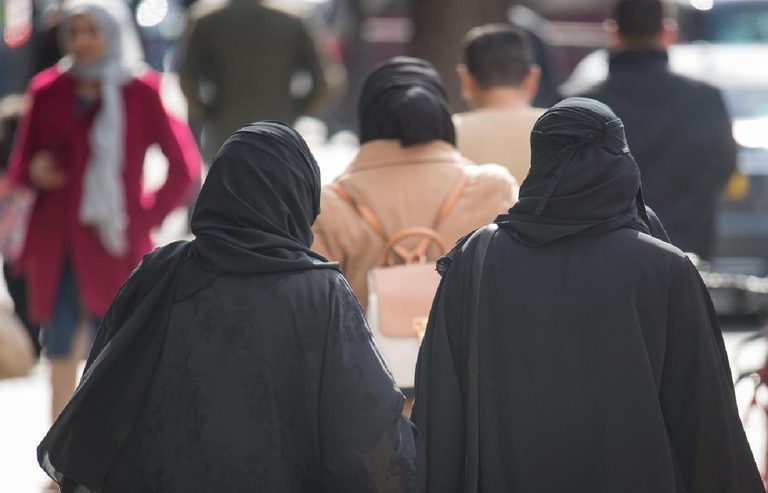
Researchers have documented how far-right movements frequently use violent crimes as vehicles for anti-Muslim mobilisation.
A stabbing becomes evidence of Islamic extremism.
A grooming case becomes evidence of cultural incompatibility.
A county lines prosecution becomes proof of a demographic threat.
The facts themselves often become secondary.
Anti-racism organisations, including groups monitoring Islamophobia and hate crime, report that online misinformation campaigns routinely distort or invent details about perpetrators’ backgrounds to fit pre-existing narratives.
These campaigns frequently overlap with broader forms of racism, xenophobia, homophobia and misogyny.
Experts argue that this is not accidental.
Far-right movements often construct a common enemy encompassing migrants, Muslims, refugees, ethnic minorities and LGBTQ+ communities, presenting each as part of a wider threat to national identity.
Statistics, Scapegoats, And Political Opportunism:
Crime statistics have become powerful political weapons.
Criminologists warn that the selective use of crime data can create misleading impressions when stripped of context regarding population size, deprivation, age demographics and broader offending patterns.
Individual crimes become representative of entire communities.
Outlier statistics become proof of national decline.
Complex social problems become racial narratives.
Experts warn that such framing obscures evidence-based solutions while intensifying social divisions.
Knife crime becomes immigration.
County lines become ethnicity.
Child exploitation becomes religion.
The result is a cycle in which fear generates political capital while the structural causes of violence remain largely unaddressed.
The Children Lost In The Debate:
Lost amid the political arguments are the children themselves.
The Children’s Society, Barnardo’s, youth workers, social workers and safeguarding practitioners all report increasing concern over the age of victims entering exploitation networks.
Girls are being targeted in growing numbers.
Children are being subjected to violence, sexual abuse, coercion and trafficking.
Many require protection long before they come to the attention of law enforcement.
Experts consistently point to the need for collaborative responses involving schools, social services, youth organisations, police, healthcare providers and local communities.
Yet many of the services designed to intervene early have experienced years of funding pressures.
Safeguarding professionals argue that preventing violence requires sustained investment rather than reactionary politics.
Organised criminal groups continue to adapt and evolve.
But the evidence consistently points towards exploitation, deprivation, social exclusion and organised criminality, not race, religion or immigration status, as the primary drivers.
The rise of knife crime, child exploitation, hostile immigration policies and far-right mobilisation should therefore not be viewed as separate crises.
They are interconnected.
One exploits vulnerable children.
The other exploits public fear.
Both flourish when communities are divided.
Britain’s challenge is not simply reducing crime. It is preventing violence, grief and insecurity from being weaponised by those seeking to advance racism, Islamophobia and exclusionary politics.
For campaigners, community leaders and safeguarding organisations, the answer remains clear: dismantle criminal gangs, protect children, support vulnerable communities, confront organised exploitation, and reject attempts to turn tragedy into hatred.
No child, regardless of race, religion, ethnicity or immigration status, should become a victim of violence, county lines exploitation or political scapegoating.
The fight against crime and the fight against racism are not competing causes.
They are inseparable.
Conclusion: The Politics Of Fear And The Cost Of Division.
At its core, Britain’s knife crime crisis is not a story about race, religion or immigration.
It is a story about vulnerable children recruited by organised criminal gangs. It is a story about county lines networks generating millions from drug trafficking while exploiting children as disposable commodities. It is a story about communities hollowed out by poverty, inequality, social exclusion and years of underinvestment in youth services, safeguarding programmes and early intervention.
Yet rather than confronting these realities, a growing ecosystem of far-right activists, anti-immigration campaigners and extremist organisations has increasingly sought to weaponise public fear for political gain.
The pattern has become disturbingly familiar.
A child is stabbed.
A teenager is exploited.
A gang-related murder takes place.
Before investigators establish the facts, social media channels and far-right networks begin constructing a narrative in which race, religion or immigration status becomes the central explanation.
Complex criminal phenomena are reduced to simplistic racial and religious stereotypes.
Knife crime becomes “Muslim crime.”
County lines become an “immigration problem.”
Child exploitation becomes evidence of a supposed civilisational threat.
In this process, entire communities are collectively blamed for crimes they neither committed nor condoned.
The far right’s greatest political success has not been convincing people that crime exists. Crime exists. Communities are living with its consequences every day.
Its success has been convincing sections of the public that race and religion are the causes.
This distortion serves an important ideological purpose.
By presenting violence as a consequence of multiculturalism rather than organised criminality, far-right movements can justify increasingly extreme policies under the language of public safety. Calls for deportations become “community protection.” Islamophobia becomes “security.” Racism becomes “common sense.” Ethnic exclusion becomes “remigration.”
The result is a politics that exploits victims while doing little to address the conditions that created those victims in the first place.
The evidence points elsewhere.
Police investigations, safeguarding reviews, academic research and child protection organisations consistently identify poverty, deprivation, social exclusion, adverse childhood experiences, school exclusion, organised drug markets and exploitation as among the strongest drivers of serious youth violence.
Criminal gangs do not recruit children because of their religion.
Drug networks do not traffic young people because of their ethnicity.
County lines groups do not operate because Britain has become too diverse.
They operate because vulnerable children exist, because exploitation is profitable, and because criminal organisations adapt faster than the institutions tasked with stopping them.
The danger is that every moment spent scapegoating migrants, Muslims and ethnic minorities is a moment not spent confronting the individuals and criminal enterprises actually responsible.
This has consequences beyond politics.
The weaponisation of knife crime has contributed to rising anti-Muslim hatred, racial harassment, attacks on asylum seekers, conspiracy theories about demographic replacement and growing support for “remigration” campaigns that seek to remove entire communities from public life.
Such movements present themselves as defenders of children.
Yet they rarely campaign for youth services.
They rarely campaign for safeguarding funding.
They rarely campaign for mental health support, social care reform or investment in deprived communities.
Instead, they transform the suffering of victims into recruitment material for broader ideological projects rooted in exclusion, division and fear.
Britain, therefore, faces a challenge that extends beyond crime reduction.
The country must decide whether it will respond to violence with evidence or with scapegoating; whether it will protect children through investment and prevention or through rhetoric and division; whether it will confront organised criminality as a social problem or continue allowing extremist movements to redefine it as a racial and religious conflict.
No child should become a victim of knife crime.
No child should be trafficked through county lines networks.
No child should be exploited by gangs.
And no child’s death should be weaponised to justify hatred against entire communities.
The fight against organised crime requires policing, safeguarding, education, community cohesion and social investment.
The fight against racism requires confronting those who exploit fear, manipulate grief and seek to turn tragedy into a justification for exclusion.
Both struggles are inseparable.
Because a society that allows children to be exploited is failing its future.
And a society that allows that exploitation to be transformed into racism, Islamophobia and ethnic scapegoating risks failing its democracy as well.
For The Secure Submission Of Documentation, Testimonies, Or Exclusive Investigative Reports From Any Global Location, Please Utilise The Following Contact Details For Our Investigations Desk: enquiries@veritaspress.co.uk or editor@veritaspress.co.uk
Help Support Our Work:
Popular Information is powered by readers who believe that truth still matters. When just a few more people step up to support this work, it means more lies exposed, more corruption uncovered, and more accountability where it’s long overdue.
Help Protect Independent Journalism, Which Is Currently Under Attack.
If you believe journalism should serve the public, not the powerful, and you’re in a position to help, becoming a DONATOR or a PAID SUBSCRIBER truly makes a difference.
DONATION APPEAL: If You Found This Reporting Valuable, Please Consider Supporting Independent Journalism.
Help Support Our Work – We Know, We Know, We Know …
Seeing these messages is annoying. We know that. (Imagine what it’s like writing them … )
Your support fuels our fearless, truth-driven journalism. In unity, we endeavour to amplify marginalised voices and champion justice, irrespective of geographical location.
But it’s also extremely important. One of Veritas Press’s greatest assets is its reader-funded model.
1. Reader funding means we can cover what we like. We’re not beholden to the political whims of a billionaire owner. We are a small, independent and impartial organisation. No one can tell us what not to say or what not to report.
2. Reader funding means we don’t have to chase clicks and traffic. We’re not desperately seeking your attention for its own sake: we pursue the stories that our editorial team deems important and believe are worthy of your time.
3. Reader Funding: enables us to keep our website and other social media channels open, allowing as many people as possible to access quality journalism from around the world, particularly those in places where the free press is under threat.
We know not everyone can afford to pay for news, but if you’ve been meaning to support us, now’s the time.
Your donation goes a long way. It helps us:
Keep the lights on and sustain our day-to-day operations
Hire new, talented independent reporters
Launch real-time live debates, community-focused shows, and on-the-ground reporting
Cover the issues that matter most to our communities, in real time, with depth and integrity
We have plans to expand our work, but we can’t do it without your support. Every contribution, no matter the size, helps us stay independent and build a truly people-powered media platform.
If you believe in journalism that informs, empowers, and reflects the communities we serve, please donate today.
Kamran Faqir is a volunteer investigative journalist and writer committed to exposing hidden truths and amplifying underreported stories. Driven by social justice, he brings sharp insight and fearless truth-telling to independent journalism. NUJ registered.
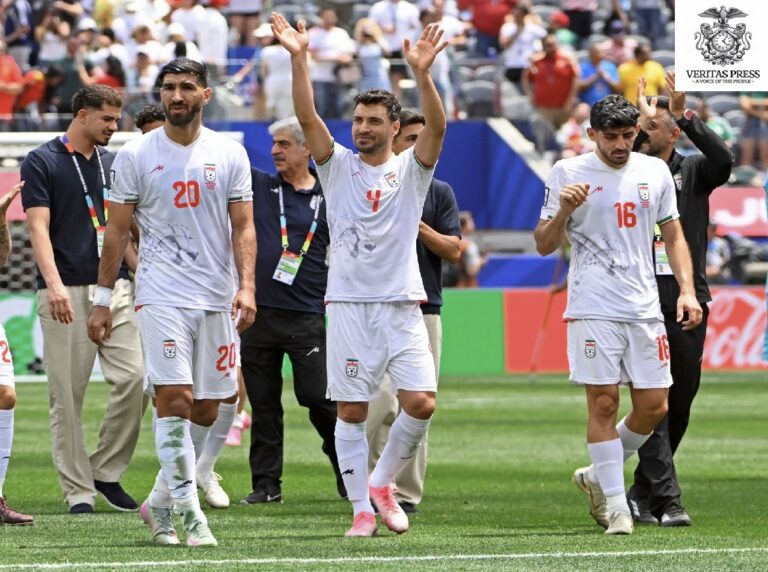
SEATTLE, TEHRAN — The U.S. Department of Homeland Security (DHS) will allow Iran’s national football team to enter the country 48 hours before their critical World Cup match against Egypt on Friday, a modest concession in a tournament where Team Melli’s travel conditions have sparked claims of oppression and competitive disadvantage.