





Help support our mission, donate today and be the change. Every contribution goes directly toward driving real impact for the cause we believe in.
As The Far-Right Israeli Minister Revels In A Noose-Shaped Birthday Cake And A Tiktok-Style Fantasy Of Gallows, Rights Groups, Diplomats, And Legal Experts Are Warning Of A Dangerous Slide Toward State-Sanctioned Executions And A Political Escalation That Could Destabilise The Wider Region. A Human Rights Organisation Has Branded Israel’s So-Called National Security Minister, Itamar Ben-Gvir, The “Hangman Of The Century” For Spearheading Controversial Death Penalty Legislation Aimed At Palestinians Accused Of Abductions.
1. The Cake, The Tiktok And The Vote:
On 4 May, Israel’s National Security Minister Itamar Ben-Gvir posted a video to his TikTok account that was both childlike and chilling. Set to a viral sound that repeats “I know I should sleep, but the voices in my head go…” the clip stitches together AI-generated images of everyday objects, a curtain tie, a looped hosepipe, a twisted bread roll, all rendered as gallows and hangman’s nooses. “Sometimes dreams come true,” the Hebrew caption reads.
Two days later, for his 50th birthday, staffers presented him with a cream-coloured cake decorated with a thick rope noose and the same slogan piped in chocolate. The minister beamed, shot a selfie with the confection and posted it online. Within hours, the image had ricocheted across the world.

The celebration was not merely eccentric; it was a victory lap. On 30 March 2026, the Knesset approved the death penalty for Palestinians convicted of “nationalistically motivated” killings in a razor-thin 62–48 vote. The legislation, which had been repeatedly shelved by previous governments, was finally bulldozed through the current coalition by Ben-Gvir’s Jewish Power party and its far-right allies. It permits a military court, already a system that convicts over 99% of Palestinian defendants, to sentence prisoners to hanging on a simple majority of judges, with no mandatory appeals and no presidential clemency required.
The message to Palestinians held in Israeli jails was unambiguous. Overnight, some 9,100 prisoners, including 3,532 in administrative detention without charge or trial, 342 children and 84 women, were placed in the crosshairs of a statute that large parts of the country’s own legal establishment call “judicial murder.”
2. ‘The World’s Hangman Of The Century’:
On Thursday morning, the Red Ribbons Campaign, a Geneva-based human rights group that works exclusively on the fate of Palestinian prisoners, issued an excoriating statement that named Ben-Gvir directly.
“Ben Gvir has earned the 2026 grim crown as ‘World’s hangman of the century’ for his continued efforts to promote apartheid and racism against Palestinians, and for expressing his aims to hang Palestinian prisoners and kill them by all means,” the group wrote.
The organisation added: “We view Ben Gvir’s push towards executions as a dangerous escalation that risks entrenching irreversible punishment within a system already marked by deep inequality. We state plainly: a man who persistently advocates for policies enabling execution under such conditions must be held to the highest level of scrutiny and accountability.”
The Red Ribbons Campaign has spent years documenting the architecture of the Israeli military detention apparatus, the night raids, the blindfoldings, the coerced confessions extracted from minors, and the absence of an independent judiciary. As their collected statistics reveal, the period after October 2023 saw approximately 10,500 Palestinian individuals being held in Israeli prisons. Since the start of the military campaign in Gaza, that number has nearly doubled, driven by mass round-ups of men and boys who often disappear into the opaque administrative detention system for months or years without seeing a lawyer or a charge sheet.
With the death penalty now on the statute books, the NGO warns of a “qualitative leap” from oppression to annihilation. “A state that already treats Palestinians as subhuman will now have a legal mechanism to finish the job under the cover of law,” the statement continued.
3. The Weight Of The International Response:
Ben-Gvir’s noose-festooned birthday cake drew a rare and visceral reaction from the United Nations’ top human rights official.
“I am disgusted by scenes of an Israeli Minister glorifying violence with the image of a noose on his lapel and his birthday cake,” Volker Türk, UN High Commissioner for Human Rights, said in a statement released from Geneva on 7 May. “The introduction of the death penalty in an occupied territory, applied by a military justice system that falls far short of international standards, constitutes a grave breach of the Fourth Geneva Convention.”
Türk’s office has since confirmed it is compiling a dossier for the UN Human Rights Council that could recommend the activation of the General Assembly’s “Uniting for Peace” mechanism should the Security Council fail to act.
The European Union’s high representative for foreign affairs, Kaja Kallas, warned on Friday that the bloc was “urgently reviewing” its Association Agreement with Israel. “The death penalty has no place in a country that claims democratic values, and its application in the occupied Palestinian territory is illegal under international humanitarian law,” she said in Brussels. France and Ireland have independently summoned Israeli ambassadors for a dressing-down.
Yet the most consequential silence remains that of Washington. The White House issued a carefully worded statement saying it was “deeply troubled” and urged Israel to “uphold the moratorium on capital punishment that has existed since 1962”, the year Nazi war criminal Adolf Eichmann was hanged. But Republican leaders in Congress have already signalled they will block any efforts to condition the $3.8 billion in annual military aid. Senator Tom Cotton dismissed the controversy as “hysteria from the same people who call Israel a genocide state.”
Human Rights Watch and Amnesty International have both declared that the death penalty law forms part of the “apartheid and persecution” they have already documented. Amnesty’s Secretary-General, Agnès Callamard, called Ben-Gvir “a politician who openly fetishises the killing of Palestinians and now wants to turn those fantasies into state ritual.”
4. The Man, The Movement And The Mosque:
To understand the speed with which the death penalty law materialised, you have to understand the political extortion that fuels the current Israeli government.
Ben-Gvir, a disciple of the racist, banned Kahanist movement, was convicted in 2007 of supporting a terrorist organisation and incitement to racism. Less than two decades later, he controls domestic security, the police, the prison service and the settler-guarding Border Police. From this perch, he has systematically tightened the physical and psychological pressure on Palestinian detainees, cutting electricity to cells, restricting family visits, limiting food deliveries and openly encouraging guards to abuse prisoners.
“We are too democratic,” Ben-Gvir told the Knesset during the death penalty debate. “A terrorist who slaughters a Jewish family should not be allowed to watch television in prison and study for a degree. He should hang.” His party’s legislative aide, speaking off-camera to the far-right Channel 14, later boasted that “within six months we will see the first Palestinian swinging.”
Throughout 2025 and early 2026, Ben-Gvir repeatedly threatened to dissolve Prime Minister Benjamin Netanyahu’s coalition whenever ceasefire talks with Hamas gained traction. Each time the war cabinet appeared ready to accept a hostage-release pause, Ben-Gvir would march into the media gallery and declare that any halt to the offensive amounted to “surrender”, forcing Netanyahu to scuttle the deal to save his government. The death penalty law, his aides privately admit, was the price of keeping him inside the tent during the March budget vote.
Simultaneously, Ben-Gvir has led a series of high-profile incursions into the Al-Aqsa Mosque compound in occupied East Jerusalem, each one a deliberate provocation that ignited street clashes and drew rocket fire from Gaza and Lebanon. In April 2026, he erected a mock gallows outside his office in the settlement of Kiryat Arba, next to a sign reading “Justice for the Victims of Arab Terrorism.” Local Palestinian residents said children walking to school were forced to pass underneath it.
5. The First Case: Ahmed Al-Masri.
On 6 May, three days after Ben-Gvir’s TikTok went live, the Ofer military court sentenced 24-year-old Ahmed al-Masri to death by hanging. Al-Masri, from the Jenin refugee camp, was convicted of fatally stabbing an off-duty Israeli soldier during a morning commuter stop in March 2025. The trial lasted just nine days, held entirely in Hebrew, a language Al-Masri does not speak. He was permitted a single lawyer, assigned by the military, who told the court her client’s confession had been extracted during 37 days of solitary confinement and sleep deprivation.
“My son was tortured until he signed papers he couldn’t read,” said his mother, Umm Ahmed, speaking from the family’s half-demolished home in Jenin camp. “They blindfolded him, tied his hands and feet, played deafening noise and kept him awake for days. Now they want to hang him. Where is the world?”
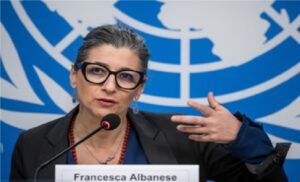
The United Nations Special Rapporteur on the situation of human rights in the occupied Palestinian territory, Francesca Albanese, issued an immediate statement labelling the sentence “a judicial crime that exposes the reality of Israel’s apartheid regime.” The International Criminal Court’s chief prosecutor, whose investigation into war crimes in Palestine was suspended in 2024 during a period of US pressure but has now been reactivated, said executing a prisoner from an occupied population “is explicitly prohibited by the Rome Statute and could constitute the war crime of wilful killing.”
Four more Palestinian detainees are currently in the sentencing phase of capital trials, according to the Palestinian Prisoners’ Society. Lawyers say military prosecutors are fast-tracking cases in what one veteran defence attorney called “an assembly line for the noose.”
6. The Judicial Trap And The Apartheid Architecture:
Israeli civil rights groups have filed an urgent petition with the Supreme Court asking it to strike down the death penalty law. The Association for Civil Rights in Israel (ACRI), Adalah, the Legal Centre for Arab Minority Rights, and HaMoked argue that the legislation violates Basic Law: Human Dignity and Liberty and institutionalises racial discrimination, since it applies only to Palestinians in the military courts while Jewish Israelis accused of similar crimes are tried in civilian courts that have never handed down a death penalty since independence.
“The law is the legal embodiment of a white-supremacist fantasy,” said Sawsan Zaher, a senior attorney at Adalah, in an interview. “A Palestinian life is already worthless in the military courts, 99.7% conviction rate, confessions extracted under torture, no bail, no habeas corpus. Now they’ve added state killing. This is the natural endpoint of 57 years of occupation and a legal system designed to dispossess and suppress one people for the benefit of another.”
But the Supreme Court, deeply divided and under relentless political assault from the right, may lack the institutional courage to strike the law down. Justice Minister Yariv Levin, who orchestrated the judicial overhaul that nearly tore the country apart in 2023, has already threatened to “rein in” any court that dares interfere with the Knesset’s sovereignty.
Legal scholars point to a broader pattern: the death penalty cannot be viewed in isolation. It sits atop a structure of administrative detention, youth incarceration, movement restrictions, house demolitions, land expropriation and settlement expansion that the International Court of Justice in 2024 ruled constitutes a “comprehensive regime of apartheid” and an illegal occupation. The capital statute, says Oxford University international-law professor Neve Gordon, “is the final gear in a machine that already grinds Palestinians up. You cannot judge the noose without judging the entire system that built the gallows.”
7. The Palestinian Street And The Fear Inside The Prisons:
Inside Israel’s jails, fear is tangible. Family visits, already restricted, were suspended entirely after the March vote for what the Israel Prison Service called “security reasons.” Through smuggled letters obtained by the Palestinian Commission of Detainees’ Affairs, prisoners describe a regime of collective punishment: loudspeakers blasting Ben-Gvir’s speeches into wings, guards drawing nooses on cell walls, and widespread threats that “soon you’ll be hanged like the others.”
“My husband told me the guards are playing a recorded audio of the minister laughing and saying ‘you’re next’ on a loop,” said Fatima Abu Sneineh, whose husband is serving a life sentence in Nafha prison. “They want to break our men’s minds before they break their necks.”
In the West Bank, a general strike paralysed cities for three days after al-Masri’s death sentence. Protests in Ramallah, Nablus, Hebron and Jenin were met with live fire from Israeli forces, with 14 Palestinians killed and hundreds wounded, according to the Palestinian Ministry of Health. In Gaza, where more than 46,000 Palestinians have been killed since October 2023, the reaction was desolate fury. “They are already killing us every day with their bombs,” said Dr. Ahmed al-Najjar, a surgeon at Al-Aqsa Martyrs Hospital in Deir al-Balah. “Now they want to perform a public execution so the world can watch and do nothing, as always.”
The Palestinian Authority, long dismissed as a subcontractor of the occupation by its own population, scrambled to respond. President Mahmoud Abbas signed a decree activating Palestine’s accession to the Second Optional Protocol to the International Covenant on Civil and Political Rights, aiming at the abolition of the death penalty, a symbolic counterpoint. Foreign Minister Riyad al-Maliki formally requested an emergency session of the UN General Assembly and filed a referral to the International Criminal Court, specifically citing Ben-Gvir by name.
“The man who celebrates a noose cake while his soldiers slaughter children in Gaza is not a minister; he is a criminal,” al-Maliki said. “The international community’s silence is a licence to kill, and history will not forgive it.”
8. The Journalists’ Lens: A Mirror Of Complicity:
Israeli media, with notable exceptions, has either downplayed the story or framed it through the lens of security necessity. Channel 12 ran a segment with retired generals arguing that the death penalty “sends a necessary deterrence” to potential attackers. Yedioth Ahronoth published an opinion piece the morning after Ben-Gvir’s birthday, captioned “Let Them Hang.”
But the newspaper Haaretz, one of the few outlets consistently critical of the government, devoted its weekend supplement to a blistering editorial titled “The Republic of the Noose.” Editor-in-Chief Aluf Benn wrote: “A minister who dreams of nooses and a Knesset that gives him the rope are not defending the state; they are accelerating its moral collapse. When the hangman is a birthday boy, we are no longer a democracy. We are a shameful spectacle for the world and a danger to ourselves.”
International journalists in Jerusalem have faced increasing censorship. The government’s newly tightened media regulations allow the military censor to block any coverage deemed to “harm public morale or benefit the enemy.” Two foreign correspondents for the Guardian and ARD were briefly detained last week while reporting on the family of Ahmed al-Masri; their materials were confiscated.
David Sheen, an Israeli independent journalist who has documented the far-right’s rise for two decades, sees the death penalty law as a logical outcome of a deeper shift. “Ben-Gvir is not an aberration,” Sheen said. “He is the id of Israeli society. The noose cake is just an honest representation of what a large political class has been advocating for years: extermination dressed as self-defence. If the world doesn’t stop this now, the next step won’t be one prisoner hanging; it will be a lot more.”
9. What The Law Means For ‘Administrative Detainees’ And The Uncharged:
A crucial and underreported dimension is the intersection of the death penalty with administrative detention. Under military law, the state can detain anyone deemed a security threat for six-month renewable blocks without presenting a scrap of evidence in open proceedings. Over 3,500 Palestinians are currently held this way. More than 700 have been inside for more than two years without ever seeing the inside of a courtroom.
While the death penalty law is formally limited to those convicted of murder, human rights lawyers say the combination is lethal. The military prosecutor could, in theory, issue an administrative detention order against a suspect, hold him indefinitely, extract a confession, then use it in a capital trial. The absence of due process means there is no meaningful check on state fabrication.
“It is a horror show waiting to happen,” said Jessica Montell, director of HaMoked. “Two mechanisms, administrative detention and the death penalty, that on their own violate fundamental rights, come together to create a void where a person can be disappeared, tortured into confessing, convicted behind closed doors, and then executed. And all of it will carry the signature of the Israeli Minister of National Security, who will probably be eating another cake.”
10. The Geopolitical Ripple Effects:
Regionally, the mood is incendiary. Hezbollah’s leader responded to al-Masri’s death sentence by warning that “every Israeli soldier held by the resistance”, an oblique reference to captives taken during mounting border clashes, “will face the same fate if this judicial crime is carried out.” The statement has been interpreted as a direct threat to summarily execute Israeli prisoners, a prospect that has caused panic within the Israeli security establishment.
Egypt and Jordan, the only two Arab states with peace treaties with Israel, summoned their Israeli ambassadors to relay “profound alarm.” The Arab League convened an emergency session in Cairo and announced it would petition the Security Council for a binding resolution. Qatar’s foreign minister, who has mediated hostage negotiations, told reporters, “We cannot negotiate with a state that announces its intention to hang the people we are discussing. This makes our work impossible.”
Within Israel’s own security apparatus, dissent is emerging. Retired Mossad director Tamir Pardo gave a rare interview to Channel 12 in which he called the death penalty “a strategic mistake of the highest order.” Shin Bet, the domestic intelligence service, has privately warned the prime minister’s office that executions could provoke a wave of kidnappings and suicide attacks, according to a leaked internal memo seen by Haaretz.
“When you execute a Palestinian, you don’t deter them, you give 2 million others a reason to volunteer for the next attack,” said retired Major General Amiram Levin, former commander of the IDF’s Northern Corps, in a public forum in Tel Aviv. “This is not about security. This is about satisfying a fascist minister’s blood lust, and the country will pay the price.”
11. Conclusion: A Hangman’s Legacy In The Making.
The Red Ribbons Campaign’s decision to label a sitting Israeli minister “the hangman of the century” is extraordinary, but it does not feel hyperbolic when you stand outside the Ofer military court and imagine the gallows being erected inside. The death penalty law is not merely a punitive measure; it is a symbolic and material statement about the ultimate value of Palestinian life, which, in the eyes of the Israeli state as currently constituted, is zero.
Ben-Gvir’s noose cake, his TikTok loops, his public “dream” of mass executions, these are not gaffes. They are confessions of intent. “A man who persistently advocates for policies enabling execution under such conditions must be held to the highest level of scrutiny and accountability,” the Red Ribbons Campaign says, and the logic is irrefutable.
The international community has a long history of issuing strong statements while arming, funding and protecting Israel. That pattern is probably what Ben-Gvir is counting on. He has calculated that the outrage cycle will spin for a few weeks, the EU will waver, Washington will bury the issue in procedural language and by summertime, the first Palestinian will be hanging from a scaffold while the world looks away.
But something feels different this time. The images of the cake, the AI nooses, the dancing minister, they are so explicit, so unvarnished, that they have pierced the diplomatic fog. “The mask is now fully off,” said Raja Shehadeh, the Palestinian writer and lawyer, from his Ramallah office. “A member of the Israeli cabinet is literally celebrating the prospect of killing Palestinians in the most dehumanising way possible. If this does not constitute the crime of our age, nothing does. The hangman’s noose is not just a prop; it is a banner for a regime that no longer hides what it is.”
At the United Nations, corridors are buzzing with talk of a possible emergency special session. In The Hague, the ICC prosecutor’s pre-trial documents will reportedly name Ben-Gvir under the crime of incitement to genocide. And in the prisons, Palestinian detainees are writing their final letters, not knowing if they will be received before the trapdoor opens.
As one prisoner, Mahmoud al-Hindi, scribbled in a message smuggled out of Gilboa Prison last week: “Tell the world that the hangman of the century has already won if they let him put the rope around the first neck. After that, he won’t need a law. He will only need a bigger cake.”
Source: Multiple News Agencies
Submissions:
For The Secure Submission Of Documentation, Testimonies, Or Exclusive Investigative Reports From Any Global Location, Please Utilise The Following Contact Details For Our Investigations Desk: enquiries@veritaspress.co.uk or editor@veritaspress.co.uk
Help Support Our Work:
Popular Information is powered by readers who believe that truth still matters. When just a few more people step up to support this work, it means more lies exposed, more corruption uncovered, and more accountability where it’s long overdue.
Help Protect Independent Journalism, Which Is Currently Under Attack.
If you believe journalism should serve the public, not the powerful, and you’re in a position to help, becoming a DONATOR or a PAID SUBSCRIBER truly makes a difference.
DONATION APPEAL: If You Found This Reporting Valuable, Please Consider Supporting Independent Journalism.
Help Support Our Work – We Know, We Know, We Know …
Seeing these messages is annoying. We know that. (Imagine what it’s like writing them … )
Your support fuels our fearless, truth-driven journalism. In unity, we endeavour to amplify marginalised voices and champion justice, irrespective of geographical location.
But it’s also extremely important. One of Veritas Press’s greatest assets is its reader-funded model.
1. Reader funding means we can cover what we like. We’re not beholden to the political whims of a billionaire owner. We are a small, independent and impartial organisation. No one can tell us what not to say or what not to report.
2. Reader funding means we don’t have to chase clicks and traffic. We’re not desperately seeking your attention for its own sake: we pursue the stories that our editorial team deems important and believe are worthy of your time.
3. Reader Funding: enables us to keep our website and other social media channels open, allowing as many people as possible to access quality journalism from around the world, particularly those in places where the free press is under threat.
We know not everyone can afford to pay for news, but if you’ve been meaning to support us, now’s the time.
Your donation goes a long way. It helps us:
- Keep the lights on and sustain our day-to-day operations
- Hire new, talented independent reporters
- Launch real-time live debates, community-focused shows, and on-the-ground reporting
- Cover the issues that matter most to our communities, in real time, with depth and integrity
We have plans to expand our work, but we can’t do it without your support. Every contribution, no matter the size, helps us stay independent and build a truly people-powered media platform.
If you believe in journalism that informs, empowers, and reflects the communities we serve, please donate today.
Donate Today.
GENEVA — A United Nations fact-finding mission has concluded there are “reasonable grounds to believe”
Iran’s GDP is projected to contract by 5.4 to 6.1% in 2026, its worst performance

The Trump administration is preparing a $2.8 billion weapons package for Israel containing 40,000 2,000-pound

Film alleges mass civilian deaths are routinely built into military decisions amid Israel’s genocidal war
The Israeli rights group says violence, displacement, economic strangulation, and settlement expansion form part of

Houthi forces have captured the historic Red Sea port of Mocha and are advancing on
London’s historic sanctions against Israeli settlements mark a watershed moment in UK foreign policy, but
With 95% of Gaza’s population now wholly dependent on aid and more than 90% stripped
India calls for Kashmir and Ladakh to appear only on its official map after a
ISLAMABAD – In the high-stakes political theatre of Pakistan, the battleground has shifted from the