






Author:
Help support our mission, donate today and be the change. Every contribution goes directly toward driving real impact for the cause we believe in.
A deep-dive investigation into the escalating conflict, the humanitarian fallout, the shadow of great-power rivalry, and the spectre of a nuclear state being bled by a war it once covertly nurtured.
Prologue: A Border Ablaze.
On the morning of 16 March 2026, the roar of fighter jets shattered the relative calm over Kabul. Pakistan’s air force struck a drug rehabilitation centre in the Afghan capital, killing, according to independent estimates, more than one hundred people. The Afghan Taliban government called it a “crime against humanity.” Two days later, Islamabad announced a temporary pause in fighting ahead of Eid al-Fitr, bowing to pleas from Saudi Arabia, Turkey, and Qatar. That pause, however, was little more than a comma in a sentence now written in blood.
By July 2026, the conflict had metastasised. On 27 June, gunmen attacked a paramilitary compound in Karachi, killing three personnel. They identified an Afghan national as a suspect captured alive. Within 48 hours, Pakistan struck back, launching airstrikes in the Afghan provinces of Paktia, Paktika, and Kunar. In retaliation, the Afghan Taliban launched drones into Pakistan’s Balochistan and Khyber Pakhtunkhwa provinces, drones Pakistan’s military said it shot down with “sophisticated countermeasures.” Each side accused the other of harbouring terrorists. Neither side’s claims could be independently verified.
What had begun as a covert, decades-long dance of manipulation between Pakistan’s deep state and the Afghan Taliban has curdled into an overt, undeclared war, the deadliest since the Taliban’s return to power in 2021. This is not merely a border skirmish. It is, as Pakistan’s own defence minister Khawaja Asif admitted, an “open war.” And the world, transfixed by the embers of conflict in the Middle East and Ukraine, is barely watching.
From Godfather To Adversary: The Toxic Legacy Of Strategic Depth.
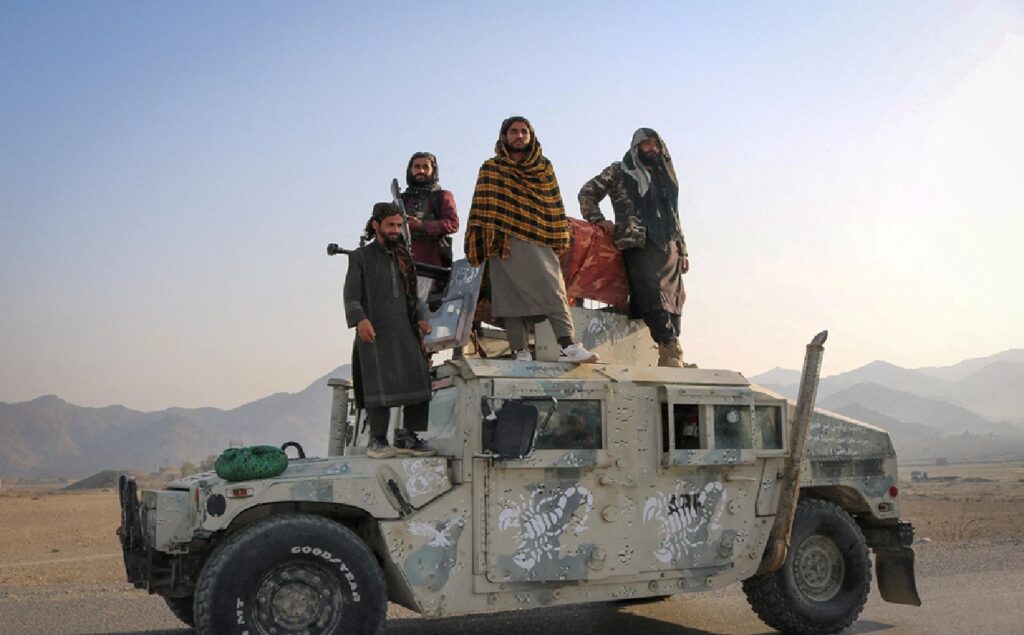
To understand how two ostensible allies turned their guns on each other, one must travel back to the 1990s, when Pakistan’s Inter-Services Intelligence (ISI) helped midwife the Afghan Taliban into existence. The logic was coldly geopolitical: a pliant, Pashtun-dominated government in Kabul would provide Pakistan “strategic depth” against its existential foe, India. Throughout the U.S.-led war in Afghanistan, Pakistan maintained a double game: officially a counterterrorism partner, unofficially providing sanctuary, advisors, and logistical support to the very Taliban it was supposed to fight. A 2012 leaked NATO report and multiple U.S. State Department assessments documented this duplicity in granular detail.
When the Taliban swept into Kabul in August 2021, Pakistan’s then-prime minister Imran Khan celebrated Afghans having “broken the shackles of slavery.” Islamabad believed its long game had paid off. Instead, the blowback was swift and savage.
“There was no other choice but to work with these countries after the United States left Afghanistan,” said Daniel Markey, senior fellow with the South Asia program at the Stimson Centre, referring to regional powers engaging the Taliban. Their initial strategy, he added, “was to see whether they could collectively exert some degree of diplomatic pressure on this new Taliban government.”
The pressure failed because the Taliban government was never a monolith it could control. The real monster under the bed was the Tehrik-e-Taliban Pakistan (TTP), the Pakistani Taliban—an ideological cousin of the Afghan Taliban that had sheltered Al-Qaeda and turned its guns on the Pakistani state in 2007. After the U.S. withdrawal, TTP attacks inside Pakistan surged. The Pakistan Institute for Peace Studies (PIPS) reported that militant violence killed over 1,200 people in Pakistan by 2025, more than double the number in 2021. The TTP, Islamabad insists, operates from safe havens in Afghanistan with the Taliban government’s knowledge and protection. The Afghan Taliban denies it, but the evidence, from UN monitoring reports to Western intelligence, points to a more uncomfortable truth: the group sees the TTP as a loyal, battle-hardened partner it cannot afford to alienate, even if it wanted to.
The TTP Factor: The Unbearable Alliance.
The TTP is both a byproduct of the U.S. invasion and a Frankenstein monster Pakistan helped create. Pakistani jihadists who had fought alongside the Afghan mujahideen turned against Islamabad after it allied with Washington. Pursued by Pakistani forces, they found refuge across the Durand Line, deepening bonds with the Afghan Taliban and Al-Qaeda. Today, the TTP highly decentralises, with factions ranging from those focused solely on fighting Pakistani security forces to those with broader jihadist ambitions.
“The Afghan Taliban seeks autonomy and has little incentive to rein in the TTP, which it sees as a loyal partner,” Markey observed. Meanwhile, Pakistan’s military chief, General Syed Asim Munir, has called the TTP a “fundamental enemy” that cannot be reconciled or negotiated with. This is a diplomatic cul-de-sac of the first order.
Pakistan’s frustration boiled over in October 2025 when it carried out an airstrike on what it called a “base of operations for terrorism in Pakistan.” That strike, which killed civilians according to Afghan officials, triggered the deadliest cross-border exchange since 2021. Qatari and Turkish mediation produced a fragile ceasefire, but follow-up talks in Istanbul collapsed twice. Saudi-brokered negotiations dissolved by year’s end.
The real trigger for the current “open war,” however, came on 16 February 2026, when a suicide bomber killed eleven Pakistani security personnel and a child at a border checkpoint. Islamabad struck back on 22 February, targeting alleged militant camps in eastern Afghanistan. Afghan officials said at least eighteen people, including civilians, died. The Taliban’s retaliation, attacks on Pakistani military bases near the border—was swift, and Pakistan’s response was unprecedented: bombing multiple Afghan border provinces and, for the first time, urban areas, including Kabul.
“Pakistani aerial strikes in Afghanistan have become reactionary in nature, without any notable change in the frequency of militant attacks. Afghan Taliban officials, for their part, have failed to take any notable action to ensure Afghanistan does not serve as a launching pad for attacks in Pakistan,” said Fahad Nabeel, head of the Islamabad-based consultancy Geopolitical Insights.
The Escalation Spiral: From Covert Proxies To Drone Duels.
What was once a shadow war fought through militant proxies is now a direct, conventional clash. Pakistan’s Operation Ghazab-lil-Haq (Wrath for Justice), announced on 27 February 2026, signalled a doctrinal shift: no longer would Islamabad tolerate cross-border militancy; it would carry the fight onto Afghan soil. The March 16 strike on the Kabul rehabilitation centre was the operation’s most devastating moment, drawing widespread international condemnation and pushing the region closer to the brink.
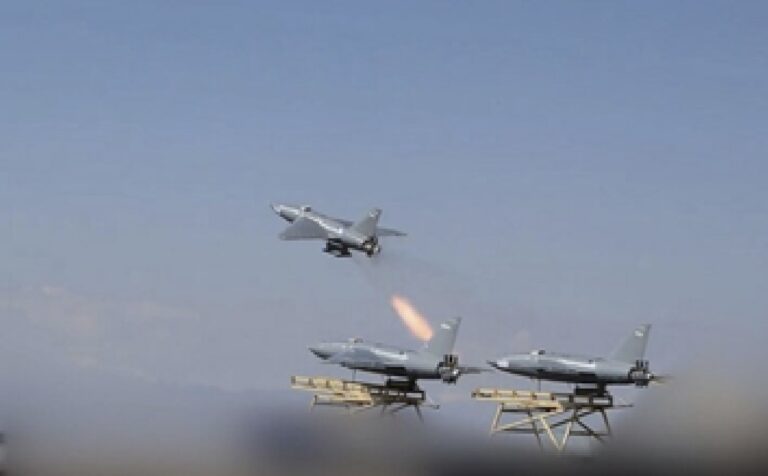
The Armed Conflict Location & Event Data (ACLED) project has documented at least a dozen drone launches from Afghanistan into Pakistani territory since February. By July 2026, the tempo had quickened. After the June 27 Karachi paramilitary compound attack, claimed by Jamaat-ul-Ahrar, a TTP splinter group, Pakistan’s June 29 strikes in Paktia, Paktika, and Kunar killed what Islamabad said were 25 fighters; the Taliban said 36 civilians died. In an almost choreographed tit-for-tat, the Taliban then launched drones into Balochistan’s Pishin district and parts of Khyber Pakhtunkhwa, claiming to have targeted Islamic State (ISIS) “centres.” Pakistan’s military, in a statement, said it neutralised the drones, calling the launches proof of the Taliban’s “patronisation and support of terrorist outfits.”
“What had started in 2022 as occasional incidents and retaliations has, since 2025, become a consolidated pattern,” said Ricardo Alvarez, a research analyst tracking armed rebellions across South and Central Asia. “Tit-for-tat has become the norm, but there might still be a gradual escalation ahead, with more decisive attacks from each side.”
Behind the patterns lies a grim arithmetic. PIPS recorded 699 militant attacks in Pakistan in 2025, a 34% increase from the previous year, leaving at least 1,034 people dead. The UN Assistance Mission in Afghanistan (UNAMA) recorded at least 75 civilians killed and 193 injured between late February and mid-March 2026 alone, figures it called preliminary and likely under-counted. The true human cost lies hidden in remote villages, in mass graves, and within the trauma of communities caught between two armed states and a hydra of militant groups.
The Weaponisation Of Refugees: Expulsion As Collective Punishment.
Parallel to the bombing runs, Pakistan has waged an economic and humanitarian war against Afghanistan’s people. In 2023, Islamabad launched a mass expulsion campaign of Afghan refugees, ostensibly a counterterrorism measure. By 2025, Pakistan had deported more than one million Afghans. Many of them were born in Pakistan and knew no other home. In October 2025, they largely sealed the border, which serves as a lifeline for landlocked Afghanistan. Today, it remains closed to all but deported nationals.
The United Nations and human rights organisations have condemned the campaign as collective punishment, a violation of the principle of non-refoulement. Local communities on both sides are reeling. At the Chaman border crossing, families huddle with their remaining belongings, children hollow-eyed from the journey. “We are caught between two fires. Our homes are shells, our children terrified,” one displaced woman told a Reuters journalist in late February, her face lined with dust and despair.
The economic toll on Afghanistan, already reeling from the cutoff of international aid and frozen assets, is catastrophic. Cross-border trade, worth billions annually, has ground to a halt. Food prices have soared. The Taliban government, diplomatically isolated, struggles to feed its population, making it more dependent on the very militants it shelters as a source of revenue and manpower.
The Great Game Redux: Regional Powers Circle The Wound.
The conflict has become a magnet for outside powers, each with its own agenda, raising the stakes far beyond a bilateral dispute.
China, Pakistan’s closest ally and largest trading partner, must now play the role of a reluctant mediator. Its flagship $65 billion China-Pakistan Economic Corridor (CPEC) runs through territory increasingly targeted by militants, and Beijing has no appetite for a full-blown war that could jeopardise its investments. In April 2026, Chinese-mediated talks in Urumqi led to a temporary drop in Pakistani airstrikes, with Taliban officials reportedly offering written guarantees to restrain the TTP. The lull lasted only two months. Chinese ambassador meetings and foreign-minister phone calls are now a near-weekly occurrence, but Beijing remains unwilling to commit peacekeeping troops or economic leverage strong enough to force a settlement.
Russia, which in July 2025 became the first nation to formally recognise the Taliban government, has strengthened its defence ties with Pakistan over the past decade, partly to counterbalance U.S.-Indian rapprochement. Moscow has offered to broker talks, but its primary interest appears to be ensuring that chaos does not spill into Central Asia, where it maintains security commitments.
India has pounced on Pakistan’s predicament. Since 2021, New Delhi has slowly courted the Afghan Taliban, reopening its embassy in Kabul in 2022 and welcoming a Taliban diplomatic delegation to New Delhi in October 2025. Pakistan’s Defence Minister Khawaja Asif has openly accused Afghanistan of operating as an Indian “proxy.” Whether New Delhi is actively funnelling support to the TTP remains unproven, but the suspicion has become axiomatic in Islamabad’s security establishment.
The United States, burned by two decades of war and now fixated on great-power competition, has largely disengaged. Trump administration officials have expressed support for Pakistan’s right to self-defence, and former President Donald Trump suggested in October 2025 that he could end the conflict, a boast that echoed his earlier unfulfilled claim about the Kashmir dispute. Behind the scenes, U.S. counterterrorism officials are watching nervously. “War between Pakistan and the Taliban would probably increase the threat [the self-declared Islamic State and Al-Qaeda] pose to the United States,” argued Alexander Palmer, a fellow at the Centre for Strategic and International Studies (CSIS). Farah Pandith, a CFR senior fellow, called the escalation of a “ripe moment for unexpected action” and warned that if Washington were to take a non-neutral stance, it could influence how China and Russia respond.
Nuclear Nightmares And The Proxy War Underworld:
A profound fear, rarely spoken aloud, lurks beneath the tactical exchange of fire: the vulnerability of Pakistan’s nuclear arsenal. The country possesses an estimated 170 warheads, and extremist sympathisers have long infiltrated its security apparatus. The idea that a protracted war with a militant-allied Taliban regime, fought on multiple fronts, including inside Pakistani cities—could weaken the state’s control over its nuclear infrastructure is the stuff of nightmares for Western intelligence agencies.
In Islamabad’s strategic community, a darker narrative has taken hold: that foreign powers, intent on neutralising Pakistan’s nuclear capability, are secretly fuelling the conflict. According to this view, the TTP is not merely a terrorist group but a proxy of hostile intelligence agencies, unnamed but commonly understood to include India and perhaps others, designed to bleed Pakistan’s military, stretch its resources, and ultimately create conditions for the neutralisation or seizure of its nuclear assets. While many independent analysts dismiss this theory as a conspiracy used to deflect from domestic security failures, it is repeated in off-the-record briefings by Pakistani security officials and has become a staple of hawkish media commentary.
“Pakistan has turned this into a kind of new normal, blaming its own security failures on Afghanistan,” said Rahim Nasari, a Quetta-based security analyst. “Attackers travel more than 1,200km from the Afghan border to reach Karachi, planning and organising with facilitators inside Pakistan itself. That raises a basic question: whose intelligence failure is this, really?” Nasari described the relationship as one of “mutual blackmail,” with Kabul accusing Islamabad of sheltering anti-Taliban figures even as Pakistan accuses Kabul of hosting the TTP.
Alvarez noted that any durable solution would require both sides to “address their internal issues without outsourcing the conflict to each other.” But for now, neither the Taliban government, fractious, ideologically rigid, and reliant on militant allies, nor Pakistan’s military establishment, deeply invested in the strategic depth doctrine and facing its own legitimacy crisis, appears willing to make the necessary concessions.
The Diplomatic Graveyard: Why Talks Keep Failing.
A pattern has emerged: bloody incident, military retaliation, hurried mediation, temporary ceasefire, collapse, repeat. Why do diplomatic efforts consistently fail?
First, the trust deficit is total. Pakistan views the Taliban government as either complicit or impotent regarding the TTP; the Taliban view Pakistan as a treacherous former patron that is now violating Afghan sovereignty and killing civilians. Second, the maximalist demands are irreconcilable. Pakistan insists that the TTP’s leadership be handed over or that the group be dismantled by force, actions that would probably split the Afghan Taliban and spark an internal civil war. The Taliban demand Pakistan cease all cross-border strikes and implicitly recognise the Durand Line, which Afghanistan has never accepted as a legitimate international border.
Third, the mediators- Qatar, Turkey, Saudi Arabia, China, have shallow leverage. They can convene talks, but none will impose economic sanctions or military penalties on either side. The result, as Markey described, is a cycle of coercive diplomacy in which negotiations fail, the parties fight until it “becomes less productive,” then return to diplomacy, a permanent state of controlled instability.
“Neither option looks like a particularly good solution to their problem, or a sustainable one,” Markey said.
A Glimpse Over The Edge: What Happens Next?
Will the conflict remain a simmering border war, or could it explode into a full-scale conventional engagement? Pakistan’s military capacity dwarfs that of the Taliban’s lightly armed forces, but the Taliban have a deep reservoir of guerrilla fighters and a terrain that has swallowed empires. A ground invasion of Afghanistan would be a quagmire Islamabad cannot afford. For its part, the Taliban cannot sustain a protracted air war against a nuclear state with a modern air force.
Yet miscalculation is the great accelerant of history. A Pakistani strike that kills a senior Taliban leader, a spectacular TTP attack inside Pakistan that is traced directly to Taliban blessing, or a drone that slips through and hits a sensitive military installation – any of these could shatter the unwritten rules that currently limit the conflict.
International observers are sounding the alarm. Ibraheem Bahiss of the International Crisis Group told DW that the border remains central to global counterterrorism concerns, warning that further instability “could benefit extremist groups and trigger new humanitarian crises.” The Islamic State’s Khorasan Province (ISIS-K), which both the Taliban and Pakistan claim to fight, is the ultimate opportunist, thriving in the ungoverned spaces created by this internecine war.
Back at the Chaman crossing, a young Afghan man, his deportation papers crumpled in his hand, told a journalist: “They say we are terrorists. But we are just people. My father fought the Soviets. Now we are the enemy. Tell me, who is not the enemy in this land?”
The question hangs, unanswered, over a border drawn in blood, contested by history, and now, once again, on fire.
Source: Veritas Press C.I.C. | Multi-News Agencies
Help Support Our Work By Donating
Readers who believe that truth still matters have power over popular information. When just a few more people step up to support this work, it means more lies exposed, more corruption uncovered, and more accountability where it’s long overdue.
Help Protect Independent Journalism, Which Is Currently Under Attack.
If you believe journalism should serve the public, not the powerful, and you’re able to help, becoming a regular DONOR or a PAID SUBSCRIBER truly makes a difference.
DONATION APPEAL: If you found this reporting valuable, please consider supporting independent journalism.
Your support fuels our fearless, truth-driven journalism. In unity, we endeavour to amplify marginalised voices and champion justice, irrespective of geographical location. We operate independently, with no financial backing from billionaires; our readers support us.
But it’s also extremely important. One of Veritas Press’s greatest assets is its reader-funded model.
1. Reader funding means we can cover what we like. We’re not beholden to the political whims of a billionaire owner. We are a small, independent and impartial organisation. No one can tell us what not to say or what not to report.
2. Reader funding means we don’t have to chase clicks and traffic. We’re not desperately seeking your attention for its own sake; we pursue the stories that our editorial team deems important and believes are worthy of your time.
3. Reader Funding: enables us to keep our website and other social media channels open, allowing as many people as possible to access quality journalism from around the world, particularly those in places where the free press is under threat.
We know not everyone can afford to pay for news, but if you’ve been meaning to support us, now’s the time.
Your donation goes a long way. It helps us:
- Keep the lights on and sustain our day-to-day operations
- Hire new, talented, independent reporters
- Launch real-time live debates, community-focused shows, and on-the-ground reporting
- Cover the issues that matter most to our communities, in real time, with depth and integrity
Without your support, independent voices like ours will be silenced.
Furthermore, we plan to expand our work, but we can’t do so without your support. Every contribution, no matter the size, helps us stay independent and build a truly people-powered media platform.
If you believe in journalism that informs, empowers, and reflects the communities we serve, please donate today.
Submissions:
For the secure submission of documentation, testimonies, or exclusive investigative reports from any global location, please utilise the following contact details for our Investigations Desk: mailto:enquiries@veritaspress.co.uk or mailto:editor@veritaspress.co.uk

New York City Mayor Zohran Mamdani Has Declared Benjamin Netanyahu A “War Criminal” And Demanded
SANA’A — The narrow, sun-scorched waters of the Bab el-Mandeb Strait, through which roughly 10%
A Dramatic Escalation In The Gulf Raised Alarms As Iran Reported A Strike On US-Linked
A deep-dive investigation into the escalating conflict, the humanitarian fallout, the shadow of great-power rivalry,
As Andy Burnham Enters Downing Street Promising A “Circuit Breaker” Moment, Observers Carry Hope And

Boy Charged With Preparing Terrorist Acts Against Two Sutton Mosques, As Community Leaders Demand Action
KUWAIT CITY / TEHRAN — Air raid sirens wailed across Kuwait City before dawn Sunday
TEHRAN/WASHINGTON — The predawn skies over Iran’s southern coast shattered for an eighth consecutive night

How An Extremist Minister And A Compliant Environment Minister Turned A Grotesque Political Provocation Into
An Investigative Analysis Of The Latest Planning Data, Land Confiscations, Settler Violence, And The Global